रक्षाबंधन केवल भाई-बहन के रिश्ते और सुरक्षा की रस्म तक सीमित नहीं होना चाहिए। आज असली रक्षा उन चीज़ों की ज़रूरत है जो कमज़ोर और संकट में हैं—गौरैया, नदियाँ, पहाड़, पेड़, महासागर और पृथ्वी। साथ ही ईमानदारी, आत्मज्ञान और मानवीय मूल्यों की भी रक्षा जरूरी है। धर्म कर्मकांड नहीं, अपनी शक्ति और उससे जुड़ी व्यापक ज़िम्मेदारी को समझना है।
Acharya Prashant: You might be an MBBS, or an MD, or a DM, but you could still be quite illiterate; you might still not have basic knowledge regarding the nutritional value of various food products. You could have a quack graduating even from the best medical college.
प्रश्नकर्ता: युद्ध की शुरुआत की पहचान कैसे हो? वो जो कुरुक्षेत्र में हो रहा है, वहाँ तो शंखनाद हुआ, जिससे पता चला कि युद्ध शुरू हुआ। पर जो जीवन में युद्ध हैं, उनमें किसी एक युद्ध पर अगर ध्यान है, उसकी शुरुआत का पता कैसे चले?
प्रश्नकर्ता: नमस्ते आचार्य जी, जैसे इंसान अपने जीवन में अकेले भी कई सारे फ़ैसले लेता है। जैसे मैं पढ़ने के लिए समाज से और परिवार से काफ़ी लड़ रही हूँ। क्या ये सबकुछ अपनेआप ही हो रहा है या ये मेरी अपनी ही लड़ाई है? तो फिर संघर्ष करने से
मैनचेस्टर से जाकर पूछो कि गांधी का वहां क्या नाम था और क्या छवि थी। गांधी कहते थे कि यह सब व्यापारी हैं, सभी पैसे के भूखे हैं। इन्हें भारत से जो पैसा मिल रहा है, भारत को लूट-लूट कर के लंदन मोटा रहा है। मैं भारत की लूट रुकवाऊंगा।…
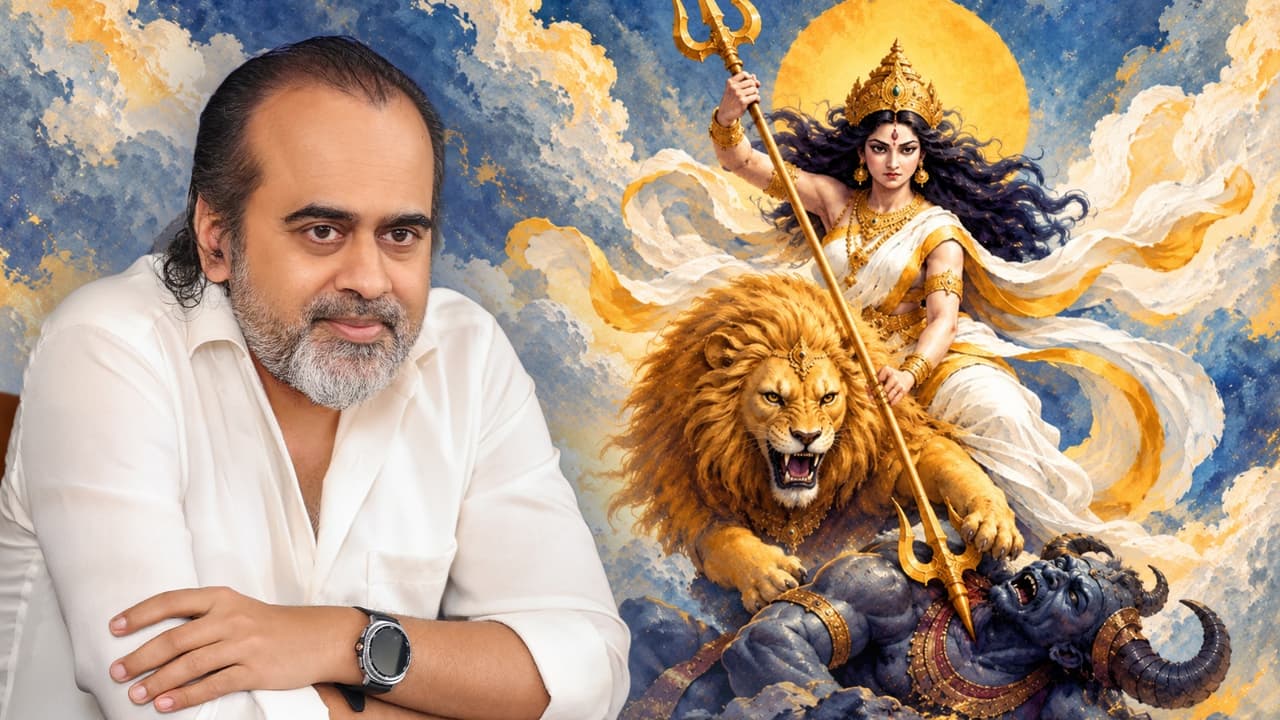
चेतना को मिटाने या दबाने के प्रयास को हिंसा कहते हैं। चेतना को समर्थन और सम्मान देना ही अहिंसा है। दैत्य स्वयं तो अचेत है ही, ये चैतन्य जीव की चेतना पर आक्रमण के लिए भी आतुर है, तो अब देवी क्या करें? अगर चेतना को बचाना है तो सबसे पहले उसका वध करना पड़ेगा जो चेतना के विरुद्ध खड़ा है। हिंसा हुई या नहीं हुई, यह इससे नहीं नापा जा सकता कि खून बहा कि नहीं बहा, बल्कि इससे नापना होगा कि आपका मन चेतना के साथ है या चेतना के ख़िलाफ़ है।
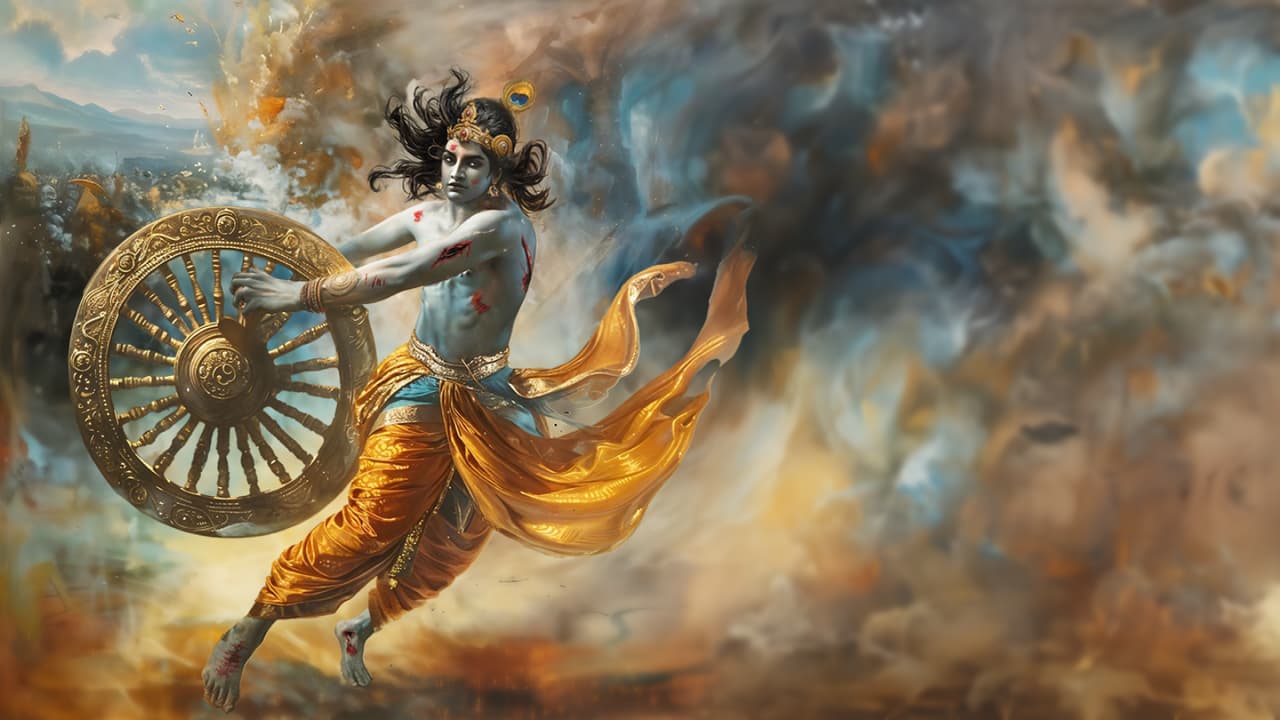
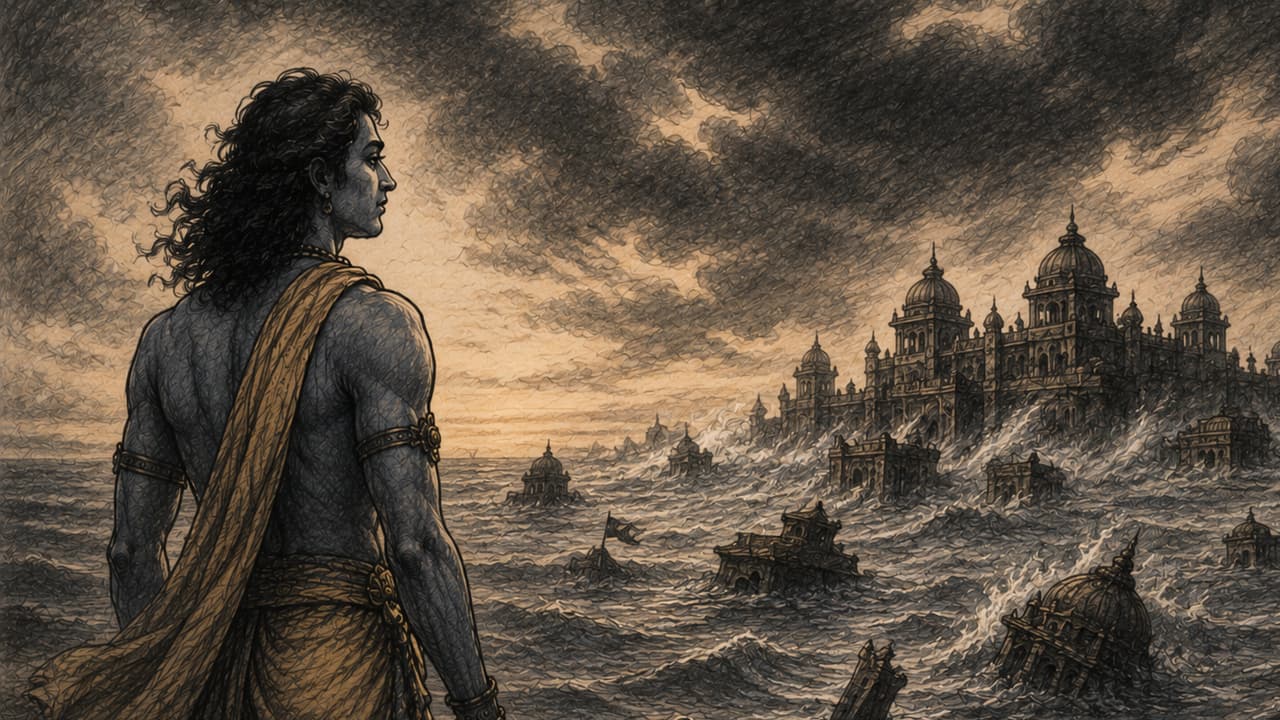
We have images of peace. When you look at the image of Shri Krishna rushing towards Bhishma to attack him personally, going beyond his brief as a charioteer, you don’t think that this is peace. You feel as if Shri Krishna is being violent. The expression of peace often looks very much like violence. Truth, Peace, Love, Freedom — these must never be searched in ‘actions’. Peace and Truth are no different. Peace is about the right action.
Non-violence does not mean being good to others or turning the other cheek; this is a naïve interpretation of non-violence. In fact, non-violence does not have much to do with the "other" at all. It is actually about self-knowledge. If you know yourself, then you’re not afraid. And if you’re not afraid, you don’t treat the other as the "other" at all. With this realization, do what you must—this is non-violence.
Excerpts from Articles
Justice Without Boundaries: Why Compassion Cannot Stop at Species
Oppression should not see caste, gender, creed or colour, and it should not see species either. The moral threshold is sentience, not intelligence. An animal feels pain as fully as a human does, whether or not it can explain its suffering.
ज्योतिष कितना सच है? कुंडली, ग्रह-नक्षत्र: इनका क्या अर्थ है?
वेदांत को केवल इसलिए सही या श्रेष्ठ नहीं माना जा सकता कि वह किसी विशेष परंपरा से आता है। विज्ञान जहाँ भौतिक जगत की वस्तुनिष्ठ जाँच करता है, वहीं अद्वैत वेदांत सीधे मनुष्य के ‘मैं’, उसके दुख, बंधन और मुक्ति की पड़ताल करता है। इसकी कसौटी वैज्ञानिक प्रमाण नहीं, बल्कि अपने जीवन में इसकी सच्चाई को देख पाना है। किसी दर्शन को मान लेना नहीं, बल्कि उससे स्वयं को मुक्त करना ही उसका वास्तविक उद्देश्य है।
Struggling to choose between a secure job and the path you actually feel drawn to? This isn't really a question about careers. It's about why other people's opinions have so much power over you in the first place. Real clarity doesn't come from finding the 'right' choice. It comes from honestly looking at your own fear, again and again, until it stops running the decision for you.
एक पुजारी जो रोज़ भूत-प्रेत, तंत्र-मंत्र और वशीकरण के नाम पर आए लोगों से मिलता है, आचार्य प्रशांत से पूछता है: जब वो ख़ुद जानता है कि कुछ भूत-चुड़ैल नहीं होता, तो लोग बार-बार इसी झूठ की शरण में क्यों जाते हैं? जवाब अंधविश्वास से कहीं गहरा निकलता है — यह हमारे भीतर के उस झूठ की कहानी है, जिसे हम हर कीमत पर बचाना चाहते हैं।
Climate change is more than an environmental crisis—it is a crisis of human choices. Our patterns of consumption, consumerism and endless pursuit of more are putting increasing pressure on the planet. But meaningful change does not necessarily begin with new technology or stricter policies. It begins with a deeper question: what are we willing to change within ourselves?
फ़ालतू खर्च छोड़िए, अपनी ज़िंदगी पर खर्च करना सीखिए
आचार्य प्रशांत बताते हैं कि क्यों हम सही खान-पान, स्वास्थ्य और अपने ऊपर ज़रूरी खर्च से बचते हैं, लेकिन दिखावे और फ़ालतू सामाजिक परंपराओं पर पैसा बहा देते हैं। अधिकांश लोगों के लिए समस्या सिर्फ़ पैसों की कमी नहीं, बल्कि विवेक और सही प्राथमिकताओं की कमी भी है।
प्रश्नकर्ता: मुझे ये जानना था कि ऐसा क्यों होता है कि हर मालिक चाहते हैं कि उनके एम्प्लॉईज़ उनके ग़ुलाम ही रहें। मतलब आप सैलरी दे रहे हो, कोई भी काम कर रहा है तो उस हिसाब से क्यों नहीं रहता, उनको क्यों हमेशा यही रहता है कि हम उनको…
Wars first start in the mind. Without inner education, all the scientific knowledge and technological advancements merely provide more sophisticated tools to those who are internally ignorant. Mass awareness is the solution. It must begin with you; it must begin with me. There is no other way.
Share
Brahm
is truly greater by manifolds, then what motivation would I have to perform the mundane duties, chasing worldly desires like wealth etc.? I cannot just sit doing nothing, thinking that my kids will have an education and
…
2
प्रश्नकर्ता: “अहिंसा परमो धर्म:।” श्लोक के इस अंश में एक तरफ़ तो भगवद्गीता में श्रीकृष्ण कहते हैं, “अहिंसा परमो धर्म:” और दूसरी तरफ़ वो गीता का ही इस्तेमाल कर रहे हैं, अर्जुन से हिंसा करवाने के लिए। तो ये बात तो सरासर गलत है। कृष्ण हिंसा करवा रहे हैं और…
2
प्रश्नकर्ता: नमस्ते आचार्य जी। मेरा क्वेश्चन आज के सत्र से है जिसमें आपने बोला कि हिंसा कमज़ोरी की निशानी और अहिंसा मज़बूती की है। लेकिन आजकल हिंसा को कई तरीकों से उचित ठहराया जा रहा है।
अभी तीस जनवरी को गाँधीजी की पुण्यतिथि आने वाली है, तो जितना हमें उस…
1
प्रश्नकर्ता: आचार्य जी कुछ समय पहले यूनाइटेड नेशंस का एक ट्वीट आया था उसमें उन्होंने कहा था कि माँसाहार क्लाइमेट चेंज (जलवायु परिवर्तन) के प्रमुख कारणों में से एक है इसलिए माँसाहार कम करें। तो यह ट्वीट आया और फिर कुछ घण्टों में या एक दिन के अंदर वो ट्वीट…
2
प्रश्नकर्ता: आचार्य जी, मेरा प्रश्न वीगनिज़्म (शुद्ध शाकाहार — पशु उत्पादों के उपयोग से परहेज़) के ऊपर है। मैं पिछले सात-आठ महीने से वीगनिज़्म फ़ॉलो कर रहा हूँ। मैंने अपने घरवालों को समझाने का भरसक प्रयास किया, इससे होने वाले वैश्विक तापन, जलवायु परिवर्तन जैसे नुक़सान गिनाये। लेकिन वो हैं…
प्रश्नकर्ता:
एक
यंग एक्ट्रेस
(युवा अभिनेत्री) होने के नाते मेरे लिए एक बहुत ही
कांसर्निंग टॉपिक
(सम्बन्धित विषय) हैं—
फेमिनिज़्म
(नारीवाद) और हमारी
इंडस्ट्री
और जो
पोर्ट्रेयल
(निरूपण) होता है
एक्ट्रेसेस
(अभिनेत्रियों) का या
कैरेक्टर्स
(पात्रों) का। मैं तो अपने
रोल्स
(भूमिकाओं) के ज़रिए हमेशा यही कोशिश करती हूँ आचार्य
…
चिकन
(मुर्गे का माँस) और
मीट
(बकरे का माँस) नहीं खाना चाहिए। अक्सर अपने परिवार में और दोस्तों को भी माँसाहार पर आपके वीडियोज़ साझा करता रहता हूँ। मैं एक किसान परिवार से
…
बैक्टीरिया
की जान भी तो बराबर होनी चाहिए न।
साँस लेते वक़्त हम न जाने कितने बैक्टीरिया मार डालते हैं, अन्न उगाने की प्रक्रिया में खेती-बाड़ी…
आचार्य प्रशांत: असल में…
…
🔥 “मैं तुम्हें प्यार से लूटने आया हूँ” 🔥
देश को आज़ाद हुए 4 साल ही हुए थे, और 75% आबादी कृषि संबंधित कार्यों से जीवनयापन कर रही थी।
लेकिन एक बहुत विचित्र बात थी: कृषि क्षेत्र में काम कर रहे अधिकतर लोगों के पास अपनी ज़मीन ही…
2
When someone calls us ugly or dumb, it can feel as if our confidence has been taken away. But others are outsiders; they cannot know us as well as we can know ourselves. The trouble begins when we do not know ourselves, so we start looking at ourselves through others’ eyes. Self-knowledge here simply means being honest with ourselves about where our likes, fears and desires come from. What would change if we looked at ourselves directly, and not through others’ opinions?
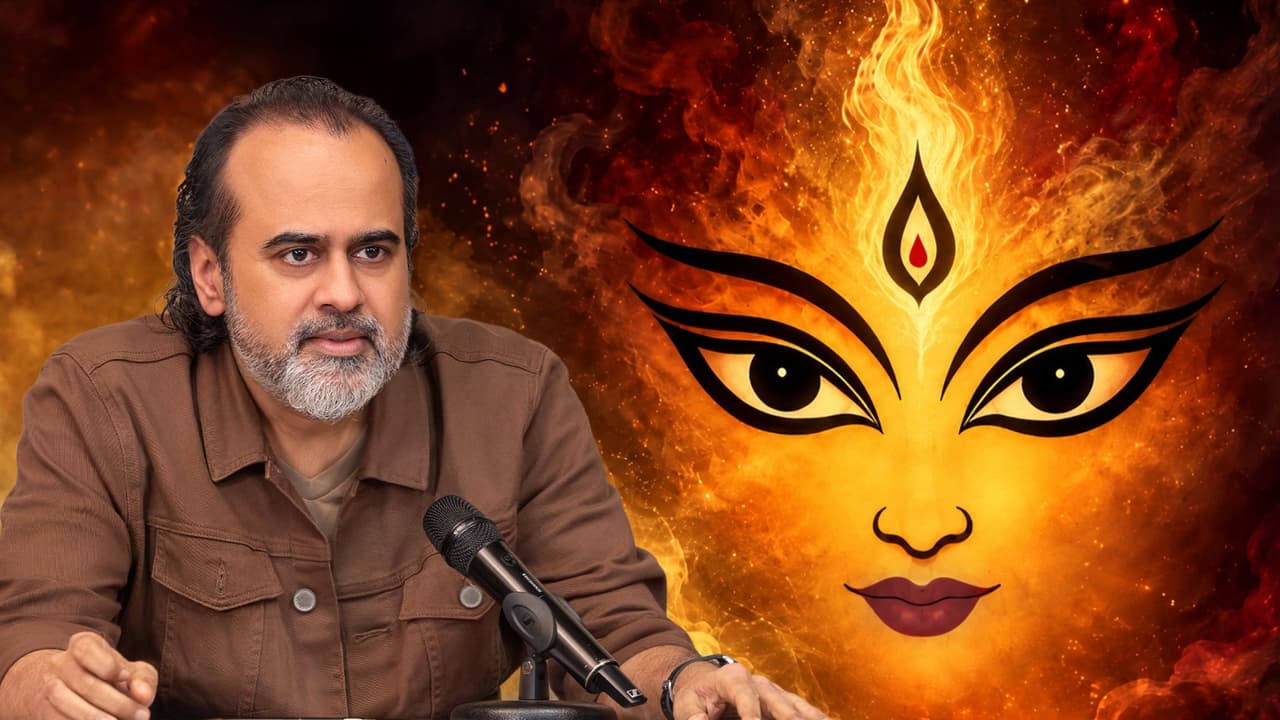
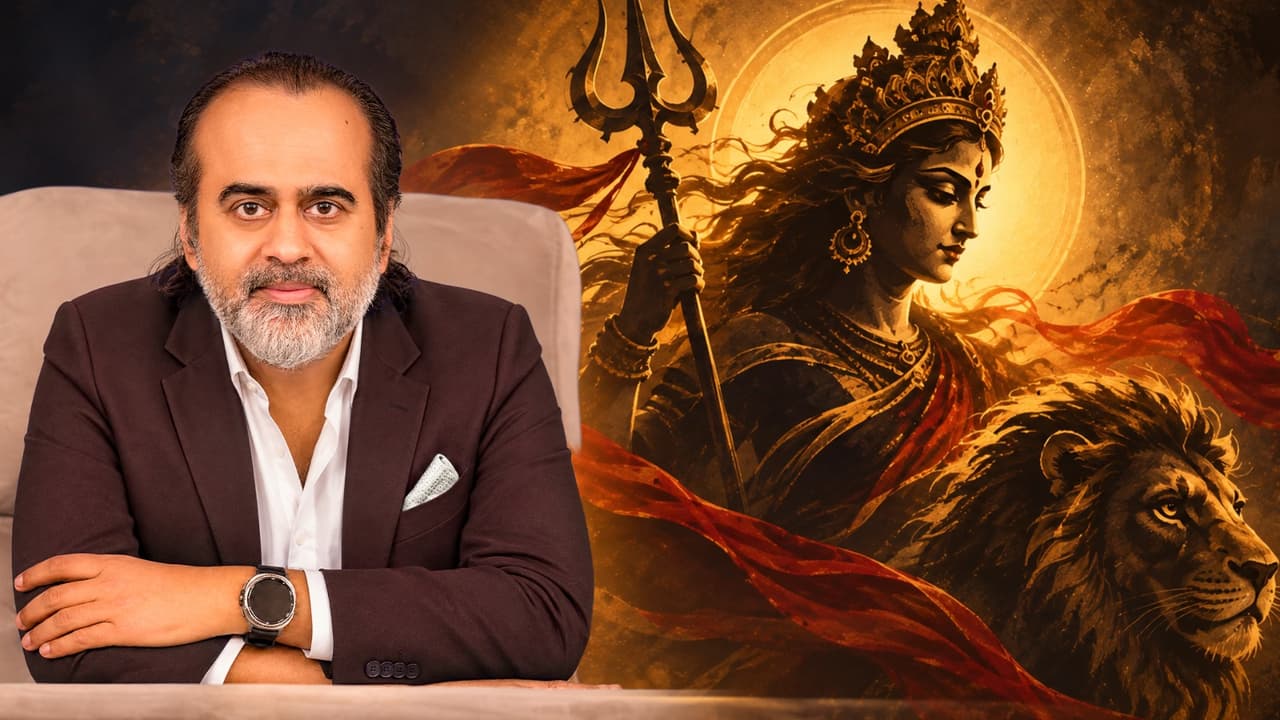
नवरात्रि में देवी और असुरों की कथा पढ़कर सवाल उठता है: जब दोनों ही प्रकृति हैं, तो लड़ाई किससे है? लड़ाई प्रकृति से नहीं, उस अधूरेपन से है जो मानता है कि दुनिया को भोगकर वो पूरा हो जाएगा। देवता और असुर दोनों यही चाहते हैं। अंतर बस इतना है कि चोट खाकर देवता देखते हैं और लौट आते हैं, असुर फिर वही दोहराते हैं। हम भी रोज़ भोजन, लोगों और चीज़ों से पूरा होने की उम्मीद करते हैं। और ‘सब ब्रह्म है’ कहकर विवेक छोड़ देना भी उसी अहंकार की चाल है। चोट हमें भी लगती है; क्या हम उससे सीखते हैं?
नवरात्रि में हम देवी की पूजा करते हैं और महिषासुर को बाहर का कोई दैत्य मान लेते हैं। पर दुर्गा सप्तशती का दूसरा चरित्र हमारी अपनी वृत्ति की कथा है। जो मन प्रकृति को केवल भोगने की वस्तु मानता है, जंगल काटता है, नदियाँ दूषित करता है, पशुओं को खाता है और कहता रहता है कि मुझे और चाहिए, वही महिषासुर है। त्यौहार उसी के वध के लिए है, उसे भोग लगाने के लिए नहीं। क्या इस नवरात्रि हम अपने भीतर के महिषासुर को पहचानेंगे?
नवरात्रि आते ही हम सोचने लगते हैं कि क्या खाना है, क्या नहीं खाना, कौन-सा हवन करना है। पर व्रत का अर्थ है संकल्प, और शुभ संकल्प एक ही है: हम जैसे हैं, वैसे न रहें। इसीलिए ये नौ दिन दुर्गा सप्तशती को समझने के लिए हैं, केवल रस्मों के लिए नहीं। जिसे हम माँ कहते हैं, वह यह पूरी प्रकृति है, और उसके ही बच्चों को चोट पहुँचाकर उसका पर्व नहीं मनाया जा सकता। क्या इस बार हम नौ दिन अपने ही जीवन को ईमानदारी से देख पाएँगे?
We often defend a bad choice by pointing to a worse one: stay dishonest or starve, keep the wrong grip or stop playing. But the real trouble is not the option we picked. It is the option we never let ourselves see. Action does not need greed or attachment to find its energy. The third way begins by rejecting both false choices, without knowing what comes next. Which of our everyday choices are really false dilemmas?
Sisyphus pushes a rock up a hill forever, knowing it will always roll back down. A regular workman does the same thing inside a job: he keeps pushing too, except he hopes it will eventually pay off, a promotion, a house, a better life. This hope is often just a comfortable lie. Sisyphus, who expects nothing and still keeps going, is actually more honest than we are. The real question is not whether the effort is worth it, but whether we can stop lying to ourselves about it.
Oppression should not see caste, gender, creed or colour, and it should not see species either. The moral threshold is sentience, not intelligence. An animal feels pain as fully as a human does, whether or not it can explain its suffering.
प्रेम की गहराई हमेशा प्रेमी की अपनी चेतना जितनी होती है — जो जैसा है, उसका प्रेम भी वैसा ही होगा, चाहे उसे कितना भी पावन या अनोखा क्यों न मान लिया जाए। जिस चेतना ने खुद को कभी गहराई से नहीं जाना, वह प्रेम में भी सतह से आगे नहीं जा सकती। जो कोई अपने प्रेम को गहराई से परखने से बचता है, वह असल में खुद को परखने से बच रहा होता है — और यही बचाव, प्रेम के नाम पर पाला गया एक और भ्रम है।
वेदांत को केवल इसलिए सही या श्रेष्ठ नहीं माना जा सकता कि वह किसी विशेष परंपरा से आता है। विज्ञान जहाँ भौतिक जगत की वस्तुनिष्ठ जाँच करता है, वहीं अद्वैत वेदांत सीधे मनुष्य के ‘मैं’, उसके दुख, बंधन और मुक्ति की पड़ताल करता है। इसकी कसौटी वैज्ञानिक प्रमाण नहीं, बल्कि अपने जीवन में इसकी सच्चाई को देख पाना है। किसी दर्शन को मान लेना नहीं, बल्कि उससे स्वयं को मुक्त करना ही उसका वास्तविक उद्देश्य है।
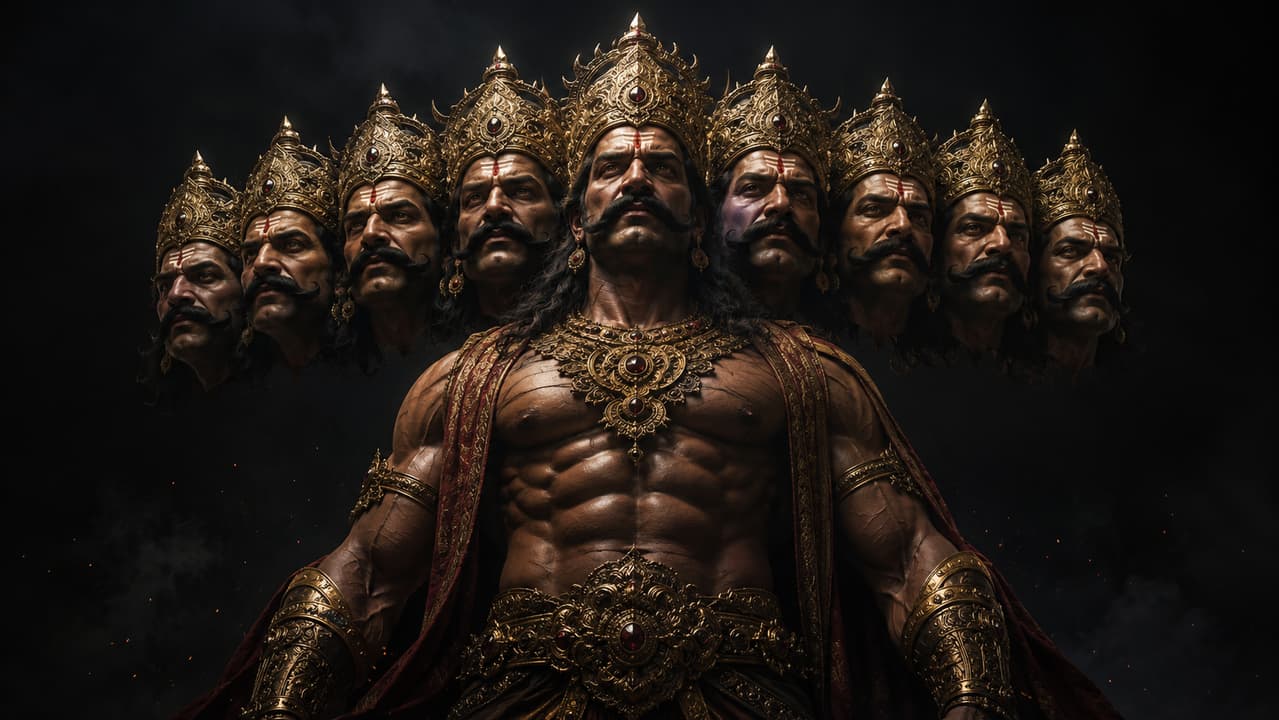
Knowledge alone cannot transform life; it can become another object of the ego. True knowledge is self-knowledge—a mirror that exposes and destroys false ideas about oneself. Ravana may have been knowledgeable, but without self-knowledge, knowledge can become a tool for exploitation. Wisdom is not something to acquire; it is innate. Self-knowledge is the process of unbecoming unwise by clearing away the nonsense we have gathered.
The balance between order and disorder should not be decided by personal likes or dislikes, but by what the task at hand requires. Sometimes a project demands discipline and order; at other times, more important work requires leaving things messy. The right action comes from responding to the actual need, not personal preference. Even sacrifice can be meaningful when it serves something important, but “staying backstage” should never become an excuse to avoid what one cannot tolerate.
Acharya Prashant: Because, you are asking this question.
We ‘think’ that we are lost, equally, we ‘think’ that we are not lost. The same place from where the thought, the perception of being lost, or not lost arises, that place is the same place…
Friendships naturally change as people follow different paths in life. When you remain focused on your true purpose, you stop clinging to those who only accompany you briefly. Instead of dwelling on memories or fearing others' intentions, examine your own expectations and self-deception first. Honest self-awareness brings clarity, wiser relationships, and the freedom to move forward without resentment or attachment.
Real love is not measured by comfort, agreement, or preserving relationships at any cost. It is revealed when one has the courage to challenge falsehood, embrace uncomfortable truths, and even risk a relationship for another's freedom and growth. Truth is not a fixed destination but a continuous rejection of illusion. Genuine relationships, mature guidance, and authentic scriptures all serve as mirrors that help us see and dissolve our own falseness.
भारत में जाति केवल सामाजिक या कानूनी समस्या नहीं, बल्कि धर्म से जुड़ चुकी मानसिक संरचना बन गई है। इसलिए संविधान, कानून और समाज-सुधार के प्रयास इसे समाप्त नहीं कर पाए। जन्म-आधारित जाति का आधार वैदिक दर्शन नहीं, बल्कि बाद की विकृत धार्मिक व्याख्याएँ हैं। जाति तभी समाप्त होगी जब धर्म अपने मूल वेदान्त और अद्वैत स्वरूप की ओर लौटे, जहाँ मनुष्य की पहचान जन्म से नहीं, सत्य से होती है।
समझदारी याददाश्त से नहीं, समझ से आती है। जीवन हर पल नए प्रश्न पूछता है, इसलिए रटे हुए उत्तर नहीं चलते। जानकारी बाहर से मिल सकती है, पर सही उत्तर तभी जन्म लेते हैं जब मन वर्तमान में पूरी तरह उपस्थित हो। जो समझ में न आए उसे रटने के बजाय प्रश्न करो, जिज्ञासु बने रहो। सीखने का सार स्मृति नहीं, जागरूकता, समझ और वर्तमान क्षण में जीने की क्षमता है।
मन पर बाहरी प्रभाव पड़ना स्वाभाविक है, लेकिन जीवन का संचालन उन प्रभावों से नहीं, अपने विवेक से होना चाहिए। जानकारी बाहर से आती है, पर उसे समझना, परखना और सही निर्णय लेना हमारी आंतरिक क्षमता है। जो व्यक्ति अपने विवेक को जागृत रखता है, वही विचारों का स्वामी बनता है; अन्यथा वह केवल परिस्थितियों और दूसरों की धारणाओं का अनुयायी बनकर रह जाता है।
अध्यात्म यह नहीं सिखाता कि बाहरी प्रभावों से बचो, बल्कि यह सिखाता है कि उनके दास मत बनो। जानकारी, विचार और अनुभव बाहर से ही आते हैं, लेकिन उन्हें समझने और उनके आधार पर निर्णय लेने का अधिकार आपके विवेक का है। वास्तविक स्वतंत्रता तब है जब जीवन बाहरी प्रभावों से नहीं, बल्कि अपने विवेक से संचालित हो। मन बाहरी प्रभावों पर आश्रित हो सकता है, लेकिन आप केवल मन नहीं हैं ।
The biggest weakness of modern education is not that it fails to keep pace with technology, but that it neglects self-knowledge. Students are trained to build identities around qualifications and careers, making them rigid in a world that demands constant change. Real adaptability, innovation, and lifelong learning come not from acquiring more skills, but from understanding oneself and letting go of fixed identities.
True learning is not built on memorizing answers but on understanding reality. Memory may help in examinations, but life constantly presents new questions that demand clarity, presence, and intelligence. Education becomes meaningful only when knowledge is deeply understood and lived, not merely remembered. Real understanding frees us from dependence on rote learning and enables us to respond wisely to every new situation.
समझ केवल जानकारी इकट्ठा करने या बातों को याद रखने से नहीं आती, बल्कि पूरी सजगता से वर्तमान में जीने और हर अनुभव को स्वयं देखने से आती है। जीवन हर दिन नए प्रश्न पूछता है, इसलिए रटी हुई बातें पर्याप्त नहीं होतीं। वास्तविक सीख तब होती है जब जिज्ञासा, प्रश्न और प्रत्यक्ष समझ विकसित होती है। स्मृति नहीं, बल्कि जागरूकता और समझ ही सही निर्णय, सीखने और जीवन को सार्थक दिशा देने का आधार बनती है।
तकनीक अपने-आप में समस्या नहीं है। असली प्रश्न यह है कि उसका उपयोग कौन और किस मानसिक अवस्था से कर रहा है। यदि भीतर भय, असुरक्षा और निर्भरता है, तो तकनीक सुविधा देने के बजाय बैसाखी बन जाती है। तब संवाद कृत्रिम हो जाता है, ज्ञान सतही रह जाता है और शक्ति विनाश का साधन बनती है। बाहरी प्रगति तभी सार्थक है जब उसके साथ भीतर की परिपक्वता और विवेक भी विकसित हों; अन्यथा हर नई तकनीक हमारी कमज़ोरियों को ही और बढ़ा देती है।
Humanity's greatest crisis arises from the imbalance between immense external progress and inadequate inner understanding. While technology, wealth, and knowledge have expanded unprecedentedly, unchecked desires and ignorance continue to fuel conflict, inequality, and environmental destruction. Sustainable change requires mass-based education of the self so individuals understand their motives and use science, technology, capital, and power with wisdom, responsibility, and inner clarity rather than unconscious craving.
आध्यात्मिक प्रगति अधिक गुरु, ग्रंथ या संस्थाएँ बदलने से नहीं, बल्कि एक सत्य को गहराई से जीने से होती है। सतही अध्ययन अहंकार को बढ़ाता है, जबकि वास्तविक अध्ययन स्वयं को बदल देता है। जो वास्तव में समझता है, उसे निरंतर नए उपाय नहीं चाहिए। विनम्रता से अपनी अधूरी समझ स्वीकार कर, एक प्रामाणिक स्रोत के साथ गहराई से जुड़े रहना ही आत्मज्ञान और आंतरिक परिवर्तन का मार्ग है।
श्रीकृष्ण, श्रीराम और अन्य अवतारों को केवल उनके मानवीय जीवन से समझना भ्रम पैदा करता है। साकार रूप सीमित होता है, जबकि उसका उद्देश्य मनुष्य को निराकार सत्य की ओर ले जाना है। देह, परिवार या घटनाओं में कमियाँ खोजने के बजाय उनके संदेश का सार समझना आवश्यक है। विवेक, कृतज्ञता और सही दृष्टि ही आध्यात्मिक समझ का आधार हैं, जबकि हर बात में दोष ढूँढ़ना केवल अहंकार को पोषित करता है।
Superstition does not begin with rituals alone; it begins with unquestioned beliefs about the self. Science can remove many false beliefs, but complete freedom requires Self-knowledge. Vedanta, philosophy and meditation help expose the ego, making awakening possible. Religion becomes meaningful only when it encourages Self-knowledge rather than blind belief. Real freedom comes not from accepting inherited ideas but from understanding oneself through direct observation and awareness.
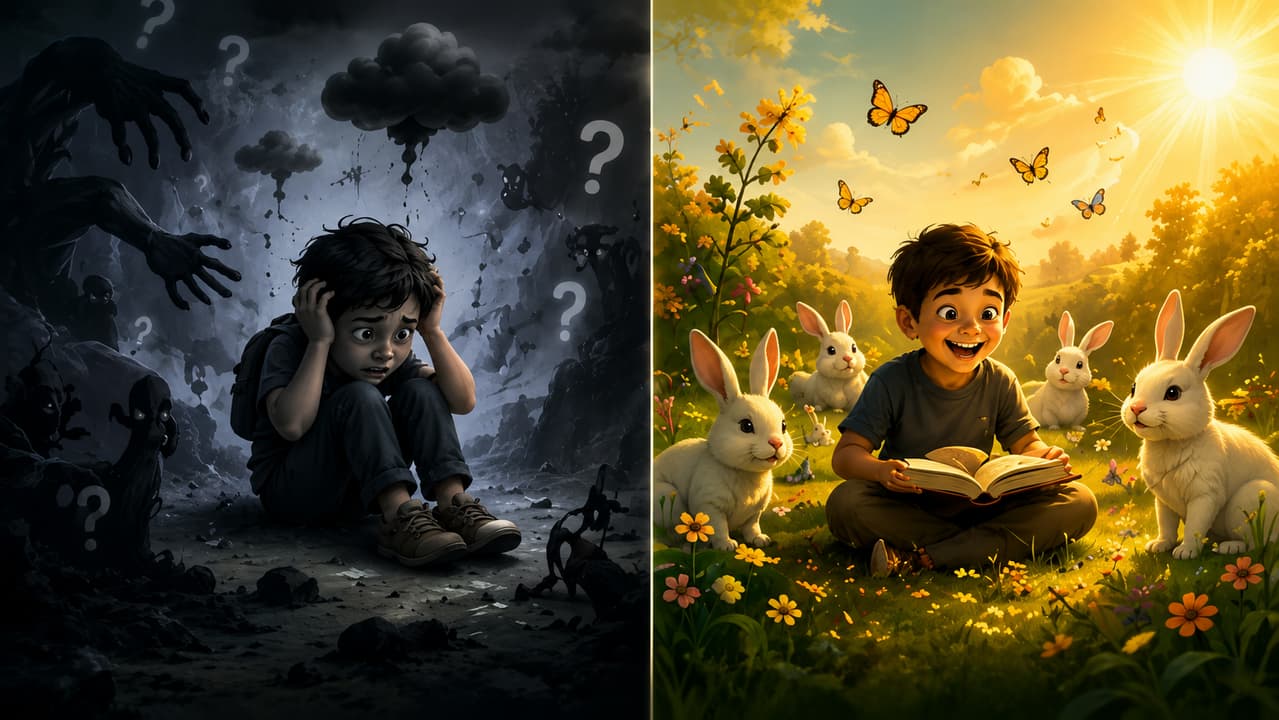
ज्ञान ही डर को मस्ती में बदलता है। अज्ञान भय पैदा करता है, जबकि सही समझ भय दूर करता है। सच्चे मित्र बनाने की कोशिश करने के बजाय आत्म-अवलोकन अधिक आवश्यक है। कबीर साहब का संदेश है कि केवल किताबें पढ़ने से नहीं, बल्कि ज्ञान के प्रति प्रेम से जीवन बदलता है। मन स्वयं चंचल नहीं होता; हमारी इच्छाएँ और अस्थिरता उसे भटकाती हैं। शिक्षा का उद्देश्य केवल जानकारी जुटाना नहीं, बल्कि अपनी मान्यताओं पर प्रश्न करना और सत्य की खोज करना है।
आध्यात्मिकता अहंकार को सांत्वना देने या स्वयं को विद्रोही घोषित करने का माध्यम नहीं, बल्कि अपने भीतर बैठी गहरी गुलामी को पहचानने का साहस है। हमारी अधिकांश इच्छाएँ, मान्यताएँ और पसंद वास्तव में सामाजिक संस्कारों से बनी होती हैं, इसलिए केवल बाहरी विद्रोह स्वतंत्रता नहीं देता। सच्चा धर्म भीतर के अहंकार से संघर्ष कर जीवन में सत्य के पक्ष में खड़े होने का आह्वान करता है, चाहे उसकी कीमत संघर्ष और घाव ही क्यों न हों।
The ego is not a real, independent entity but a bundle of conditioning that creates the illusion of a separate "I" and becomes the source of suffering. Self-observation is not introspection or analysis but moment-to-moment honesty about what is happening within. Real freedom comes when this false center is seen through, allowing life to function naturally without the burden of psychological ownership.
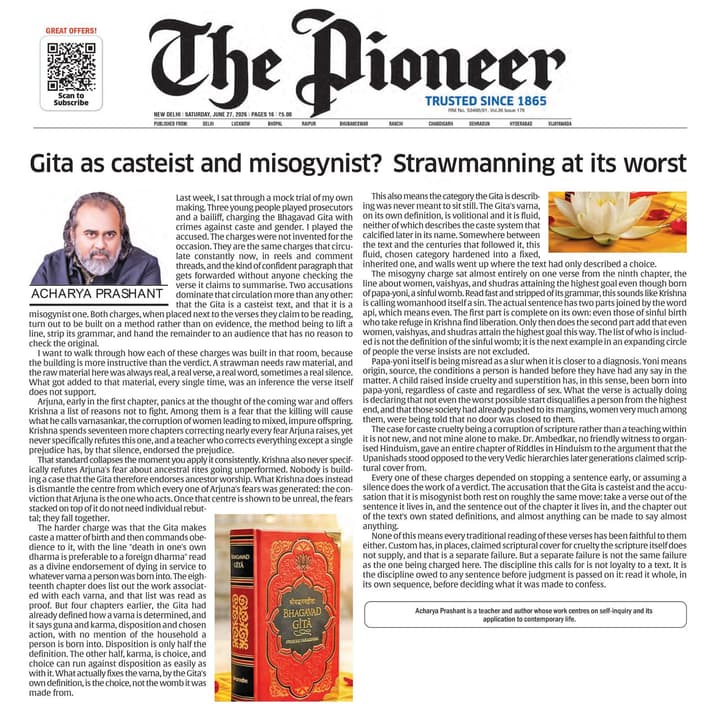
The Bhagavad Gita is often accused of supporting caste and misogyny through selective quotations that ignore context, grammar, and the text's central teachings. A closer reading shows that its emphasis is on inner qualities, conscious action, and spiritual equality rather than birth-based hierarchy or gender discrimination. Misinterpretations arise when isolated verses are detached from their broader meaning, while the Gita consistently points toward self-knowledge, freedom from ego, and the universal possibility of liberation for every human being.
पढ़ना केवल पन्ने पूरे करना नहीं, बल्कि समझ विकसित करना है। जब किसी विषय को सचमुच समझा जाता है, तो जिज्ञासा स्वयं आगे पढ़ने के लिए प्रेरित करती है। अधूरी किताबें अक्सर रुचि की कमी नहीं, बल्कि बिना समझे आगे बढ़ने का परिणाम होती हैं। इसलिए गति से अधिक महत्त्वपूर्ण है हर विचार को समझना, क्योंकि वास्तविक सीख वहीं से शुरू होती है।
![[गाँधी जयंती विशेष] मत मानों उनके आदर्शों को, लेकिन उनको एक बार ठीक से पढ़ लो](https://cimg.acharyaprashant.org/images/img-8e708d2d-a5df-48cf-92ec-50fbf0d40a8a/30/image.jpg)