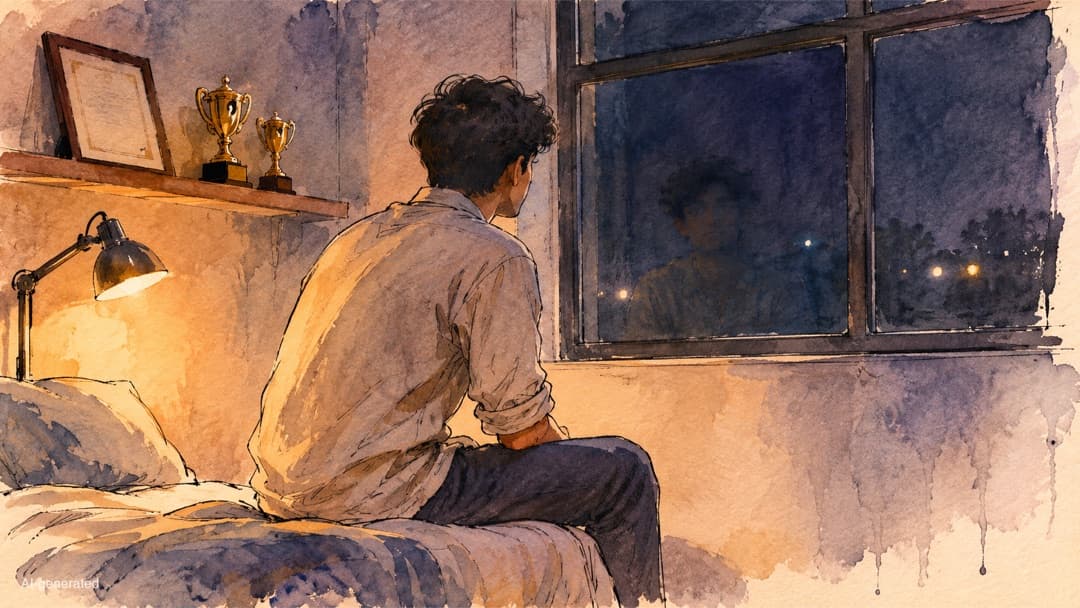
We sharpen the brain, collect the degrees, climb the ladder, and still feel strangled from within. The brain struggles with a hard maths problem, but who struggles with life? It is the one who uses the brain, the body and every opportunity, and calls all of it “mine”. We never examine that user, so its first claim, “I am important”, goes unchecked, and every value we build on it inherits the flaw. We chase prizes that give very little. Can we look at the one who is chasing?
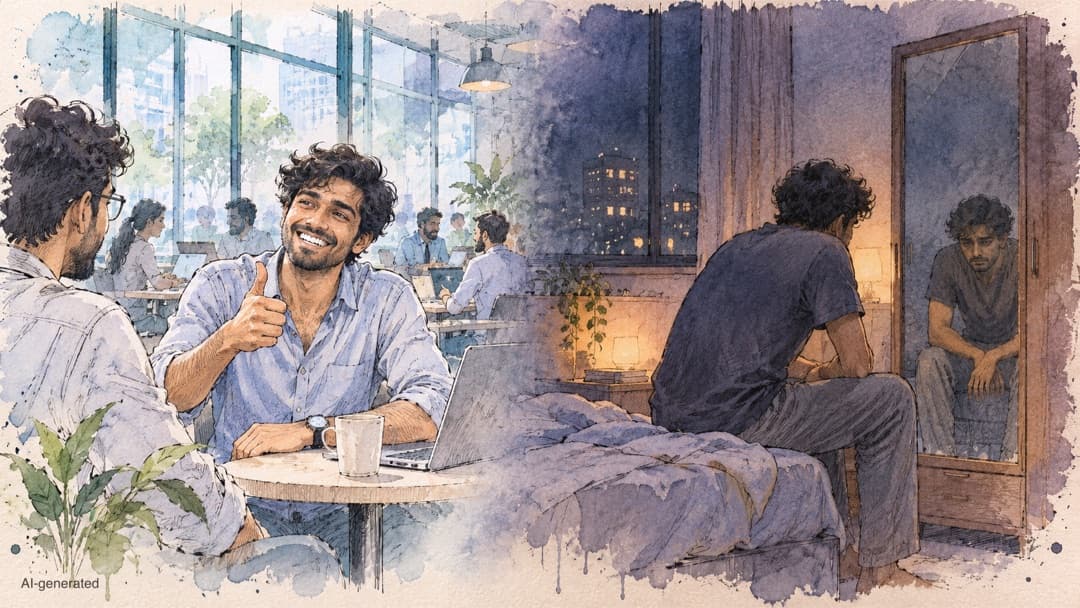
Someone asks how we are, and we say, “I am so good. I’m doing so well.” Then comes 3 a.m., and we know better. Nobody outside can check that claim, so the talk says an inner claim can be falsified only in the first person. Science runs on peer review; self-inquiry does not. A mirror can show where we stand, but whether we accept what it shows depends on honesty. Which of our own claims have we never allowed to be tested?


Many of us feel a small chill when a machine explains, writes or solves faster than we can. If being clever was what made us feel worth something, what is left? Cleverness was never intelligence. It was a favourite toy, and we built our self-esteem around it. Intelligence is the moment we look at ourselves and say, “Enough, I want to thin down.” The toy is gone, and we are not going anywhere. What would we be if our worth did not rest on being clever?
First the board percentage, then the CGPA, the money, the house: we keep ticking things off and reaching for the next, as if we were items on a conveyor belt that started the day we were born. When we do not know what we want, we end up wanting everything. The same unexamined words, success, love, settling down, decide what we call a true calling. If the seeker is false, how can what we seek be true? What if we first looked honestly at our own ideas of life and success?
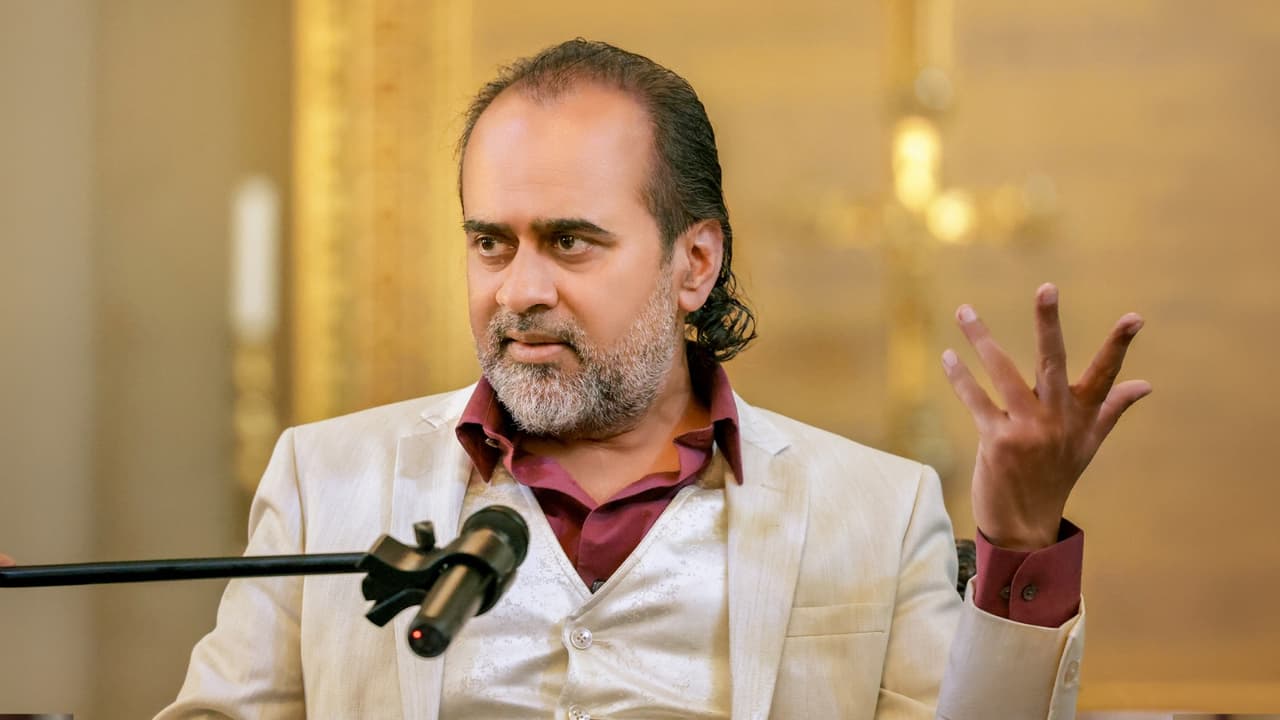

We believe we are born to be happy, and that happiness comes from more and more consumption. We keep consuming, and the lonely, anxious, restless feeling keeps returning. A sage, the talk says, has nothing to tell anyone who claims to be already fulfilled. The only question put to us is blunt: have all these objects and ideas worked on you? If not, why not be honest enough to discard them, instead of endlessly rolling on a flat plane? What could we learn by looking at the one who keeps trying?
We have all put down a book that could have helped us, or dozed off halfway through something that mattered. A man who could not keep food down was given medicine, and he threw that away too, since it went in by the same route. Most of us strike a similar deal: we move into a place that stinks and, within a week, call the smell normal. Show our fifteen-year-old self the life we lead now and they would scoff. What would change if we admitted we do not like our condition?
Research has shown that loneliness is found throughout the society, including among people in marriages along with other strong relationships, and those with successful careers. As a subjective emotion, people experience loneliness even when surrounded by other people.

Love is great. Love is necessary. Love is beautiful.
But what is love?
For most of us, love is the greatest excitement and comfort—and also the greatest suffering. Whether love has become a problem or something you cherish the most in your life, please go deeper into the matter. Know…

Spirituality is about belonging to existence. Not belonging to a narrow household, or caste or ideology. All these are boundaries. So, wherever there are boundaries, there is violence. Wherever there are boundaries, there is also the fear of being small, powerless, limited. The really non-violent one is at home, everywhere and in every situation. Non-violence is not about following duties. Non-violence is an action in clarity and love. That alone is non-violence.

Questioner: Namskar Acharya ji. Pardon me for not remembering exactly but in one of the shivirs where we had read ‘Gospel of Sri Ramakrishna’ to come to terms with this expression called ‘Adhikar Bhed.’
So therein Ramakrishna was saying that, “now in modern times there cannot be any Adhikar Bhed,…

Acharya Prashant: Hell is a place where you get a lot of sympathy, consolation, condolence, and commiseration. You're told that we agree that you are in a miserable state. Your neighbor comes to you, puts his hand on your shoulder, and with a grave face tells you that you are…

Acharya Prashant: Desire means that you are not alright with yourself and you want something else to happen, correct? So, we are anyway not living for ourselves. We are rather living to change ourselves. And are these not two very different things? If you are living for yourself as you…

Acharya Prashant: The spiritual soldier, the religious warrior has to be extremely intelligent. You could go to the extent of saying that he has to be cunning in the service of Truth; I’m choosing this word with all deliberation.
He has to be cunning in the service of the Truth;…

Questioner: I have a question on an excerpt from you.
“Aloneness is not about being free of others and living without others. Aloneness is to live without oneself. Aloneness does not have much to do with the so-called others; aloneness has everything to do with the one called oneself.”
I’d…

Acharya Prashant: Everybody in his own personal way is seeking fulfillment and that is love. If you are young you may seek fulfillment in somebody's body, if you are middle-aged you may seek fulfillment in wealth and prestige, if you are old you may seek fulfillment in security and property…

Acharya Prashant: A quiver full of the best of arrows but no bow, how do you fight the battle of life? Can you imagine the amusing as well as tragic situation of the person who has a great arrow without a bow? He will be sharpening and sharpening his weapon,…

Questioner (Q): I had been part of the last Delhi Camp, IIT Delhi Camp. During those three days, I have seen that you have spoken to the participants continuously for 6 hours, then later in the evenings, with hostel students, for another two, to three hours till 2 a.m. in…

Laugh with no care at all. Why take oneself so seriously? What hurt, what wound can be so big? When we fully well know that the only thing that really is the Truth. Can there be two truths? The truth and the wound. The wound has to be a lie. But it will continue to pretend to be the truth as long as you avoid looking at it. The more you look at it, the more you will see that the wound is just some kind of dressing up that has been needlessly done.

The word for a Guru does not really exist in the English language. So, they have borrowed Guru itself, Guru. But they have borrowed the word Guru and rather misunderstood it and misapplied it. So, anybody who seems to be an expert at anything, can be justifiably called a Guru in the English language. Now that's not the proper usage in spirituality or in Sanskrit.

Questioner (Q): Good afternoon, Sir. I have a doubt. In the market, there are a number of Bhagavad Gitas available. Somebody told me that there are eighty varieties of the Gita. Even though the slokas are the same, from what I have seen, the explanation was not making sense. In…

The hurt that you have received is a result of your own lack of understanding about the nature of life. This is an opportunity to understand life. It is an opportunity to not let the previous mistakes be repeated.

Acharya Prashant: If you look at knowledge that man has gathered in various fields, you will easily see that all of man’s knowledge is related to man’s desire. Man does not try to gain knowledge in fields that have absolutely no connection with man’s fundamental desires.
Man desires, man gets…

The world is like an open book to the one whose eyes are open; if you cannot read the world, then you have to look at yourself first, then you have to be mindful of your own condition. Read more...

Acharya Prashant: Observing the daily ordinary actions of the mind, that is the only way. Observing it as an impartial observer. There is no other method that is going to work because all other methods are ‘isolations.’ The method does something to life. The method excludes life; the method…

Acharya Prashant: You have to ask yourself what your primary identity is. If your primary identity is that of the body, then do what the body commands you to do. Good. The body has an inbuilt software of its own, and it’s a self-improving software. Its capacity to keep improving…

Questioner (Q): I have been suffering from a type of OCD (Obsessive Compulsive Disorder) called somatic OCD for the last two years. I was in constant fear, every single moment, for around two years. I was on sleeping pills and anti-anxiety pills, but I think what helped me a lot…

Maturity is when you can transcend your body, and by the body, I mean the bodily compulsions. That includes your thoughts, your feelings, and everything because they are all bodily. You very well know how chemicals in the body translate into thoughts and feelings. Read more...

Questioner: Acharya Ji, a good discussion happened yesterday in which many seekers participated and shared their understanding of Prakṛiti, Puruṣha and other things.
During the discussion, it was put that Prakṛiti, Puruṣha, Māyā, are mere concepts and that one is pure Ātman, never threatened and…

Acharya Prashant (AP): When you come upon something beautiful, try to understand it. That’s what is meant by watching. The worldly bird, the engaged bird would have surely glanced at her neighbour many times, that’s not really called looking. To look is to understand; do you really understand, or do…

The word for that is ‘Nirmam’ — you are not mine. It is instructive that the word ‘Nirmam’ has a pejorative meaning in layman language. There it means cruel, but Nirmam actually is a beautiful word. Nirmam means not mine. You’re not mine, why must I shelter you? You’re not mine—no. You are no well wisher. You are no lover. I will be nirmam. If this is cruelty, you need this kind of cruelty. It is a very life-affirmative cruelty. Read more....

Questioner (Q): Put in some difficult situations and old locations, I am surprised to see my old tendencies of hurt and dependence are back; they never did leave. I am selfish, difficult and stubborn. Help me Acharya Ji. Help me move ahead of this pettiness. Please!
Acharya Prashant (AP): You…

You didn't have anything special in the past. Had we had anything special in the past, then we wouldn't have come to the state of suffering we find ourselves in today. So, the past is not the solution. You have to realize how things are with you today. You have to look at your interactions with human beings today. You have to see how you relate to your body, to your friends, to your workplace—all these things. And from there, you—you develop an insight, and that insight offers, some freedom.

Questioner (Q): I think this is a follow up question of one of your videos, in which you described physical love, and you concluded with a statement that, “Love has to be learnt”. I wanted to learn more about this and how I can cultivate this kind of love in…

I'm not asking you to be a loner or an avoider of human company. It's just that things must be given their due place — and their due place depends on their quality. If you do not have good quality people around you, there are many other better options. Why not spend your evenings learning to swim or sing? And there could be so many other things. I mean, you would know better.

It’s not going to be right when the patient starts playing the doctor. We need to grow up; and having a kid, in that sense, is an opportunity. You want to be of some use to the kid, then grow up with the kid.

Acharya Prashant: If one is living rightly, then youth is the permanent state of one's mind. The body can grow old. The mind cannot grow old if one has lived rightly. Youth, that way is your default state.
The 'Atma' has no age; it is ageless; the mind has the…

We see the craving for what it is, laugh it off once, and soon it is back. The laughter “is lazy and goes off to sleep,” as the talk puts it. We are taught to chase our dreams, yet desire is only the ego’s agenda under another name. “Want is not sacred.” Suffering cannot be wished away either, but we do have a choice in how we live with it. Can we keep laughing at our own wants, and ask where they really come from?

Vedānta is about the person gaining liberation from both of these—body identification and mental conditioning. So, ideally spirituality should be the woman’s best friend. But practically, evidence has been rather mixed; in fact, evidence has been that religion historically has been on the side of the oppressors when it comes to the women, oppressors of the women. The reason is that religion itself has not been well understood. Religion itself has been a victim of contamination, and when religion is contaminated then religion becomes a tool towards exploitation of women.

Destiny is the inviolable thing. You cannot get rid of it. You have to reach there. So, better choose in favour of your destiny. Now, destiny is something that can, at most, keep waiting till eternity. But you can never dismiss it. So, make a choice in the favour of destiny. Bow down to your destiny, surrender to your destiny. If it has to happen, why keep postponing it? Because that postponement is just suffering. Destiny is love. Destiny is what each of us craves, is crazy for.

There is a search within the human being, always for the greatest, the absolute, and that is what differentiates humans from animals. India was fertile, and there was abundance. You had ample leisure, and in that leisure there was space for intellectual inquiry. The sages and the seers would talk to each other purposelessly. And from that purposeless discussion, from silent observation of life for hours, days, months, and years, came those insights that you today recognize as Indian philosophy.

Vedanta reveals that freedom is impossible as long as the ego seeks to preserve itself. Meditation may bring temporary calm, but real transformation begins only when the false sense of individuality dissolves. Whether through devotion or knowledge, every genuine spiritual path culminates in the complete dissolution of the seeker into Truth. Liberation is not the experience of Truth by an individual—it is the end of the individual who wants to experience Truth.

There is only one Dharma. And that is to attain liberation or peace, to gain freedom from your bondages, to gain freedom from your inner chaos and noise, to gain freedom from your inner falseness. Gaining freedom from inner falseness is more commonly known as Truth realization. It is a euphemism—a very decorated euphemism. It’s not really Truth that is really realized; it is falseness that is dropped.
![Truth Without Apology [Book Launch]](https://cimg.acharyaprashant.org/images/img-1ba7c449-c792-4b5e-b7c3-714d51940a57/30/image.jpg)
This evening in Delhi, a new book steps into the world—Truth Without Apology by Acharya Prashant. The launch takes place amidst seekers, readers, and companions of his work. In times when words are often polished to please and truths are dressed in comforting disguises, Truth Without Apology arrives like an uninvited storm—direct, raw, and uncompromising.

Life comes to us in an unending number of ways and you never know what's going to happen next. We are starved of something that really penetrates the surface. So, it is the intensity that this book brings — arrow-like depth, striking like lightning, immediately, so you don't have a chance to escape away from it. Like a Zen koan: very brief, very effective, and does its work in a snap. You could open just any chapter from anywhere and find it as if it was written just for you.

“The will to live.” “The will to just continue.” That, he said, is the basic human existential tendency. I’m asking, “Don’t animals have that tendency?” At the root of all consciousness; is the will to survive and continue. We don’t want to die; the animals, too, don’t want to die, right? We feel pain, we suffer; so do animals. The reasons might be very different. Often the reasons are, in fact, not too different. Separate a human mother from her baby and you see the suffering. It’s very apparent. Separate a cow from her calf, and the suffering is much the same. Read more...

Kabir Saheb's message questions the very act of searching for fulfilment outside oneself. Whether through religion, relationships, success, possessions, or identity, people keep assuming that what is missing lies somewhere else. The problem is not the destination but the belief that fulfilment exists at a distance. Real freedom begins when the search turns inward, recognising that the seeker and the sought were never truly separate.

Many Indian parents keep their children, and especially their daughters, away from sport, even where coaches and facilities exist. The barrier is often not outside but in the parent’s own ideas: poor returns, uncertainty, and fixed notions of what a girl’s life must be. Blaming our own parents does not help either; our life is now our responsibility. Parenting is a decision of the greatest responsibility, and it begins with self-love. Can we love a child if we cannot love ourselves?

A boy’s face turns black with soot at the train window while his sister cries as the engine starts rolling. Their father says that to reach the destination we must learn to embrace the noise and the soot. We too wait for a day when suffering ends and joy begins, and the waiting only deepens the hurt. But joy lies in the courageous embrace of suffering, not beyond it. Can we look at what we are protecting when we run from pain?

We gladly worship Krishna the cowherd of Mathura and Vrindavan, yet the Krishna of Kurukshetra, who speaks the Gita, is rarely welcome. Much of what we call religion is a request: we pick a favourite deity, place and ritual, then ask for a car, money or a cure. The Gita values rituals done for desire as little as a pond beside the ocean. Popular religion says, "I want, therefore I act." The Gita says, "Know who you are and then simply let things happen." Which of the two do our prayers come from?

True love is not a biological instinct, emotional attachment, or social conditioning. Biology and science explain the body's drives, but they cannot explain the self that seeks freedom. Love is the inner restlessness to move from ignorance and bondage toward truth and liberation. Religion is not rituals or inherited beliefs but this personal journey of understanding. Freedom—not possession or conformity—is the essence of both love and religion.