Our mood is always dependent on others and situations. Results have not been up to your expectations. So now you require a morale booster, some motivating speaker. The moment that fellow is gone, your energy also goes away. But there is another way of living. Deep within myself, I find a point that no external situation can touch. Whatever happens, happens on the surface. That will remain stable, uninvolved, a non-participant. Then you are really free.
The real issue is not about time at all. You are spending time exactly according to your values. Don’t ask how to utilize time. Ask yourself, "Do I know what is truly valuable?" When you are clear about what is truly valuable in life, all your time will be devoted to that. Become clear. Know what is truly valuable.
Joy is not something that you can think of as something wonderful. You cannot go somewhere and say that, looking at a mountain, I experienced joy. Joy is something which is always there, obfuscated; hence, it is the absence of obfuscation. A complete absence of all rubbish is joy, and that rubbish includes both pleasure and pain.
You've heard there's competition and you must plan to survive, but without understanding 'career' or knowing that a mind that is always competing becomes diseased. This fear is also implanted by others. It isn't yours, yet you've imbibed it. Understand the mind, the world. Then you will know what is worth doing.
Fighting Duryodhana is Dharma. Fight Duryodhana in the way you can, that is swadharma. Dharma is the same for everybody, but swadharma varies according to your physical, social, temporal conditions.
But remember that swadharma can never be in contradiction of Dharma; swadharma will always be something…
1
Truth enlightens, so it is attractive. Maya enthrals, so it is sometimes even more attractive. Where to go — that is the battle.
Excerpts from Articles
Justice Without Boundaries: Why Compassion Cannot Stop at Species
Oppression should not see caste, gender, creed or colour, and it should not see species either. The moral threshold is sentience, not intelligence. An animal feels pain as fully as a human does, whether or not it can explain its suffering.
Animal cruelty: Who deserves mercy, and who doesn’t?
Violence begins long before the knife or the slaughterhouse—it begins with the ego, the one that draws boundaries, seeks justification, and decides who deserves compassion. Laws and reforms may reduce suffering, but they cannot end violence while the ego remains intact. When the ego dissolves, exploitation ends naturally, and compassion no longer depends on regulation or moral boundaries.
ज्योतिष कितना सच है? कुंडली, ग्रह-नक्षत्र: इनका क्या अर्थ है?
वेदांत को केवल इसलिए सही या श्रेष्ठ नहीं माना जा सकता कि वह किसी विशेष परंपरा से आता है। विज्ञान जहाँ भौतिक जगत की वस्तुनिष्ठ जाँच करता है, वहीं अद्वैत वेदांत सीधे मनुष्य के ‘मैं’, उसके दुख, बंधन और मुक्ति की पड़ताल करता है। इसकी कसौटी वैज्ञानिक प्रमाण नहीं, बल्कि अपने जीवन में इसकी सच्चाई को देख पाना है। किसी दर्शन को मान लेना नहीं, बल्कि उससे स्वयं को मुक्त करना ही उसका वास्तविक उद्देश्य है।
You Don't Understand the Bhagvad Gita, But You Still Claim That You Love Krishna?
The Bhagavad Gita deserves reverence not because of inherited beliefs about its author, but because of its power to dissolve falsehood and reveal Truth. Real devotion is not ritual or blind faith—it is understanding, inquiry, and living the wisdom of the Gita. Through sincere study, one discovers the true meaning of Krishna, making the Gita the most authentic path to knowing and worshipping Him.
कई तरह के डर—अकेले पड़ने, छवि खोने या छोटा समझे जाने—की जड़ अक्सर अतीत में बनी पहचान और कहानियों में होती है। शरीर की हाइट जैसी चीज़ों को समस्या मानकर उनसे जूझने के बजाय उनकी अप्रासंगिकता को समझकर आगे बढ़ना चाहिए। अतीत को दबाने से मुक्ति नहीं मिलती; उसके करीब जाकर अपनी स्मृतियों, धारणाओं और पुराने पैटर्न को निष्पक्षता से देखना ज़रूरी है।
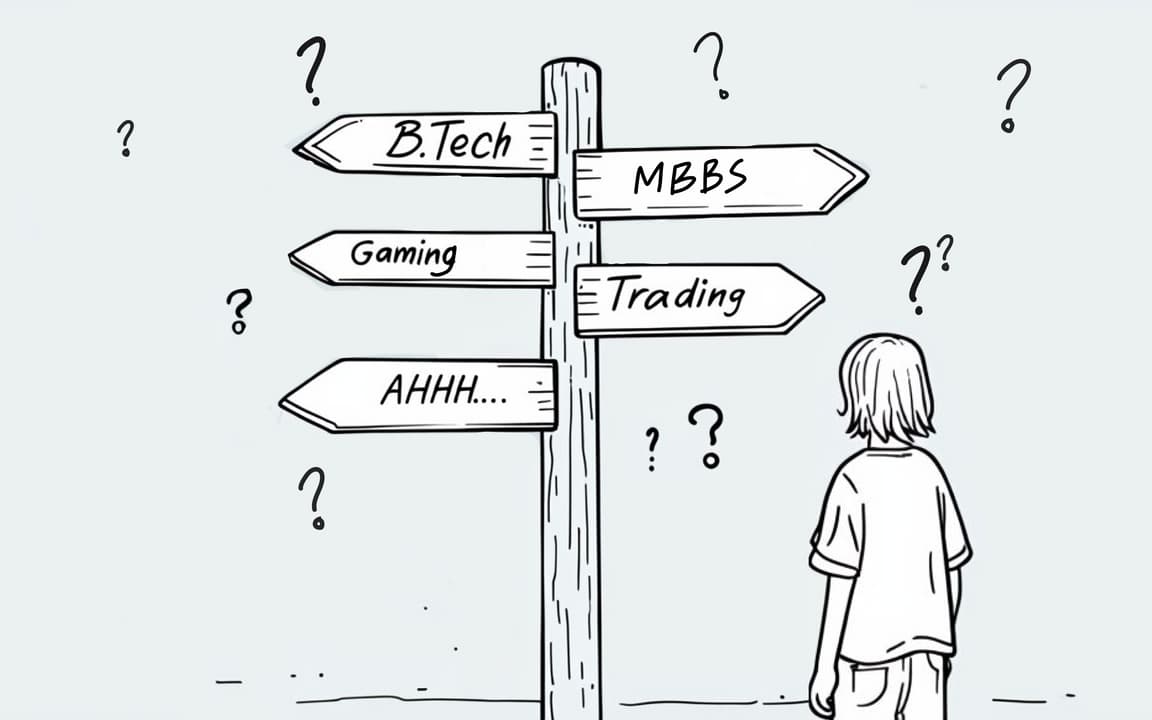
Struggling to choose between a secure job and the path you actually feel drawn to? This isn't really a question about careers. It's about why other people's opinions have so much power over you in the first place. Real clarity doesn't come from finding the 'right' choice. It comes from honestly looking at your own fear, again and again, until it stops running the decision for you.
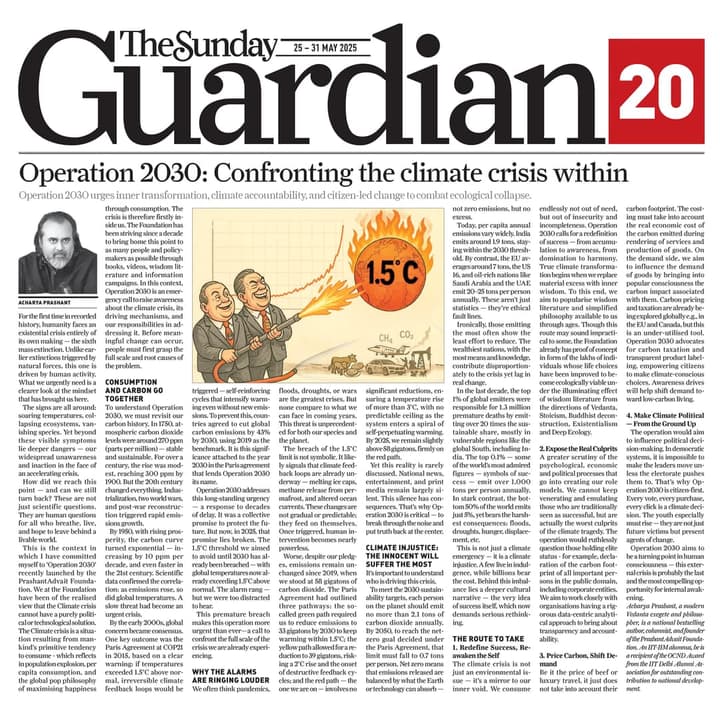
Climate change is more than an environmental crisis—it is a crisis of human choices. Our patterns of consumption, consumerism and endless pursuit of more are putting increasing pressure on the planet. But meaningful change does not necessarily begin with new technology or stricter policies. It begins with a deeper question: what are we willing to change within ourselves?
Love has to be seen as the need of the mind, the attraction of the mind towards Peace, towards rest. All attraction is there only with a desire; the hope is of fulfilment. So when the mind says ‘love’, along with love it has a picture of love. How do you know that somebody loves you? Only if he behaves according to set patterns. When real love comes to us, we close our gates to it. Love is not with a particular man or woman; Love is the natural state of the mind.
Your only obligation is your liberation. These are just loveless social customs and economic structures where a woman is seen as a factor of production that produces babies. There’s no need to go to the husband’s place or even stay at your father’s if you are unloved and unwanted. The world is a vast opportunity. Live anywhere, stay anywhere, do whatever is the right work, and fly free—simple.
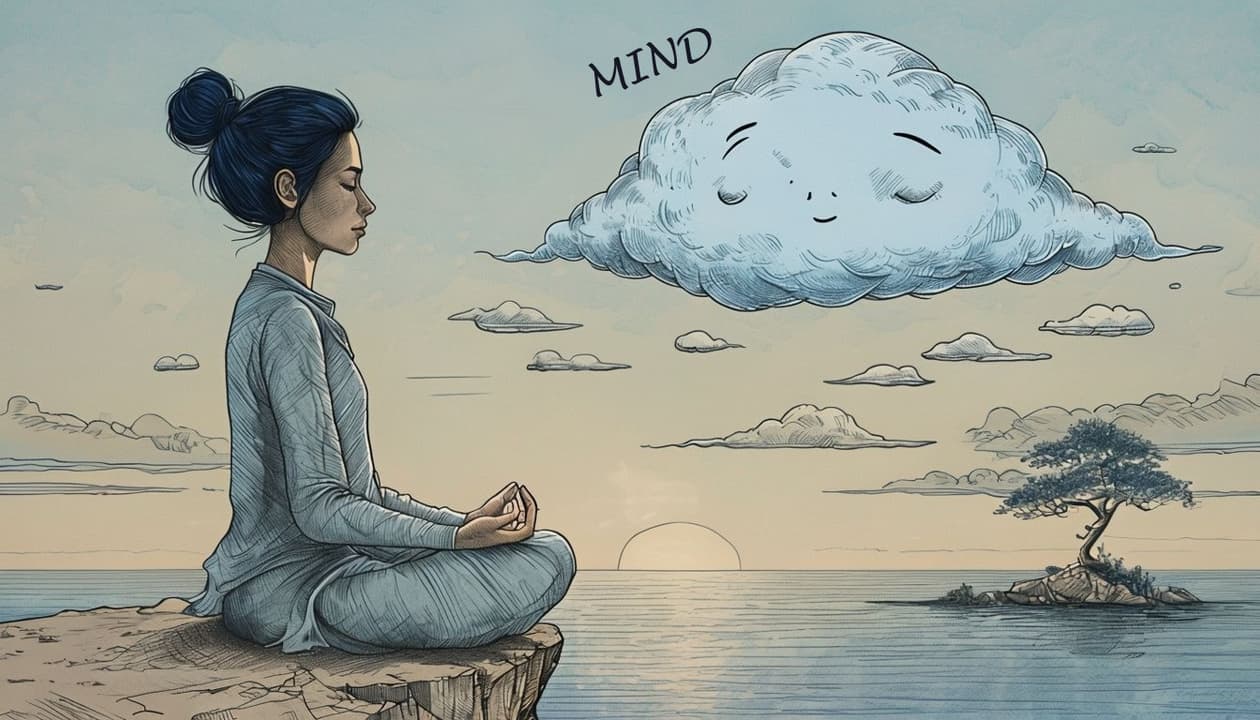
Mind control is not about suppressing the mind; it is about supporting it to take the right route and reach the right destination. The mind does not really need control; it needs peace. But the mind is a little foolish. If the mind were not foolish, why would it leave its peaceful state, which is its natural state?
What do you call as ‘bipolar disorder’? Is this disorder fundamentally not present in everybody? Mind lives in dualities; that is what you call as the ‘poles’. Sitting on one pole you feel attracted to the other. There is always a need to change and become something else. Won’t it be great to firstly understand the mind itself–its urges, its actions? There has to be determination to go into the route of the swings, desires and urges, to be free and well. And it is quite possible that the right medication need not be a pill.
Yada yada hi dharmasya glanirbhavati bharata
abhyuttanam adharmasya tadaatmanaam srujamyaham
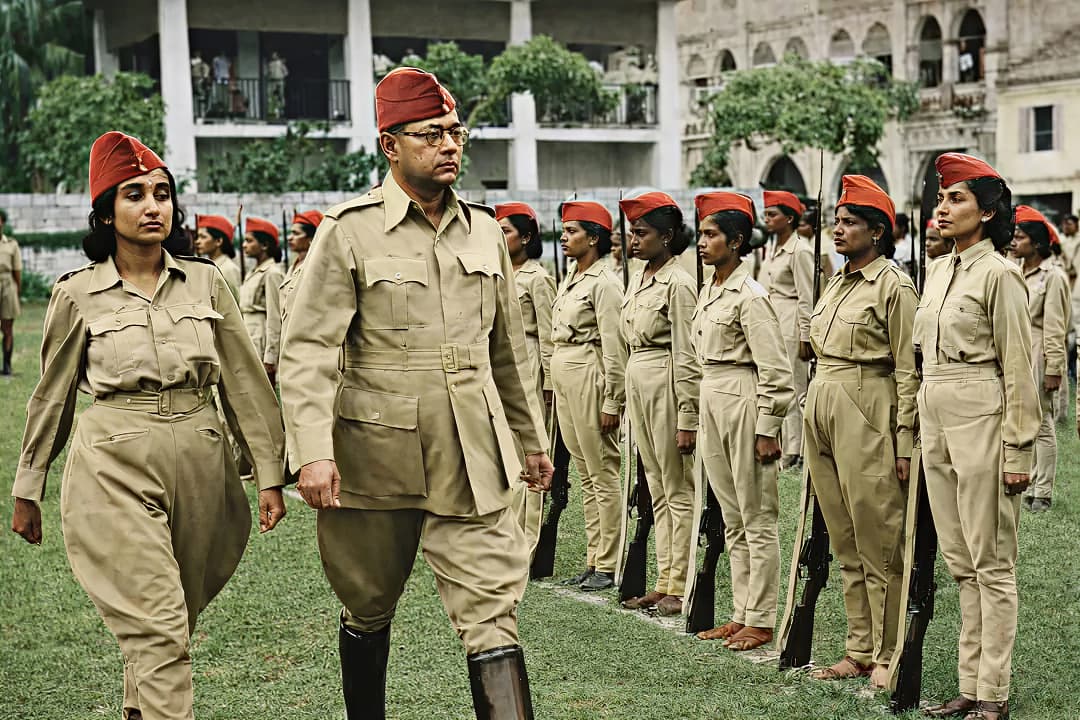
There is no revolution possible without the Gita. That’s the reason why even those who are not remembered particularly for their spiritual inclination, people like Subhash Chandra Bose, even they founded their core on Gita. What kind of revolution can you do if it’s the body that’s always at the top of your mind? You require a Gita to tell you that this body is perishable and would anyway go. Gita only teaches you, "Endure and fight."
There is enough scientific evidence that says if the average global temperature exceeds 1.5 degrees centigrade above pre-industrial levels, it could trigger massive feedback loops — self-sustaining and irreversible climatic phenomena. There is evidence that the average global temperature rise has already reached 1.7 degrees centigrade. This operation is a voice against an impending catastrophe — a catastrophe that the younger generations are going to face the brunt of.
The tiger chases the buffalo calf and brings it down. Does that disappoint you? No, because that was expected. Similarly, expect animal behavior all the time from everyone around you, including yourself. Everything we do comes from the jungle, so don’t be disappointed. Disappointment always arises from expectations. You really have to strive to be someone who is not an animal. And the first step in that striving is to address your own inner animal.
Overthinking trivial matters stems from inner emptiness. Fill your life with something genuinely important, a worthy cause, a meaningful pursuit. When you're truly immersed in what matters, random anxieties lose power. Develop strong inner immunity through purpose, not by fighting thoughts. Like Bhagat Singh, marry yourself to something noble. Immersion in the essential is the best meditation and antidote to mental suffering. Without importance, life becomes scattered doing nothing in particular.
The kinds of meanings that we associate with love are actually quite demeaning. It’s not your own self-interest that you think of in love. Love is not an emotion; love primarily is a spiritual understanding. Saint Valentine would not be quite pleased with the meanings we have associated with his name and his day. The saints laid down their lives so that our faulty definition of love could be corrected, and that is probably the best use this day can be put to: correcting the definition of Love.
23
We must ask why most marriages are based on superficial factors like appearance, caste, or family approval rather than deeper considerations. When marriage is based on a pursuit of security rather than wisdom and awareness, it can lead to dependency and exploitation. While legal reforms are necessary, the ultimate solution lies in societal transformation. And societal transformation means reforming the individual to have mental depth — self-knowledge is the only path.
We are all born married to our desires, despair, and desperation. A woman or a man is not responsible for making us feel bonded or suffocated. It is the feeling of attachment, loneliness, and dependency that troubles you. Get rid of these, and then, if someone comes into your life, it’s alright. If you feel like marrying them, do it; if not, don’t.
When it comes to real happiness, there is no rule that a single woman would be happier than a married woman, or vice versa. Even sharing dinner or being friends with someone means you're not truly single. We must have the sense to relate properly. If you can connect with someone who brings beauty and understanding to your life, nothing like it. But that alone should be the objective of the relationship.
When you don’t want to do something, you feel lazy. All your wants emanate from your conditioning. Have a sharp look at what you call your ‘wants’. Our ‘wants’ are just an expression of how we have been programmed; they are not our ‘wants’ at all. Wanting and realizing are very, very different dimensions. Act on the basis of your intelligence, on the basis of your realization. Laziness is just a symptom of the effects of conditioning.
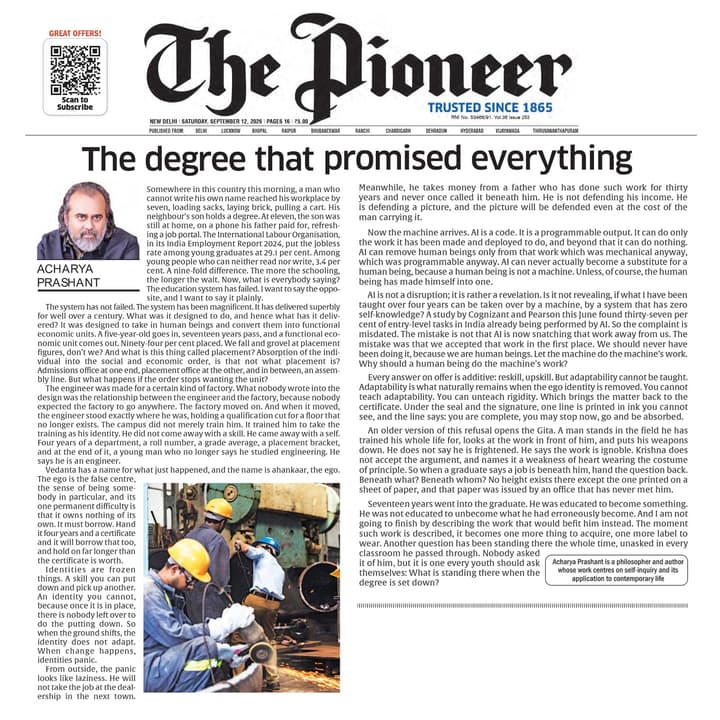
India’s educated youth face a strange paradox — the more qualified they are, the longer they may remain unemployed. But the problem runs deeper than a changing job market. Degrees often become identities, making it difficult to accept work or change that does not fit the image one has built of oneself. In the age of AI, the real question is not only what new skill to learn, but who remains when the old label is set aside.
17
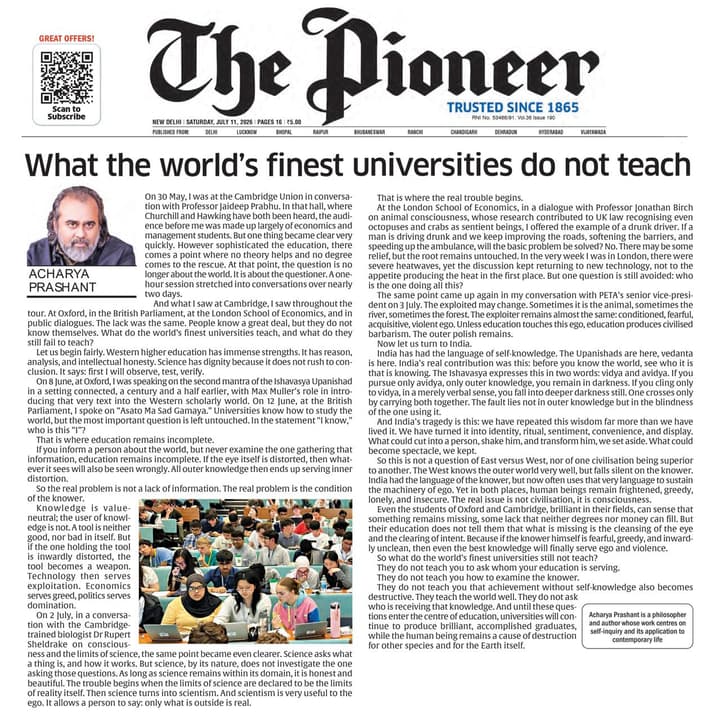
Modern education teaches science, technology, economics, and the external world with remarkable depth, yet often neglects the one who acquires that knowledge. Without self-knowledge, education serves fear, greed, and ego instead of truth. Lasting solutions to humanity's crises require combining outer knowledge with inner awareness. True education liberates consciousness by examining both the world and the knower, not merely producing skilled professionals.
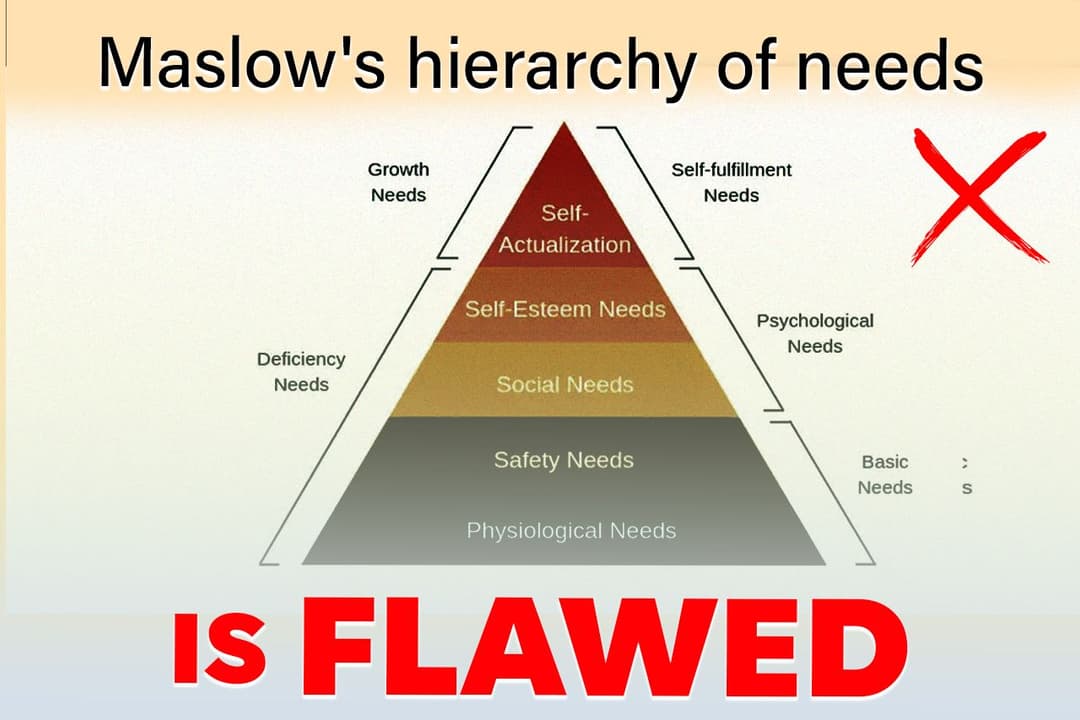
The way Maslow constructed his pyramid is good, but not very exact. The ladder goes like “Food, security, self-esteem, and only then self-actualization.” No, that is not how it actually is. Self-actualization is not the top of the pyramid; it is the foundation of everything that you do; it is the foundation of your activity even when you are fulfilling your lower needs. Whatever you do, your entire universe, all your deeds, thoughts, purposes, motivations—all arises for the sake of actualization.
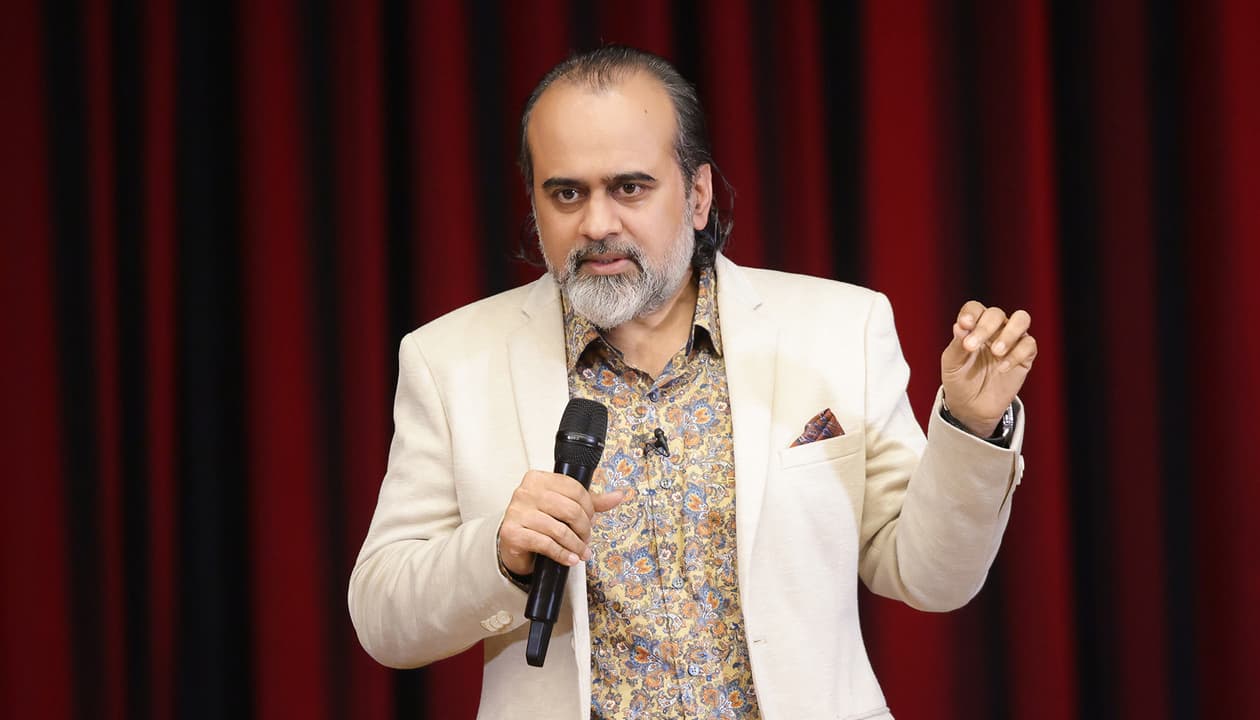
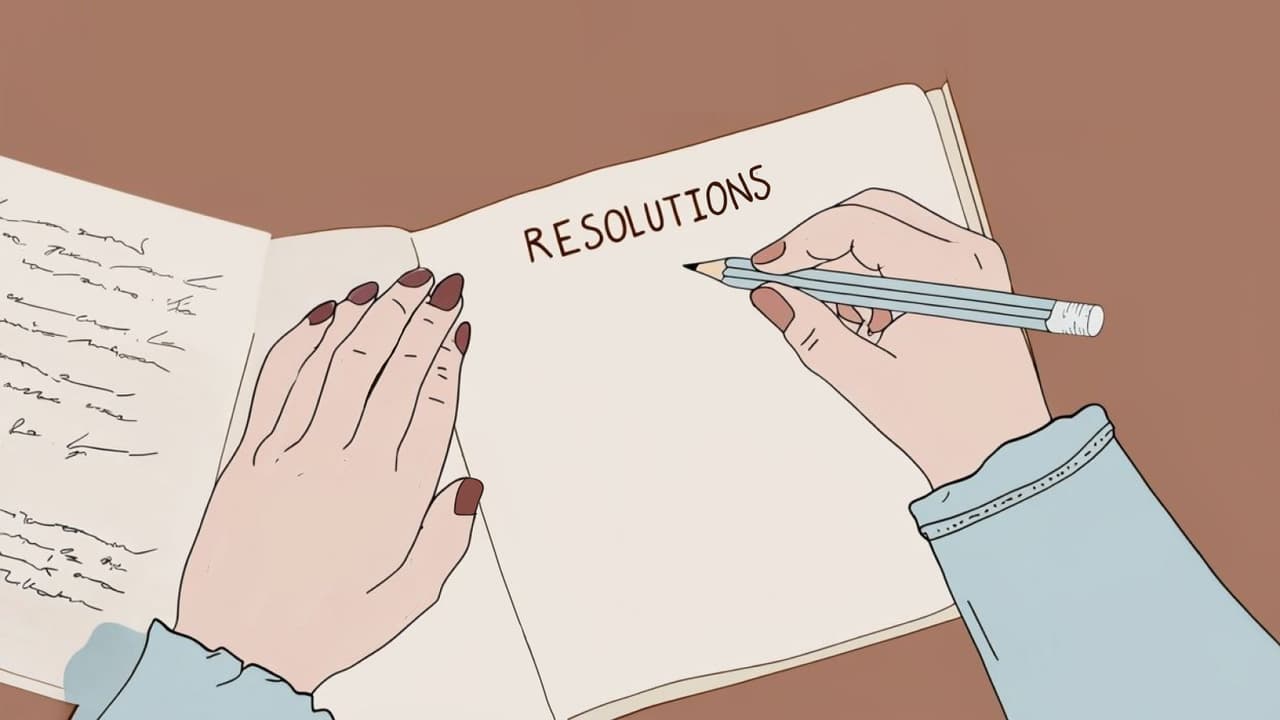
Man has always been attracted to the new. But attraction alone is not enough, especially when one is resistant to leaving the old ways. 'New' comes with an opportunity to change, and equally with a responsibility to act upon that change. Bridging this gap between attraction and action, Acharya Prashant guides us with practical resolves that possess the potential to bring real development—if followed honestly!
When it comes to healing the discontentment within, we believe that one object is better than the other. We are desirous of happiness and scared of sadness, but we can’t see that neither can give us what we really want. Feelings and experiences are not to be taken so seriously. Don’t resist tears, cry gently, without suppression. Similarly, laughter can be organic, beautiful in its purposeless flow.
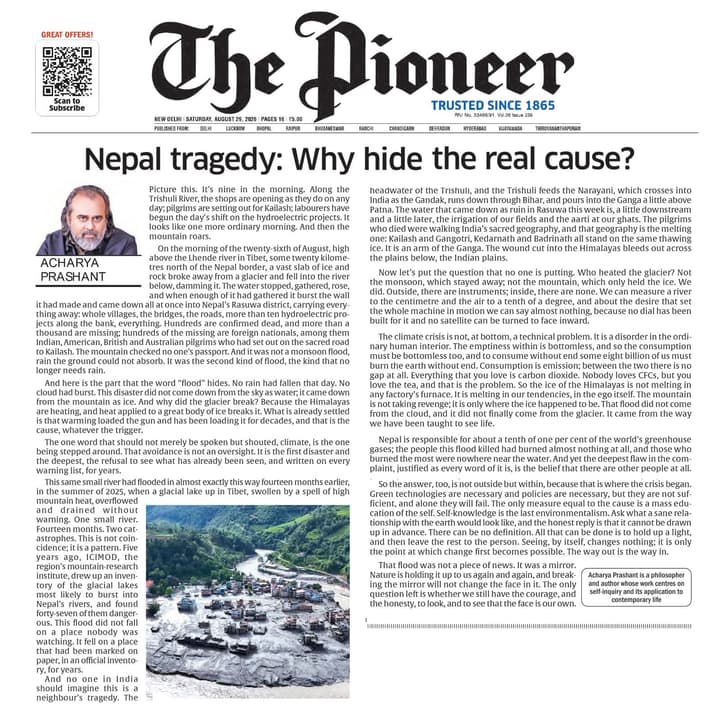
The devastating flood in Nepal was not merely a natural disaster but a warning about the climate crisis. A glacier collapse triggered the flood, while rising temperatures, melting ice, thawing permafrost, and reckless development have made such disasters increasingly likely. The deeper cause lies in humanity’s endless consumption and desire. Real environmental action therefore requires not only technology and policy, but self-knowledge and a fundamental reconsideration of how we live.
We love saying, 'Yada-yada hi dharmasya – whenever there is evil, then Krishna comes.' The Lord does not physically drop from the heavens. The metaphor must be understood. It simply means that whenever the ego inflates, it results in suffering, and suffering itself calls for its cessation. This call for cessation of suffering itself is the coming of the Lord.
10
Violence begins long before the knife or the slaughterhouse—it begins with the ego, the one that draws boundaries, seeks justification, and decides who deserves compassion. Laws and reforms may reduce suffering, but they cannot end violence while the ego remains intact. When the ego dissolves, exploitation ends naturally, and compassion no longer depends on regulation or moral boundaries.
We talk about the 10, 20, or 100 indulging in active rioting but not the thousands and lakhs passively supporting them. If those thousands disappeared, would these few rioters survive? Had they known that displaying perverse attitudes in religion’s name would lead to social rejection, would they still dare? We fight because we are animals from jungles, sharing instincts with beasts. We require the Bhagavad Gita to transcend our animal disposition. Otherwise, we will remain violent.
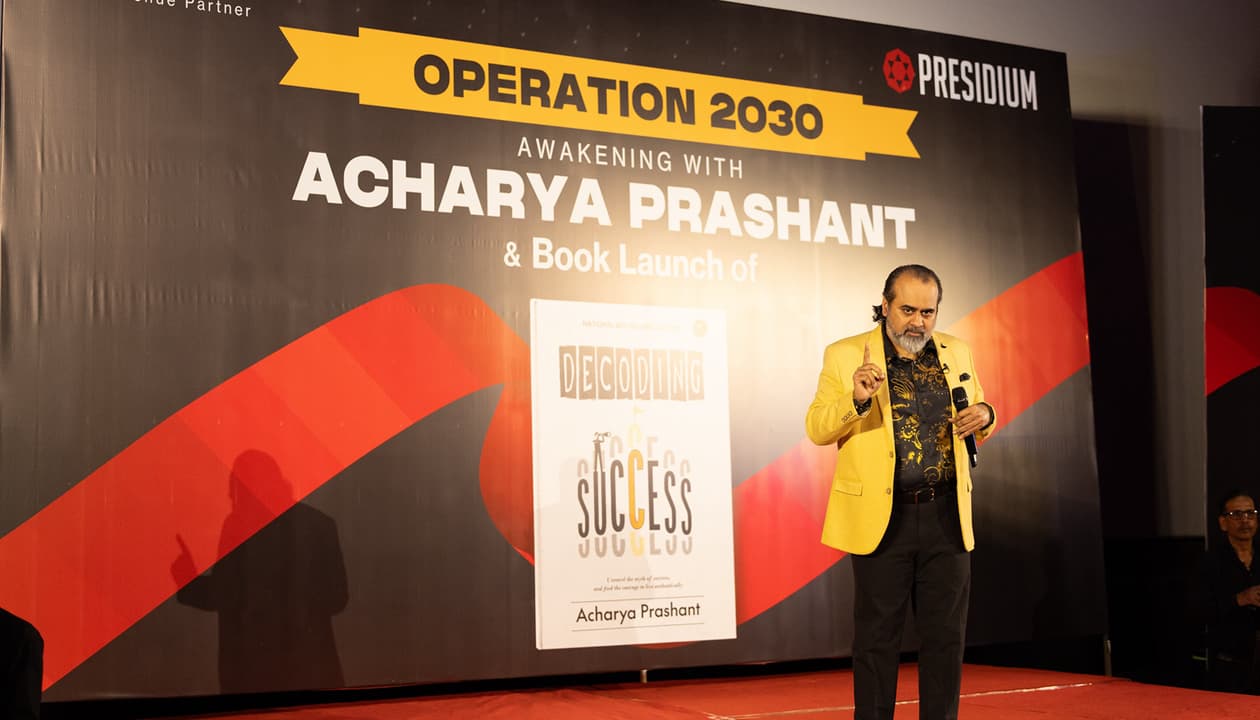
Operation 2030 aims to do four things: Redefine Success—From accumulation to awareness by popularizing wisdom literature; Expose the Real Culprits—Question those holding elite status; Price Carbon, Shift Demand—Influence the demand of goods based on their carbon impact; and Make Climate Political—Every vote, purchase, and click is a climate decision. It is a call to confront the full scale of the crisis we are already experiencing.
Superficiality offers pleasures. Superficiality offers cheap salvation. Therefore, it is easy to be attracted to superficiality. On the other hand, true spirituality challenges you to pay a heavy price. So, you see, all this knowledge has existed since antiquity. Yet there are people who do not want to read the Gita.
7
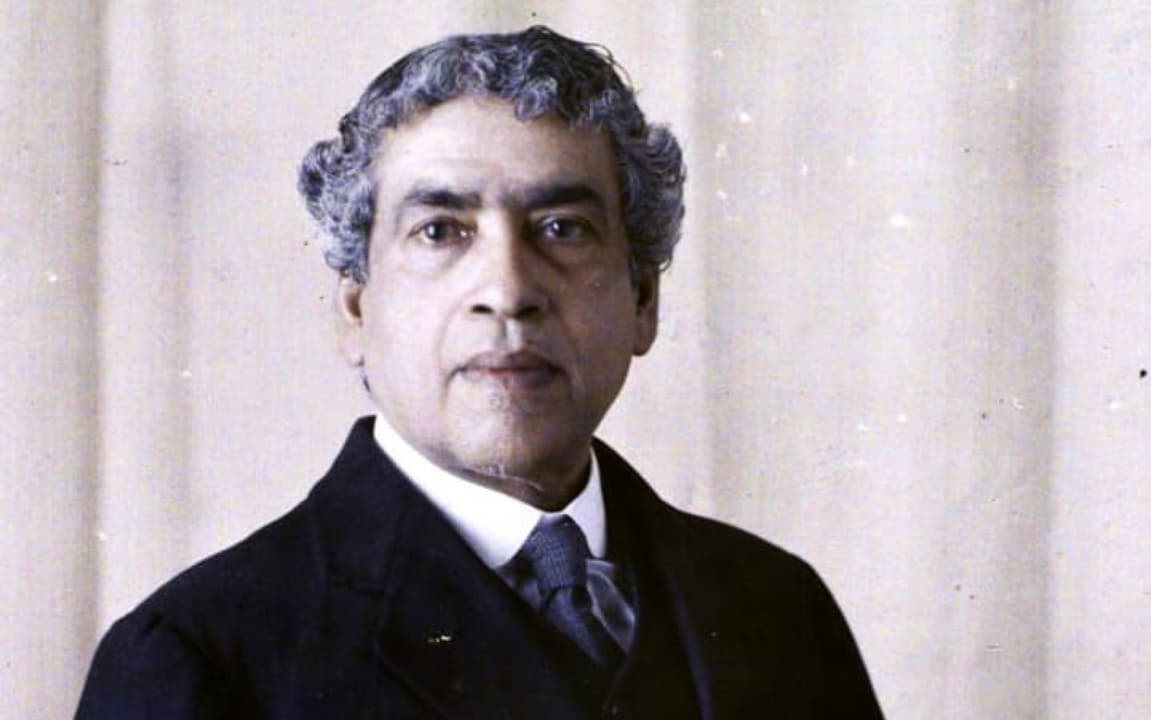
Bose's contribution to radio technology was kept in the dark and came to light only recently. Francesco Marconi, grandson of G. Marconi himself, in one of his lectures, addressed Bose as the inventor of radio, and his grandfather as its propagator. Additionally, the international organization IEEE gave Bose the title of ‘Father of Radio Science’. Many scientists believe that Bose deserved two Nobel Prizes – one for his research on radio waves and the other for his semiconductor research.
You ask about balancing priorities, but "balance" is a very violent word. It denotes competition. ‘Or’ denotes either this or that — this is conflict. Life does not proceed like this. A polymath, like Leonardo da Vinci, mastered many fields. There was no ‘or’ in his life. His life was full of ‘And’. Most of us live a life of poor man. Life can be very, very, very rich. But not when you say “Either this, or that.” Life is rich when you say, “And, And, And.”
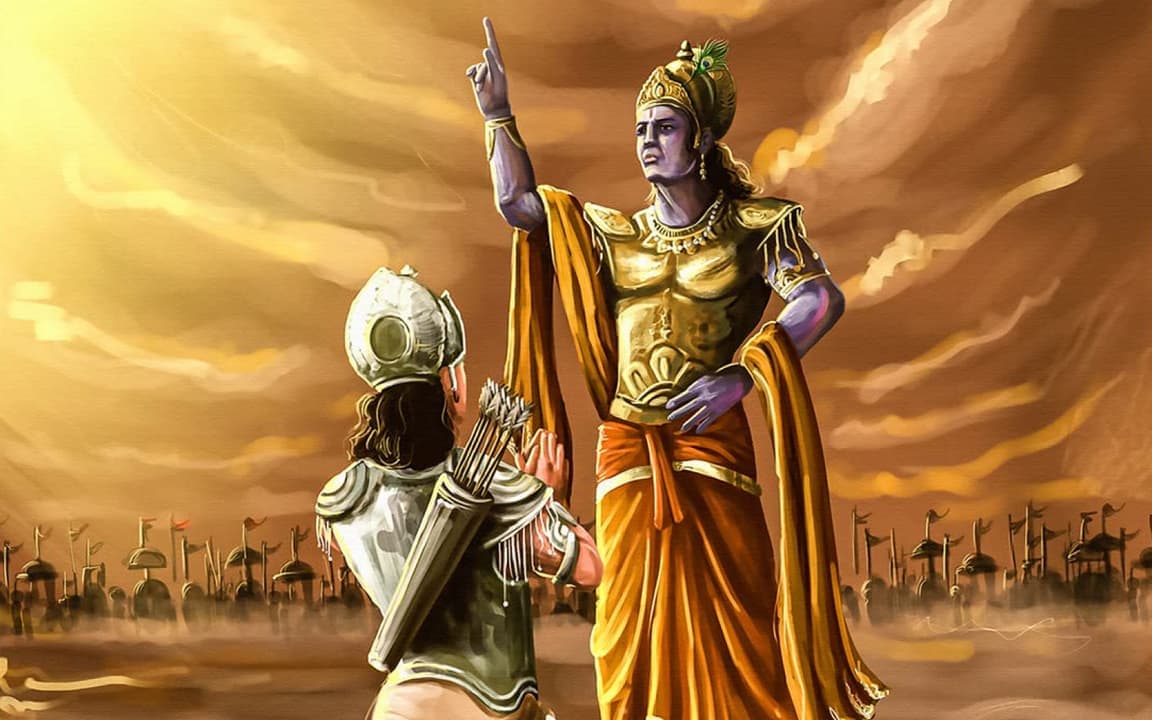
The Gita is useful because its setting is extremely relatable. Just like us, Arjuna does not know himself—he's a victim of multiple identities and all kinds of conditioning. Therefore, the Gita is about letting Arjuna know who he is, and this illumination enables him to do what he must. So, first of all, see that you are Arjuna. Then, step by step, verse by verse, there will be some resolution.
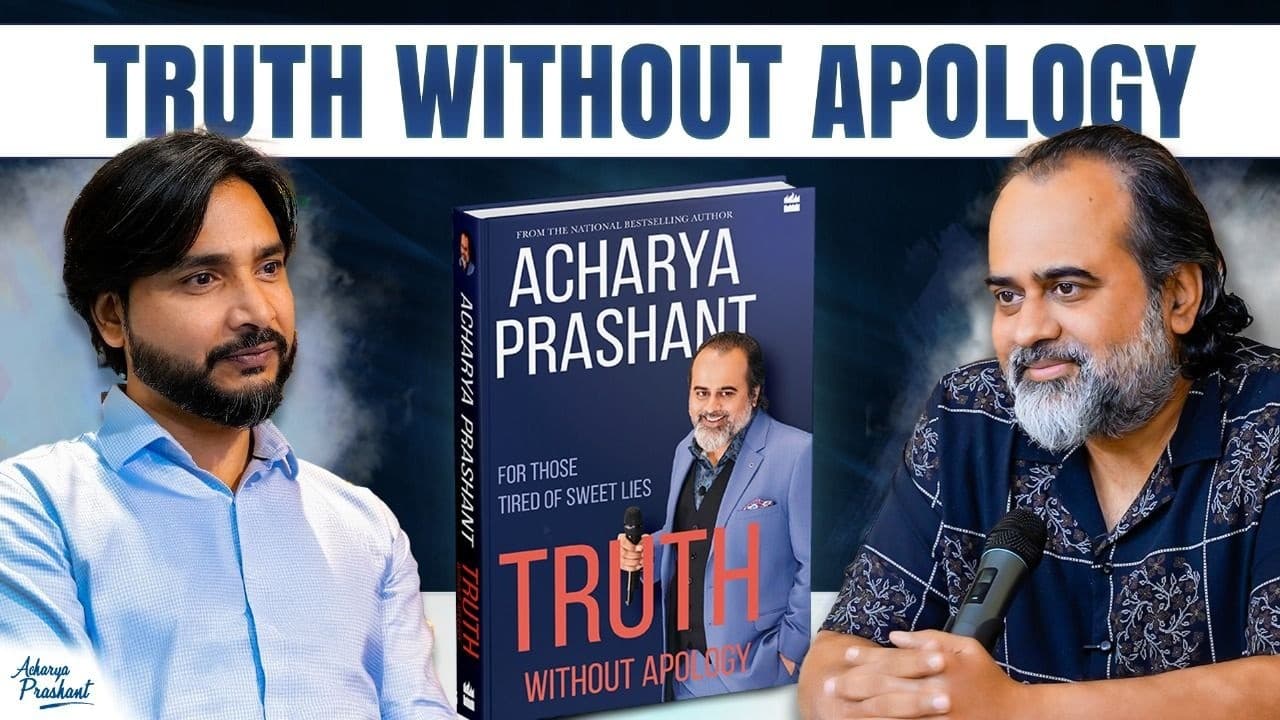
Life comes to us in an unending number of ways and you never know what's going to happen next. We are starved of something that really penetrates the surface. So, it is the intensity that this book brings — arrow-like depth, striking like lightning, immediately, so you don't have a chance to escape away from it. Like a Zen koan: very brief, very effective, and does its work in a snap. You could open just any chapter from anywhere and find it as if it was written just for you.
Your responsibility is to be better than yourself, not to compare with others. Ask, “How much better am I than yesterday?” You are on your own journey. Competing with others is neither wise nor possible. Focus on where you started and where you are today. The real battle is not with others but with yourself. The question is always, “How far have I come?” That’s the essence of wisdom and bravery—being your own best self through constant self-improvement.
As long as one is alive, habits will remain. Nature gave us habits for the sake of efficiency. In habits, there is no decision-making involved. You just do it. So habit is not a problem, the problem is that we are habituated in the wrong things. Be habituated towards the Truth. Towards Freedom. Be habituated towards keeping it simple and straight. Let these be your habits.
When you do not have a sense of what is worthy, little things will invade your mind, like germs constantly attacking you. There’s no way to keep them away. Give all your inner space to something that is beautiful to you. Let there be no vacancy. Get a headband — No Vacancy! Or wear a t-shirt — No Vacancy! Occupied. Engaged.
7
India’s deepest contribution is not culture, ritual, or tradition, but the inquiry into the self. Laws, technology, policy, and economic progress can improve external conditions, yet they cannot resolve the inner hunger that drives conflict, consumption, and ecological crisis. Real change begins with self-knowledge, honesty, and awareness of the one who chooses, desires, and acts. Without understanding the self, progress remains incomplete, no matter how advanced society becomes.
It's difficult to be born in India and have a passion for ice hockey. Few kids aspire to make a career in rugby or ice hockey, while many are passionate about cricket. Passion arises from surroundings, not internally. It may present itself as something internal and heartfelt, but it is as external as peer pressure.
2
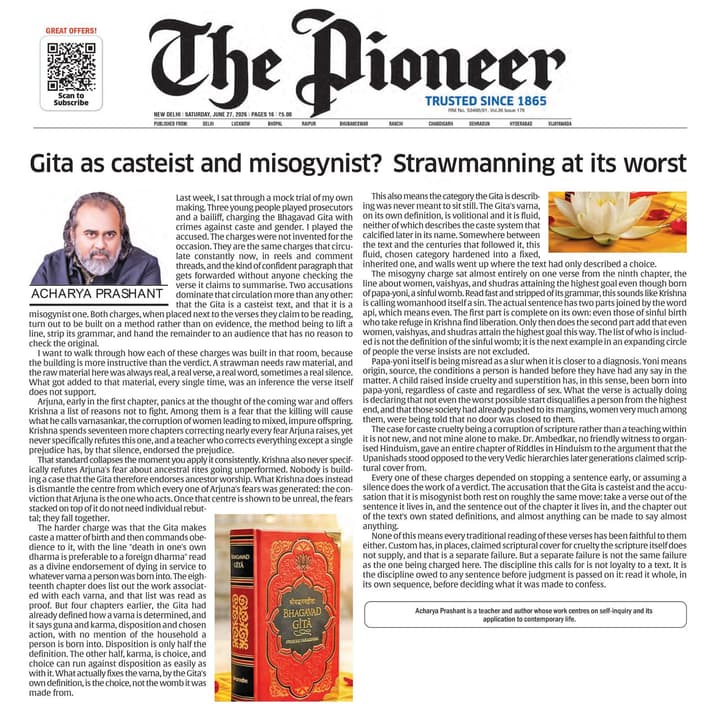
The Bhagavad Gita is often accused of supporting caste and misogyny through selective quotations that ignore context, grammar, and the text's central teachings. A closer reading shows that its emphasis is on inner qualities, conscious action, and spiritual equality rather than birth-based hierarchy or gender discrimination. Misinterpretations arise when isolated verses are detached from their broader meaning, while the Gita consistently points toward self-knowledge, freedom from ego, and the universal possibility of liberation for every human being.
Love is great. Love is necessary. Love is beautiful.
But what is love?
For most of us, love is the greatest excitement and comfort—and also the greatest suffering. Whether love has become a problem or something you cherish the most in your life, please go deeper…
Women, the way they are brought up in our country, anyway do not have much to lose. If I do not have much in life, and then there arrives a person who is attractive, earns well, is strong, then why, as a woman, will I not go for him? Your body is impelling you to take a particular decision, and you don't even know that it's coming from the body. The only solution is understanding, real, deep, honest observation of life. And this you could also call spirituality.
Good spirituality is good economics. We do not know what to purchase. We do not know what really is valuable, even in the material domain. The punishment of not being spiritual is that you lead a very bad, a very ruined worldly life and that includes an economic life, a ruined economic life. It is not merely the person, even nations, actually the entire world suffers when the one making the economic decision is spiritually bankrupt.
6
Drop the center of confusion, come to the center of clarity. Drop what the masses practice, come to the direct route of self-realization. That’s what it means.
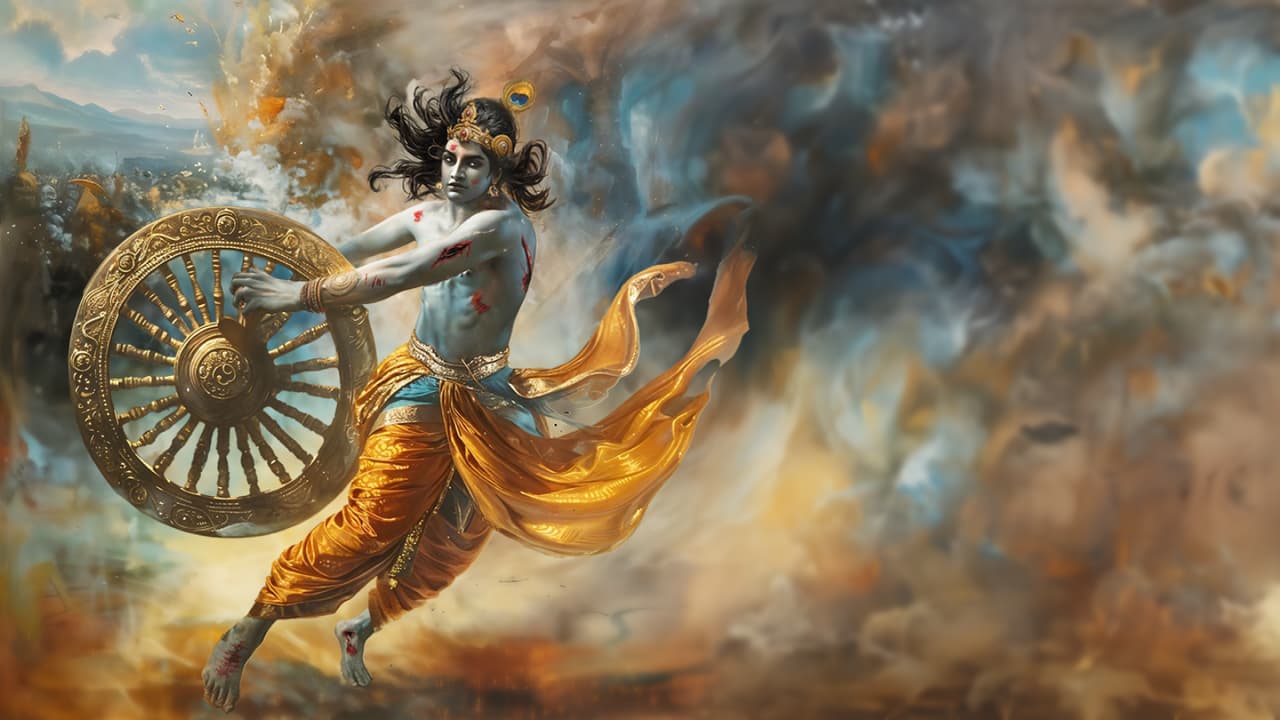
We have images of peace. When you look at the image of Shri Krishna rushing towards Bhishma to attack him personally, going beyond his brief as a charioteer, you don’t think that this is peace. You feel as if Shri Krishna is being violent. The expression of peace often looks very much like violence. Truth, Peace, Love, Freedom — these must never be searched in ‘actions’. Peace and Truth are no different. Peace is about the right action.
Ghosts and gods and goddesses and all the stories we have read about this and that, obviously, they come from our own minds. Spirituality isn't about God; spirituality isn't about believing in anything. Neither ghosts nor gods. Not only does it say, ‘Do not believe in ghosts, do not believe in God,’ but it’s also so brutally honest that it says, ‘Do not believe even in yourself.’
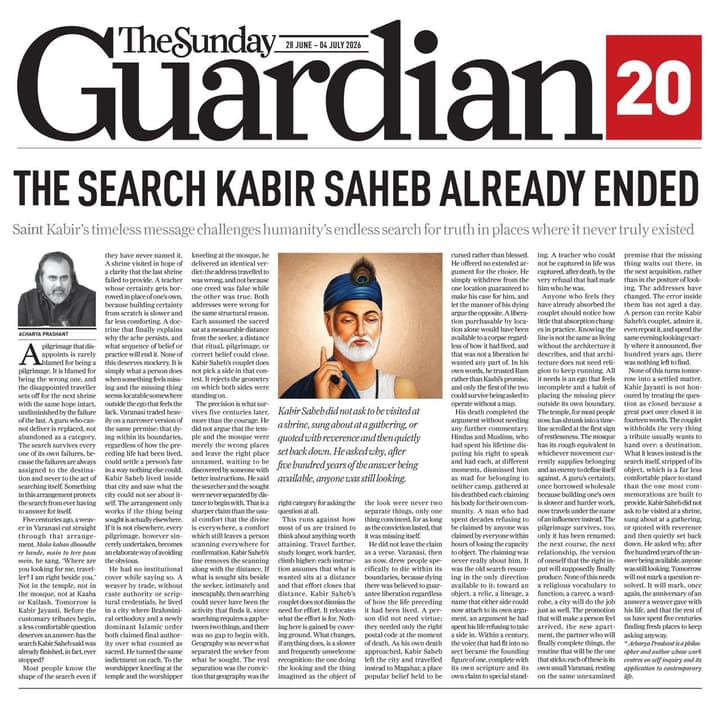
Kabir Saheb's message questions the very act of searching for fulfilment outside oneself. Whether through religion, relationships, success, possessions, or identity, people keep assuming that what is missing lies somewhere else. The problem is not the destination but the belief that fulfilment exists at a distance. Real freedom begins when the search turns inward, recognising that the seeker and the sought were never truly separate.
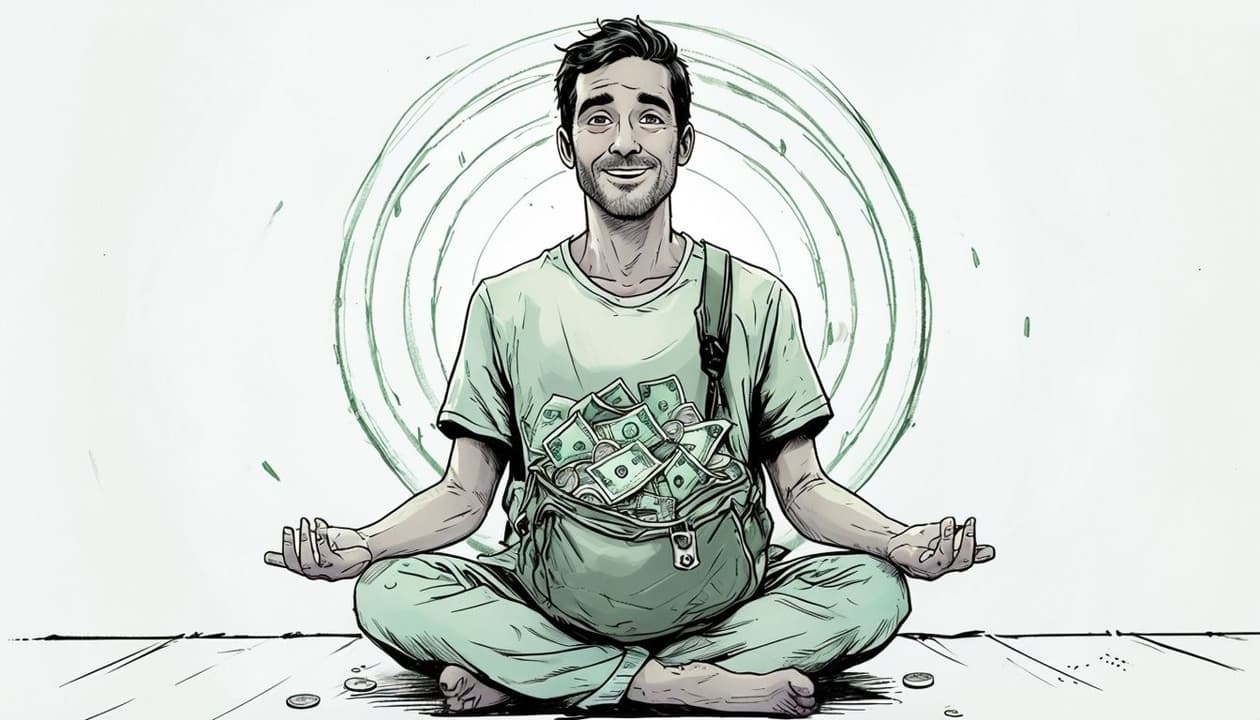
All motivation and ambition are rooted in a sense of unworthiness, inferiority, and incompleteness. Motivation is external, meaning an outside force is acting upon you, making you react. If motivation can come from outside, it can also disappear when the outside factor disappears. That’s no way of living a conscious life. However, when you start from a point of completeness, you perform all your actions out of love and joy, and the result becomes irrelevant.
Manifestation is simply an expression of your desire. You desire something, and then you imagine your desire has been fulfilled. What does the common man desire? ‘Give me more money.’ What will the politician desire? ‘Finish off democracy and give me power for life.’ We have very stinking desires. Do we ever desire anything that is really good for everybody? The question remains: Was that thing worth it? You gave it so much time, so much respect, did it deserve that?