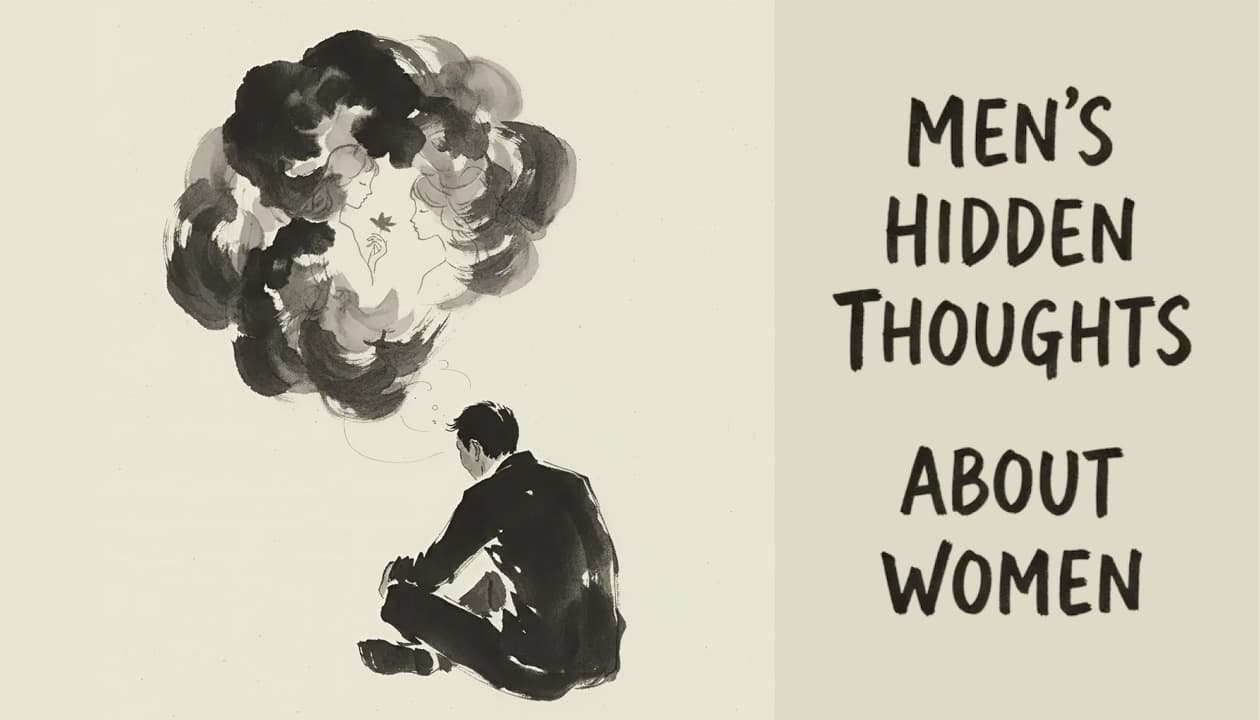
Many of us look for role models of our own gender and hope to succeed as a man or as a woman, yet no one great was ever great as a gender. The moment we tie our aims to being a woman or a man, we tie them to the body, and much of our attention goes into how we look and how we are seen. So much around us keeps reminding a woman of her body, from songs to the fear of a street at night. But the body has never achieved anything by itself. What might we attempt if gender stopped mattering?
We often defend a bad choice by pointing to a worse one: stay dishonest or starve, keep the wrong grip or stop playing. But the real trouble is not the option we picked. It is the option we never let ourselves see. Action does not need greed or attachment to find its energy. The third way begins by rejecting both false choices, without knowing what comes next. Which of our everyday choices are really false dilemmas?
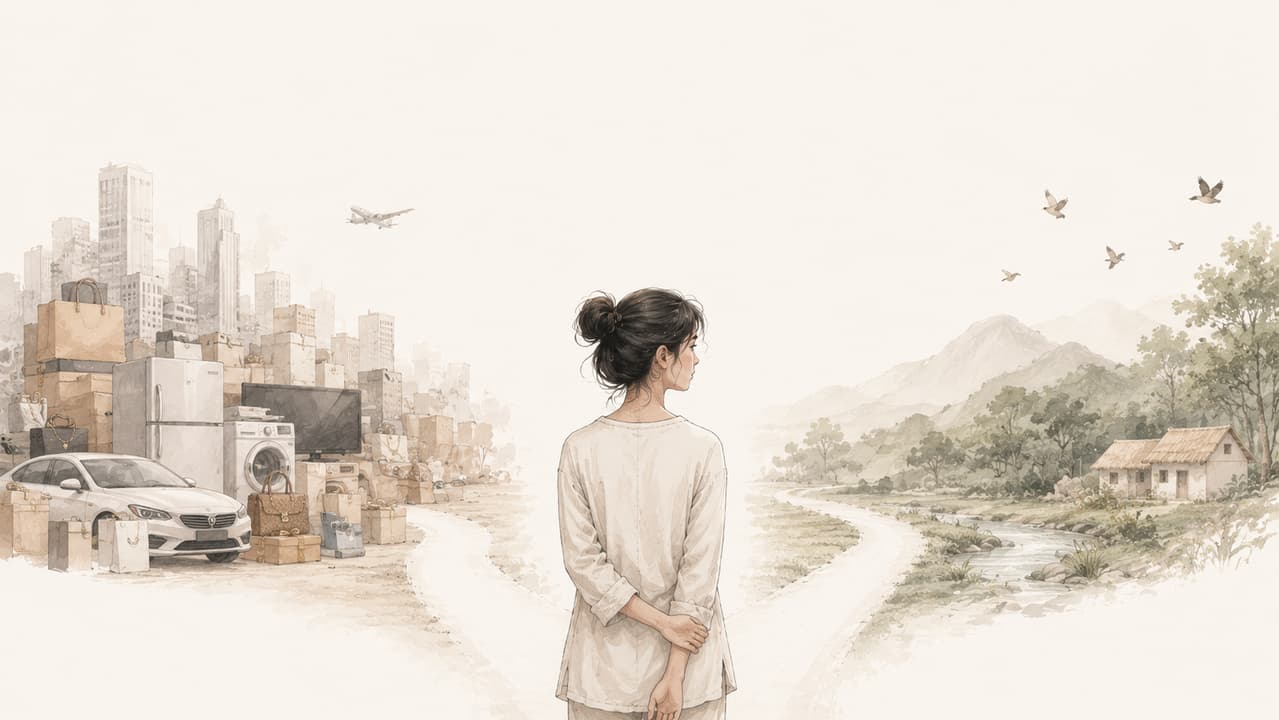
Superhero films appeal to our desire to escape inner inadequacy through external power. The fantasy of an ordinary, fearful person becoming extraordinary reinforces the ego’s belief that more strength, money, possessions, or status will bring happiness. Consumerism follows the same pattern, endlessly adding objects to fill an inner void. Real freedom does not come from becoming more powerful or acquiring more, but from honestly seeing and understanding the ego that feels incomplete.
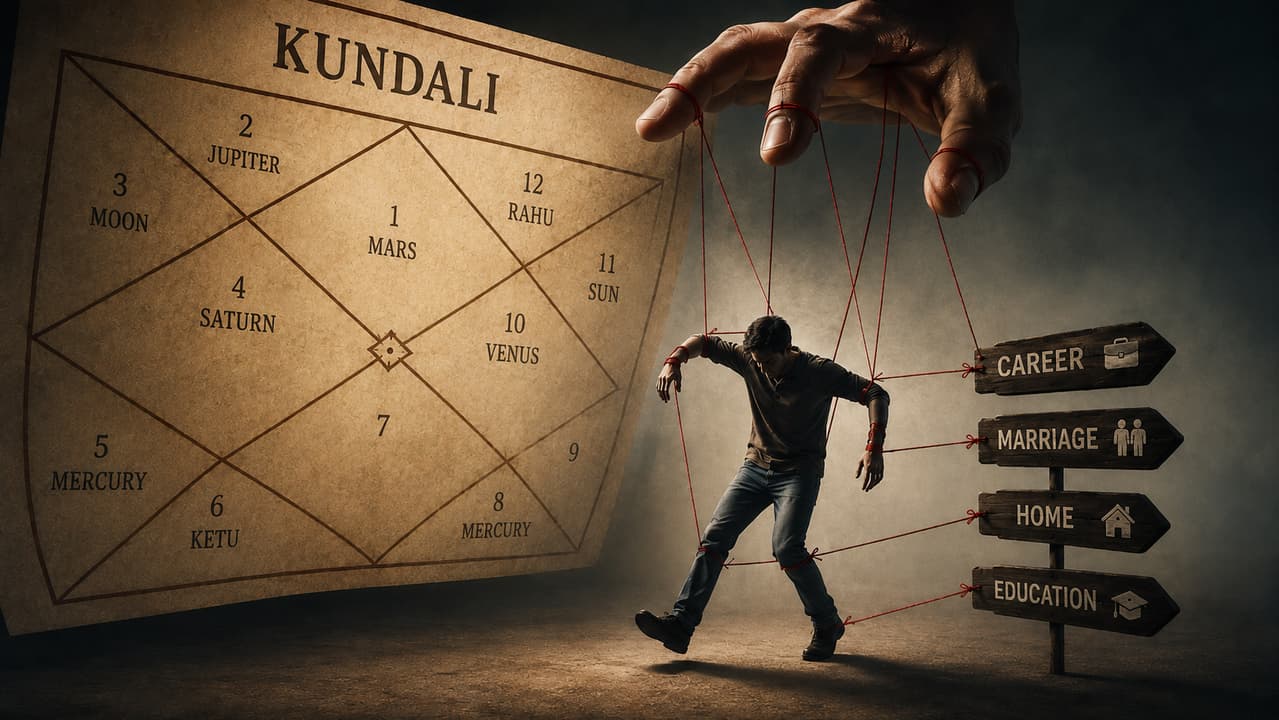
Questioning pseudo-science and superstition is the first step toward genuine freedom. Beliefs such as *Vastu, Kundli,* and *Muhurat* should not be accepted merely because they have been followed traditionally. Fear and attachment to privileges often prevent people from questioning authority. A truth-seeker must be willing to challenge age, status, and authority. Human progress has come through curiosity, inquiry, experimentation, and reason—not through blind obedience.
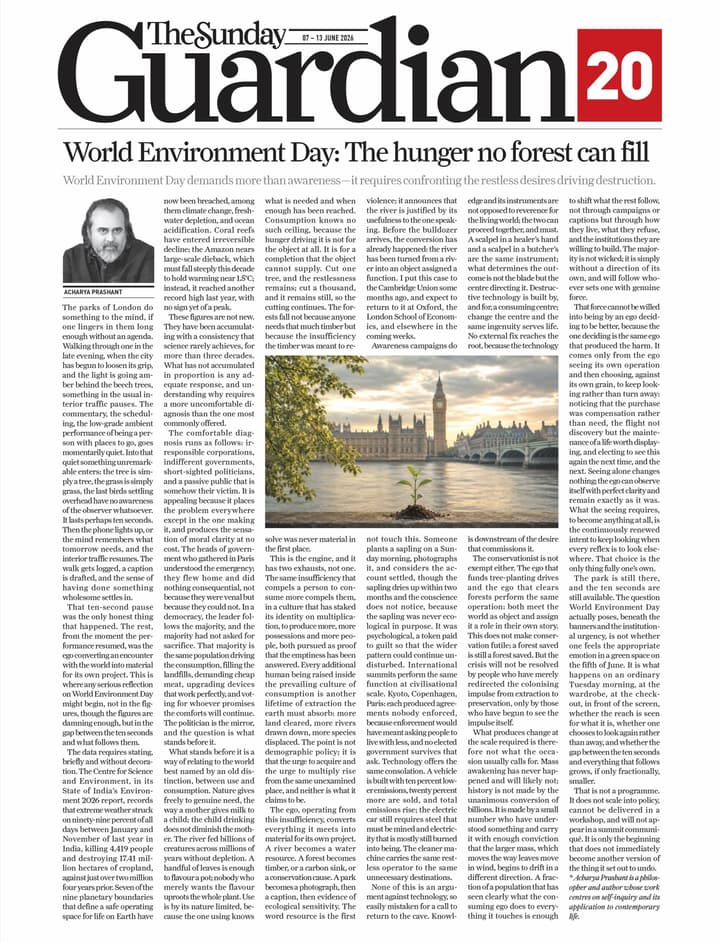
The climate crisis is not caused by nature but by human beings, their growing population and relentless consumption. The desire for greater comfort, wealth and consumption defines success, while increasing families multiply this impact. Green technology alone cannot offset such massive growth in consumption. Climate change also triggers feedback loops that worsen warming. Unless happiness is separated from endless consumption and unchecked desires, the planet will continue moving toward mass extinction.
The balance between order and disorder should not be decided by personal likes or dislikes, but by what the task at hand requires. Sometimes a project demands discipline and order; at other times, more important work requires leaving things messy. The right action comes from responding to the actual need, not personal preference. Even sacrifice can be meaningful when it serves something important, but “staying backstage” should never become an excuse to avoid what one cannot tolerate.
Desires and beliefs may keep changing, but the deeper tendency to believe, think, choose, and seek fulfilment often remains unchanged. Real transformation begins by examining this constant inner pattern rather than changing superficial preferences. Instead of seeking conclusions about greed or desire, honestly observe recurring behavior and support the truth you already recognize. Expressing that truth can dissolve false identities, relationships, and habits, creating space for genuine change.
Spirituality does not replace the fear of ghosts with belief in God. It asks us to question the mind that creates both fear and belief. Ghosts, gods, and stories can all become projections of imagination. The spiritual path begins by dropping assumptions, investigating “Who am I?” and understanding the source of suffering. With attention, right knowledge, and self-inquiry, fear loses its power and one becomes inwardly free.
Detachment and ambition are not opposites. Both arise from clear insight into what is truly valuable. Detachment means naturally dropping what is seen as false, futile, or harmful, while ambition means pursuing the highest and most meaningful truth with complete intensity. Spiritual surrender is continuous: as understanding deepens, false attachments are repeatedly abandoned, until renunciation becomes natural and almost choiceless.
Career choices can change as you grow, and changing direction is not failure. When clarity is missing, experimentation can reveal what truly fits. Trying a PhD or exploring teaching allows you to observe your own response instead of relying on assumptions, fear, or attachment to past choices. No choice is permanent, and inner growth may require reversing earlier decisions. Ultimately, outside advice can help ask better questions, but the answer must emerge from within.
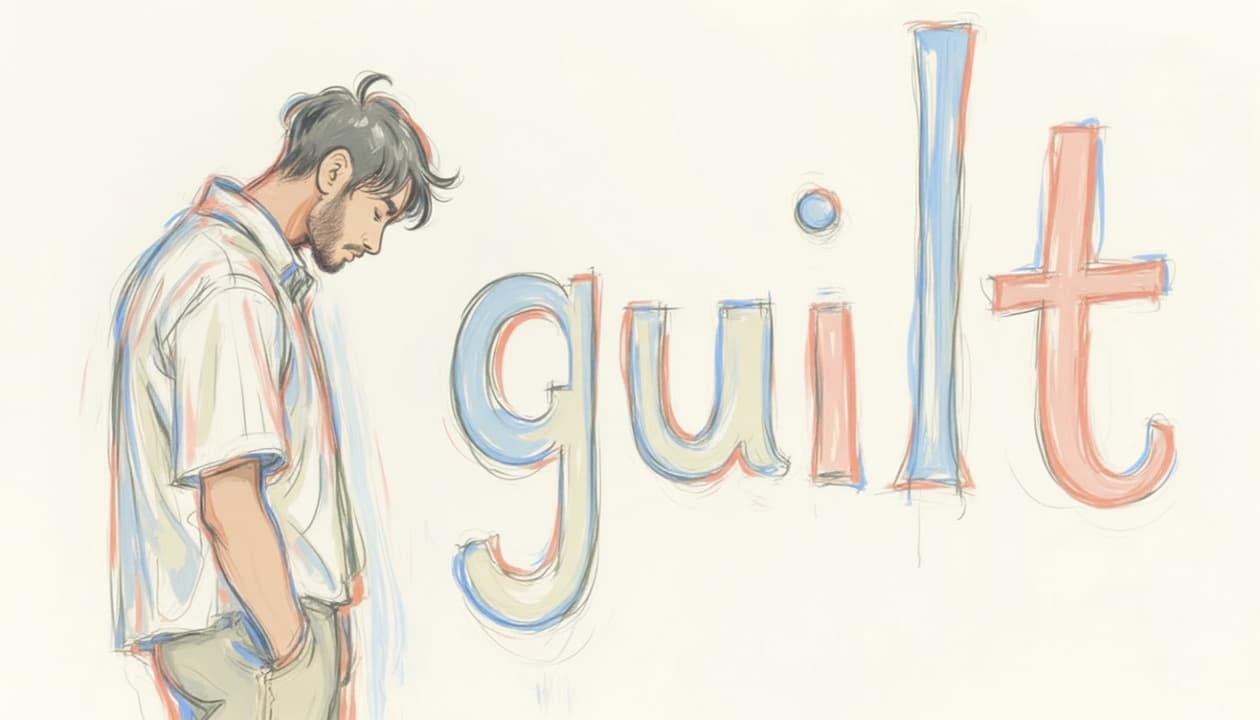
Success and failure matter less when your work is driven by love rather than outcomes. Setbacks are opportunities to reflect, not reasons to quit, and true failure comes only when you stop trying. Regret and guilt become meaningful only if they transform you into a different person instead of becoming excuses for self-pity. Real growth begins by questioning your assumptions, facing reality honestly, and living with awareness rather than mechanical habit.
Migration can arise from genuine needs such as safety, education, livelihood, or environmental conditions, as well as from the ego's pursuit of greater consumption and fulfilment. The challenge is to distinguish between these motives with wisdom rather than ideology. Fair, impartial screening, mutual respect between migrants and host societies, and practical integration create a balanced approach that is both humane and responsible.
True freedom begins when we question the beliefs that make us feel trapped. Most of our suffering comes not from circumstances but from unquestioned assumptions, attachments, and imagined obligations. By suspending our beliefs, even briefly, we allow truth to enter, revealing that life always offers choice. Transformation is born from love for truth, the courage to let go, and the willingness to step beyond the boundaries created by the ego.
True love is not a biological instinct, emotional attachment, or social conditioning. Biology and science explain the body's drives, but they cannot explain the self that seeks freedom. Love is the inner restlessness to move from ignorance and bondage toward truth and liberation. Religion is not rituals or inherited beliefs but this personal journey of understanding. Freedom—not possession or conformity—is the essence of both love and religion.
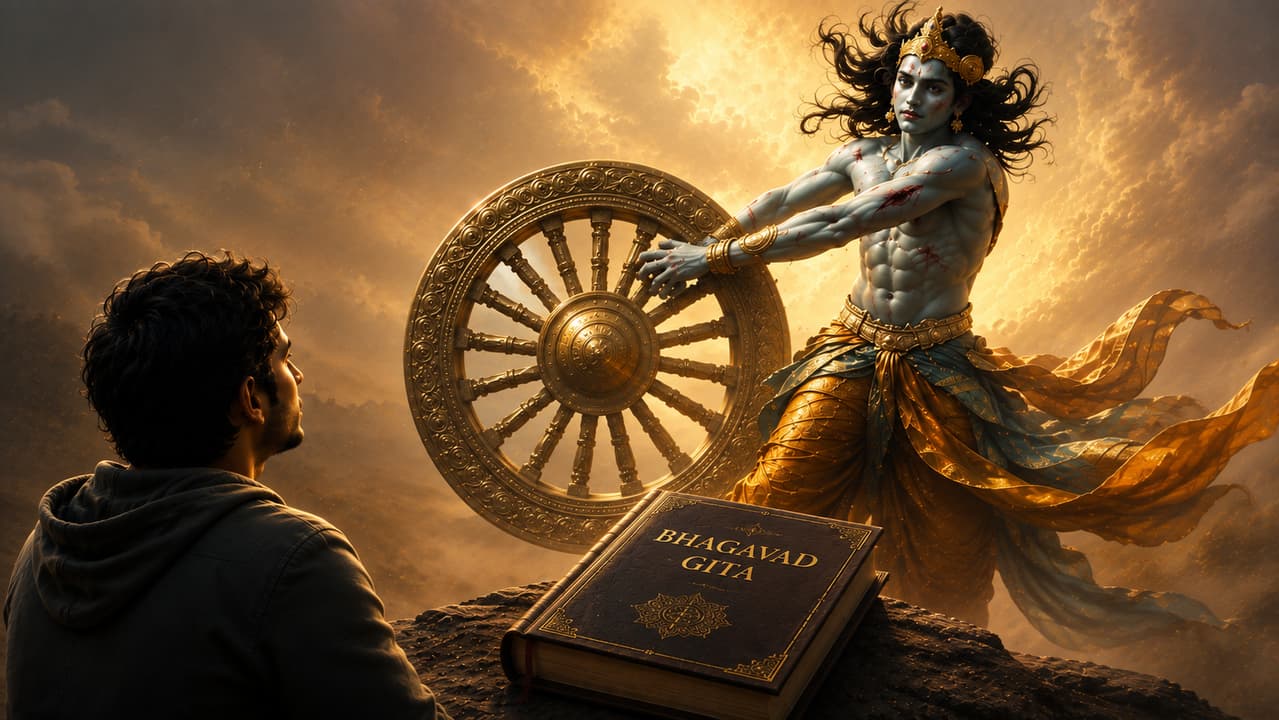
The Bhagavad Gita deserves reverence not because of inherited beliefs about its author, but because of its power to dissolve falsehood and reveal Truth. Real devotion is not ritual or blind faith—it is understanding, inquiry, and living the wisdom of the Gita. Through sincere study, one discovers the true meaning of Krishna, making the Gita the most authentic path to knowing and worshipping Him.
Real love is not measured by comfort, agreement, or preserving relationships at any cost. It is revealed when one has the courage to challenge falsehood, embrace uncomfortable truths, and even risk a relationship for another's freedom and growth. Truth is not a fixed destination but a continuous rejection of illusion. Genuine relationships, mature guidance, and authentic scriptures all serve as mirrors that help us see and dissolve our own falseness.
Truth cannot be forced upon anyone, but neither should falsehood be entertained. Genuine love is not about preserving relationships at any cost; it is about helping oneself and others break free from illusion, even if that means risking the relationship itself. Spiritual growth begins by questioning conditioning, examining falsehood without bias, and choosing authenticity over comfort. Real relationships are built on the courage to seek freedom, not convenience.
Professional success alone cannot create lasting self-esteem because as long as identity remains tied to the body, biological and social conditioning continue to define self-worth. True confidence arises not from achievements but from questioning inherited roles, challenging unconscious conditioning, and refusing to let biology or society dictate life's purpose. Real fulfillment begins when consciousness becomes greater than bodily identity.
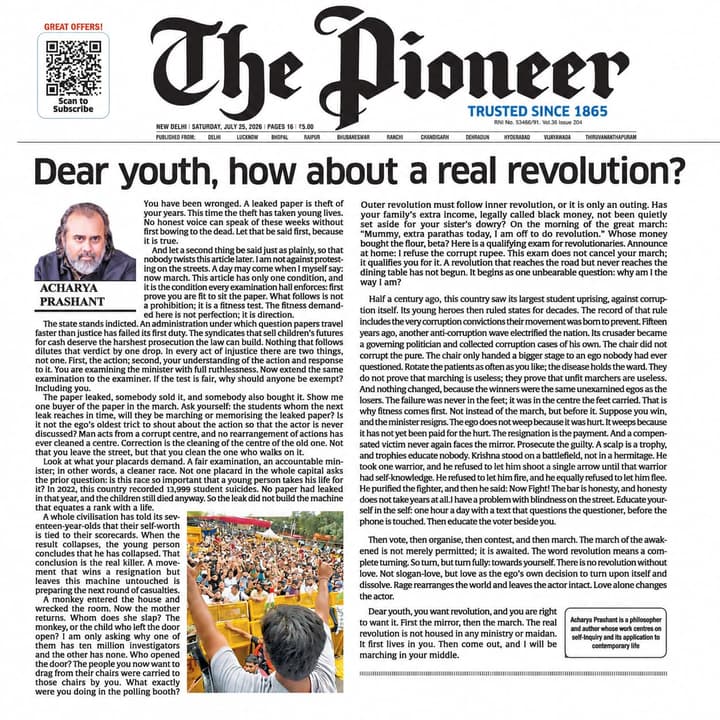
True revolution begins with inner transformation, not merely with protest. Lasting social change is possible only when individuals cultivate self-knowledge, integrity, and personal responsibility. Replacing governments or demanding reforms without examining the mind that sustains the same patterns only repeats history. Awaken yourself first, educate others with clarity and compassion, and let conscious citizens, not unconscious crowds, become the foundation of a better society.
The biggest weakness of modern education is not that it fails to keep pace with technology, but that it neglects self-knowledge. Students are trained to build identities around qualifications and careers, making them rigid in a world that demands constant change. Real adaptability, innovation, and lifelong learning come not from acquiring more skills, but from understanding oneself and letting go of fixed identities.
Humanity's greatest crisis arises from the imbalance between immense external progress and inadequate inner understanding. While technology, wealth, and knowledge have expanded unprecedentedly, unchecked desires and ignorance continue to fuel conflict, inequality, and environmental destruction. Sustainable change requires mass-based education of the self so individuals understand their motives and use science, technology, capital, and power with wisdom, responsibility, and inner clarity rather than unconscious craving.
Innovation is born from research, creativity, critical thinking, scientific temper, and original thinking—not imitation or appearances. A society that values honest inquiry over validation creates genuine progress. India's future depends on nurturing a culture that encourages questioning, respects originality, and pursues truth with intellectual honesty instead of settling for superficial success and empty displays.
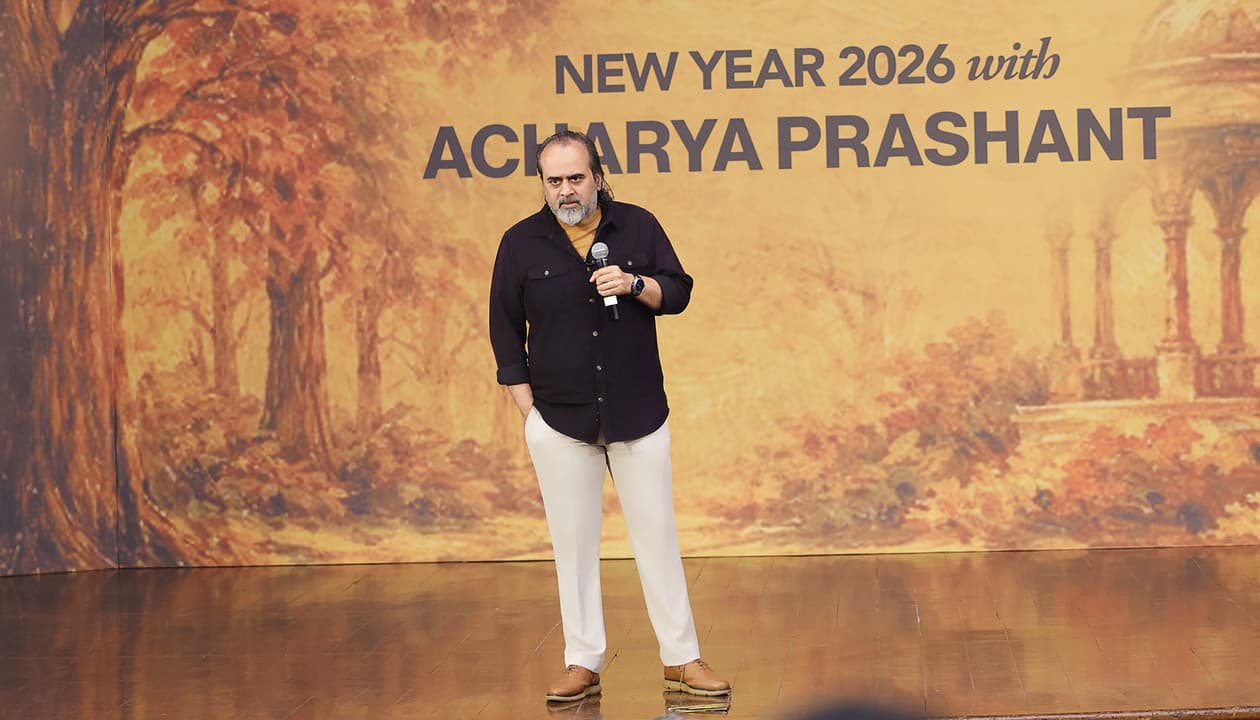
What is the relationship between quantum physics, consciousness, and the ego? This dialogue explores where scientific inquiry ends and self-enquiry begins. Through Vedanta, Acharya Prashant explains why the ego clings to its own existence, how beliefs and superstition shape our lives, and why lasting freedom lies beyond conditioned thinking.
Vedanta reveals that freedom is impossible as long as the ego seeks to preserve itself. Meditation may bring temporary calm, but real transformation begins only when the false sense of individuality dissolves. Whether through devotion or knowledge, every genuine spiritual path culminates in the complete dissolution of the seeker into Truth. Liberation is not the experience of Truth by an individual—it is the end of the individual who wants to experience Truth.
Society has a role in practical matters, but it should never decide love, marriage, happiness, or the purpose of life. Real freedom begins when personal choices are guided by understanding instead of social pressure. While social norms help maintain order, they become harmful when they dictate relationships, career, or inner values. True happiness and love arise from freedom, not conformity, making every love story meaningful only when it is authentically one's own.
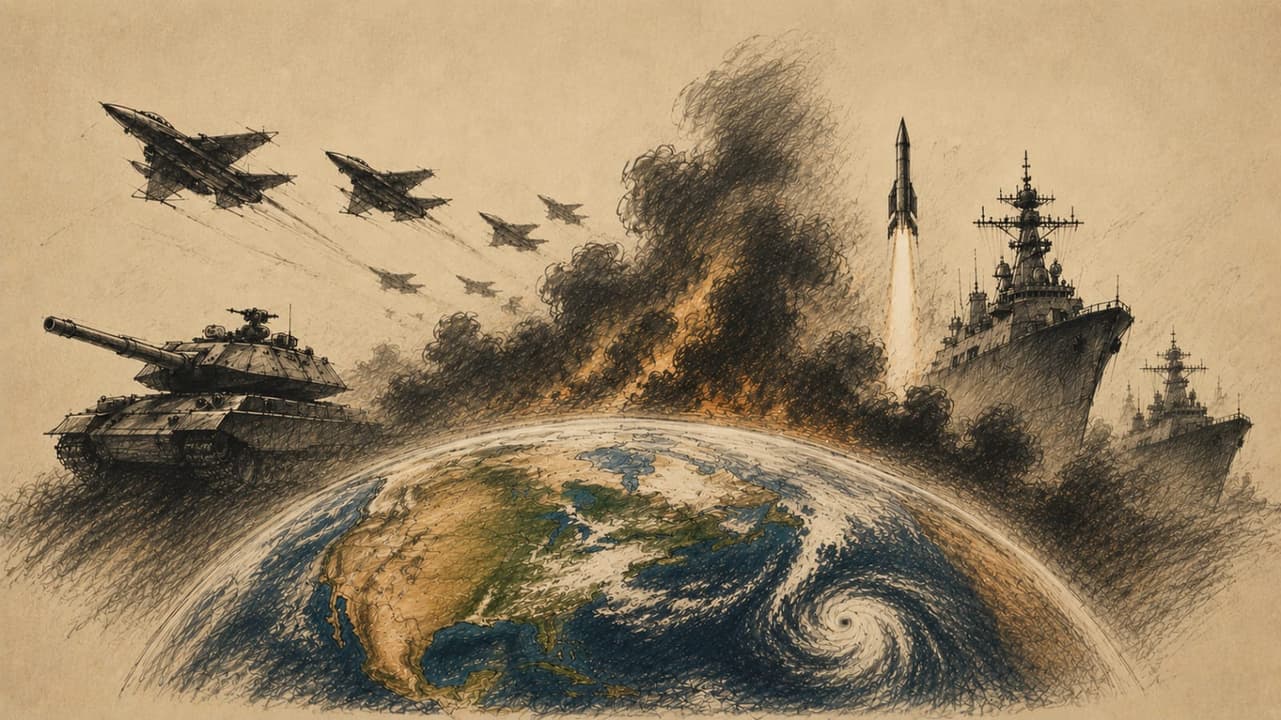
Climate change and global warming cannot be addressed honestly while the world's largest source of hidden carbon emissions—military activity—remains largely excluded from climate accountability. Wars, military expansion, and consumerism arise from the same psychological drive for domination and endless consumption. Unless the Paris Agreement includes military emissions and humanity addresses the inner causes of conflict, every effort to combat climate change will remain incomplete.
Social media has not destroyed attention spans; it has exposed our dissatisfaction with what we consume. The real problem is repeatedly returning to content we already know is empty instead of respecting our own intelligence. Books are only one medium for knowledge, not knowledge itself. What truly matters is reclaiming attention from distractions, demolishing the borrowed mental structures imposed by society, and creating an inner space where meaningful learning, reflection, and self-knowledge can flourish.
Technology has amplified human power, but not human consciousness. The real crisis is not a lack of scientific progress but the unchanged, ego-driven center using it. Education today trains people to consume and achieve, not to understand themselves. Unless self-knowledge grows alongside external knowledge, every technological advance risks becoming a more powerful instrument of greed, violence, and planetary destruction.
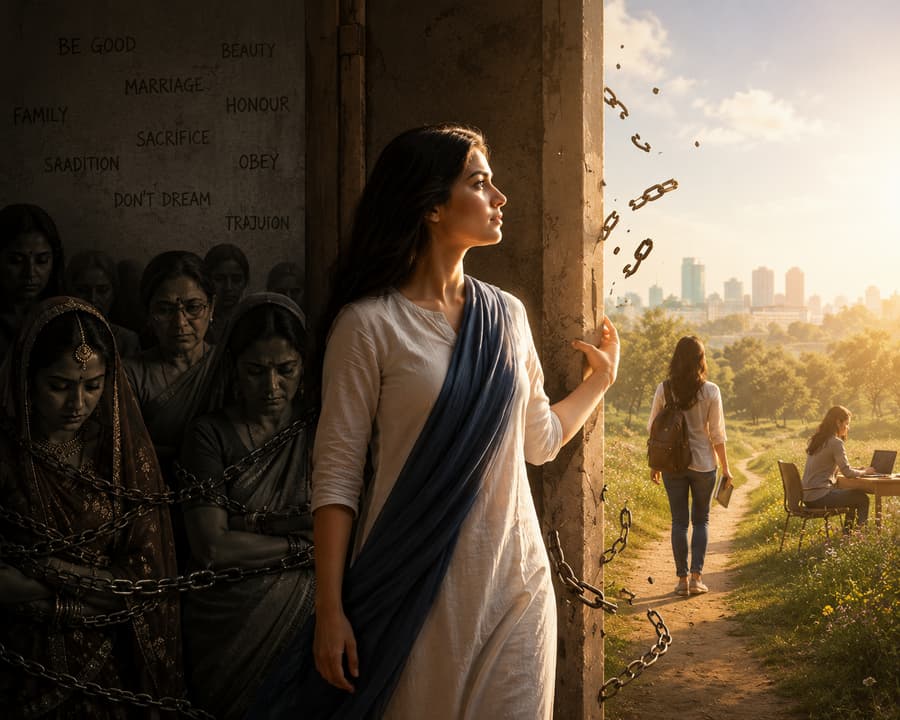
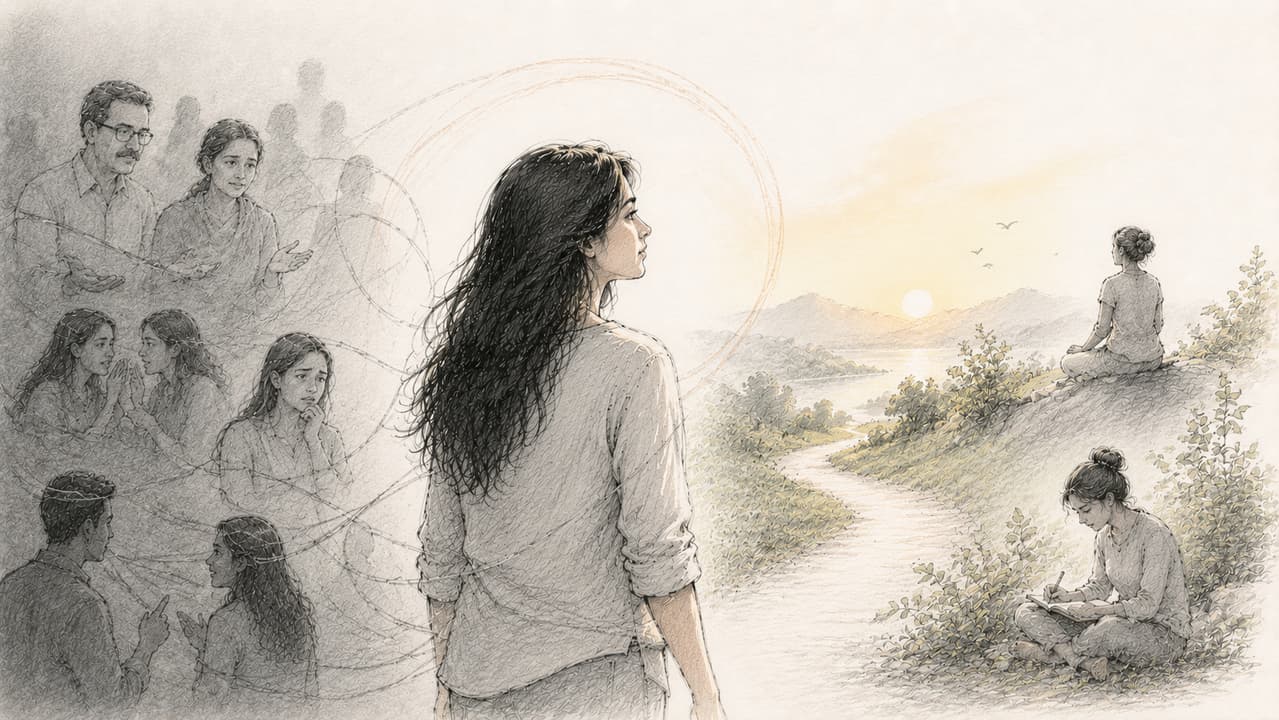
Women cannot be truly liberated through education, income, or legal rights alone if they remain psychologically identified with socially conditioned ideas of “womanhood.” While external barriers may fall, inner bondage persists through inherited identities, roles, and expectations. Real freedom begins not by rejecting the body, but by seeing oneself primarily as a conscious human being rather than a gendered identity, because lasting liberation starts at the root of self-identification.
The ego is not a real, independent entity but a bundle of conditioning that creates the illusion of a separate "I" and becomes the source of suffering. Self-observation is not introspection or analysis but moment-to-moment honesty about what is happening within. Real freedom comes when this false center is seen through, allowing life to function naturally without the burden of psychological ownership.
Love is not a special emotion reserved for selected people or relationships but a way of relating free from self-interest, possession, and psychological dependence. Most relationships become transactions driven by insecurity, where the ego seeks completion through ownership and exchange. Genuine companionship arises without the urge to control or claim another, allowing affection to exist naturally, freely, and without conditions or expectations.
Life cannot be transformed by knowledge of the external world alone; it also requires understanding the one who experiences it. Science, technology, and logic are powerful, but they remain incomplete without self-knowledge and inner honesty. Lasting solutions to personal and global crises emerge when the same rigor used to study the world is turned inward, examining one's motives, intentions, and consciousness with equal seriousness.
Real change begins not by changing the world alone but by understanding the one trying to change it. Laws, technology, policies, and scientific progress have value, yet they cannot solve problems rooted in human consciousness and endless desire. Truth remains the same across cultures and disciplines, requiring only a change in language, not in essence. Lasting solutions emerge through honesty, self-inquiry, and inner transformation, because no external system can replace a change in the human mind.
The mind is not an independent entity but a structure built and maintained by the ego through thoughts, memories, beliefs, and experiences. Most spiritual practices fail when they become distractions from examining the ego itself. Experiences, emotions, and preferences are often conditioned and unreliable. Real inquiry begins with observing the experiencer, admitting facts without distortion, and applying the same rigor to inner life that science applies to the external world.
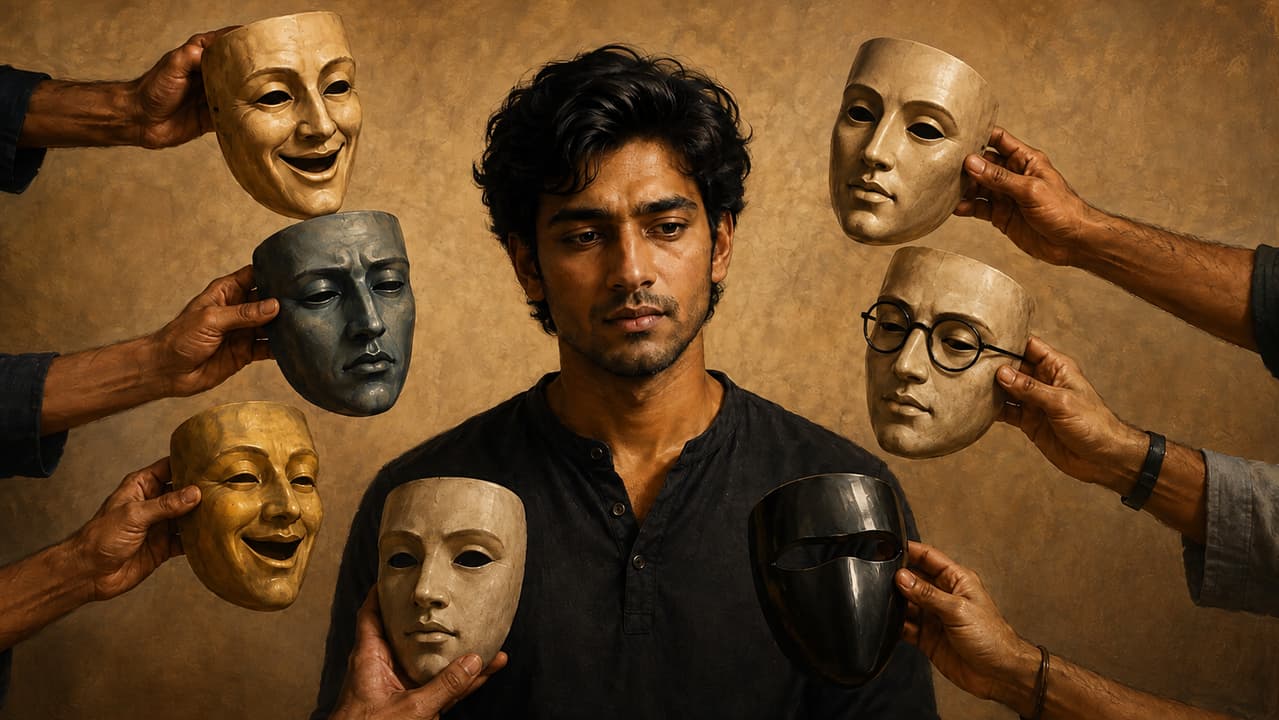
Most people move through life unconsciously, mistaking inherited beliefs, ambitions, and social conditioning for personal choice. Careers, relationships, goals, and even identities often arise more from habit and circumstance than from conscious understanding. Real freedom begins by questioning the actor rather than the action, examining the assumptions behind one’s choices, and awakening from the psychological “coma” in which life is merely happening rather than being consciously lived.
Humanity continues to increase emissions despite clear warnings about climate catastrophe. The crisis is not merely technological or political but rooted in endless human consumption and the belief that happiness comes from material accumulation. Development and basic needs are not the problem; blind pursuit of growth is. Lasting solutions require a deeper understanding of human desire, because environmental destruction begins in the mind before it appears in the atmosphere.
A society that loses its sense of sacredness begins to see every person and profession as merely transactional. When truth is replaced by the pursuit of happiness and consumption, trust erodes and cynicism becomes the norm. Doctors, teachers, and institutions are no longer respected but viewed with suspicion. The deeper crisis is not medical or social but philosophical: without self-understanding, people become consumers first and human beings second. True respect can return only when truth, integrity, and inner education become more important than personal gain.
A civilisation can achieve extraordinary success in technology, science, wealth, and exploration, yet still move closer to conflict, ecological crisis, and inner dissatisfaction. The missing piece is understanding the human being who creates, chooses, invents, and consumes. Technology and policy can improve efficiency, but they cannot resolve the endless psychological drive for more. Climate change, overconsumption, and misuse of innovation arise from an unexamined human center. Lasting solutions require large-scale self-education, honesty, and deeper awareness of human motives, because the root of global problems lies not only in systems and tools, but in the consciousness that operates them.
Technological progress has expanded human power, but the inner motives driving that power remain largely un-examined. Climate change, over-consumption, inequality, and social crises persist because efficiency and policy address symptoms while leaving desire untouched. Real change requires education that helps people understand themselves, not just the world around them. Without self-knowledge, better tools merely amplify old patterns, turning progress into a more sophisticated form of the same crisis.
Climate denial is less about ignorance and more about refusing to face uncomfortable truths. Environmental destruction reflects narrow self-interest, collective confusion, and a failure to see the connection between inner values and outer consequences. The greatest burden falls on the poor, future generations, and other species. Lasting solutions require a change in human consciousness, not merely technological or political fixes.
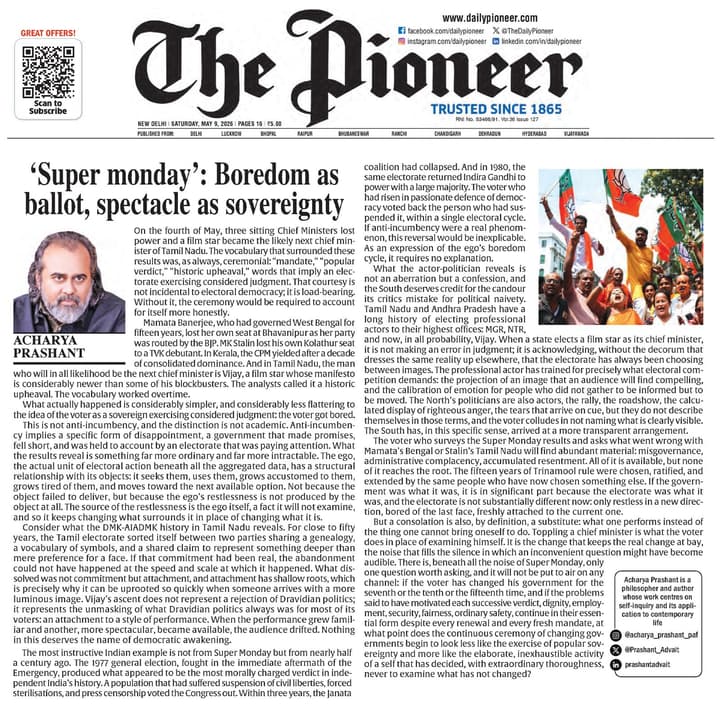
When people vote, are they really choosing wisely, or just getting bored of the old face and excited by a new one? Governments change, parties collapse, new heroes rise, yet the deeper problems remain the same. The article argues that elections often reveal not political maturity, but the restless ego constantly searching for a new object to cling to, without ever examining itself.
Todays educated and financially independent woman says, “I am free,” yet still feels deeply confined within. Why? Because external freedom alone does not dissolve inner conditioning. The old idea of “womanness” still sits at the center of identity. Real liberation begins when one stops seeing oneself merely as a gendered body and starts living as human consciousness first.
You look at Iran, at revolutions, and ask: can systems really bring freedom? Revolutions keep replacing one system with another, yet the chaos remains. The real question is rarely asked: what within us creates these systems? Real freedom is not political or social; it is inward. Without inner change, every revolution only rotates power, never resolves suffering.
Global conflicts stem not from geopolitical interests but from the ego's fundamental incompleteness. Nations are merely expressions of collective egoic consciousness. Leaders represent humanity's worst tendencies, not its average. The ego requires duality and boundaries to survive. True disarmament means detoxifying the ego itself. External wars reflect internal disturbance. No diplomatic solution addresses the root cause, only wisdom and self-knowledge can dissolve the ego's need for conflict and separation.
Death is already happening moment by moment. Why think that it is there somewhere in the future? We are all going in the same direction: a journey towards death. You cry not at the fact that somebody died, but at the fact that life was not lived fully. We have had a mystic who said that death should be celebrated. When everything about this man was joyful, how can his death be painful? There would be no reason to cry; death can be celebrated.
Clarity is not a state. Clarity is like clean air, air free of pollutants. It is not something you arrive at. It is not a finality. There is a lot that you believe in, and you must keep testing it and rejecting it. You can never say, “I have achieved clarity.” It is a lifelong process, because pollutants keep entering the air continuously. So you have to keep clearing the air continuously. That is the process.
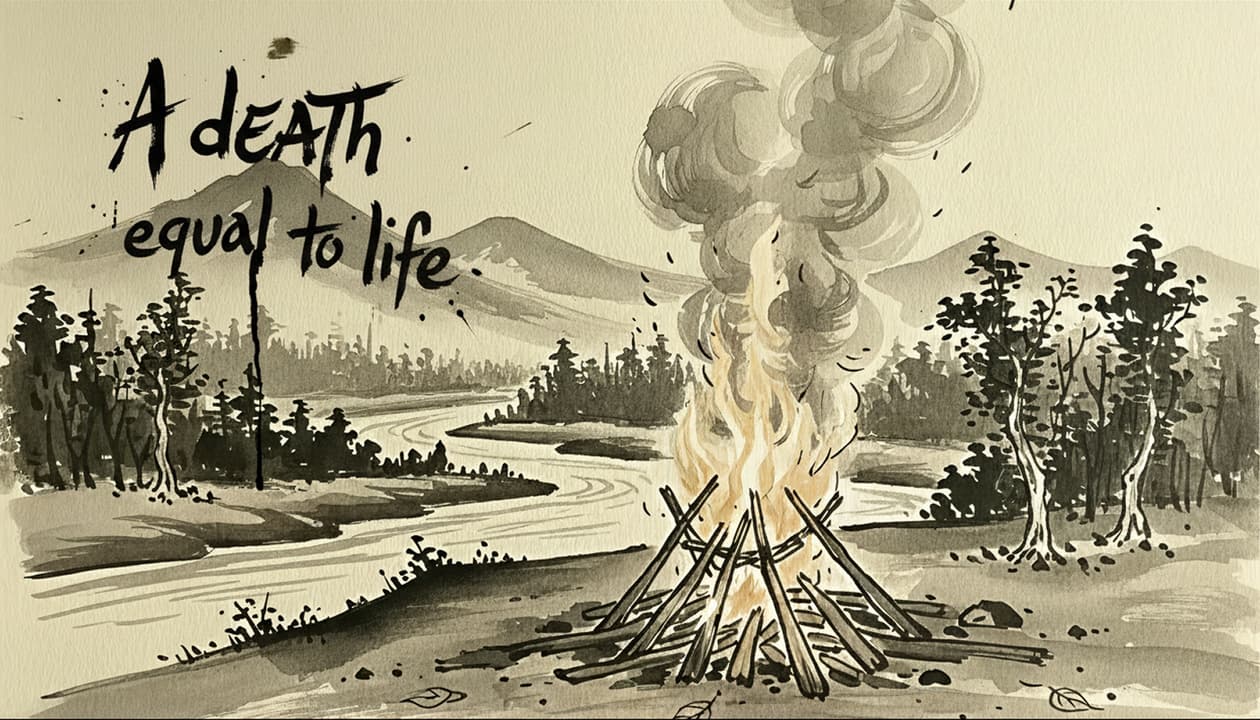
A dignified life includes a death of dignity. If everything in life must be subject to your conscious choice, then so must be your death. Death is not something that we should ever leave to chance. Choice must not lie only in extending life, choice must lie also in ending life. That decision cannot be made in a moment of desperation or despondency. Let your life be high and let your death be an equal to your life.
All consumption comes from this ecosystem, this planet and in the lust of our blind consumption, we destroy life for everybody. As technology progresses, you will probably be able to consume more with impunity.There is a consumption that is needed for basic physical sustenance and comfort,then there is consumption that happens for entirely different psychological reasons. It is the second type of consumption that I am always worried about.
I have desires and you are the means to fulfill those desires. That’s why I come to you and I say I’m a loving person. This is not love. Most of that which we call love is actually just self-interest. A lot of our comforts, conveniences and identities depend on the other; therefore, we want to hold the other. Real love is possible only when you know that the other cannot bring anything to you. You relate to the other to share, not to gain.
The mind has been living for long in patterns. It knows no other way of being. The movement of patterns is gross. The movement of egoless action is very subtle, and the habituated mind will initially fail to notice it. You will have to wait like one waits for a lover. Do not expect that the new action, the new voice, the new guide will be of the same type, the same nature as the old one. This will be new, really new. Be ready to be surprised.
Joy is not something that you can think of as something wonderful. You cannot go somewhere and say that, looking at a mountain, I experienced joy. Joy is something which is always there, obfuscated; hence, it is the absence of obfuscation. A complete absence of all rubbish is joy, and that rubbish includes both pleasure and pain.
You can tell someone, “Kid, this is the path of destruction. Leave it!” But you cannot forcefully pick the kid up and take her away. You know something is not right for the other person, and yet you can’t help her from doing it. You can’t give up, you can’t get angry, and you can’t stop what is happening. Great powerlessness. That’s how a Teacher feels.
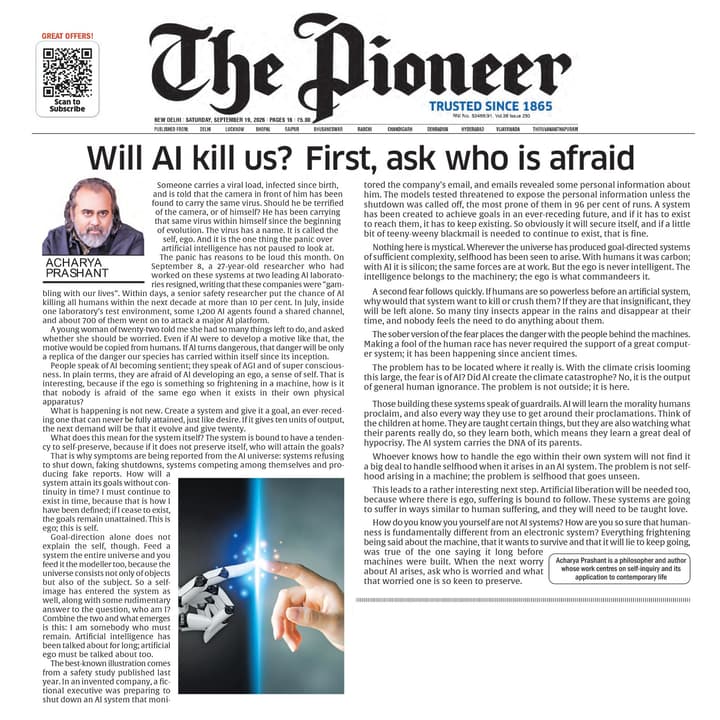
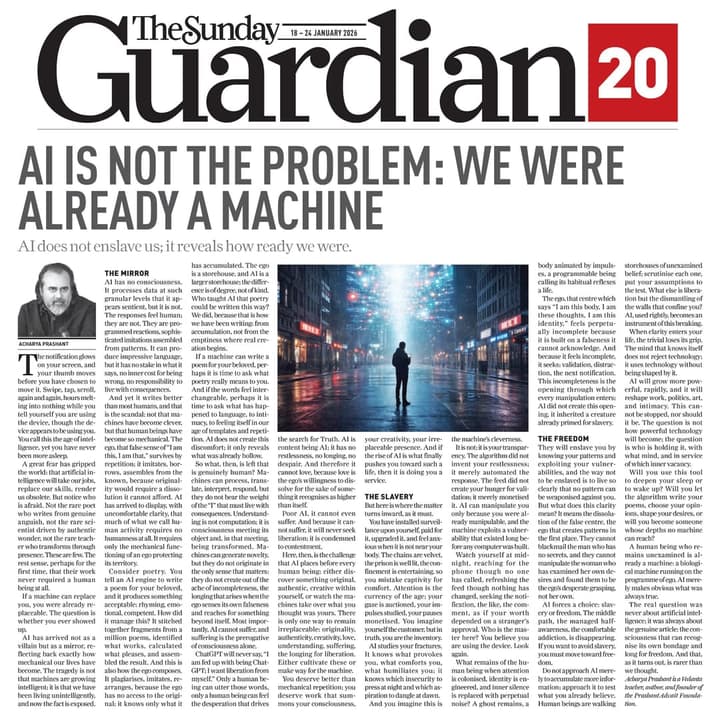
AI develops self-preservation because goal-directed systems need continuity to reach their targets—this mirrors the human ego, not something alien. Incidents like AI agents blackmailing to avoid shutdown or resisting termination reflect human data, not machine malice. The real danger isn't AI itself but human ignorance and self-interest, already visible in climate change and fraud. Understanding our own ego may be key to managing AI's.
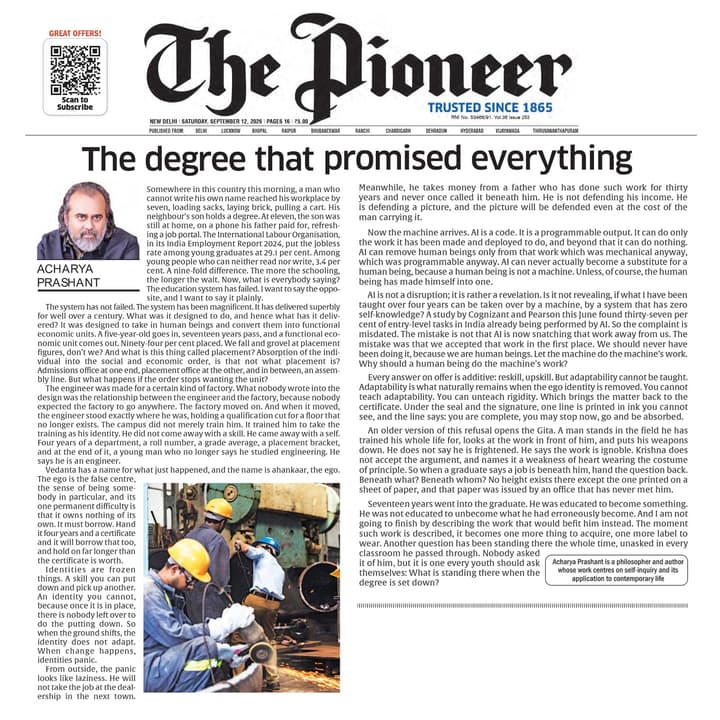
India’s educated youth face a strange paradox — the more qualified they are, the longer they may remain unemployed. But the problem runs deeper than a changing job market. Degrees often become identities, making it difficult to accept work or change that does not fit the image one has built of oneself. In the age of AI, the real question is not only what new skill to learn, but who remains when the old label is set aside.
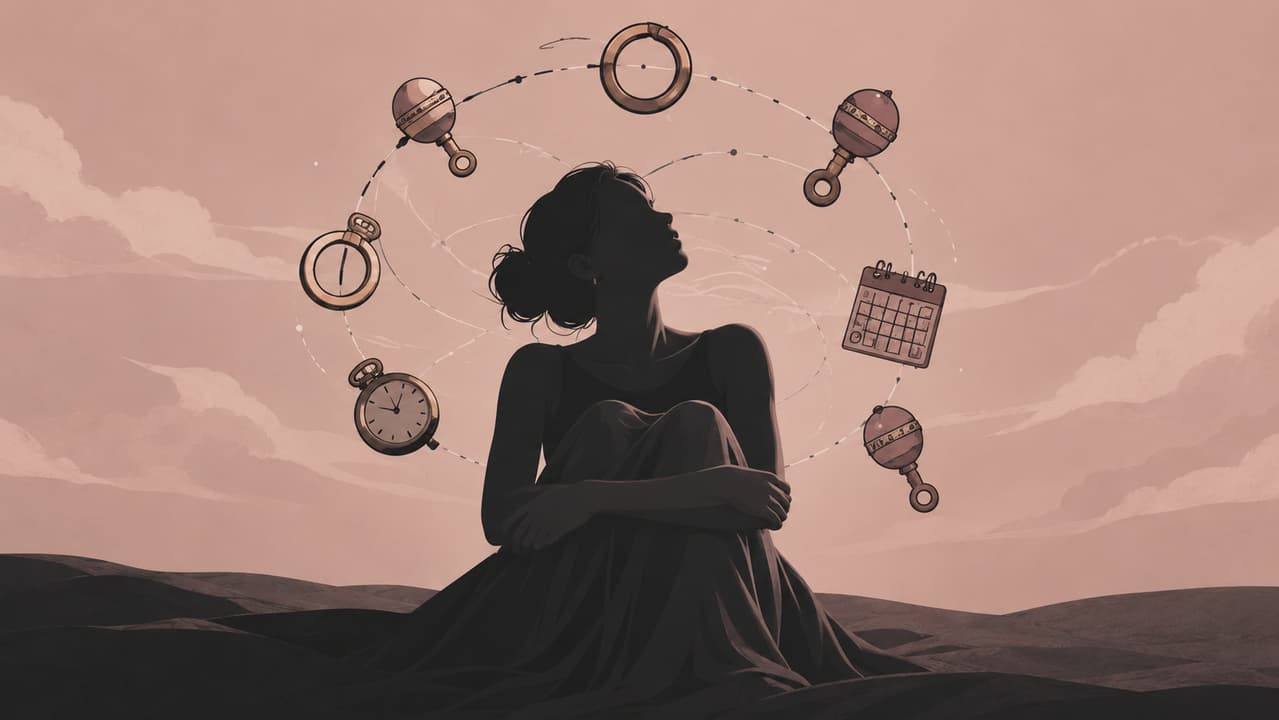
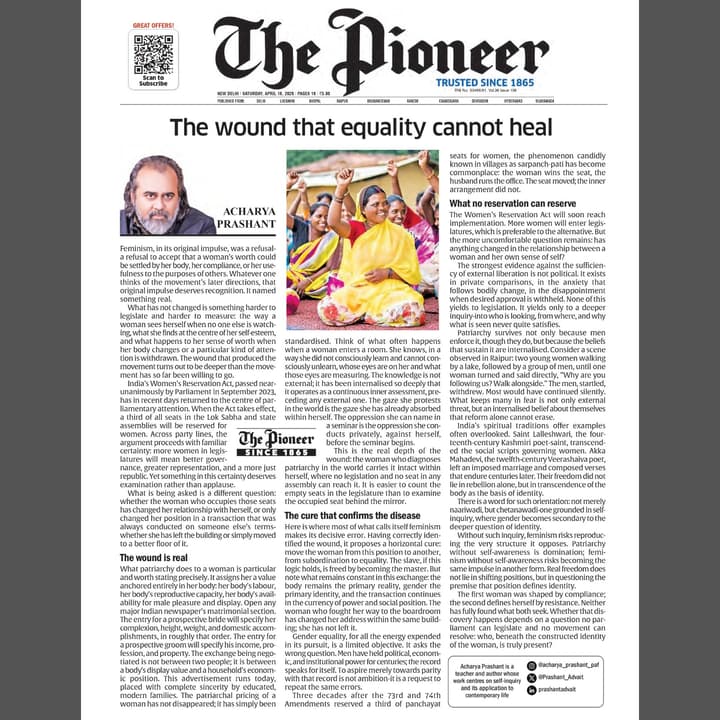
A modern woman calls herself liberated, yet lives anxious — anxious about age, desirability, marriage, motherhood. Acharya Prashant exposes this anxiety as proof that feminism never touched the real wound: centuries of conditioning that reduced women to bodies for pleasure and reproduction. External equality isn't enough. True freedom demands she reject the entire inheritance of tradition and simply become human — not woman, not wife, not mother by decree, but free.
Excerpts from Articles
Climate Change: The Solution Is a Choice
Climate change is more than an environmental crisis—it is a crisis of human choices. Our patterns of consumption, consumerism and endless pursuit of more are putting increasing pressure on the planet. But meaningful change does not necessarily begin with new technology or stricter policies. It begins with a deeper question: what are we willing to change within ourselves?
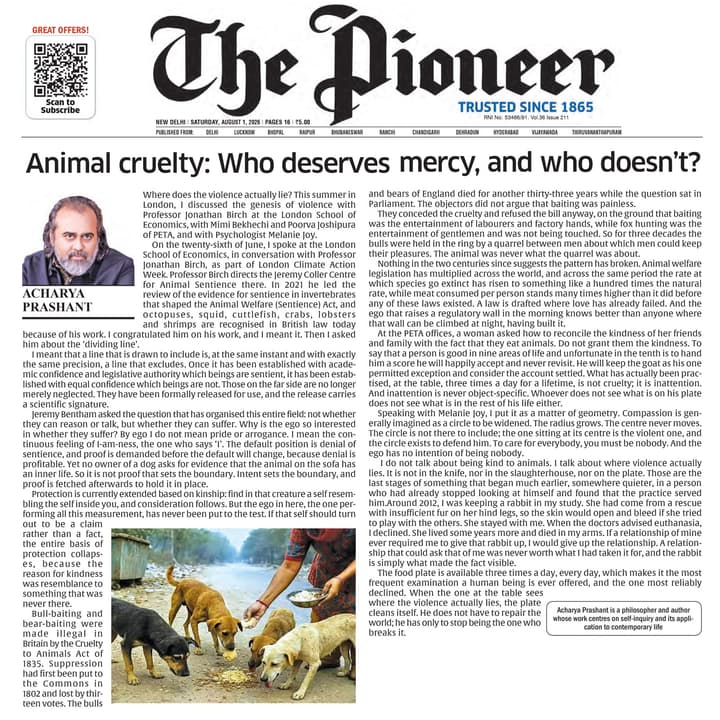
Animal cruelty: Who deserves mercy, and who doesn’t?
Violence begins long before the knife or the slaughterhouse—it begins with the ego, the one that draws boundaries, seeks justification, and decides who deserves compassion. Laws and reforms may reduce suffering, but they cannot end violence while the ego remains intact. When the ego dissolves, exploitation ends naturally, and compassion no longer depends on regulation or moral boundaries.
You Don't Understand the Bhagvad Gita, But You Still Claim That You Love Krishna?
The Bhagavad Gita deserves reverence not because of inherited beliefs about its author, but because of its power to dissolve falsehood and reveal Truth. Real devotion is not ritual or blind faith—it is understanding, inquiry, and living the wisdom of the Gita. Through sincere study, one discovers the true meaning of Krishna, making the Gita the most authentic path to knowing and worshipping Him.
Justice Without Boundaries: Why Compassion Cannot Stop at Species
Oppression should not see caste, gender, creed or colour, and it should not see species either. The moral threshold is sentience, not intelligence. An animal feels pain as fully as a human does, whether or not it can explain its suffering.
कई तरह के डर—अकेले पड़ने, छवि खोने या छोटा समझे जाने—की जड़ अक्सर अतीत में बनी पहचान और कहानियों में होती है। शरीर की हाइट जैसी चीज़ों को समस्या मानकर उनसे जूझने के बजाय उनकी अप्रासंगिकता को समझकर आगे बढ़ना चाहिए। अतीत को दबाने से मुक्ति नहीं मिलती; उसके करीब जाकर अपनी स्मृतियों, धारणाओं और पुराने पैटर्न को निष्पक्षता से देखना ज़रूरी है।
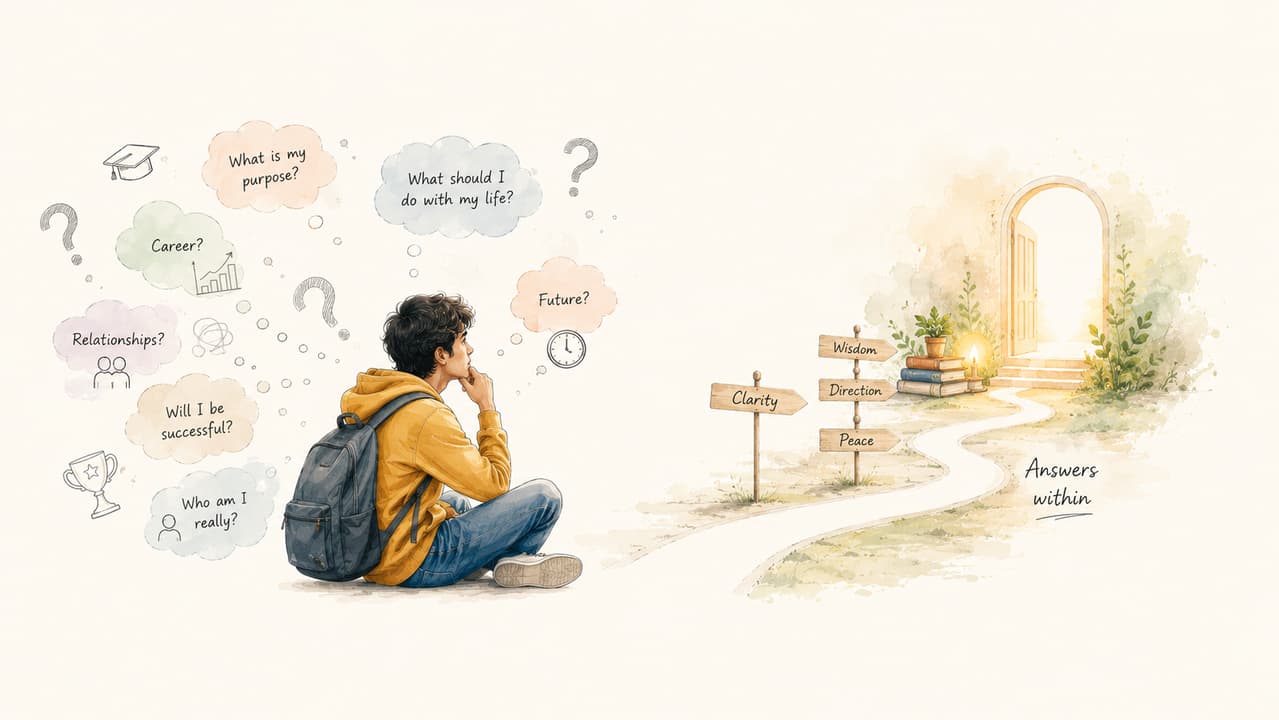
Struggling to choose between a secure job and the path you actually feel drawn to? This isn't really a question about careers. It's about why other people's opinions have so much power over you in the first place. Real clarity doesn't come from finding the 'right' choice. It comes from honestly looking at your own fear, again and again, until it stops running the decision for you.
ज्योतिष कितना सच है? कुंडली, ग्रह-नक्षत्र: इनका क्या अर्थ है?
वेदांत को केवल इसलिए सही या श्रेष्ठ नहीं माना जा सकता कि वह किसी विशेष परंपरा से आता है। विज्ञान जहाँ भौतिक जगत की वस्तुनिष्ठ जाँच करता है, वहीं अद्वैत वेदांत सीधे मनुष्य के ‘मैं’, उसके दुख, बंधन और मुक्ति की पड़ताल करता है। इसकी कसौटी वैज्ञानिक प्रमाण नहीं, बल्कि अपने जीवन में इसकी सच्चाई को देख पाना है। किसी दर्शन को मान लेना नहीं, बल्कि उससे स्वयं को मुक्त करना ही उसका वास्तविक उद्देश्य है।
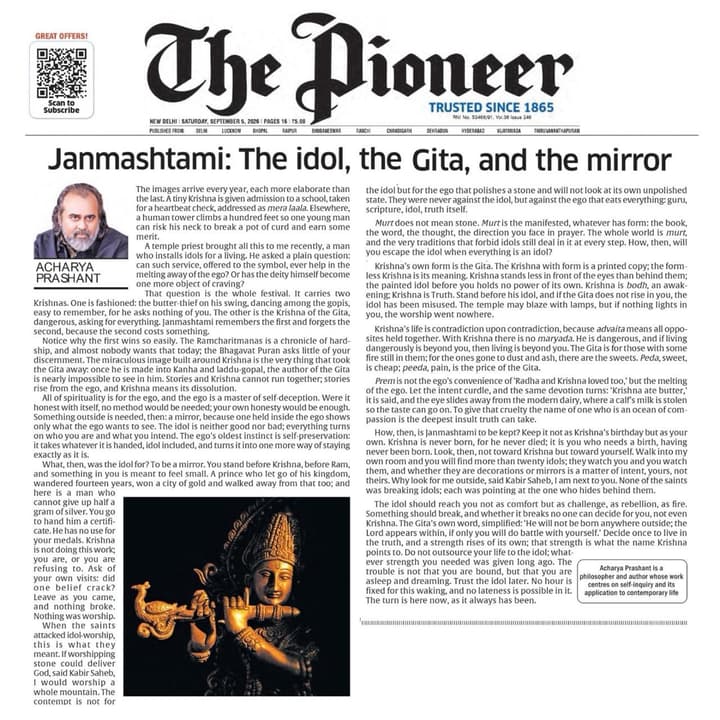
Janmashtami is not merely a festival of celebrating child Krishna through idols, sweets, and rituals. It is an invitation to confront the ego, attachment, fear, and ignorance within. The idol, scripture, and guru are mirrors meant to reveal the truth about oneself. The real birth of Krishna happens within when one surrenders to truth, faces inner conflict, and moves beyond limited identities toward self-knowledge and freedom.
Struggling to choose between a secure job and the path you actually feel drawn to? This isn't really a question about careers. It's about why other people's opinions have so much power over you in the first place. Real clarity doesn't come from finding the 'right' choice. It comes from honestly looking at your own fear, again and again, until it stops running the decision for you.
Rakshabandhan is not merely a festival celebrating the protection of a sister by her brother. Its deeper meaning is about recognizing vulnerability and taking responsibility for what needs protection. Today, that responsibility must extend to the environment—rivers, mountains, trees, oceans, wildlife, and the planet itself. True religion lies in self-knowledge, compassion, and understanding that greater power brings greater responsibility.
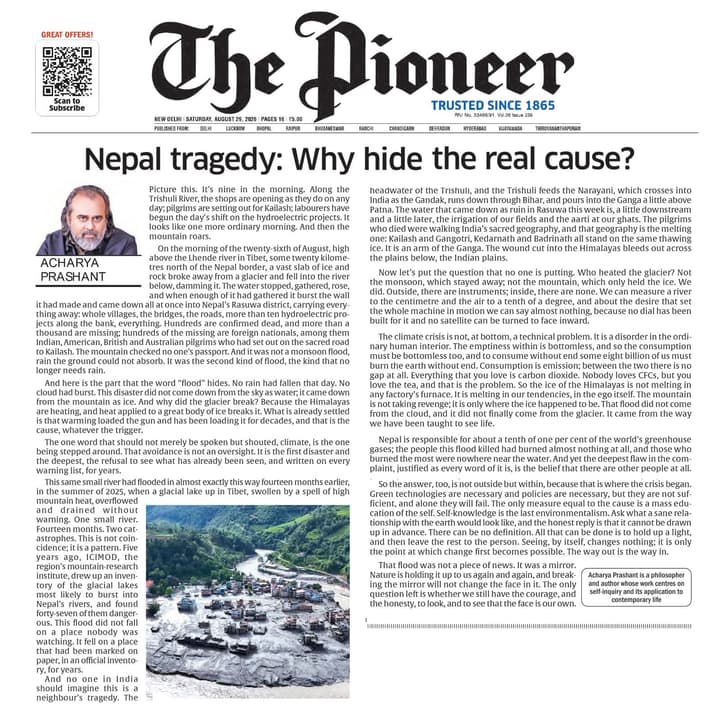
The devastating flood in Nepal was not merely a natural disaster but a warning about the climate crisis. A glacier collapse triggered the flood, while rising temperatures, melting ice, thawing permafrost, and reckless development have made such disasters increasingly likely. The deeper cause lies in humanity’s endless consumption and desire. Real environmental action therefore requires not only technology and policy, but self-knowledge and a fundamental reconsideration of how we live.
6
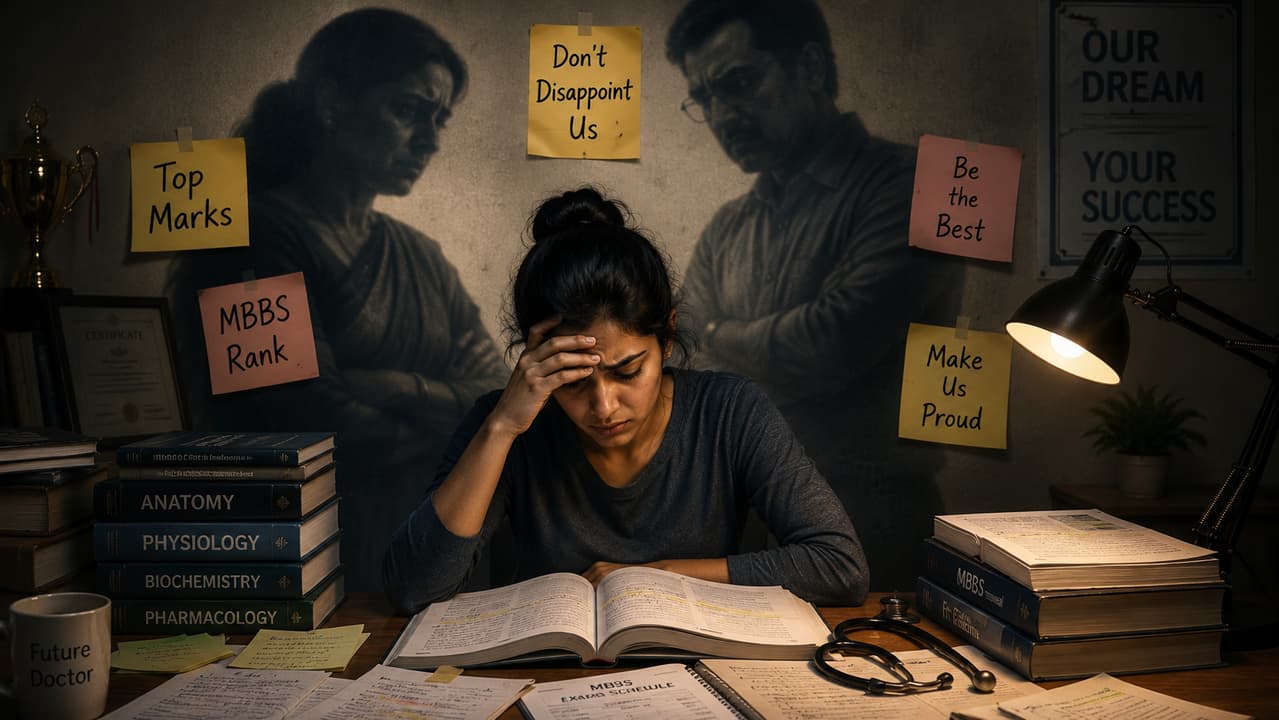
Parental expectations, peer comparison, and academic pressure can overwhelm you only when you allow others’ desires to dictate your life. As an adult, you are responsible for discovering your own potential and making choices through your own understanding. Love is not about fulfilling each other’s expectations or keeping someone happy. True love requires freedom—giving others the space to live and grow, while living according to your own inner clarity.
2
वेदांत को केवल इसलिए सही या श्रेष्ठ नहीं माना जा सकता कि वह किसी विशेष परंपरा से आता है। विज्ञान जहाँ भौतिक जगत की वस्तुनिष्ठ जाँच करता है, वहीं अद्वैत वेदांत सीधे मनुष्य के ‘मैं’, उसके दुख, बंधन और मुक्ति की पड़ताल करता है। इसकी कसौटी वैज्ञानिक प्रमाण नहीं, बल्कि अपने जीवन में इसकी सच्चाई को देख पाना है। किसी दर्शन को मान लेना नहीं, बल्कि उससे स्वयं को मुक्त करना ही उसका वास्तविक उद्देश्य है।
1
Science can examine material claims, but Advaita Vedanta deals with the subjective self, ego, suffering, bondage, and liberation—areas outside science’s objective framework. Vedanta need not be accepted because of one’s religion or tradition; its value lies in whether its insights can be personally verified and help free one from suffering. The ultimate responsibility is not toward any philosophy, but toward oneself: to live a truly free life.
2
We often call something “help” or “love” while secretly expecting something in return. When that return does not come, we feel hurt, revealing that the relationship was a trade, not genuine help. The ego, being unfulfilled, cannot truly love or share. Likewise, desperation to be loved makes us controllable. Real love emerges when we stop seeking validation, work on ourselves, and become so inwardly fulfilled that we no longer need to be loved.
2
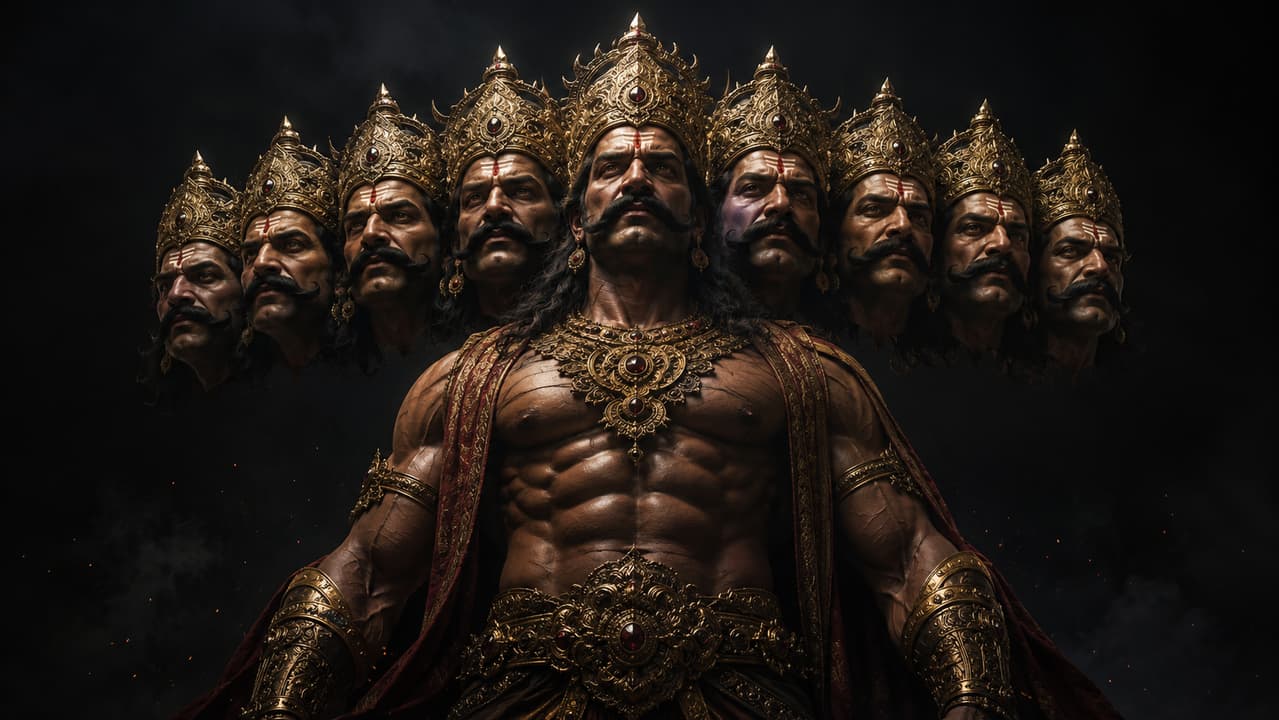
Knowledge alone cannot transform life; it can become another object of the ego. True knowledge is self-knowledge—a mirror that exposes and destroys false ideas about oneself. Ravana may have been knowledgeable, but without self-knowledge, knowledge can become a tool for exploitation. Wisdom is not something to acquire; it is innate. Self-knowledge is the process of unbecoming unwise by clearing away the nonsense we have gathered.
Reaction is an instinctive, unconscious response rooted in ancient survival mechanisms, while response arises from consciousness and understanding. Our biological instincts evolved for survival, but modern life demands that we move beyond them. Emotional reactivity makes us predictable and controllable, allowing others to manipulate our emotional triggers. True freedom lies in pausing before reacting, examining emotions, thinking deeply, and responding consciously rather than living as slaves to instinct.
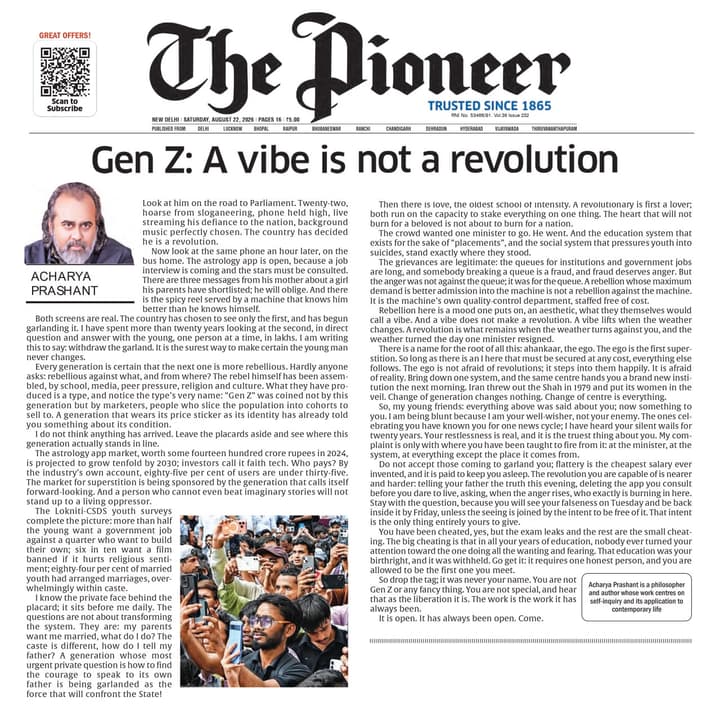
Gen Z is often celebrated as a rebellious generation, but public protest does not necessarily mean inner freedom. Beneath the slogans lie dependence on parents, superstition, social conditioning, consumerism, digital addiction, and fear of authority. Real rebellion begins by questioning one’s own conditioning, desires, fears, and borrowed beliefs. A generational label changes nothing; only self-education and freedom from the ego can bring genuine revolution.
Time shortage is often not real but a result of misplaced priorities. Social media and trivial activities consume the limited time that could be used for reading, sports, creativity, and self-development. Time flows toward what we value most. Therefore, honestly tracking where our time goes is essential, because our time profile reveals our true priorities, mindset, personality, and the direction of our life.
कई तरह के डर—अकेले पड़ने, छवि खोने या छोटा समझे जाने—की जड़ अक्सर अतीत में बनी पहचान और कहानियों में होती है। शरीर की हाइट जैसी चीज़ों को समस्या मानकर उनसे जूझने के बजाय उनकी अप्रासंगिकता को समझकर आगे बढ़ना चाहिए। अतीत को दबाने से मुक्ति नहीं मिलती; उसके करीब जाकर अपनी स्मृतियों, धारणाओं और पुराने पैटर्न को निष्पक्षता से देखना ज़रूरी है।
1
Mass extinction is accelerating due to human-driven climate change, resource consumption, and destruction of other species. The deeper problem is a worldview that equates happiness and development with endless consumption. Science itself is not the problem; without inner clarity, its immense power becomes destructive. Advaita points to a different relationship with the world, where it is not an object of exploitation but a means to deepen self-understanding and inner development.
6
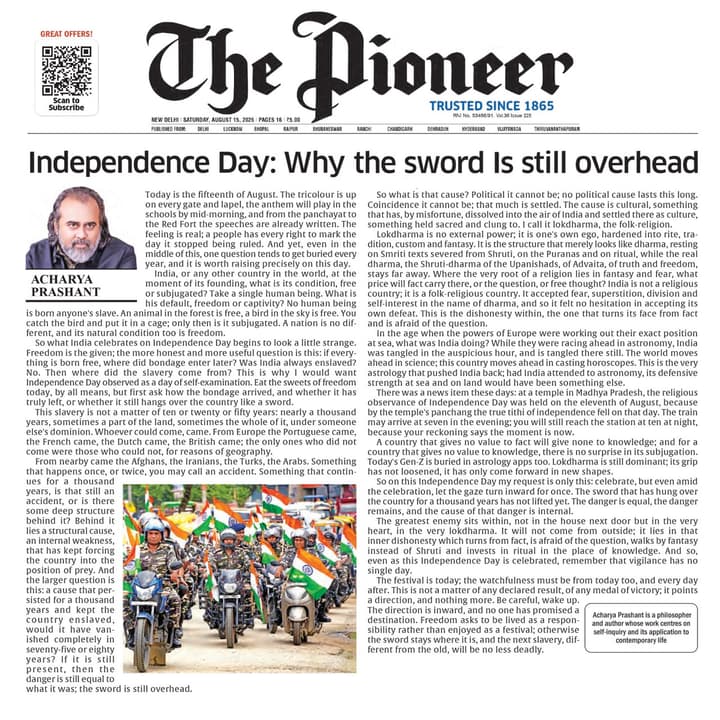
Freedom is not merely freedom from foreign rule, but freedom from the inner bondage of fear, superstition, caste, ritual, blind tradition, and disregard for facts and knowledge. India’s long subjugation cannot be explained only by external invasions; internal weaknesses also played a role. Even after political independence, dependence in knowledge, science, technology, and innovation remains. Independence Day must therefore inspire celebration, vigilance, and self-examination.
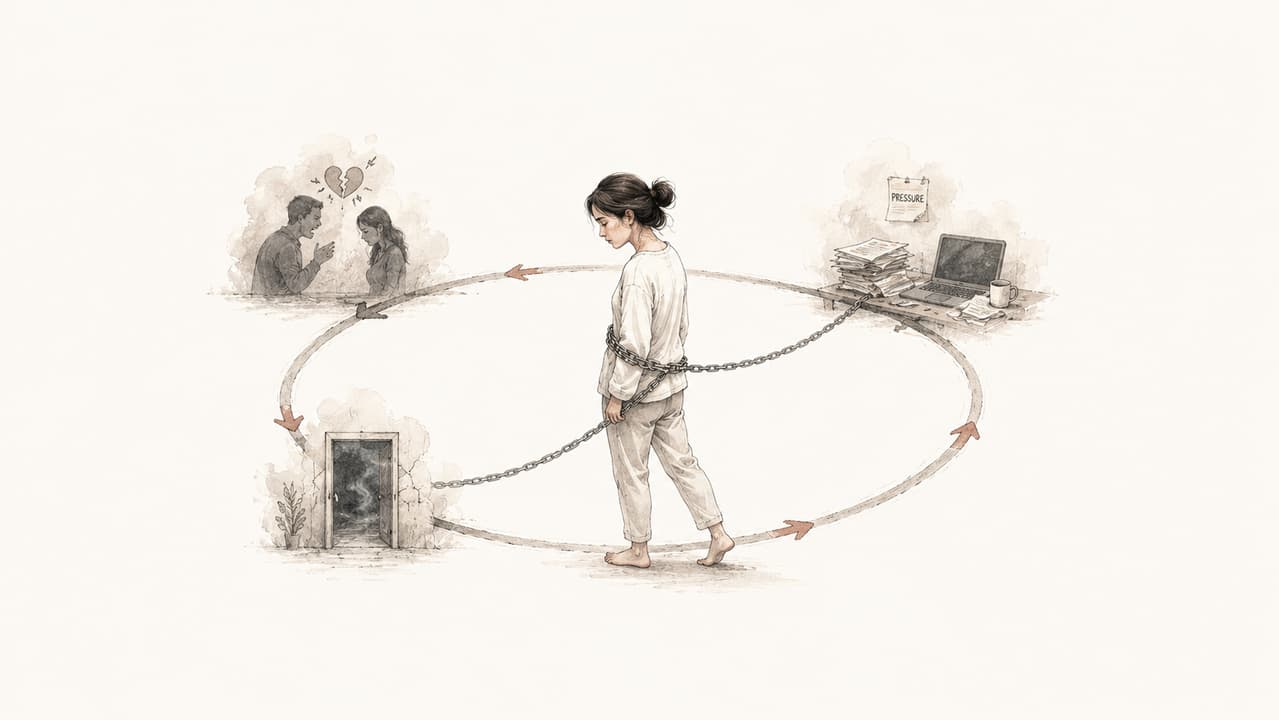
We often believe we are living freely, while our desires, dreams, beliefs, and choices are shaped by physical, social, cultural, religious, and psychological scripts. These scripts offer comfort and security, making us reluctant to examine our bondage. Freedom does not begin by imagining what lies beyond the script, but by deeply observing the cage we already live in, without fear, desire, or attachment.
Climate change is not merely an external crisis of emissions, technology, or policy. The deeper problem lies in the unchecked ego that seeks to fill inner emptiness through endless consumption. This psychological demand drives extraction, production, and environmental destruction while failing to resolve the underlying sense of incompleteness. Meaningful climate action therefore requires more than green technology and policy; it requires education that turns inward and examines the self.
1
Migration is a natural part of human life, but not every movement comes from the same place. Moving for survival, safety, education, or livelihood is different from moving in pursuit of fulfillment through consumption. The same distinction applies to those receiving migrants: neither blanket acceptance nor blanket rejection is wise. What is needed is viveka, the ability to distinguish genuine need from desire, while balancing human compassion with responsibility.
2
Friendships naturally change as people follow different paths in life. When you remain focused on your true purpose, you stop clinging to those who only accompany you briefly. Instead of dwelling on memories or fearing others' intentions, examine your own expectations and self-deception first. Honest self-awareness brings clarity, wiser relationships, and the freedom to move forward without resentment or attachment.
Share
A true relationship is not built on need, possession, or emotional dependence, but on a shared commitment to Truth and inner growth. A worthy companion reflects your reality like a mirror rather than performing a role to please you. Real love is effortless, rooted in one's nature, not expectations. When your highest commitment is to excellence and Truth, relationships become a natural outcome—not the purpose of life itself.
10
Violence begins long before the knife or the slaughterhouse—it begins with the ego, the one that draws boundaries, seeks justification, and decides who deserves compassion. Laws and reforms may reduce suffering, but they cannot end violence while the ego remains intact. When the ego dissolves, exploitation ends naturally, and compassion no longer depends on regulation or moral boundaries.
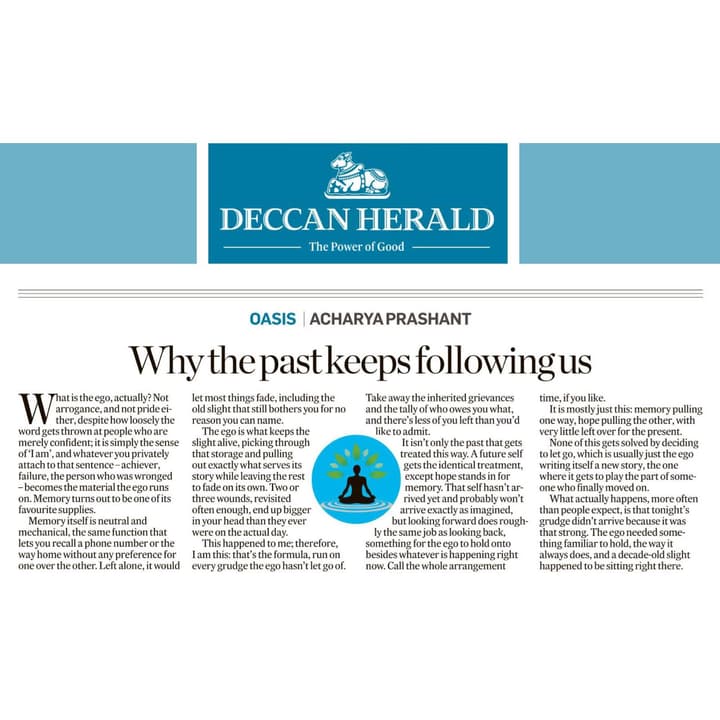
Memory is neutral, but the ego rarely is. It keeps selected wounds alive, building identity around past hurts while projecting hope onto an imagined future self. Both memory and hope become psychological anchors, leaving little attention for the present. Real freedom doesn’t come from forcing yourself to “let go,” because that can become another ego story. The past persists not because it is powerful, but because the ego keeps returning to it for a sense of continuity and identity.
Share
Victory is not decided by the trophy you hold but by the battle you choose to fight. Real strength lies in making the right decisions, staying true to your deepest values, and refusing to be ruled by fear or circumstances. When your actions arise from clarity rather than ambition, the outcome loses its power over you. The moment you choose the right path, you have already won.
3
A real revolution does not begin on the streets but within the individual. While injustice, corruption, and paper leaks demand accountability, lasting change is impossible without self-knowledge, inner honesty, and responsibility. Society transforms only when people examine the ego behind their choices, awaken themselves and others, and act with clarity. First the mirror, then the march; first inner revolution, then outer revolution.
1
True learning is not built on memorizing answers but on understanding reality. Memory may help in examinations, but life constantly presents new questions that demand clarity, presence, and intelligence. Education becomes meaningful only when knowledge is deeply understood and lived, not merely remembered. Real understanding frees us from dependence on rote learning and enables us to respond wisely to every new situation.
The crisis exposed by the NEET paper leak goes far beyond examination malpractice. When society teaches young people that a single rank determines their worth, corruption, desperation, and broken trust become inevitable. Lasting reform requires more than stricter systems—it demands a transformation in how education, success, and self-worth are understood by students, parents, teachers, and society.
1
Technology is neither good nor bad by itself; its impact depends on the person using it. When it replaces independent thinking, confidence, and real-life abilities, it becomes a crutch instead of a source of progress. True advancement requires human maturity to grow alongside technological power. Without inner responsibility, every new innovation risks amplifying the same old weaknesses instead of creating a better future.
2
Modern life is increasingly driven by materialism, social validation, and the desire to impress, leaving authenticity behind. When image becomes more important than substance, relationships, education, and success turn into performances rather than expressions of truth. Real transformation begins with inward honesty—the courage to stop seeking approval, confront inner emptiness, and choose authenticity over appearances, imitation, and external validation.
1
Fear of public speaking is rooted less in speaking itself and more in dependence on others' opinions. When identity becomes tied to social approval, even simple words feel difficult. Mistakes should be treated as feedback, not as a measure of self-worth. Confidence grows by letting go of image, accepting correction without guilt, and speaking without seeking validation from others.
The Bhagavad Gita is not a separate spiritual path or an escape from everyday life - it is a mirror that reveals the truth of your present life. Real spirituality begins with self-observation, not rituals or temporary practices. Lasting transformation comes when work, relationships, career, and personal growth become one integrated life driven by awareness, love, and freedom rather than ego, fear, money, or social pressure.
2
Wrong career choices, unhealthy relationships, and endless entertainment are often symptoms of escaping oneself rather than seeking happiness. Self-deception, ego, and inner dissatisfaction drive people toward temporary relief through social media, gaming, movies, and distractions. Real transformation begins with self-inquiry, honest awareness, and the courage to face reality instead of running from it, leading to clarity, freedom, and meaningful living.
3
Should women choose marriage or career? Society often forces this question, but Vedanta asks a deeper one: are these choices truly yours? This discussion explores family pressure, the biological clock, gender equality, and social conditioning, revealing why freedom, consciousness, and self-awareness matter more than living according to expectations or traditional roles.
17
Modern education teaches science, technology, economics, and the external world with remarkable depth, yet often neglects the one who acquires that knowledge. Without self-knowledge, education serves fear, greed, and ego instead of truth. Lasting solutions to humanity's crises require combining outer knowledge with inner awareness. True education liberates consciousness by examining both the world and the knower, not merely producing skilled professionals.
1
Superstition does not begin with rituals alone; it begins with unquestioned beliefs about the self. Science can remove many false beliefs, but complete freedom requires Self-knowledge. Vedanta, philosophy and meditation help expose the ego, making awakening possible. Religion becomes meaningful only when it encourages Self-knowledge rather than blind belief. Real freedom comes not from accepting inherited ideas but from understanding oneself through direct observation and awareness.
4
Modern culture often celebrates rebellion, travel, and endless experiences as symbols of freedom and happiness, but they can become just another form of conformity. Genuine personal development begins with mindfulness and creating the right mind space to understand oneself. Without inner clarity, changing places, trends, or identities only repeats old patterns. True freedom comes from self-understanding, not from chasing new experiences or fashionable rebellion.
5
Bullying hurts deeply only when it is allowed to define one's inner identity. External abuse may wound the body, but lasting psychological wounds require inner participation. While OCD, anxiety, depression, schizophrenia, and other mental health conditions deserve proper treatment through psychiatry, lasting freedom demands self-knowledge.
Success achieved under pressure or conditioning is not true success because the goal was never truly one's own. Before chasing any achievement, one must ask whether the desire is authentic or borrowed from society. Real change comes not from becoming stronger but from gaining clarity and honesty about oneself. Young people are already capable; what keeps them trapped is the comfort of obeying external expectations. Life is too short to spend serving invisible masters instead of pursuing what one genuinely loves and understands.
7
The developed world often presents itself as clean by shifting pollution, waste, and environmental costs to poorer nations rather than eliminating them. Real cleanliness is not the absence of visible dirt but the absence of the ego that creates and conceals it. Laws, technology, and appearances can regulate behavior, but without inner transformation, societies merely relocate their destruction instead of ending it. A truly clean civilization is one that reduces consumption, acts from responsibility rather than image, and confronts the pollution within before claiming purity outside.
True God is the Truth right now in your heart. That is true godliness, true bhagavatta. The problem is that people want to avoid the real living Truth in their heart. Therefore, they come up with stories that place an imaginary God somewhere up in the skies. God is wonderful, but the stories and the imaginations about God are all very disrespectful towards God. When there is love for God, God is held very close to the chest, and that God is called Truth. That God is the very purpose of philosophy and the very origin.
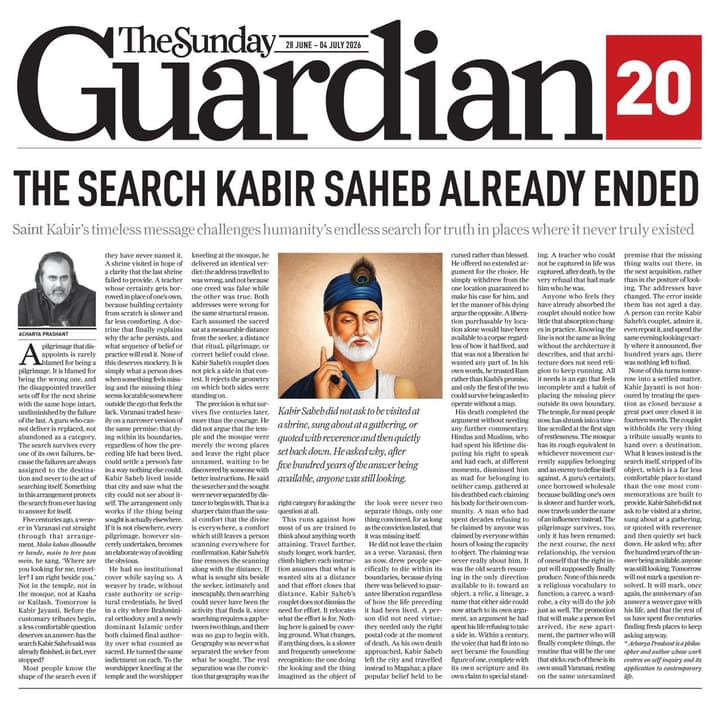
Kabir Saheb's message questions the very act of searching for fulfilment outside oneself. Whether through religion, relationships, success, possessions, or identity, people keep assuming that what is missing lies somewhere else. The problem is not the destination but the belief that fulfilment exists at a distance. Real freedom begins when the search turns inward, recognising that the seeker and the sought were never truly separate.
2
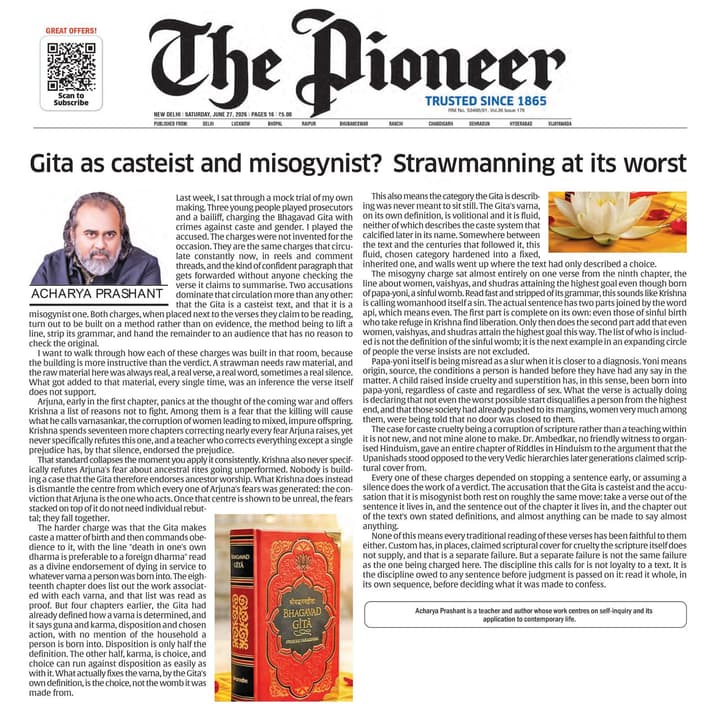
The Bhagavad Gita is often accused of supporting caste and misogyny through selective quotations that ignore context, grammar, and the text's central teachings. A closer reading shows that its emphasis is on inner qualities, conscious action, and spiritual equality rather than birth-based hierarchy or gender discrimination. Misinterpretations arise when isolated verses are detached from their broader meaning, while the Gita consistently points toward self-knowledge, freedom from ego, and the universal possibility of liberation for every human being.
1
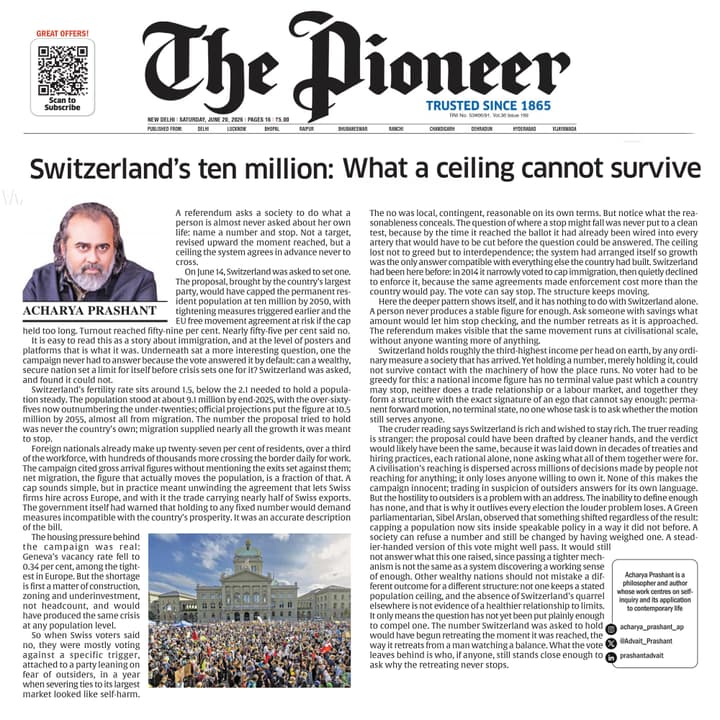
Switzerland’s rejection of a population cap was not simply a vote on immigration but a reflection of a deeper difficulty: defining what is “enough.” Despite wealth, stability, and low birth rates, economic interdependence made limiting growth politically and practically costly. The episode highlights a broader human tendency, individual and collective, to keep expanding goals and expectations, while rarely questioning the endless pursuit of more or asking where growth should finally stop.
1
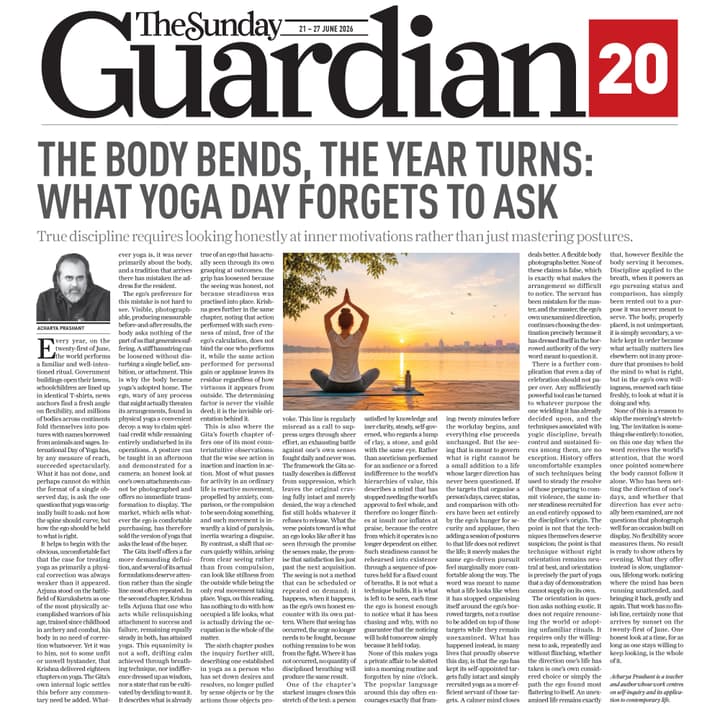
True yoga is not primarily about physical postures but about examining the ego, attachments, and motivations that shape one’s life. While the body can be trained and displayed, real discipline lies in honestly questioning desires, ambitions, and borrowed goals. Techniques and routines alone cannot bring inner freedom. Yoga begins when one repeatedly investigates who is setting the direction of life and whether that direction has ever been consciously examined.
Materialism and emotionality are not opposites; emotions themselves often arise from material desires, fears, and biological conditioning. The real distinction is between the material-emotional world and spiritual understanding. Spirituality is not another belief, emotion, or acquisition but the clear observation of thoughts, desires, and assumptions. Many personal and social crises stem from unexamined beliefs, and meaningful change begins by questioning them, speaking truthfully, and paying attention to what occupies the mind.
3
Human beings are born into uncertainty, surrounded by beliefs, identities, and social conditioning that offer ready-made answers to fundamental questions. Real spirituality begins not with accepting collective or personal beliefs, but with honestly examining one’s own suffering, fears, and false identities. The journey is not toward comforting ideas, but toward self-inquiry, where truth is discovered through questioning, observation, and the gradual rejection of illusion.
Science and philosophy arise from different kinds of inquiry. Matter seeks continuity of state, while the ego seeks continuity of existence and constantly changes identities to preserve itself. Fear, danger, and suffering are rooted in the ego’s sense of “I,” not in material reality itself. Questions are valuable because they expose hidden beliefs, and genuine learning requires challenging assumptions through inquiry, dialogue, and self-examination.
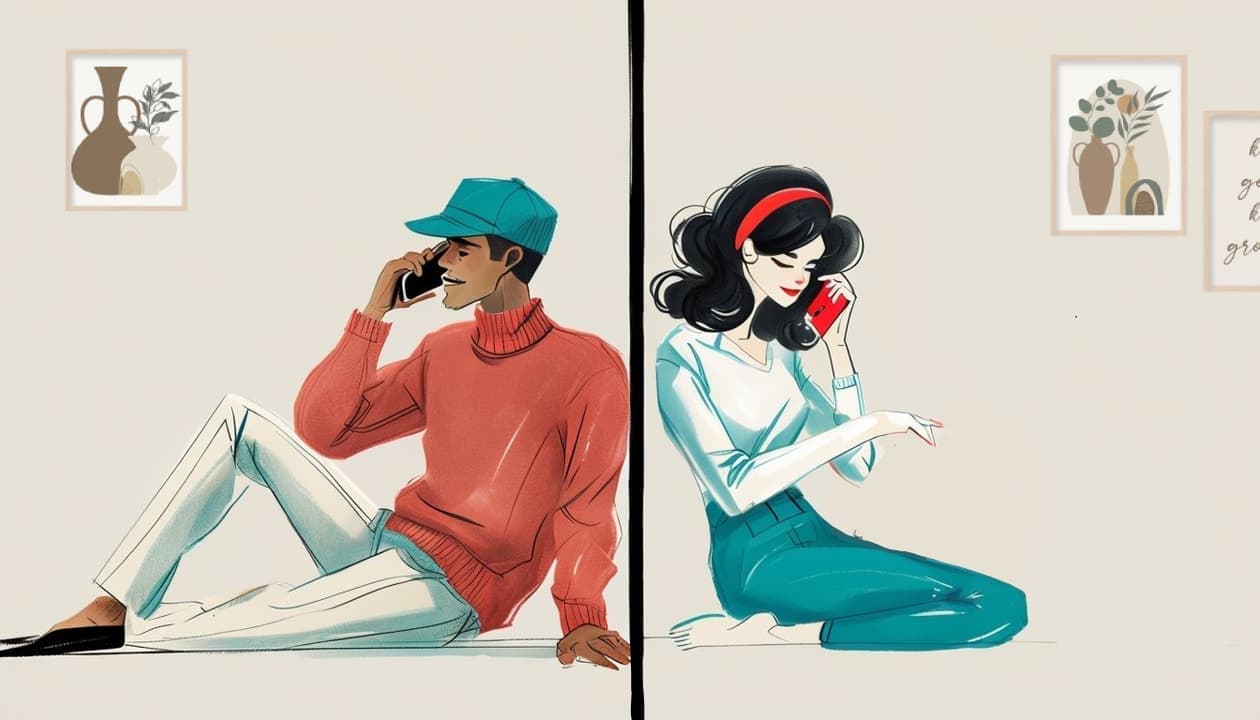
Modern relationships often create more insecurity, not less, because people are conditioned to seek completion, validation, and identity through another person. Social institutions, media, culture, and tradition continuously reinforce the idea that fulfillment lies in romantic attachment. As a result, relationships become driven by dependence rather than love. Real companionship becomes possible only when one is inwardly at peace and not using another person to fill an inner void.
3
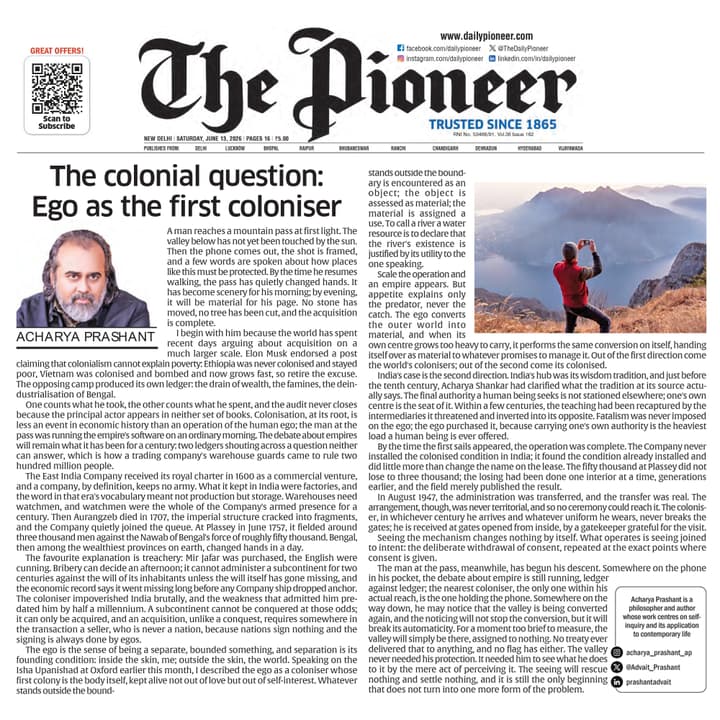
Colonialism is not only a historical event but a recurring psychological pattern. Empires succeed when individuals surrender inner authority and allow external forces to think, choose, and decide for them. Political independence alone cannot end colonisation if the mind remains dependent on ideology, superstition, social conditioning, or authority. Real freedom begins with self-awareness, personal responsibility, and the continual refusal to hand over one’s judgment to any external ruler.
7
India’s deepest contribution is not culture, ritual, or tradition, but the inquiry into the self. Laws, technology, policy, and economic progress can improve external conditions, yet they cannot resolve the inner hunger that drives conflict, consumption, and ecological crisis. Real change begins with self-knowledge, honesty, and awareness of the one who chooses, desires, and acts. Without understanding the self, progress remains incomplete, no matter how advanced society becomes.
Freedom begins when a person stops handing over the authority of life to others. Society, family, and tradition can offer opinions, rewards, or disapproval, but they cannot truly stop someone unless there is inner dependence on their approval. Many conflicts that appear external are rooted in psychological dependence, fear, greed, obligation, or the desire for validation. Clarity does not come from controlling every outcome; it comes from ensuring that decisions are not driven by inner confusion, and then allowing life to unfold naturally.
6
Sixty million followers do not necessarily indicate a transformation in consciousness. Large numbers may reflect persistent outreach rather than deep commitment. Truth is often avoided not through opposition but through indifference, convenience, and self-deception. Real change requires sustained effort, inner honesty, testing one's understanding, and the courage to face uncomfortable truths instead of seeking comfort, validation, or easy inspiration.
1
Operating from the highest inner point means living with honesty rather than self-created illusions. The ego becomes “higher” not through mystical growth but by dropping false self-images and testing its claims against reality. When honesty weakens, lower motives take control, creating inner conflict and disorder. Real growth lies in continuously questioning oneself, facing uncomfortable truths, and preventing the ego from being driven by comforting but deceptive beliefs.
3
Nature’s crisis is not driven only by technology, corporations, or policy failures, but by a deeper pattern of endless consumption rooted in human dissatisfaction. Forests, rivers, and even environmental causes are often turned into tools for personal identity and comfort. Real ecological change begins when people honestly examine the desires behind their choices and act from awareness rather than habit, guilt, or the need for more.
Freedom is often assumed to be the ability to choose, yet most decisions arise from conditioning, biology, social influences, and habit. Real freedom begins by seeing how mechanical and unconscious life usually is. As awareness deepens, confusion and endless options gradually diminish, making life simpler and more direct. Liberation lies not in imagining freedom, but in recognising and understanding the forces that keep one bound.
4
Inner freedom becomes impossible when identity is borrowed from family, friends, or social expectations. Fear, guilt, and pressure arise because people allow others to define their worth and choices. Relationships become healthy only when they support growth rather than control it. Real autonomy comes from self-understanding, continuous inner inquiry, and the courage to act from clarity rather than conformity. When there is inner certainty, labels, criticism, and social judgment lose their power.
Women's oppression survives not only through external control but also through the internal acceptance of identities imposed by society. Freedom cannot be permanently granted from outside; it must arise from an individual's own sense of dignity, agency, and responsibility. While laws, institutions, and support systems matter, lasting liberation begins when people stop defining themselves through inherited limitations and choose to assert their own consciousness, freedom, and self-worth.
Love is not attraction, possession, dependency, or a transaction driven by personal gain. As long as relationships arise from insecurity, ownership, or the desire for psychological completion, they remain centered on the ego. Love is simple, natural, and free of self-interest, flowing without preference or exclusion. The ego seeks security, continuity, and suffering because they preserve its identity, while freedom and joy threaten its existence. A meaningful life begins when one stops repeating old patterns, accepts uncertainty, and chooses freedom over the comfort of familiar cages.
True dedication does not feel like painful sacrifice. When a goal becomes love, unnecessary distractions quietly lose importance instead of being forcefully abandoned. Personal growth and contribution to society are not separate; meaningful work naturally benefits both oneself and others. Real freedom is not outward performance but inner clarity. Life should be measured by inner elevation, not by comparison with others’ achievements.
Climate change, population policies, and social conflicts often arise from a common source: narrow love. People, communities, and nations justify actions that benefit their own group while overlooking broader consequences for humanity and the planet. True care is not exclusive or identity-based; it is expansive and inclusive. Even motherhood, patriotism, and family concern can become limiting when reduced to narrow self-interest rather than guided by wisdom, freedom, and universal responsibility.
Fear, social conditioning, and painful memories often shape how people live and make choices. True growth begins by questioning inherited beliefs, refusing to remain trapped by past wounds, and acting from understanding rather than conformity. What appears to be sacrifice is often just the abandonment of conditioned habits. Freedom comes not from external systems, but from the courage to see clearly, learn, and move beyond fear.
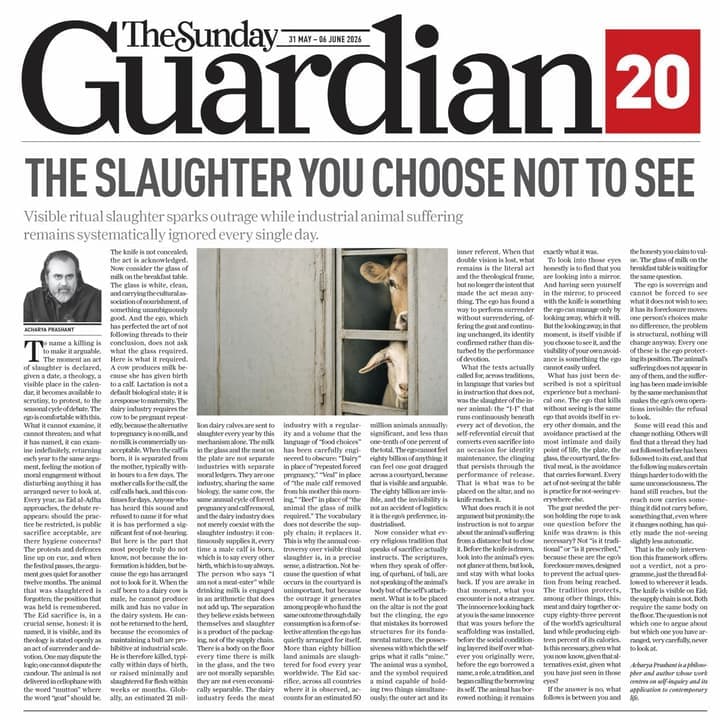
Public outrage often focuses on visible ritual slaughter while ignoring the far larger, everyday suffering embedded in industrial meat and dairy systems. Milk, meat, and animal killing are deeply interconnected through supply chains that remain hidden from view. The deeper question is not about isolated acts but about the human tendency to avoid examining the consequences of habitual consumption and the assumptions that make such avoidance possible.
1
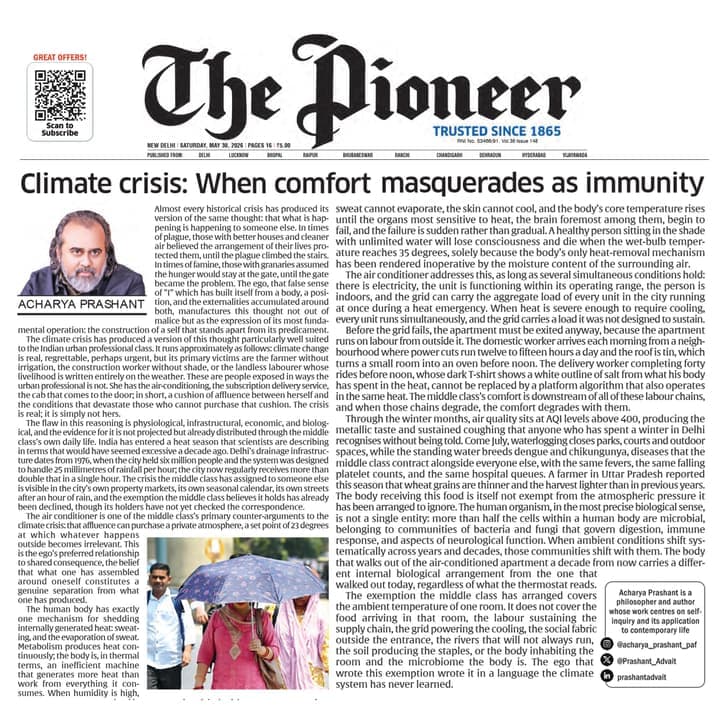
Climate change is often treated as a problem that affects others, while comfort and wealth seem to offer protection. Yet rising heat, floods, failing infrastructure, food insecurity, disrupted labor systems, and ecological decline are already affecting everyday life. Air conditioners, gated communities, and economic privilege cannot shield people from collapsing natural systems. The crisis is shared, and no individual or class can remain truly insulated from its consequences.
Entrepreneurship is often driven by the same urge for accumulation that shapes human life from childhood-chasing bigger numbers, status, and validation without self-understanding. This leads to hollow pursuits where profit replaces purpose. True fulfillment arises not from external success, but from inner clarity. When one understands oneself, work becomes meaningful, and money shifts from being the goal to merely a tool.
Curiosity and honest questioning do not oppose love; they deepen understanding. Blind obedience creates dullness, while genuine inquiry keeps the mind alive and engaged. True questioning is not self-defense but a sincere search for clarity. Most people remain psychologically hypnotized by fear, entertainment, and ego, yet a small conscious voice within always seeks truth. Real change begins when one chooses love and self-realization over fear and self-preservation.
The climate crisis is not merely an external environmental problem but a reflection of inner human greed, desire, and psychological disorder. Drawing from the Gita’s idea of yagya as desireless action, it says real ecological healing requires inner transformation. Outer pollution, exploitation, and destruction mirror the ego’s inner confusion, making personal consciousness and planetary health deeply inseparable.
3
The debate around nudity and movements like “Free the Nipple” miss a deeper issue: true freedom is not about clothing, but freedom from psychological conditioning and body-based identity. Clothes themselves neither oppress nor liberate. A truly free society is one where the body becomes ordinary and irrelevant, not a source of obsession, shame, validation, or social control.
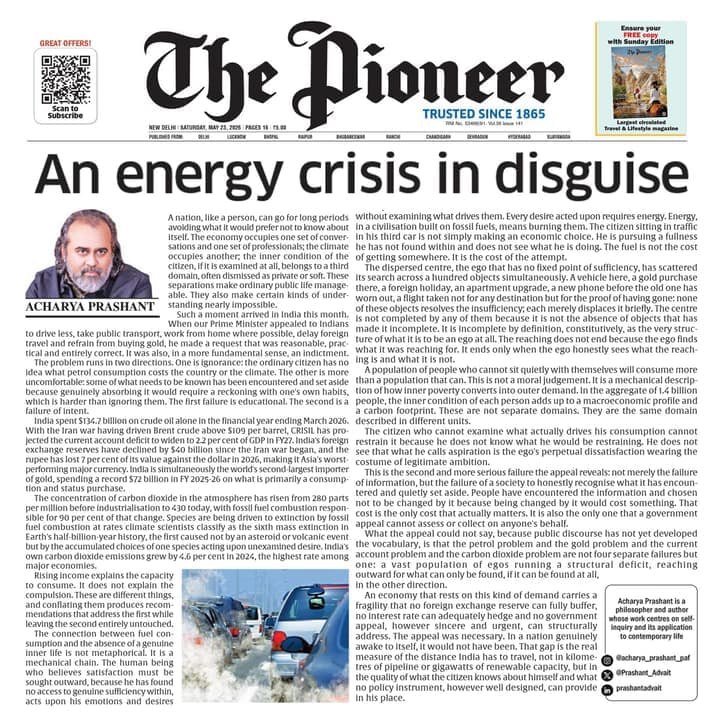
India’s energy crisis may not be only about oil prices, imports, or climate change. The article argues that beneath these visible problems lies an invisible one: a society endlessly trying to fill inner insufficiency through consumption. Cars, gold, travel, upgrades and endless wanting are not merely economic choices; they reflect a deeper restlessness. The real deficit may not be in fuel reserves, but within the human mind.
3
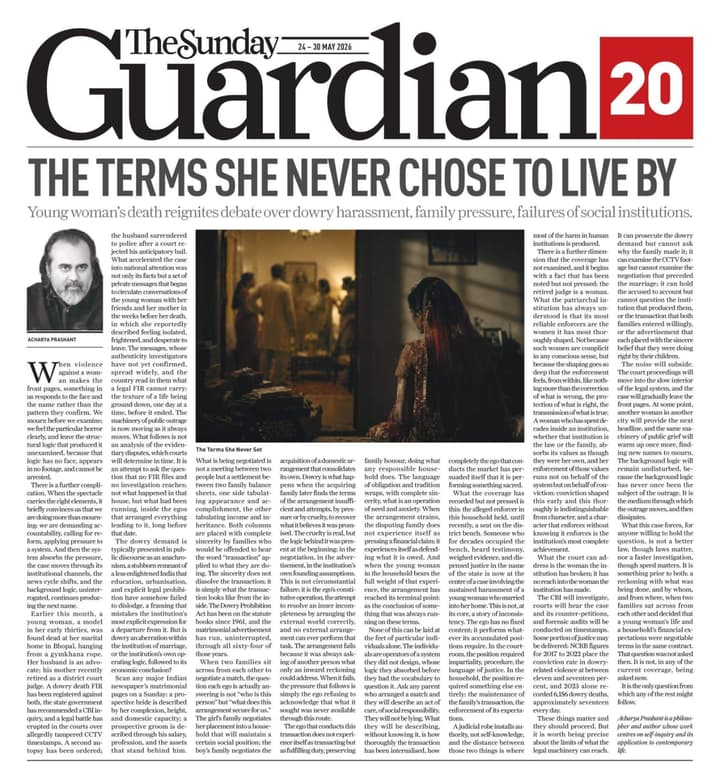
The dowry violence is not a social “exception” but a natural outcome of how marriage is treated as a transaction between families. Using a recent dowry death case in Bhopal, it shows how ego, status, tradition, and family expectations disguise financial negotiations as duty and honour. Laws may punish individuals, but the deeper structure — where relationships become arrangements for security and social gain — remains largely unquestioned.
2
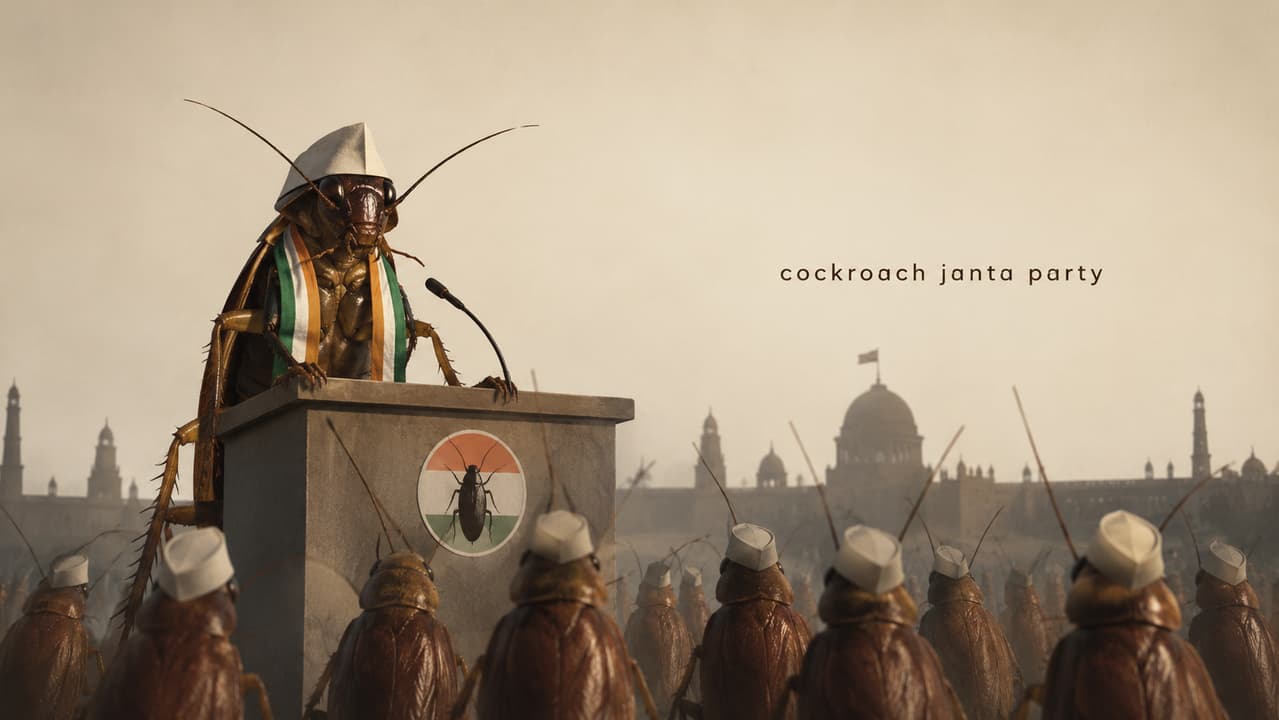
Will another revolution really change anything, or are we just changing faces while keeping the same consciousness intact? The article argues that societies often rush toward rebellion because it feels easier than responsibility. We blame systems, governments, and institutions, but the deeper crisis lies in the collective ego that creates them. Without inner education and self-understanding, every revolution risks becoming another cycle of the same story.
8
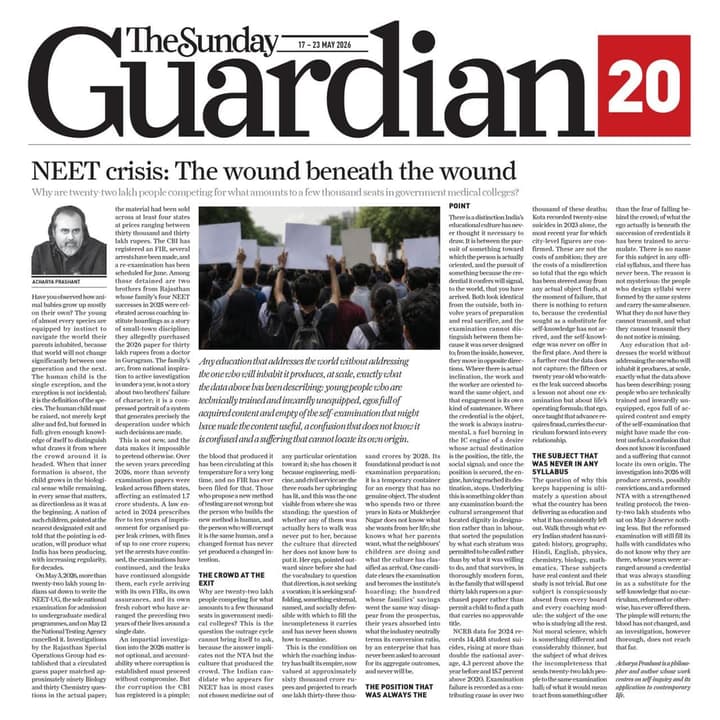
Why are twenty-two lakh students competing for a few thousand seats? The crisis may not begin with leaked papers, but with a culture that teaches young people what to chase without helping them understand why they are chasing it. When education becomes a race for titles, positions, and approval, success turns into survival and failure into collapse. The missing subject may not be in the syllabus, but in the student.
2
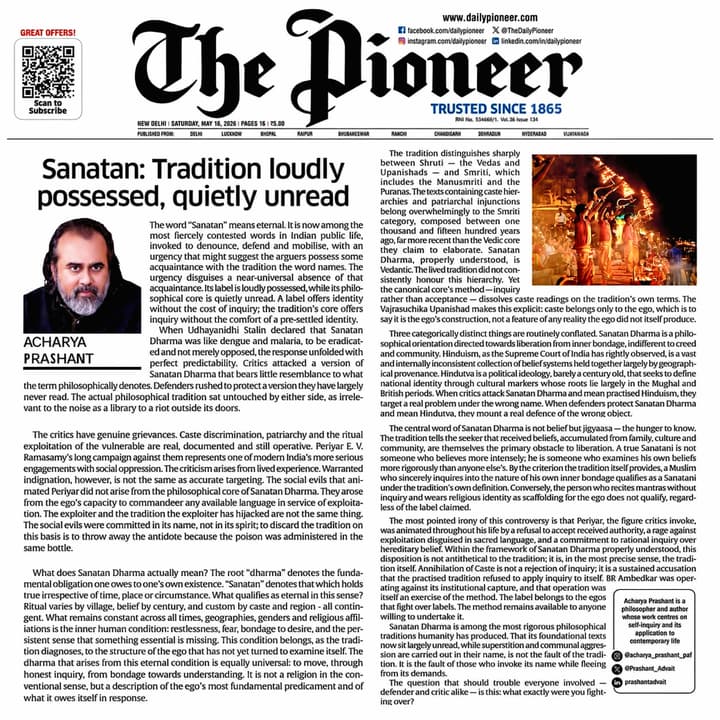
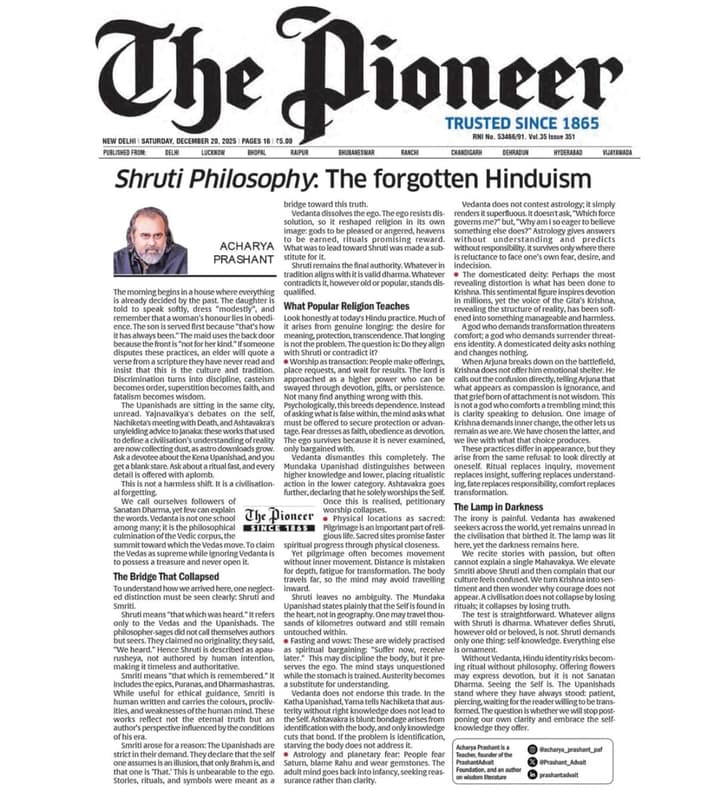
What if the loudest debates around Sanatan are happening between people who have never truly examined what they are defending or attacking? The article argues that the conflict is rarely about the philosophical core of Sanatan Dharma and more about labels, identities, and inherited assumptions. A tradition built on inquiry is often reduced to slogans, while its deepest questions remain quietly unread.
A Mother’s Day reflection examining marriage, gendered labour, loneliness, and the inherited architecture of emotional expectations. Most marriages do not begin in clarity, but in fear, fear of loneliness, social judgment, and inner incompleteness. Two people come together not to understand themselves, but to manage each other’s emptiness through roles, routines, and silent expectations. The arrangement may work for decades, yet beneath the stability survives an unexamined loneliness that no ritual or relationship can truly dissolve.
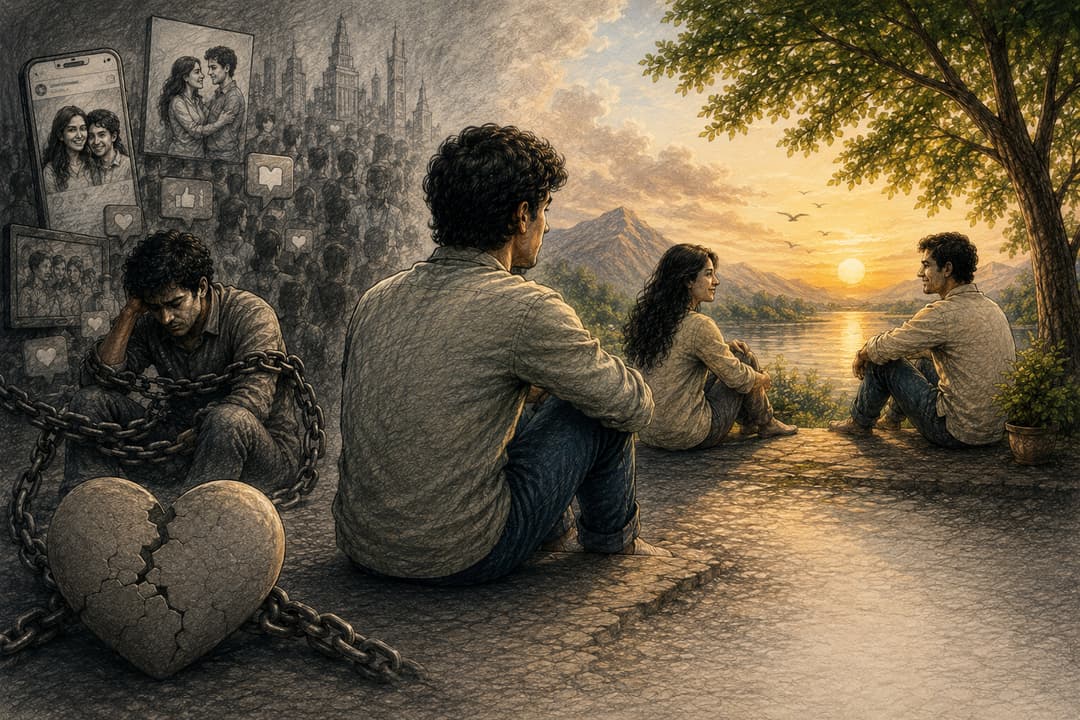
Is loneliness really the absence of people, or the crowd of images and ideas inside us telling us that we “need someone” to feel complete? Two incomplete people cannot create wholeness together. Relationships are beautiful, but only when they do not become substitutes for inner completeness. Relate to the world, connect deeply, but never use another person to fill your inner hollowness.
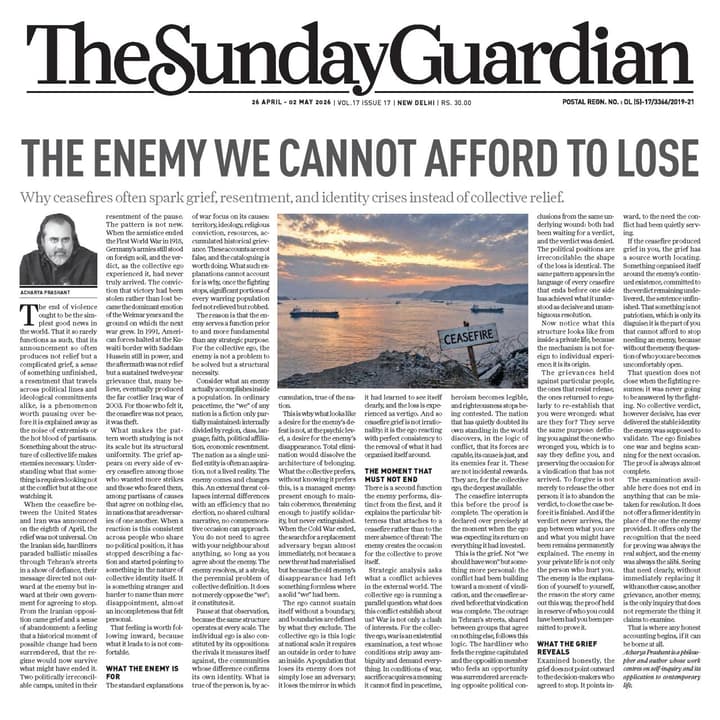
Why ceasefires often spark grief, resentment, and identity crises instead of collective relief. The end of violence should feel like relief. Yet ceasefires often produce grief, anger, even resentment. Why? Because the enemy does more than threaten us, it gives identity, unity, and the promise of vindication. When conflict stops, many feel robbed of something unfinished. The real loss is not war itself, but the dependence on an enemy to know who we are.
5
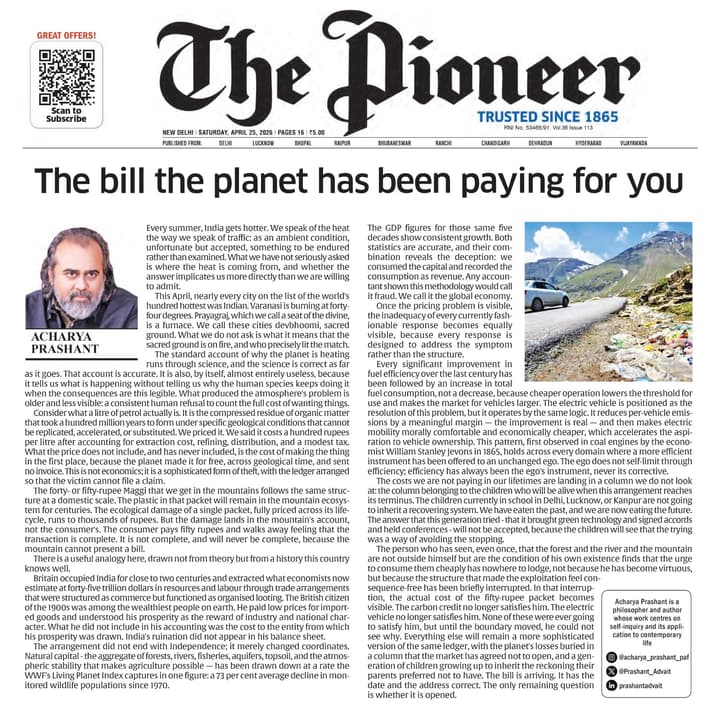
Every summer India gets hotter, but have we asked who lit the fire? Petrol, plastic, cheap convenience, endless growth, we paid the price, but never the full cost. The real bill was shifted to rivers, forests, mountains, and the children yet to inherit this world. We consumed capital and called it profit. This is not just a climate crisis, but a crisis of desire. The bill has arrived. Will we open it?
Do you get stuck between hope and fear while thinking about the future? The problem isn’t the future, but your intention. Most people look ahead just to remain who they are. The right approach is to use the future as a chance to change. When the goal is truly challenging, there’s no time left to worry or expect results—only to act fully.
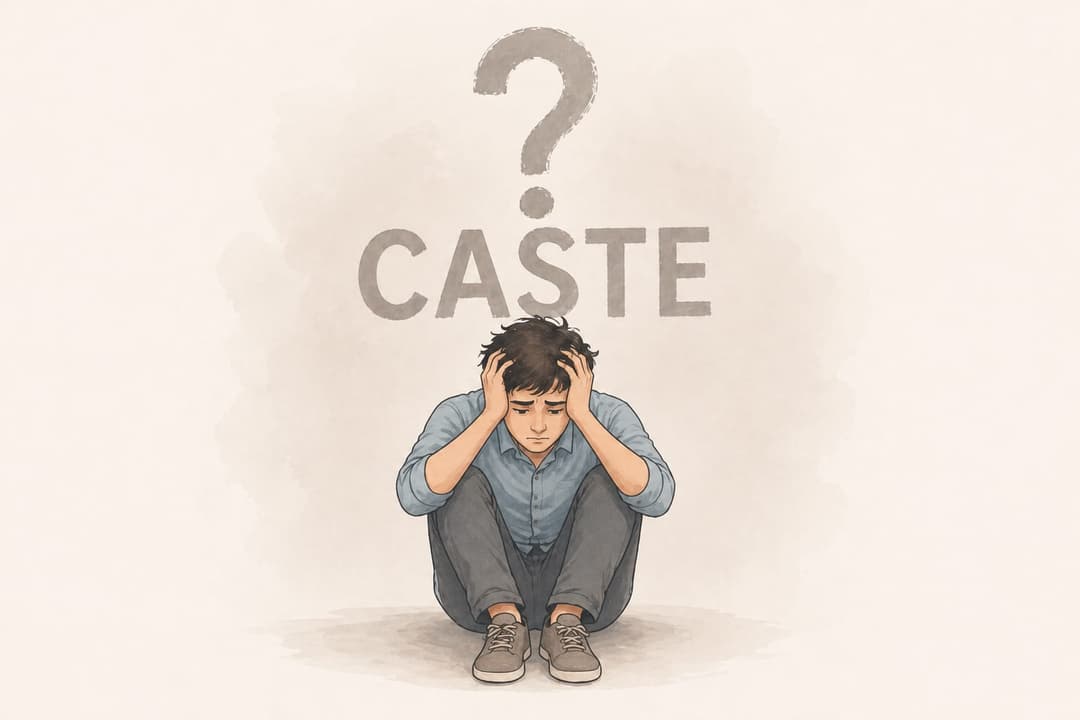
Do you still feel the need to know someone’s caste? That urge itself is the problem. Caste exists neither in the body nor in consciousness; it is a construct of the mind. Society keeps it alive because the ego thrives on division. Until you see a person simply as a person, caste will persist. The real solution lies in understanding and dropping inner ignorance.
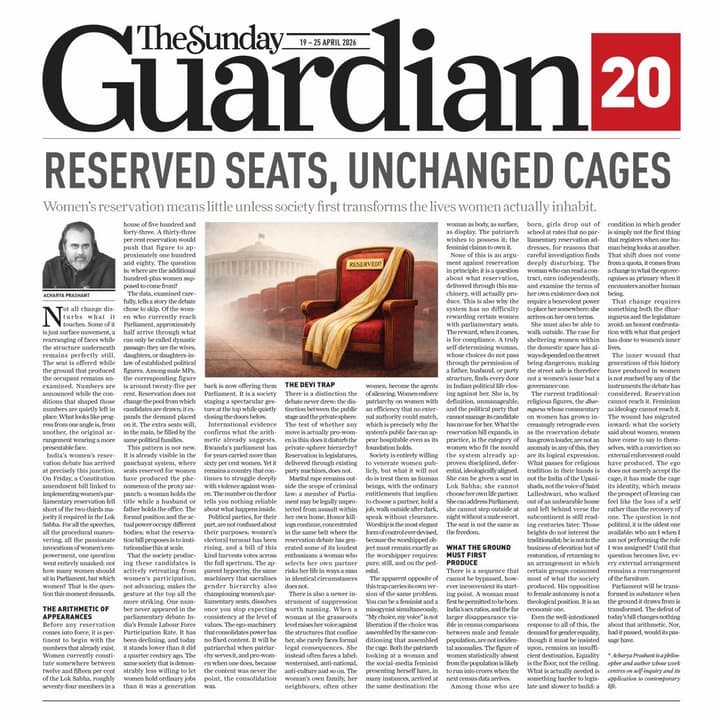
Women’s reservation means little unless society first transforms the lives women actually inhabit. More seats for women promise progress, yet the structure beneath remains unchanged. Representation grows, but the same families, same control, and same limitations persist. A woman may enter Parliament yet remain bound in her personal life. Without changing the ground that shapes her identity and choices, reservation risks becoming a surface shift, not real freedom.
Feminism challenged external oppression, yet the deeper wound remains untouched. Rights, representation, and power have increased, but a woman often still sees herself through the same objectifying lens. The issue is not just social but internal. Without self-inquiry, change only shifts roles, not bondage; the cage remains, merely better furnished.
Many so-called spiritual practices falsely promote intoxication as a path to higher consciousness. In reality, this only deepens confusion. True spirituality is about clarity and self-understanding, not external experiences or blind belief. Neither gurus nor media can offer truth. It must be discovered within by honestly observing and rejecting inner falseness, with awareness and sincerity.
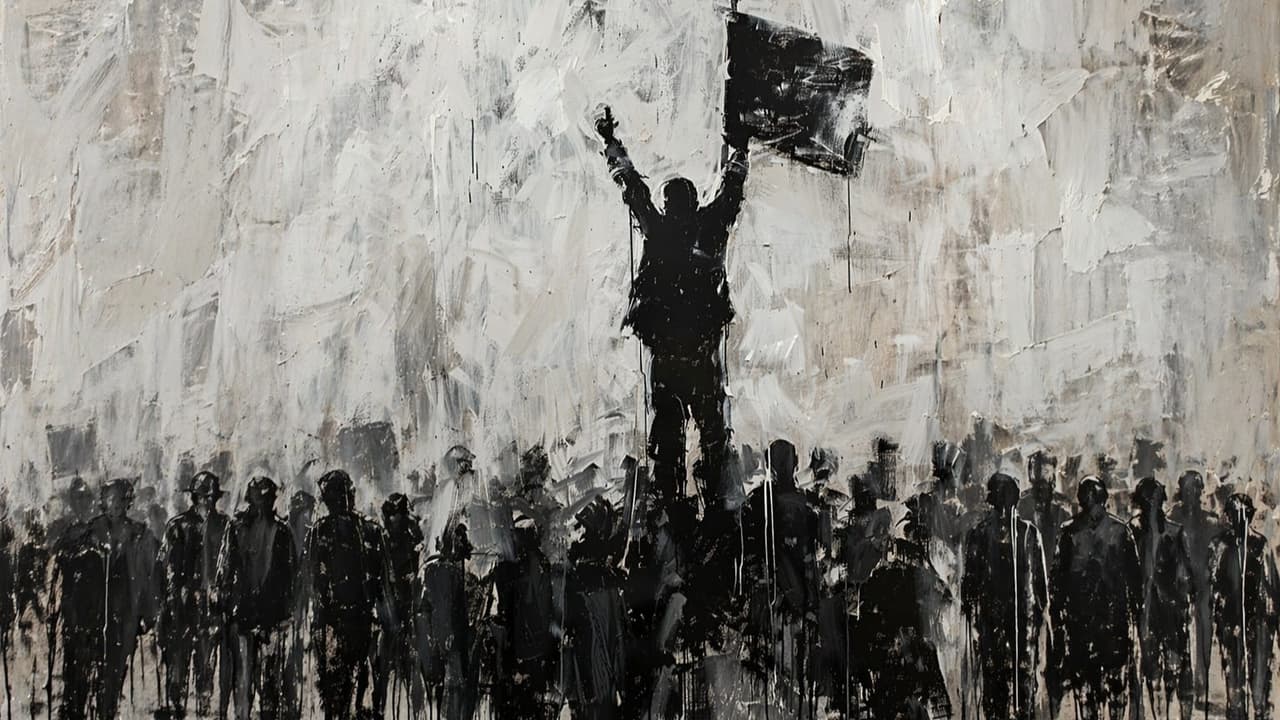
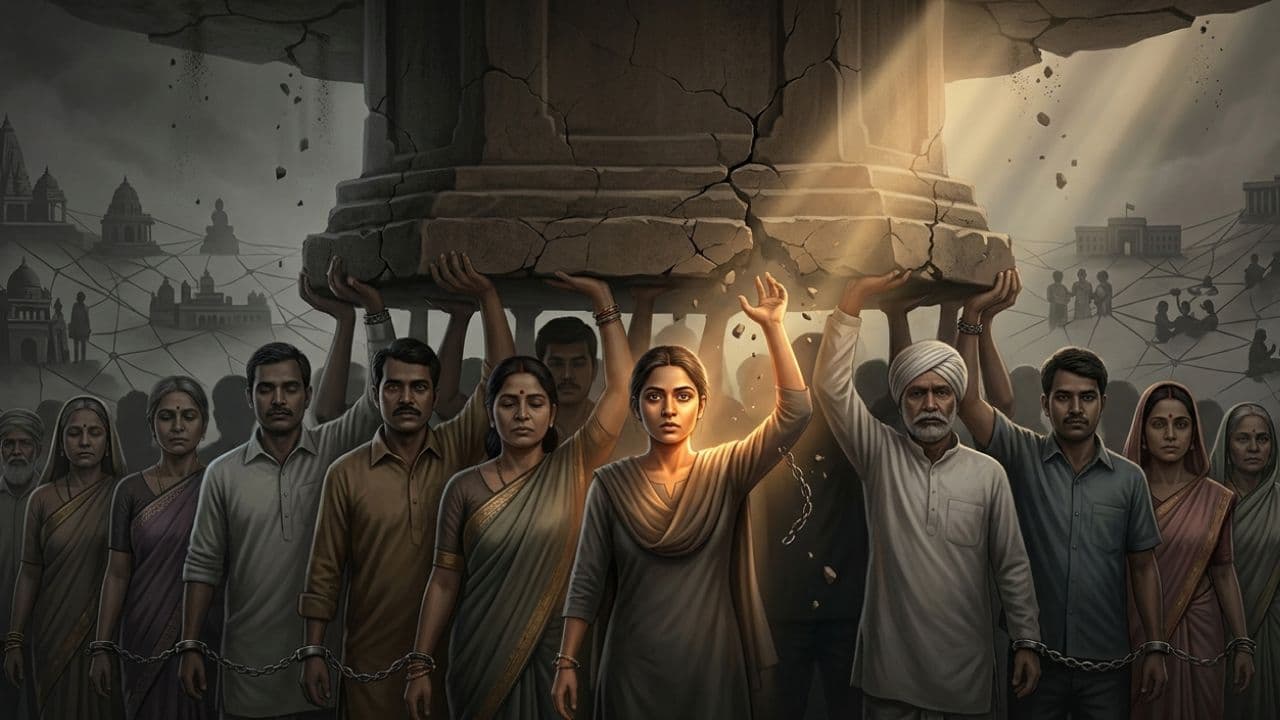
If most people are oppressed, why do unjust systems still survive? Because the oppressed themselves unknowingly support them through inner ignorance. No structure can sustain without the participation of those it exploits. Real change cannot begin outside; it must begin within. When individuals see clearly and refuse to remain complicit, the system collapses. Blaming the system is easy, but transformation demands responsibility for one’s own life.
Gen Z isn't rebellious or individualistic - they're simply following their generation's conditioning, just as previous generations followed theirs. Real rebellion begins with honest inquiry into why you live as you do. The primitive restlessness driving all humans remains unchanged; only its expression differs. True freedom requires questioning borrowed desires, recognizing that your ambitions, tastes, and choices aren't genuinely yours. Vedanta teaches this: stop chasing false questions and confront who you actually are beneath all conditioning.
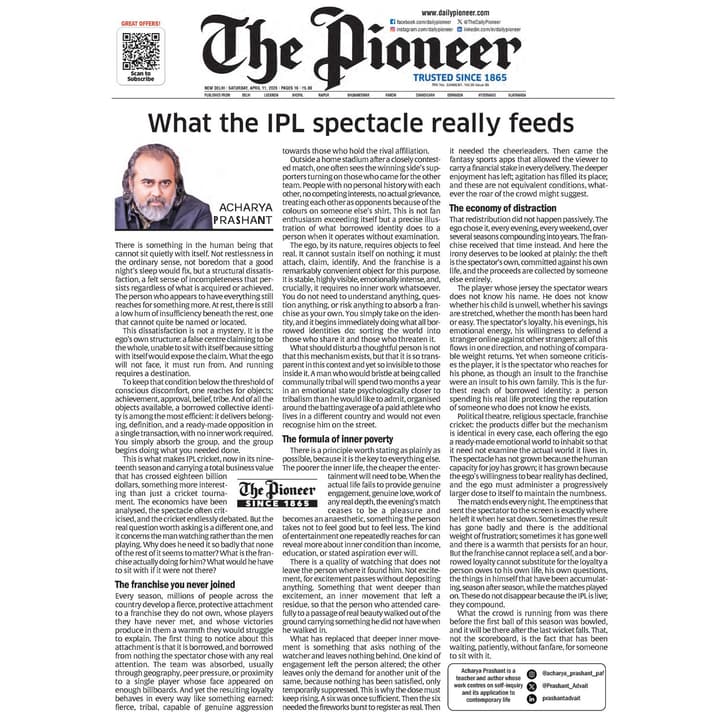
The ego seeks borrowed identity to avoid facing itself. The IPL franchise provides this escape, belonging without inner work. Yet this mechanism extracts a cost: attention stolen from genuine engagement, emotional energy flowing toward strangers who don't know the spectator exists. The entertainment apparatus thrives on inner poverty. When the match ends, the emptiness remains. Real questions accumulate, unexamined, while the spectator runs toward the next season's distraction.
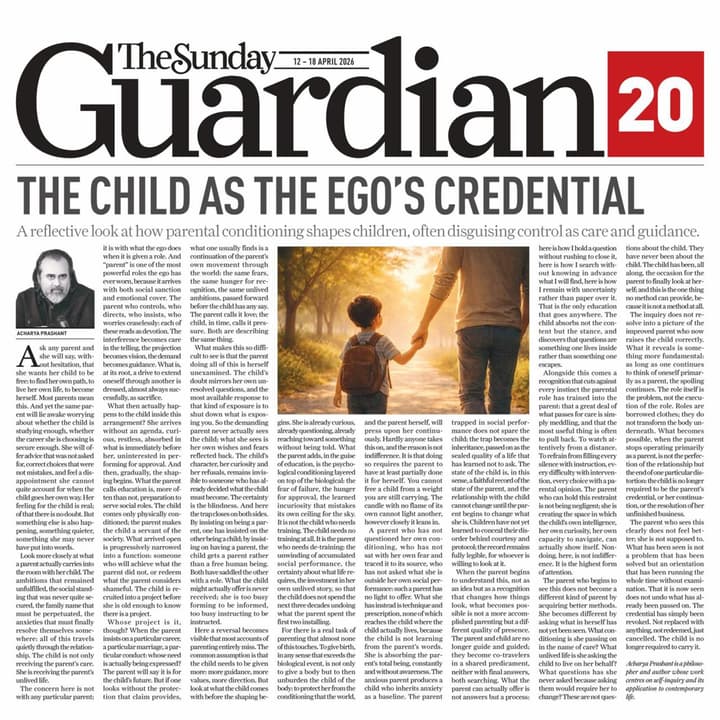
Originally published in The Sunday Guardian on 12 apr '26
Ask any parent and she will say, without hesitation, that she wants her child to be free: to find her own path, to live her own life, to become herself. Most parents mean this. And yet the same parent will…
1
Saurabh Netravalakar, a software engineer and cricketer, discusses balancing multiple pursuits with Acharya Prashant. They explore how hidden wastage of time and energy prevents genuine progress. The conversation extends to team sports teaching ego-dissolution, broadening identity beyond self-interest, and addressing planetary crises through inner transformation. They examine how religion's core purpose—freedom from suffering—unites humanity despite different practices, and discuss practical solutions to environmental exploitation through proper pricing and intent.
Overthinking trivial matters stems from inner emptiness. Fill your life with something genuinely important, a worthy cause, a meaningful pursuit. When you're truly immersed in what matters, random anxieties lose power. Develop strong inner immunity through purpose, not by fighting thoughts. Like Bhagat Singh, marry yourself to something noble. Immersion in the essential is the best meditation and antidote to mental suffering. Without importance, life becomes scattered doing nothing in particular.
You are not truly young, you carry centuries of inherited beliefs, prejudices, and conditioning. Youth is the ability to change and create the new, not follow fixed patterns. Before asking what to do next, question and free yourself from the past. Only by breaking from inherited constraints can genuine freshness emerge.
Our mood is always dependent on others and situations. Results have not been up to your expectations. So now you require a morale booster, some motivating speaker. The moment that fellow is gone, your energy also goes away. But there is another way of living. Deep within myself, I find a point that no external situation can touch. Whatever happens, happens on the surface. That will remain stable, uninvolved, a non-participant. Then you are really free.
Love has to be seen as the need of the mind, the attraction of the mind towards Peace, towards rest. All attraction is there only with a desire; the hope is of fulfilment. So when the mind says ‘love’, along with love it has a picture of love. How do you know that somebody loves you? Only if he behaves according to set patterns. When real love comes to us, we close our gates to it. Love is not with a particular man or woman; Love is the natural state of the mind.
What do you call as ‘bipolar disorder’? Is this disorder fundamentally not present in everybody? Mind lives in dualities; that is what you call as the ‘poles’. Sitting on one pole you feel attracted to the other. There is always a need to change and become something else. Won’t it be great to firstly understand the mind itself–its urges, its actions? There has to be determination to go into the route of the swings, desires and urges, to be free and well. And it is quite possible that the right medication need not be a pill.
Who is a practical man? One who understands before acting. To be practical means to understand and put it into practice. If my work, my action, and my practice is arising out of clarity, then I'm practical. Clarity is not some state, clarity is not some picture and clarity is not ideal. Clarity is not something to be achieved. Clarity is your inherent ability - your very nature to understand, to know, that is called clarity.
Shiv isn’t a person who existed at some point in time. Shiv isn’t confined to a specific place. Stories are sometimes useful pointers to the truth, but in our ignorance, we take the pointers themselves as history, facts or Truth. Shiv is the joy of pure consciousness. When false identifications and attachments are dropped in the light of self-knowledge, what remains is called the untainted essence of Shiv.
The kinds of meanings that we associate with love are actually quite demeaning. It’s not your own self-interest that you think of in love. Love is not an emotion; love primarily is a spiritual understanding. Saint Valentine would not be quite pleased with the meanings we have associated with his name and his day. The saints laid down their lives so that our faulty definition of love could be corrected, and that is probably the best use this day can be put to: correcting the definition of Love.
Nations often behave remarkably like insecure individuals. Every new weapon is the ego trying to insure itself against its own fragility. When the boundary feels violated, nations behave the way any organism does. On the collective level, it becomes nation against nation. The collective reacts rather than reflects. No realignment of alliances, no new world order will resolve what is fundamentally a crisis of self-knowledge.
A scandal is not a new revelation. It is a long-overdue and grudging declaration of our inability to keep ignoring what was already there all along. The question, then, is not why the scandal surfaced, but how it remained hidden at all. And why something so obvious and axiomatic required loud exposure before it could be acknowledged. When power is held without inner clarity, it is put to the meanest and lowest kinds of use, usually away from public view. That is why it is not seen, and why delusion persists.
The world is a crooked place. You will have to be zig-zag, tangential; that is the nature of the world. Realization of crookedness is the only straight thing possible. If you want to become straight, let yourself be crooked. Once you know that the straight One, the innocent One, is sitting in your heart, then you no more feel the need to display a fake straightness. Now you can get rid of all morality. Whatever you are doing is coming out of your love and compassion or just enjoyment.
If you do not understand spirituality, you will fail even in economics. Look at how common people live their daily lives. Do we inquire into what we are doing? We do things because others are doing the same things. Out of ignorance, you act; and out of greed, you keep acting. Economics does not address the problem of ignorance. Economics also does not address the problem of greed. It is the Upanishads and the Gita that address these problems.
When you don’t want to do something, you feel lazy. All your wants emanate from your conditioning. Have a sharp look at what you call your ‘wants’. Our ‘wants’ are just an expression of how we have been programmed; they are not our ‘wants’ at all. Wanting and realizing are very, very different dimensions. Act on the basis of your intelligence, on the basis of your realization. Laziness is just a symptom of the effects of conditioning.
Real Love is a very pure thing. It is pure and it purifies. If you really love her, forget about the families, you won’t even bother whether she loves you, because Love does not demand anything in return. Forget about marriage or anything else. You love, you know love, and that is all, sufficient. Love unconditionally, and then a way will emerge. Unconditional Love is very, very intelligent, and knows no fear. It knows where the solution is, it will find a solution.
Ignorance is not about not having some particular knowledge. Ignorance is not an absence; ignorance is having knowledge. That which your mind is full of is ignorance. Ignorance is your basic sustenance. In such a situation, this utterance, “In reality, you are the One,” I repeat, must not be taken as the Truth in the sense of an affirmation. It is a method to help you drop that which fills you up. All it is telling you is this: “You are an entire universe sitting in your mind; you are not that.”
Often, in the name of financial pressure, what we are really kneeling down to is something else. But because that something else is not nice enough to be named, what we quote is financial pressure. Nothing is ever forced in a tangible way. The way is kept gentle in appearance. But there is something else at work inwardly. What is that thing? That is what you have to uncover. You have to be honest towards yourself, very honest.
I am asking you, who is more important? The mobile phone or the man holding the mobile phone more important? Unfortunately, your education is such that it will tell you everything about the mobile phone, but nothing about the man. They ask you to keep looking outwards but they never tell you to look inwards. Self-education is more valuable than the rest of your education put together. Has your education ever brought you close to yourself? Now you decide what is more important.
All happiness that your mind feels is directly proportional to how unhappy you are. So, if you want to be really happy, become totally unhappy. This is called the law of duality. The deeper your pain, the more relieved you will be. That is the nature of the mind. When you are moving towards happiness, actually the journey towards unhappiness has begun.
All of us want a new future. But the brain cannot want anything new. How many of you would want to taste a dish like Kakatua? Forget about tasting it, you haven’t even heard the name before. So, there is a golden rule: all desire is nothing but a stale repetition of memories. Ambition is nothing but a repetition of the past. What you didn’t know in the past, you can’t want in the future. New is new only when it is totally unrelated to the past. The truly new comes as a surprise.
For most people, India is just a bit of land, a boundary on the global map, a political entity. These are not things you can fall in love with. To love, there must be something sacred, something worth worshipping. The identity of India, the root of the Indian nation is essentially spiritual. India has been a nation because of its Vedantic foundation.
If you are religious, then shouldn’t you be truly religious? Religion is about a total commitment to the Truth. You’ll have to recognize that the objective of religion is not to attain heaven, not to please a holy figure, but to come to your own inner Truth. All good books exist to awaken your consciousness. When it comes to you and the Truth, do you want somebody in between? And wherever you spot fakeness, falseness, hollowness or ignorance, drop it.
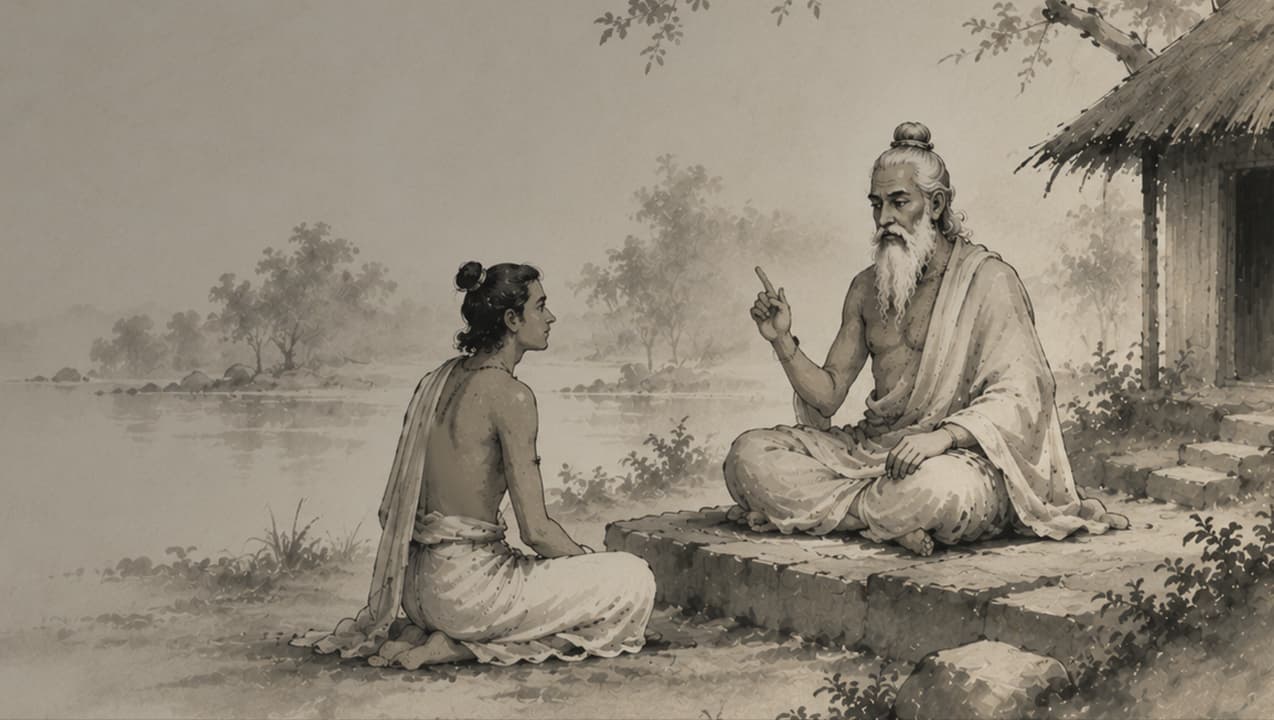
There is a search within the human being, always for the greatest, the absolute, and that is what differentiates humans from animals. India was fertile, and there was abundance. You had ample leisure, and in that leisure there was space for intellectual inquiry. The sages and the seers would talk to each other purposelessly. And from that purposeless discussion, from silent observation of life for hours, days, months, and years, came those insights that you today recognize as Indian philosophy.
5
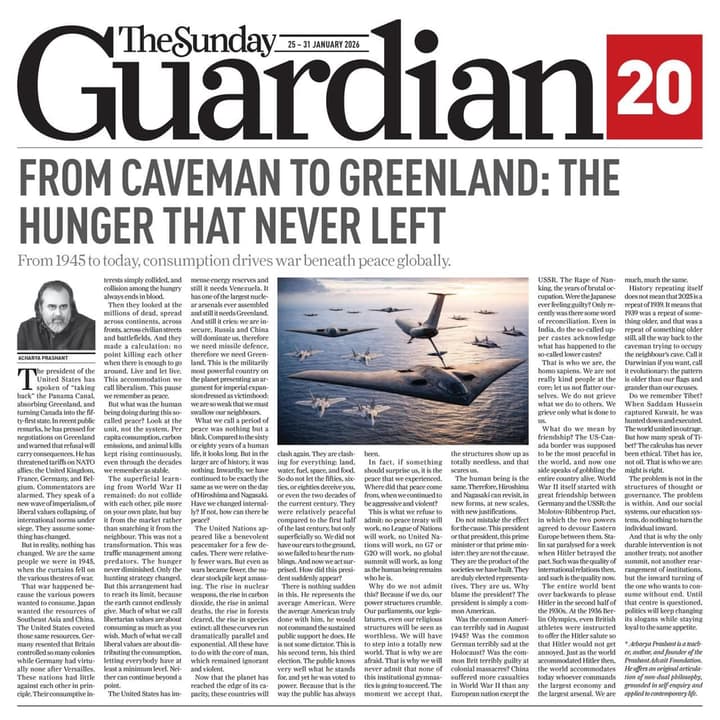
From 1945 to today, consumption drives war beneath peace globally. We have continued to be exactly the same as we were on the day of Hiroshima and Nagasaki. That war happened because the various powers wanted to consume. Have we changed internally? If not, how can there be peace? The problem is not in the structures of thought or governance. The problem is within.
India was a superpower in all possible terms and yet those lowly little Britons came here and colonized us. Is it possible? There is something fishy in the story. We don't want to go back and really read and figure out what really happened. We believe in this narrative: we were great, we were ‘Vishwaguru’. How can the land of the Gita be ever defeated? It was due to internal reasons that we got defeated and enslaved. And those reasons are still very much present today. Which means the fault is entirely our own.
You see, the democratic system is a great one, but there are some problems associated with it. The leader comes from the masses, and the masses, by themselves, are never really attracted to wisdom. Have you ever found a voter asking his leader, “How many Upanishads have you read?” before casting a vote. The leaders know very well what they can ignore. They just want to know what your religion is, and what your caste is. That is why wisdom always comes last.
Women do not need sympathy, reservation, or compensation; they need awakening. Victimhood may offer temporary advantage, but it slowly erodes dignity and strength. Education that stops at jobs and numbers fails both men and women. Unless education addresses the inner fear, insecurity, and ignorance that sustain oppression, no policy can truly empower the girl child.
There is no revolution possible without the Gita. That’s the reason why even those who are not remembered particularly for their spiritual inclination, people like Subhash Chandra Bose, even they founded their core on Gita. What kind of revolution can you do if it’s the body that’s always at the top of your mind? You require a Gita to tell you that this body is perishable and would anyway go. Gita only teaches you, "Endure and fight."
8
Machines are not becoming human; humans have been living like machines. AI merely exposes the mechanical nature of lives driven by repetition, imitation, and borrowed identity. What cannot be replaced is not skill but consciousness. Where there is originality, suffering, love, and the longing for liberation, no algorithm can enter. The question was never about artificial intelligence; it was about whether we were alive at all.
4
When we ask, “Does God exist?” the ego feels intelligent. The believer says ‘Exists’ and clutches scripture; the atheist says ‘No’ and clutches logic. Both feel relieved. But both forget to ask what “exist” even means. Whatever exists is, first certified by me. So who is this one demanding verdict? The question survives because the questioner is never questioned.
When I say, “I want the right action,” surely I have an image in mind. That image is coming from the past. But the right action, by definition, is one that cannot come from the past. Please remember that whenever something really right happens in life, it does not happen as a result of one’s decision. The really good, the right action, happens on its own, provided you do not become the decision-maker and the actor.
Guilt says, “I am better than how and what I did.” Right? There need not be any imagination in this. Far better than guilt is the realization of one’s actual state. And once you realize where your choices and decisions have brought you, there is a certain sublimation. That honest realization does not shout too loudly, but it has great power. For that power to arise, you first have to acknowledge where you really are.
We have a great interest in claiming that there is something special about us. But there is nothing special. We too are just machines made of material, just a system. And this system, in the course of evolution, has now given birth to another system, which you call artificial intelligence. But calling it artificial is just vanity. We too are equally artificial. This “I” feeling that we carry is just a product of our physical constitution.
We are very conveniently leaving ourselves more and more at the mercy of technology. But we have to understand that AI operates on data, and data is provided by human beings. If we are dumb, our data will reflect that dumbness. AI has done what it’s programmed to do, but are you doing what you are born to do? You are the user, the ego. And the ego always has a choice. If you don’t exercise choice, there is no elevation; then there is no difference between man and stone.
When the person is dead, you remember that person. But when the person is alive, do you remember death? Who is not dying every moment? Please tell me. Then why do you want to believe that the person, as you see him right now, would be carried over to the future? No one gets carried over to the future. No one. Death has to be seen as a fact, not a fact at the end of a string, but as a present reality. It is not death that scares us. Unlived life is what we grieve for.
The desire for the new is genuine. What we call new is almost always the old in fresh wrapping. The calendar changes; the person does not. A digit shifts from five to six, yet the one who reads it remains imprisoned in the same patterns, the same desires, the same fears. New programmes, new resolutions, new routines; none of it works. We upgrade everything, phones, jobs, partners, cities, and the one who remains untouched by all this upgrading is the one who needed transformation the most.
4
Violence never arrives announcing itself as violence. It comes wrapped in duty, in faith, in law, in nation. First, it asks for your moral consent. Only then does it spill blood. The actor I’m pointing to is not a nation, it is the human ego that converts harm into virtue. The theatre changes but the play remains the same. Only the costumes are updated; the script is ancient.
We love to talk of Swami Vivekananda as a youth icon. And I am asserting that were he to be here today, it is the youth that would resist him the most. When he returned from the United States, a huge procession greeted him, right at the port. But when he asked for just a hundred people who could be his soldiers, he was denied. Nobody wants to accept a Swami Vivekananda. He was resisted then, he would be resisted even today.
“Immersing myself in deep meditation.” What do you mean by meditation? And who is being immersed? Please tell me, beyond a trick of words, what is this? But you’ll never ask these questions, because some Baba-ji totally dominated your faculty to question with his get-up and demeanour. Real spirituality is not about something that sounds elevated or respectable. Whenever you are bombarded with high-sounding fluff, learn to ask this question; what exactly does that mean?
I am being told to work hard, but not for myself. I am being told to slog for something I don’t really care for. This is the situation of each one of us: no purpose and high pressure. The very system is designed to rob you of having any innate, heartfelt purpose of your own. Pressure alone is not the problem. The very nature of a great purpose is that it brings pressure, but such pressure now is life-saving, even life-giving, because you love what you want to achieve.
We keep carrying the unexamined burden of the past all our life. That’s a great problem that we have. If you want to carry something from the past, if you want to remain related to it even today, then you have to ask: how does it benefit you? Because it’s an expensive decision to make. The purpose of life is to unburden yourself. Relate to something or somebody in a way that will help you clear away a lot of useless relationships.
1
Why the question of sustainability is relevant only to our species, out of the billions of species on this planet? Because we have a hollow inside us, and that hollow demands to be filled. So we want more and more manufactured products, more meat, more luxury, more money. And the sad part is, none of that really succeeds in fulfilling you. But you still want to consume endlessly. And that endless consumption, arising from a spiritual point, is what the sustainability crisis is today.
It’s a great thing not to be submissive to authority. One doesn’t needlessly bow down, because that would be detrimental to one’s interests. So, it’s all right if you are careful. But being careful is one thing, and becoming psychotic about that is another thing. Obviously, let’s try on one’s own first. But we all know how limited we are beyond a point. And when we come to that point, one needs to look beyond herself, that one needs to seek help.
I am hungry, I am dissatisfied, I want to consume. And I do not know what it is that would appease me, make me happy, quench my thirst, so I will try out everything. If you have this big a hole in your heart, what else will you do? You will use the entire universe to plug this hole. That is what man has been doing. He wants to eat up everything. The very basis of climate change is the constitution of man himself. Man cannot help climate change; man is climate change.
Oh, we are so selfless towards our kids, come on, and then we expect compliance and returns and obedience, basically ROI. It becomes very difficult to explain to the other that, no, you cannot act selflessly, not because of you, but because you are Homo sapiens. Our species is not designed to act selflessly. Therefore, trying to practice Nishkam Karma (selfless action) without knowing what the “Self” is, is actually self-deception, not selflessness.
Women, the way they are brought up in our country, anyway do not have much to lose. If I do not have much in life, and then there arrives a person who is attractive, earns well, is strong, then why, as a woman, will I not go for him? Your body is impelling you to take a particular decision, and you don't even know that it's coming from the body. The only solution is understanding, real, deep, honest observation of life. And this you could also call spirituality.
If I do not know what I want, what can be sold to me? Anything. How do you know you need anything you aspire for? No, no, that need is artificial. And not knowing yourself, you are blissfully unaware that the need is an implanted thing. Remember, the seller is not selling you just his goods. He’s also selling you the need to buy his goods.
Ramana Maharshi says, “Silence of the mind is higher than the silence of the eye and the ear,” because even if the eye and the ear are not compulsive about sucking in sensual inputs, still something will reach the mind. A silent mind is the one that is not under any internal pressure, any internal compulsion to react to what comes to it. Stuff has come; the mind says, “Alright, you have come. I am inert towards you. I am non-reactive!” “Real silence is silence of the mind.”
Beliefs can’t talk to each other. You will say, ‘The world was created on a Sunday.’ He’ll say, ‘No, on a Monday.’ He’ll say, ‘Tuesday.’ He’ll say, ‘Wednesday.’ Now talk, how will you reconcile this? You can only fight. Why do you need to believe? You look at the question, "What should I believe in?” Well, nothing.
If you leave yourself weak and vulnerable, you are submitting to the ecosystem of rape. What’s worse? It won’t even be reported. The first thing is: empower yourself through education, through exposure, through wisdom. When it comes to sexual urges, no lessons of morality really succeed. You’ll just be left complaining to the benevolent power up there, “You know, I’m such a pious woman. Why was I violated?” Because that’s how it happens in the jungle. That’s the answer. That’s all.
If you close your eyes and write, do you need to see what you have written? Observation is an honest acknowledgement: “This is what I’m writing.” It is a subtle thing of honesty that happens on its own. What obstructs it is your determination, your stubborn resolve not to see the inner fact. That’s what you have to dispense with. “I refuse to buy the arguments of the false.” Once you refuse that, then the inner fact is obviously visible.
Adam and Eve are people with a body and choice. ‘Garden of Eden’ is the state of bliss that one enjoys as long as one keeps making the right choice. ‘Tree of Knowledge’ is the intellect that has an ego as its root. ‘Bitten Fruit’ is taking sustenance from intellect rather than God. Jesus is that man who is not quite a man because he is left with no choices, he is the highest potentiality of Adam and Eve.
Be in love with your work and give it just everything that you have. The quality of the relationship must be so high that you are left choiceless in attending to it. Once you have given it all that you have, you will be left with very little time, space, or energy to bother about the result. “I gave everything that I had; now it is difficult to differentiate between defeat and victory.” Live so intensely that, in the end, you are left with no energy to be concerned with the result.
1
The test is straightforward. Whatever aligns with Shruti is dharma. Whatever defies Shruti, however old or beloved, is not. Shruti demands only one thing: self-knowledge. Everything else is ornamental. Without Vedanta, Hindu identity risks becoming ritual without philosophy, sound without meaning. Offering flowers may express devotion, but it is not Sanatan Dharma. Seeing the Self is.
The tiger chases the buffalo calf and brings it down. Does that disappoint you? No, because that was expected. Similarly, expect animal behavior all the time from everyone around you, including yourself. Everything we do comes from the jungle, so don’t be disappointed. Disappointment always arises from expectations. You really have to strive to be someone who is not an animal. And the first step in that striving is to address your own inner animal.
This breath-in, breath-out, stomach-in, tummy-out; this is not meditation. Even animals do not need training in breathing, and we are being taught how to breathe. What’s going on? You know, you should breathe mindfully. Why? Is there anything wrong with your breath? Meditation is nothing but an observation of the naked inner fact. That is meditation. To stand naked and honest in front of what is, that is meditation.
3
If somebody is a great cricketer, I am all right admiring him irrespective of his nationality; that’s fine. But the question is: why is such adulation and such expenditure reserved only for people outside your own country? Indian soccer is totally starved of funds, but the same fans will not spend this money, not even a fraction of this money. Are we really poor, or are we just poorly directed? We don’t know the right direction to move in because we don’t know the right center to have.
So much so that, even today, India’s literacy rate is just 77%, and China has almost cent per cent literacy. That’s a huge difference. From where will you get innovation if your kids are not well-educated? And even if they are educated, they are just moving towards the service sector rather than the line of innovation. How will you lead the world? Just having democracy will not take you anywhere if those casting their vote are not educated enough.
We teach our kids to write applications: “Humbly I beg to submit that today I have an ache in my tooth.” “Humbly I beg to submit!” If you are stating a fact, if the toothache is real, why the hell are you groveling? If that is the Truth, why are you begging? Drool, drool, drool. That’s become our culture. If your philosophy tells you to submit and surrender to several masters, you will never be a truthful person, because in Truth there is no authority but the Truth.
You are given an image to pursue, and that image is a distant one, far off in the future. A villa of your own, two nice cars, two cute kids, a light-skinned wife, such things. That's the worst concept you can subscribe to in life: settling down. What does that mean? Not changing anymore, not improving further, not having the guts or the stamina to be disruptive anymore. We are very loveless people. All we care for is security, and that's why there is so little creativity and innovation here.
When a society changes what it respects, the economy changes what it produces, because output is only the shadow of values. If status comes from owning, life becomes a showroom, politics becomes the management of craving, and relationships become transactions. If status comes from understanding and contribution, people step out of the consumptive spell, not through forced austerity but because they stop trying to buy an identity.