

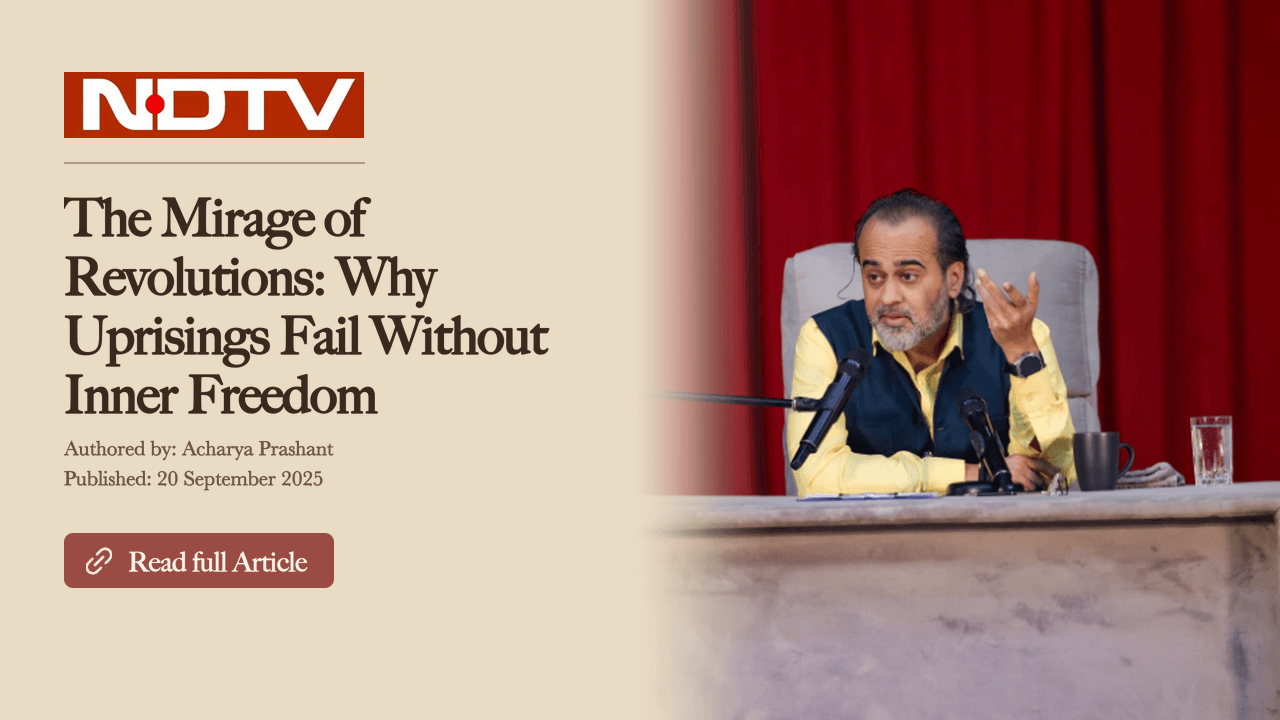
When we think of revolutions, it is often the sound that comes back first: the roar of voices in the streets, slogans ringing through capitals, crowds that feel unstoppable, and rulers suddenly brought down. For a fleeting moment, it feels as if a new dawn has arrived. Yet when the dust clears, the old shadows return.
This summary is AI-generated. Please read the full article for complete understanding.
Originally published in NDTV on 20 September '25
When we think of revolutions, it is often the sound that comes back first: the roar of voices in the streets, slogans ringing through capitals, crowds that feel unstoppable, and rulers suddenly brought down. For a fleeting moment, it feels as if a new dawn has arrived. Yet when the dust clears, the old shadows return. Thrones are replaced, constitutions rewritten, but the patterns of life remain strikingly the same.
From Europe's uprisings to America's civil war, from Russia's overthrow of the Tsar to the Arab Spring, the story repeats: regimes end, but the inner regime of fear and greed stays intact. We've seen it in India too. Civil Disobedience, Quit India, and even Sampoorna Kranti rattled the empire, but the deeper rot-inequality and corruption-never really left. The crowds dispersed, but the habits of thought endured.
The recent student protests in Nepal offered yet another mirror. Again and again, its youth have marched against monarchy, corruption, and curbs on freedom. Sacrifice has been immense, and victories have been proclaimed. Every fresh order carries the same baggage; the old problems never really leave.