Questioner: Pranaam Acharya Ji, I am Pratik and I have been trying to learn from you for the past two years now and have been an active participant for more than a quarter now. So my question is related to the upbringing of children. Time and again, you have emphasized that changing parents themselves is the prime focus of this aspect, and I understand the rationale behind that. But then there is another fact, Acharya Ji, that it’s not only the parents, there’s the total world out there which plays an important part in the conditioning of the child.
So particularly with respect to schooling and the education aspect of it; I have a 1.5-year-old daughter now. So, if I feel that I should not send her to school because there are teachers and other children over there who are obviously as unaware as us, it will play a lot of role in the conditioning of the child. So why send her to school in the first place if we can teach the academic subjects? Because academics are also very important, we can teach her the academic subjects at home; but then discipline becomes a very big aspect of it, because schools and other educational spots, from age-old experience, have a very well-designed curriculum and discipline.
So my question is: what can be an alternate measure so that we can save the child right from, like who are just about to go out in the world? How can we save them from getting conditioned by people and can give them academic knowledge?
Acharya Prashant: No, you cannot save her. Let that hurt you and kill you, and only that will save the child.
You are a continuity from your past, right? All these wise things you are speaking of right now, did you not know of them two years back? If you know that the child is in grave threat today, you knew of the same thing two years back as well. So you brought her into the world so that she would be gravely threatened, right?
Now we are speaking so eloquently, so wisely, so compassionately; when we have put the kid in an impossible situation. She goes to school, she gains formal knowledge but also gathers a lot of corruption. You put her at home and the set of troubles is different but deeper. It’s a very obvious problem, and today you know of it. Obviously, you knew of this thing two or three years back as well.
And you are a continuity. You are the same person who did that and the person who is talking about this. And today you have the belief that, remaining who you are, the continuity that you have been, you can still save the kid. That belief is what would hurt the kid very, very deeply.
You have come up with a wise plan: option A, option B; you are already thinking of these things using your own same continuous self, and a deep belief that with a further stretch of that same self you can do some good. How? The self took unwise decisions then, the self is thinking of some unwise options now, and the self is confident about the kid’s future; past, present, future, all being trampled under the ruthless weight of the same continuity, the self.
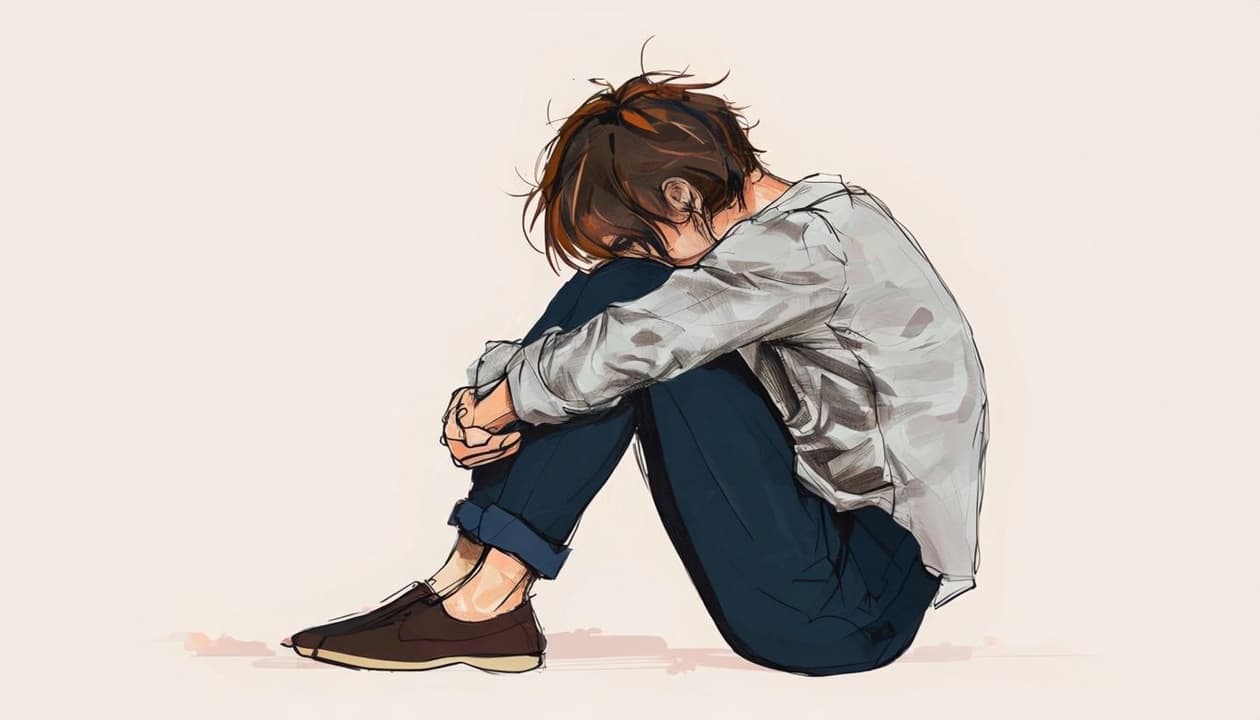
First thing when you have a kid in front of you, weep. That’s what I do too. I look at animals in the markets, I look at them getting ready for slaughter, I look at extremely stupid parents carrying kids, what can I do? First thing is, I allow that to hit me hard. I can’t pretend I’m in control. I can’t pretend I’m living in a healthy place. I can’t pretend I can save them. They can’t be saved. I can’t say I’m the wise one who will come up with a management plan and strategic steps to solve a particular problem. I’m not going to be a victim of my own wishful thinking.
How do I save that kid? I can’t.
Questioner: But something happened in ignorance, like you said, maybe two years ago I was aware of these things, I was, but not so deeply. I mean, knowing a thing from the periphery is different, but coming to terms with its reality is something different. So if I have done something, like what can we do about it now?
Acharya Prashant: Weep, cry.
Questioner: We are already doing it.
Acharya Prashant: No, when that happens, that’s a thing of total transformation. When that happens, then you realize that it’s not the kid who has to grow up; the parents have to grow up, first thing. You can’t say, “I’m the parent devising plans for the kid.” No, devise plans for yourself. And just as you would repeatedly fail in your plans for yourself, you’ll also fail in your plans for the kid. And there can be no respite from that.
You can’t say, “I made a bad decision; I want to correct it now.” No, you’ll have to live with the utter hurt and the consequences. And probably that is the only way out. Ostensibly, all parents at least claim that they want the welfare of their kids. That doesn’t happen, it’s not going to happen. You are not the first one; you’re not the last one; you’re not unique in any sense. Nobody is unique in any sense.
Are you talking about neighbors’ kids? Are you talking about all the kids in the world? Are you talking about all the species in the world? You can’t. And since all can’t be saved, therefore it would be really impossible to save just one.
Questioner: Even before she goes out into the world, her fate is determined. Like even if I want to save her from conditioning and I want to change myself too.
Acharya Prashant: Now this is the best statement you have made so far. Not a statement of hope, not a declaration of plans, but an appreciation of the horror of the situation. But we are trained to be actors, no? We are trained to say, “Yes, yes, I know the situation; now let’s act.”
The fact is, all your acting is just a convenient escape from acknowledgment of the situation. Once you know what the situation is, the right action will anyway happen on its own.
Action doesn’t have to be planned or organized, action will happen. What is needed is appreciation, a holistic realization of what the situation is like, and then the right action happens; for the parents, for the kid, for the entire world.
Sir, you’re not the first one. The situation is so grim. If one is not a dimwit, one obviously realizes it’s very bad for the kids. We would be leaving behind for them a world totally distorted by climate change. We know that. We know what we have done, and you can’t stop that. We know what we are releasing, continuously releasing into the atmosphere, and I cannot stop that, you cannot stop that.
The first thing is to be vulnerable to suffering, because that is the reality.
Questioner: Feeling the gravity of it, but as you said, things seem like they are already out of hand. That’s become very, you know, the anxiety increases because of this.
Acharya Prashant: That might actually be a good beginning. It is not anxiety or any other state that is ever a problem; it is the center of the state that matters. We know the sages have said, yes, fear is good, even greed is good from the right center. So please do be anxious, but not just for your limited interests and little family. And then you will see that you are able to act rightly, and right action is no prescription.
By right action, I do not mean to give you hope. I’m not saying the right action will save you or your kid. No, not quite likely. But at least the right action will happen irrespective of the result.
Do you see how, in the name of correcting a bad situation, we worsen it? Is that not the story of our life?
Questioner: Yes.
Acharya Prashant: I spoiled it, now I’ll clean it up.
Questioner: Because we are not holistic in our understanding ever.
Acharya Prashant: Yes, and because we have so much confidence in the doer. “If I could do it wrong, I can also do it right. I made a mess of it, I will set it right.” No, sir. It’s a continuity remaining the same person who created the mess, you will only further the mess in the name of setting it right. You will only make it worse because you are the same self, the same doer.
So parents claim they want all the goodness for their kids, and they destroy the kids. And when there is some evidence that the kid is actually being destroyed, in their wisdom they take the next step to correct the situation. Instead of remedy, it brings more ruin, because it’s a continuity, the actor is the same.
You know, it’s not going to be right when the patient starts playing the doctor. We need to grow up; and having a kid, in that sense, is an opportunity. You want to be of some use to the kid, then grow up with the kid.