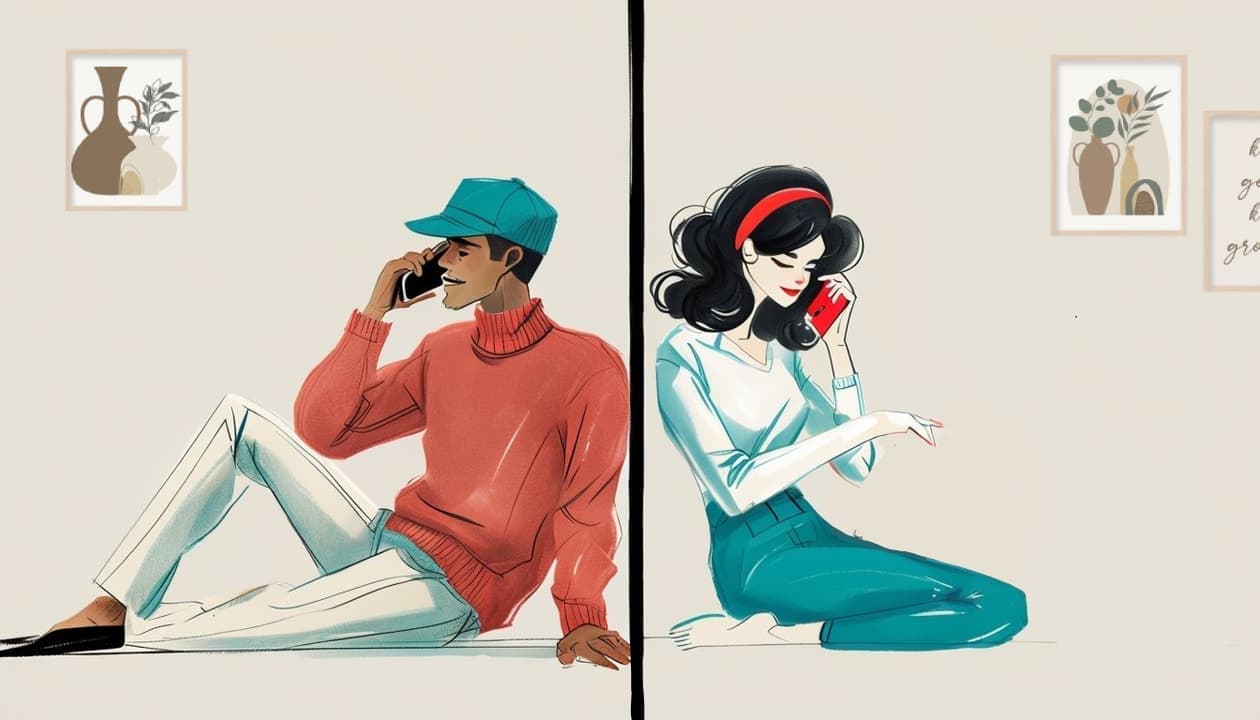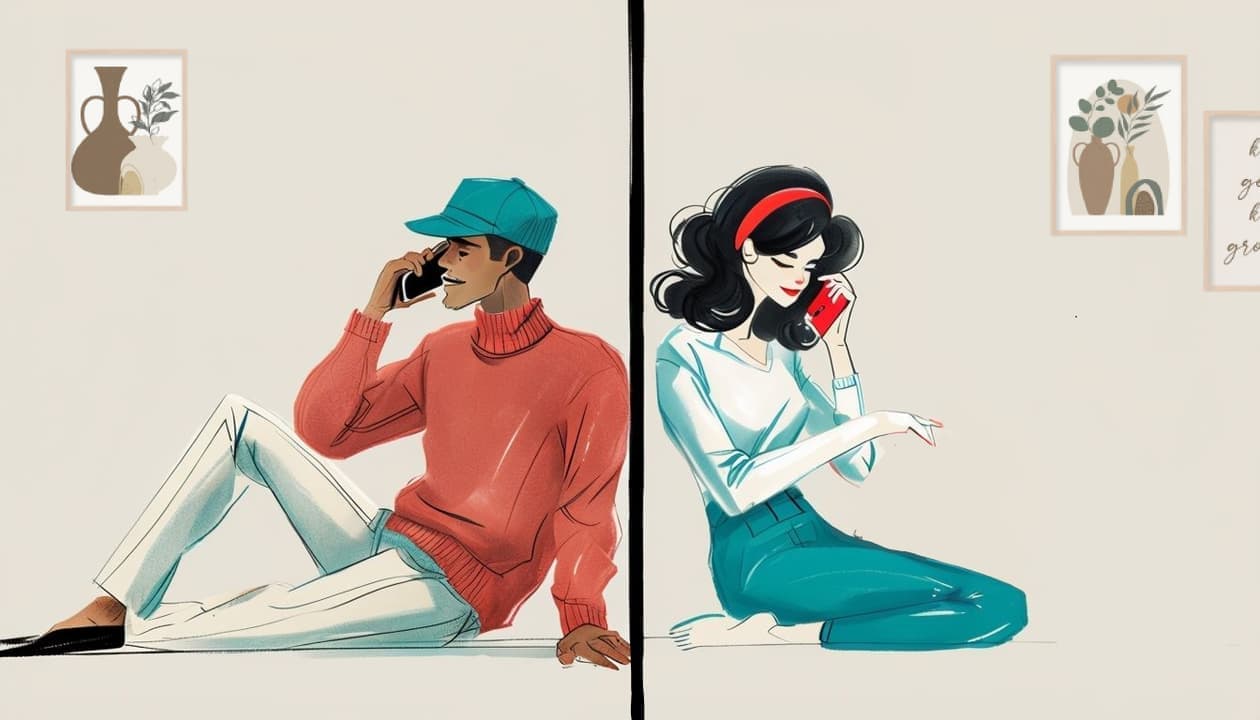
We often call something “help” or “love” while secretly expecting something in return. When that return does not come, we feel hurt, revealing that the relationship was a trade, not genuine help. The ego, being unfulfilled, cannot truly love or share. Likewise, desperation to be loved makes us controllable. Real love emerges when we stop seeking validation, work on ourselves, and become so inwardly fulfilled that we no longer need to be loved.

True love is not a biological instinct, emotional attachment, or social conditioning. Biology and science explain the body's drives, but they cannot explain the self that seeks freedom. Love is the inner restlessness to move from ignorance and bondage toward truth and liberation. Religion is not rituals or inherited beliefs but this personal journey of understanding. Freedom—not possession or conformity—is the essence of both love and religion.

Truth cannot be forced upon anyone, but neither should falsehood be entertained. Genuine love is not about preserving relationships at any cost; it is about helping oneself and others break free from illusion, even if that means risking the relationship itself. Spiritual growth begins by questioning conditioning, examining falsehood without bias, and choosing authenticity over comfort. Real relationships are built on the courage to seek freedom, not convenience.

The Bhagavad Gita is not a separate spiritual path or an escape from everyday life - it is a mirror that reveals the truth of your present life. Real spirituality begins with self-observation, not rituals or temporary practices. Lasting transformation comes when work, relationships, career, and personal growth become one integrated life driven by awareness, love, and freedom rather than ego, fear, money, or social pressure.

Love is not a special emotion reserved for selected people or relationships but a way of relating free from self-interest, possession, and psychological dependence. Most relationships become transactions driven by insecurity, where the ego seeks completion through ownership and exchange. Genuine companionship arises without the urge to control or claim another, allowing affection to exist naturally, freely, and without conditions or expectations.

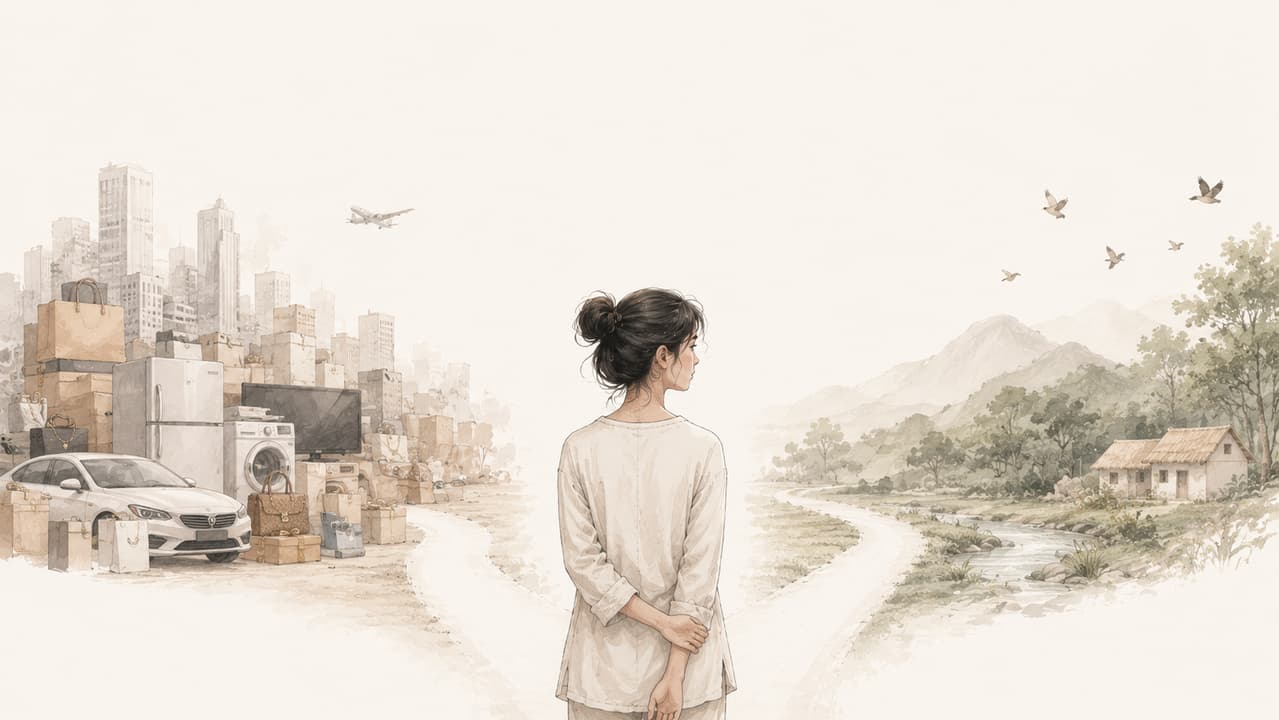
Modern relationships often create more insecurity, not less, because people are conditioned to seek completion, validation, and identity through another person. Social institutions, media, culture, and tradition continuously reinforce the idea that fulfillment lies in romantic attachment. As a result, relationships become driven by dependence rather than love. Real companionship becomes possible only when one is inwardly at peace and not using another person to fill an inner void.

Love is not attraction, possession, dependency, or a transaction driven by personal gain. As long as relationships arise from insecurity, ownership, or the desire for psychological completion, they remain centered on the ego. Love is simple, natural, and free of self-interest, flowing without preference or exclusion. The ego seeks security, continuity, and suffering because they preserve its identity, while freedom and joy threaten its existence. A meaningful life begins when one stops repeating old patterns, accepts uncertainty, and chooses freedom over the comfort of familiar cages.
Climate change, population policies, and social conflicts often arise from a common source: narrow love. People, communities, and nations justify actions that benefit their own group while overlooking broader consequences for humanity and the planet. True care is not exclusive or identity-based; it is expansive and inclusive. Even motherhood, patriotism, and family concern can become limiting when reduced to narrow self-interest rather than guided by wisdom, freedom, and universal responsibility.

The debate around nudity and movements like “Free the Nipple” miss a deeper issue: true freedom is not about clothing, but freedom from psychological conditioning and body-based identity. Clothes themselves neither oppress nor liberate. A truly free society is one where the body becomes ordinary and irrelevant, not a source of obsession, shame, validation, or social control.

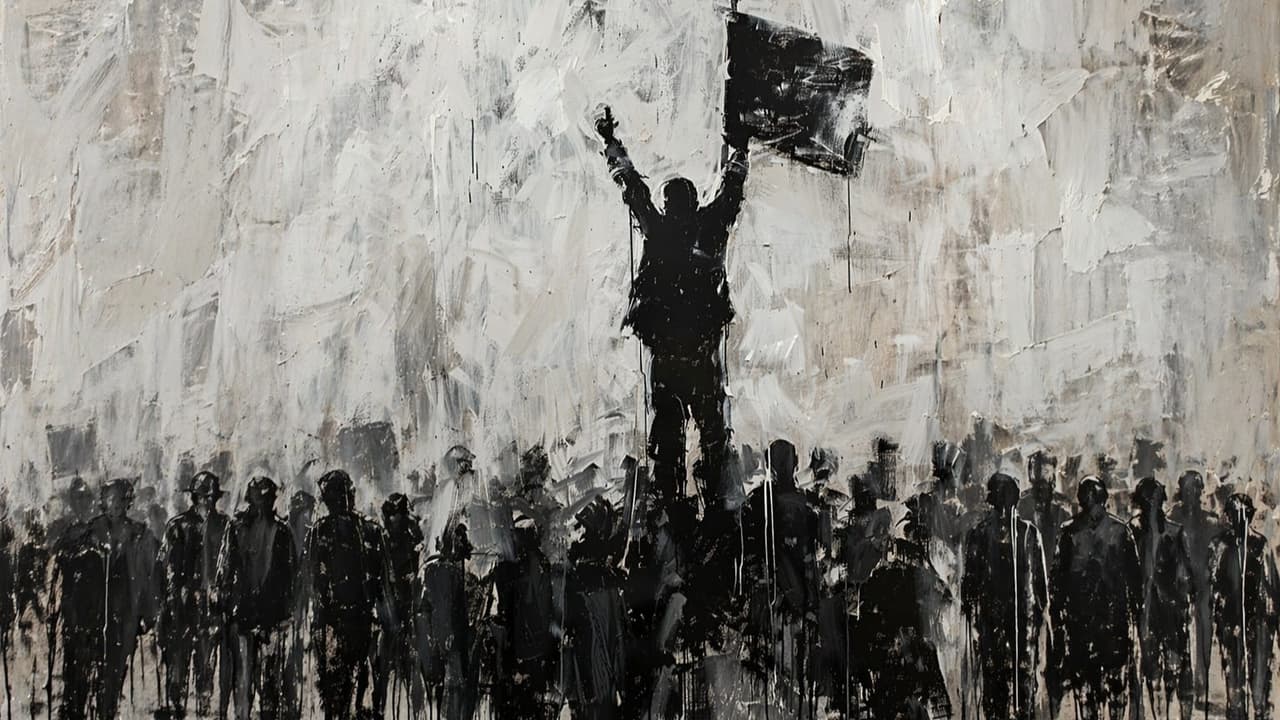
You look at Iran, at revolutions, and ask: can systems really bring freedom? Revolutions keep replacing one system with another, yet the chaos remains. The real question is rarely asked: what within us creates these systems? Real freedom is not political or social; it is inward. Without inner change, every revolution only rotates power, never resolves suffering.

Mojud – The man with the inexplicable life
There was once a man named Mojud. He lived in a town where he had obtained a post as a small official, and it seemed likely that he would end his days as inspector of weights and measures.
One day when he…

Question: Dear Sir, a few questions:
Why am I so attracted to the personality and mannerisms of all my teachers, often curious about their lives than the truth of their teachings? When I read Jiddu Krishnamurti(JK), am I conditioned by him? Is JK’s method really ‘via negativa’ all the time?…

Love has to be seen as the need of the mind, the attraction of the mind towards Peace, towards rest. All attraction is there only with a desire; the hope is of fulfilment. So when the mind says ‘love’, along with love it has a picture of love. How do you know that somebody loves you? Only if he behaves according to set patterns. When real love comes to us, we close our gates to it. Love is not with a particular man or woman; Love is the natural state of the mind.

The kinds of meanings that we associate with love are actually quite demeaning. It’s not your own self-interest that you think of in love. Love is not an emotion; love primarily is a spiritual understanding. Saint Valentine would not be quite pleased with the meanings we have associated with his name and his day. The saints laid down their lives so that our faulty definition of love could be corrected, and that is probably the best use this day can be put to: correcting the definition of Love.

Real Love is a very pure thing. It is pure and it purifies. If you really love her, forget about the families, you won’t even bother whether she loves you, because Love does not demand anything in return. Forget about marriage or anything else. You love, you know love, and that is all, sufficient. Love unconditionally, and then a way will emerge. Unconditional Love is very, very intelligent, and knows no fear. It knows where the solution is, it will find a solution.
Often, in the name of financial pressure, what we are really kneeling down to is something else. But because that something else is not nice enough to be named, what we quote is financial pressure. Nothing is ever forced in a tangible way. The way is kept gentle in appearance. But there is something else at work inwardly. What is that thing? That is what you have to uncover. You have to be honest towards yourself, very honest.

That’s the purpose of life, no? To know your real destiny beyond your physical limitations and social conditioning. Most people do not know that such a dangerous thing is surreptitiously happening to them. I have found that we are quite big on media and social media now, so comments flow in their hundreds. And women actually have a self-righteous position when they say that we are not supposed to work and you better not expect that from us. Equally, men are conditioned about the roles they are supposed to play in life at home, in society, and how they are supposed to feel about themselves.

I have desires and you are the means to fulfill those desires. That’s why I come to you and I say I’m a loving person. This is not love. Most of that which we call love is actually just self-interest. A lot of our comforts, conveniences and identities depend on the other; therefore, we want to hold the other. Real love is possible only when you know that the other cannot bring anything to you. You relate to the other to share, not to gain.

The tiger chases the buffalo calf and brings it down. Does that disappoint you? No, because that was expected. Similarly, expect animal behavior all the time from everyone around you, including yourself. Everything we do comes from the jungle, so don’t be disappointed. Disappointment always arises from expectations. You really have to strive to be someone who is not an animal. And the first step in that striving is to address your own inner animal.

A thousand feelings: envy, fear, hatred, competition will come to you. You cannot fight them all, and there is no need to fight them. Be courageous when that feeling comes, and sit down like friends and talk. Be honest that you are the one who is nurturing that feeling all the time. Be aware that it is coming. Let it not enter like a thief. And when it comes, don’t feel small. You only need to understand, not control.

Manifestation is simply an expression of your desire. You desire something, and then you imagine your desire has been fulfilled. What does the common man desire? ‘Give me more money.’ What will the politician desire? ‘Finish off democracy and give me power for life.’ We have very stinking desires. Do we ever desire anything that is really good for everybody? The question remains: Was that thing worth it? You gave it so much time, so much respect, did it deserve that?

“I love my job as long as I'm paid for it.” Can you work without being paid? If yes, then probably there is some beginning of love. There are ten things we all like, and all liking or disliking is conditional, and the mark of love is that it survives all conditions. If you come to something that is dearer to you than life itself, then you know what love is. Love is dangerous, because it would mean you have come to something that's more precious to you than life itself.

The other must exist in your life, and vice versa, only for the sake of internal elevation, to make you into a better person. Don't you see the impact the other one is having on your life? Seeing is the key. What does seeing mean? Seeing implies understanding. See and ask yourself: What is the impact upon me? And if you see that, you'll just push it aside. It will be spontaneous. You won't even require to think, because now you have seen.

As a doctor, can we limit our responsibility to the one particular body or to the set of few bodies that come to us for treatment? Or is the patient actually a representative of an entire society, an entire ecosystem? Can I really be a good doctor of the lungs, if I support a society that pollutes the environment in the name of development? So, if I'm a doctor, then health is my responsibility in the holistic sense, not just one patient.

It’s not going to be right when the patient starts playing the doctor. We need to grow up; and having a kid, in that sense, is an opportunity. You want to be of some use to the kid, then grow up with the kid.

When you do not like human beings, you must also remember that they do carry the potential to be lovable. Not just the potential to be loved, but the potential to be lovable. Beyond likable, lovable. So, along with not liking humanity, also comes the responsibility to maybe help them become lovable, to whatever extent one can.

A suicide is a sad event because it prevents us from realizing our possibility and potential — there was an opportunity to live, learn, grow, realize, and be liberated, but it was wasted. But how many of us actually manage to realize our potential even if we live to 80 years? Hardly anybody. For our species, the extent of aliveness is proportional to the freedom and height of our consciousness. So ask yourself honestly: How close am I to the best I could have been?

The worldly philosophy says, “Even if you lead a corrupt life, at the last moment you utter ‘Ram, Ram’, and you are redeemed.” I say just the opposite. Even if you have lived a life of wisdom, you can still lose it in your last breath. Even your wisdom requires a supporting and nourishing ecosystem. You can never afford to be complacent.

The object of love is so big, so total, so filling, so occupying that it leaves no space for the subject to hide and survive. The task is so damn big that it can’t be done if you protect yourself. If you protect yourself, it won’t happen. Love involves a lot of bloodshed and demolition. And there are fireworks. Great structures collapse. Formidable enemies have to be defeated. All that is love.

Acharya Prashant (AP): Jayant has initiated, and he is saying that he used to lead a mechanical life that starts the story, and then he got into spirituality, now he wants to be in love always but that does not always seem possible. Right?
Love is neither molecular nor even…

The Gita can come only from someone who understands the world. And if you understand the world, you cannot keep failing in the world. Shri Krishna was the one who brought victory when defeat looked so probable. The Ātman, the Self, within you is the climax of perfection. The man of God is a winner in the world as well. That is full embrace.

An ignorant person is a dangerous thing, made even more dangerous by a relationship. An ignorant person, even if he is walking alone on a road, is a dangerous thing. What if you bring that person to your bedroom? How does it matter? You start calling him your husband or wife. He has remained equally ignorant. Or, does wedding change things so much? It doesn't. Very stupidly you can go round and round the fire, how will that change anything within?

Acharya Prashant: That's why the rājasika mind is better than the tāmsika mind. The rājasika says, “I’m not alright. I need to do something to become better. I feel inferior. I feel incomplete. I need to rise. I need to achieve.” That’s the rājasika mind. The rājasika mind at least…

The hurt that you have received is a result of your own lack of understanding about the nature of life. This is an opportunity to understand life. It is an opportunity to not let the previous mistakes be repeated.

I'm not asking you to be a loner or an avoider of human company. It's just that things must be given their due place — and their due place depends on their quality. If you do not have good quality people around you, there are many other better options. Why not spend your evenings learning to swim or sing? And there could be so many other things. I mean, you would know better.

Try it out, go get an experience. But you must have the intent to really test it for what it really is. Experience is one thing and realization is a totally different thing. You can live your entire life without knowing even a moment of love. Real love is a purely spiritual thing. You cannot have real love without having paid the price to earn spiritual education.

Love and realization are things that roar aloud. They are extremely intimate, yet if they are there, there is no way you can hide them. These are not things that you can ever prevent from getting expressed. So, don’t even try. This expression means living it. Every thought is an expression, every action is an expression. You just express. By blocking it, you are blocking the thing itself. You don’t allow it to be expressed, and it’s gone.

The parts of the Upanishads that do not deal with self-enquiry can be taken as outdated. They do not want to address things that change with time. Mankind today is more prosperous than it has ever been in its history — but internally, are you not still afraid? Are you still not greedy? That’s the problem of the self that the scriptures seek to address. The Upanishads are dealing with a very peculiar problem that time alone cannot address — and that is the problem of fundamental human suffering.

It was Guru Nanak who said, "You may try as hard as you can, but you will never get to know the mind of the liberated one." That's from the Adi Granth. You keep trying. You keep speculating. And the ego has a serious urge to know what is going on in the mind of the Buddha. But you'll never know what's there in the mind of the Buddha. Being who you are, how will you know the mind of the Buddha?

You have to be dismissive of any talk of the afterlife. Only then the Gita will make sense to you. Those who have a battle at hand, those who are living in matters of the moment, those who are engaging deeply with the world as it is right now — present to them — they are the ones who will find the Gita useful, indispensable rather.

There is no particular glory or joy in defeat. Victory is likable because man associates joy with victory and the loss of joy with defeat. Your victories will not bring you joy. If your victories are bringing you joy, then it is a very shallow joy. And when joy there is, joy remains equally in victory and in defeat. Victory appeared favorable, defeat appeared unfavorable, the poet is celebrating the fact that that which appeared unfavorable is no more unfavorable.

Our culture has turned attachment into value, very proximate to love. However, attachment is poison and has nothing to do with love. We don’t feel ashamed admitting that we are attached, as if something beautiful is happening. If you are with the wrong one, and not even prepared to see that you are with the wrong one — that’s attachment. And you can never be attached to the Right One; there is only dissolution.

It has been a tradition in India that when you donate, you bow down to the one you are donating to, because he has done you a favour by accepting your donation. Being what we are, it is hardly possible for us to do anything for others. Kindly get over this notion that we live for others. That is the privilege granted only to a Buddha. Only in a state of inner fulfilment can one really do something for others.

Gita can be brought to anybody, and Arjunas are not always available. Sometimes, Duryodhanas have to be turned into Arjunas. It’s just that it’s relatively easier with an Arjuna. As long as somebody has even the faintest remnant of consciousness left, Gita can be brought to that person — but it will be tough. Nobody really deserves the Gita. You can only be grateful to the Gita if it comes to you.

The Gita has nothing to do with sāttvikatā. Even sāttvikatā is to be rejected as destiny, while even rājasikatā is to be embraced if it serves as a means to freedom. Everything and anything is fine if it is usable in the context of liberation. Even sattva can become an object of consumption — don’t we see learned people whose knowledge becomes their identity? The Gita is about getting rid of all traps — be it sattva, rajas, tamas, or anything.

We say, “It was just sheer grace that the Buddha encountered sights of the old man, the sick man, the destitute, and was transformed.” But — was the Buddha the only one who encountered such sights? Grace is available to everybody; it was only the Buddha who decided that it’s time to take action. Grace is that which comes to you unconditionally, but people reject grace. Even grace respects your choice.

The prerequisite is love, and love is an openness. Love is a vulnerability. Without that, all you will have is dry and meaningless and violent argumentation that yields nothing.

Whenever the past bothers you, you should immediately know that some danger is lurking in the present. Had the right thing been happening to you right now, then you couldn’t have been bothered with the past. And that is what the past does. It serves as a very deceptive distraction from the present. Figure out what is happening today.

The reason is that we have internalized a utopian image of a suffering-free life. And our current state of suffering, compared with the utopian heaven, makes us very frustrated. So, keep this comparison aside by seeing that this utopia is purely imaginary. You are not born to be in bliss. In fact, suffering is an inevitable part of life. Take life as it is, and then do your best to raise it as much as possible — this is excellence.

Expression is a relationship you establish with the world. It becomes a gift you give to others. What gets expressed, gets amplified. Anger expressed is anger amplified; attachment expressed is attachment multiplied. Do you want to gift chains and shackles, or something that helps and liberates?