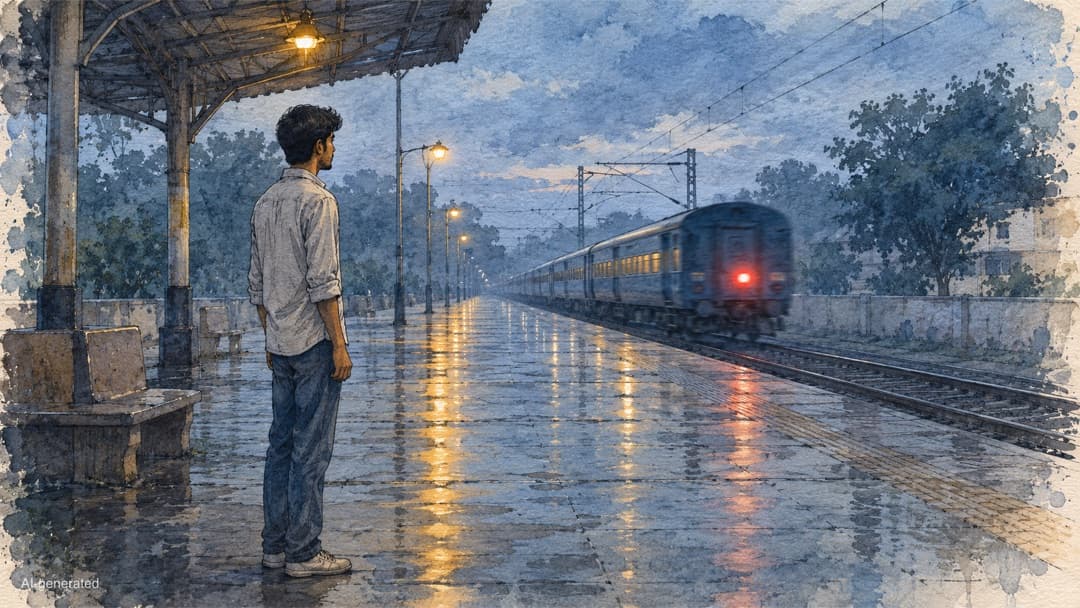
We have all felt it: a phone stolen, a job gone, someone who walked out, and suddenly it seems we were lost along with it. Things come, stay for a while and leave; that movement is not what hurts. It hurts when we were riding on what left. The same habit shows up when we try to learn: we want to be taught without our old walls being touched, and then we call the teaching confusing. So what are we really holding on to, the thing or ourselves in it?
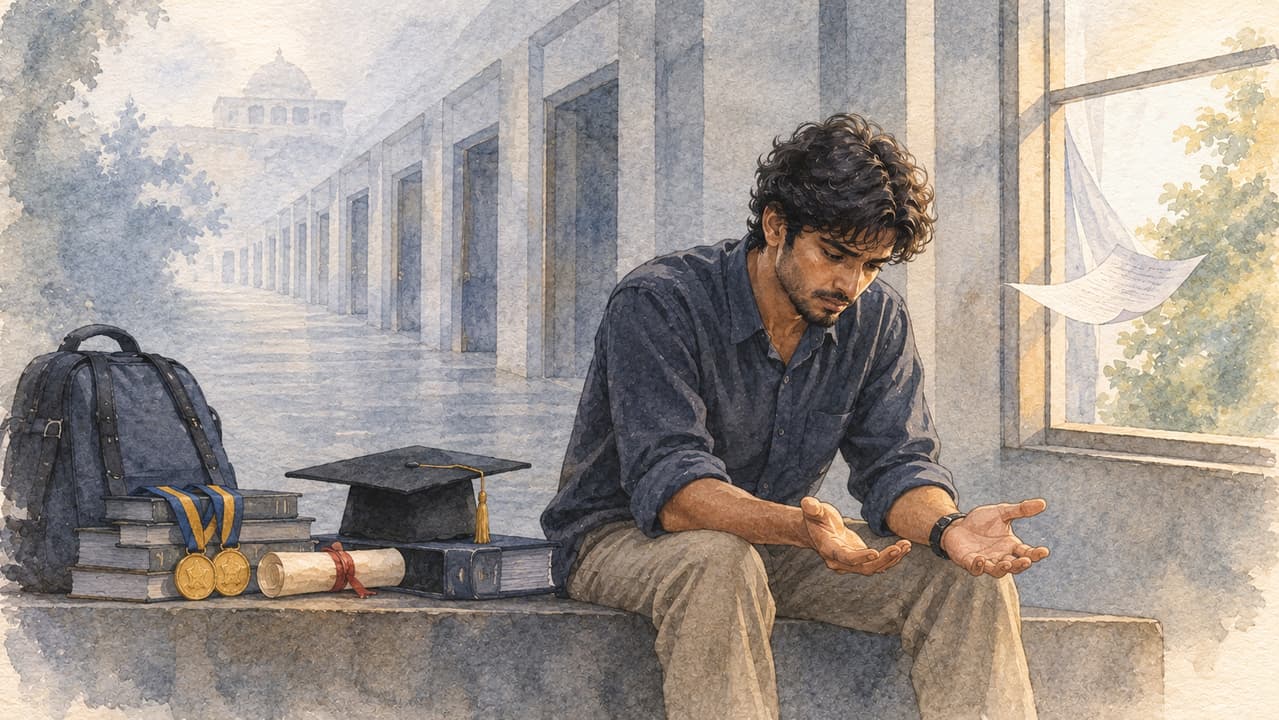
A degree, then a gold medal, then a PhD, and each time we tell ourselves this is the last milestone. Yet something still feels missing. Wanting to know what comes next is wanting to control it, and years of control have produced exactly this dissatisfaction. Even “I should be happy” is control. A mug that weighed 100 grams should not come back from the wash at 106: what we hear is meant to dissolve what we carry, not add to it. What if we simply stopped standing in the way?

We are gentle with the people who matter to us, and quite different with those who have nothing to offer. A friend can be generous, peaceful and tender, and still sit down to a meal that began in a factory farm. Is that a blind spot, or one restless wish to gain, showing kindness here and hardness there? Nobody is bad in their own eyes, and even our giving may come from the same place. Who is it in us that is being good?
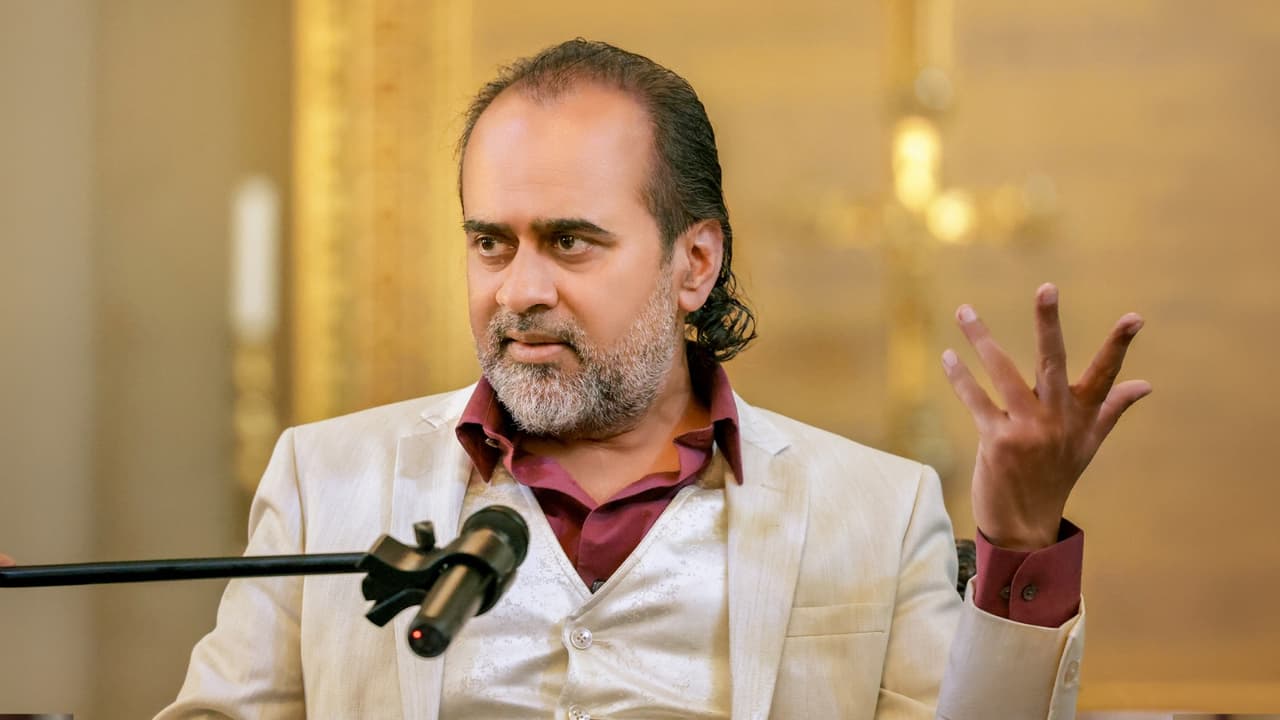
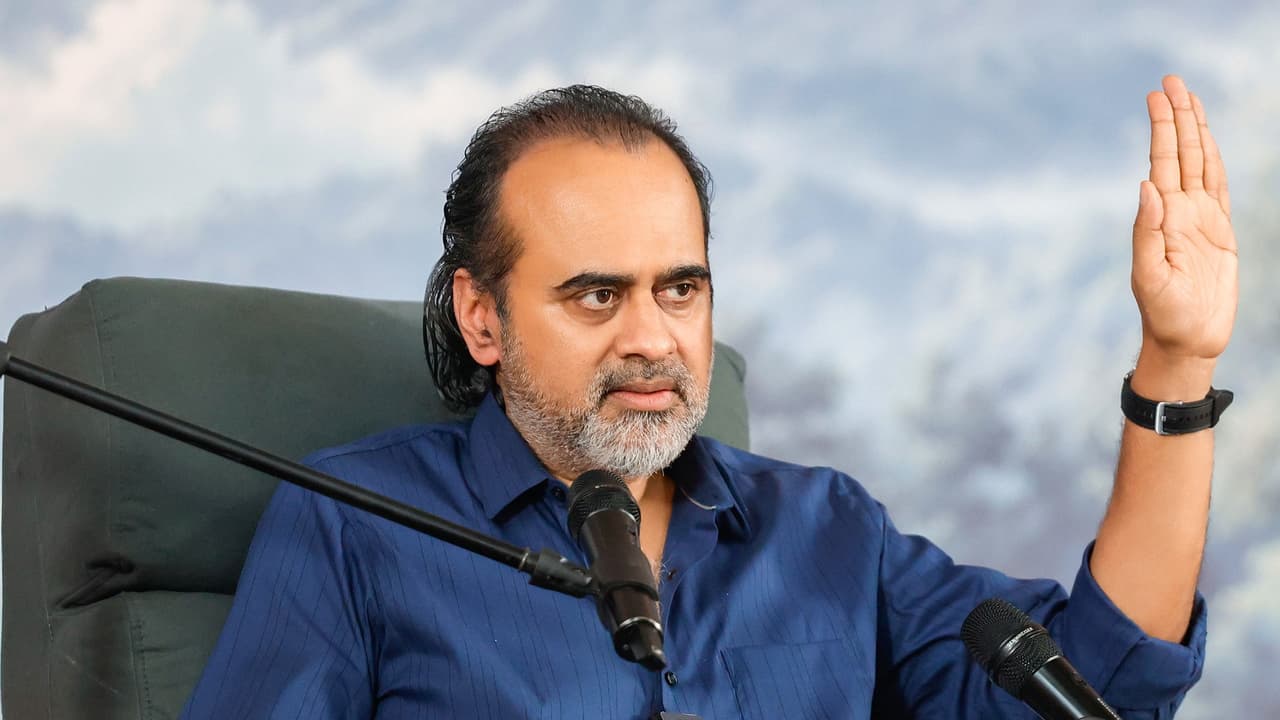
We have all put down a book that could have helped us, or dozed off halfway through something that mattered. A man who could not keep food down was given medicine, and he threw that away too, since it went in by the same route. Most of us strike a similar deal: we move into a place that stinks and, within a week, call the smell normal. Show our fifteen-year-old self the life we lead now and they would scoff. What would change if we admitted we do not like our condition?

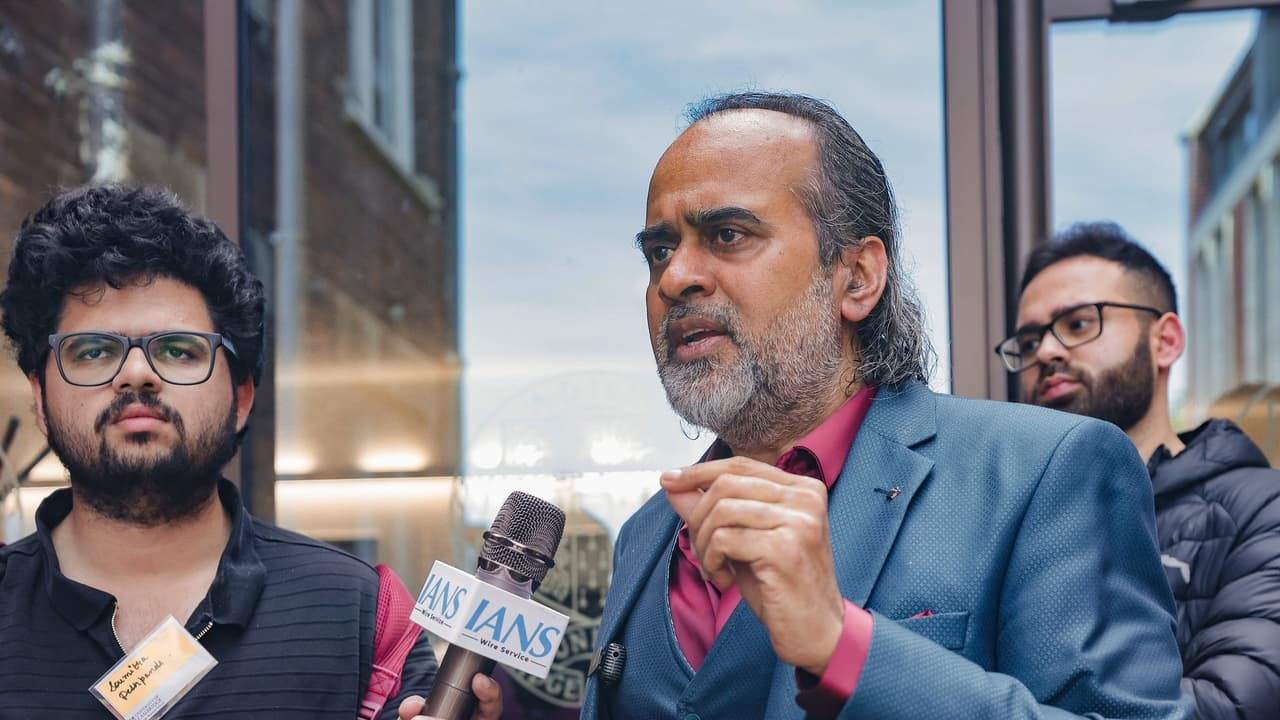
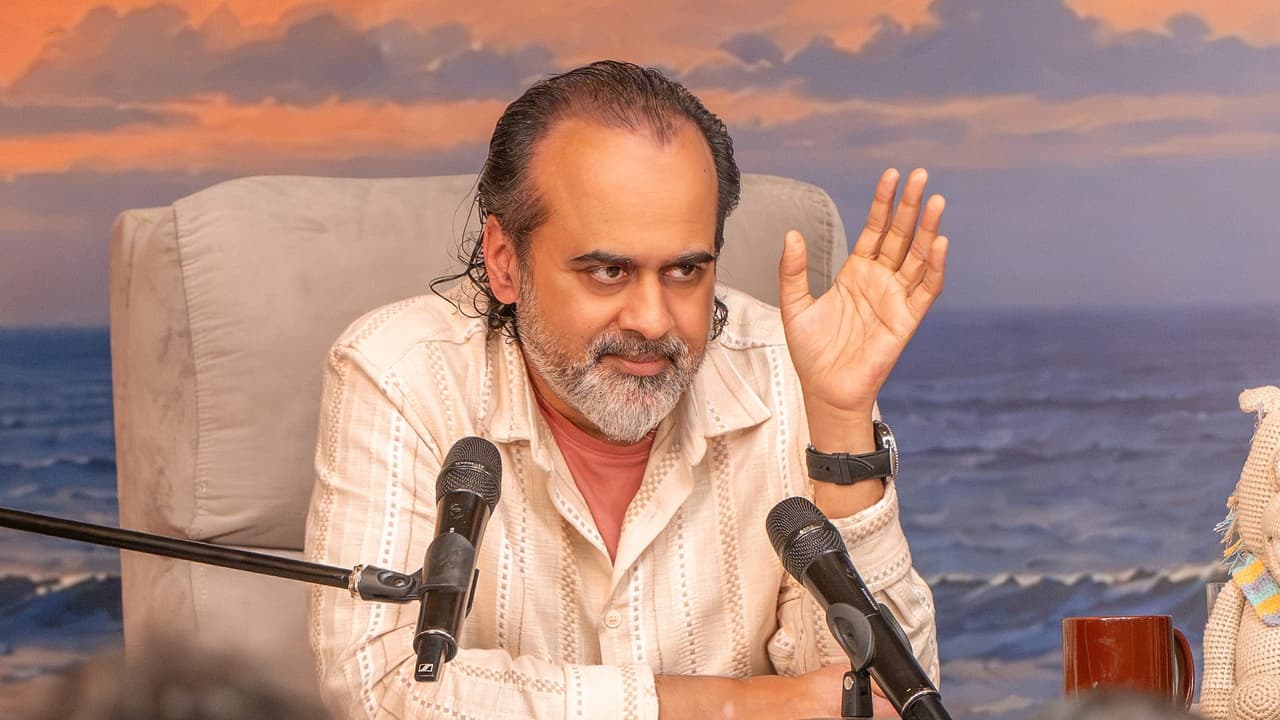
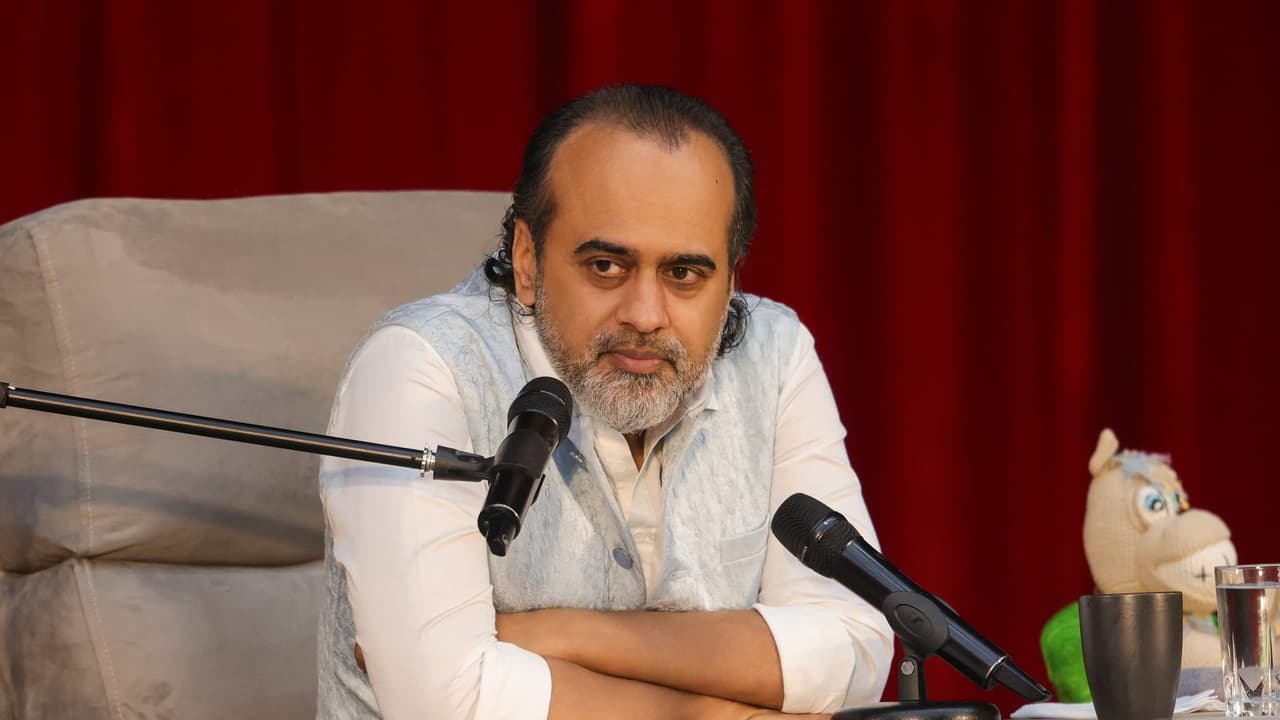
On the evening of November 15, just hours before a scheduled Gita session, a message arrived from Gauri Maulekhi, a prominent animal rights activist. She requested Acharya Prashant to join her in Patna the following morning to meet the Chief Secretary of Bihar and address the press about the Gadhimai festival in Nepal. This was no ordinary request. It was a plea to save thousands of animals and to raise a voice against a centuries-old practice of cruelty disguised as tradition.

Love is great. Love is necessary. Love is beautiful.
But what is love?
For most of us, love is the greatest excitement and comfort—and also the greatest suffering. Whether love has become a problem or something you cherish the most in your life, please go deeper into the matter. Know…

Spirituality is about belonging to existence. Not belonging to a narrow household, or caste or ideology. All these are boundaries. So, wherever there are boundaries, there is violence. Wherever there are boundaries, there is also the fear of being small, powerless, limited. The really non-violent one is at home, everywhere and in every situation. Non-violence is not about following duties. Non-violence is an action in clarity and love. That alone is non-violence.

Spirituality is neither a tradition nor a culture. Spirituality is not at all about following something or somebody. When it is said that you must follow the Guru, the Guru is the Truth, not a person not a man. Spirituality would never say, “Follow the words of a man.” Spirituality says, “Let the mind follow the Center, the Truth or you may call it the Heart or God.”

Questioner: Namskar Acharya ji. Pardon me for not remembering exactly but in one of the shivirs where we had read ‘Gospel of Sri Ramakrishna’ to come to terms with this expression called ‘Adhikar Bhed.’
So therein Ramakrishna was saying that, “now in modern times there cannot be any Adhikar Bhed,…

Acharya Prashant: Hell is a place where you get a lot of sympathy, consolation, condolence, and commiseration. You're told that we agree that you are in a miserable state. Your neighbor comes to you, puts his hand on your shoulder, and with a grave face tells you that you are…

Questioner: I have a question on an excerpt from you.
“Aloneness is not about being free of others and living without others. Aloneness is to live without oneself. Aloneness does not have much to do with the so-called others; aloneness has everything to do with the one called oneself.”
I’d…

Acharya Prashant: Everybody in his own personal way is seeking fulfillment and that is love. If you are young you may seek fulfillment in somebody's body, if you are middle-aged you may seek fulfillment in wealth and prestige, if you are old you may seek fulfillment in security and property…

The man who lives with his heart—there will be heart in his work as well. Heart will be visible in his every step. And the one who is doing something for money—he will say that he will marry where he’s getting more dowry. "I will take up a job where I get a high CTC. And I will give the contract to the one who’s paying more bribe." And this—who teaches this love? Learning this is wisdom. This is self-knowledge. This is self-observation.

Questioner (Q): So I had your advice and I got some books in terms of getting different perspectives. It might be a bit weird in a way question but I kind of wonder, when people are praying for God somewhere and also you're mentioning something about the myth of the…

Acharya Prashant: Observing the daily ordinary actions of the mind, that is the only way. Observing it as an impartial observer. There is no other method that is going to work because all other methods are ‘isolations.’ The method does something to life. The method excludes life; the method…

Questioner (Q): So, we often have many tasks to do in our day-to-day life and we make a to-do list, but we fail to complete it and the loop goes on every time. So, what can be the other ways to overcome this?
Acharya Prashant (AP): Right the right things…

Maturity is when you can transcend your body, and by the body, I mean the bodily compulsions. That includes your thoughts, your feelings, and everything because they are all bodily. You very well know how chemicals in the body translate into thoughts and feelings. Read more...

Questioner(Q): Hello Sir, I am Saurav, PhD student at IIT-Patna. Sir, a couple of years ago I met with a bike accident. At that moment, I felt like time was moving very slowly. I don’t know if it was just my feelings, but I searched on the internet and I…

The universe does not care for any human being. The universe is a very, very neutral place and a very random place. We are all products of randomness. Do you get this? The universe is not going to have any specific intention towards a specific individual. All that we are experiencing is episodes and events of random distribution. That’s all. Please understand the philosophy.

The word for that is ‘Nirmam’ — you are not mine. It is instructive that the word ‘Nirmam’ has a pejorative meaning in layman language. There it means cruel, but Nirmam actually is a beautiful word. Nirmam means not mine. You’re not mine, why must I shelter you? You’re not mine—no. You are no well wisher. You are no lover. I will be nirmam. If this is cruelty, you need this kind of cruelty. It is a very life-affirmative cruelty. Read more....

Questioner (Q): I think this is a follow up question of one of your videos, in which you described physical love, and you concluded with a statement that, “Love has to be learnt”. I wanted to learn more about this and how I can cultivate this kind of love in…

Acharya Prashant: If you will observe, you will find that people who are living most contented lives do not find it necessary to intrude in the lives of their kids, their sons and daughters. Because they are complete and satisfied in themselves. If they have to do something, or get…

Acharya Prashant: If one is living rightly, then youth is the permanent state of one's mind. The body can grow old. The mind cannot grow old if one has lived rightly. Youth, that way is your default state.
The 'Atma' has no age; it is ageless; the mind has the…

Questioner: Good evening sir. I’m…. and I’m a PhD student here at IIT, Kanpur. Sir, I have a very personal question. Being a girl child, especially in India, comes with very different sets of consequences. Despite being given equal opportunities like education and skills, at the end where we’re supposed…

Formal education is important to the extent the body is important. The less the body-identification, the less is the importance of object-centric education. A person's attachment to material possessions, driven by societal values, leads to poverty and duality. Poverty, unlike the natural world, is man-made and rooted in the desire to accumulate. While education enables material progress, it doesn’t address deeper issues of self-identity and existence.

In our daily lives, we find people using the word Ji as an affirmative statement or while addressing people. Though, it has just become as social norm, there is a profound meaning behind it that conveys of beauty and auspiciousness. It is a reminder that one is beyond the body and the mind; beyond all names and forms. And instead of being identified with the body and the mind, there is something better to be identified with—‘Sri’- a Sanskrit word standing for Ji in vernacular.

Vedānta is about the person gaining liberation from both of these—body identification and mental conditioning. So, ideally spirituality should be the woman’s best friend. But practically, evidence has been rather mixed; in fact, evidence has been that religion historically has been on the side of the oppressors when it comes to the women, oppressors of the women. The reason is that religion itself has not been well understood. Religion itself has been a victim of contamination, and when religion is contaminated then religion becomes a tool towards exploitation of women.

Destiny is the inviolable thing. You cannot get rid of it. You have to reach there. So, better choose in favour of your destiny. Now, destiny is something that can, at most, keep waiting till eternity. But you can never dismiss it. So, make a choice in the favour of destiny. Bow down to your destiny, surrender to your destiny. If it has to happen, why keep postponing it? Because that postponement is just suffering. Destiny is love. Destiny is what each of us craves, is crazy for.

There is a search within the human being, always for the greatest, the absolute, and that is what differentiates humans from animals. India was fertile, and there was abundance. You had ample leisure, and in that leisure there was space for intellectual inquiry. The sages and the seers would talk to each other purposelessly. And from that purposeless discussion, from silent observation of life for hours, days, months, and years, came those insights that you today recognize as Indian philosophy.

Remember, it is not as if Krishna did not try with Duryodhana. Krishna goes to Duryodhana and what does Duryodhana do? He tries to arrest him. Krishna goes as the messenger of peace and Duryodhana says no, no, no! The action of Love is still taking place. He is not saying that I will leave Duryodhana to his fate. He says it is my responsibility to teach even Duryodhana. But when Duryodhana proves it beyond doubt, that he is incorrigible, then Krishna says, “Fine, now that the battle is destined, let the blows rain.”

There is only one Dharma. And that is to attain liberation or peace, to gain freedom from your bondages, to gain freedom from your inner chaos and noise, to gain freedom from your inner falseness. Gaining freedom from inner falseness is more commonly known as Truth realization. It is a euphemism—a very decorated euphemism. It’s not really Truth that is really realized; it is falseness that is dropped.

We read books, watch talks and follow advice, and somewhere along the way we begin to wonder how much of what we think is really ours. The subject we chose, the way we dress, even our spiritual beliefs seem borrowed from someone. Yet perhaps nothing was ever ours to begin with. Every word comes from somewhere, and what we examine closely enough stops being borrowed. What changes when wisdom moves from the palm of our hand into the heart?

Questioner (Q): Acharya Ji, I watch stand-up sometimes to check what's going around, I see comedians using satire and sarcasm for India in their comedy. Big companies like Amazon, Netflix are hiring big content creators for promotions and making videos and they are shifting from their channels to the company's…

“The will to live.” “The will to just continue.” That, he said, is the basic human existential tendency. I’m asking, “Don’t animals have that tendency?” At the root of all consciousness; is the will to survive and continue. We don’t want to die; the animals, too, don’t want to die, right? We feel pain, we suffer; so do animals. The reasons might be very different. Often the reasons are, in fact, not too different. Separate a human mother from her baby and you see the suffering. It’s very apparent. Separate a cow from her calf, and the suffering is much the same. Read more...

किससे मिल रहे हो? किससे नहीं मिल रहे हो? कहाँ रोज़ पहुँच जाते हो? कहाँ से पैसे ला रहे हो? पहली बात – क्या ईमानदारी से काम रहे हो? दूसरी बात – जो कमा रहे हो, उसको खर्च कहाँ कर रहे हो? छः घण्टे से कोई खबरिया चैनल लगा कर…

Many Indian parents keep their children, and especially their daughters, away from sport, even where coaches and facilities exist. The barrier is often not outside but in the parent’s own ideas: poor returns, uncertainty, and fixed notions of what a girl’s life must be. Blaming our own parents does not help either; our life is now our responsibility. Parenting is a decision of the greatest responsibility, and it begins with self-love. Can we love a child if we cannot love ourselves?

Desires and beliefs may keep changing, but the deeper tendency to believe, think, choose, and seek fulfilment often remains unchanged. Real transformation begins by examining this constant inner pattern rather than changing superficial preferences. Instead of seeking conclusions about greed or desire, honestly observe recurring behavior and support the truth you already recognize. Expressing that truth can dissolve false identities, relationships, and habits, creating space for genuine change.

We gladly worship Krishna the cowherd of Mathura and Vrindavan, yet the Krishna of Kurukshetra, who speaks the Gita, is rarely welcome. Much of what we call religion is a request: we pick a favourite deity, place and ritual, then ask for a car, money or a cure. The Gita values rituals done for desire as little as a pond beside the ocean. Popular religion says, "I want, therefore I act." The Gita says, "Know who you are and then simply let things happen." Which of the two do our prayers come from?

True love is not a biological instinct, emotional attachment, or social conditioning. Biology and science explain the body's drives, but they cannot explain the self that seeks freedom. Love is the inner restlessness to move from ignorance and bondage toward truth and liberation. Religion is not rituals or inherited beliefs but this personal journey of understanding. Freedom—not possession or conformity—is the essence of both love and religion.

Questioning pseudo-science and superstition is the first step toward genuine freedom. Beliefs such as *Vastu, Kundli,* and *Muhurat* should not be accepted merely because they have been followed traditionally. Fear and attachment to privileges often prevent people from questioning authority. A truth-seeker must be willing to challenge age, status, and authority. Human progress has come through curiosity, inquiry, experimentation, and reason—not through blind obedience.

What is the relationship between quantum physics, consciousness, and the ego? This dialogue explores where scientific inquiry ends and self-enquiry begins. Through Vedanta, Acharya Prashant explains why the ego clings to its own existence, how beliefs and superstition shape our lives, and why lasting freedom lies beyond conditioned thinking.

A society that loses its sense of sacredness begins to see every person and profession as merely transactional. When truth is replaced by the pursuit of happiness and consumption, trust erodes and cynicism becomes the norm. Doctors, teachers, and institutions are no longer respected but viewed with suspicion. The deeper crisis is not medical or social but philosophical: without self-understanding, people become consumers first and human beings second. True respect can return only when truth, integrity, and inner education become more important than personal gain.

Love is not attraction, possession, dependency, or a transaction driven by personal gain. As long as relationships arise from insecurity, ownership, or the desire for psychological completion, they remain centered on the ego. Love is simple, natural, and free of self-interest, flowing without preference or exclusion. The ego seeks security, continuity, and suffering because they preserve its identity, while freedom and joy threaten its existence. A meaningful life begins when one stops repeating old patterns, accepts uncertainty, and chooses freedom over the comfort of familiar cages.

Truth cannot be forced upon anyone, but neither should falsehood be entertained. Genuine love is not about preserving relationships at any cost; it is about helping oneself and others break free from illusion, even if that means risking the relationship itself. Spiritual growth begins by questioning conditioning, examining falsehood without bias, and choosing authenticity over comfort. Real relationships are built on the courage to seek freedom, not convenience.

It has been extremely conclusively proven, demonstrated that astrology is not a science at all. It's a conjecture. It's a belief system. Belief system with no material basis at all.

If there is work to do, how do I say that my routine necessitates going to bed at 11 pm. When you say routine that means, these are the hours I will study, these are the hours and I’ll do this, do that and these are the hours when I will have my spare time for leisure etc. So, a routine is some kind of luxury, you require a discipline beyond a routine. A successful life, in some sense, is about dancing to somebody else's tune. Who’s tunes? Something bigger than yourself. Something bigger than yourself.

There is such great fun in leaving yourself behind and turning a servant to the Truth. It’s almost like Krishna advising Arjuna, “Talk in everlasting words and dedicate them all to Me—*mām ekaṃ śaraṇaṃ vraja, sarva-dharmān parityajya*.” And at numerous places in the *Bhagavad Gita*, he says, “Arjuna, you are not fighting for yourself, you are fighting for Me. As long as you fight for yourself, if you win, you suffer, and if you lose, you suffer. And when you fight for Me, then you are a victor even before the fight begins.”

The purest definition of love is when the mind is very, very joyful, and that joy shows up in all your relationships. Love is your internal joy spilling over. Love is not about trying to find love. Love is about letting yourself be absolutely free! That is it! Love is not object-based. Love is not about - 'I love this person,' or 'I love this work,' or 'I love this book.' Love is your inner state of mind.

Jesus is not a hater of persons. He is saying hate the way you have become. The Bible is not a document of hate, the central message is of Love. But when we love, we chain each other. When God loves us, He sets us free. So Jesus is saying to hate the way we relate to each other — because our love is not Godly. Love each other just as God the Father has loved you.

To the one who believes in ghosts (Bhūta-Piśāca) — for him, they exist. When you are asleep and are engaged in some nightmare, you feel it actually exists. Bhūta-Piśāca Nikata Nahiṁ Āve, Mahāvīra Jab Nāma Sunāve: Mahavira Hanuman, devoted to Shri Ram, is to be taken as the representative of Truth. If you can be close to the representative of the Truth, you will get rid of all nonsensical and horrifying imaginations.