Sufism
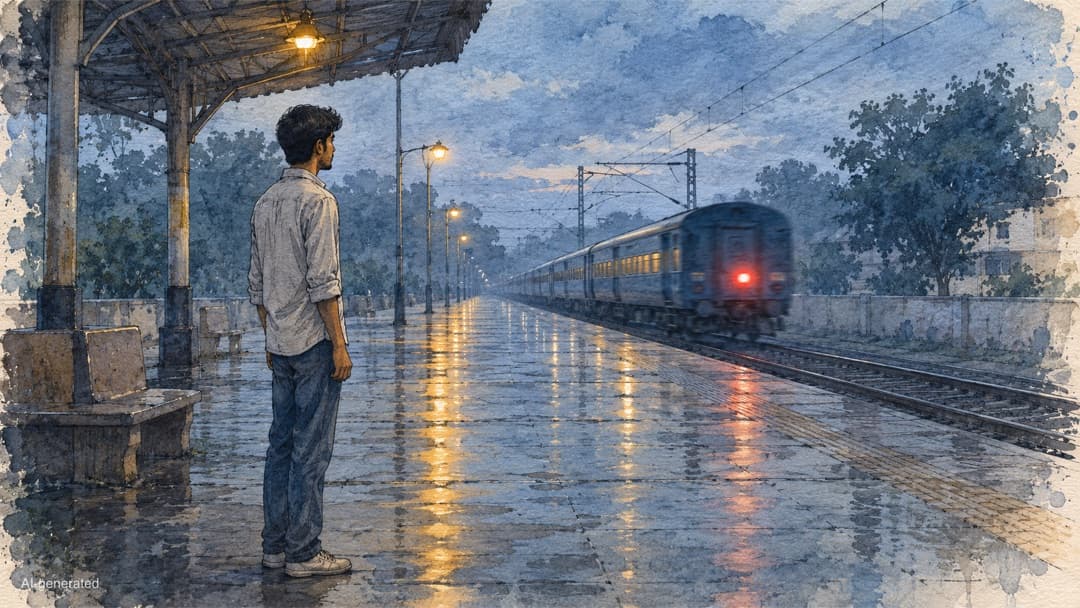
Suffering
10min201reads82
We have all felt it: a phone stolen, a job gone, someone who walked out, and suddenly it seems we were lost along with it. Things come, stay for a while and leave; that movement is not what hurts. It hurts when we were riding on what left. The same habit shows up when we try to learn: we want to be taught without our old walls being touched, and then we call the teaching confusing. So what are we really holding on to, the thing or ourselves in it?
Sufism
7min437reads1
Mojud – The man with the inexplicable life
There was once a man named Mojud. He lived in a town where he had obtained a post as a small official, and it seemed likely that he would end his days as inspector of weights and measures.
One day when he…
Sufism
10min272reads6
A man and a nail had a conversation. The nail said, “I have often wondered during my years, sticking here in this panel what my fate is to be.” The man said, “Latent in your situation, maybe a tearing out with pliers, a burning of wood, the rotting of the…
Sufism
12min347reads5
The Lamp Post
One dark night two men met on a lonely road.
‘I am looking for a shop near here, which is called The Lamp Shop,’ said the first man.
‘I happen to live near here, and I can direct you to it, ‘ said the second man.
‘I…
Ego
17min363reads111
Sufi Story: In the city of Bastan where Bayazid made his home, there lived a very respected and venerable ascetic. He enjoyed Bayazid's circle, though he never became one of his disciples. One day he said to Bayazid, "O Master! For the last thirty years, I have been fasting from…
Excerpts from Articles
Contemporising Kumbh: Ancient wisdom, Modern Relevance
The story, the myth, is elaborate, but one word that firmly dictates the narrative of the Kumbh saga is immortality. Immortality is to live deeply, not necessarily long. It is to go to one’s deepest desire, fulfill it, and extinguish it forever. Another Kumbh beckons us. Can we go beyond the ritualistic dip and honestly observe life as it is, within and around us?
Climate Crisis: A Mirror to Our Inner State
Climate change is not just about data and systems. It reflects something deeper: the confusion in the human mind. We are not just harming the planet by accident. We are driven by wants we do not understand, chasing comfort, status, or identity without pausing to ask: What do we really need?
Sanatan Dharma is the way if the world is to be saved, rest is just cult
When it comes to philosophy and spirituality, the discourse often becomes dense. But in our endeavour to understand Sanatan Dharma, we will proceed with simple definitions and queries.
Devi as Nature, Demon as Destruction
Navratri is not just about outer restoration. It is about inner illumination. Liberation is knowledge, and knowledge is restoration. Until man knows himself, no river will run clean, no forest will stand safe. To worship Devi is to end the demon within; only then will the earth be free.
Beyond The Mat - Yoga, The Return To The Centre
Yoga is not something you do - it's what remains when falsehood falls away. It is the union, through conscious acsendence, of your current (ordinary and lowly) state with your highest possibility.
Jealousy is dependency in disguise
Nobody wants to admit to jealousy, not even to themselves. It is easier to look away from than to examine. But it is worth looking at, because jealousy tells you where your sense of worth is kept.
The real meaning of Shiva
All names are beautiful. But if we understand the meaning of these names by going into the depths of spirituality, their beauty increases further.
Dr BR Ambedkar: A Visionary Beyond Politics
Dr. Ambedkar is an enduring symbol of struggle, dignity, and the relentless pursuit of justice. His life was not merely a series of events that were linked with politics or social reform. It was an intellectual, social, and spiritual odyssey. Dr.
Children’s Day: What Are We Really Giving Our Children?
Children’s Day is celebrated on 14 November every year. We try to provide the best schools, facilities, and plans for our children’s future and celebrate their achievements with pride.
The planet is irreversibly tipping. Who is pushing it?
We have begun to speak of the future climate as though we could settle the bill later. We shall keep emitting greenhouse gases, warm the planet beyond the limit we have agreed upon and, when technology has improved, bring the temperature down again.
You Have Lifted The Cup, And Part Of The Spell
A true victory is not over an external opponent, But over one’s own limitations: personal, cultural, historical. When women play freely, the nation breathes freely. When women claim their place, the planet finds its peace.
Israel-Hamas: Unraveling The Role Of Religion In Conflict And Cruelty
Why do conflicts happen, and why is there cruelty in the world? These two things show us what religion means to regular people.
How To Get Freedom From Anxiety?
Especially in the modern world, unfortunately, a degree of constant anxiety has become an almost normalized state for us. A large portion of our mental health problems as a collective is very much about anxiety and fear. Burn-outs, career pressures, problems with self-esteem, fear of others, stress about studies etc.
Complex challenges necessitate consciousness and policy shift
India faces multitudes of challenges arising from different quarters. But essentially all problems have their roots in the mind of the human being and arise from a lack of adequate understanding of the self. The solutions therefore have to be both in the external and the internal domain.
A Lesser Known Incident From Mahatma Gandhi’s Life
Mahatma Gandhi had been in South Africa at the center of a civil movement for more than two decades but he kept coming to India to attend Congress sessions. There was not much depth in those visits.
Climate change: When disaster becomes a market
When a flood destroys a bridge, rebuilding it creates economic activity. Someone buys steel and cement, construction companies get contracts, workers are hired, and money changes hands.
When clarity ends confusion
Decision-making, for most of us, becomes heavier than it needs to be. The moment a choice appears, the mind begins its familiar dance. Thoughts circle around the options, trying to predict outcomes, trying to secure certainty, and the whole thing turns strangely tiring.
The Mirage of Revolutions: Why Uprisings Fail Without Inner Freedom
When we think of revolutions, it is often the sound that comes back first: the roar of voices in the streets, slogans ringing through capitals, crowds that feel unstoppable, and rulers suddenly brought down. For a fleeting moment, it feels as if a new dawn has arrived. Yet when the dust clears, the old shadows return.
Suffering
36min11reads1
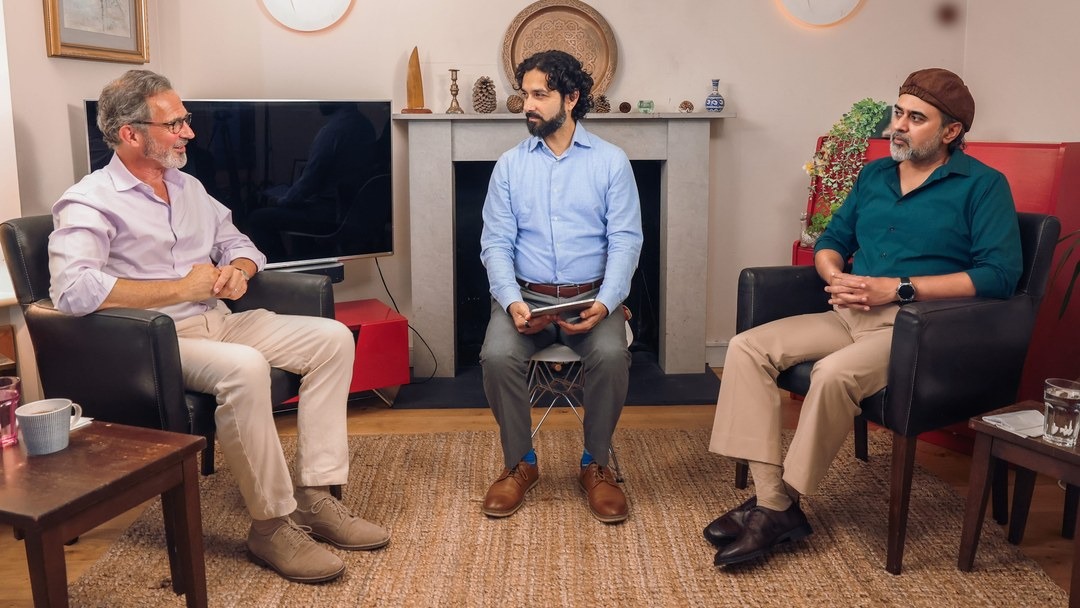
Most of us try to fix our suffering: a better job, a calmer mind, a new practice, a holier word to hide behind. But what if the trouble was never the pain itself? In this London dialogue with a teacher of non-duality, we look at who it is that says “I am”, why the sufferer hides in money and in holy concepts alike, and why non-duality is an intention, not a state. If the ego is a born lover, what does it truly want?
Related Articles
Suffering
16min192reads102
Every year we burn Ravan, and every year he is back. We ask what the punishment for living wrongly will be, hoping it is small, or can be postponed, or paid off. But the battle never ends, and the punishment is not a sentence handed down later. It is the self we live with, so familiar that it feels normal. What we truly intend shows in what our actions keep leading to, not in what we declare. Can we look honestly at the outcomes of our own lives?
Suffering
15min163reads72
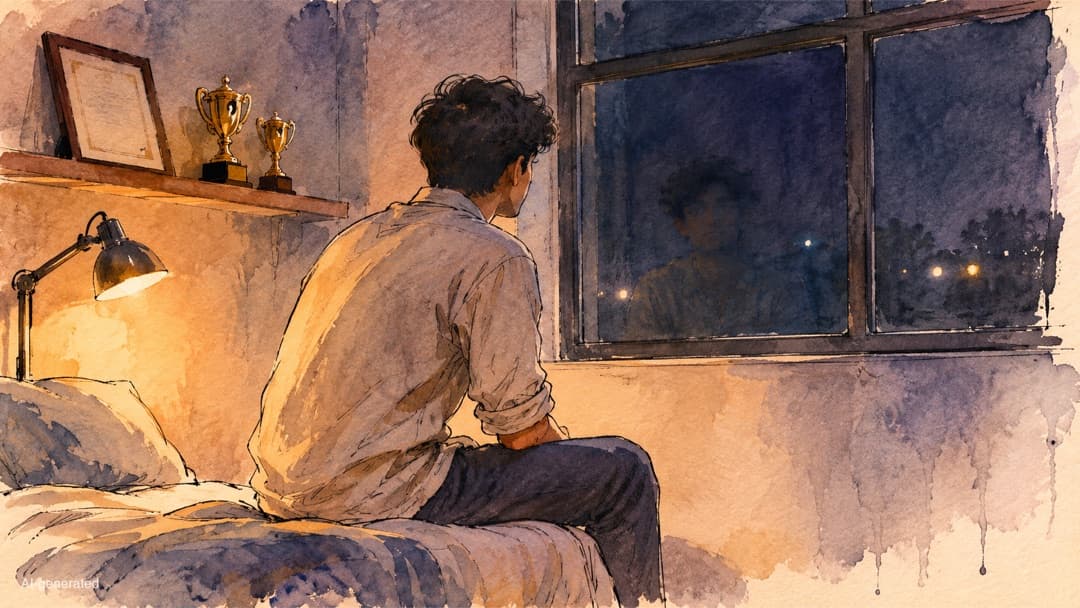
We sharpen the brain, collect the degrees, climb the ladder, and still feel strangled from within. The brain struggles with a hard maths problem, but who struggles with life? It is the one who uses the brain, the body and every opportunity, and calls all of it “mine”. We never examine that user, so its first claim, “I am important”, goes unchecked, and every value we build on it inherits the flaw. We chase prizes that give very little. Can we look at the one who is chasing?

Suffering
12min174reads112
Someone asks how we are, and we say, “I am so good. I’m doing so well.” Then comes 3 a.m., and we know better. Nobody outside can check that claim, so the talk says an inner claim can be falsified only in the first person. Science runs on peer review; self-inquiry does not. A mirror can show where we stand, but whether we accept what it shows depends on honesty. Which of our own claims have we never allowed to be tested?

Ego
10min239reads111
We believe we are born to be happy, and that happiness comes from more and more consumption. We keep consuming, and the lonely, anxious, restless feeling keeps returning. A sage, the talk says, has nothing to tell anyone who claims to be already fulfilled. The only question put to us is blunt: have all these objects and ideas worked on you? If not, why not be honest enough to discard them, instead of endlessly rolling on a flat plane? What could we learn by looking at the one who keeps trying?
Truth
11min112reads1
First the board percentage, then the CGPA, the money, the house: we keep ticking things off and reaching for the next, as if we were items on a conveyor belt that started the day we were born. When we do not know what we want, we end up wanting everything. The same unexamined words, success, love, settling down, decide what we call a true calling. If the seeker is false, how can what we seek be true? What if we first looked honestly at our own ideas of life and success?
Suffering
8min3.2kreads322
Research has shown that loneliness is found throughout the society, including among people in marriages along with other strong relationships, and those with successful careers. As a subjective emotion, people experience loneliness even when surrounded by other people.
Love
10min3.8kreads1877
Love is great. Love is necessary. Love is beautiful.
But what is love?
For most of us, love is the greatest excitement and comfort—and also the greatest suffering. Whether love has become a problem or something you cherish the most in your life, please go deeper into the matter. Know…

Love
6min597reads316
Spirituality is about belonging to existence. Not belonging to a narrow household, or caste or ideology. All these are boundaries. So, wherever there are boundaries, there is violence. Wherever there are boundaries, there is also the fear of being small, powerless, limited. The really non-violent one is at home, everywhere and in every situation. Non-violence is not about following duties. Non-violence is an action in clarity and love. That alone is non-violence.
Clarity
11min611reads61
Questioner: When I do something my parents don’t approve of, they scold me. But sometimes the matter goes too far and I get offended, and then I refrain from talking back to them; I fear that if I say something, I will end up hurting them. But then, if I…
Love
6min359reads141
Questioner: Namskar Acharya ji. Pardon me for not remembering exactly but in one of the shivirs where we had read ‘Gospel of Sri Ramakrishna’ to come to terms with this expression called ‘Adhikar Bhed.’
So therein Ramakrishna was saying that, “now in modern times there cannot be any Adhikar Bhed,…
Clarity
8min329reads11
Acharya Prashant: Desire means that you are not alright with yourself and you want something else to happen, correct? So, we are anyway not living for ourselves. We are rather living to change ourselves. And are these not two very different things? If you are living for yourself as you…
Clarity
13min896reads281
Questioner: I have a question on an excerpt from you.
“Aloneness is not about being free of others and living without others. Aloneness is to live without oneself. Aloneness does not have much to do with the so-called others; aloneness has everything to do with the one called oneself.”
I’d…
Clarity
11min132reads2
Acharya Prashant: Everybody in his own personal way is seeking fulfillment and that is love. If you are young you may seek fulfillment in somebody's body, if you are middle-aged you may seek fulfillment in wealth and prestige, if you are old you may seek fulfillment in security and property…
Mind
12min228reads3
Acharya Prashant (AP) All the diversities that you see are the world. And these diversities are what make the mind suffer and here the sages have picked up all the diversities and have said that all these diversities are actually one. The distinctions are merely apparent. Actually, there is an…
Clarity
8min254reads3
Acharya Prashant: A quiver full of the best of arrows but no bow, how do you fight the battle of life? Can you imagine the amusing as well as tragic situation of the person who has a great arrow without a bow? He will be sharpening and sharpening his weapon,…
Suffering
12min435reads21
Questioner (Q): I had been part of the last Delhi Camp, IIT Delhi Camp. During those three days, I have seen that you have spoken to the participants continuously for 6 hours, then later in the evenings, with hostel students, for another two, to three hours till 2 a.m. in…
Suffering
7min495reads6
Laugh with no care at all. Why take oneself so seriously? What hurt, what wound can be so big? When we fully well know that the only thing that really is the Truth. Can there be two truths? The truth and the wound. The wound has to be a lie. But it will continue to pretend to be the truth as long as you avoid looking at it. The more you look at it, the more you will see that the wound is just some kind of dressing up that has been needlessly done.
Bhagavad Gita
6min842reads3
Questioner (Q): Good afternoon, Sir. I have a doubt. In the market, there are a number of Bhagavad Gitas available. Somebody told me that there are eighty varieties of the Gita. Even though the slokas are the same, from what I have seen, the explanation was not making sense. In…
Suffering
6min1.2kreads4014
The hurt that you have received is a result of your own lack of understanding about the nature of life. This is an opportunity to understand life. It is an opportunity to not let the previous mistakes be repeated.
Clarity
5min349reads2
Acharya Prashant: If you look at knowledge that man has gathered in various fields, you will easily see that all of man’s knowledge is related to man’s desire. Man does not try to gain knowledge in fields that have absolutely no connection with man’s fundamental desires.
Man desires, man gets…
Love
4min401reads1
Acharya Prashant: Observing the daily ordinary actions of the mind, that is the only way. Observing it as an impartial observer. There is no other method that is going to work because all other methods are ‘isolations.’ The method does something to life. The method excludes life; the method…
Love
7min761reads8
Maturity is when you can transcend your body, and by the body, I mean the bodily compulsions. That includes your thoughts, your feelings, and everything because they are all bodily. You very well know how chemicals in the body translate into thoughts and feelings. Read more...
Clarity
5min303reads2
The word for that is ‘Nirmam’ — you are not mine. It is instructive that the word ‘Nirmam’ has a pejorative meaning in layman language. There it means cruel, but Nirmam actually is a beautiful word. Nirmam means not mine. You’re not mine, why must I shelter you? You’re not mine—no. You are no well wisher. You are no lover. I will be nirmam. If this is cruelty, you need this kind of cruelty. It is a very life-affirmative cruelty. Read more....
Suffering
3min563reads51
Questioner (Q): Put in some difficult situations and old locations, I am surprised to see my old tendencies of hurt and dependence are back; they never did leave. I am selfish, difficult and stubborn. Help me Acharya Ji. Help me move ahead of this pettiness. Please!
Acharya Prashant (AP): You…
Suffering
4min699reads91
You didn't have anything special in the past. Had we had anything special in the past, then we wouldn't have come to the state of suffering we find ourselves in today. So, the past is not the solution. You have to realize how things are with you today. You have to look at your interactions with human beings today. You have to see how you relate to your body, to your friends, to your workplace—all these things. And from there, you—you develop an insight, and that insight offers, some freedom.
Love
13min1.4kreads3081
Questioner (Q): I think this is a follow up question of one of your videos, in which you described physical love, and you concluded with a statement that, “Love has to be learnt”. I wanted to learn more about this and how I can cultivate this kind of love in…
Suffering
8min1.6kreads459
I'm not asking you to be a loner or an avoider of human company. It's just that things must be given their due place — and their due place depends on their quality. If you do not have good quality people around you, there are many other better options. Why not spend your evenings learning to swim or sing? And there could be so many other things. I mean, you would know better.

Suffering
9min454reads92
It’s not going to be right when the patient starts playing the doctor. We need to grow up; and having a kid, in that sense, is an opportunity. You want to be of some use to the kid, then grow up with the kid.
Love
2min638reads3
Acharya Prashant: If one is living rightly, then youth is the permanent state of one's mind. The body can grow old. The mind cannot grow old if one has lived rightly. Youth, that way is your default state.
The 'Atma' has no age; it is ageless; the mind has the…
Suffering
19min291reads1111
We see the craving for what it is, laugh it off once, and soon it is back. The laughter “is lazy and goes off to sleep,” as the talk puts it. We are taught to chase our dreams, yet desire is only the ego’s agenda under another name. “Want is not sacred.” Suffering cannot be wished away either, but we do have a choice in how we live with it. Can we keep laughing at our own wants, and ask where they really come from?
Clarity
6min1.8kreads246
Destiny is the inviolable thing. You cannot get rid of it. You have to reach there. So, better choose in favour of your destiny. Now, destiny is something that can, at most, keep waiting till eternity. But you can never dismiss it. So, make a choice in the favour of destiny. Bow down to your destiny, surrender to your destiny. If it has to happen, why keep postponing it? Because that postponement is just suffering. Destiny is love. Destiny is what each of us craves, is crazy for.
Bhakti
8min121reads121
Vedanta reveals that freedom is impossible as long as the ego seeks to preserve itself. Meditation may bring temporary calm, but real transformation begins only when the false sense of individuality dissolves. Whether through devotion or knowledge, every genuine spiritual path culminates in the complete dissolution of the seeker into Truth. Liberation is not the experience of Truth by an individual—it is the end of the individual who wants to experience Truth.

Grace
8min1.3kreads35719
Gita can be brought to anybody, and Arjunas are not always available. Sometimes, Duryodhanas have to be turned into Arjunas. It’s just that it’s relatively easier with an Arjuna. As long as somebody has even the faintest remnant of consciousness left, Gita can be brought to that person — but it will be tough. Nobody really deserves the Gita. You can only be grateful to the Gita if it comes to you.
Love
8min127reads71
Many Indian parents keep their children, and especially their daughters, away from sport, even where coaches and facilities exist. The barrier is often not outside but in the parent’s own ideas: poor returns, uncertainty, and fixed notions of what a girl’s life must be. Blaming our own parents does not help either; our life is now our responsibility. Parenting is a decision of the greatest responsibility, and it begins with self-love. Can we love a child if we cannot love ourselves?
Suffering
11min511reads271
A boy’s face turns black with soot at the train window while his sister cries as the engine starts rolling. Their father says that to reach the destination we must learn to embrace the noise and the soot. We too wait for a day when suffering ends and joy begins, and the waiting only deepens the hurt. But joy lies in the courageous embrace of suffering, not beyond it. Can we look at what we are protecting when we run from pain?
Bhagavad Gita
6min146reads51
We gladly worship Krishna the cowherd of Mathura and Vrindavan, yet the Krishna of Kurukshetra, who speaks the Gita, is rarely welcome. Much of what we call religion is a request: we pick a favourite deity, place and ritual, then ask for a car, money or a cure. The Gita values rituals done for desire as little as a pond beside the ocean. Popular religion says, "I want, therefore I act." The Gita says, "Know who you are and then simply let things happen." Which of the two do our prayers come from?
Love
19min187reads51
True love is not a biological instinct, emotional attachment, or social conditioning. Biology and science explain the body's drives, but they cannot explain the self that seeks freedom. Love is the inner restlessness to move from ignorance and bondage toward truth and liberation. Religion is not rituals or inherited beliefs but this personal journey of understanding. Freedom—not possession or conformity—is the essence of both love and religion.

Suffering
9min225reads64
Sisyphus pushes a rock up a hill forever, knowing it will always roll back down. A regular workman does the same thing inside a job: he keeps pushing too, except he hopes it will eventually pay off, a promotion, a house, a better life. This hope is often just a comfortable lie. Sisyphus, who expects nothing and still keeps going, is actually more honest than we are. The real question is not whether the effort is worth it, but whether we can stop lying to ourselves about it.

Love
11min221reads61
Love is not attraction, possession, dependency, or a transaction driven by personal gain. As long as relationships arise from insecurity, ownership, or the desire for psychological completion, they remain centered on the ego. Love is simple, natural, and free of self-interest, flowing without preference or exclusion. The ego seeks security, continuity, and suffering because they preserve its identity, while freedom and joy threaten its existence. A meaningful life begins when one stops repeating old patterns, accepts uncertainty, and chooses freedom over the comfort of familiar cages.
Love
14min229reads9
Truth cannot be forced upon anyone, but neither should falsehood be entertained. Genuine love is not about preserving relationships at any cost; it is about helping oneself and others break free from illusion, even if that means risking the relationship itself. Spiritual growth begins by questioning conditioning, examining falsehood without bias, and choosing authenticity over comfort. Real relationships are built on the courage to seek freedom, not convenience.
Atma
17min38reads
“I lust after your body” is the ego speaking plainly. Tell it the ego is false, and it rephrases: “It’s not lust, it’s love. And I’m not the ego, I’m Atma.” So the Buddha said even this Atma is false, and we turned Neti Neti into one more belief. A PhD student asks which of the two works better. The answer: neither teaching was weak. “You give poison to the ego, that becomes nourishment.” Which holy word is doing that work for us today?
Suffering
25min1.1kreads247
The parts of the Upanishads that do not deal with self-enquiry can be taken as outdated. They do not want to address things that change with time. Mankind today is more prosperous than it has ever been in its history — but internally, are you not still afraid? Are you still not greedy? That’s the problem of the self that the scriptures seek to address. The Upanishads are dealing with a very peculiar problem that time alone cannot address — and that is the problem of fundamental human suffering.
Bhagavad Gita
23min1.6kreads2006
There is such great fun in leaving yourself behind and turning a servant to the Truth. It’s almost like Krishna advising Arjuna, “Talk in everlasting words and dedicate them all to Me—*mām ekaṃ śaraṇaṃ vraja, sarva-dharmān parityajya*.” And at numerous places in the *Bhagavad Gita*, he says, “Arjuna, you are not fighting for yourself, you are fighting for Me. As long as you fight for yourself, if you win, you suffer, and if you lose, you suffer. And when you fight for Me, then you are a victor even before the fight begins.”
Suffering
16min1.7kreads4013
Whenever the past bothers you, you should immediately know that some danger is lurking in the present. Had the right thing been happening to you right now, then you couldn’t have been bothered with the past. And that is what the past does. It serves as a very deceptive distraction from the present. Figure out what is happening today.