Christianity
Jesus Christ
28min1.8kreads1778
Jesus is not a hater of persons. He is saying hate the way you have become. The Bible is not a document of hate, the central message is of Love. But when we love, we chain each other. When God loves us, He sets us free. So Jesus is saying to hate the way we relate to each other — because our love is not Godly. Love each other just as God the Father has loved you.
Suffering
36min11reads1
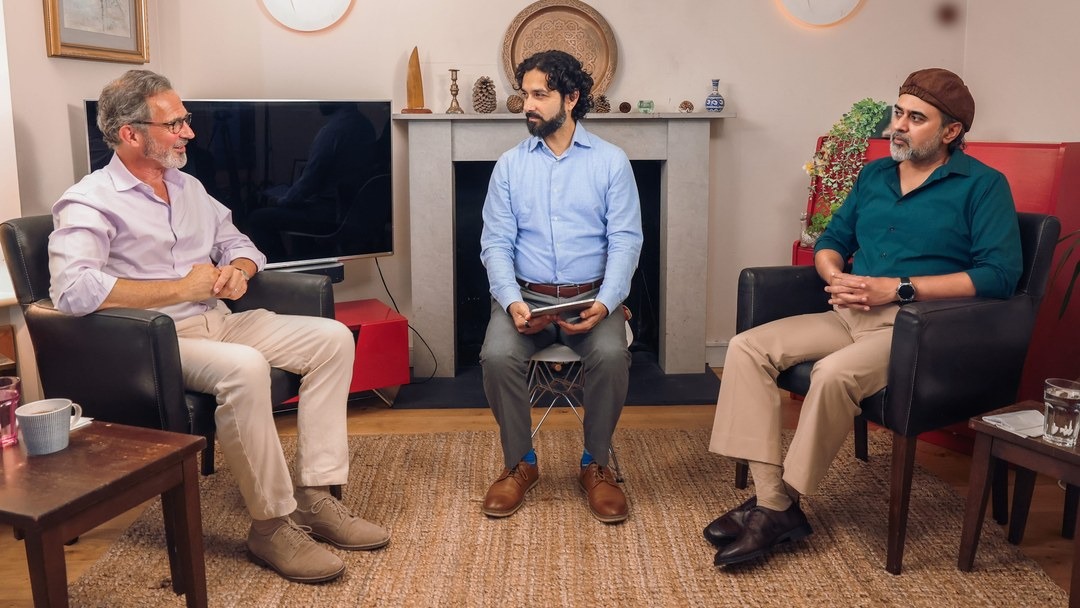
Most of us try to fix our suffering: a better job, a calmer mind, a new practice, a holier word to hide behind. But what if the trouble was never the pain itself? In this London dialogue with a teacher of non-duality, we look at who it is that says “I am”, why the sufferer hides in money and in holy concepts alike, and why non-duality is an intention, not a state. If the ego is a born lover, what does it truly want?
Excerpts from Articles
Jealousy is dependency in disguise
Nobody wants to admit to jealousy, not even to themselves. It is easier to look away from than to examine. But it is worth looking at, because jealousy tells you where your sense of worth is kept.
Israel-Hamas: Unraveling The Role Of Religion In Conflict And Cruelty
Why do conflicts happen, and why is there cruelty in the world? These two things show us what religion means to regular people.
A Lesser Known Incident From Mahatma Gandhi’s Life
Mahatma Gandhi had been in South Africa at the center of a civil movement for more than two decades but he kept coming to India to attend Congress sessions. There was not much depth in those visits.
Dr BR Ambedkar: A Visionary Beyond Politics
Dr. Ambedkar is an enduring symbol of struggle, dignity, and the relentless pursuit of justice. His life was not merely a series of events that were linked with politics or social reform. It was an intellectual, social, and spiritual odyssey. Dr.
Climate Crisis: A Mirror to Our Inner State
Climate change is not just about data and systems. It reflects something deeper: the confusion in the human mind. We are not just harming the planet by accident. We are driven by wants we do not understand, chasing comfort, status, or identity without pausing to ask: What do we really need?
The Mirage of Revolutions: Why Uprisings Fail Without Inner Freedom
When we think of revolutions, it is often the sound that comes back first: the roar of voices in the streets, slogans ringing through capitals, crowds that feel unstoppable, and rulers suddenly brought down. For a fleeting moment, it feels as if a new dawn has arrived. Yet when the dust clears, the old shadows return.
Beyond The Mat - Yoga, The Return To The Centre
Yoga is not something you do - it's what remains when falsehood falls away. It is the union, through conscious acsendence, of your current (ordinary and lowly) state with your highest possibility.
Sanatan Dharma is the way if the world is to be saved, rest is just cult
When it comes to philosophy and spirituality, the discourse often becomes dense. But in our endeavour to understand Sanatan Dharma, we will proceed with simple definitions and queries.
The planet is irreversibly tipping. Who is pushing it?
We have begun to speak of the future climate as though we could settle the bill later. We shall keep emitting greenhouse gases, warm the planet beyond the limit we have agreed upon and, when technology has improved, bring the temperature down again.
Climate change: When disaster becomes a market
When a flood destroys a bridge, rebuilding it creates economic activity. Someone buys steel and cement, construction companies get contracts, workers are hired, and money changes hands.
Contemporising Kumbh: Ancient wisdom, Modern Relevance
The story, the myth, is elaborate, but one word that firmly dictates the narrative of the Kumbh saga is immortality. Immortality is to live deeply, not necessarily long. It is to go to one’s deepest desire, fulfill it, and extinguish it forever. Another Kumbh beckons us. Can we go beyond the ritualistic dip and honestly observe life as it is, within and around us?
How To Get Freedom From Anxiety?
Especially in the modern world, unfortunately, a degree of constant anxiety has become an almost normalized state for us. A large portion of our mental health problems as a collective is very much about anxiety and fear. Burn-outs, career pressures, problems with self-esteem, fear of others, stress about studies etc.
Devi as Nature, Demon as Destruction
Navratri is not just about outer restoration. It is about inner illumination. Liberation is knowledge, and knowledge is restoration. Until man knows himself, no river will run clean, no forest will stand safe. To worship Devi is to end the demon within; only then will the earth be free.
The real meaning of Shiva
All names are beautiful. But if we understand the meaning of these names by going into the depths of spirituality, their beauty increases further.
Children’s Day: What Are We Really Giving Our Children?
Children’s Day is celebrated on 14 November every year. We try to provide the best schools, facilities, and plans for our children’s future and celebrate their achievements with pride.
Complex challenges necessitate consciousness and policy shift
India faces multitudes of challenges arising from different quarters. But essentially all problems have their roots in the mind of the human being and arise from a lack of adequate understanding of the self. The solutions therefore have to be both in the external and the internal domain.
You Have Lifted The Cup, And Part Of The Spell
A true victory is not over an external opponent, But over one’s own limitations: personal, cultural, historical. When women play freely, the nation breathes freely. When women claim their place, the planet finds its peace.
When clarity ends confusion
Decision-making, for most of us, becomes heavier than it needs to be. The moment a choice appears, the mind begins its familiar dance. Thoughts circle around the options, trying to predict outcomes, trying to secure certainty, and the whole thing turns strangely tiring.
Related Articles
Suffering
10min201reads82
We have all felt it: a phone stolen, a job gone, someone who walked out, and suddenly it seems we were lost along with it. Things come, stay for a while and leave; that movement is not what hurts. It hurts when we were riding on what left. The same habit shows up when we try to learn: we want to be taught without our old walls being touched, and then we call the teaching confusing. So what are we really holding on to, the thing or ourselves in it?
Suffering
16min192reads102
Every year we burn Ravan, and every year he is back. We ask what the punishment for living wrongly will be, hoping it is small, or can be postponed, or paid off. But the battle never ends, and the punishment is not a sentence handed down later. It is the self we live with, so familiar that it feels normal. What we truly intend shows in what our actions keep leading to, not in what we declare. Can we look honestly at the outcomes of our own lives?
Suffering
15min163reads72
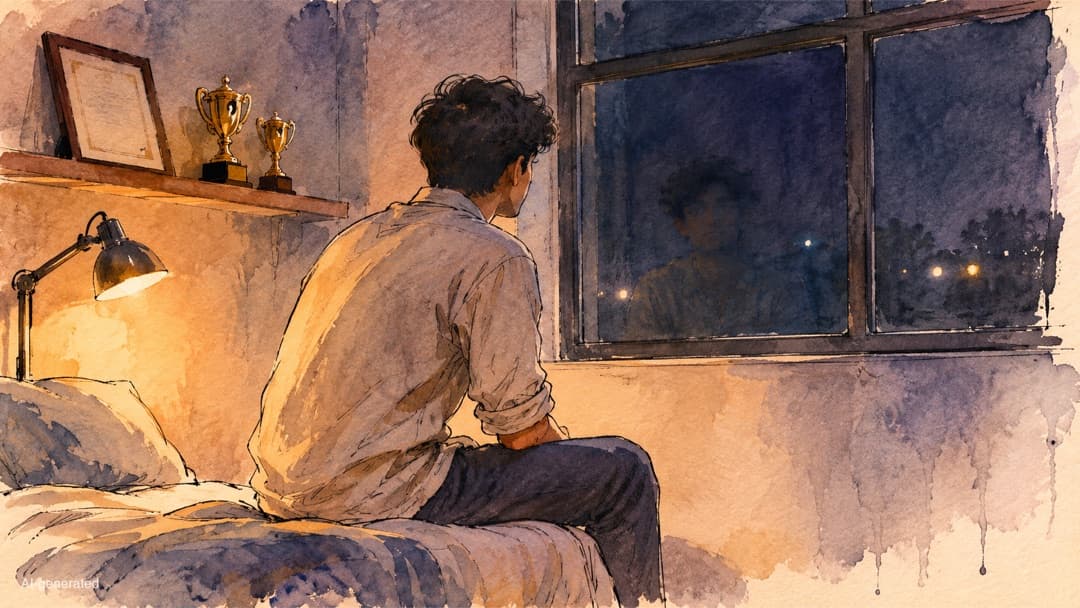
We sharpen the brain, collect the degrees, climb the ladder, and still feel strangled from within. The brain struggles with a hard maths problem, but who struggles with life? It is the one who uses the brain, the body and every opportunity, and calls all of it “mine”. We never examine that user, so its first claim, “I am important”, goes unchecked, and every value we build on it inherits the flaw. We chase prizes that give very little. Can we look at the one who is chasing?

Suffering
12min174reads112
Someone asks how we are, and we say, “I am so good. I’m doing so well.” Then comes 3 a.m., and we know better. Nobody outside can check that claim, so the talk says an inner claim can be falsified only in the first person. Science runs on peer review; self-inquiry does not. A mirror can show where we stand, but whether we accept what it shows depends on honesty. Which of our own claims have we never allowed to be tested?
Truth
11min112reads1
First the board percentage, then the CGPA, the money, the house: we keep ticking things off and reaching for the next, as if we were items on a conveyor belt that started the day we were born. When we do not know what we want, we end up wanting everything. The same unexamined words, success, love, settling down, decide what we call a true calling. If the seeker is false, how can what we seek be true? What if we first looked honestly at our own ideas of life and success?
Bhagavad Gita
17min161reads72
We have all put down a book that could have helped us, or dozed off halfway through something that mattered. A man who could not keep food down was given medicine, and he threw that away too, since it went in by the same route. Most of us strike a similar deal: we move into a place that stinks and, within a week, call the smell normal. Show our fifteen-year-old self the life we lead now and they would scoff. What would change if we admitted we do not like our condition?
Depression and Anxiety
6min2kreads182
Especially in the modern world, unfortunately, a degree of constant anxiety has become an almost normalized state for us. A large portion of our mental health problems as a collective is very much about anxiety and fear. Burn-outs, career pressures, problems with self-esteem, fear of others, stress about studies etc.—all…
Suffering
8min3.2kreads322
Research has shown that loneliness is found throughout the society, including among people in marriages along with other strong relationships, and those with successful careers. As a subjective emotion, people experience loneliness even when surrounded by other people.
Love
10min3.8kreads1877
Love is great. Love is necessary. Love is beautiful.
But what is love?
For most of us, love is the greatest excitement and comfort—and also the greatest suffering. Whether love has become a problem or something you cherish the most in your life, please go deeper into the matter. Know…
Festivals
3min3.2kreads27352
Man has always been attracted to the new. But attraction alone is not enough, especially when one is resistant to leaving the old ways. 'New' comes with an opportunity to change, and equally with a responsibility to act upon that change. Bridging this gap between attraction and action, Acharya Prashant guides us with practical resolves that possess the potential to bring real development—if followed honestly!

Love
6min597reads316
Spirituality is about belonging to existence. Not belonging to a narrow household, or caste or ideology. All these are boundaries. So, wherever there are boundaries, there is violence. Wherever there are boundaries, there is also the fear of being small, powerless, limited. The really non-violent one is at home, everywhere and in every situation. Non-violence is not about following duties. Non-violence is an action in clarity and love. That alone is non-violence.

Mind
16min2kreads143
Questioner: Would you please be able to explain to us the difference between the mind, the soul, the spirit, and consciousness?
Acharya Prashant: There is just consciousness; that consciousness requires physical support. That consciousness requires a physical support, right? That physical support is called: the man.
When we say consciousness,…
Love
6min359reads141
Questioner: Namskar Acharya ji. Pardon me for not remembering exactly but in one of the shivirs where we had read ‘Gospel of Sri Ramakrishna’ to come to terms with this expression called ‘Adhikar Bhed.’
So therein Ramakrishna was saying that, “now in modern times there cannot be any Adhikar Bhed,…
Beliefs
4min300reads
Acharya Prashant: Hell is a place where you get a lot of sympathy, consolation, condolence, and commiseration. You're told that we agree that you are in a miserable state. Your neighbor comes to you, puts his hand on your shoulder, and with a grave face tells you that you are…
Truth
4min362reads33
Acharya Prashant: The spiritual soldier, the religious warrior has to be extremely intelligent. You could go to the extent of saying that he has to be cunning in the service of Truth; I’m choosing this word with all deliberation.
He has to be cunning in the service of the Truth;…
Clarity
13min896reads281
Questioner: I have a question on an excerpt from you.
“Aloneness is not about being free of others and living without others. Aloneness is to live without oneself. Aloneness does not have much to do with the so-called others; aloneness has everything to do with the one called oneself.”
I’d…
Clarity
11min132reads2
Acharya Prashant: Everybody in his own personal way is seeking fulfillment and that is love. If you are young you may seek fulfillment in somebody's body, if you are middle-aged you may seek fulfillment in wealth and prestige, if you are old you may seek fulfillment in security and property…
Clarity
3min216reads2
Acharya Prashant: Our normal life is our nemesis. And it is our nemesis precisely because it appears normal. It is not normal. It is normal only by comparison. It is normal only relative to your neighbour. It is the life that your neighbour is leading. It is the life that…
Clarity
8min254reads3
Acharya Prashant: A quiver full of the best of arrows but no bow, how do you fight the battle of life? Can you imagine the amusing as well as tragic situation of the person who has a great arrow without a bow? He will be sharpening and sharpening his weapon,…
Suffering
12min435reads21
Questioner (Q): I had been part of the last Delhi Camp, IIT Delhi Camp. During those three days, I have seen that you have spoken to the participants continuously for 6 hours, then later in the evenings, with hostel students, for another two, to three hours till 2 a.m. in…
Suffering
7min495reads6
Laugh with no care at all. Why take oneself so seriously? What hurt, what wound can be so big? When we fully well know that the only thing that really is the Truth. Can there be two truths? The truth and the wound. The wound has to be a lie. But it will continue to pretend to be the truth as long as you avoid looking at it. The more you look at it, the more you will see that the wound is just some kind of dressing up that has been needlessly done.
Atma
12min962reads161
Acharya Prashant: Chandogya Upanishad — Chapter 3, part 11, verses 2 and 3:
न वै तत्र न निम्लोच नोदियाय कदाचन । देवास्तेनाहंसत्येन मा विराधिषि ब्रह्मणेति ॥ ३.११.२ ॥
na vai tatra na nimloca nodiyāya kadācana | devāstenāhaṃsatyena mā virādhiṣi Brahmaṇeti || 3.11.2 ||
Never does this happen there; never did…
Suffering
6min1.2kreads4014
The hurt that you have received is a result of your own lack of understanding about the nature of life. This is an opportunity to understand life. It is an opportunity to not let the previous mistakes be repeated.
Self Enquiry
16min1.4kreads81
Questioner (Q): So I had your advice and I got some books in terms of getting different perspectives. It might be a bit weird in a way question but I kind of wonder, when people are praying for God somewhere and also you're mentioning something about the myth of the…
Clarity
6min375reads1061
The world is like an open book to the one whose eyes are open; if you cannot read the world, then you have to look at yourself first, then you have to be mindful of your own condition. Read more...
Love
4min401reads1
Acharya Prashant: Observing the daily ordinary actions of the mind, that is the only way. Observing it as an impartial observer. There is no other method that is going to work because all other methods are ‘isolations.’ The method does something to life. The method excludes life; the method…
Truth
20min645reads101
Questioner (Q): I have been suffering from a type of OCD (Obsessive Compulsive Disorder) called somatic OCD for the last two years. I was in constant fear, every single moment, for around two years. I was on sleeping pills and anti-anxiety pills, but I think what helped me a lot…
Love
7min761reads8
Maturity is when you can transcend your body, and by the body, I mean the bodily compulsions. That includes your thoughts, your feelings, and everything because they are all bodily. You very well know how chemicals in the body translate into thoughts and feelings. Read more...
Festivals
6min293reads33
If you know no philosophy and you are just celebrating Holi, Diwali, or Eid, or Christmas, that's dumb. Very dumb. And you call that as your great culture. No, I will have to sacrifice goats. Bloodshed is the name of religion. What kind of religion? No crackers are needed, even if that kills the air. What is this? AQI of 1,400. But I don't bother. I'm a religious man. What are you celebrating?
Clarity
5min303reads2
The word for that is ‘Nirmam’ — you are not mine. It is instructive that the word ‘Nirmam’ has a pejorative meaning in layman language. There it means cruel, but Nirmam actually is a beautiful word. Nirmam means not mine. You’re not mine, why must I shelter you? You’re not mine—no. You are no well wisher. You are no lover. I will be nirmam. If this is cruelty, you need this kind of cruelty. It is a very life-affirmative cruelty. Read more....
Clarity
9min551reads61
Questioner: So, do you teach any Sādhanā through which your disciples and followers can access this inner Witness through which they can constantly de-attach themselves from the world which they are experiencing.
Acharya Prashant: Know what you are doing currently, first of all, that’s what is needed. Anything begins when…
Suffering
3min563reads51
Questioner (Q): Put in some difficult situations and old locations, I am surprised to see my old tendencies of hurt and dependence are back; they never did leave. I am selfish, difficult and stubborn. Help me Acharya Ji. Help me move ahead of this pettiness. Please!
Acharya Prashant (AP): You…
Suffering
4min699reads91
You didn't have anything special in the past. Had we had anything special in the past, then we wouldn't have come to the state of suffering we find ourselves in today. So, the past is not the solution. You have to realize how things are with you today. You have to look at your interactions with human beings today. You have to see how you relate to your body, to your friends, to your workplace—all these things. And from there, you—you develop an insight, and that insight offers, some freedom.
Love
13min1.4kreads3081
Questioner (Q): I think this is a follow up question of one of your videos, in which you described physical love, and you concluded with a statement that, “Love has to be learnt”. I wanted to learn more about this and how I can cultivate this kind of love in…
Suffering
8min1.6kreads459
I'm not asking you to be a loner or an avoider of human company. It's just that things must be given their due place — and their due place depends on their quality. If you do not have good quality people around you, there are many other better options. Why not spend your evenings learning to swim or sing? And there could be so many other things. I mean, you would know better.
Suffering
9min454reads92
It’s not going to be right when the patient starts playing the doctor. We need to grow up; and having a kid, in that sense, is an opportunity. You want to be of some use to the kid, then grow up with the kid.
Love
2min638reads3
Acharya Prashant: If one is living rightly, then youth is the permanent state of one's mind. The body can grow old. The mind cannot grow old if one has lived rightly. Youth, that way is your default state.
The 'Atma' has no age; it is ageless; the mind has the…
Values
5min3.2kreads5713
In our daily lives, we find people using the word Ji as an affirmative statement or while addressing people. Though, it has just become as social norm, there is a profound meaning behind it that conveys of beauty and auspiciousness. It is a reminder that one is beyond the body and the mind; beyond all names and forms. And instead of being identified with the body and the mind, there is something better to be identified with—‘Sri’- a Sanskrit word standing for Ji in vernacular.
Suffering
19min291reads1111
We see the craving for what it is, laugh it off once, and soon it is back. The laughter “is lazy and goes off to sleep,” as the talk puts it. We are taught to chase our dreams, yet desire is only the ego’s agenda under another name. “Want is not sacred.” Suffering cannot be wished away either, but we do have a choice in how we live with it. Can we keep laughing at our own wants, and ask where they really come from?

Women Empowerment
30min1.6kreads379
Vedānta is about the person gaining liberation from both of these—body identification and mental conditioning. So, ideally spirituality should be the woman’s best friend. But practically, evidence has been rather mixed; in fact, evidence has been that religion historically has been on the side of the oppressors when it comes to the women, oppressors of the women. The reason is that religion itself has not been well understood. Religion itself has been a victim of contamination, and when religion is contaminated then religion becomes a tool towards exploitation of women.
Clarity
6min1.8kreads246
Destiny is the inviolable thing. You cannot get rid of it. You have to reach there. So, better choose in favour of your destiny. Now, destiny is something that can, at most, keep waiting till eternity. But you can never dismiss it. So, make a choice in the favour of destiny. Bow down to your destiny, surrender to your destiny. If it has to happen, why keep postponing it? Because that postponement is just suffering. Destiny is love. Destiny is what each of us craves, is crazy for.
Religion
8min1.1kreads369
There is a search within the human being, always for the greatest, the absolute, and that is what differentiates humans from animals. India was fertile, and there was abundance. You had ample leisure, and in that leisure there was space for intellectual inquiry. The sages and the seers would talk to each other purposelessly. And from that purposeless discussion, from silent observation of life for hours, days, months, and years, came those insights that you today recognize as Indian philosophy.
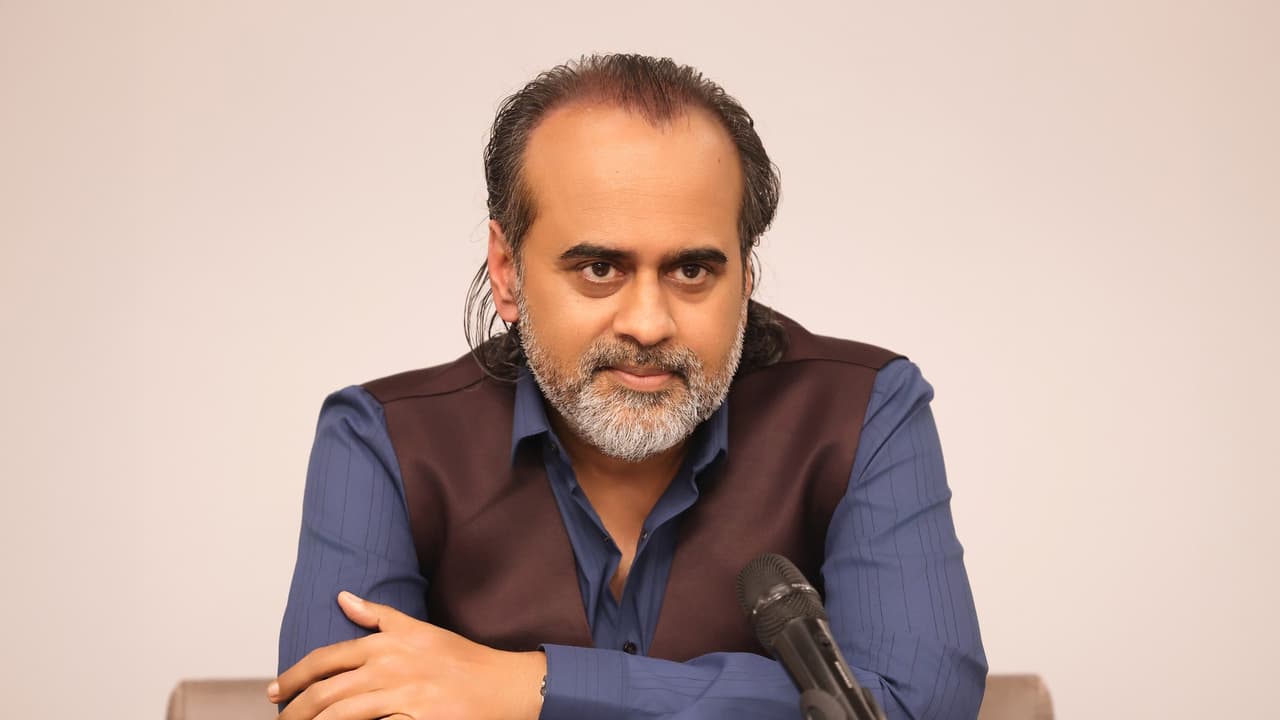
Bhagavad Gita
11min1kreads154
There is only one Dharma. And that is to attain liberation or peace, to gain freedom from your bondages, to gain freedom from your inner chaos and noise, to gain freedom from your inner falseness. Gaining freedom from inner falseness is more commonly known as Truth realization. It is a euphemism—a very decorated euphemism. It’s not really Truth that is really realized; it is falseness that is dropped.

Truth
1min2kreads2019
This evening in Delhi, a new book steps into the world—Truth Without Apology by Acharya Prashant. The launch takes place amidst seekers, readers, and companions of his work. In times when words are often polished to please and truths are dressed in comforting disguises, Truth Without Apology arrives like an uninvited storm—direct, raw, and uncompromising.
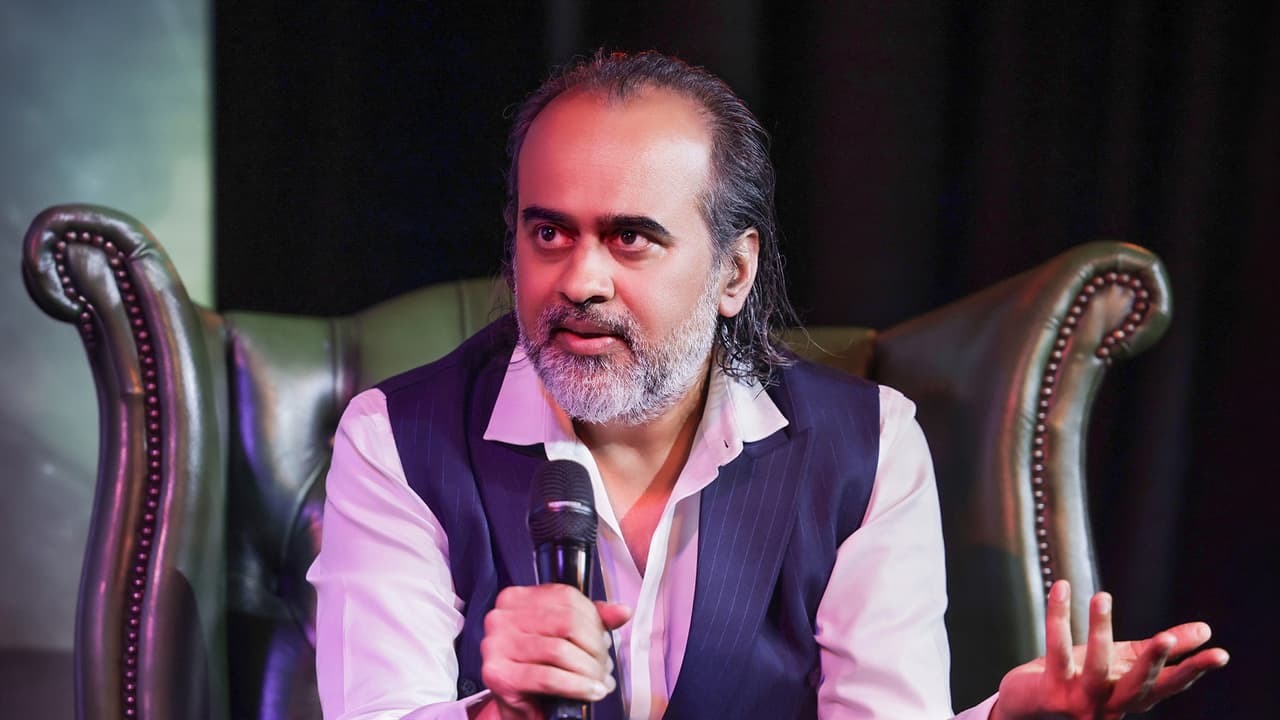
Truth
25min4.3kreads44414
Life comes to us in an unending number of ways and you never know what's going to happen next. We are starved of something that really penetrates the surface. So, it is the intensity that this book brings — arrow-like depth, striking like lightning, immediately, so you don't have a chance to escape away from it. Like a Zen koan: very brief, very effective, and does its work in a snap. You could open just any chapter from anywhere and find it as if it was written just for you.
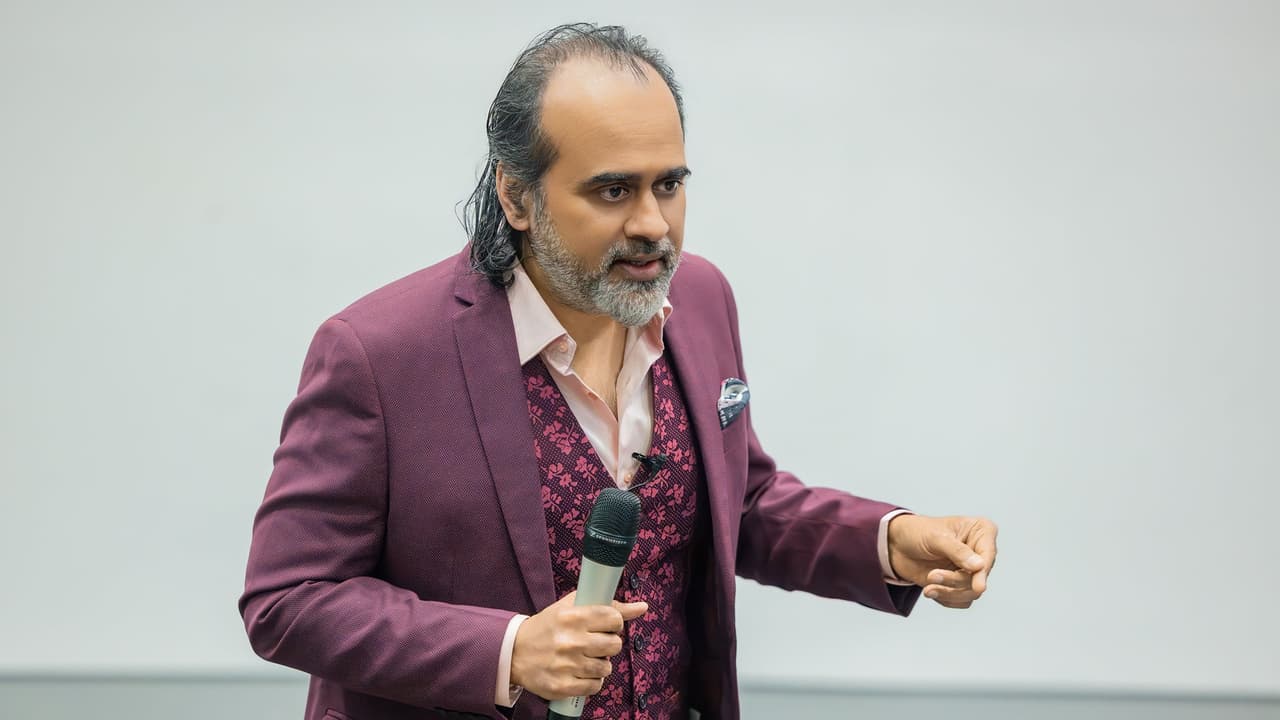
Women Empowerment
9min1.5kreads228
Questioner: All the forms of multimedia, the film industry and advertisements, have presented images of both sexes that are very often unrealistic and debatable. The very quality of femininity has been portrayed in the film industry, ironically, as victimizing them, merely pretty faces, and sidekicks. Why do you think women…
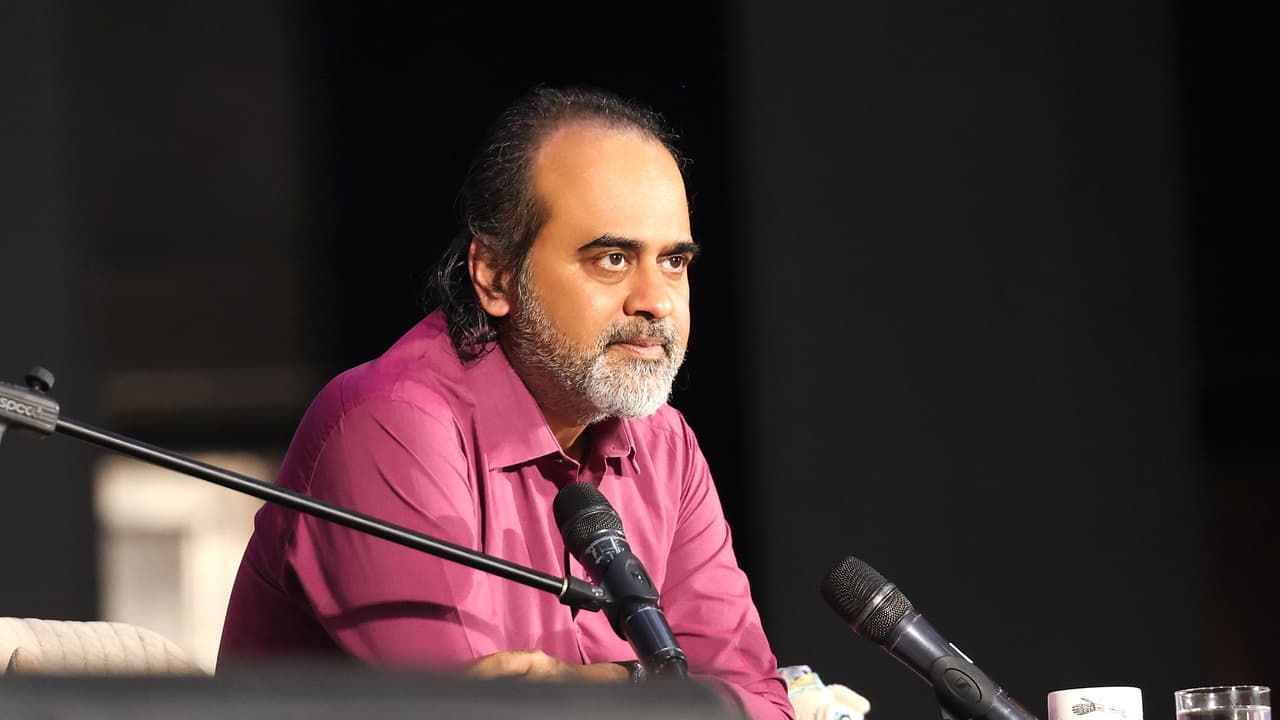
Love
8min127reads71
Many Indian parents keep their children, and especially their daughters, away from sport, even where coaches and facilities exist. The barrier is often not outside but in the parent’s own ideas: poor returns, uncertainty, and fixed notions of what a girl’s life must be. Blaming our own parents does not help either; our life is now our responsibility. Parenting is a decision of the greatest responsibility, and it begins with self-love. Can we love a child if we cannot love ourselves?
Suffering
11min511reads271
A boy’s face turns black with soot at the train window while his sister cries as the engine starts rolling. Their father says that to reach the destination we must learn to embrace the noise and the soot. We too wait for a day when suffering ends and joy begins, and the waiting only deepens the hurt. But joy lies in the courageous embrace of suffering, not beyond it. Can we look at what we are protecting when we run from pain?