True God is the Truth right now in your heart. That is true godliness, true bhagavatta. The problem is that people want to avoid the real living Truth in their heart. Therefore, they come up with stories that place an imaginary God somewhere up in the skies. God is wonderful, but the stories and the imaginations about God are all very disrespectful towards God. When there is love for God, God is held very close to the chest, and that God is called Truth. That God is the very purpose of philosophy and the very origin.

Questioning pseudo-science and superstition is the first step toward genuine freedom. Beliefs such as *Vastu, Kundli,* and *Muhurat* should not be accepted merely because they have been followed traditionally. Fear and attachment to privileges often prevent people from questioning authority. A truth-seeker must be willing to challenge age, status, and authority. Human progress has come through curiosity, inquiry, experimentation, and reason—not through blind obedience.
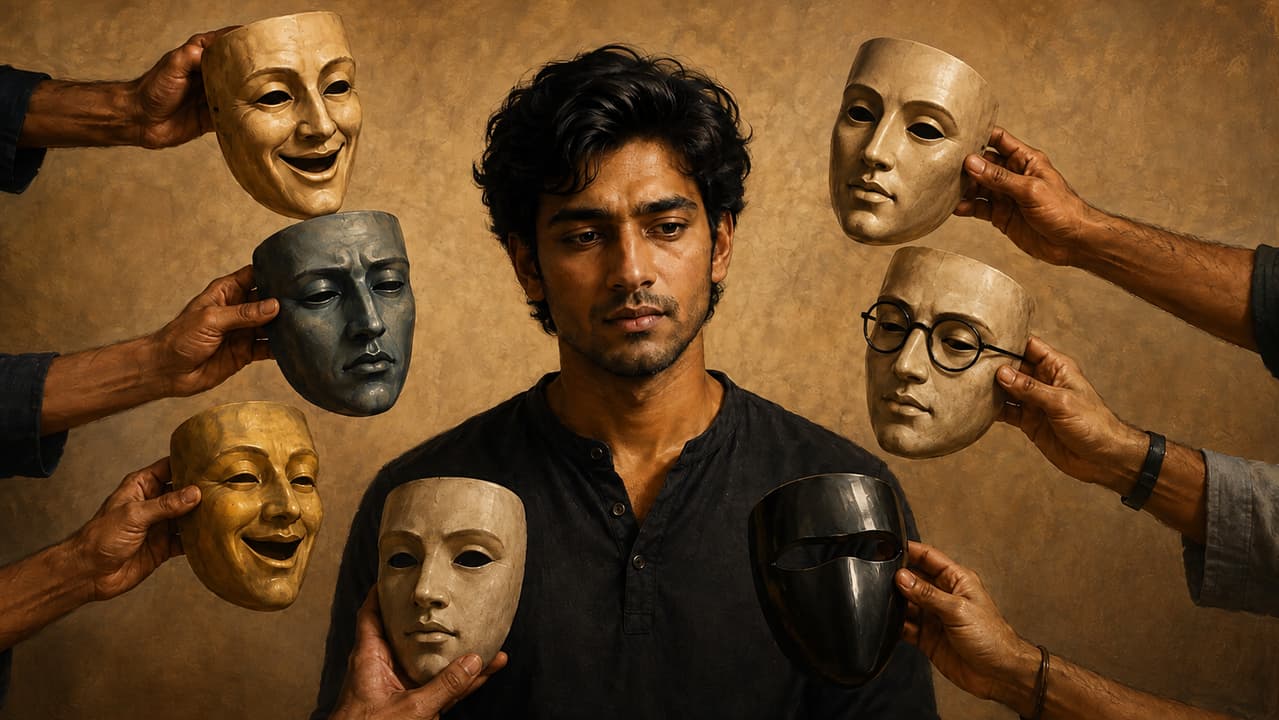
We often call something “help” or “love” while secretly expecting something in return. When that return does not come, we feel hurt, revealing that the relationship was a trade, not genuine help. The ego, being unfulfilled, cannot truly love or share. Likewise, desperation to be loved makes us controllable. Real love emerges when we stop seeking validation, work on ourselves, and become so inwardly fulfilled that we no longer need to be loved.

Desires and beliefs may keep changing, but the deeper tendency to believe, think, choose, and seek fulfilment often remains unchanged. Real transformation begins by examining this constant inner pattern rather than changing superficial preferences. Instead of seeking conclusions about greed or desire, honestly observe recurring behavior and support the truth you already recognize. Expressing that truth can dissolve false identities, relationships, and habits, creating space for genuine change.

True love is not a biological instinct, emotional attachment, or social conditioning. Biology and science explain the body's drives, but they cannot explain the self that seeks freedom. Love is the inner restlessness to move from ignorance and bondage toward truth and liberation. Religion is not rituals or inherited beliefs but this personal journey of understanding. Freedom—not possession or conformity—is the essence of both love and religion.

Truth cannot be forced upon anyone, but neither should falsehood be entertained. Genuine love is not about preserving relationships at any cost; it is about helping oneself and others break free from illusion, even if that means risking the relationship itself. Spiritual growth begins by questioning conditioning, examining falsehood without bias, and choosing authenticity over comfort. Real relationships are built on the courage to seek freedom, not convenience.
Modern life is increasingly driven by materialism, social validation, and the desire to impress, leaving authenticity behind. When image becomes more important than substance, relationships, education, and success turn into performances rather than expressions of truth. Real transformation begins with inward honesty—the courage to stop seeking approval, confront inner emptiness, and choose authenticity over appearances, imitation, and external validation.

The Bhagavad Gita is not a separate spiritual path or an escape from everyday life - it is a mirror that reveals the truth of your present life. Real spirituality begins with self-observation, not rituals or temporary practices. Lasting transformation comes when work, relationships, career, and personal growth become one integrated life driven by awareness, love, and freedom rather than ego, fear, money, or social pressure.

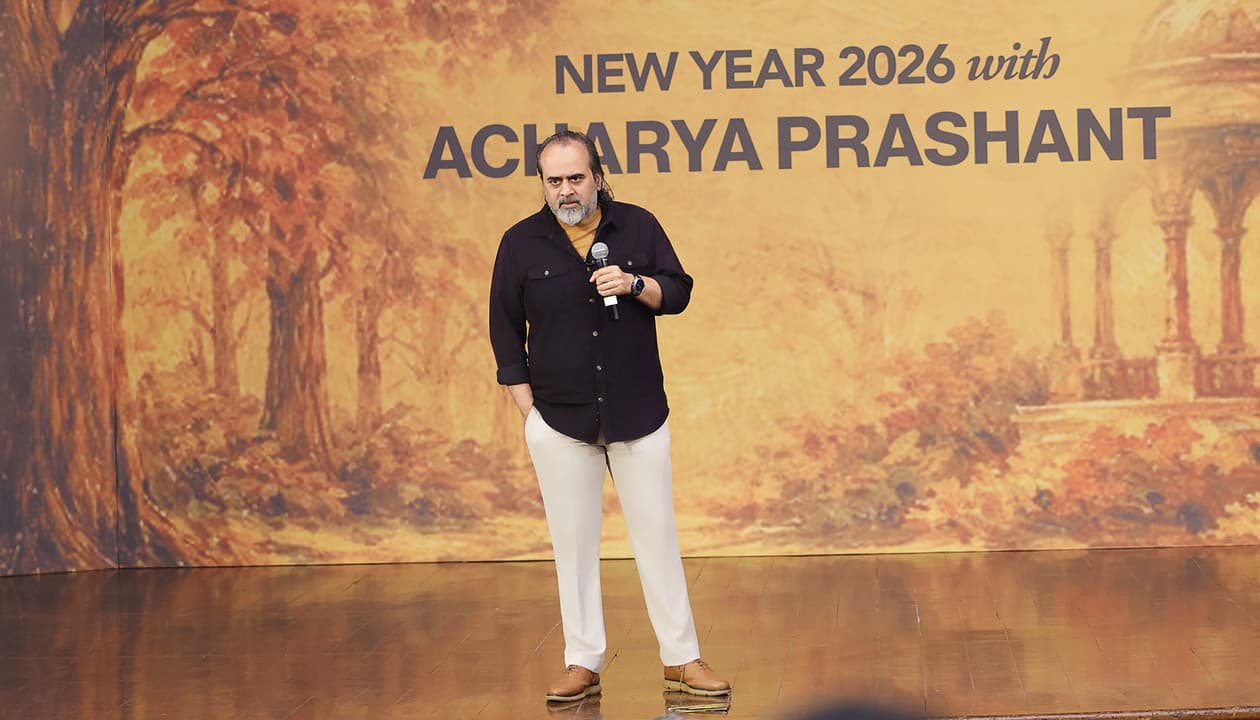
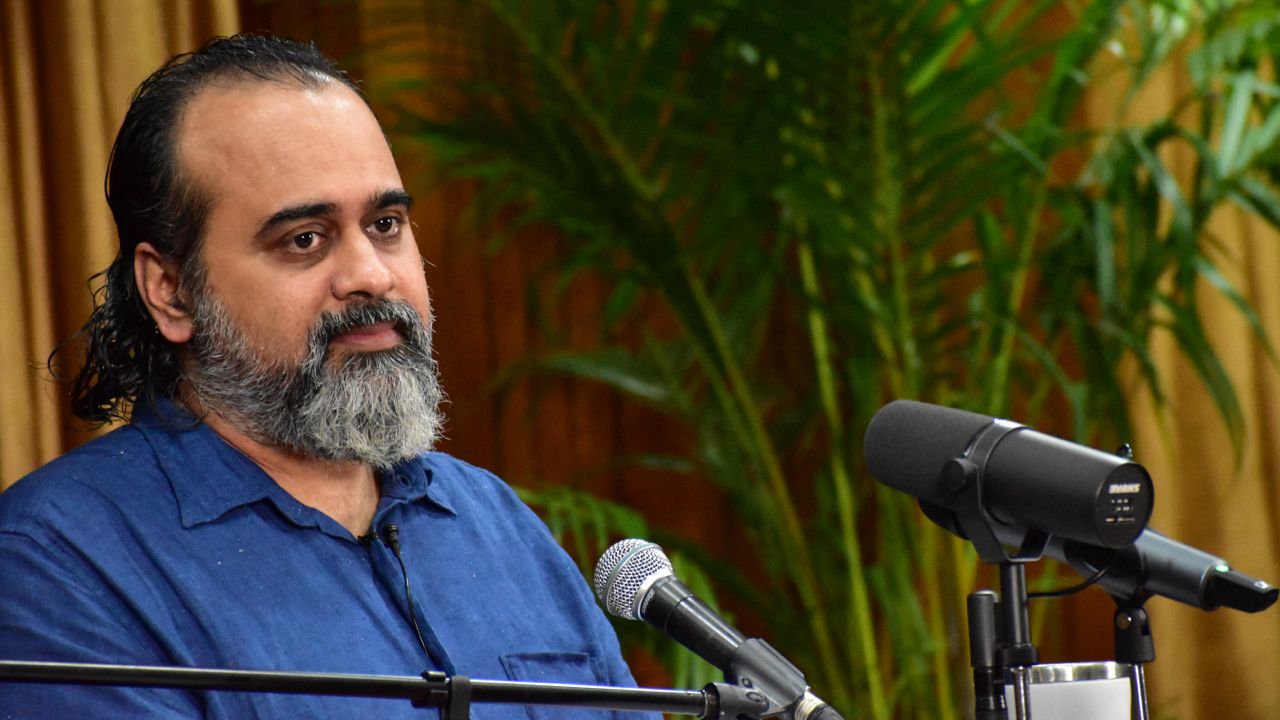
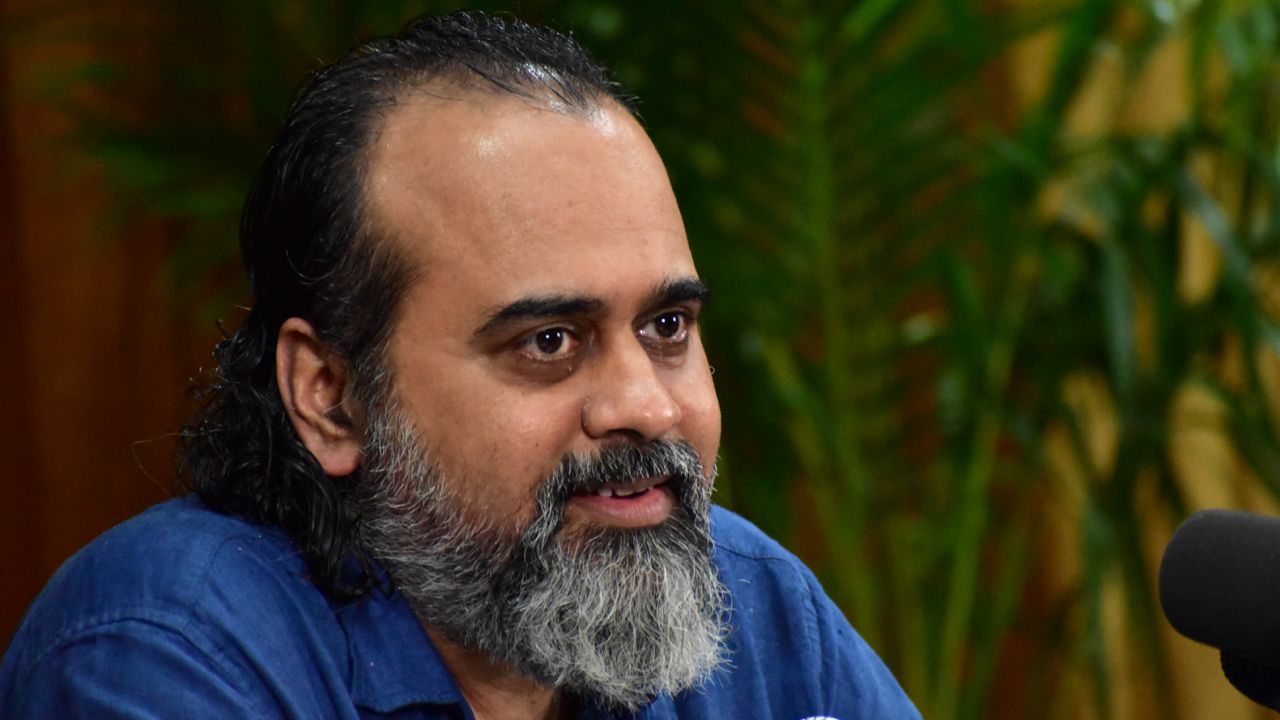
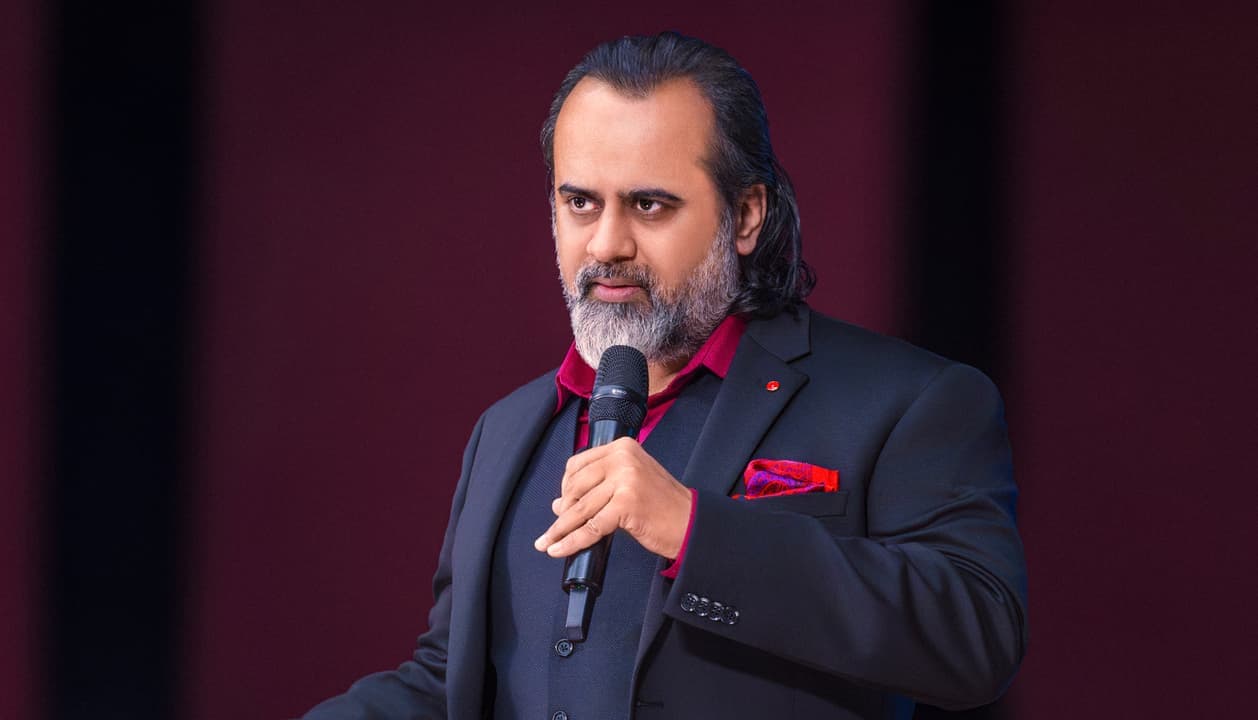
What is the relationship between quantum physics, consciousness, and the ego? This dialogue explores where scientific inquiry ends and self-enquiry begins. Through Vedanta, Acharya Prashant explains why the ego clings to its own existence, how beliefs and superstition shape our lives, and why lasting freedom lies beyond conditioned thinking.

Modern culture often celebrates rebellion, travel, and endless experiences as symbols of freedom and happiness, but they can become just another form of conformity. Genuine personal development begins with mindfulness and creating the right mind space to understand oneself. Without inner clarity, changing places, trends, or identities only repeats old patterns. True freedom comes from self-understanding, not from chasing new experiences or fashionable rebellion.

Love is not a special emotion reserved for selected people or relationships but a way of relating free from self-interest, possession, and psychological dependence. Most relationships become transactions driven by insecurity, where the ego seeks completion through ownership and exchange. Genuine companionship arises without the urge to control or claim another, allowing affection to exist naturally, freely, and without conditions or expectations.
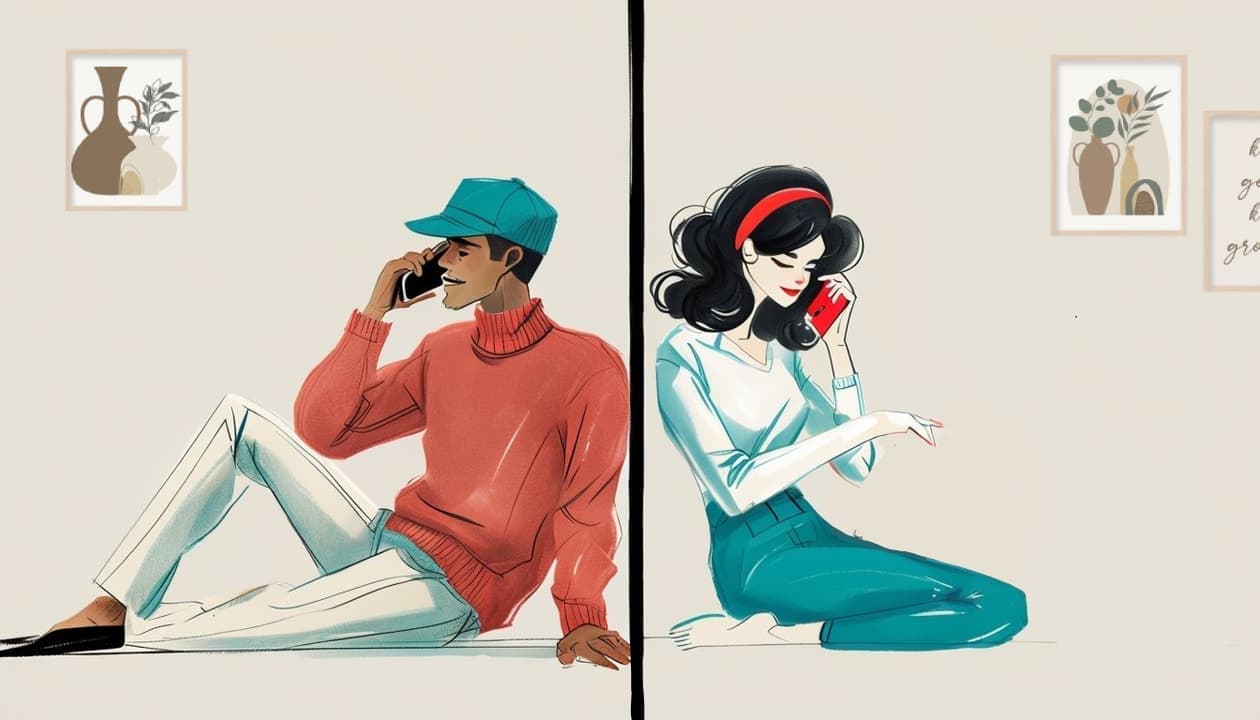
Modern relationships often create more insecurity, not less, because people are conditioned to seek completion, validation, and identity through another person. Social institutions, media, culture, and tradition continuously reinforce the idea that fulfillment lies in romantic attachment. As a result, relationships become driven by dependence rather than love. Real companionship becomes possible only when one is inwardly at peace and not using another person to fill an inner void.

Love is not attraction, possession, dependency, or a transaction driven by personal gain. As long as relationships arise from insecurity, ownership, or the desire for psychological completion, they remain centered on the ego. Love is simple, natural, and free of self-interest, flowing without preference or exclusion. The ego seeks security, continuity, and suffering because they preserve its identity, while freedom and joy threaten its existence. A meaningful life begins when one stops repeating old patterns, accepts uncertainty, and chooses freedom over the comfort of familiar cages.
Climate change, population policies, and social conflicts often arise from a common source: narrow love. People, communities, and nations justify actions that benefit their own group while overlooking broader consequences for humanity and the planet. True care is not exclusive or identity-based; it is expansive and inclusive. Even motherhood, patriotism, and family concern can become limiting when reduced to narrow self-interest rather than guided by wisdom, freedom, and universal responsibility.

Many so-called spiritual practices falsely promote intoxication as a path to higher consciousness. In reality, this only deepens confusion. True spirituality is about clarity and self-understanding, not external experiences or blind belief. Neither gurus nor media can offer truth. It must be discovered within by honestly observing and rejecting inner falseness, with awareness and sincerity.

Question: A gentleman was saying that a person, who is drinking or is drunk, he still has got some kind of stability on mind, and he too, can judge. That is what I felt to be perhaps wrong. A person who is drunk probably loses his judgement and whatever we…

Joy is not something that you can think of as something wonderful. You cannot go somewhere and say that, looking at a mountain, I experienced joy. Joy is something which is always there, obfuscated; hence, it is the absence of obfuscation. A complete absence of all rubbish is joy, and that rubbish includes both pleasure and pain.

Love has to be seen as the need of the mind, the attraction of the mind towards Peace, towards rest. All attraction is there only with a desire; the hope is of fulfilment. So when the mind says ‘love’, along with love it has a picture of love. How do you know that somebody loves you? Only if he behaves according to set patterns. When real love comes to us, we close our gates to it. Love is not with a particular man or woman; Love is the natural state of the mind.

The kinds of meanings that we associate with love are actually quite demeaning. It’s not your own self-interest that you think of in love. Love is not an emotion; love primarily is a spiritual understanding. Saint Valentine would not be quite pleased with the meanings we have associated with his name and his day. The saints laid down their lives so that our faulty definition of love could be corrected, and that is probably the best use this day can be put to: correcting the definition of Love.

If you do not understand spirituality, you will fail even in economics. Look at how common people live their daily lives. Do we inquire into what we are doing? We do things because others are doing the same things. Out of ignorance, you act; and out of greed, you keep acting. Economics does not address the problem of ignorance. Economics also does not address the problem of greed. It is the Upanishads and the Gita that address these problems.
Real Love is a very pure thing. It is pure and it purifies. If you really love her, forget about the families, you won’t even bother whether she loves you, because Love does not demand anything in return. Forget about marriage or anything else. You love, you know love, and that is all, sufficient. Love unconditionally, and then a way will emerge. Unconditional Love is very, very intelligent, and knows no fear. It knows where the solution is, it will find a solution.
All happiness that your mind feels is directly proportional to how unhappy you are. So, if you want to be really happy, become totally unhappy. This is called the law of duality. The deeper your pain, the more relieved you will be. That is the nature of the mind. When you are moving towards happiness, actually the journey towards unhappiness has begun.

The universe does not care for any human being. The universe is a very, very neutral place and a very random place. We are all products of randomness. Do you get this? The universe is not going to have any specific intention towards a specific individual. All that we are experiencing is episodes and events of random distribution. That’s all. Please understand the philosophy.

That’s the purpose of life, no? To know your real destiny beyond your physical limitations and social conditioning. Most people do not know that such a dangerous thing is surreptitiously happening to them. I have found that we are quite big on media and social media now, so comments flow in their hundreds. And women actually have a self-righteous position when they say that we are not supposed to work and you better not expect that from us. Equally, men are conditioned about the roles they are supposed to play in life at home, in society, and how they are supposed to feel about themselves.

I have desires and you are the means to fulfill those desires. That’s why I come to you and I say I’m a loving person. This is not love. Most of that which we call love is actually just self-interest. A lot of our comforts, conveniences and identities depend on the other; therefore, we want to hold the other. Real love is possible only when you know that the other cannot bring anything to you. You relate to the other to share, not to gain.

Beliefs can’t talk to each other. You will say, ‘The world was created on a Sunday.’ He’ll say, ‘No, on a Monday.’ He’ll say, ‘Tuesday.’ He’ll say, ‘Wednesday.’ Now talk, how will you reconcile this? You can only fight. Why do you need to believe? You look at the question, "What should I believe in?” Well, nothing.

That’s what the entire spiritual process is about, collecting the airfare. So that you can rise up, otherwise, you stay crawling on the highway. Life is not so that you just remain a crawler, a creeper. Life is so that you can take off.

“I love my job as long as I'm paid for it.” Can you work without being paid? If yes, then probably there is some beginning of love. There are ten things we all like, and all liking or disliking is conditional, and the mark of love is that it survives all conditions. If you come to something that is dearer to you than life itself, then you know what love is. Love is dangerous, because it would mean you have come to something that's more precious to you than life itself.

The other must exist in your life, and vice versa, only for the sake of internal elevation, to make you into a better person. Don't you see the impact the other one is having on your life? Seeing is the key. What does seeing mean? Seeing implies understanding. See and ask yourself: What is the impact upon me? And if you see that, you'll just push it aside. It will be spontaneous. You won't even require to think, because now you have seen.

The money you pay for something must be commensurate with its practical utility, but how do you know something is worth its price? For example, does jewellery really have any utility that you pay so much for just a piece of metal? The average Indian household spends much more on the girl’s dowry than on her education. And poor farmers in India are often pushed to suicide because they spend a lot on weddings and funerals by borrowing at exorbitant rates. This is what happens when you are not deeply spiritual: you can be easily conditioned to earn from the wrong source and spend at the wrong place.

Spirituality is not belief. Please, please. In fact, spirituality is constantly sniffing for belief. And if I smell belief there, I’ll come hunting. Spirituality is the unrelenting enquiry into all beliefs in life. “Why am I living on imaginations? I want to question.” Enquiry does yield results, but it requires honesty. If you honestly look at yourself, you’ll discover there is a reason why you are irritated. In the absence of honesty, belief is the crutch.

Prasad is what you get by being in contact with a luminous source. You are close to the Bhagavad Gita, there are insights, you start living those insights, others look at you and see something special, something luminous, and feel inspired — that is prasad. There is a certain realization, and you want to share it with everybody — that is prasad. Your own inner illumination is prasad.

When you do not like human beings, you must also remember that they do carry the potential to be lovable. Not just the potential to be loved, but the potential to be lovable. Beyond likable, lovable. So, along with not liking humanity, also comes the responsibility to maybe help them become lovable, to whatever extent one can.

It is one kind of misfortune to not have money at all. The next kind of misfortune is to have a lot of money rotting in your bank account. Why must it be there in your bank account? You are so impoverished, you couldn't find a right place where you can spend your money. Money is meant to be spent. Spend it at the right places. Go enroll in a hobby class. Get a tennis coach. All that is expensive. Spend your money. If you won't, then you will end up just buying whatever your friends buy.

Some battles need to be fought just because they deserve to be fought, not for the sake of victory but for the sake of the fight itself. And victory is indeed possible. We are not fundamentally evil. We are all hypnotized since birth. That’s what is called Maya. Just as somebody can hypnotize us, somebody can also break the hypnosis. It is possible! Never, never lose Faith.

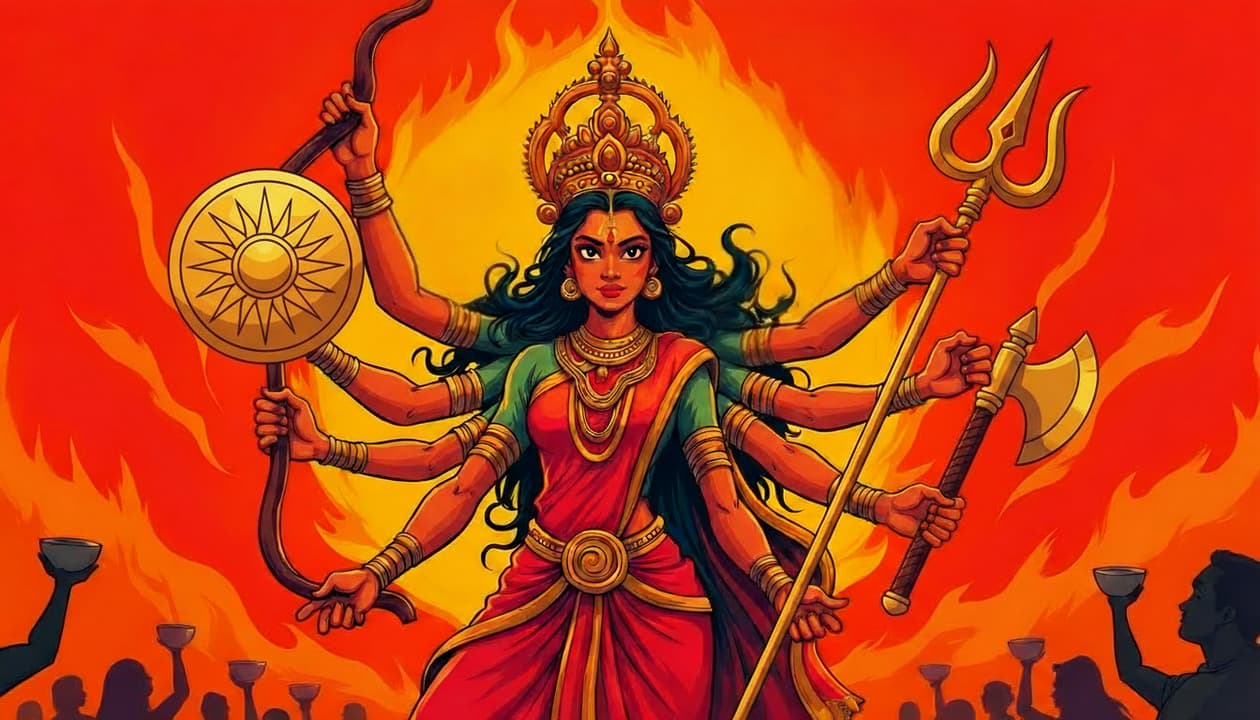
You are the subject, Puruṣa, and everything you can experience, perceive, speak, imagine, or think is Prakṛti. The only real spiritual question is to determine the right relationship between Puruṣa and Prakṛti. India came up with a beautiful answer: Worship Prakṛti with reverence, but do not try to possess or exploit her. The Shakti tradition with the Devi-puja is nothing but an answer to this question of right relationship. Durga, Ambika, and Kali — they all represent Prakṛti.

Real spirituality is actually a shameless path — not something that sounds elevated or admirable. In contrast, conventional spirituality or ‘Lokdharm’ feels poetic and enchanting — romantic mysticism. The most common statements are often the ones that deserve your scrutiny. Whenever you're bombarded with high-sounding fluff, ask: “What exactly do you mean by that?” Expect answers rooted in bare facts, not in abstractions, idioms, or euphemisms.

The object of love is so big, so total, so filling, so occupying that it leaves no space for the subject to hide and survive. The task is so damn big that it can’t be done if you protect yourself. If you protect yourself, it won’t happen. Love involves a lot of bloodshed and demolition. And there are fireworks. Great structures collapse. Formidable enemies have to be defeated. All that is love.

As young people, we mistakenly take tradition to be the Truth. Tradition tells you in advance, "This is important," and you believe it. This has to stop. You must question, inquire, and experiment. Because if you have readymade definitions of what is important, then you will never come to what is truly important. And when you independently inquire, a lot of unimportant nonsense disappears from life, and fresh space is revealed. Now, through your own discretion and wisdom, if you decide that these things are indeed important, then so be it.

Acharya Prashant (AP): Jayant has initiated, and he is saying that he used to lead a mechanical life that starts the story, and then he got into spirituality, now he wants to be in love always but that does not always seem possible. Right?
Love is neither molecular nor even…

It is not really happiness that is to be found through self-knowledge. In fact, self-knowledge often is a danger to happiness. Self-knowledge dissolves both happiness and sadness, and you are left with nothing but a naked and silent joy. If you can see yourself clearly, without motivation, then the seeing itself is great fun.

You are promoting belief, and religion's mandate is to demolish belief. Religion's mandate is to promote inquiry. But as your example suggests, that has never really been the case. First of all, religion gets into all kinds of worldly things. Who made the rivers? Which tree is sacred and which tree is not? What to wear? Where to sleep? Whom to marry? What to eat? Religion gets into all these things which are none of religion's business. True religion is just an inquiry into the ego, the self. "Who am I?" That's religion.

Because you underestimate Maya. Because maybe you are in the illusion that you have conquered, that you have left her way behind. Because probably you do not perceive that you too are still threatened. You feel, 'Oh, the thing is so easy, I overpowered it. Why is my dad not able to accomplish this simple feat?' Maybe it's actually so difficult that not only your dad is failing—even you have not fully succeeded.

An ignorant person is a dangerous thing, made even more dangerous by a relationship. An ignorant person, even if he is walking alone on a road, is a dangerous thing. What if you bring that person to your bedroom? How does it matter? You start calling him your husband or wife. He has remained equally ignorant. Or, does wedding change things so much? It doesn't. Very stupidly you can go round and round the fire, how will that change anything within?

Try it out, go get an experience. But you must have the intent to really test it for what it really is. Experience is one thing and realization is a totally different thing. You can live your entire life without knowing even a moment of love. Real love is a purely spiritual thing. You cannot have real love without having paid the price to earn spiritual education.

Love and realization are things that roar aloud. They are extremely intimate, yet if they are there, there is no way you can hide them. These are not things that you can ever prevent from getting expressed. So, don’t even try. This expression means living it. Every thought is an expression, every action is an expression. You just express. By blocking it, you are blocking the thing itself. You don’t allow it to be expressed, and it’s gone.

You look at a person and you say, “This fellow gives me bad vibes.” Now, those bad vibes are your feelings about that person. But you are pretending as if your feelings are his quality. Vedanta says, “You are the source of all your experiences.” The cult of vibrations, auras, energies, positivity, and negativity — it is an enemy of self-observation. It will not allow you to look at yourself.

To the one who believes in ghosts (Bhūta-Piśāca) — for him, they exist. When you are asleep and are engaged in some nightmare, you feel it actually exists. Bhūta-Piśāca Nikata Nahiṁ Āve, Mahāvīra Jab Nāma Sunāve: Mahavira Hanuman, devoted to Shri Ram, is to be taken as the representative of Truth. If you can be close to the representative of the Truth, you will get rid of all nonsensical and horrifying imaginations.

If you do not have even a little light, then the great light will remain elusive. And that's a major tragedy that has befallen religious people. They expect the scriptures to give them a lot of light, which is fair. But they do not go to the scriptures with any light of their own, which is very, very unfair. The scriptures will give you a lot of light. But first of all, use whatever light you have to reach the scripture and read it properly. How will the scripture give you anything if you can't even apply basic sense to the verses or the stories or the injunctions?

Our culture has turned attachment into value, very proximate to love. However, attachment is poison and has nothing to do with love. We don’t feel ashamed admitting that we are attached, as if something beautiful is happening. If you are with the wrong one, and not even prepared to see that you are with the wrong one — that’s attachment. And you can never be attached to the Right One; there is only dissolution.