Questioner (Q): I want to know, essentially, the relationship between the material world and consciousness. Is the body, you know, just like putting together a few chemicals? And, how does consciousness come from an unconscious body? Or.. is it the other way around?
Acharya Prashant (AP): Obviously. Yeah, yeah! Obviously,…

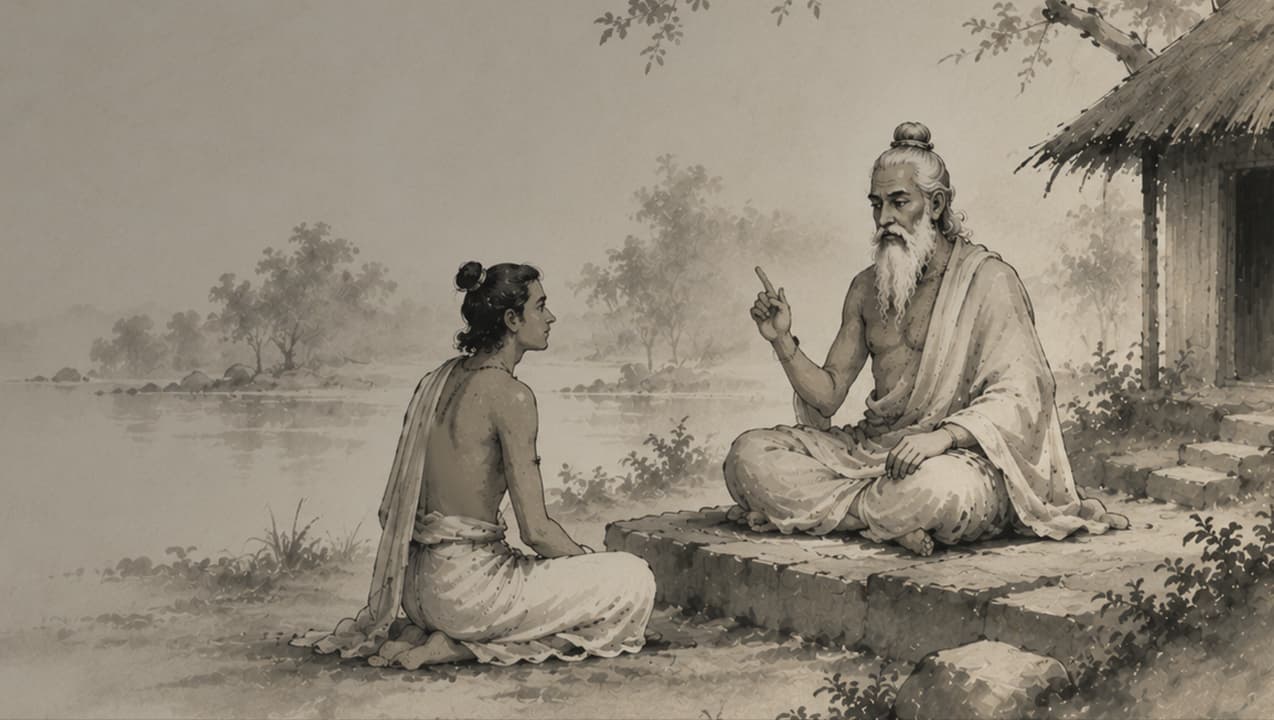
Science can examine material claims, but Advaita Vedanta deals with the subjective self, ego, suffering, bondage, and liberation—areas outside science’s objective framework. Vedanta need not be accepted because of one’s religion or tradition; its value lies in whether its insights can be personally verified and help free one from suffering. The ultimate responsibility is not toward any philosophy, but toward oneself: to live a truly free life.

Superhero films appeal to our desire to escape inner inadequacy through external power. The fantasy of an ordinary, fearful person becoming extraordinary reinforces the ego’s belief that more strength, money, possessions, or status will bring happiness. Consumerism follows the same pattern, endlessly adding objects to fill an inner void. Real freedom does not come from becoming more powerful or acquiring more, but from honestly seeing and understanding the ego that feels incomplete.


Spirituality does not replace the fear of ghosts with belief in God. It asks us to question the mind that creates both fear and belief. Ghosts, gods, and stories can all become projections of imagination. The spiritual path begins by dropping assumptions, investigating “Who am I?” and understanding the source of suffering. With attention, right knowledge, and self-inquiry, fear loses its power and one becomes inwardly free.
Struggling to choose between a secure job and the path you actually feel drawn to? This isn't really a question about careers. It's about why other people's opinions have so much power over you in the first place. Real clarity doesn't come from finding the 'right' choice. It comes from honestly looking at your own fear, again and again, until it stops running the decision for you.
Climate change is more than an environmental crisis—it is a crisis of human choices. Our patterns of consumption, consumerism and endless pursuit of more are putting increasing pressure on the planet. But meaningful change does not necessarily begin with new technology or stricter policies. It begins with a deeper question: what are we willing to change within ourselves?
वेदांत को केवल इसलिए सही या श्रेष्ठ नहीं माना जा सकता कि वह किसी विशेष परंपरा से आता है। विज्ञान जहाँ भौतिक जगत की वस्तुनिष्ठ जाँच करता है, वहीं अद्वैत वेदांत सीधे मनुष्य के ‘मैं’, उसके दुख, बंधन और मुक्ति की पड़ताल करता है। इसकी कसौटी वैज्ञानिक प्रमाण नहीं, बल्कि अपने जीवन में इसकी सच्चाई को देख पाना है। किसी दर्शन को मान लेना नहीं, बल्कि उससे स्वयं को मुक्त करना ही उसका वास्तविक उद्देश्य है।
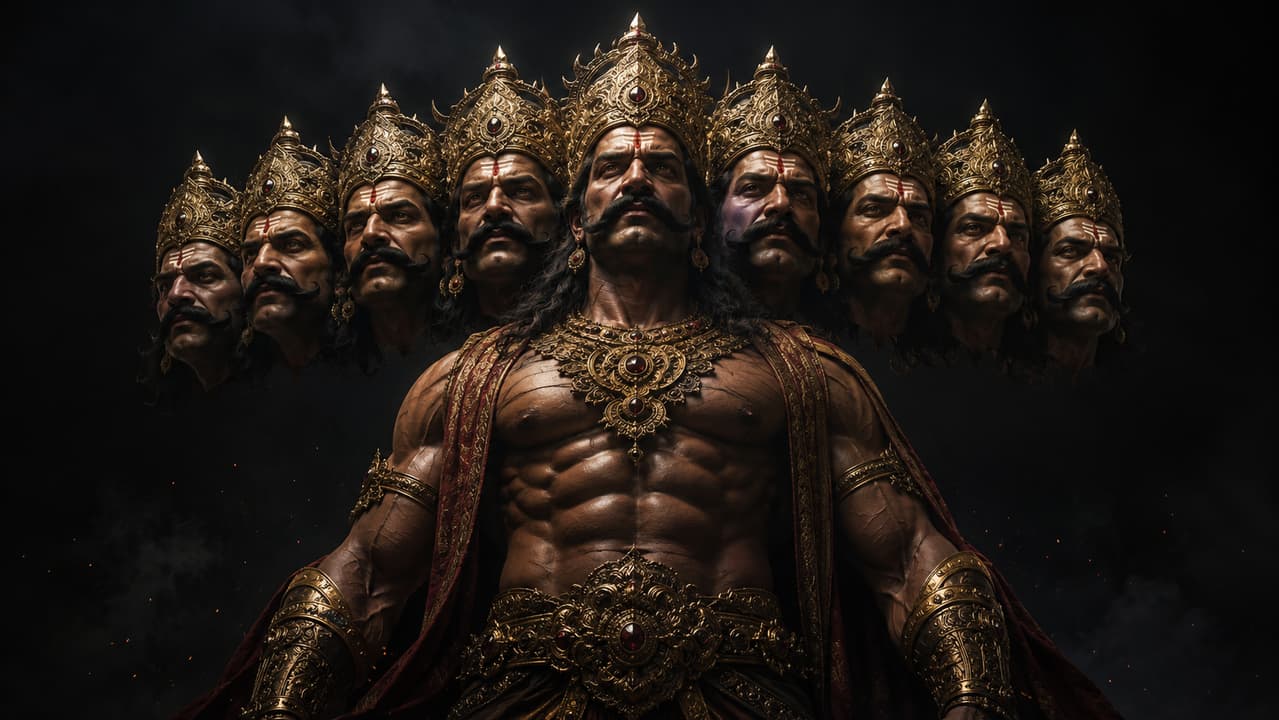
Knowledge alone cannot transform life; it can become another object of the ego. True knowledge is self-knowledge—a mirror that exposes and destroys false ideas about oneself. Ravana may have been knowledgeable, but without self-knowledge, knowledge can become a tool for exploitation. Wisdom is not something to acquire; it is innate. Self-knowledge is the process of unbecoming unwise by clearing away the nonsense we have gathered.
कई तरह के डर—अकेले पड़ने, छवि खोने या छोटा समझे जाने—की जड़ अक्सर अतीत में बनी पहचान और कहानियों में होती है। शरीर की हाइट जैसी चीज़ों को समस्या मानकर उनसे जूझने के बजाय उनकी अप्रासंगिकता को समझकर आगे बढ़ना चाहिए। अतीत को दबाने से मुक्ति नहीं मिलती; उसके करीब जाकर अपनी स्मृतियों, धारणाओं और पुराने पैटर्न को निष्पक्षता से देखना ज़रूरी है।

Question: Why do I feel lost?
Acharya Prashant: Because, you are asking this question.
We ‘think’ that we are lost, equally, we ‘think’ that we are not lost. The same place from where the thought, the perception of being lost, or not lost arises, that place is the same place…

Friendships naturally change as people follow different paths in life. When you remain focused on your true purpose, you stop clinging to those who only accompany you briefly. Instead of dwelling on memories or fearing others' intentions, examine your own expectations and self-deception first. Honest self-awareness brings clarity, wiser relationships, and the freedom to move forward without resentment or attachment.

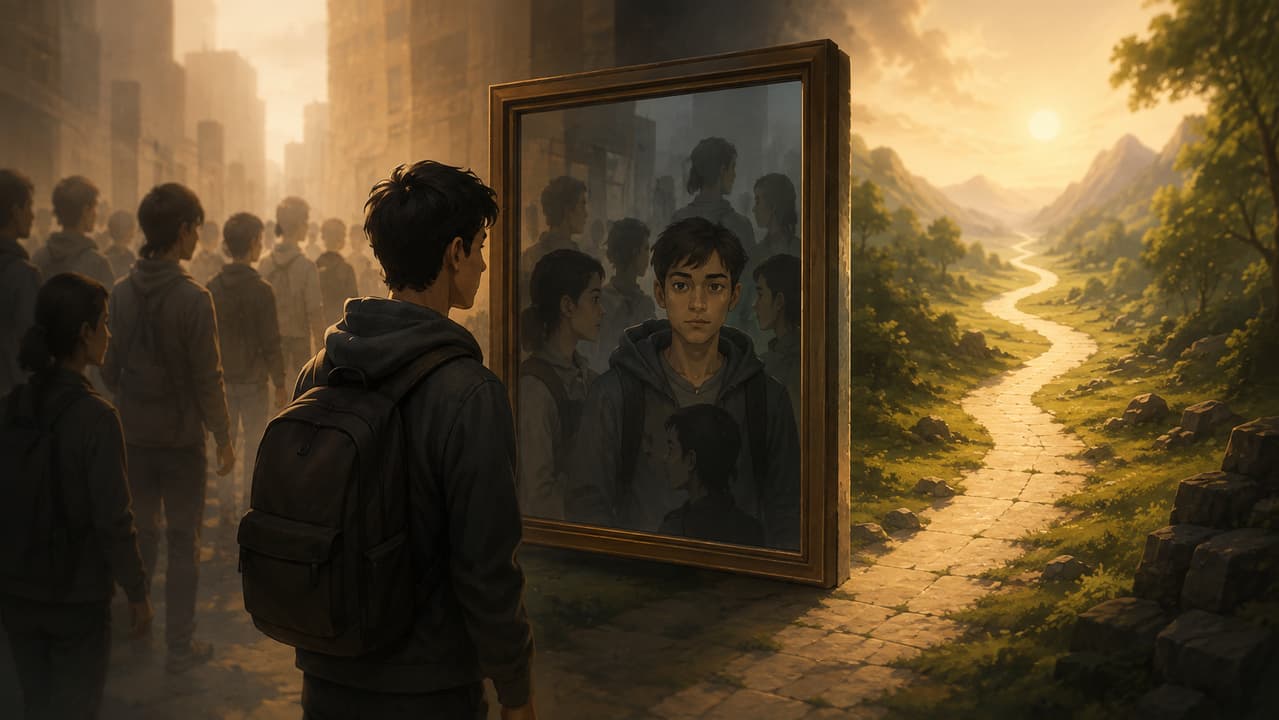
A true relationship is not built on need, possession, or emotional dependence, but on a shared commitment to Truth and inner growth. A worthy companion reflects your reality like a mirror rather than performing a role to please you. Real love is effortless, rooted in one's nature, not expectations. When your highest commitment is to excellence and Truth, relationships become a natural outcome—not the purpose of life itself.

Real love is not measured by comfort, agreement, or preserving relationships at any cost. It is revealed when one has the courage to challenge falsehood, embrace uncomfortable truths, and even risk a relationship for another's freedom and growth. Truth is not a fixed destination but a continuous rejection of illusion. Genuine relationships, mature guidance, and authentic scriptures all serve as mirrors that help us see and dissolve our own falseness.

The biggest weakness of modern education is not that it fails to keep pace with technology, but that it neglects self-knowledge. Students are trained to build identities around qualifications and careers, making them rigid in a world that demands constant change. Real adaptability, innovation, and lifelong learning come not from acquiring more skills, but from understanding oneself and letting go of fixed identities.

Humanity's greatest crisis arises from the imbalance between immense external progress and inadequate inner understanding. While technology, wealth, and knowledge have expanded unprecedentedly, unchecked desires and ignorance continue to fuel conflict, inequality, and environmental destruction. Sustainable change requires mass-based education of the self so individuals understand their motives and use science, technology, capital, and power with wisdom, responsibility, and inner clarity rather than unconscious craving.

Superstition does not begin with rituals alone; it begins with unquestioned beliefs about the self. Science can remove many false beliefs, but complete freedom requires Self-knowledge. Vedanta, philosophy and meditation help expose the ego, making awakening possible. Religion becomes meaningful only when it encourages Self-knowledge rather than blind belief. Real freedom comes not from accepting inherited ideas but from understanding oneself through direct observation and awareness.

The ego is not a real, independent entity but a bundle of conditioning that creates the illusion of a separate "I" and becomes the source of suffering. Self-observation is not introspection or analysis but moment-to-moment honesty about what is happening within. Real freedom comes when this false center is seen through, allowing life to function naturally without the burden of psychological ownership.

Life cannot be transformed by knowledge of the external world alone; it also requires understanding the one who experiences it. Science, technology, and logic are powerful, but they remain incomplete without self-knowledge and inner honesty. Lasting solutions to personal and global crises emerge when the same rigor used to study the world is turned inward, examining one's motives, intentions, and consciousness with equal seriousness.

Most people move through life unconsciously, mistaking inherited beliefs, ambitions, and social conditioning for personal choice. Careers, relationships, goals, and even identities often arise more from habit and circumstance than from conscious understanding. Real freedom begins by questioning the actor rather than the action, examining the assumptions behind one’s choices, and awakening from the psychological “coma” in which life is merely happening rather than being consciously lived.

Materialism and emotionality are not opposites; emotions themselves often arise from material desires, fears, and biological conditioning. The real distinction is between the material-emotional world and spiritual understanding. Spirituality is not another belief, emotion, or acquisition but the clear observation of thoughts, desires, and assumptions. Many personal and social crises stem from unexamined beliefs, and meaningful change begins by questioning them, speaking truthfully, and paying attention to what occupies the mind.

Science and philosophy arise from different kinds of inquiry. Matter seeks continuity of state, while the ego seeks continuity of existence and constantly changes identities to preserve itself. Fear, danger, and suffering are rooted in the ego’s sense of “I,” not in material reality itself. Questions are valuable because they expose hidden beliefs, and genuine learning requires challenging assumptions through inquiry, dialogue, and self-examination.

Sixty million followers do not necessarily indicate a transformation in consciousness. Large numbers may reflect persistent outreach rather than deep commitment. Truth is often avoided not through opposition but through indifference, convenience, and self-deception. Real change requires sustained effort, inner honesty, testing one's understanding, and the courage to face uncomfortable truths instead of seeking comfort, validation, or easy inspiration.

Fear, social conditioning, and painful memories often shape how people live and make choices. True growth begins by questioning inherited beliefs, refusing to remain trapped by past wounds, and acting from understanding rather than conformity. What appears to be sacrifice is often just the abandonment of conditioned habits. Freedom comes not from external systems, but from the courage to see clearly, learn, and move beyond fear.

The debate around nudity and movements like “Free the Nipple” miss a deeper issue: true freedom is not about clothing, but freedom from psychological conditioning and body-based identity. Clothes themselves neither oppress nor liberate. A truly free society is one where the body becomes ordinary and irrelevant, not a source of obsession, shame, validation, or social control.

You look at Iran, at revolutions, and ask: can systems really bring freedom? Revolutions keep replacing one system with another, yet the chaos remains. The real question is rarely asked: what within us creates these systems? Real freedom is not political or social; it is inward. Without inner change, every revolution only rotates power, never resolves suffering.

Gen Z isn't rebellious or individualistic - they're simply following their generation's conditioning, just as previous generations followed theirs. Real rebellion begins with honest inquiry into why you live as you do. The primitive restlessness driving all humans remains unchanged; only its expression differs. True freedom requires questioning borrowed desires, recognizing that your ambitions, tastes, and choices aren't genuinely yours. Vedanta teaches this: stop chasing false questions and confront who you actually are beneath all conditioning.

Global conflicts stem not from geopolitical interests but from the ego's fundamental incompleteness. Nations are merely expressions of collective egoic consciousness. Leaders represent humanity's worst tendencies, not its average. The ego requires duality and boundaries to survive. True disarmament means detoxifying the ego itself. External wars reflect internal disturbance. No diplomatic solution addresses the root cause, only wisdom and self-knowledge can dissolve the ego's need for conflict and separation.

Listener: Why is it that people don’t recognise?
Acharya Prashant: There is nobody who does not recognises. Everybody recognises. They just don’t speak about it, it’s a secret. It’s a well kept secret. If you speak about it you will be ostracized.
L1: Because you are then a threat…

Question: Dear Sir, a few questions:
Why am I so attracted to the personality and mannerisms of all my teachers, often curious about their lives than the truth of their teachings? When I read Jiddu Krishnamurti(JK), am I conditioned by him? Is JK’s method really ‘via negativa’ all the time?…

Our mood is always dependent on others and situations. Results have not been up to your expectations. So now you require a morale booster, some motivating speaker. The moment that fellow is gone, your energy also goes away. But there is another way of living. Deep within myself, I find a point that no external situation can touch. Whatever happens, happens on the surface. That will remain stable, uninvolved, a non-participant. Then you are really free.
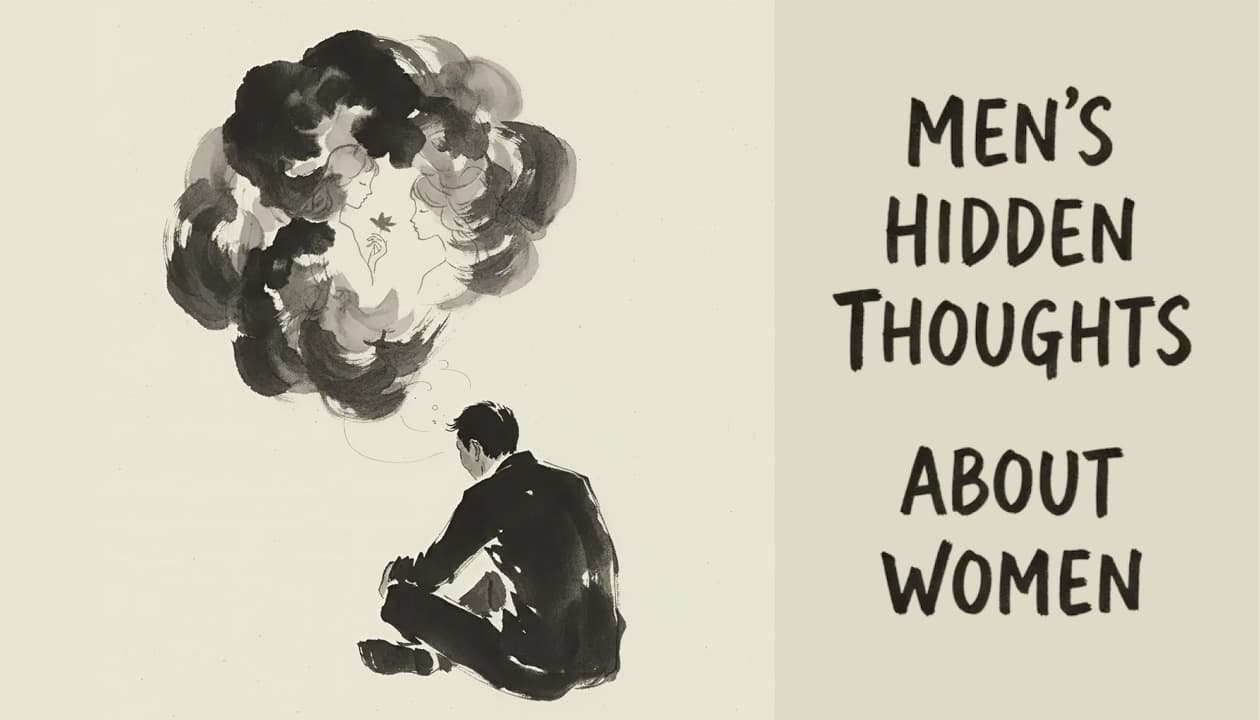
The only principle that truly runs this world, created by all of us, is the principle of greed and power. What do you think that fellow has earned his billions for? He didn't become a politician to be noble. The only thing that separates us from animals is the intellect, not the center the intellect is operated from. Don't locate the problem and the responsibility somewhere out there. We change ourselves; the world changes.
Often, in the name of financial pressure, what we are really kneeling down to is something else. But because that something else is not nice enough to be named, what we quote is financial pressure. Nothing is ever forced in a tangible way. The way is kept gentle in appearance. But there is something else at work inwardly. What is that thing? That is what you have to uncover. You have to be honest towards yourself, very honest.

I am asking you, who is more important? The mobile phone or the man holding the mobile phone more important? Unfortunately, your education is such that it will tell you everything about the mobile phone, but nothing about the man. They ask you to keep looking outwards but they never tell you to look inwards. Self-education is more valuable than the rest of your education put together. Has your education ever brought you close to yourself? Now you decide what is more important.

There can be no self-respect without self-knowledge. And we have been repeatedly saying that the ego survives only in lack of self-knowledge. The less you know yourself, the denser and more crystallized your ego is. Self-respect is nothing but self-awareness. The more you know yourself, the more you realize who you are not, and that brings you to who you are. That is real self-respect, knowing oneself.

You really think the world is being run by an authority outside of yourself? No. We are the ones running this world, and we have made a mess of it. But we don’t want to own the responsibility, so we bring somebody else in between. And that somebody else, poor God, cannot even come and argue for Himself, defend Himself, and claim innocence and say, “No, no, no, no. I have not brought the world to such a pathetic position. You have done it.”

Most of us look outwards for reasons of security, of prestige, because we want to have career progress, or because we are just curious and we do not even know what’s behind the curiosity. And then there are those who want to know the curious one itself. If there is no conscious point behind your choices or actions, then the default point is biology. The other center is when you are coming from an illuminated point that wants to know, not because it does not know why it wants to know, but because it is interested in knowing, and therefore the knower itself.

It’s a great thing not to be submissive to authority. One doesn’t needlessly bow down, because that would be detrimental to one’s interests. So, it’s all right if you are careful. But being careful is one thing, and becoming psychotic about that is another thing. Obviously, let’s try on one’s own first. But we all know how limited we are beyond a point. And when we come to that point, one needs to look beyond herself, that one needs to seek help.

The mind has been living for long in patterns. It knows no other way of being. The movement of patterns is gross. The movement of egoless action is very subtle, and the habituated mind will initially fail to notice it. You will have to wait like one waits for a lover. Do not expect that the new action, the new voice, the new guide will be of the same type, the same nature as the old one. This will be new, really new. Be ready to be surprised.

Beliefs can’t talk to each other. You will say, ‘The world was created on a Sunday.’ He’ll say, ‘No, on a Monday.’ He’ll say, ‘Tuesday.’ He’ll say, ‘Wednesday.’ Now talk, how will you reconcile this? You can only fight. Why do you need to believe? You look at the question, "What should I believe in?” Well, nothing.

If you close your eyes and write, do you need to see what you have written? Observation is an honest acknowledgement: “This is what I’m writing.” It is a subtle thing of honesty that happens on its own. What obstructs it is your determination, your stubborn resolve not to see the inner fact. That’s what you have to dispense with. “I refuse to buy the arguments of the false.” Once you refuse that, then the inner fact is obviously visible.

That’s what the entire spiritual process is about, collecting the airfare. So that you can rise up, otherwise, you stay crawling on the highway. Life is not so that you just remain a crawler, a creeper. Life is so that you can take off.

The tiger chases the buffalo calf and brings it down. Does that disappoint you? No, because that was expected. Similarly, expect animal behavior all the time from everyone around you, including yourself. Everything we do comes from the jungle, so don’t be disappointed. Disappointment always arises from expectations. You really have to strive to be someone who is not an animal. And the first step in that striving is to address your own inner animal.

Manifestation is simply an expression of your desire. You desire something, and then you imagine your desire has been fulfilled. What does the common man desire? ‘Give me more money.’ What will the politician desire? ‘Finish off democracy and give me power for life.’ We have very stinking desires. Do we ever desire anything that is really good for everybody? The question remains: Was that thing worth it? You gave it so much time, so much respect, did it deserve that?

The other must exist in your life, and vice versa, only for the sake of internal elevation, to make you into a better person. Don't you see the impact the other one is having on your life? Seeing is the key. What does seeing mean? Seeing implies understanding. See and ask yourself: What is the impact upon me? And if you see that, you'll just push it aside. It will be spontaneous. You won't even require to think, because now you have seen.

Every living being, from humans to the smallest species, is trying to change the world to suit its own needs. But this is not intended to do any good to the world, it is just coming from the little ego. And the ego will not say, “I'm not all right;” it will try to change the world. So, if your idea of ‘good’ is only relative to your personal self, is it right to impose it on others? You must be clear about why you aspire to change the world, and whether you have brought about any change in yourself first.

Why do you expect the universe to be a fair and just place? That’s not philosophy, that’s a lot of fiction. This whole thing is very, very random. But we want to assign causality to it. We want to say, “Things happen for such and such a reason.” Why are we allowing randomness to assume meaning? A life without meaning terrifies us. There is no meaning in external material life; it is absurd. But there can be meaning in the one who you are.

As a doctor, can we limit our responsibility to the one particular body or to the set of few bodies that come to us for treatment? Or is the patient actually a representative of an entire society, an entire ecosystem? Can I really be a good doctor of the lungs, if I support a society that pollutes the environment in the name of development? So, if I'm a doctor, then health is my responsibility in the holistic sense, not just one patient.

It’s not going to be right when the patient starts playing the doctor. We need to grow up; and having a kid, in that sense, is an opportunity. You want to be of some use to the kid, then grow up with the kid.

Joy is not a problem. Suffering is a problem. I am the sufferer. And if this ‘I’ is the problem, the sufferer, then firstly the ‘I’ itself has to be approached. And when I find that my efforts are getting saturated, I will have to go to a book that talks exclusively of the ‘I.’ The Upanishads are such books, because their subject matter is nothing but the ‘I.’ So, if you come across something that is dealing in stories, beliefs, and deviating from the self, you must know that it is not Vedanta at all.

The theoretical reply would be that if condemnation hurts you, then somewhere you are looking for praise. Even if it’s implicit praise or subtle praise, there is some hunger for praise. Or the inner condition that the ego has set is, don’t give me praise, but don’t condemn me either. So there is some condition that the ego is setting on the world. The fact is, the world has a movement, a flow of its own. You cannot set any condition on it. If you are getting hurt, it means there is an expectation, a condition.