Why We Cling To What Hurts Us?

Acharya Prashant

18 min
415 reads
Why We Cling To What Hurts Us?
Fear, social conditioning, and painful memories often shape how people live and make choices. True growth begins by questioning inherited beliefs, refusing to remain trapped by past wounds, and acting from understanding rather than conformity. What appears to be sacrifice is often just the abandonment of conditioned habits. Freedom comes not from external systems, but from the courage to see clearly, learn, and move beyond fear. This summary is AI-generated. Please read the full article for complete understanding.

Questioner: Namaste Acharya ji. Yeah, I have heard your speeches a lot. You know, for one year I was listening to all the long videos on YouTube, and then at the beginning of this year I joined your Gita community.

I used to hear a lot about, you know, as a woman we need to go out, we need to explore, we need to travel alone. But Acharya ji, from childhood, what I have experienced, at the age when I was studying in third standard, I experienced the worst thing, not from a teacher, not from someone outside, not from a relative, but from some same classmates, the same guys, three guys actually. At that time I was not aware of what was happening, what these guys were doing and all that. But, you know, the fear that comes within us, wherever we travel, whomever we see, whomever we listen to, we always have that thing in us. So that carries out, and that not only carries out in looking at myself or in my own decisions.

When I look at some other girl child, or any other girl child, I get fear whether she is safe, whether she is in a safe environment. Because this thing which I suffered at my school age, I was a kid then. It was not at the age of social media. It was not where the wrong information, which we say now is easily accessible to children maybe. And even whenever I speak to children before, like when I was studying in 10th standard or anything like that, the things they used to talk to me about actually made me afraid of what they are getting exposed to. Today, I mean, at that time I remember very well that they were not using cell phones. So that is something because of which I cannot believe any girl child to be safe or, you know, going forward to be safe.
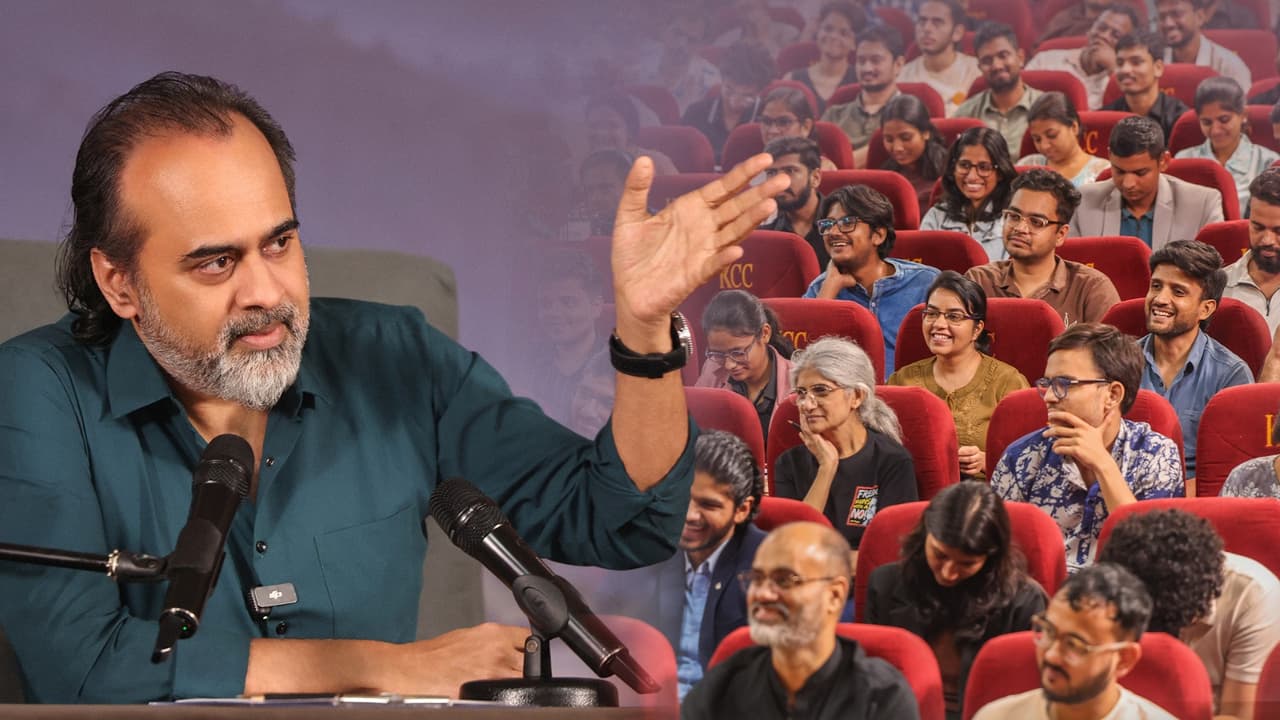
Acharya Prashant: On one hand, what you are saying is undeniable, and someone who has gone through it has actually gone through it. I wish we had social values and law and order of the kind that doesn't allow any such thing to happen. But that's utopian.

Our species, we spoke of it today, is a beast at heart. Right? So irrespective of how morally sound social values are, or how robust the law and the enforcement mechanisms are, there would still be incidences of the kind you are mentioning. Not only that, even after once that incidence has happened, a small but definite probability would still remain that it might recur. So we know these things as facts. Right? Having known, the question is: what do we do with this information, this experience? And that's a choice. Because it did happen. No denying that. And there is a probability it might happen again. And also it is certain that it is still happening with someone else. Right? We can't deny that, can't discount that. Yes, for sure.

But what to do with it?

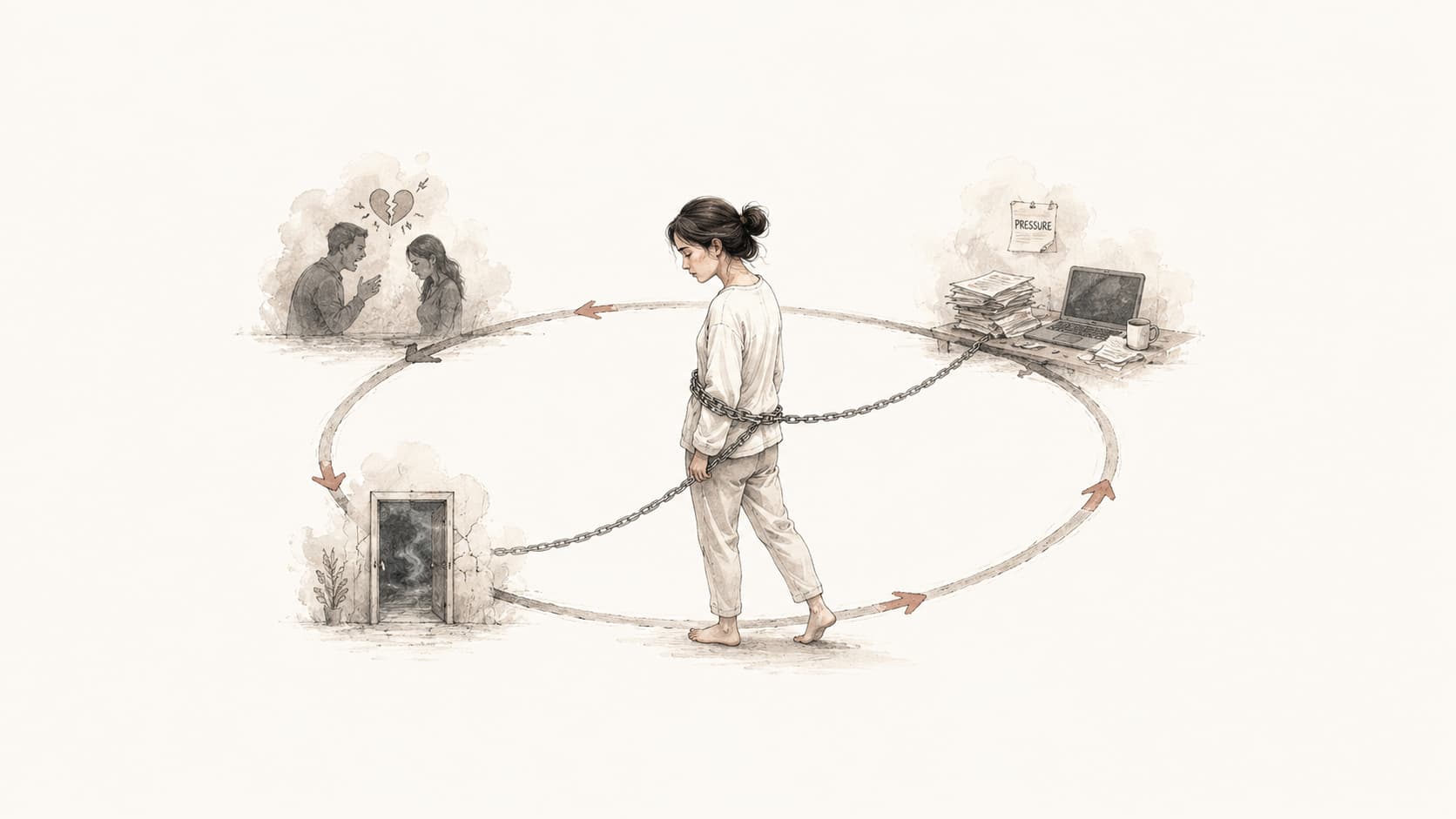
There is a loss that happened in the past, and there is a loss that is happening by continuously recalling the past. Right? One has to weigh one against the other. One has to see which one is the bigger loss, the probability that something violent, unsavory might happen in the future, or the loss that comes by compromising on the potential that the present has. It's an individual choice. Are you getting it?

Memory is not automatic. Memory is a decision. You do not remember every experience you have had, do you? You remember only that which you choose to attach importance to. Think of all that has happened in your life. Do you remember even 1% of it? Think of what has happened since the morning today itself. Do you remember even 10% of it?

Memory is not automatic. So decide what is healthy enough to be remembered, what is instructive enough to be remembered, what is nourishing enough to be remembered. Decide. We are not denying that the other events were real. They were real, yes, and they left a deep imprint, a deep scar rather. Yes. But is there any welfare, any potential benefit to be had by retaining those things in memory? And if it is there in memory, it will be recalled again and again. That's the very point of having something in memory, right? To recall it, to recall it.

Now let's say we are here speaking since the last 2 and 1/2 hours. And I really hope something of value has been discussed. And these 2 and 1/2 hours, if you choose to recall; and I'm consciously using the word “choice,” if you choose to recall that old incident five times, ten or twenty times, what have you missed out on? Please tell me. Everything that the present had to offer.

And this that is happening here is life. The past is not life, the future is not life. So yes, there was a loss in the past. But aren't we extending and inflating that loss into the present? Understand the nature of life itself. This species is not evolved enough. And most of the evolution that we talk of has happened only in the physical way. So, men will be animals. And by men, I mean both men and women. And so, ugly things will happen, as they have happened throughout history.

Should that obstruct our path towards highness? Lowly events are definitely going to happen. If not today, then tomorrow. If not here, then there. Nobody can have a blemishless life. Nobody could say, “You know, nothing untoward ever happened with me.” Not possible.

Lowly things will happen. What if that lowly incidence and its memory are allowed to obstruct your path towards the highness of your potential? What if…, and this might hurt a little, but please take it, what if the ego is deliberately choosing to remember the bitterness of the past for some reason? Because the ego is really deceptive, mayavi. We think of ourselves as pleasure-seeking people, right? But look at how people love to pamper their wounds. Look at how people choose to retain their wounds.

So surely then it is possible, just consider this, it is possible that the ego is deriving a certain hidden pleasure from the wound itself. Either a pleasure or some other kind of benefit, some psychological gratification.

I know what I'm saying will sound hurtful, especially to those who have been victims in the past. But sometimes it happens. When you clean the wound, it hurts. Let's take the hurt for a while. The wound itself is bad enough. What's the sense in retaining it? Isn't that even worse? Please tell me.

You stumble, you fall, you gather dirt on your clothes. You preserve the dirt? Do you? Or do you just want to shrug it all off and walk on? Life is there to walk on and shine on, not to preserve the dirt and say, “You know, this is something. This is a very sacred relic of my history. It must be preserved like a mummy.” Why must we make a museum of our being?

Yes, there was a perpetrator of the crime. He harmed us. And we are saying that was bad enough. And we want to have systems where such crimes don't happen. Yes. But they will happen. And then we don't want to make it even worse by preserving the rubbish.

And that's the strongest and the healthiest response you can have. I no more care because I forget. What did you do with that unsavory experience? I learned and I dropped it. Otherwise, the exploiter has doubly succeeded, once on that day and again today. That can be your, if you want to put it that way, your revenge. You did it, but I chose not to carry it.

Not that we want such things to happen. No. And if such things happen, the doer must be taken to task. The entire society must be punished for raising such individuals. But irrespective of our noble intentions, our species being the beasts that we are, I repeat, will have to put up with these things, as women and as men, as human beings.

Let's choose to learn and move on. It's difficult, I know. You will say, “Sir, it didn't happen to you. That's why you can easily suggest this way.” And I appreciate what you will say, probably. But irrespective of that, this is the only way. Think of the terrible things a lot of people go through. What else can you advise them? Move on. Don't remain stuck. Move on.

Questioner: Namaste, Acharya ji. Acharya ji, I want to share something and want to know your view on that. Recently, I visited an NGO in South India where we visited a community. They are following a center of non-violence and minimalism and sustainability. In that community, children who are raised are not socially conditioned, and they are free to grow with freedom, courage, without being socially conditioned.

Acharya Prashant: That is not possible. Every single sight is out there to condition you. You don't need an active human agency for that. There is a child, and the child is present here, and nobody is talking to the child. The child is sitting there silently in a corner. He is still getting conditioned. None of us are trying to or planning to condition the child, but the child is still getting conditioned. That's the nature of this biological apparatus. The senses are there, the mind is there, and it will get conditioned.

So, these are all just buzzwords, sustainability, freedom, “I would not condition the child.” You don't condition the child; the child would get automatically conditioned. Can you rid the child of its body in the first place? No. The body is the first conditioning.

You see, what you are mentioning, with all due respect to that NGO, are things of doing. I will do this and call it sustainability, do this and call it minimalism, do this and call it antinatalism, do this and call it veganism, do this and call it something, something, something. Now, all these deeds are conveniently ignoring the doer.

You can be a very violent minimalist. It's very possible. You can be an absolutely cruel vegan. It's possible. Not just possible, probable. All these things very easily translate into performances. I perform veganism. I remain “I,” I perform veganism.

These are not acts. These are expressions. These are manifestations of something happening deep within. And then sometimes it's possible, even without your knowledge, you might find you have turned non-violent. Without resolution, without determination, without even knowing, you might find you're just non-violent. Nobody taught you something called minimalism, yet you are minimalist, and minimalist not in the conventional sense. Are you getting this?

The ego loves to preserve itself. And a great way of self-preservation is the performance of austerities. “I don't do this. I don't touch that.”

Haven't we seen, in the course of history, how egoistic the most austere people are? “I don't eat that. Even human beings are filthy. I don't touch human beings.” Such austerity. And that's the deepest kind of historical violence we have had in India, right? Untouchability.

I won't eat it if it's not cooked by a particular caste. And even that person must be a male, and this, and should have taken a bath five times a day...” And this fellow would actually abstain from eating if the right conditions are not met. Do you see the violence contained in refusing to eat? There is a violence that's visible in the blood on your plate, and there is a violence implicit in your refusal to eat if the right caste or the right hands aren't cooking it for you.

Questioner: My name is Anupam. The path towards truly educating yourself, knowing yourself, growing that center, seems to be like, because the other choices are more rewarding. So that path comes at a lot of self-sacrifice, things that people have to do at a disadvantage, be at a disadvantage. So, in a way, it feels like that path is deep. Like, going that way is a loss, and going that other way seems far more rewarding.

And just an anecdote, right? For instance, we are child-free by choice, and it had a lot to do with what you're talking about, about what we as a race do with the world. So, it comes at a lot of self-sacrifice, and a lot of it is performed in the ego zone. The question is: do we need a parallel system which promotes this behavior, allows people to walk this path?

Acharya Prashant: Yeah, but any system... I see where you're coming from, but any system requires a center to begin from. The greatest of trees first of all require a seed. And the individual consciousness is the seed. So the moment you say you are seeing it, you become the seed and the center. And it's bound to grow outwards from you. You are the center. You are the beginning.

But if the question is, can we have a ready-made center out there somewhere...? That's wishful thinking. Nobody is going to construct it for you. You are the doer, and you are already doing it if you're living rightly.

Additionally, please understand the element of sacrifice is experienced, rather imagined, more when you are still away from it and just visualizing it. And then you say, “Oh my God, we are child-free and we are sacrificing so much.” Does it still feel like a sacrifice now that you are really child-free? That's what. But those who are planning to have kids, or those who are planning to push their daughters and sons and daughters-in-law into having one more kid, to them it would sound like a lot of sacrifice. “Oh my God, look at the poor lady. She sacrificed the diapers.”

Now that you're mentioning it, I'm asking myself: has it occurred to me even once in the last 200 years that I don't have a kid? How is it a sacrifice? Not a sacrifice. I'm much better off. What I'm doing wouldn't have been possible with veils and nappies and all those things. No, not possible. Am I missing something? Just like the flesh-eaters often ask the vegetarians, “Don't you miss the juice of the chicken? Don't you think you're missing something big in life?”

No, sir, not at all. There's no sacrifice involved, really. I'm not missing anything. I'm not sacrificing anything. I'm much better off. In fact, I look at you with pity. It's not the chicken you are chewing. It's your own life.

But I understand what you are saying, right? It has to begin from you. Has to begin from you. And the deeper you are into it, the taller is the tree.

Your assumption is, first of all, that people have some pleasure in their lives. You're assuming that. Let's question that. You're assuming, you know, people have happiness, pleasure, this, that. And the right life asks them to sacrifice it. Sir, something can be sacrificed only if, first of all, it is there. Who actually looks happy to you? Let's keep the performance of happiness aside, “Happy birthday to you.” Suppose we are honest enough to discount all that. “I love you so much, darling,” and, you know, let's... We know what all that is.

Who in this world, in this life, actually has something vulnerable to sacrifice? And that which is really precious can never be sacrificed. Right? But the sheer imagination, just the thought, is scary and keeps a lot of people away. “You know, if I live rightly, I'll have to make a lot of sacrifices.” No, sir, no sacrifice. It's a lot of fun. A lot of fun. Joy of the kind that's unspeakable. What do you plugged ones, coupled ones, know of the joy of single nights? Even the imagination makes you grin, right?

People have stuff not because that makes them happy, but because they are conditioned to have it. So, there is no sacrifice involved. Nobody has stuff out of his own volition, his own choice, his own discretion. No, no, no.

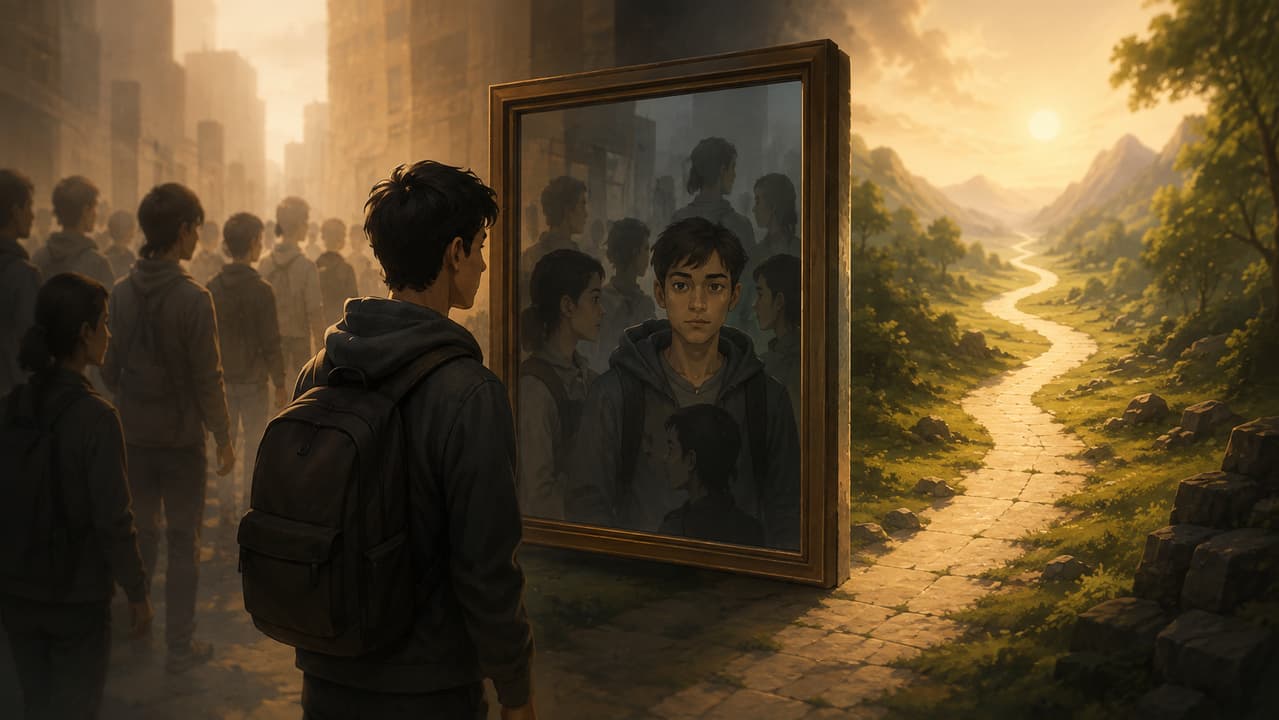
Assume you are born without history. Would you still cherish all these institutions and hold them sacred? Please tell me. Please tell me, if there were nobody to tell you, “Do this. Study there. Act this way. Enter this institution and now get pregnant.” If there were nobody to tell you all this, would you still do all this?

Nobody is doing it out of volition or understanding. There's no realization in it. There's just a desperate and terrified urge to conform. “I have to do it because everybody else is doing it. And if I don't do this, then I'll be beaten up.” That's why people do what they do. Which means all that they have is a vacuum, a very hollow place inside. What's there to sacrifice? Don't get afraid. No sacrifice is involved. But yes, if you continue sitting at your place and imagine how it feels like up there, then you will name it as a sacrifice. All the fear is in the imagination. In living it, there is just joy.

But most of us want to be assured beforehand. So, we say, before we live it, we want a guarantee. So, we will first of all imagine. We'll imagine how it would probably feel if I reach there and do that. And standing where you are, if you imagine that, that would always appear scary because of a simple principle: the ego is self-preservatory.

So, standing here, the ego would want to preserve this position. And what you're asking the ego to evaluate, to judge, to consider is that position. From this position, that position would always be unwelcome because the ego loves to self-preserve. From this position, that position would always look scary, unwelcome, terrifying, repulsive. Therefore, don't think of the future if you are doing the right thing. The right center is enough. Don't be bothered of the future. The future will take care of itself. You take care of what must be done right now.

Don't demand an entire road map. Don't say, “Put it in writing. Assure me with a guarantee.” The moment you ask this, you'll find no guarantees are really available. And the ego would smile because that would mean the continuation of its current position.

If you don't even know why you must have what you have, how can you be happy with what you have? Please tell me. If you don't know why you must have what you have, how can you possibly be happy with what you have?

We are carrying our associations, the objects in our lives, our roles and responsibilities, more or less like burdens. The word responsibility, therefore, always sounds heavy, as burdens do. If there were no one to tell you, “This is your responsibility,” would you still take this as your responsibility? No. And if no, then how can this be your responsibility? Therefore, where is the question of sacrifice?

I'm not reaching you, am I?

This article has been created by volunteers of the PrashantAdvait Foundation from transcriptions of sessions by Acharya Prashant
Comments
LIVE Sessions
Experience Transformation Everyday from the Convenience of your Home
Live Bhagavad Gita Sessions with Acharya Prashant
Categories