Climate Change: The Solution Is a Choice

Acharya Prashant

33 min
36 reads
Climate Change: The Solution Is a Choice
Climate change is more than an environmental crisis—it is a crisis of human choices. Our patterns of consumption, consumerism and endless pursuit of more are putting increasing pressure on the planet. But meaningful change does not necessarily begin with new technology or stricter policies. It begins with a deeper question: what are we willing to change within ourselves? This summary is AI-generated. Please read the full article for complete understanding.

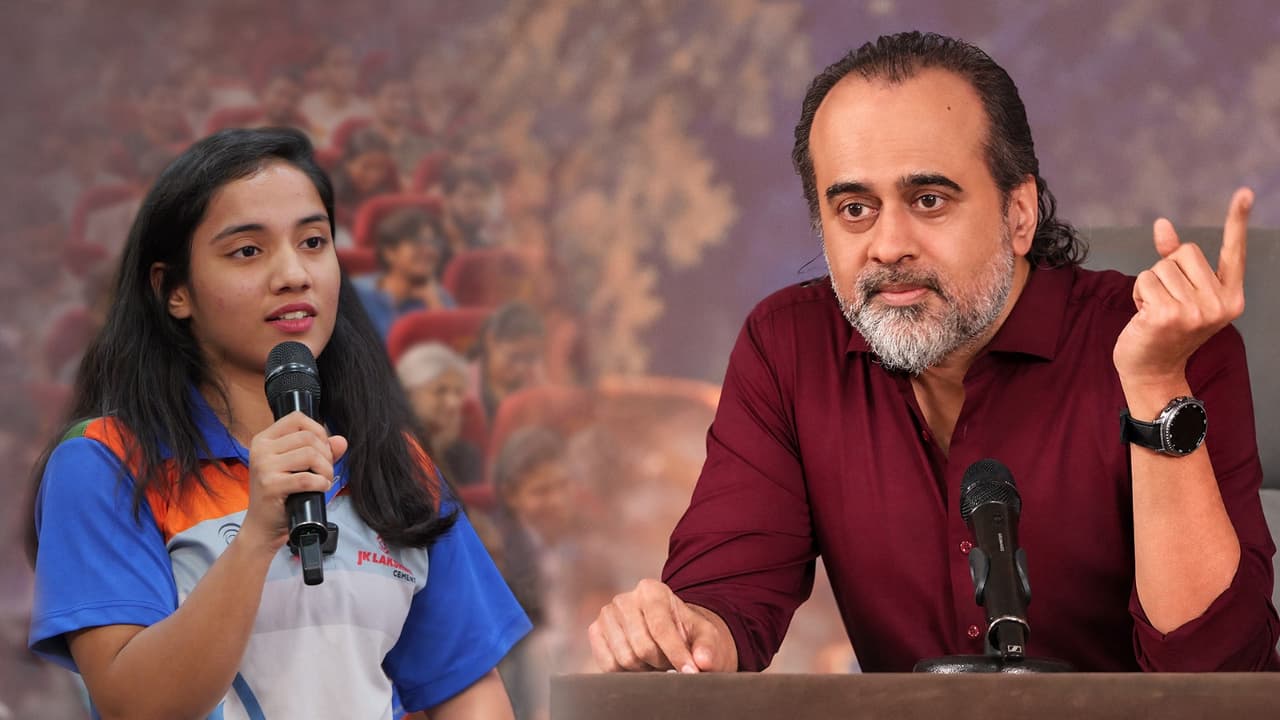
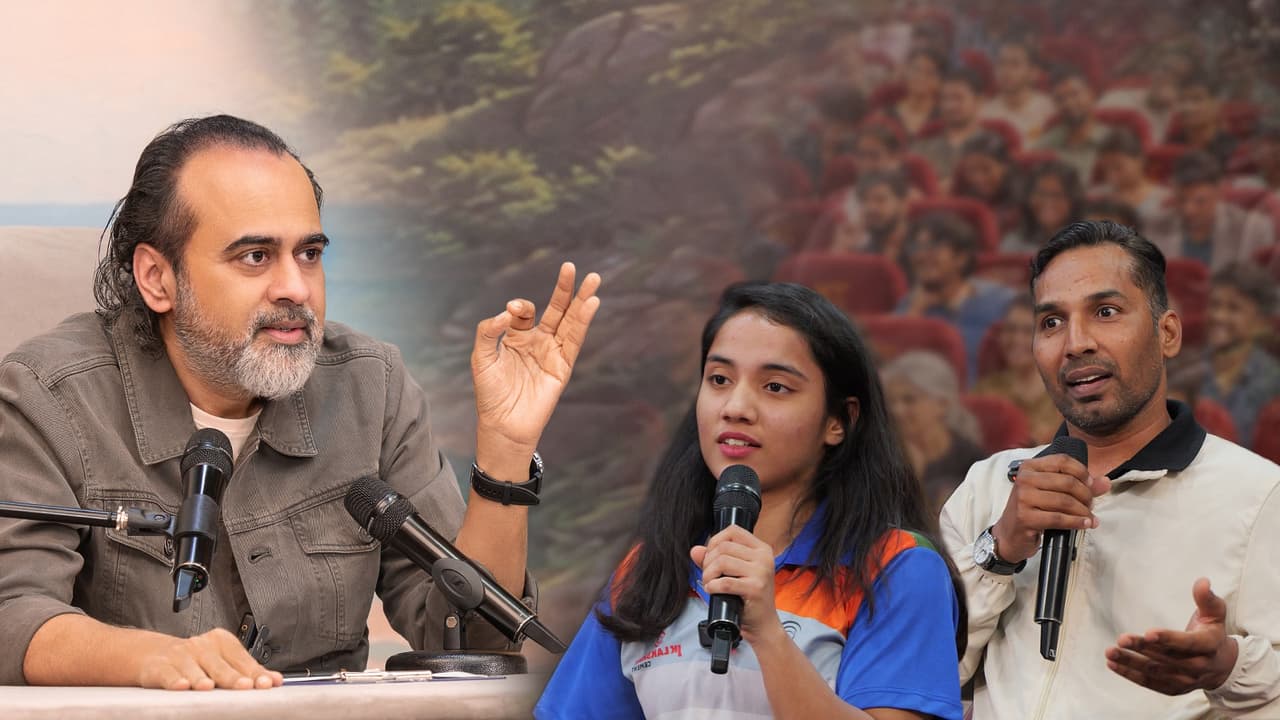
Questioner: Good afternoon. Acharya Ji, salutations. You got quite the crowd here. And so, you know, I noticed living across the Western world that some of the population would listen to a lot of your great teachings, you know, overconsumption, destruction of the environment, war, right? All those things, those detrimental issues will continue to happen, unfortunately. Do you think that humanity will ever be able to achieve and, more importantly, maintain and sustain a higher level and elevated level of consciousness without a major catastrophic or cataclysmic event that could happen that could maybe possibly not instill fear, or more so that would be the driver, but maybe fear or really force people to question?

Acharya Prashant: It's a choice. It depends on you. And there is no guarantee. Let me bring the bad news first. There is no guarantee that even an apocalyptic event will drill down any sense in our collective head. There is no guarantee.

The question is asking, "Oh, people are not listening today." But let's say the average temperature rises by 4°, 5°. The mean sea levels rise by not just feet, several meters. Entire metros are drowned, eliminated, wiped off the map. There is mass migration of populations. Wars happen for the sake of natural resources, not like oil, but like water and food. If that happens, will humanity wake up?
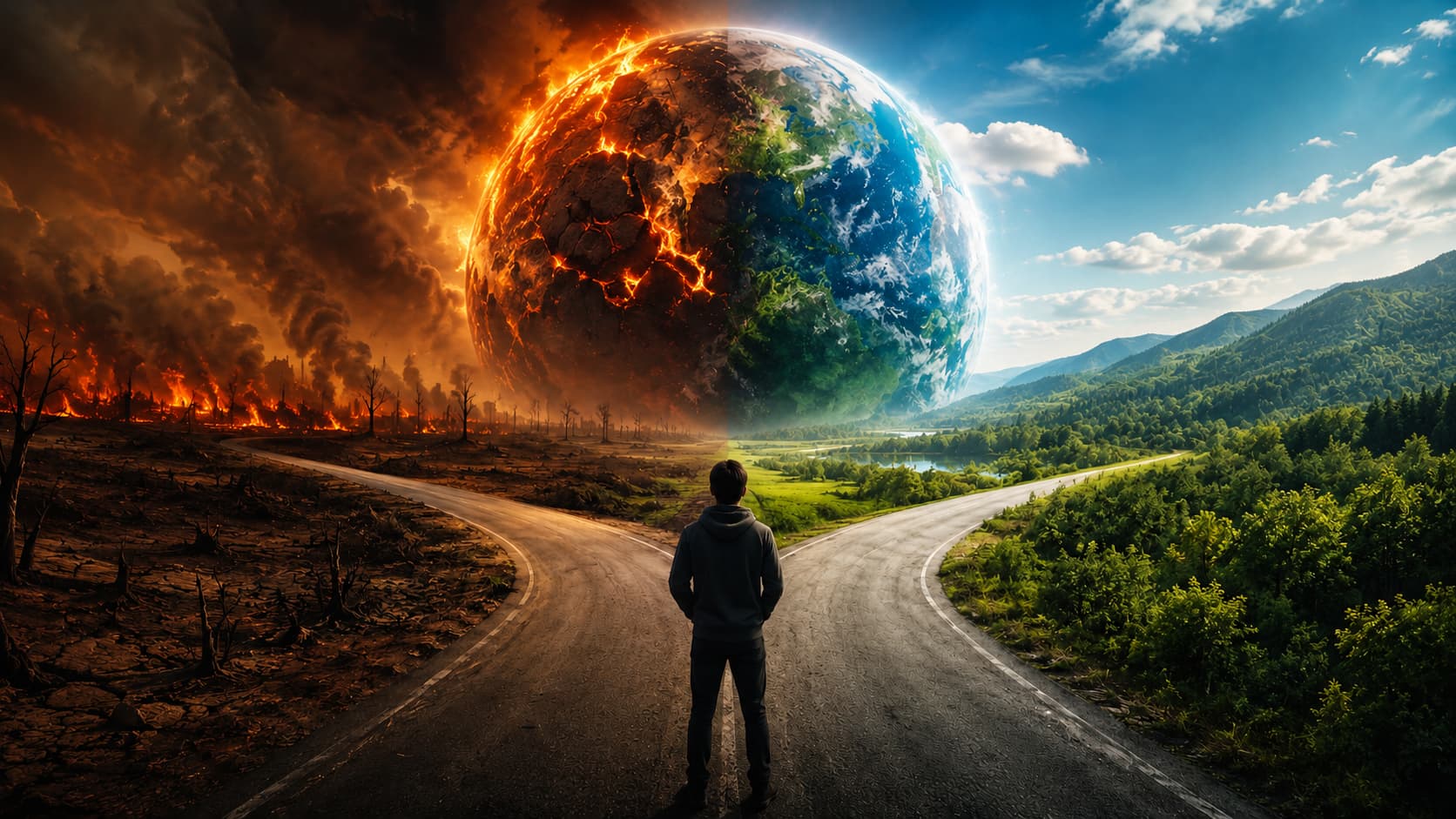
My answer is not necessarily. It's a choice. And that was the bad news. The good news is it can happen since it is a choice, even without that kind of an apocalypse. It can happen today, right now. It's a choice. It's a choice you have to make.

When you say an absolute tragedy will wake us up, even in that you are denying choice to mankind. Because that would be a deterministic event according to your question, right? You are saying this happens, then this happens. If there is a tragedy, mankind wakes up. If X, then Y. That is deterministic, right? No choice there. No. Mankind would have a choice even then. Mankind can refuse to wake up. Even if we see the fate of dinosaurs awaits us. There's a choice there. And if there is a choice there, there is a choice here as well, right now.

You can wake up. You can see things. You can see things not for the sake of others, for your own sake. For your own sake. I never say take care of everybody. I'm asking, when you say you take care of this one, are you really being honest to her? If there can be authenticity in one relationship, it would radiate to all your other relationships. It's not about loving the beast in Africa or the fish in the Amazon River. It's not about that. There must be somebody in your life you claim to care for, right? And if there is nobody you care for, at least yourself, don't you? Yes.

I'm asking you to investigate the validity of that statement. Do you even love yourself? If you can love even yourself, this planetary crisis can be taken care of.

Questioner: Thank you for asking that. Just one question. It might be a rhetorical question, but do you think it will ever happen in our lifetime?

Acharya Prashant: It's a choice. It's a choice. It's a choice. Had I been very sure it cannot happen in my lifetime, I wouldn't have been here. Right? I'm here to just help you see that the choice is available. Whether or not you exercise it and which way you exercise it is for you to decide. But the choice exists.

Questioner: I'm a big follower of you. I'd like to say congratulations to you to be a warrior and a modern Acharya. You are the transition from the old-age sages to the modern lot of life threat, and the way you have shown resistance, the power to overcome all of this was amazing. A lot of people are over here following you, and we wish you well and do amazing things.

Okay, so, so the question is, you're mentioning climate change, all right? So, the bigger abuser or the responsible people for that change is not here or not among us, right? Like, they are rich and powerful. The people who make decisions of war, countries, and all that, they are not sitting here, and you have no reach. So, what is your plan to achieve that result and outcome?

Acharya Prashant: Every single dollar that reaches their bank account is a dollar coming from somebody in this hall. They don't mint money. They sell products and services. And you are the consumer. And so that you keep consuming, they don't just produce goods, they also produce a lot of ego. Because there can be no consumption without the consumer. So that you keep consuming, you are turned into consumers. They are nobody without you.

Remember again, they don't mint those billions and trillions of dollars. They get it from you. By making you consume stuff that you don't need at all. By making you feel incomplete if you do not purchase the stuff that they produce. And that's the deeper damage they cause you. They don't just pinch your wallet. They add toxic stuff to your heart. It's an implant happening all the time. They are penetrating you. They are changing your very identity statements. And making you do things that you won't do without being corrupted.

The problem is not just that they are taking your money. The problem is what they are turning you into so that you willingly give them money. Right? So, you need to be cautious. You need to be. That's why I'm talking to you, not to them. Do you think they listen to me? Next question. Do you think they don't already know what I'm saying?

Questioner: I think they know. That's why they are trying to suppress you, obviously, but they're already rich. They're already rich and powerful.

Acharya Prashant: Sir, the irony is, the ones I'm trying to speak to, and if I may say, save, do not see that I'm trying to save them. But the ones I'm trying to save them from very clearly see that I am trying to save the ones they want to hunt. And that's why, before they hunt the ones I'm trying to save, they want to hunt me down.

If I survive, hunting you down would become a little problematic. But you don't see that. So, from your side, not much support is forthcoming. You don't see you are being hunted. You have been so successfully indoctrinated, your center is an implanted one. So, you don't see you are being hunted. Therefore, when I come and tell you, "Please see what is happening to you," you think there's some kind of propaganda. You feel I'm out here to sell something more, just as everybody else does. Right?

So, you don't see the danger. You don't see the danger. But the ones who are after you, they obviously know what they are doing. So, they know who is the hindrance. They know what I'm doing. And the real trouble will start when you start seeing what I do because that's when they might become desperate. And that's when things can explode. So, in some sense, it is good for me that you're not seeing anything and I'm not succeeding. That is helping me in my physical survival.

Questioner: So, thank you for coming here and feeling very grateful to be able to interact with you. My question is actually about climate change and also indivisibility. If we are talking about everything being indivisible and at the same time we are trying to protect something, let's say climate itself, which is pro-life. We are trying to protect life as well, which even if it gets destroyed or if it remains, it might not matter because it is indivisible. So.

Acharya Prashant: It does not matter to the one who is not. When you say it does not matter, again, the question is: matter or matter to whom? You are the one to whom the life of your family member does matter. Does it not?

Questioner: It does.

Acharya Prashant: Yes. Since the life of your family member or your kid or your own life, since it matters to you, therefore, don't be selective. Let all life matter to you. And when you come to that, when you say, "Oh, all life is just prakriti and prakriti will take care of herself." That's when you'll be entitled to say, "Climate change is a hoax." Then you can say that. But then that would be a very auspicious statement to utter. Because now, when you are saying, "I don't need to work for climate change," you are no more the one who caused climate change in the first place.

The climate crisis is not a result of absence of right action. The climate crisis is a result of proliferation, abundance of a lot of misplaced action.

"I need to burn fuel. I need to burn fuel. I need to burn fuel. I need to eat meat. I need to eat meat. I need to eat meat." Most of which is quite needless. Now, all organisms in the world, they move. Locomotion is a universal need. Right? But the ego moves not for the sake of the organism, but for its own sake.

A lot of your movement actually does you a lot of harm, but you still move because it is not you moving, but the ego moving. And this excessive action is what is the climate crisis. Therefore, the climate crisis does not require additional action. You don't need to become a savior and say, "Now I have come up with a fantastic plan and a cutting-edge technology, and this will take care of the climate."

The climate crisis simply requires you to stop doing what you have been doing, and that can stop only when you stop being the doer you have been. The ego is the doer.

As long as you retain your identities, as long as you do not question the false self, you will keep doing what you have been doing, and that would mean you'll keep burning fuel, and that's what the climate crisis is. That would mean you'd keep clearing the forests. You'd keep converting them into farmlands for meat and beef, and that's what the climate crisis is about. Do you understand this?

Please remember, all answers are to somebody. Here, there is somebody with the honesty to say it's not that I can see I'm totally false, just that I am no more very sure of the identities I was holding since very long. So, now I'm asking, who am I? Who am I? Right?

So that clarity has to be there. Are you someone who does not value life at all? Ifs and buts don't operate here. We have to speak from the ground of reality. On one hand, even a scratch on your arm would bother you so much. And on the other hand, you come up and say, "Oh, all this is mithya. All this is an illusion." So let it all vanish.

Would you say the same thing if your own house is on fire? Then why do you say that when the Amazon is on fire? When those forests burn, you say, "Oh, but it is all just an illusion." That's what the Eastern philosophy says, Maya. This is not forest burning. This is just the dance of Maya. And what if the same fire spreads to your own house? Would you still say the same thing?

Questioner:** But it's the change. Let's say, so we are talking about our own house burning, and then there is the climate change which is on the earth. And then also at the same time, there are so many, let's say, galaxies which are getting destroyed and made up at the same time, at all the times. So, from an action perspective, should we be concerned about everything that is going on?

Acharya Prashant: The simple answer is, as long as you are concerned about your own life, please also be concerned about life in the Amazon. The more you start seeing that what you call your own life is misplaced, false, the more you get entitled to stop worrying about Amazon. And that lack of worry will not hurt the Amazon, but actually save it because in the removal of the one who worried wrongly, you have also removed the one who acted wrongly. Please understand.

Who is the one who is acting wrongly? The ego. Who is the one who worries about his own security or that of his family and neighborhood? The ego, right? The worrying entity and the actor are the same. The worrying entity and the entity that is causing the damage that deserves to cause the worry is the same. Right? When the entity that causes the damage is gone, now you are qualified not to worry about the world at all. And when that stage comes, then you did not worry because now the one doing the damage is no more there. So, why worry about the damage?

The one causing the damage is no more there, so what's the point in worrying about the damage? But as long as the one causing the damage is there, please do worry, and worry not only about your own house, but also about the Amazon.

Questioner: But to what extent?

Acharya Prashant: The same extent to which you worry about your own house.

Questioner: No, so we will worry about my own house, let's say, and then also about Amazon, and also about some destruction which is happening in, let's say, thousands of galaxies away from Earth, let's say. So, is it like everything we should…

Acharya Prashant: And that will make you see that you cannot do all of that. And that will reveal something about yourself to you. That will tell you that your care for this limited set of people is invariably based on violence towards others.

I can save these four people only at the cost of the rest of the world. Because, you know, I attended this session and they said if you have to worry about your own kid, you must also worry about the goat's kid. But then there are so many goats getting slaughtered. I tried worrying about them. That led to neurosis. And I'm finding I cannot worry about everything. Which means that I'll worry only about my little kid.

And that will reveal to you that what we call love is so dualistic. It is another name for violence. When you say you care about these four people, what you're actually saying is to hell with the other 500. And that's what is the climate crisis.

See, nobody wants to put the planet to fire, and still it is burning. We all are decently okay people, right? Almost nice people. And still it is 430 ppm. So, something must be off somewhere. What is it? We are nice, but very selectively nice. And that's another name for violence. I'll be good, but only to my wife. Not that I'm out with a gun looking for others' wives. Just that, just that being good to my wife in many hidden, unseen, invisible, implicit ways requires violence.

I'm corrupt. I'm siphoning off government funds. For whose sake? Oh! I have a kid. I have to take care of the kid. That's why I need to be corrupt. I need to be corrupt. And that corruption is causing deaths on the road. Because now the roads have potholes. Not maybe so much here. In India, so let's say, right?

The number of bikers, the ones riding the two-wheelers, the deaths are the highest in India. And so many of them are happening because the roads are not maintained well. Is there a shortage of funds? Not really. Just that the funds are being diverted some other way. Why? Because there is a lover who said, "Oh! I have to take care of my wife and my daughter and my son and my kid and my ailing mother." We all are decent people, and that's what is killing the planet. Because we are people of divided decency. We are people of divided decency.

Somebody living across the border. Are we still decent? No, we have missiles. We are people of divided decency, and that's why you are the all-pervading, indivisible one. Remember, divided decency is worse than indecency. Divided love is worse than explicit violence. Explicit violence can be seen and therefore addressed. Explicit violence can be called out because it is visible. But divided love is invisible violence. It would never be called out and therefore it would perpetuate and kill the planet and everybody.

Not that we have suddenly allotted to ourselves the task of killing the planet. Just that over the last 200–300 years, the industrial revolution, we have suddenly become much more resourceful, resourceful, knowledgeable, and powerful. Otherwise, you are killing the planet since long. The ego has been what it is since ancient times. It's only now that it has the right tools and munitions to carry out its task. So, it's now succeeding. It was at it since long. Now it's succeeding.

The culture. The common kind of morality. What is it that they all teach us? Right? Please look at it. Be nice to your family. Now, what is the family if not a division? Please tell me. Do good to your brother. Why not to someone who is not my brother? People living within this boundary, this area, they wear the same labels, the same colors. They mouth the same slogans. They are yours. Be nice to them.

Members of your own species, be nice to them. And what about those who don't belong to my species? What do we do with them? What have we done with them? What have we done with them?

Even as we have spoken over the last one or two hours, you know, more than a dozen species would have gone extinct just in this narrow period. In two hours. That's the kind of rate of extinction we have today. Where is that coming from? That's coming from our love, our niceness, our goodness, our virtues. Because they are divided. The ego is a division, and that's the reason today was constantly emphasizing: Get rid of the division. It didn't say get rid of attachments. Did it say that? Did it say get rid of lust? No. Did it say get rid of covetousness? Did it say that? Did it teach you, Oh! Don't steal? Don't hold. It didn't say that. It simply said, "Don't divide. Don't divide. Don't divide."

Questioner: To whatever extent we can. That's…

Acharya Prashant: And when you come to that extent, when you come to your boundary, right? That is the boundary of your failure. You must honestly acknowledge that. I can do only this and no more. And you must face the implication. If I can do only this much and no more, what does that mean for those who are the recipients of whatever I do? If what I bring to them must necessarily come at the cost of others, what does that imply for the relationship that I have with those I'm serving?

Forget those you say you are incapable of serving. They lie outside your boundary. What does that helplessness mean for those who lie inside your boundary? That's the question to be asked.

Those who lie outside your boundary are anyway not in your radar, are they? Are we bothering about the hundreds and millions being killed and butchered and slaughtered and going extinct this moment? No, we are not, right? We are worried about the ones in our vicinity we care about. So, fine, let's look at them. What kind of relationship do I have with this person? If my relationship with this person is necessarily founded on my violence towards this person. I don't care about this person. Fine, don't care about this person. But you claim you do care about this one, right? If you do care about this one, won't you want to interrogate? Won't you want to know what's the quality of the relationship here?

If this relationship can survive only in the context of violence in this relationship, then forget this relationship. What is the quality of even this one? That's the question to be asked.

We are not asking you to be virtuous here or magnanimous. We are not asking you to be inclusive here. Just demanding honesty of you. Honesty, not virtues. Not virtues. Virtues mean nothing. Honesty. When you say, "There is a limit to the number of persons I can offer my regards to or care to or love to or whatever." Fine. Within that limit, please inquire. Within that limit.

Questioner: Yes, sir, because I this reminds me of an incident like from Buddhism like when Buddha's one of the Buddha's disciples he started counting the bacterias who were dying or like the all the microorganisms who were dying in the water and he got extremely stressed out and he talked this to the Buddha and then Buddha said that no, it's this is not your work.

Acharya Prashant: You're not here to count deaths. You are here to take care of suffering. Remember what we said about death? When the body collapses, that is not death. Death and the body are two separate categories. Death belongs not to the body, but to the ego. The body can at most collapse like a rusted bridge. It's a chemical thing. The thing was maintaining a certain structure since long and also gradually, simultaneously getting corroded, rusted. And then one day the bridge just collapses. That is what you call physical death. The body does not die, the body remains. The bridge, even if it falls, it remains. Not in that shape and structure, but nevertheless as material does. It is the ego that dies.

So here we are not talking of the millions of bacteria in your gut who might be dying this moment. The ego is not doing that. The ego is not responsible for that. We are calling into question only the actor, and that makes sense only when there is choice. When it comes to all the microorganisms that enter your nose or enter through your food or are anyway living in your intestines, there you don't have a choice. So we are not talking about all that. We are not talking, that old moral system of saving people from dying. Death is not the problem, suffering is, and only the ego suffers.

We are not focusing on death here, we are focusing on the ego. The body can experience pain, but only the ego suffers. There is a distinction there. So we are not trying to be good in the old-fashioned way. Oh! He is dying, please save him. No. In fact, there might be a bigger need to help someone who is healthy and alive but suffering a lot. It is suffering that we want to address. And remember, only the ego suffers. The body does not.

Questioner: Sir, one last question. How does the... So, if we've always been this all-pervading stainless self, how did the ego arrive in the first place?

Acharya Prashant: The body.

Acharya Prashant: But then even the body wouldn't have arisen in that manner that it... that an ego would have came into existence... not into existence.

Acharya Prashant: Evolutionary randomness. You see, there's this structure. And it is from this structure that this feeling arises that I am. The structure does not say I am. The feeling says, I am the owner of the structure. Now, how is it possible that a structure claims to be its own owner?

Look at the absurdity. There is this structure. And the structure is saying, I'm the owner of the structure. How can whole claim the whole? A part can claim a part. How can the whole structure say, I own the structure? So, maybe something apart from the structure can claim that it owns it. But then we don't find anything apart from the structure making the claim. It is from this structure that the claim arises that I own the structure.

The structure is self-sufficient, sir. We do not require an owner there. The structure knows how to run itself. The structure is its own operator. No additional ego, nothing on top of the structure is needed to operate the structure.

Questioner: Sir, but then evolutionary randomness itself wouldn't have arrived if there was no ego in the first place, then there would not be any evolution itself, right?

Acharya Prashant: No, not true. Ego is fundamentally a thing of the human body. The stones are not suffering. And to the extent evolution involves proteins and amino acids, the ego is still not being called into question. Evolution is happening, happening, happening. The ego, the suffering ego, is not found in the hills and the rivers. It is in the human body.

And that is the reason why human beings suffer much more than grapes and watermelons do or goats and dogs do. Because their anatomy is different. Your ego is a result of your particular physical structure. The ones who do not share this structure with you will not suffer the same way. And the ones who are not complex enough to have any ego at all will not suffer at all. So, a stone is not going to have any suffering. A goat will suffer, but not as much as human beings do.

Questioner: Thank you, sir. Thank you again for coming.

Questioner: Sir, you answered the question. So, it was around, like, is there no middle path? Or do we have to take an extreme option? Like, in context of, you know, climate change.

Acharya Prashant: Extreme related to what? All extremes are in the context of a preferred center. What is that center?

Questioner: Like, for my ego, let's say, you know, if we want to stop climate change, like, it's probably been happening for the last 2,000 years.

Acharya Prashant: Not anthropogenic.

Questioner: I don't understand that word.

Acharya Prashant: Not man-made. The climate has always been changing. But between 1970 and this date, you have gone from 330 ppm to almost 430 ppm. And between 1870 and, or maybe some year around that and 1970, went from 280 to 330 thing. That is not happening in the natural course of things. That is all man-made. We are doing it. Our emissions are responsible for it. So, yes, climate change is always happening and that is fine. But not this one. Not this one.

Questioner: So, no middle path and then?

Acharya Prashant: What do you mean by middle path? My question again is, please see, middle or extreme. Whatever. They have to be in the context of a certain center. When you say something is extreme, I will ask, with respect to what? What do you call extreme? A goat will say the camel is extreme. The giraffe will not say that. For the goat, the camel is extreme in height. Would the giraffe say the same thing? So, from which center are we raising this question? Extreme with respect to what?

Please understand. Averting the climate crisis does not mean that you have to stop consuming. Averting the climate crisis means the organism is free to consume. The ego is not. That's the distinction. You can consume as much as you want to, provided the consumption is not coming from your ignorance.

I quoted the Ishavasya Upanishad yesterday at Cambridge and I'll quote it again here. "Ten tyakten bhunjitha." In your wisdom, you are free to consume. Literally, that translates into consume after renunciation. But what that practically means is: Oh, fine, once you know who you are and what you are doing, you are free to pick it up and eat it and do whatever you want because now it is guaranteed that you will not do anything stupid. Now, you are free. The entire world is yours. The universe is yours.

You see, all organisms play games with their ecosystems. And that does not result in a climate catastrophe. Birds build nests, don't they? But only we build stupid buildings of the kind that trap so much heat. Right? And they might not even be necessarily useful to us.

India, this month, May and June, you go and see what dogs are doing. Constantly digging, so that they can get some relatively cooler places. To just survive. So, even they are manipulating their habitat, their ecosystem. Even they are modifying the planet in a certain way, are they not? And that is fine. You can do that. But that is not being done by the ego for the sake of its insecurities.

When we work, that is not for the sake of the organism. That is for the sake of the one psychologically deprived here. If I have a bigger building, I will be a bigger man. Now, that's a statement no bird and no dog makes. Therefore, their nests and their kens are not a problem to the earth. They too need houses. So many animals build houses for themselves, house of some kind. That does not cause a climate crisis because when we build houses, that is a house not to the body, but to the ego. And that's the problem.

All animals move. And animals, they don't just move, they have specialized technologies for movement. They also coordinate their movements. We know of that, right? Migratory birds, for example. Fish that swim halfway across the ocean before laying eggs. We know of all that. So, locomotion is a very legitimate thing in the Prakritik universe. But when we buy a car, that's not just to move, that's to impress. That's not the need of this anatomy, that's the need of the useless vacancy here (human brain). The ego without a bottom. And you can give it a car as long as...

We talked about the giraffe. Let that be used as an example. The ego still won't be satisfied. Still won't be satisfied. Yes? So that's the middle path maybe that you are looking for. Yes, you are free to consume. You are free to consume, but not as the ego. You are free to consume just like the kid feeds itself on the mother's breast. Fine. No problem there. No problem. The mother won't complain and nobody gets hurt and nobody bleeds and nobody says, "Oh! I'm getting exploited." Right? And the kid remains happy and the mother remains elated.

I was repeatedly saying the climate crisis can have no tech or policy solutions. Unless you see that you are the planet, you will invariably destroy the planet. If the planet is the other, there is no way you will save the planet. In the morning, you'll come up with a regulation. In the evening, you'll walk around that regulation. Because the regulator and the consumer are the same. Because the policymaker and the voter are the same. And the voter is the consumer.

Why will the voter, who is also the consumer, vote an ultra-regulatory government to power? And the government, if the government has any nice intentions, will have to come up with strict regulations for a lot of things. Will the voter tolerate that? Who is the voter? The ego. Who is the consumer? The ego. Who is the policy setter? The ego.

So, the ego will put on different hats. But inwardly, it has just one purpose, self-preservation. Self-preservation, and that self which is being preserved is restless. So, the restlessness is sought to be healed through consumption. Excessive consumption is not an aberration. It is the very nature of the ego. The ego will have to compulsively consume because the ego is a pain. The ego is the mother of all suffering. The ego is crying all the time and the ego does not know who is the one crying. But the ego feels that if I consume more and more, bigger cars, bigger planes, bigger houses, bigger this, bigger that, more of this, more of that, then maybe I'll feel better about myself. And that's what the climate crisis is.

It is a crisis not of technology, it is not a failure, not of policy. It belongs to the ego.

The ego is the separation. The ego is the one creating otherness. Let all the species go extinct. I don't care because they are the other. They are other. Let all the species evaporate. They are other to me. They are not who I am.

No. You are all-pervasive. It is the ego that makes you feel that you are this limited body. Remove the ego and this body and the air and the oceans and the rivers and the soil, they are all one. They're actually one. That's the fact of life. That's not rhetoric. That's not morality of some kind. That's not some spiritual teaching. That's the very fact of life. It's all one. It's the ego that falsely separates.

“These four people are my family. This little piece of land is my country. Those four lakh people, they are my community.” Now, that's a stain. And when you say, no, not four lakh, but eight billion, each single one of them is family. That's no more a stain.

On the contrary, what has often happened in the field of religion is that knowing that relationship, true relationship with one person is a problem because it is being called as a stain. So, people have said, "Drop all relationships." It's not about dropping all relationships. It's about seeing that you are all-pervasive, therefore all is yours. All is yours.

The problem is not that you are attached. The problem is that you're selectively attached. Detachment is not about not being attached to anything. It is about being attached to everything. Because the ego is a sucker for attachment. The ego will get attached. If I have to get attached, I'll get attached to everybody. Do you get this? That's what is meant by stainless and pure.

Impurity is selectiveness. Division. I'll take care of her, but this one is an alien. To take care of my little baby, I'll feed her soup made from the chicken's baby. Now, this is a problem. Babies are good. All babies. Your baby is wonderful. But so are all babies, including the baby of the chicken.

So, this is not just high-flying philosophy. This gets into life. In fact, this does not get into life. It removes from life what is not needed in life. It does not additionally get into life. It removes from life what is needless and additional in life. And what is that? What is that, which is needless and additional?

Listener: Ego.

This article has been created by volunteers of the PrashantAdvait Foundation from transcriptions of sessions by Acharya Prashant
Comments
LIVE Sessions
Experience Transformation Everyday from the Convenience of your Home
Live Bhagavad Gita Sessions with Acharya Prashant
Categories