God vs Ghosts: Truth or Imagination?

Acharya Prashant

13 min
12 reads
God vs Ghosts: Truth or Imagination?
Spirituality does not replace the fear of ghosts with belief in God. It asks us to question the mind that creates both fear and belief. Ghosts, gods, and stories can all become projections of imagination. The spiritual path begins by dropping assumptions, investigating “Who am I?” and understanding the source of suffering. With attention, right knowledge, and self-inquiry, fear loses its power and one becomes inwardly free. This summary is AI-generated. Please read the full article for complete understanding.

Questioner: Namaste Acharya Ji. My problem is that my logic doesn't let me believe in God, but then in the night, if somebody starts talking about ghosts, I want something godlike near me, like a picture or something. I don't understand. I don't like it, so I want to know: can spirituality help me fight my phobias?

Acharya Prashant: But there is no God in spirituality.

Questioner: That's what I'm saying. I don't. That is why I went towards spirituality, because it was because my logic is telling me to move towards spirituality.

Acharya Prashant: Did you say ghosts in between?

Questioner: Yes.
Acharya Prashant: What was that?

Questioner: Like when fear, ghost is just an example of, like, fear. Extreme fear, illogical happens. I immediately want something which I don't believe in to help me.

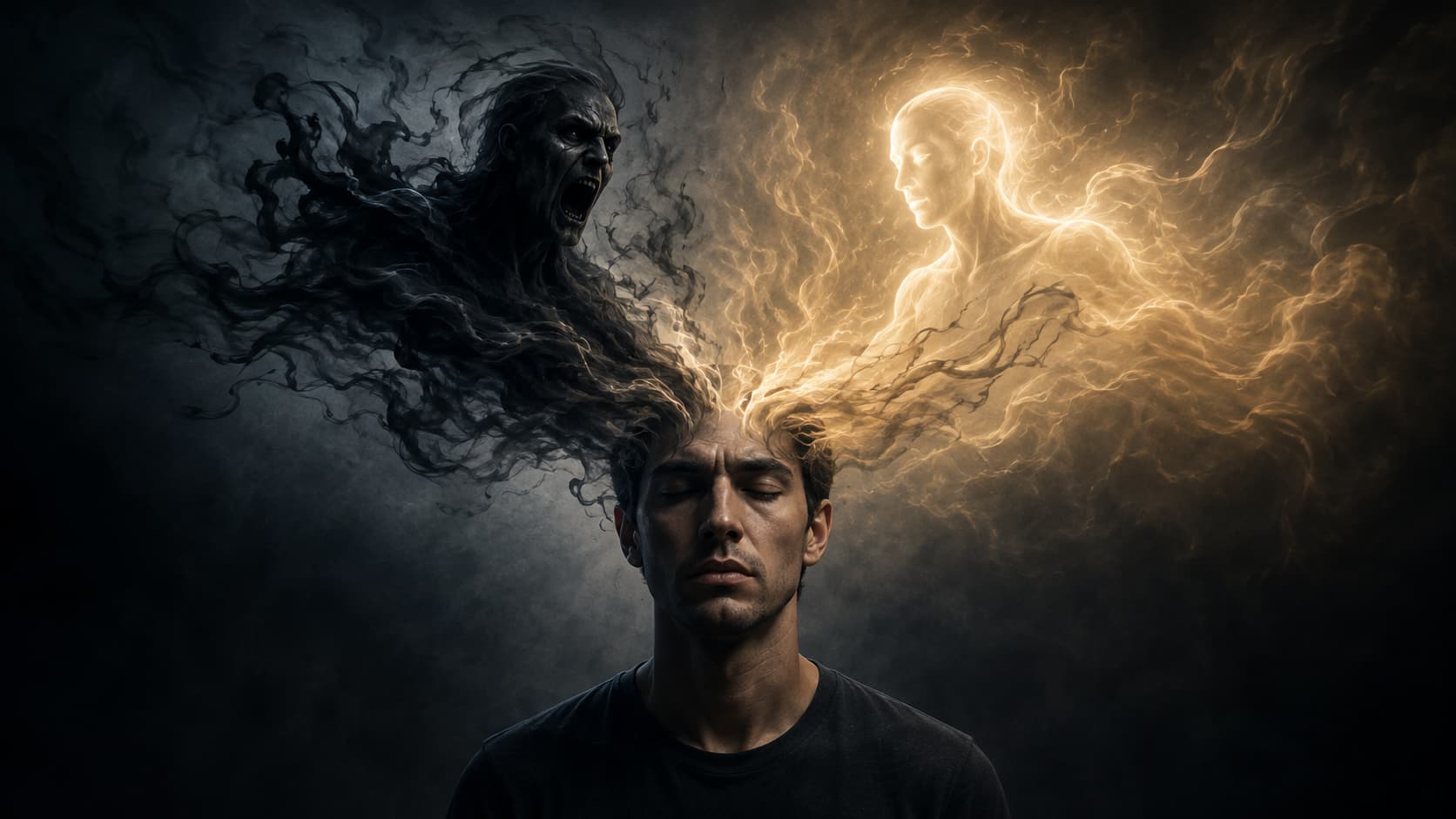
Acharya Prashant: Okay. See, this is one way of dealing with your fears. You believe in ghosts, so to counter that, you start believing in gods, and then you make it ghosts versus gods in your inner battlefield. And because you are the referee, you make the gods win, right? So that's one way, and that's a tried-and-tested way, and that way has actually helped a lot of people. It's not without reason that those fancy stories continue to hold sway. They help a lot of people. So you could use that, or you could ask yourself: do I need to counter imagination with imagination?

There is somebody sitting inside me who has no taste for Truth but has a very fertile imagination, and that one comes up with all kinds of fancy ideas. Not only does she come up with fancy ideas, she is also so forgetful. She doesn't remember the idea is her own. The idea does not absolutely or objectively exist. The idea is a purely subjective fancy. It came from me, and you forget that.

You imagined something, and then you let your own imagination terrify you. And when you feel terrified, you say, "Oh my God, there is a real danger in front of me." And how do you counter that real danger, which obviously is an imaginary thing, because in your mind, reality and imagination have really never been totally seen apart? So you counter this imaginary reality with another kind of imaginary reality.

Spirituality isn't about God. Spirituality isn't about believing in anything, neither ghosts nor gods. In fact, what you have said, I have come across this earlier as well. Whenever I have spoken against the superstitions related to ghosts and spirits and souls and whatnot, people have said that every single argument that you are giving against the existence of ghosts and spirits also denies the existence of God. We could pick the same arguments, and the way they cut down the existence of ghosts, they can equally well be used to deny the existence of God. So, are you denying the existence of God as well?

And that surprised me. I said, yes. I mean, God, as it exists in popular imagination, is nothing but the dualistic counterpart of ghosts. So, if I'm saying ghosts cannot exist for such-and-such reasons, those reasons work both ways. They take down God as well. God and Truth are not the same thing.

Spirituality is about seeking the Truth. God and gods and goddesses, and all the stories that we have read about this and that, obviously, they come from our own mind. No story can come from anywhere else.

To seek Truth is to go to the origin of all your stories and fall silent there. That's what spirituality does.

Spirituality does not say, "Well, we can start talking only if you first of all agree to believe in such-and-such story, and if you do not agree to believe in stories of my choice, then you are my enemy."

Is that not how religions of the world operate? One religion has one fancy story that it takes to be the Truth. The other religion has another story with other names, other characters, and the other religion takes that story to be the Truth. And the first thing in being indoctrinated is that you have to give your consent to those stories. "I agree that this story is my Truth."

Now, obviously, all that is just belief. Spirituality, first off, says, "All says: drop all beliefs." You cannot investigate the Truth if you are burdened with beliefs. Beliefs will simply block your vision. Beliefs will totally impede your capacity to know reality at all.

So, it's not as if spirituality says, "Do not believe in God." It simply says, "Do not believe." Not only does it say, "Do not believe in ghosts," "Do not believe in God," you know, it is so, so brutally honest. It says, "Do not believe even in yourself." The first superstition is the existence of one's own self. No?

Even today, on the Foundations Hindi channel, a video has been published this very morning that says that, you know, nobody really created this world of yours, or I do not remember exactly that title. What was the title there? "There is nobody sitting upstairs running your businesses on this earth."

And the one argument I'm constantly encountering is, "But if there is this world, somebody has to be the creator, right? And if the planets are going around, and there are galaxies and stars and suns and moons, the entire infinite universe, there has to be somebody who's running the show. So, things are there, somebody has to be the creator and stuff is moving, so somebody has to be the mover." That's the argument.

Spirituality laughs at this. Spirituality says, "Who says there is something in the first place?" Your argument is, "Because this table exists, so somebody has to be the creator." Spirituality says, "How do you know that the table exists?"

Now, that is a question that religion never asks. Only spirituality does. Religion says, "Obviously, the table exists." What does religion say? "Obviously." Spirituality says, "No, nothing is obvious. I want to investigate." Religion does not investigate, or even if it does, its investigation does not go beyond this point. Beyond this point, there is no investigation, just assumption and then stories.

Spirituality says, "No, I'm not sure this table exists. What is the proof? What is the proof that the table does exist?" Then you say, "Well, the proof is that I can see the table, I can touch the table, and if I hit it, I can hear the table."

Spirituality says, "So, you are the only proof, right? So, you are the only proof that the world exists. Then you are the creator of the world. Why are you bringing a God in between?"

"But if I take your word as final, then according to you, there are so many things that exist that do not. Are you reliable in the first place? How do you know?"

Just the other day, you were saying that the girl next door certainly loves you, that her love exists. Did it really exist? It did not. So, how do you know the table exists if you could be mistaken in that case? Why is it not possible that you are mistaken in this case as well?

"No, no, but that was intangible. This is tangible."

All right, right. Just the other night, I asked you how many fingers, and these are all tangible fingers, right? I asked you how many fingers, and it was a Saturday night, and you're returning from your fave party, and you said, 'Eight.' Eight. Are you always accurate when it comes to tangibles, how do you know you're not drunk even right now?

"Well, I know I'm not drunk."

You said the same thing that night as well when you told me eight. I said, "You are drunk," and you said, "You would be drunk. I am perfectly sober."

Do you really know yourself? If you do not know yourself, how do you know the table exists?

Now, to many of us, it would appear like an annoying question. But is it not obvious that the table exists? No, sir. We want to take the existence of this table as granted, as absolute, just because we want to take the existence of our senses and the testimony of our mind as absolute.

Our problem is, the reason we feel threatened is if we agree that it is not certain that the table exists, then we'll also have to agree that it is not certain that the body exists, because the table and the body are one. I couldn't be reclining this way over the table and say, "The table does not exist, but my elbow does." If the table might not exist, it is possible that even this elbow does not exist, because the two are one. Don't you see? The two are one. If one does not exist, probably the other one also does not exist.

So, that's the epistemological question spirituality grapples with: What is the right source of knowledge? How do I know anything? How do I be perfectly sure of anything?

So, then the real, genuine seeker of Truth says, "So, I keep all assumptions and observations aside, and I'll begin only with that which is beyond doubt." Now, what is it that is beyond doubt? The fact that I am in doubt. The fact that there exists a questionnaire, because the question is there. The question is, "Does the world exist?" No, I do not know whether the world exists or not, but for sure, the question exists. If the question exists, somebody is the questioner. So, that is the only thing I can start out with. So, I start from there.

There is something that is dissatisfied, in need of answers, and is curious to know the answers. There is a questioning entity that definitely exists. That's where spirituality starts from. All the other things it sees as projections of its own ignorance.

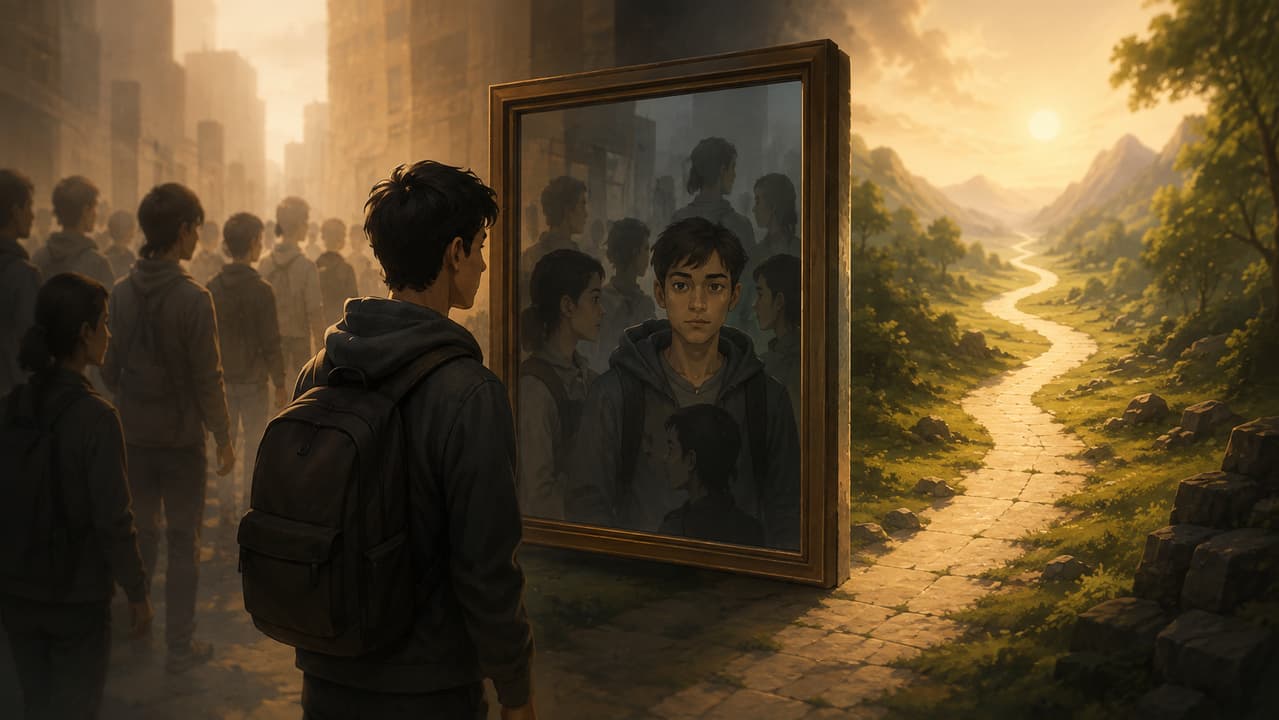
This world, it's a projection of my ignorance. My story is obviously, they are imaginary. Once you come to that, once you start seeing that this world around you, whatever you can talk of, whatever you can experience, whatever you can hear of, is just a projection of your own mind, then you also know that you are the painter of all these terrible paintings that terrify you.

If you can paint them, then you can also unpaint them. If you can write, you can also erase. Therefore, spirituality is inherently empowering. It does not leave you at the whims and caprices of some uncontrollable forces in the universe, some God sitting somewhere up in heaven. No. I am not at the mercy of unknowable and uncontrollable forces. I have choice, I have power, and I'll suffer only if I do not exercise my choice rightly. I'll not suffer because some curse will descend from the heavens. I will suffer if I am not attentive enough and awake enough to exercise right choices.

That is the only source of suffering: lack of awakening, lack of attention, lack of discretion, lack of right knowledge.

If that is why I suffer, then I need not run to someone for shelter to keep my suffering away. If I suffer due to lack of attention, if I suffer due to lack of realization, then how do I get rid of my suffering? By being more attentive. By trying to realize what the Truth is. And that's what will keep the ghosts really away.

Are you getting it?

So, spirituality is something for everybody, irrespective of your religious identity, your ideological persuasion. You exist, right? And if you exist, then spirituality is a simple investigation into your existence. Who am I? Why do I suffer? Who am I? Why do I suffer? Nice. Is it not? Or do you want to believe that we are all just pawns in the hands of fate and destiny and such things?

In spirituality, you do pray, you do bow down. What do you pray to? You pray to your own highest potential. Now, if you want to call that as God, perfectly all right. But if you are calling your own highest potential as God, then God is not somewhere out there. Then God is sitting right in the middle of your existence, and then your duty in life is to realize your own godly potential.

I am born to be godly, and how do I be godly? By clearing away all the nonsense sitting inside me: genetic nonsense, social nonsense, all the layers of conditioning I have accumulated. I keep clearing that away, I keep peeling the layers off, and what remains is godliness.

So, it's not as if spirituality is allergic to the word God, but spirituality has a very clean and clear definition of God: sans stories, God sans communalism, God sans sectarianism. God is your highest potential.

In spirituality, God is called the Self. Pure Self. Vedant refers to that as Atma, Self, Atma. That is God. But Vedant won't call it God, really. However, because we are used to calling the highest as God, therefore I am referring to the pure Self as God.

Is this somewhere near to clarifying something? I'm sure I have not been able to answer fully, but you may continue to question if it's not clear.

This article has been created by volunteers of the PrashantAdvait Foundation from transcriptions of sessions by Acharya Prashant
Comments
LIVE Sessions
Experience Transformation Everyday from the Convenience of your Home
Live Bhagavad Gita Sessions with Acharya Prashant
Categories