Gen Z Isn't Cool, It's Just Conditioned

Acharya Prashant

40 min
452 reads
Gen Z Isn't Cool, It's Just Conditioned
Gen Z isn't rebellious or individualistic - they're simply following their generation's conditioning, just as previous generations followed theirs. Real rebellion begins with honest inquiry into why you live as you do. The primitive restlessness driving all humans remains unchanged; only its expression differs. True freedom requires questioning borrowed desires, recognizing that your ambitions, tastes, and choices aren't genuinely yours. Vedanta teaches this: stop chasing false questions and confront who you actually are beneath all conditioning. This summary is AI-generated. Please read the full article for complete understanding.

Questioner: In today's world of social media, constant stimulation, information overload, and doomscrolling, why should Gen Z even care about Vedanta and the Gita, this ancient wisdom?

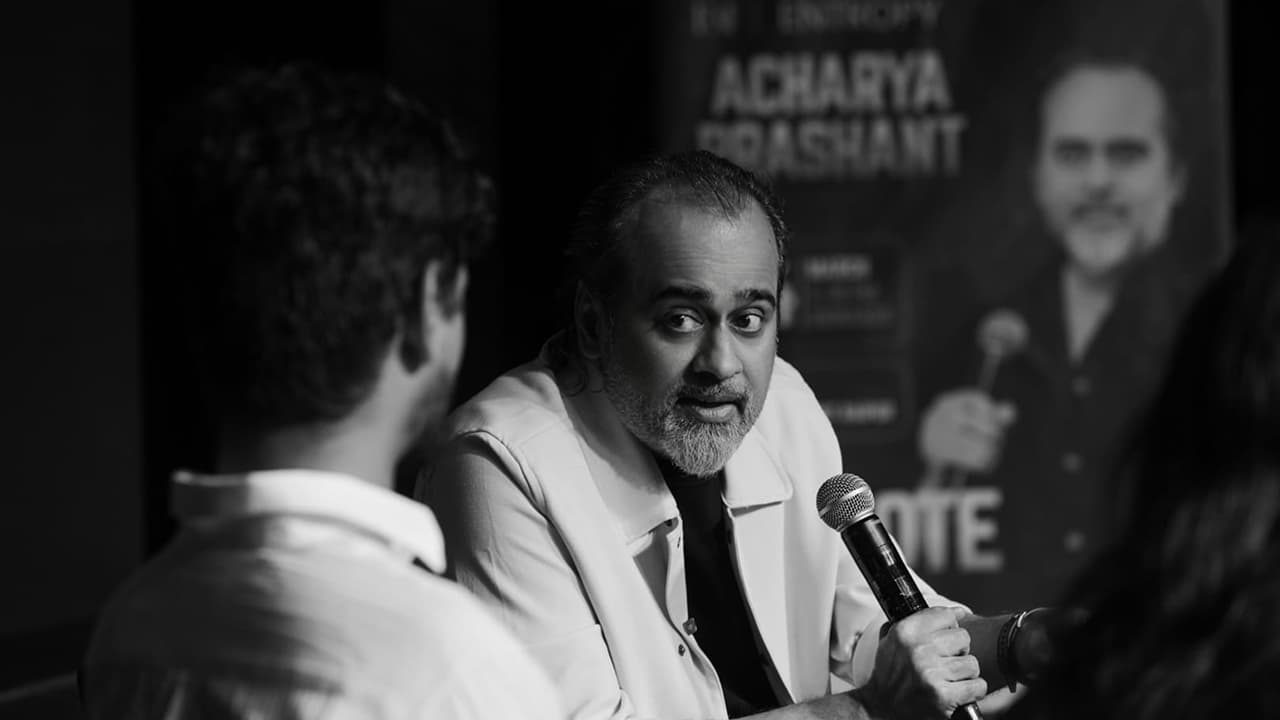
Hi, I'm Divyanshi Sumrav and welcome to NDTV's special program where we are going to discuss this important issue, the hot issue, with Acharya Prashant, IIT-IIM alumnus. Welcome to the show, Acharya Prashant. You have decoded the timeless wisdom and imparted it to the most restless minds. It may have cured their anxiety; it might have shown them the right path through your teachings.

I would like to talk about Gen Z. We talk about them in so many different ways. How do you see Gen Z?

Acharya Prashant: You see, you used two words in the way you introduced. You said "ancient wisdom" and you said "timeless." So, these are the two ways of looking at anybody. There is something about us which is dependent on time, that you can call ancient or modern. In that sense, Gen Z belongs to today; it’s very modern. It belongs to the present. It is the most present of all generations.

And then, there is something timeless about the human being that doesn't change with time and that remains the same. And that, too, is at two levels, that which doesn't change: one, our primitive restlessness; and second, our potential, our eternal potential to gain freedom from that restlessness. Understand?

There is something about us, the very outer sheet, that depends on time, place, situations, gender, this, that, culture, habits, everything that keeps changing. Unfortunately, most of us don't penetrate beneath that level. So, we take that level as the Truth of the individual. But the fact is, there is so much more present beneath that.

Beneath that, what do you first find? You find a mass of fears, insecurities, restiveness, desires, hopes, hurts. That's there. And then, right at the center is the ultimate Truth. The Truth beyond all layers and sheets. That's timeless. Absolutely timeless. So that's the same for the person that existed 50,000 years ago, 5,000 years. That's also the same for Gen Z. That would also be the same for Gen whatever that comes next.

Questioner: Gen Alpha and so on. But we stereotype Gen Z a lot, that they live in a distracted world, their minds are maybe more restless as compared to the previous generations. And we both belong to different generations; if we talk about Gen Z, we are not the same generation as they are. And the thing you just said, the restlessness is primitive? It's the same. Maybe the form has changed?

Acharya Prashant: The form has changed.

Questioner: Maybe the environment has changed.

Acharya Prashant: And the degree of expression has changed. Maybe Gen Z, then yours that came before it, and then mine that came before, maybe we had an equal measure of restlessness, but we were culturally trained to not be expressive about it. To deal with it in a different way. To suppress it, very simply.

Questioner: Yeah.

Acharya Prashant: Maybe that was the case, because that restlessness is nothing new. That's not something of the 21st century; that exists in the species itself. That's the way we are physically designed. We are restless by design and birth. The mass that emerges from the womb is restless since its first moment, its first cry. We are restless. And that brings us to the eternal relevance of good philosophy. It addresses that restlessness. That's the entire purpose of philosophy. That's the beginning point, the very source of all good philosophy.

Questioner: That restlessness.

Acharya Prashant: Yep. "I'm not all right with myself. What's wrong with me?" That's true about all Indic philosophy. And that's also true about good Western philosophy. It looks at oneself; it emanates from there. And philosophy that doesn't look at itself is second-rate.

So, for example, Vedanta would say the human being suffers from three kinds of ailments, inner stirrings, restlessness, disquiet, and they are named, you know, they say Adhidaivika, Adhibhautika, Adhyatmika. There are three kinds of inner turbulence, and so you would have heard the Shanti Path that precedes the texts of all Upanishads, and at its end, it says, "Om Shanti, Shanti, Shanti." So, the three Shantis correspond to the three kinds of restlessness that ail each one of us.

Similarly, when you look at the Buddha, his First Noble Truth is Dukkha. So, the entire philosophy begins with that acknowledgement. It is because we human beings are in a state of misery and suffering that I, Gautama Buddha, would now proceed to say something. Otherwise, one is not obsessed with speaking or writing or lecturing or gaining a crowd or followership. No one wants that.

That's the thing about having the philosopher as the sage or the saint: he explores the Truth with the objective of ridding humankind from suffering. That's it. Now, that suffering is primitive. It keeps taking just different contemporary forms, right? Beneath all the forms, the germ is primitive. The seed, the source, is eternal. And therefore, whatever has been said, not whatever, really, but the highest that has been said to address the very root of suffering, will hold relevance till eternity, and that's the reason Gen Z will need to go to it.

However, each age has its own idiosyncrasies, its own fantasies and whims. So, yes, the eternal understanding probably needs to be brought to this generation in its own preferred form and lingo, in its own preferred vocabulary. That is what needs to be done. So, you need to contemporize and contextualize the eternal understanding and bring it to this generation and the next generation and the next generation, provided there are many generations still left, given the spectre of climate change.

Questioner: We will talk about it. But as you said, it's the primitive seed and it's there. But when someone is on the lookout, someone is seeking an answer; I really can't speak for Gen Z because I'm not a Gen Z. I do not belong to that generation. But I can talk about millennials. And you used this particular term, "expression." We have suppressed ourselves, suppressed ourselves so much that we did not see it as a problem. It's okay, we are doing it, maybe this is how it ought to be done. But when it comes to Gen Z, what I have observed is they are more expressive. They talk about it. They challenge authority.

For example, Gen Z as a generation is called an "employer's nightmare" because they won't ask for a holiday if that's there in their structure; they would simply email their employer and say, "Oh, we are not coming tomorrow." It's very difficult for the millennial employers and the Gen Z employees to go hand in hand or to have a perfect harmony.

But that's not the case with our generation, what I have observed, this is my opinion. That's why when they pose a challenge, maybe a threat, become a rebel, it starts birthing different problems which might not be, you know, good for the culture we have been living in. So, what do you have to say about it?

Acharya Prashant: They are not really rebellious. They, too, are following the norms of their times and their community. It is the norm in their community to act as if you do not accept authority. You see, real rebellion is not possible without self-knowledge. You cannot be a real challenger if you are not wise.

We were conditioned to treat authority in one particular way, and we did that. Maybe that appeared like submission. And this generation is conditioned to respond to authority in another way, and it does that, and that is not freedom. Because if we were being submissive because of conditioning, these people would appear rebellious. Mind you, they appear rebellious. They are not rebellious. They appear rebellious because of their particular conditioning. And rebellion that is a result of conditioning is not freedom at all, or is it? It is not.

So, they are following the code of their community. They are following the norm of their times. It's not that they are particularly rebellious, and I can say that because millennials, Z, Alpha, newborns, I deal with everybody. They all are present, and I look at them. You see, we all are born in a condition of inner slavery, right? Unless that is challenged with realization and wisdom, the maximum that you can get is a decorated kind of slavery. The maximum that you can get is an expressive kind of slavery.

Questioner: A golden cage.

Acharya Prashant: A golden cage, or a particular fence within which you are free to do your own thing. Do your own thing, but these are the limits. Or say that you are free even as you are a blind servant to your bodily impulses. Proclaim that you are free and you love freedom, even as you do not even know that you are just succumbing to peer pressure and following the prevalent trends, and that is not freedom at all.

So, there is no fundamental difference between the conditions of the different generations. The commonality is all are internally unfree. Externally, there are different, various expressions of the lack of freedom.

Some expressions of lack of freedom appear like freedom. But just because lack of freedom can deceptively take the form of freedom, that doesn't make it free.

I hope I'm not twisting it so much that one gets lost in words. You see, it's cool to be rebellious. Not that I know what I must rebel against.

Questioner: But previous generations must have also done this.

Acharya Prashant: It was not cool to be rebellious then. No? You would not get social sanction if you defy authority in your generation or the generations preceding yours. You would not get social sanction. You would not be rewarded, if you defy authority today, you can proclaim that. Then you can wear that as a bumper sticker; you can put that on your cap or on your t-shirt. "I'm a big rebel." These are not the things that were happen sexy and fashionable and acceptable 20 or 40 years back. It was not happening.

But if you look at other places, exactly when you say we had submissive generations, you had the hippies at some other place. The 60s and the 70s were the periods of the most outrageous kind of rebelliousness in the world. Gen Z is not a patch on them. What the hippies were doing 60–70 years back, Gen Z cannot even think of matching that when it comes to…

Questioner: Being rebellious.

Acharya Prashant: Being rebellious. But then, were the hippies really rebellious? No, all that just tapered down.

Questioner: I would really like to know your opinion on that. Why did you just say that?

Acharya Prashant: You see, there was the hippie trail. There was the blatant materialism of the post-World War years. There was a sudden rush of prosperity. There were technological innovations. The world was doing great when it came to technology and economy, and all that made it even more obvious that there was something missing in life.

So, there were these youngsters who said, "No, we don't want to live the life that our parents have been living." And we have enough money because the generations are getting richer. So, we'll go to Asia, we'll go to some parts of even Africa. We'll smoke, we'll live in defiance of cultural, social, religious norms, and all that became a fashion and all that died down within two decades. Does that remain anymore?

Questioner: But they also talked about something like, the discourse was like that, through whatever means, they were moving toward that rebellious realm. They're entering into a state of consciousness, and a lot of spiritual talks were also prevalent at that time. How do you see that?

Acharya Prashant: Fashion. Contemporary fashion.

Questioner: A fad.

Acharya Prashant: Like fashion emanating from Paris, spiritual fashion was emanating from some points in India. Not much more than that.

Questioner: A lot of them came to India as well, a lot of places.

Now, in today's generation, we see a lot of studies being done, and we talk about the loneliness epidemic, and people from this generation, they might be suffering from it. And the whole hyper-individuality trend that is going on, there is solitude, and then there is this hyper-individuality that is happening around. How do you differentiate between these two? And if a Gen Z person is watching this interview, what do you have to say about this thing?

Acharya Prashant: A real individuality will never leave you feeling lonely. Loneliness is a state arising out of craving for social company or social validation. Right here, I am full of desires. I want this, I want that, I want him, I want her. And when I do not get all that, then I am lonely. So, loneliness is when you are not comfortable with your aloneness. Right? So, individuality is a beautiful word.

The corresponding expression is Atma in Vedanta. That which is indivisible, Akhand, Atoot, avibhajya, anavyav, that which cannot be broken; indivisible. From there comes individuality. Individuality is a beautiful thing, but it cannot be so easily available that you are talking of hyper-individuality.

Questioner: But these are the terms that are being…

Acharya Prashant: They are using these terms in blatant ignorance. They do not know what they are saying. They are not individuals. It takes a lot to be an individual. They are not individuals. An individual is someone who is not broken from inside. Do you understand? Indivisible, not composed of fragments, not put together, not stitched together. That's an individual.

Questioner: But do we have these absolute individuals?

Acharya Prashant: At least there is the possibility. At least we can be honest enough to not call ourselves an individual if all we are is a mess of foreign influences, social impacts. That's who we are, right? And then we dare call ourselves individuals. That's not fair.

Questioner: So, there's no point of hyper-individuality at all?

Acharya Prashant: Even individuality does not exist. See, please understand. Her mother cannot bear, forget a bikini, even a skirt, right? Her mother cannot bear wearing a skirt. She cannot bear wearing a sari. Where is freedom? Mother says, "Look at this crazy shit," and she says much the same thing. She mirrors the mother. She looks at the sari and says, "Slimy, elongated piece of clothing."

Where is freedom?

The mother is a product of her times, her tradition, the influences that operated upon her. And the daughter is a product of her times, her traditions, her influences. Where is freedom? And when there is no freedom, then you are just a collection of all that has put an imprint upon you. This condition came and stamped itself on you. That person came, that book came, that movie came, the school, the media, the peer pressure, then religion, society, culture, all those are imprinting themselves on your consciousness. And the resultant is being called the self. Is this individuality?

Individuality did not exist then; it does not exist now. And that's why Vedanta and Gita are needed. They reveal your hidden individuality; otherwise, very mistakenly, you keep on calling everything alien as "self." That which you call as "I," when you say "individual," that individual says "I," you know, "I like this, I don't like this, I'll do this, I, I, I." That which you call as "I," there is no "I-ness" in it.

You love cricket because everybody around you is playing cricket. Do you love ice hockey? You don't. Do you love rugby? You don't. But then you say, "I love cricket." No, there is no individuality in it. "I love tandoori roti. I love dosa.” "I love something else, some staple food in Gujarat, Rajasthan, Northeast somewhere." Why? What individuality is there in it?

"I think the purpose of life is to do this, do this, get married, bear kids," or to participate in your father's business or be a good housewife. Where is individuality in this? Or: "I saw a movie in which the protagonist was roaming around the world hitchhiking, backpacking, all those things. I think that's the purpose of life." Where's the individuality in this?

Your mother thought being a good housewife and raising kids is the purpose of life. She didn't think this; she was made to think this. It was implanted in her mind. There was no individuality. And now you think that backpacking and criss-crossing the world, that's the purpose of life. Are you an individual? This idea, too, has been implanted in your mind. There is no individuality.

And that's the reason we need Vedanta. The method there is of negation. You come to see what is not yours. "These ideas, these thoughts, this personality is not me. This accent is not me. These tastes, these distastes, these are not me. These opinions are not mine at all. Even my emotions, my feelings are not mine at all. Every bit of me is conditioned." And when I see that, then for the first time, there is the potential for some individuality.

Questioner: So, there are lots and lots of existential questions again. Like in every generation, we are human beings. Primitive restlessness is there, just like you said, and there are existential questions: "Who am I?" Which the answers, an individual, I might say in that sense in the sense of language, he or she might be seeking the answers to. How can Vedanta and Gita prove to be useful, and how can they get access to it?

Acharya Prashant: No, they don't answer these questions. They just tell you that these questions are important. Please tell me, if you look at ten people from a Gen Z sample, how many of them are actually interested in asking, "Who am I?" How many of them are actually experiencing existential angst?

Questioner: Maybe not in the clear form, not with clarity, but maybe these questions...

Acharya Prashant: You ask them. Fine. You ask them: "Give me the top ten questions that affect you or are important to you." It's unlikely that you will get deep questions like "Who am I?" or questions of identity anywhere in the list.

Vedanta, first of all, ask you to reconsider your questions. It does not give you answers. It asks you: "Are your questions important enough?" Forget the answers. Are you asking even the right questions, or is this a bogus query? You are asking something that, even if answered, will not take you anywhere.

It's like I have this that we are calling primitive restlessness, and I'm asking: "So, what's the score in the IPL match?" Hello sir, there is something else that ails you very deeply, and look at the direction of your inquiry. You're asking about where the stock market is, or where the cricket match is, or what a particular politician is doing. Should you even be interested in these questions? That's what Vedanta asks you: "Is this the right question?"

You ask something and the sage will say, "Is this important enough to be asked, or is there something else that's at the core of your existence, and hence your suffering?" That's what Vedanta does. And when you are brought to the right question, that's the ending of the one who thrived on all the nonsense, the distractions, and all the false questions.

See, every question is a statement of intent and importance. No? When I say I want to know this, I'm according importance to this. I want to know what’s the price of this (pointing towards the table)? In the middle of this conversation, if I say I want to know the price, then I'm saying that the price is more important than this conversation. So, a question is a statement of importance. Vedanta asks you: "Is your question important at all, or is the thing of real importance being obfuscated behind false questions?"

And when you start seeing that your questions are false, then along with the false question, the false self gets exposed. Something new then reveals itself, and that we can call as individuality. It's very important that first of all, this kind of badge of honor, that we very unwittingly and unquestioningly award to Gen Z be withdrawn. We say, "Oh, they are rebels." No, they are not. We say, "They are individualistic." No, they are not. We say, "They defy authority." No, they don't. They don't. They are just following their type. They are typical; otherwise, how would you say "Gen Z"? "Gen Z" is in itself an indication of a type. No?

Questioner: But society might have given this term and...

Acharya Prashant: I understand. You might say they are different from millennials, but among themselves, are they different from each other? No. They have only as much variance as the members of the millennial club would vary from each other, right? Which means they are a type. And if a people can be typified, are they individuals at all?

"I belong to Gen Z, so I'm behaving like Gen Z." Now, where is individuality? He belongs to some other generation, Gen X or whatever, Gen D, A, B, S, T, whatever. So they are behaving according to their generation. Where is individuality? I'm behaving as per my type, as per my cultural norms, as per my times, as per my peers, as per my age, not as per who I am.

Questioner: How can this be done?

Acharya Prashant: By seeing that what you are taking as yourself is not you at all. The choice of your clothes is not yours at all. The movies that you like are not liked by you at all. The way you choose your friend or boyfriend or girlfriend, that too is a product of your situations. There is no authenticity in that. And how scary is that? Please see.

Questioner: But we talk a lot about authenticity.

Acharya Prashant: We talk about it, yes. And then you find something very shallow masquerading as authenticity. You know, just because I can behave in a particular way, I usurp the right to call myself authentic. This is very bogus.

Questioner: What is authentically authentic?

Acharya Prashant: By seeing what you're calling as authentic in the first place is not authentic. "I love the latest flavor of pizza in town," which incidentally was recommended to me by my best friend. "I love the way that particular lady in that flick was wearing those earrings," or something, and now I have them upon me.

Would you have them upon you had you not seen those things in the latest Western? And then you call yourself an individual? Are you an individual in the first place?

Questioner: How to get them toward... if you're saying this, and we're talking about being free and that we are not being free even when we appear to be in so many senses. How to get them towards Vedanta or Gita? They might not be interested; maybe they consider it something ancient, as I must have previously mentioned, and something maybe, maybe boring. I'm not saying it in any otherwise sense. Can it become somewhat cool? Can the language be like that? Can there be something?

Acharya Prashant: Their definition of coolness is coming from a very uncool place. Why should Vedanta modify itself to look cool? You are uncool. First of all, you question your own sense of coolness. You are so uncool and yet you want to forcefully, deliberately, undeservedly carry that tag: "I am cool. Vedanta is uncool." How the hell are you cool? I don't think you are cool. A small thing happens and you just blow up. Are you cool?

**Questioner: Not.

Acharya Prashant: A little emotional upheaval, and you get into an emotional frenzy.

Questioner: And that might not be the case with just this generation, but every generation.

Acharya Prashant: Every generation. But not all generations were so intent on labeling themselves "cool." This one wants to call itself cool. And I want to deny that. You're not cool. Mental problems, you have the maximum. How are you cool? A little deviation from what you think to be right or acceptable and you cannot bear that. How are you cool? Emotionally brittle, fragile, how are you cool? One random breakup starts playing on your mind and you question life itself. How are you cool?

Questioner: A lot of shayari has been written…

Acharya Prashant: Very low-class shayari. You see, there can be exalted shayari as well. But your shayari, too, is very uncool, and then you want to call the Gita as uncool. First of all, you question your coolness. You're not cool, sir. You're not cool. You're just following your own type, your times. And you better see that, because if you don't, then you will be the recipient of all the nonsense of the previous generations.

It's a thing of great injustice; I understand that. But you will be bearing the brunt of it. From climate change to all kinds of cultural nonsense and wars and all the nuclear accumulations, you will be inheriting it. So, the onus is on you to watch yourself and make sense of your life; otherwise, there would be great problems.

Questioner: But if someone really wants to understand themselves better, self-inquiry, and they want to get...

Acharya Prashant: How? That's the question: how?

Questioner: Yeah.

Acharya Prashant: The honest answer is suffering itself is the method. You see, if I am not honestly admitting that I am not all right within, there can be no redemption. So, the most honest, straightforward, direct, effective answer is: no method is needed.

If I am suffering, then suffering itself is the method to gain freedom from suffering, because our inner nature, swabhav, is not to suffer. And when you suffer, then there must be a resistance resulting in due deliberation, realization, and right action which will relieve you of suffering.

Suffering, should ideally activate a cycle that ends in the obliteration of suffering. Ideally, that should happen. But if that does not happen, then what's the method we come to? Then the method is twofold: One, read those who want to take you to that one singularly important question: "What's your Truth?" Two, observe your own life in the light of what those books or people are telling you.

Questioner: But this self-inquiry also, can it be dull and maybe passive? Because when we talk about ambitions, when we talk about everything that is happening in the world, the fast pace, the hustle culture, and there are dreams and aspirations of people, and not just for Gen Z, this is a reality for our previous generations also. I really want to understand: can ambition in today's time and spirituality, as you teach it, as Gita says, as Vedanta says, can they coexist?

Acharya Prashant: Your ambition is not yours. We have been taught to be ambitious about certain things. Ambition is nothing but desire inflated into a big balloon, right? Normal desire. Most of us have common desires. Then there are those whose desires know no limits; we call them ambitious. The problem is, just as those desires are not yours but they have been implanted in you or induced in you, similarly, your ambitions are not yours.

A fellow born in a business family wants to become a business baron. A fellow born in a doctor's place wants to become a good doctor. A fellow born in a fauji family says, "I'll join the army." A girl born in a family of actors says, "Oh, my future is already decided and set; I'll join the film industry."

Where is "I-ness" in ambition? There is no "I-ness" really. Our likes, dislikes, our love, everything is so false, so induced, so borrowed. It's not ours. And when you see that, you realize what really needs to be done. And that's the birth of a totally different kind of energy and movement. If you want to call that as real ambition, you may. But what we normally see and call ambition is something very false. A fellow is running after something, how has that target come to his mind in the first place?

These days, the UPSC market is quite hot and also the IIT-JEE results have been declared. We are in the months of May and June. So you look at the advertisements of all these coaching institutes. Aren't they implanting ambition in one's mind? And then the kid or the aspirant becomes ambitious and says, "My ambition." Is that your ambition, or has that been sneaked in very surreptitiously, smuggled into your mind by some person who does not know any better than trying to fulfill his own false desires by implanting false desires in somebody else's mind?

Acharya Prashant: You look at the life of the common individual. I mean common, you, me, everybody. How did you know something is worth wanting?

Questioner: Is there a way?

Acharya Prashant: You know, you look at people's emotions, their expressions. You look at their hairstyle and you say, "This thing is coming from that particular movie." You look at the way they wipe their tears and you're reminded of that particular scene there. You look at the way she walks. You look at the way he gifts her the rose and you know exactly where that is coming from. How is our love ours at all?

Our parents, they were saying, "We need to have six kids." Now you say, "No, two kids." Is that your decision really? First of all, when you were five years old, you didn't say you want to have kids. Then your body decided it for you. You come to a particular age, you say, "I want sex." Do you want sex, or is it your body or your hormones? You say, "I'm getting angry." One shot of tranquilizer and the anger is gone. Was it your anger at all, or was it a very chemical thing?

What is yours in the first place? That begs the question: Who am I? But we don't want to confront it. And all coolness is about confronting that question. That's the coolness I want to bring Gen Z to, and all gens.

Questioner: And this thing you have just talked about, the influence. Your hair, it's not yours. Even the style you're wiping your tears off, and it comes… the whole influencer culture is making headlines all the time. People are constantly talking about it. Influencers are the new celebrities, and a lot of Gen Z, they are involved in this.

Now if we divide, see, real ambition, like the ultimate cooler being maybe someone who is confronting the questions that we just discussed, can there be levels?

Acharya Prashant: Let's say we are not talking of an absolute jump from the earth to the sky. Obviously, there are levels. There is a progression.

Questioner: So how do you see that? Can you define it a bit?

Acharya Prashant: Depends on the intensity of your courage. You see, on one side, there is the love for Truth and freedom that resides in each one of us. On the other side, there is the attachment and habituation to comfort and security. These two sides are there, and in the middle of these two you sit, and you have to decide which of these two is more important.

The decision is all yours, and the progression depends on the progress of your decision. You can decide, "I want comfort, I want security" of which you obviously get none. But it seems like something attainable by following a hackneyed route, so there will be no progression. "I want comfort." If you want comfort, then you stay in your old position that you are habituated to.

Or you could say, "I love freedom. I love Truth. I love authenticity." And then you progress. As you progress, there is greater potential but also greater challenge. How far you go is totally a decision you make.

Questioner: You also talk about meeting people where they are, like if we feel the lack of empathy, maybe love, and then there are so many conflicts, maybe the conflicts that are not even necessary. How should one deal with that?

When someone is being, for example, in the previous times, if someone is leaving for the jungle and the society might label them as the "black sheep" or something of the family in those terms, if you talk about it. Now, real rebellion, how would it look like for the current generation, and maybe for our generation, and maybe for the previous generation? How can they break those ties?

Acharya Prashant: No. If I say it would look like this, I'm giving you a blueprint or a roadmap. And anybody who follows a blueprint or a map is not rebellious at all. Which means we can never know in advance what real rebellion looks like.

When you say, "I want to be like that," then you have already surrendered your rebellion, have you not? So it doesn't look like any particular thing. It is a fresh thing in itself. And we need not concern ourselves too much with what it would result in, what the baby would look like five years down the line. No. We have to concern ourselves with what exists today.

And what exists today is no good. The proof is that I'm internally unhealthy. I'm afraid. Fear is such a great indicator. I'm possessive. I'm jealous. I'm partisan. And just so many things I can mention to decorate myself with. No? I'm all of these, and that's not good. I honestly say, "I do not want to remain in this place." That's where one starts from. One does not ask, "What's the place I would come to?" One says, "What's certain is I am not born to remain here."

Let the journey start. What this journey would make of me, where it would make me reach, all that is not too big a concern. We'll see. We'll see. We are not bothered about the result. What's certain is what exists today, within me and without me, is just not acceptable. That's rebellion. And not acceptable, not because of my prejudices, not because of my likes and dislikes, but because of the falseness it has, its inability to stand to my questions.

Acharya Prashant: Something exists. I do not want to blindly, summarily just reject it. I ask a decent, innocent question, and instead of a process of inquiry, what I get is resistance; what I get is angry stares, or what I get is fear from the other side. Then I know there is something fishy.

If my inner situation, or if those around me, cannot stand well-intentioned questions, then there is a problem. Definitely, there is a problem, and that should encourage me to ask deeper questions. That's how real rebellion starts.

Real rebellion starts with inquiry. I want to know. I'm a human being. I'm not an animal. Animals do not ask questions, at least not too many of them. But to be human is to be inquisitive. To be human is to have a hunger to know.

I want to know why you want me to behave in such a way. No, no, I'm not confronting you. I'm not disrespecting you. I want to know. Please tell me. Let's initiate a discussion. And if there can be no discussion, that's further proof there is a problem. That’s how the process starts.

You cannot have a roadmap. You cannot have a vision for the future. You cannot say, "I want to reach that particular place." Instead, you have to come back to yourself and ask: This is the way I'm living. This is how I get up. This is the place I go to. This is how I earn my livelihood. This is the person I relate to. This is the person I have married. This is the person I intend to marry. These are the kids I begot. What exactly is going on?

And I am already, what, 15, 25, 45, whatever you are Gen Z. So maybe Gen Z is, what, 15, 20, 22, whatever, 25. Irrespective of how old I am or how young I am, I have, let's say, a maximum of a few more decades to live. What am I to make of them if I do not know what is time, and time is slipping away?

These are the questions that should concern a sane human being. A sane human being. This is the basic requirement. Otherwise, you're not even a human being. Otherwise, you are some kind of automaton, a machine, or an animal. Just whiling away time, and one day you will drop dead. You get this?

We just get up, then we proceed to the washroom. We brush our teeth and then the usual chores, and now we are all tagged up and then we pull out the car and we drive away to the office. And then there are the usual responsibilities, and we somehow fulfill them. Some of that is relegated to somebody else, office gossip, there's bitching, political maneuvers, some amount of solid work as well. And then you look at this and say the time to go back, and then you return and then you buy something, or you watch TV, or you say, "I have a late-night show," and you proceed to the shopping mall.

Where is any bit of inquiry in this? Where is thought? What are you doing? What were you doing five years back? How did you come to this point? Had you been asked, let me put it this way, ten years back, had you been asked, "Is this the life that you want to lead?" Ten years back, were you shown a snapshot of how you are living it today, would you agree to it? Probably not.

How did you come to it then? You didn't decide. If you didn't decide, who decided for you? Whose commands are we obeying? Asking this question is rebellion. The beginning of it.

Questioner: But the depth you're talking about, the deeper questions that we need to ask, and the culture we are in currently: the distracted reality, the stimulated reality, where 15-second depth is there.

Acharya Prashant: But those 15 seconds can be an Acharya Prashant Reel. A little bit of vanity is always pleasurable. It's not about 15 seconds. All that Siddhartha Gautama, all that he got was what you would call today a "screenshot." Not even 15 seconds; one second, a screen grab. A moment. Because he was just passing by. There is a dead man, there is an ailing man, there is an old man, and that sufficed.

It's not about the length of time; it's about the depth of your honesty. And he was going somewhere to have good fun and pleasure, and celebrate. There was some youth festival, so goes the story. And he was a young man. He was 28. He was off to celebrate.

So, here you are, let's say, with a bunch of friends or your girlfriend, somebody, when you're driving away to watch a hot movie full of excitement, stimulation, just as you said. Don't you see how the roads are? Don't you see what's happening to the dogs and the cows? Don't you look at the beggar? And just as you are about to experience mercy, you see cunningness in the eyes of the beggar.

My question is: don't you see? It's there. How can you not see? It's there. It's not about the length of time you're passing by. These are all images coming to you and disappearing, dissolving one after the other, apparently unlinked and yet having a common source. A sequence of mirages. It is all there.

How can one not see? You look at the screen. Don't you see how the scriptwriter and the director and the actors have tried to fool you? Don't you see how the whole thing is constructed to exploit you? I mean, there you can't even say, "I was looking the other way." You're looking at the screen, right? You're looking at the screen. That's the way you're sitting. There's the screen there. And it's obvious that the whole thing has been fabricated to make a fool of you. Don't you see?

And instead of seeing, you say, "I allowed that to influence me." How is it possible? It's a decision. It's not a random happening. It's a choice. And if you are choosing this to happen, then nobody can interfere. It has to start with you. It has to start with your own clinched fist: "I will not let life slip away like this."

Questioner: On this note, what would you like to say to our Gen Z audience who might be watching this? And, yeah, how can they start making this clenched fist right now?

Acharya Prashant: You're not Gen Z or any fancy thing. You're human beings with that primitive restlessness. So, drop this fancy tag "Gen Z" and all; behave like normal human beings. You are nobody special. Nobody is any special. Let's get down to work.

Questioner: You have just repeated my mother's words: "You are not special. Behave like one."

Thank you so much, Acharya Prashant, for shedding light on these topics. A lot of things we have discussed, and I think we have got a new definition of what's cool. Thank you so much and thank you to our audience. We'll meet next time in the next episode. Till then, keep watching, keep getting enlightened.

Thank you.

This article has been created by volunteers of the PrashantAdvait Foundation from transcriptions of sessions by Acharya Prashant
Comments
LIVE Sessions
Experience Transformation Everyday from the Convenience of your Home
Live Bhagavad Gita Sessions with Acharya Prashant
Categories