Why do you expect the universe to be a fair and just place? That’s not philosophy, that’s a lot of fiction. This whole thing is very, very random. But we want to assign causality to it. We want to say, “Things happen for such and such a reason.” Why are we allowing randomness to assume meaning? A life without meaning terrifies us. There is no meaning in external material life; it is absurd. But there can be meaning in the one who you are.
This summary is AI-generated. Please read the full article for complete understanding.
Questioner: Pranam Acharya. My name is Riya. I'm a final-year MBBS student. My question to you, Acharya is: in a world full of learning and unlearning, the only constant which a person tries to hold is that kindness and fairness which we expect from life. So why is it that in life, even when people give their best through effort, sincerity, and hard work, things don't always turn in their favor? Very often it is the genuine ones who face unfairness. And when that happens, we tend to explain it away as bad luck, misfortune, or perhaps God's plan. So what is that really? Is it the whole truth, or is life simply beyond our control?
Acharya Prashant: See, this entire concept that a benevolent, benign, merciful entity has created the universe and therefore the universe must be a fair place, there’s a lot of fairy-tale dream stuff. Why do you expect the universe to be a fair and just place? That’s not philosophy, that’s a lot of fiction. Why should the universe be a fair place according to our concepts of fairness?
If you look at the way the universe really is, and prakriti is; by prakriti I mean everything that is perceivable, everything that is material. It's all a random place. But that’s often scary for us to confront and accept. This whole thing is very, very random. But we want to assign causality to it. We want to say, “Things happen for such and such a reason.”
For example, even as we sit here right now, if this thing falls on our head, probably somebody would like to explain that away by saying, “You know, these four girls, they were sinners in their past lives, and this one is a huge sinner in the current life itself. So all these five deserve to die. It’s not something unfair that happened, they are just reaping the fruits of their past karma." Nothing like that, sir. This is a random event. Why are we allowing randomness to assume meaning? There is no meaning in this. But that terrifies us, that this is a life without meaning. Life, in the sense of external material life; yes, there is no meaning in all this (pointing towards the outside). This is absurd. Absolutely absurd.
But there can be meaning in the one who you are. Please understand. Who am I? I’m the one who is born in ignorance; I’m the one who is later on trained in ways that deepen his ignorance and therefore I suffer. I suffer in ways visible and invisible, subtle and gross. Therefore, my life can have meaning. Life has no meaning, by the way; my life can have meaning. And what’s the only meaning my life can probably have? It is to get rid of my inner bondages, to be inwardly sovereign. Externally, things will never be in your control.
Who are you? Think of the universe, who are we? What can we control? And even when we realize that we are a tiny speck in this entire…, then we want to say, “No, we can’t control anything, but we have a Father up there in heaven, and my Father is very nice to me, so He’ll control things.”
Nobody’s going to control it for you. But yes, there is one point that can be your own fiefdom, one point that can be inwardly untouchable. Oriental philosophy has called that the Self; the true Self, the pure Self. That point can remain untouched by whatever is happening. You can remain untouched by all external happenings.
As body and mind, you can participate in all that, you can play with all that, knowing fully well that it is all random. You don’t know how you were born; you don’t know how you will die. Things are beyond your control. Even if there is causality, there are just so many intertwined threads of causality. The machine is just so huge that it is very, very difficult to come to one particular exact cause of any event.
Even if events do have causes, those causes are just so intermeshed and so numerous that you can’t put your finger on any one particular cause. Everything is caused by everything else. As they say, one butterfly flapping its wings in Japan can cause an earthquake or a volcanic eruption in America. And that’s not the only thing that’s causing it, right? Probably the entire history of the entire universe is coming together to cause that eruption. So you cannot say that this is happening because of this, so I can control this. You can’t control anything, but you can control who you are. And what’s the method for that? Self-inquiry.
If you look into your own self, if you look into the mirror, you will see your bondages.
And all bondages arise from not understanding what this entire game is like. You could also say bondages arise from superimposing meaning on what is innately meaningless. Something happens and we want to accord meaning to it. No, there is no meaning there.
A man or a woman enters your life, you want to say, “Oh, love has come to me.” There is no meaning to that. No love has come to you. You very well know how it happens, how hormones and chemicals and all the neurochemistry is doing what it has to do. What is happening to you at the age of twenty-two couldn’t have happened at the age of twelve. You very well know what it is; it is meaningless. Now participate in it if you want to, that’s fine. Play, roll, wallow, celebrate, cheer, but don’t give it a meaning. Otherwise, you will suffer. Let things be. You remain untouched.
And being untouched does not mean that you have to be an ascetic, that you have to be a renunciate. No, I’m not talking about that. The body will participate in the universe because the body is the universe. What else is the body? Stardust. What else is the body? This soil is the body. So how can the body not participate in the universe?
What else is the mind? The mind is the subtle body. Can there be a mind without the body? Is there something called a disembodied mind? You take something into your body, doesn’t your mental condition immediately change? Somebody smashes your skull with a hammer, that’s the body. And with the body gone, does the mind still remain? The mind too is the body, which means the mind too will participate in the universe.
So, with the body, with the mind, participate in the universe; because the mind and the body are nothing but the universe. However, you remain a witness of all this. Let this entire game of engagement play itself out. You don’t have to be involved at the deeper-most level. Deepest, you must be untouched.
That doesn’t mean that the body must be untouched. I’m not talking about being the tyagi of the common kind: “I don’t touch food, I don’t do this.” Some say, “I don’t touch women.” Some say, “No, no, no, I walk barefoot.” I’m not talking about all that. That is very silly. Even if you want to avoid the world, how will you avoid it? Can you avoid breathing? Can you avoid food? All that is the universe, how will you avoid that?
Questioner: So, sir, basically what you’ve said is, life is as chaotic as entropy. It’s always on the rise. Chaos is just present, ever-present, all around us. How do we accept that? How do we come to terms with it?
Acharya Prashant: What prevents you from accepting that?
Questioner: I suffered a very deep personal loss earlier this year. I lost my brother, and I’ve accepted that it was a random act. He got into an accident, there was no reason why it happened. But still, the question comes, why did it have to happen in my life? How do I come to terms with that kind of chaos?
Acharya Prashant: Allow the suffering one to suffer fully. The question is, “How do I come to terms with it?” Let the suffering one come to terms with it. You remain untouched. You don’t need to block or suppress your suffering. Let the eyes weep. Let the mind grieve. There is no escaping that, and there is no shame in that.
We’ll have to laugh and weep, that’s the way life is. We’ll have to meet and leave, that’s the way life is. When you are sad, weep buckets; allow yourself to beat your chest and shout from the rooftop, that’s fine. And when you are happy, dance and celebrate; that’s all right, wonderful. But one point within you must remain untouched. You must be able to see what is happening. And if you are able to see what is happening, weeping is wonderful, not weeping is also wonderful. Playing is wonderful, not playing is also wonderful.
Wisdom does not mean deadness; wisdom means participation without fear.
If I am free to celebrate the birth of a person, why should I block myself from grieving the demise of that person? I will weep because I am sad; yet the real me is never happy, never sad. The only function, the only nature of that thing within, is to know, like a witness, knowing without participating.
And that means that the ones who are participating are absolutely free to participate. They have no obligation not to engage. Please engage. It would be inhuman if you have a friend or a relative or a family member who has fallen sick and you say, “It does not affect me at all.” It must affect you. It would be inhumane if species of animals are getting extinct every day and you say, “It does not affect me.” It must affect you. If you say this deforestation does not affect you, if you say climate injustice or income inequality does not affect you, it must affect you. You must be very deeply touched by all of this.
If you see somebody in pain, that must induce pain in you as well, that’s the mark of humanness. Yes. But at the same time, there must be, as I said, a point within that nothing can reach, nothing can ever touch, let alone violate.
I know I might not be making too much sense, but that’s fine.
Questioner: No, actually it makes more sense than a lot of advice I’ve gotten on the topic.
Acharya Prashant: I’m glad.
Questioner: You have been talking about that one center in the self which is unchanging. So basically, I’m a reader of philosophy. My question is: the self is something which is unchanging, which is there forever. Even if the external body dies, the self which is there will go on continuing, the awareness, whichever it is there. But then I don’t see it. Logically, if I talk about the mind, it is a pattern recognizer. So there’s a separation between me and you in terms of experience. So what does my mind see? What does it experience?
It says, “Okay, Krishna, your experience is totally different from Acharya Ji.” So what it says is, “I am Krishna, this is me, I’m an ESI student, I’m a fourth-year student.” So there is separateness, there is ego which has been developed, which occurred naturally. Then why would I counter that against ego which has developed naturally? Isn’t it unnatural to dissolve the ego which has occurred naturally?
Acharya Prashant: Lovely question. The ego, you very rightly said, has developed naturally. What you mean is that there is the soil, and the soil, in the natural course of things, becomes the body. Right? The soil becomes the body, and in that sense, the ego is natural.
But does the ego consider itself natural? That’s the entire problem. The ego does not consider itself natural. It thinks of itself as the consumer of nature, not nature itself. Do I say, “I am the soil?” No. I’ll say, “I am the one walking on the soil. I am the tiller of the soil. I’m the harvester of the crop. I’m an eater of fruit.” I’ll never say, “I am the soil.” I’ll say, “I have a relationship with the soil.” And what kind of relationship is it? It is an exploitative relationship. And that’s the problem.
The moment the ego comes to see that it is nothing but the soil, all kinds of fancies evaporate. Doership is gone.
The ego is doership, right? And to do something, you must be separate from the field of doing. You see, if I say, “I’m doing something,” then I’m acting on an object. Action requires an actor, the subject, and the subject has to act on an object. For any action, there has to be a separation between the actor and the object being acted on. And that separation is false because the object is nature and the subject also is nature. So there is no doership.
Seen the whole train of bogies following the engine, right? Now one particular bogie thinks it’s the doer. Why? Because it’s pulling the ones behind it. Isn’t that false? The ego does not realize that it is just one of the bogies, it thinks of itself as the engine. It thinks, “I am the doer.” But you are not the doer. It’s all happening in a very complex cause–effect network in the universe. You are nobody. So the moment you see you are nobody, it’s all over. All over for you. All over in terms of your suffering. Why? Because the whole suffering is “I am the doer, and I want to do things, and those things are not happening, so I’m unhappy.”
The moment you realize there is anyway nothing that you can do beyond realizing that you are not the doer, you are free. And then, in that freedom, great things happen on their own; because now you are liberated from the petty but impossible task of doing things for yourself. It’s a petty task, but also very impossible.
How difficult it is, for example, I’ll give you a petty task. How difficult it is to protect a sandcastle from falling? It’s just a small sandcastle, but you are told, “Protect it from falling for just one year.” How difficult would it be? Very, very difficult, because it is inherently vulnerable and fragile. That’s what the ego is; it’s falseness. And the entire life we spend trying to protect the ego. We are trying to do the impossible. We are trying to defend the indefensible like that sandcastle which cannot be defended. It has to fall.
But the human being spends eighty years of her life just trying to protect the sandcastle. Now, in a fraction of that energy you can actually build a real, huge castle of marble and all kinds of stones and granite and everything. It might take just two years and far less energy. Think of it.
Think of the energy it might have taken to build this entire infrastructure here; the institute buildings, it took a particular energy, a particular kind of time. Now think of the kind of energy it will take to protect the sandcastle. Protecting the sandcastle will require greater energy. That’s the ego. It cannot be protected, but we are trying to protect it. So all the energy is going wasted.
Once you see it cannot be protected, then that energy flows in great directions and wonderful things get done, because now you are liberated from the obligation to protect the sandcastle. Now you don’t have to do the impossible, so you can do all the great things that are possible.
Questioner: So sir, what would be the difference between ego and pride? Where do we draw the line?
Acharya Prashant: Pride is a very minor thing when it comes to ego. Pride is about patting yourself on the back, feeling inflated for something. The ego is a much wider term. The ego is your very sense of the self. Ego is not pride, though that’s how we colloquially use it. If someone acts in a puffed-up way, then we say, “Oh, he is very egoistic.” No. If someone tries to act very humble, even that is ego.
Someone says, “You know, I have so much money,” we say the fellow is being egoistic. But if someone says, “I am nothing but a mere meek beggar,” even that is ego. Even a simple statement like “I am a woman,” or “I am a doctor,” or “I am a questioner,” even that is ego. Any statement of identity is ego. Ego, the word itself means I-identity. “I am X.” This is ego. And X could be anything; “I’m good, I’m bad, I’m rich, I’m poor, I’m man, I’m woman, I’m Indian, I’m American.” I am X, this is ego. Identification with any X is ego.
Questioner: Sir, so can you say reinforcement of that ego is pride? A part of it?
Acharya Prashant: Have you seen those who are always playing the victim? I am the one always being stamped upon and always being kicked around. They are some of the most egoistic persons. So, in the exact opposite of pride, there can be great ego. There is somebody who is kicking someone around. The one who is kicking somebody like this, you’ll say, such an egoistic person. Yes, he might be egoistic, but the one who is being kicked around is equally egoistic.
So, pride in particular does not have anything to do with ego. Pride has only as much to do with ego as the so-called common kind of humility. Pride and humility, in the dualistic sense, are two sides of the same coin, and both sides are egoistic, because in both there is I am X.
I am X. I am the victim. I am the victimizer. I am the winner. I am the loser. Somebody says, “I am the winner.” You will say, pride, ego. No. Somebody says, “I am the loser.” That’s every bit as much ego. I am X, is ego. X could be anything, not just pride or success or victory or money or whatever. “I am pretty.” That’s ego. “I am ugly.” That too is ego, to the extent that I am the body. Even this is ego. In fact, this is the mother statement of the ego; I am the body.
Questioner: Sir, and you also say to see the falseness of that ego. So, right now, my mind, the base of the mind is ego. Whatever I’m doing, most of the stuff is coming from ego, ahankāra, the centre point. So, now if I question it, it will collapse, okay? But then, the mind’s yardstick was that ego, right?
Acharya Prashant: Centre.
Questioner: Centre, Yeah. So, then the mind will go into anxiety; anxiety will develop.
Acharya Prashant: Who is saying this?
Questioner: The experience I have gone through.
Acharya Prashant: No. See, you are the ego. Let’s say, you are the ego. And if I am saying from here, let’s say, this mic, this equipment, is very dear to you because you are identified with it. So, you say, “I am the holder of the mic.” So, X equals the holder of the mic. And I’m saying, you don’t need to have any X whatsoever. Pure I am liberation, freedom, joy and bliss.
But you are identified with the mic; for you, the mic is? Life itself, because I am X. Remove X, and I’m dead, because I am? I am X. Remove X, who am I? Dead, right? So I say, no, you remove this. What will you do? You’ll say, “If it is removed, I’ll get anxious. Please don’t remove it.” You’ll resist. Because you know only life as the holder of the mic; and remaining the holder of the mic, you are trying to speculate about life that is free of the mic.
Who is speculating, the free one or the one in bondage?
Questioner: Intelligent?
Acharya Prashant: Who are you right now?
Questioner: The holder of the mic.
Acharya Prashant: And you are speculating about a future free of the mic. In that future, would you still be the same?
Questioner: No.
Acharya Prashant Remember, these two always go together in dualistic pairs. If you have the mic, you are one person and this person is probably rightly thinking that without the mic, I’m dead, because this and this go together.
What this person is not realizing is that the moment the mic is gone, you two would be gone, and there would be somebody else, because these two go around in pairs. That’s duality. This one is afraid of losing the mic. Would that one be afraid? But you would be that one. So why are you afraid?
A and B go together. When B goes, A becomes A′. Now A is justifiably afraid of losing B because AB is life. I am X. AB is life. I am X. What A is not considering is that when B would be gone, then A too would be gone, and A would become A′. And this A′ is not somebody who is going to be afraid. But remaining A, you are imagining a future without B. What you are not seeing is that without B, you will no longer be A. So you’ll not be afraid. Only A is afraid, and that’s what all these B’s do to our life.
We think we brought this (pointing towards the mic) into our life. No. Whatever you bring to your life changes you, and changes you in a way that makes you dependent on this (mic). And then the argument you will advance is, “If I lose this, then I’ll die.” No sir, that’s not your argument. That’s the argument of this collective, joint, dualistic entity.
And you see how this prevents us from taking right decisions. Do you see this? “If I do that, what will happen to me?” Sir, if you do the right thing, you will no more be the person who is afraid right now. Right now, you are the person who is not doing the right thing, that’s why you are afraid. Once you get into the right thing, the person will change. And when the person will change, this fear will be gone. So why are you needlessly afraid on behalf of somebody else?
What we are not seeing here is the flux that the self is, the ego is. The ego is an entity not of itself, not absolute or independent in any sense. The ego is forever dependent on the mic, which means how you are, how you are presently surrounded, and how your conditioning has been; that’s what constitutes the ego.
But we think of the ego as the absolute Truth. We think of the ego as the pure self. We think of the ego as something that is not going to change. Sir, it immediately changes. I’ll give you an example:
Let there be total darkness in this hall. And you are being told to enter this hall, and you are very afraid. There are some sounds as well. There is darkness, pitch dark, and something is creating some sound, and you are afraid. Who are you? Right now, you are the one who does not know what is within, so you are afraid. You’re saying, “If I enter, I’ll die. There must be some disembodied being here, some ghost, something, and I’ll be killed.”
What if I switch on the lights? The ego has changed. You’re now the knower. Now where is the fear?
Questioner: Gone.
Acharya Prashant: But you were being afraid on behalf of somebody else. What we do not realize is that the self changes. We do not realize we are needlessly afraid for the future, and that blocks a lot of right action. In fact, all the right action gets blocked only because of fear of consequences. No?
“Yes, I want to do the right things. But what if I starve?” Sir, who is saying this? The one who is not doing the right thing is saying this. The one who actually does the right thing is neither afraid and nor does he starve.
Do the right thing and see whether you are still afraid. You won’t be.

When someone calls us ugly or dumb, it can feel as if our confidence has been taken away. But others are outsiders; they cannot know us as well as we can know ourselves. The trouble begins when we do not know ourselves, so we start looking at ourselves through others’ eyes. Self-knowledge here simply means being honest with ourselves about where our likes, fears and desires come from. What would change if we looked at ourselves directly, and not through others’ opinions?
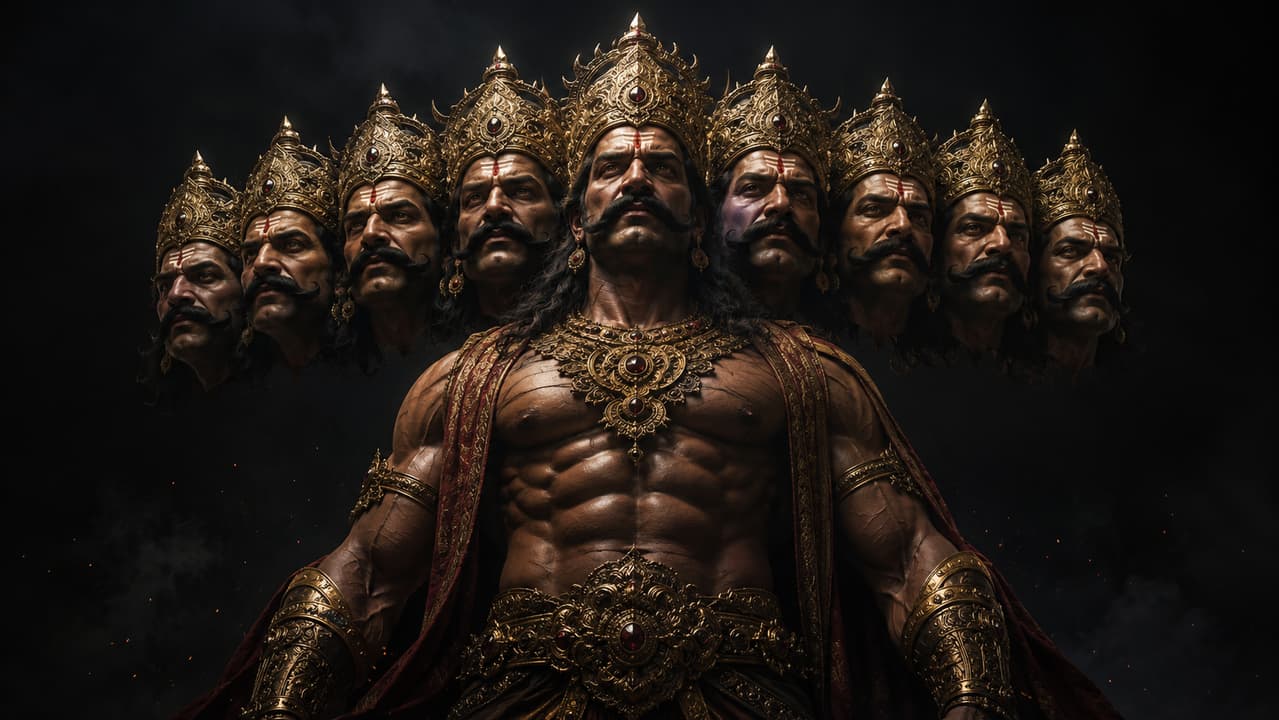
Knowledge alone cannot transform life; it can become another object of the ego. True knowledge is self-knowledge—a mirror that exposes and destroys false ideas about oneself. Ravana may have been knowledgeable, but without self-knowledge, knowledge can become a tool for exploitation. Wisdom is not something to acquire; it is innate. Self-knowledge is the process of unbecoming unwise by clearing away the nonsense we have gathered.
वेदांत को केवल इसलिए सही या श्रेष्ठ नहीं माना जा सकता कि वह किसी विशेष परंपरा से आता है। विज्ञान जहाँ भौतिक जगत की वस्तुनिष्ठ जाँच करता है, वहीं अद्वैत वेदांत सीधे मनुष्य के ‘मैं’, उसके दुख, बंधन और मुक्ति की पड़ताल करता है। इसकी कसौटी वैज्ञानिक प्रमाण नहीं, बल्कि अपने जीवन में इसकी सच्चाई को देख पाना है। किसी दर्शन को मान लेना नहीं, बल्कि उससे स्वयं को मुक्त करना ही उसका वास्तविक उद्देश्य है।