Brother, I have seen some astonishing sights.
A lion keeping watch over pasturing cows;
a mother delivered after her son was;
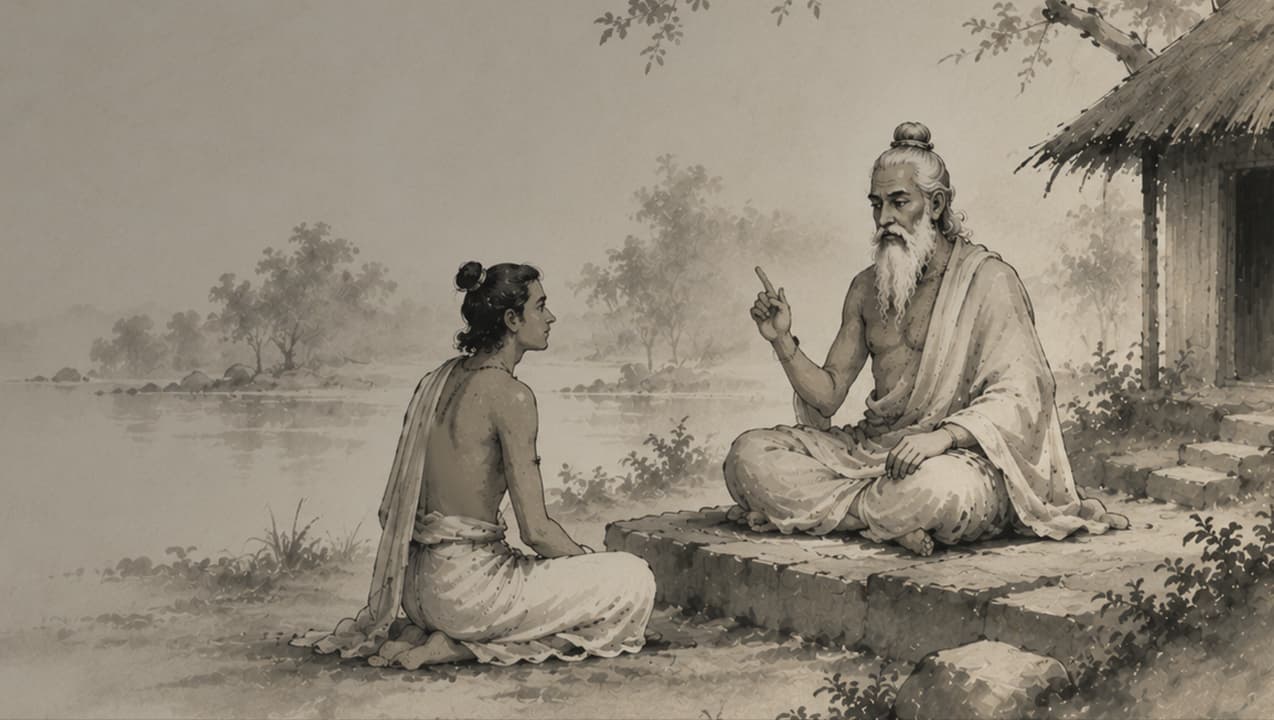
a guru prostrated before his disciple;
fish spawning on treetops;
a rooster is eating a cat;
a gunny sack driving a bullock cart;
a cat carrying away a dog;…
Science can examine material claims, but Advaita Vedanta deals with the subjective self, ego, suffering, bondage, and liberation—areas outside science’s objective framework. Vedanta need not be accepted because of one’s religion or tradition; its value lies in whether its insights can be personally verified and help free one from suffering. The ultimate responsibility is not toward any philosophy, but toward oneself: to live a truly free life.
Superhero films appeal to our desire to escape inner inadequacy through external power. The fantasy of an ordinary, fearful person becoming extraordinary reinforces the ego’s belief that more strength, money, possessions, or status will bring happiness. Consumerism follows the same pattern, endlessly adding objects to fill an inner void. Real freedom does not come from becoming more powerful or acquiring more, but from honestly seeing and understanding the ego that feels incomplete.
The balance between order and disorder should not be decided by personal likes or dislikes, but by what the task at hand requires. Sometimes a project demands discipline and order; at other times, more important work requires leaving things messy. The right action comes from responding to the actual need, not personal preference. Even sacrifice can be meaningful when it serves something important, but “staying backstage” should never become an excuse to avoid what one cannot tolerate.
Innovation is born from research, creativity, critical thinking, scientific temper, and original thinking—not imitation or appearances. A society that values honest inquiry over validation creates genuine progress. India's future depends on nurturing a culture that encourages questioning, respects originality, and pursues truth with intellectual honesty instead of settling for superficial success and empty displays.
Vedanta reveals that freedom is impossible as long as the ego seeks to preserve itself. Meditation may bring temporary calm, but real transformation begins only when the false sense of individuality dissolves. Whether through devotion or knowledge, every genuine spiritual path culminates in the complete dissolution of the seeker into Truth. Liberation is not the experience of Truth by an individual—it is the end of the individual who wants to experience Truth.
Society has a role in practical matters, but it should never decide love, marriage, happiness, or the purpose of life. Real freedom begins when personal choices are guided by understanding instead of social pressure. While social norms help maintain order, they become harmful when they dictate relationships, career, or inner values. True happiness and love arise from freedom, not conformity, making every love story meaningful only when it is authentically one's own.
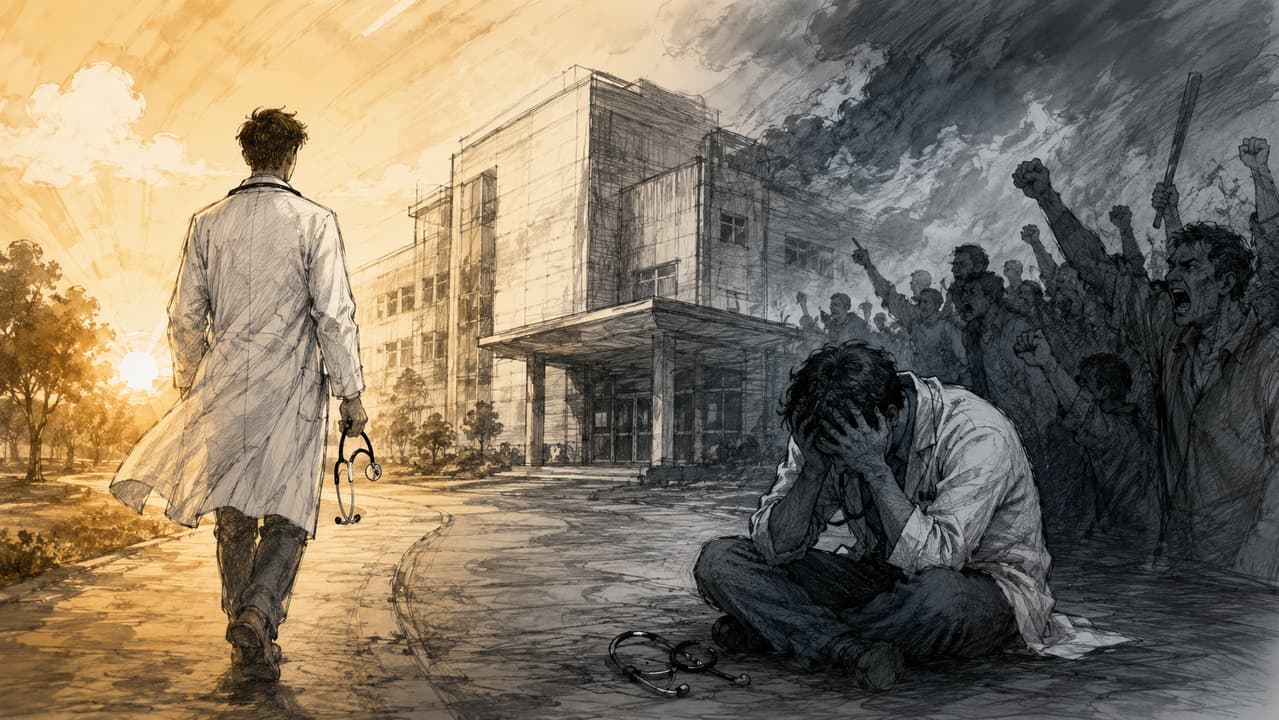
A society that loses its sense of sacredness begins to see every person and profession as merely transactional. When truth is replaced by the pursuit of happiness and consumption, trust erodes and cynicism becomes the norm. Doctors, teachers, and institutions are no longer respected but viewed with suspicion. The deeper crisis is not medical or social but philosophical: without self-understanding, people become consumers first and human beings second. True respect can return only when truth, integrity, and inner education become more important than personal gain.
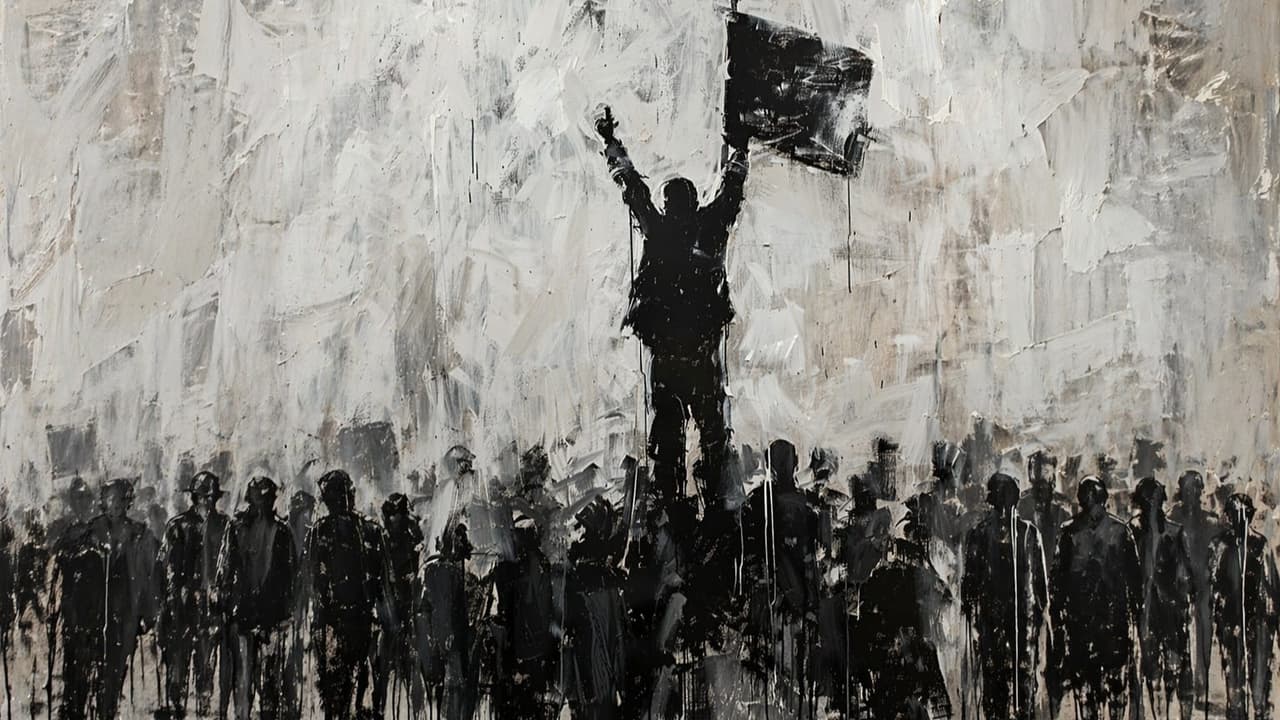
You look at Iran, at revolutions, and ask: can systems really bring freedom? Revolutions keep replacing one system with another, yet the chaos remains. The real question is rarely asked: what within us creates these systems? Real freedom is not political or social; it is inward. Without inner change, every revolution only rotates power, never resolves suffering.
Global conflicts stem not from geopolitical interests but from the ego's fundamental incompleteness. Nations are merely expressions of collective egoic consciousness. Leaders represent humanity's worst tendencies, not its average. The ego requires duality and boundaries to survive. True disarmament means detoxifying the ego itself. External wars reflect internal disturbance. No diplomatic solution addresses the root cause, only wisdom and self-knowledge can dissolve the ego's need for conflict and separation.
Why am I so attracted to the personality and mannerisms of all my teachers, often curious about their lives than the truth of their teachings? When I read Jiddu Krishnamurti(JK), am I conditioned by him? Is JK’s method really ‘via negativa’ all the time?
Clarity is not a state. Clarity is like clean air, air free of pollutants. It is not something you arrive at. It is not a finality. There is a lot that you believe in, and you must keep testing it and rejecting it. You can never say, “I have achieved clarity.” It is a lifelong process, because pollutants keep entering the air continuously. So you have to keep clearing the air continuously. That is the process.
There can be no self-respect without self-knowledge. And we have been repeatedly saying that the ego survives only in lack of self-knowledge. The less you know yourself, the denser and more crystallized your ego is. Self-respect is nothing but self-awareness. The more you know yourself, the more you realize who you are not, and that brings you to who you are. That is real self-respect, knowing oneself.
How do you, ask the chief of police, patrol a city,
where the butcher shops are guarded by vultures,
where bulls get pregnant, cows are barren,
and calves give milk three times a day,
where mice are the boatmen, and tomcats row the boats,
where frogs keep snakes as watchdogs,…
Questioner: My question is, why is creativity, like poetry, dying these days? And poetry is a part of literature. And how much contribution of literature is there on the way to Adhyatma?
Acharya Prashant: See, the more you will lose touch with yourself, the more material your world will get.…
Questioner: Pranam Acharya ji. I am Ritu Tiwari. I am an alumnus of this college. My question is related to defamation of mental health problems. I’ll give you three examples – first comes from a recent murder case that happened in the capital of our country where a man named…
Are you looking for me?
Look a little closely!
Am I in the Stupa, am I in the Shrine?
You really want me, or just images of mine?
… a little closely!
The crowds in the Ashram are all misled,
What you call as Yoga is such a dread,…
Excerpts from Articles
Stuck Between Job Security and Your Real Passion?
Struggling to choose between a secure job and the path you actually feel drawn to? This isn't really a question about careers. It's about why other people's opinions have so much power over you in the first place. Real clarity doesn't come from finding the 'right' choice. It comes from honestly looking at your own fear, again and again, until it stops running the decision for you.
Animal cruelty: Who deserves mercy, and who doesn’t?
Violence begins long before the knife or the slaughterhouse—it begins with the ego, the one that draws boundaries, seeks justification, and decides who deserves compassion. Laws and reforms may reduce suffering, but they cannot end violence while the ego remains intact. When the ego dissolves, exploitation ends naturally, and compassion no longer depends on regulation or moral boundaries.
ज्योतिष कितना सच है? कुंडली, ग्रह-नक्षत्र: इनका क्या अर्थ है?
वेदांत को केवल इसलिए सही या श्रेष्ठ नहीं माना जा सकता कि वह किसी विशेष परंपरा से आता है। विज्ञान जहाँ भौतिक जगत की वस्तुनिष्ठ जाँच करता है, वहीं अद्वैत वेदांत सीधे मनुष्य के ‘मैं’, उसके दुख, बंधन और मुक्ति की पड़ताल करता है। इसकी कसौटी वैज्ञानिक प्रमाण नहीं, बल्कि अपने जीवन में इसकी सच्चाई को देख पाना है। किसी दर्शन को मान लेना नहीं, बल्कि उससे स्वयं को मुक्त करना ही उसका वास्तविक उद्देश्य है।
Victory is not decided by the trophy you hold but by the battle you choose to fight. Real strength lies in making the right decisions, staying true to your deepest values, and refusing to be ruled by fear or circumstances. When your actions arise from clarity rather than ambition, the outcome loses its power over you. The moment you choose the right path, you have already won.
कई तरह के डर—अकेले पड़ने, छवि खोने या छोटा समझे जाने—की जड़ अक्सर अतीत में बनी पहचान और कहानियों में होती है। शरीर की हाइट जैसी चीज़ों को समस्या मानकर उनसे जूझने के बजाय उनकी अप्रासंगिकता को समझकर आगे बढ़ना चाहिए। अतीत को दबाने से मुक्ति नहीं मिलती; उसके करीब जाकर अपनी स्मृतियों, धारणाओं और पुराने पैटर्न को निष्पक्षता से देखना ज़रूरी है।
Climate change is more than an environmental crisis—it is a crisis of human choices. Our patterns of consumption, consumerism and endless pursuit of more are putting increasing pressure on the planet. But meaningful change does not necessarily begin with new technology or stricter policies. It begins with a deeper question: what are we willing to change within ourselves?
You Don't Understand the Bhagvad Gita, But You Still Claim That You Love Krishna?
The Bhagavad Gita deserves reverence not because of inherited beliefs about its author, but because of its power to dissolve falsehood and reveal Truth. Real devotion is not ritual or blind faith—it is understanding, inquiry, and living the wisdom of the Gita. Through sincere study, one discovers the true meaning of Krishna, making the Gita the most authentic path to knowing and worshipping Him.
I will miss you so much,
Pardon me, I will have to die.
We played together for long,
Now I’m going home to the Sky.
I will miss you so much,
I’m going to where I belong.
It breaks my heart to leave you,
I tried hard…
Climate change is more than an environmental crisis—it is a crisis of human choices. Our patterns of consumption, consumerism and endless pursuit of more are putting increasing pressure on the planet. But meaningful change does not necessarily begin with new technology or stricter policies. It begins with a deeper question: what are we willing to change within ourselves?
We often believe we are living freely, while our desires, dreams, beliefs, and choices are shaped by physical, social, cultural, religious, and psychological scripts. These scripts offer comfort and security, making us reluctant to examine our bondage. Freedom does not begin by imagining what lies beyond the script, but by deeply observing the cage we already live in, without fear, desire, or attachment.
1
True learning is not built on memorizing answers but on understanding reality. Memory may help in examinations, but life constantly presents new questions that demand clarity, presence, and intelligence. Education becomes meaningful only when knowledge is deeply understood and lived, not merely remembered. Real understanding frees us from dependence on rote learning and enables us to respond wisely to every new situation.
2
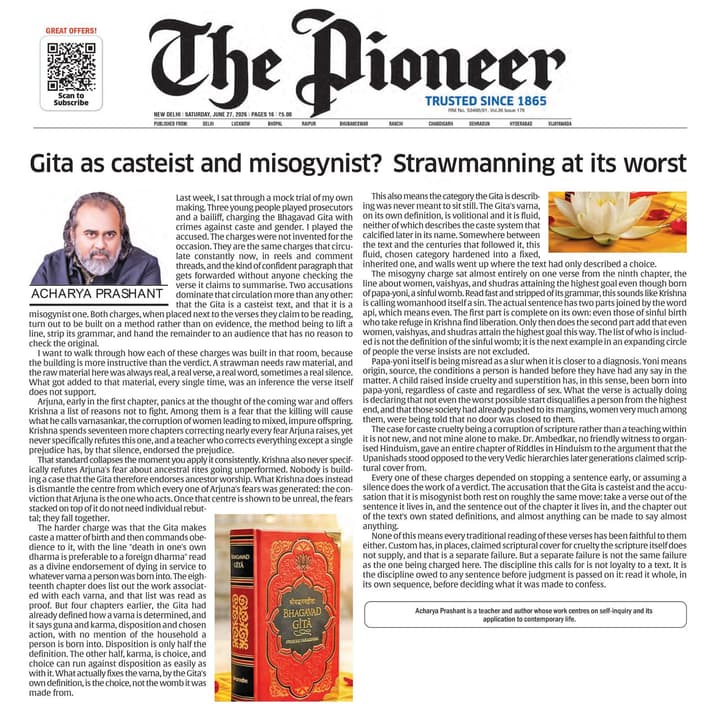
The Bhagavad Gita is often accused of supporting caste and misogyny through selective quotations that ignore context, grammar, and the text's central teachings. A closer reading shows that its emphasis is on inner qualities, conscious action, and spiritual equality rather than birth-based hierarchy or gender discrimination. Misinterpretations arise when isolated verses are detached from their broader meaning, while the Gita consistently points toward self-knowledge, freedom from ego, and the universal possibility of liberation for every human being.
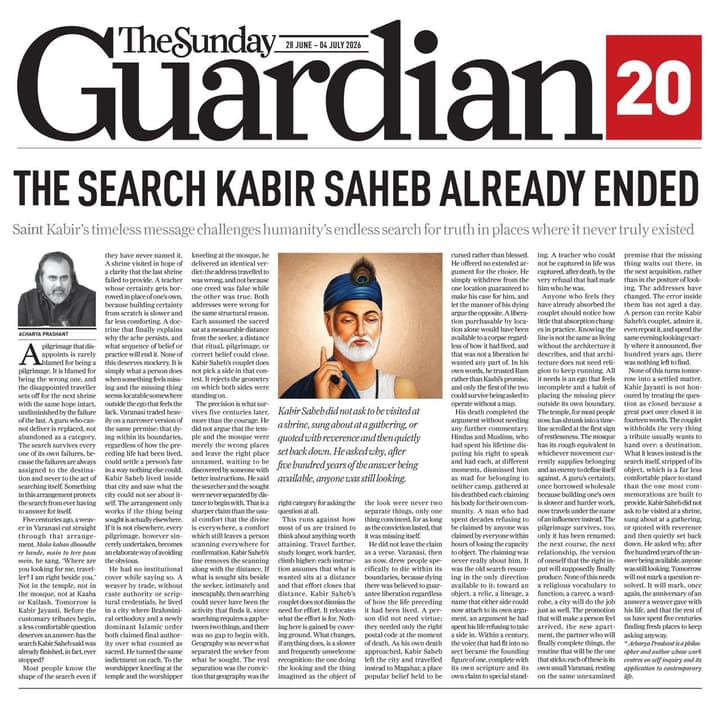
Kabir Saheb's message questions the very act of searching for fulfilment outside oneself. Whether through religion, relationships, success, possessions, or identity, people keep assuming that what is missing lies somewhere else. The problem is not the destination but the belief that fulfilment exists at a distance. Real freedom begins when the search turns inward, recognising that the seeker and the sought were never truly separate.
Science and philosophy arise from different kinds of inquiry. Matter seeks continuity of state, while the ego seeks continuity of existence and constantly changes identities to preserve itself. Fear, danger, and suffering are rooted in the ego’s sense of “I,” not in material reality itself. Questions are valuable because they expose hidden beliefs, and genuine learning requires challenging assumptions through inquiry, dialogue, and self-examination.
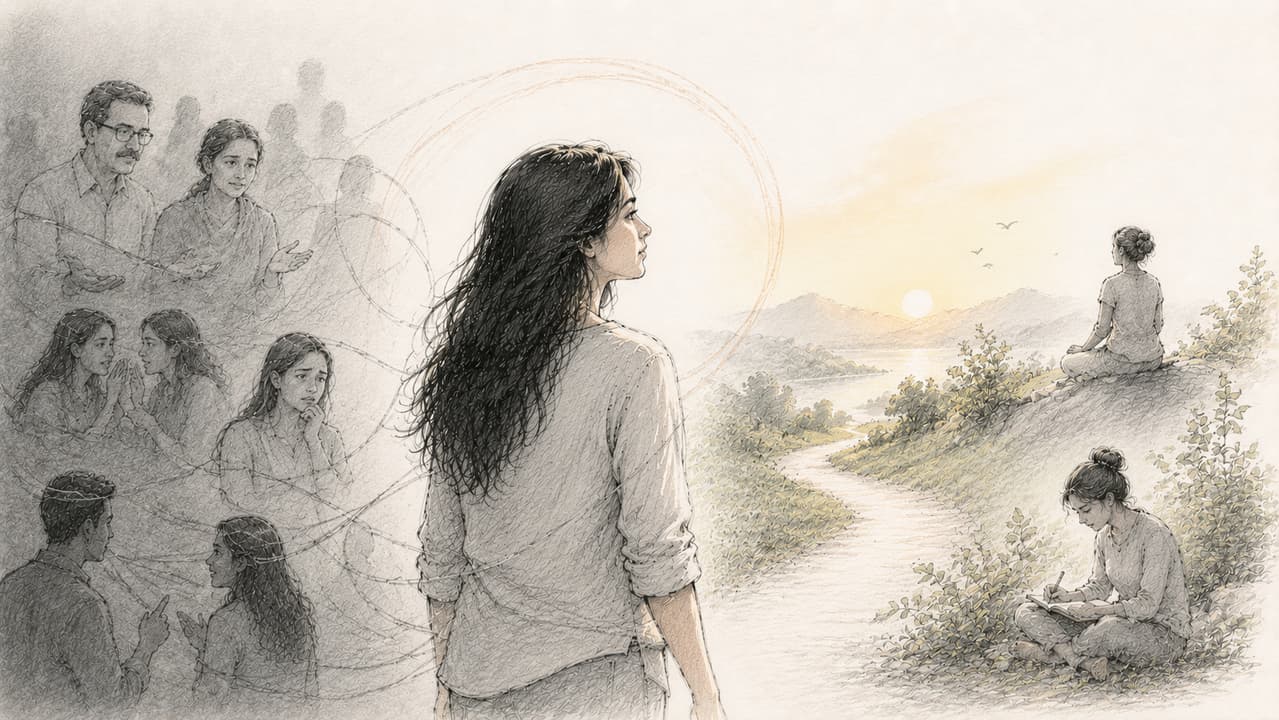
Freedom begins when a person stops handing over the authority of life to others. Society, family, and tradition can offer opinions, rewards, or disapproval, but they cannot truly stop someone unless there is inner dependence on their approval. Many conflicts that appear external are rooted in psychological dependence, fear, greed, obligation, or the desire for validation. Clarity does not come from controlling every outcome; it comes from ensuring that decisions are not driven by inner confusion, and then allowing life to unfold naturally.
4
Inner freedom becomes impossible when identity is borrowed from family, friends, or social expectations. Fear, guilt, and pressure arise because people allow others to define their worth and choices. Relationships become healthy only when they support growth rather than control it. Real autonomy comes from self-understanding, continuous inner inquiry, and the courage to act from clarity rather than conformity. When there is inner certainty, labels, criticism, and social judgment lose their power.
3
The debate around nudity and movements like “Free the Nipple” miss a deeper issue: true freedom is not about clothing, but freedom from psychological conditioning and body-based identity. Clothes themselves neither oppress nor liberate. A truly free society is one where the body becomes ordinary and irrelevant, not a source of obsession, shame, validation, or social control.
You are not truly young, you carry centuries of inherited beliefs, prejudices, and conditioning. Youth is the ability to change and create the new, not follow fixed patterns. Before asking what to do next, question and free yourself from the past. Only by breaking from inherited constraints can genuine freshness emerge.
2
Question: A gentleman was saying that a person, who is drinking or is drunk, he still has got some kind of stability on mind, and he too, can judge. That is what I felt to be perhaps wrong. A person who is drunk probably loses his judgement and whatever we…
…
Acharya Prashant (AP):
The question is, "Why do we forget? Why forgetting is a property of the mind?"
Do not ask, "Why do we forget?" Just remember that we forget. Because when you forget then you don’t ask this question that, "Why do we…
If you are honest, you will find that significant chunks of your time are being taken up by activities you do not even want to admit to yourself. The thing is, we ought to be objective; we ought to know where it is really going. And you might discover that nobody is actually all that short of time. Time is there; it’s just that when it is spent on activities that please us, we try to hide that time because it’s our little joyful secret.
Who is a practical man? One who understands before acting. To be practical means to understand and put it into practice. If my work, my action, and my practice is arising out of clarity, then I'm practical. Clarity is not some state, clarity is not some picture and clarity is not ideal. Clarity is not something to be achieved. Clarity is your inherent ability - your very nature to understand, to know, that is called clarity.
The only principle that truly runs this world, created by all of us, is the principle of greed and power. What do you think that fellow has earned his billions for? He didn't become a politician to be noble. The only thing that separates us from animals is the intellect, not the center the intellect is operated from. Don't locate the problem and the responsibility somewhere out there. We change ourselves; the world changes.
There is nothing called woman’s liberation in isolation. Woman is oppressed and the man too is oppressed, albeit in a different way. Woman’s liberation is man’s liberation. Together they suffer, and together they will celebrate. Their attempts to have freedom only for themselves are their bondage. She is love, he is awareness. There is no love without awareness. Let both know, let both be with each other. In that alone lies liberation for both.
Often, in the name of financial pressure, what we are really kneeling down to is something else. But because that something else is not nice enough to be named, what we quote is financial pressure. Nothing is ever forced in a tangible way. The way is kept gentle in appearance. But there is something else at work inwardly. What is that thing? That is what you have to uncover. You have to be honest towards yourself, very honest.
Truth is not about lofty words and scholarly theories. Truth is, first of all, a deep desire to help. If they see that you want to help, they will listen. Then they will listen even if they are not able to make perfect sense of your words. To your words, people listen later. The first thing that they listen to is your empathy. They want to see whether your face and your eyes carry their pains. If your eyes contain not a bit of the pain that they live in, they will not be able to listen to you.
9
When I say, “I want the right action,” surely I have an image in mind. That image is coming from the past. But the right action, by definition, is one that cannot come from the past. Please remember that whenever something really right happens in life, it does not happen as a result of one’s decision. The really good, the right action, happens on its own, provided you do not become the decision-maker and the actor.
Shri Krishna is saying: the mind is conditioned to move towards objects and perceive only their surface, periphery, or form. Develop the practice of penetrating further. Let Truth be your practice. The moment you would look at something, and you are in no position not to look at things being embodied, you would look at things. Nobody said that you have to practice lust. Lust just comes. You might be a total fool, an utter retard, and still you will find yourself getting sexually excited once you reach a particular age. Did you need some practice? No, you didn’t. It just happened. But if you are to understand lust, if you are to cross over, if you are to be a master of your body, then it will require a lot of practice, and that will necessarily and obviously tell you about your predicament.
We have a great interest in claiming that there is something special about us. But there is nothing special. We too are just machines made of material, just a system. And this system, in the course of evolution, has now given birth to another system, which you call artificial intelligence. But calling it artificial is just vanity. We too are equally artificial. This “I” feeling that we carry is just a product of our physical constitution.
There is no issue at all in being with one person or even five persons. That’s fine. The problem is the desperate center the need arises from. And when that center, that desperate, that unexamined center, is at the root of the relationship, the relationship will never be auspicious. Never. Let your relationships come in a natural way. You are all right with yourself. It just so happens you come across somebody worth being with, and then there is a natural companionship
Oh, we are so selfless towards our kids, come on, and then we expect compliance and returns and obedience, basically ROI. It becomes very difficult to explain to the other that, no, you cannot act selflessly, not because of you, but because you are Homo sapiens. Our species is not designed to act selflessly. Therefore, trying to practice Nishkam Karma (selfless action) without knowing what the “Self” is, is actually self-deception, not selflessness.
You are given an image to pursue, and that image is a distant one, far off in the future. A villa of your own, two nice cars, two cute kids, a light-skinned wife, such things. That's the worst concept you can subscribe to in life: settling down. What does that mean? Not changing anymore, not improving further, not having the guts or the stamina to be disruptive anymore. We are very loveless people. All we care for is security, and that's why there is so little creativity and innovation here.
Creativity is, first of all, to realize that we are uncreative people. We are puppets with strings in the past or in the hands of others. You know noodles, your mother knows noodles, even your grandmother may know noodles. So noodles are very well known. But all the other things will require a question mark; otherwise, you cannot know. So creativity begins with that question mark. Creativity begins with stepping outside your known zone.
If you are offering something to somebody without expecting much in return, then you'll never be afraid. Fear comes only from greed and desire. If your aim is to bring the Truth to the other without expecting anything or without expecting much, then you will never be afraid. Never.
Duality is Truth wanting to know itself. If there is no duality, what will the Truth do? Alone, absolutely alone. He too needs a partner. So, it divides itself into two. All our sufferings, all imperfections are important. There is no reason to feel small about it. Without you, how will the Source know what it is to fail, what it is to suffer? Indulge yourself fully, but remember what all this really is. Don’t forget that.
What surrounds you is 99.99% trash. And if, by glorious chance, there is 0.01% greatness, brilliance, selfless compassion, you will never accept it because you are used to the usual 99.99%. You will think even this one is of the same type. You need to be very careful about this because it’s a double trap. One, you are surrounded by idiots. Two, when you meet the one exception, you are so conditioned to idiots that you take even the exception as an idiot.
Every living being, from humans to the smallest species, is trying to change the world to suit its own needs. But this is not intended to do any good to the world, it is just coming from the little ego. And the ego will not say, “I'm not all right;” it will try to change the world. So, if your idea of ‘good’ is only relative to your personal self, is it right to impose it on others? You must be clear about why you aspire to change the world, and whether you have brought about any change in yourself first.
The authentic one can never be harmed because he lives freely and without dependence. If someone can inflate you with their words, they can also deflate you. By accepting your identity from someone else, you have needlessly made yourself a beggar. The authentic person does not want anything from any external being. He can have a relationship, but he’ll always be ready to leave. And that does not mean the relationship cannot have love. Love and desire are different things; desire means: I want to exploit; love is about giving without expectation.
If I’m working in a machine that helps accumulate money for one person or a group of persons, and then that money is used for the ugliest kind of consumption, for example, one that worsens the climate spectre, then there is a problem. The question is: where is the heart placed? If the heart of the system is at the right place, then at the micro level you can do your best in it. Minor flaws will remain even in the best system that you construct on your own.
Drop the center of confusion, come to the center of clarity. Drop what the masses practice, come to the direct route of self-realization. That’s what it means.