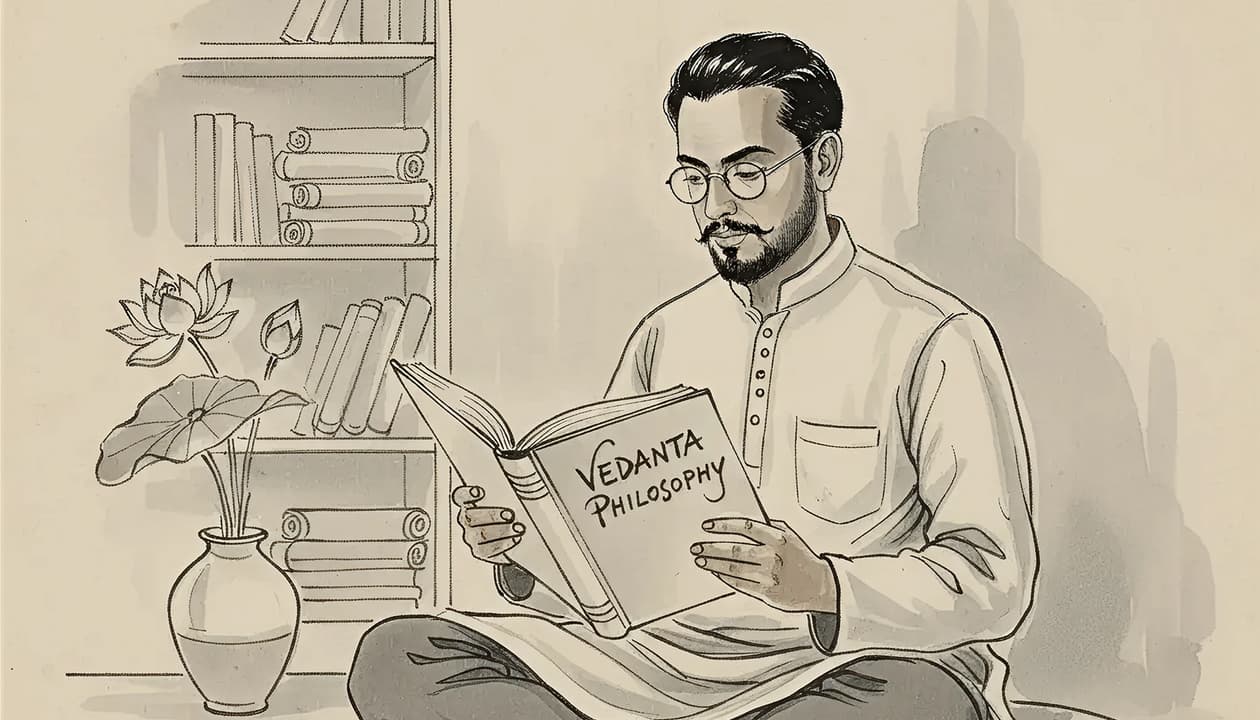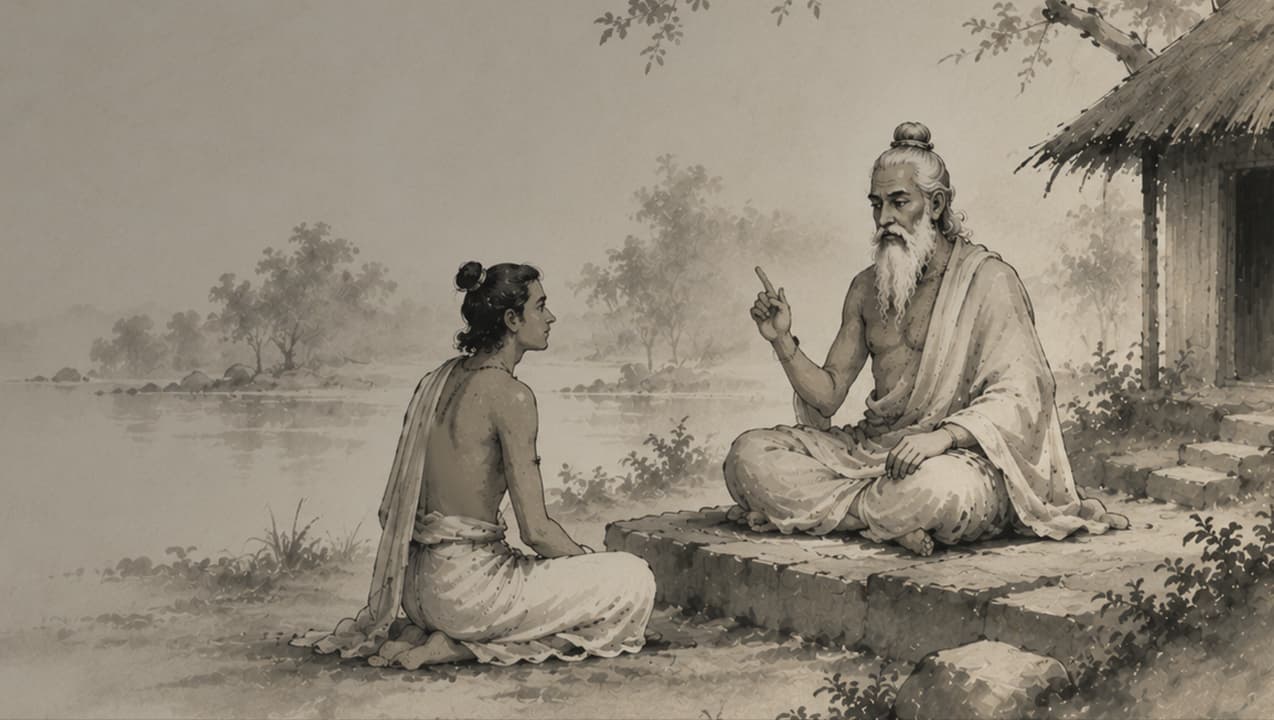
Science can examine material claims, but Advaita Vedanta deals with the subjective self, ego, suffering, bondage, and liberation—areas outside science’s objective framework. Vedanta need not be accepted because of one’s religion or tradition; its value lies in whether its insights can be personally verified and help free one from suffering. The ultimate responsibility is not toward any philosophy, but toward oneself: to live a truly free life.
When words arise from an honest observation of life, then those words are called "divine."


Acharya Prashant (AP): Two favorite tendencies of the ego are being called out, discounted, exposed as false. What are those two tendencies or inclinations?
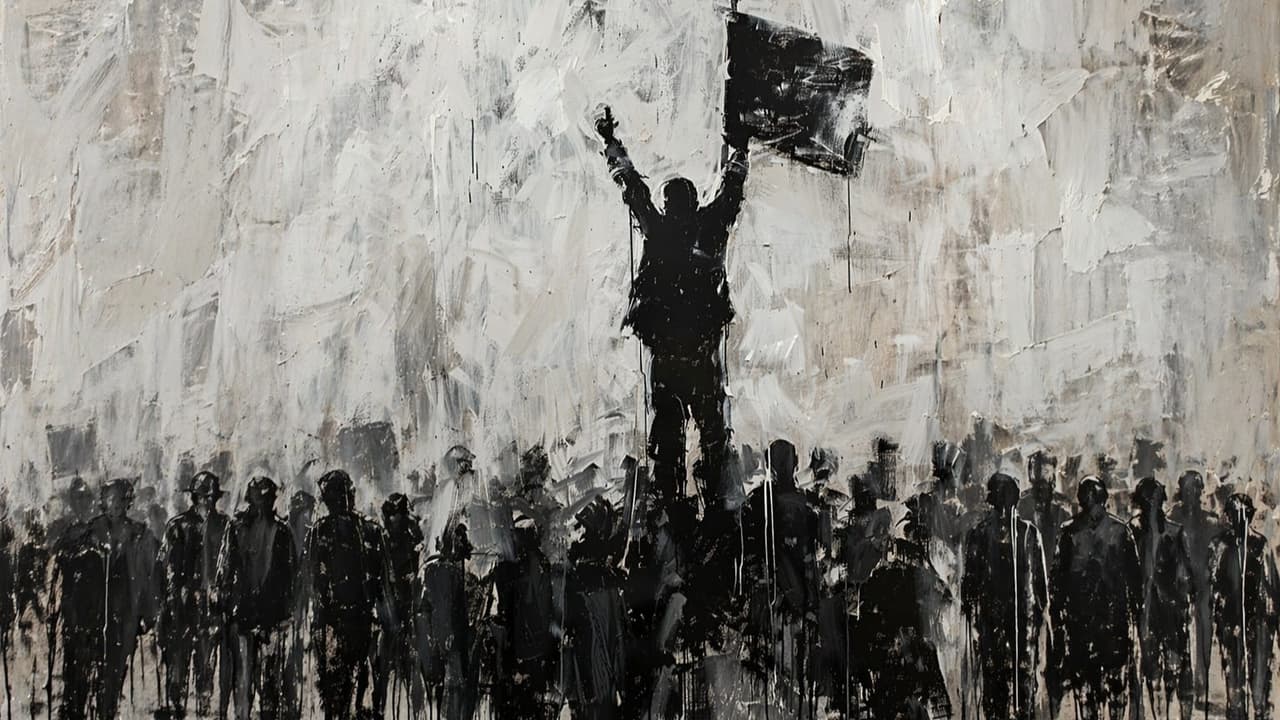
You look at Iran, at revolutions, and ask: can systems really bring freedom? Revolutions keep replacing one system with another, yet the chaos remains. The real question is rarely asked: what within us creates these systems? Real freedom is not political or social; it is inward. Without inner change, every revolution only rotates power, never resolves suffering.
The one who is religion-less. A real Hindu does not have any religion. To go beyond all religions is to be a Hindu. There are religions that are on one plane, and then there is Sanatan Dharma, which is another dimension — the eternal religiousness. Liberation from religion is religiousness. Sanatan Dharma is awakened intelligence.

The mind of a sage is continuously sensing a reality beyond appearances, a reality beyond limits. There is a constant realization that all the diversities share commonalities and there is something beyond the diversities that contain all the diversities. This feeling is being given a poetic manifestation in this particular verse. What matters here is the sense that there is something definitely beyond; that which is perceivable, all that which can be experienced between the Earth and the sky is of little importance compared to that.
Unmoving, the One, than the mind is swifter.
The senses fell back as ahead It speeded.
Though standing, It passes all others running.
The air by Its presence supports the waters.
It moves and yet It does not move. It is far and also near.
It is found within all…
Different indeed, they say, is the result of vidya and different indeed, they say, is the result of avidya. Thus have we heard from the wise who had explained it to us. He who knows both vidya and avidya together, transcends mortality through avidya and reaches immortality through vidya.
~…
The first one is ‘sambhūti’ – and remember that while the ego is being addressed, the aim is the Immeasurable as we said – so the…
यस्मिन्सर्वाणि भूतान्यात्मैवाभूद्विजानतः। तत्र को मोहः कः शोक एकत्वमनुपश्यतः ॥ ७ ॥
yasminsarvāṇi bhūtānyātmaivābhūdvijānataḥ | tatra ko mohaḥ kaḥ śoka ekatvamanupaśyataḥ || 7 ||
When to the man of realization all beings become the very Self, then what delusion and what sorrow can there be for that seer of oneness? (Or--…
अन्धं तमः प्रविशन्ति येऽविद्यामुपासते । ततो भूय इव ते तमो य उ विद्यायां रताः ॥
andhaṁ tamaḥ praviśanti ye'vidyāmupāsate tato bhūya iva te tamo ya u vidyāyāṁ ratāḥ
Those who worship avidyā enter blind darkness. Those who delight in vidyā enter darkness as it were, yet deeper.
~ Ishavasya Upanishad,…
Victory is not decided by the trophy you hold but by the battle you choose to fight. Real strength lies in making the right decisions, staying true to your deepest values, and refusing to be ruled by fear or circumstances. When your actions arise from clarity rather than ambition, the outcome loses its power over you. The moment you choose the right path, you have already won.
Human beings are born into uncertainty, surrounded by beliefs, identities, and social conditioning that offer ready-made answers to fundamental questions. Real spirituality begins not with accepting collective or personal beliefs, but with honestly examining one’s own suffering, fears, and false identities. The journey is not toward comforting ideas, but toward self-inquiry, where truth is discovered through questioning, observation, and the gradual rejection of illusion.
The debate around nudity and movements like “Free the Nipple” miss a deeper issue: true freedom is not about clothing, but freedom from psychological conditioning and body-based identity. Clothes themselves neither oppress nor liberate. A truly free society is one where the body becomes ordinary and irrelevant, not a source of obsession, shame, validation, or social control.
Listener: (Reading a quote of Acharya Prashant from a quote-calendar)
What lies beyond mind?More mind.What is more mind?What and lies and mind.Questions, perceptions on the concept of the mind.
Acharya Prashant: Any question about beyondness would be a useless question because the question itself is coming…
Often, in the name of financial pressure, what we are really kneeling down to is something else. But because that something else is not nice enough to be named, what we quote is financial pressure. Nothing is ever forced in a tangible way. The way is kept gentle in appearance. But there is something else at work inwardly. What is that thing? That is what you have to uncover. You have to be honest towards yourself, very honest.
If you are religious, then shouldn’t you be truly religious? Religion is about a total commitment to the Truth. You’ll have to recognize that the objective of religion is not to attain heaven, not to please a holy figure, but to come to your own inner Truth. All good books exist to awaken your consciousness. When it comes to you and the Truth, do you want somebody in between? And wherever you spot fakeness, falseness, hollowness or ignorance, drop it.

There is a search within the human being, always for the greatest, the absolute, and that is what differentiates humans from animals. India was fertile, and there was abundance. You had ample leisure, and in that leisure there was space for intellectual inquiry. The sages and the seers would talk to each other purposelessly. And from that purposeless discussion, from silent observation of life for hours, days, months, and years, came those insights that you today recognize as Indian philosophy.

This has always been a hugely profit-making sector of all economies, just that it has always been a small sector controlled by the priestly class. Now the attempt is to make this sector really big and on an organized scale, because the profits are very tempting, and there is no quality control. There can be no external auditor. All kinds of objections, audits, and scrutinies are ruled out. Getting it? So it’s a very tempting sector.

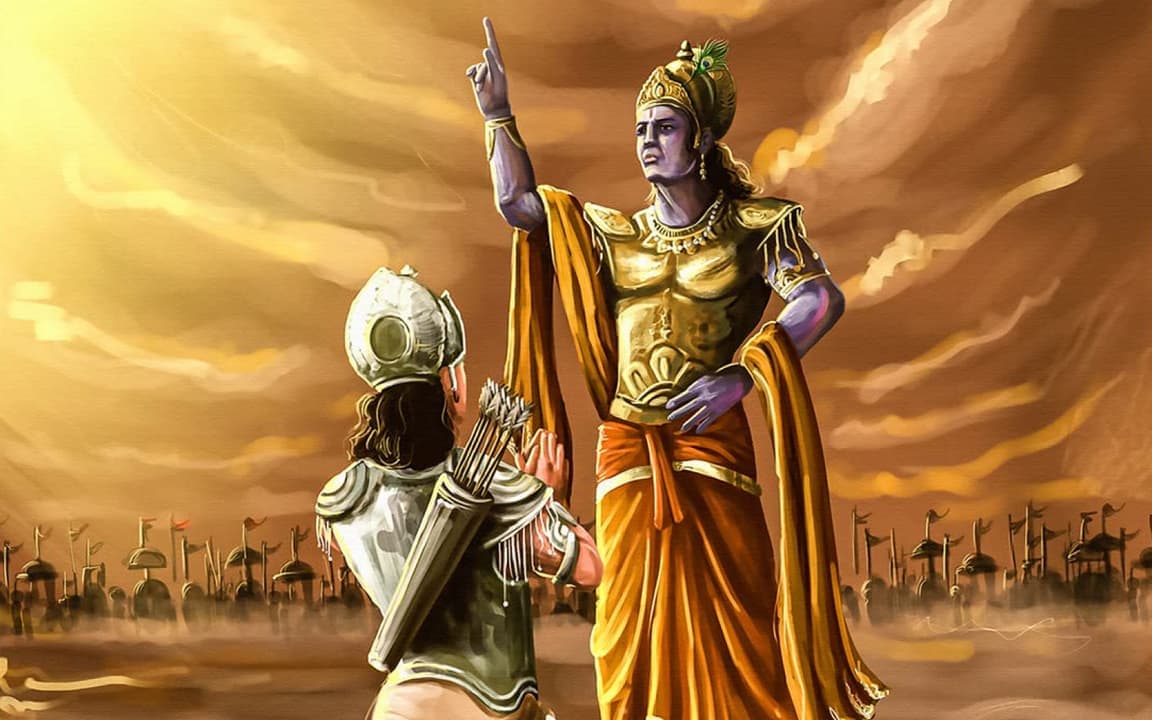
Shri Krishna is saying: the mind is conditioned to move towards objects and perceive only their surface, periphery, or form. Develop the practice of penetrating further. Let Truth be your practice. The moment you would look at something, and you are in no position not to look at things being embodied, you would look at things. Nobody said that you have to practice lust. Lust just comes. You might be a total fool, an utter retard, and still you will find yourself getting sexually excited once you reach a particular age. Did you need some practice? No, you didn’t. It just happened. But if you are to understand lust, if you are to cross over, if you are to be a master of your body, then it will require a lot of practice, and that will necessarily and obviously tell you about your predicament.

You really think the world is being run by an authority outside of yourself? No. We are the ones running this world, and we have made a mess of it. But we don’t want to own the responsibility, so we bring somebody else in between. And that somebody else, poor God, cannot even come and argue for Himself, defend Himself, and claim innocence and say, “No, no, no, no. I have not brought the world to such a pathetic position. You have done it.”

Beliefs can’t talk to each other. You will say, ‘The world was created on a Sunday.’ He’ll say, ‘No, on a Monday.’ He’ll say, ‘Tuesday.’ He’ll say, ‘Wednesday.’ Now talk, how will you reconcile this? You can only fight. Why do you need to believe? You look at the question, "What should I believe in?” Well, nothing.

The tiger chases the buffalo calf and brings it down. Does that disappoint you? No, because that was expected. Similarly, expect animal behavior all the time from everyone around you, including yourself. Everything we do comes from the jungle, so don’t be disappointed. Disappointment always arises from expectations. You really have to strive to be someone who is not an animal. And the first step in that striving is to address your own inner animal.

Manifestation is simply an expression of your desire. You desire something, and then you imagine your desire has been fulfilled. What does the common man desire? ‘Give me more money.’ What will the politician desire? ‘Finish off democracy and give me power for life.’ We have very stinking desires. Do we ever desire anything that is really good for everybody? The question remains: Was that thing worth it? You gave it so much time, so much respect, did it deserve that?

The other must exist in your life, and vice versa, only for the sake of internal elevation, to make you into a better person. Don't you see the impact the other one is having on your life? Seeing is the key. What does seeing mean? Seeing implies understanding. See and ask yourself: What is the impact upon me? And if you see that, you'll just push it aside. It will be spontaneous. You won't even require to think, because now you have seen.

Karma is a reflection of who you are. You are the doer. Karma means action. You are the actor. The principle of karma is: do not focus on karma; focus on karta, the doer, the actor. That is karma, that’s all. There is nothing mystical about it.

Can you go to the past and choose something or unchoose something? And life is happening right now. So your power to respond to life is right now. But the moment you say it is happening due to the past, then you have surrendered your power to choose, because you cannot do anything with the past. You cannot change the past. You can’t choose the past. You can’t unchoose the past. You can’t modify it. You can do nothing.

Opinions are opinions. There is nothing called ‘my opinion.’ All opinions are alien, foreign to you. They are always others. Even if they happen to be present in your mind, they are still others. It is just that you are so brain-identified that when an opinion is present in your brain, you start thinking that it is your opinion. And from where did that opinion come to your brain? It came either from biology or from society. How is the opinion yours then?

Religion is the way that brings the lost mind back to its center, its home. That is religion.

Acharya Prashant: That's why the rājasika mind is better than the tāmsika mind. The rājasika says, “I’m not alright. I need to do something to become better. I feel inferior. I feel incomplete. I need to rise. I need to achieve.” That’s the rājasika mind. The rājasika mind at least…

Overview
Fighting Duryodhana is Dharma. Fight Duryodhana in the way you can, that is swadharma. Dharma is the same for everybody, but swadharma varies according to your physical, social, temporal conditions.
But remember that swadharma can never be in contradiction of Dharma; swadharma will always be something…

Do not consume that which will poison you, even if it appears attractive. Now that is spirituality.

A lot of negative attitudes towards women today are claimed to be sanctioned by religion. The reason is that religion has been a victim of contamination. And this contaminated, mainstream, and false religion becomes a tool to exploit women. On the other hand, real religion is a woman's best friend because its effects are emancipation and empowerment. Therefore, when real religion shows up, it will deeply frustrate the traditional kind of religionists.

The human mind suffers because it does not understand what’s going on within itself. The mind longs for understanding and liberation from bondage. And the responsibility is on the human being to gain that understanding and that freedom from bondages. This responsibility is called Sanatan Dharma — founded on self-inquiry, ‘Atma-Jigyasa.’ It is a philosophy of the mind that gives a purpose to life.

Human beings are in a peculiar situation. They can choose to side with their animalistic conditioning or they can choose something higher. They can choose freedom, joy, love, liberation, compassion. Therefore, humans have a responsibility. Animals don't have that responsibility.

In our entire life, in this entire world, whenever we have remembered something or somebody, we have remembered that thing, that person, for our own personal reasons. I do not remember you. I remember what I get from you. You are not important. What is important is what I seek to have from you. This is not only loveless but also quite exploitative. It is equally truthless and foolish.

It was Guru Nanak who said, "You may try as hard as you can, but you will never get to know the mind of the liberated one." That's from the Adi Granth. You keep trying. You keep speculating. And the ego has a serious urge to know what is going on in the mind of the Buddha. But you'll never know what's there in the mind of the Buddha. Being who you are, how will you know the mind of the Buddha?

You have to be dismissive of any talk of the afterlife. Only then the Gita will make sense to you. Those who have a battle at hand, those who are living in matters of the moment, those who are engaging deeply with the world as it is right now — present to them — they are the ones who will find the Gita useful, indispensable rather.

There is no morality really there. Though, being human beings, you want to frame it in moralistic terms. We want to kind of pretend that the action has some kind of moral basis to it. But there is no moral basis. Really, there is no moral basis.

What you call as God is a concept; Truth is not a concept. Therefore, you can have stories about God, various religions, and their miscellaneous beliefs. But you can have no story at all about Truth because it is that which is invariable. Time cannot change it, and it doesn't vary from person to person. Irrespective of your subjective state, it remains as it is. Truth just turns you silent.

Our culture has turned attachment into value, very proximate to love. However, attachment is poison and has nothing to do with love. We don’t feel ashamed admitting that we are attached, as if something beautiful is happening. If you are with the wrong one, and not even prepared to see that you are with the wrong one — that’s attachment. And you can never be attached to the Right One; there is only dissolution.

What’s happening in the Israel–Iran case is mostly about religion. Israel–Iran relations were far more cordial until 1979, when Iran got a new Islamic constitution, and Iran declares Israel as the “Little Satan” because Israel is a Jewish country. Had both these countries been Muslim, would there be a strife? Had both these countries been Jewish, again, would there be a strife? But we want to close our eyes to the bare fact that religion gone wrong is the worst thing possible to human beings.

Now comes the deeper symbolism of Shivlinga. It says—look, if you have taken birth, then you are there in the body. But even while living in the body, you have to live as if you are without a body. So, the shape of the Yoni that you see in the Shivalinga is actually the world or the body, and this Lingam that you see in the middle of it is the Consciousness—the Consciousness which is located in the body.

The Gita has nothing to do with sāttvikatā. Even sāttvikatā is to be rejected as destiny, while even rājasikatā is to be embraced if it serves as a means to freedom. Everything and anything is fine if it is usable in the context of liberation. Even sattva can become an object of consumption — don’t we see learned people whose knowledge becomes their identity? The Gita is about getting rid of all traps — be it sattva, rajas, tamas, or anything.

Religion concerns itself with ‘Ego and its liberation!’ That’s all. In the name of religion, if you are talking about planets and stars, about fruits and vegetables, wear this, don’t wear that, eat this, don’t eat that, the house should face this direction, and a thousand other things that you associate with it, then all that is some kind of tribal superstition. Religion has nothing to do with these things.

We all have our moments, our episodes of failures. We all let ourselves down at some time or the other. What to do then? Rule number one – do not go down tamely. If there is an inner conflict, and you know which side should win, fight hard to ensure that the right side prevails. Rule number two – keep fighting till your victory and keep fighting in your defeat. Even in defeat, remain a winner.

Acharya Prashant (AP): Great things are happening on the screen, don't get so excited, it's just the screen. Irrespective of what happens on the screen, it's not real. That's how you have to look at things. Great silence on the screen. Is it silence? No, it is the silence of…

Attachment is just a promise. A lack of fulfilment. It is a substitute for love because the real thing is not available. If you find yourself attached, it means there is a desire for love; it means there is a call for love. Know that a fake is presenting itself as a substitute for the real thing.

Religious violence is not about a handful of terrorists; it's an entire ecosystem of passive toxicity supported by lakhs of people. When toxicity is beamed to you on TV and social media, you don't resist. And one day, it explodes into active violence. This is because we're still animals who live without understanding ourselves — this is called ignorance. Therefore, we need wisdom literature to help us transcend our animal disposition.

Before you go to the Quran, you must first be in a condition to understand what it is saying. The center of the Quran is Tauheed – Oneness. The Quran can be understood only when you, as the ego-mind, are connected to the same source that blessed the Prophet. Otherwise, you will misinterpret it. You are so full of ego that you want to remain what you are. By remaining what you are, if you apply your intellect to the scriptures, you will obviously distort them.

Once you know where you are chained, you already have the right desire. The right desire is to break the chain. It begins with an observation, and admission of your own state. The right desire is a desire to be free, to be at ease, to be able to flow. To be without fear, that is the right desire. But when we say the right desire is about being fearless, first of all you have to figure out where your fears are.