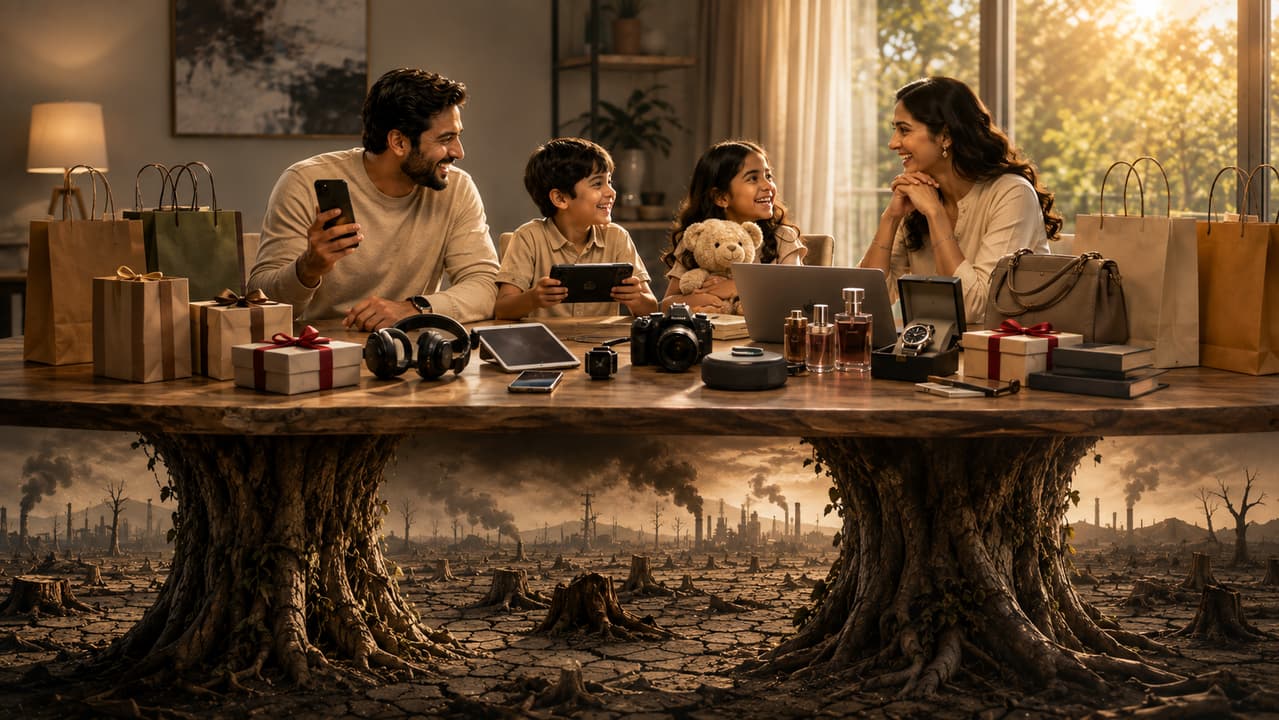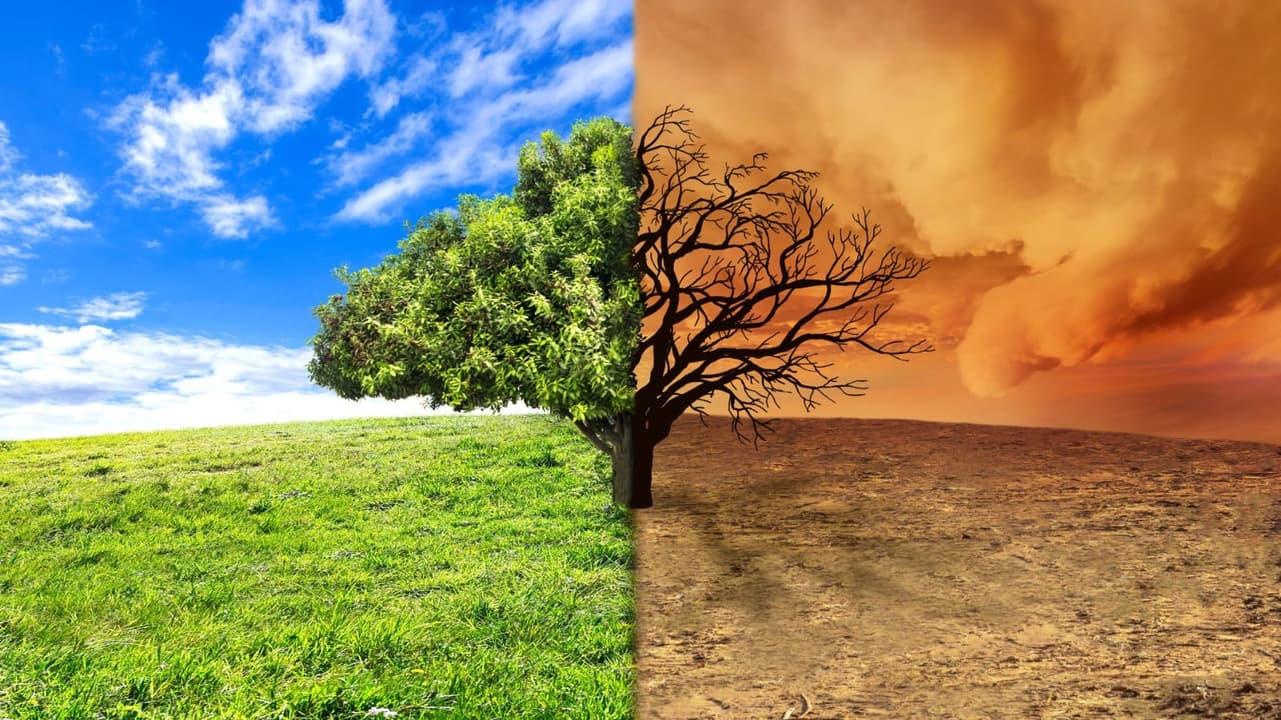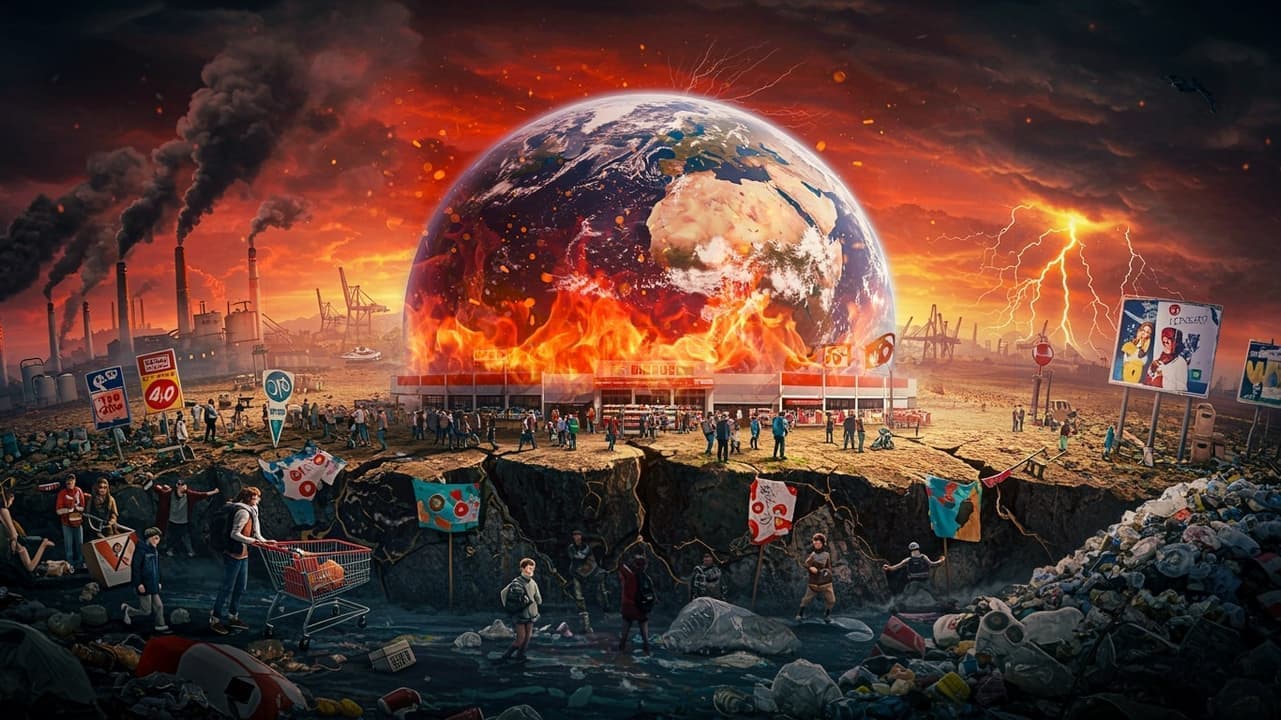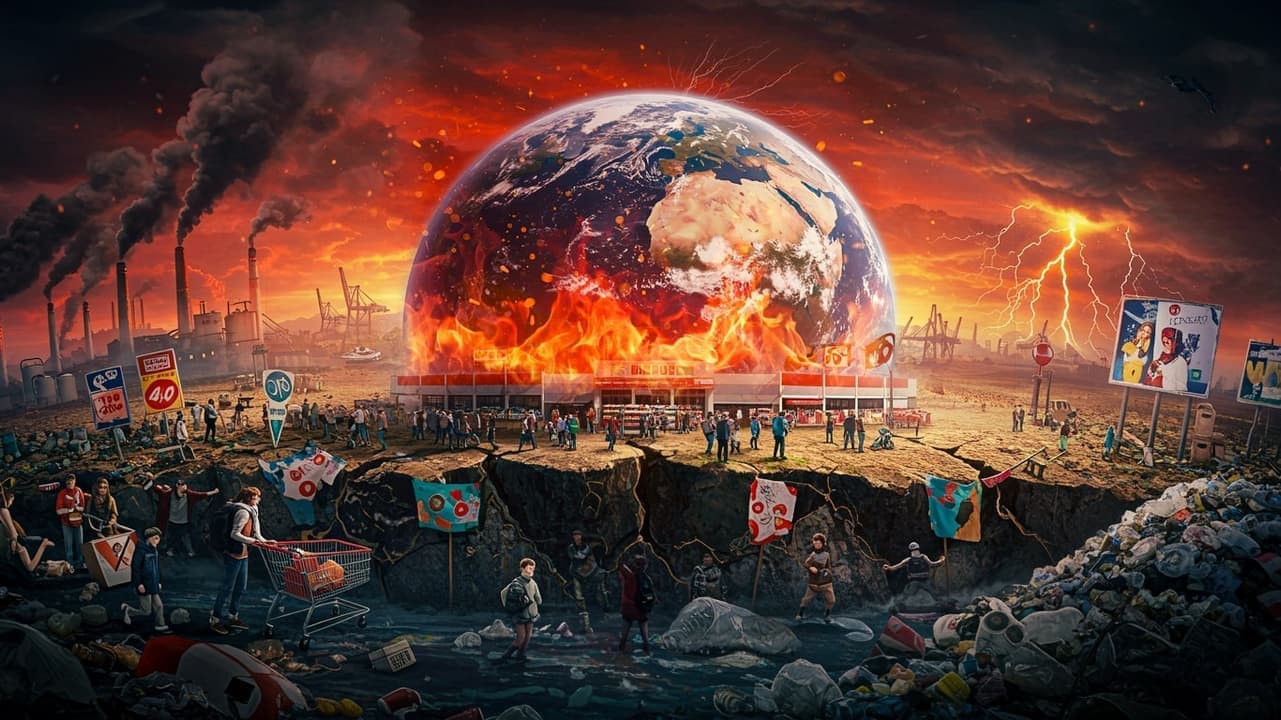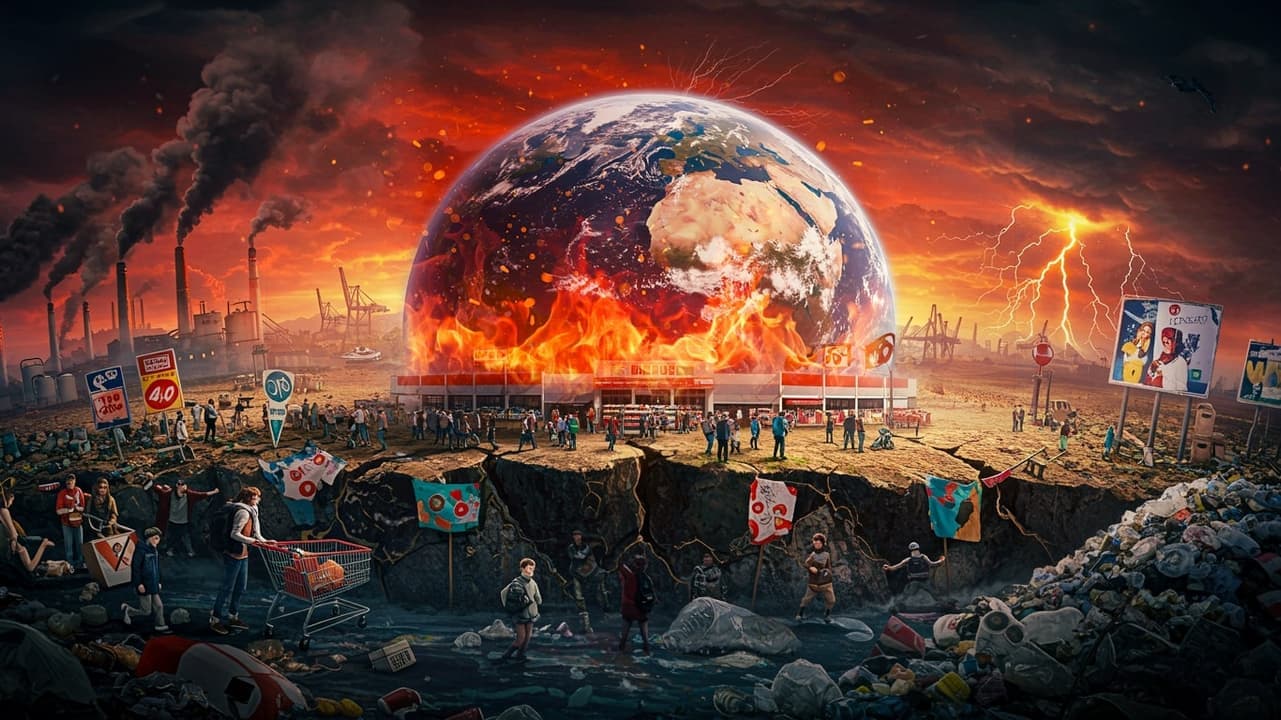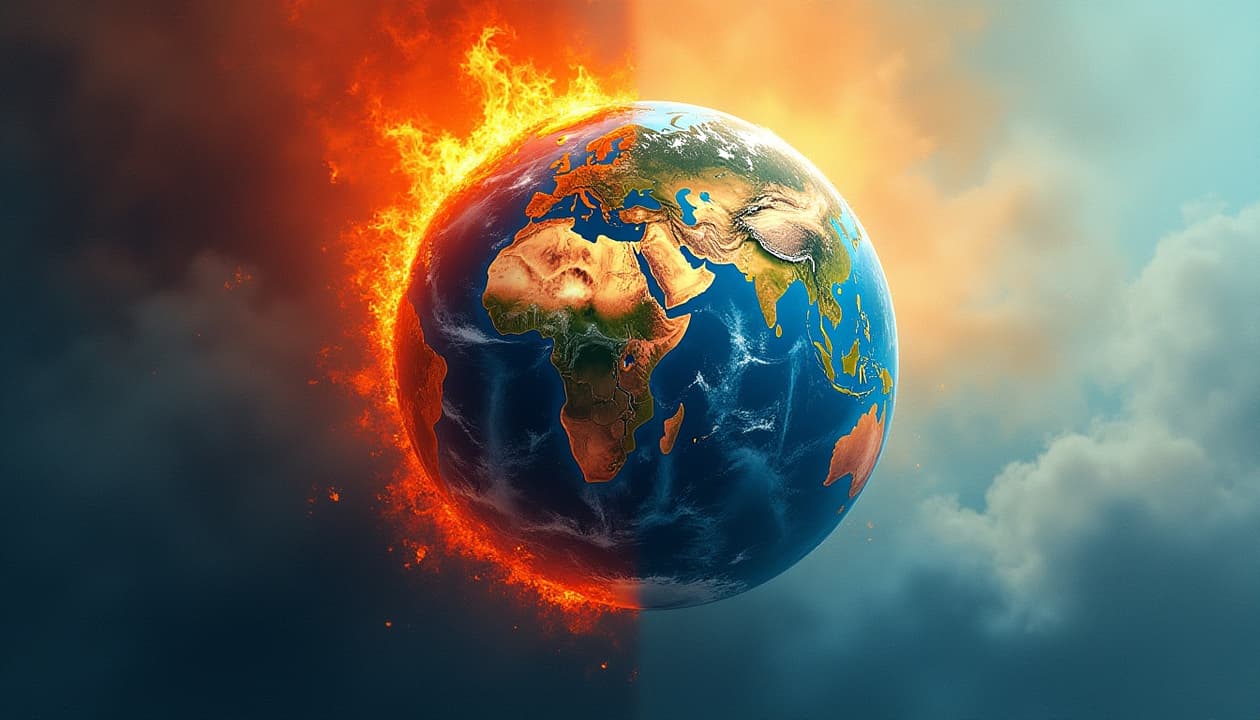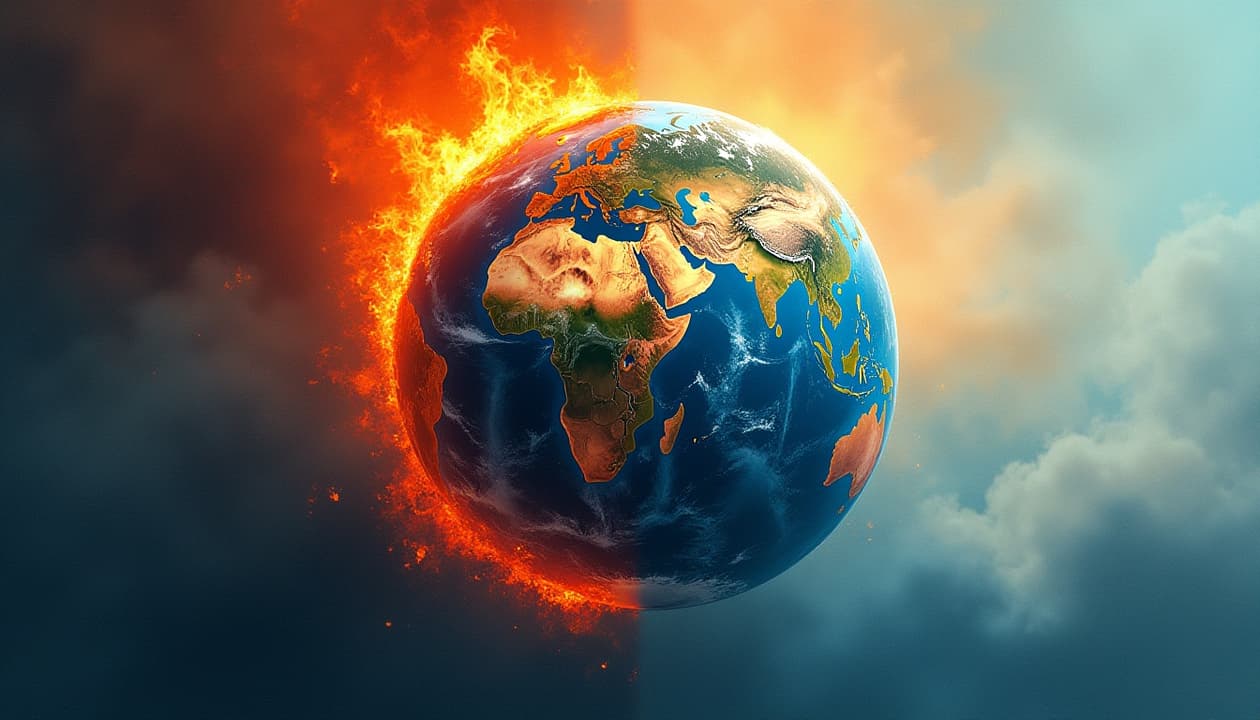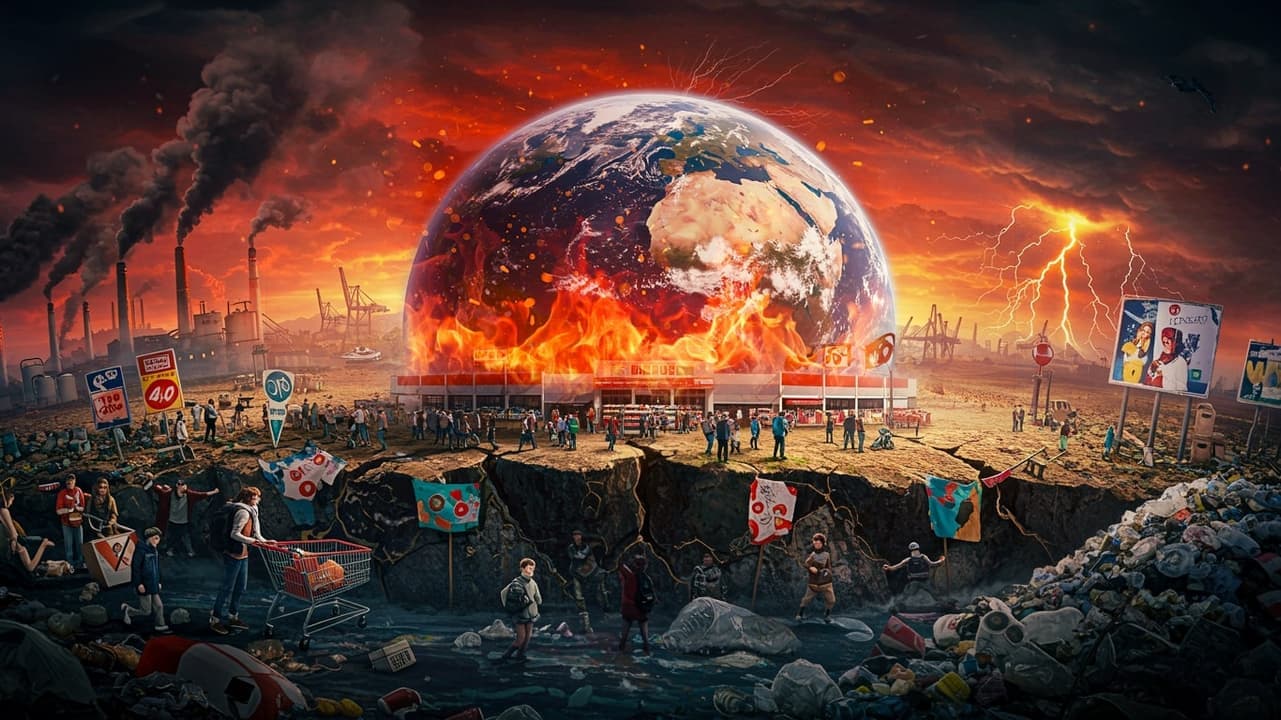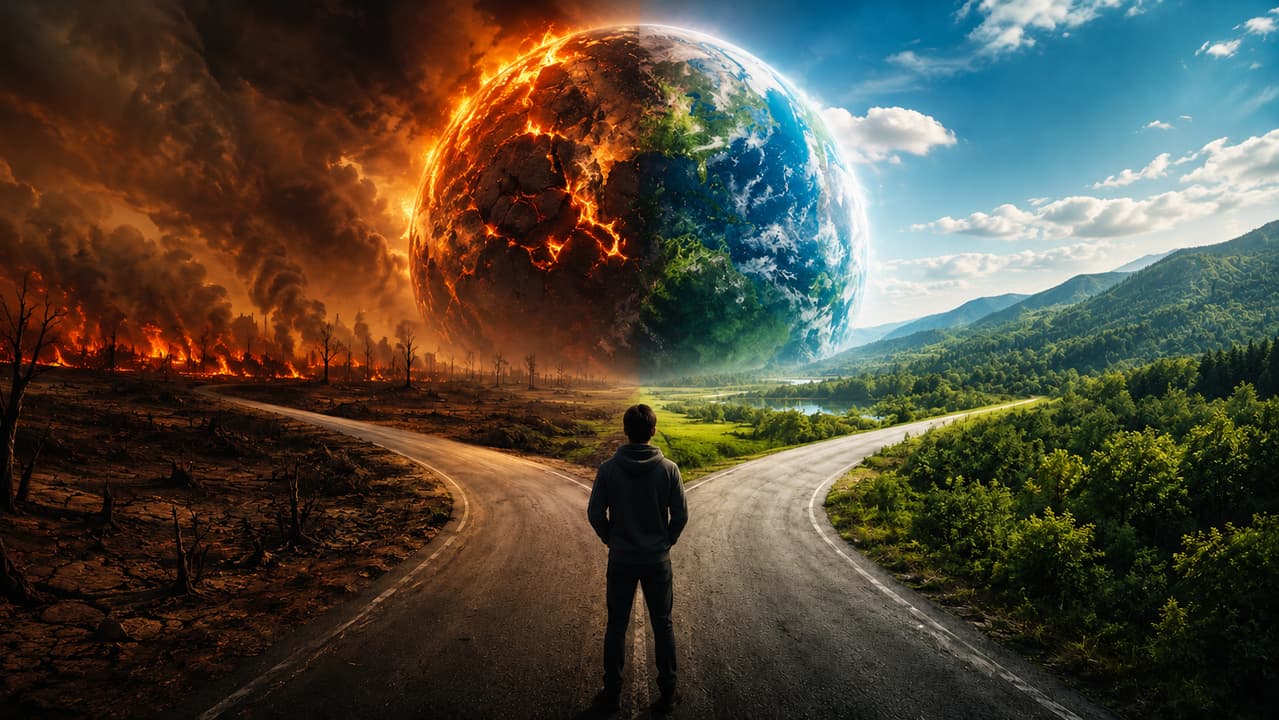
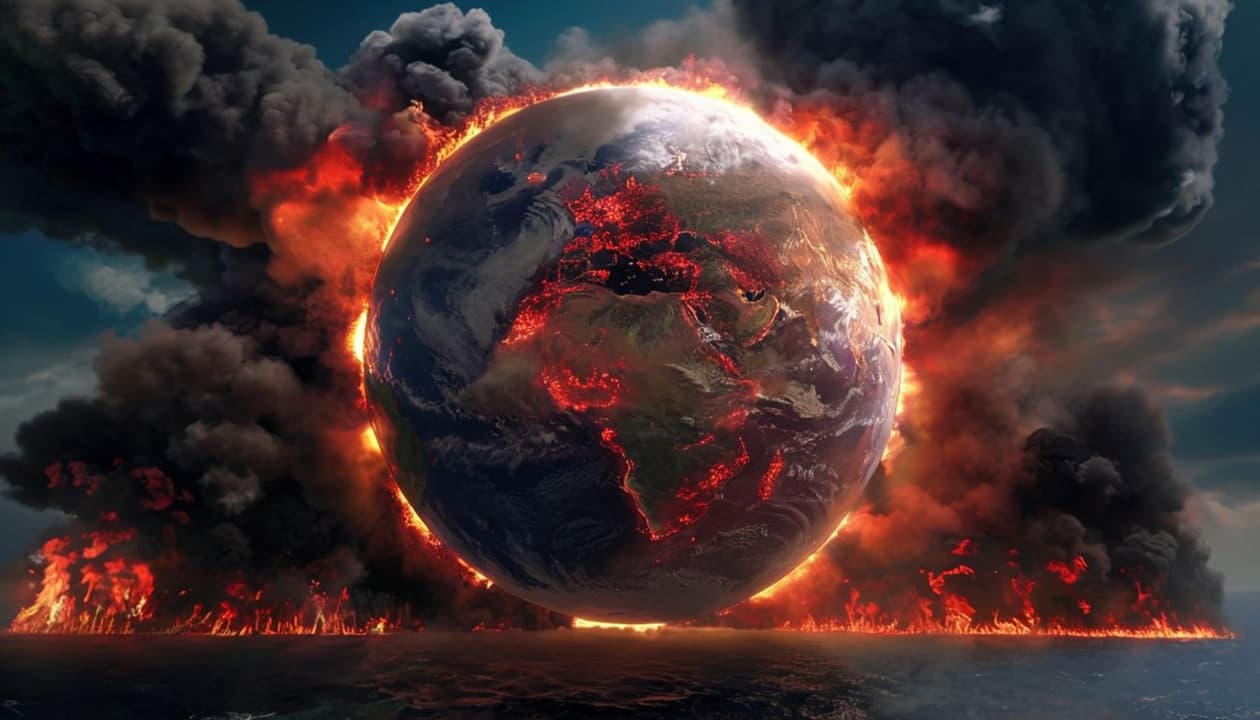
Climate change is more than an environmental crisis—it is a crisis of human choices. Our patterns of consumption, consumerism and endless pursuit of more are putting increasing pressure on the planet. But meaningful change does not necessarily begin with new technology or stricter policies. It begins with a deeper question: what are we willing to change within ourselves?
Rakshabandhan is not merely a festival celebrating the protection of a sister by her brother. Its deeper meaning is about recognizing vulnerability and taking responsibility for what needs protection. Today, that responsibility must extend to the environment—rivers, mountains, trees, oceans, wildlife, and the planet itself. True religion lies in self-knowledge, compassion, and understanding that greater power brings greater responsibility.

The climate crisis is not caused by nature but by human beings, their growing population and relentless consumption. The desire for greater comfort, wealth and consumption defines success, while increasing families multiply this impact. Green technology alone cannot offset such massive growth in consumption. Climate change also triggers feedback loops that worsen warming. Unless happiness is separated from endless consumption and unchecked desires, the planet will continue moving toward mass extinction.

Mass extinction is accelerating due to human-driven climate change, resource consumption, and destruction of other species. The deeper problem is a worldview that equates happiness and development with endless consumption. Science itself is not the problem; without inner clarity, its immense power becomes destructive. Advaita points to a different relationship with the world, where it is not an object of exploitation but a means to deepen self-understanding and inner development.

Climate change is not merely an external crisis of emissions, technology, or policy. The deeper problem lies in the unchecked ego that seeks to fill inner emptiness through endless consumption. This psychological demand drives extraction, production, and environmental destruction while failing to resolve the underlying sense of incompleteness. Meaningful climate action therefore requires more than green technology and policy; it requires education that turns inward and examines the self.

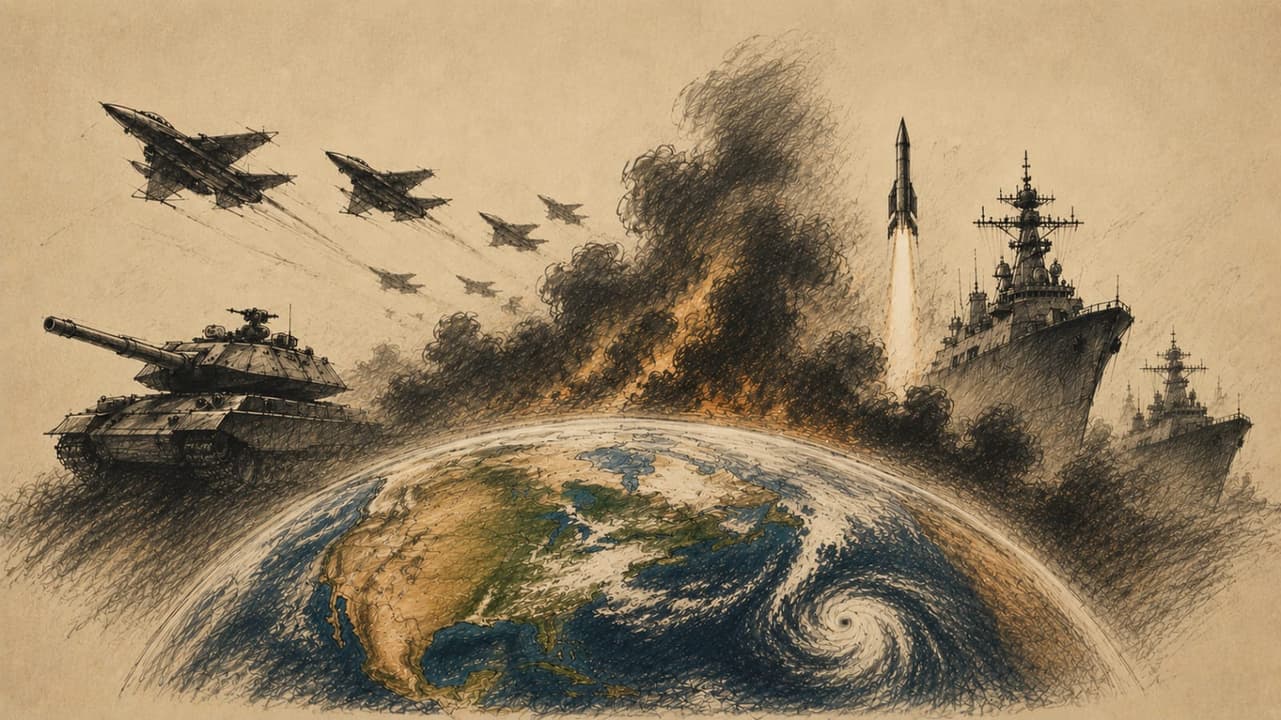
Climate change and global warming cannot be addressed honestly while the world's largest source of hidden carbon emissions—military activity—remains largely excluded from climate accountability. Wars, military expansion, and consumerism arise from the same psychological drive for domination and endless consumption. Unless the Paris Agreement includes military emissions and humanity addresses the inner causes of conflict, every effort to combat climate change will remain incomplete.

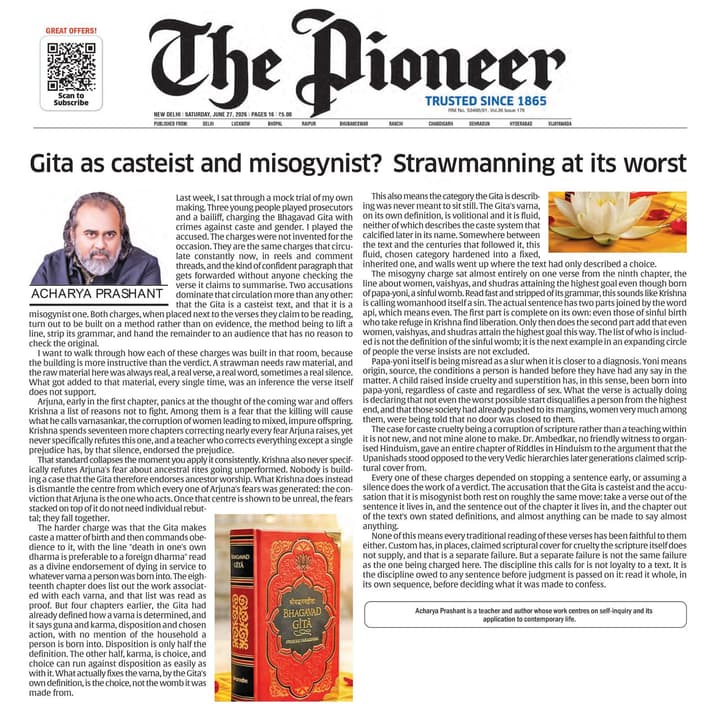
The Bhagavad Gita is often accused of supporting caste and misogyny through selective quotations that ignore context, grammar, and the text's central teachings. A closer reading shows that its emphasis is on inner qualities, conscious action, and spiritual equality rather than birth-based hierarchy or gender discrimination. Misinterpretations arise when isolated verses are detached from their broader meaning, while the Gita consistently points toward self-knowledge, freedom from ego, and the universal possibility of liberation for every human being.

Humanity continues to increase emissions despite clear warnings about climate catastrophe. The crisis is not merely technological or political but rooted in endless human consumption and the belief that happiness comes from material accumulation. Development and basic needs are not the problem; blind pursuit of growth is. Lasting solutions require a deeper understanding of human desire, because environmental destruction begins in the mind before it appears in the atmosphere.

Freedom is often assumed to be the ability to choose, yet most decisions arise from conditioning, biology, social influences, and habit. Real freedom begins by seeing how mechanical and unconscious life usually is. As awareness deepens, confusion and endless options gradually diminish, making life simpler and more direct. Liberation lies not in imagining freedom, but in recognising and understanding the forces that keep one bound.

Climate denial is less about ignorance and more about refusing to face uncomfortable truths. Environmental destruction reflects narrow self-interest, collective confusion, and a failure to see the connection between inner values and outer consequences. The greatest burden falls on the poor, future generations, and other species. Lasting solutions require a change in human consciousness, not merely technological or political fixes.

The climate crisis is not merely an external environmental problem but a reflection of inner human greed, desire, and psychological disorder. Drawing from the Gita’s idea of yagya as desireless action, it says real ecological healing requires inner transformation. Outer pollution, exploitation, and destruction mirror the ego’s inner confusion, making personal consciousness and planetary health deeply inseparable.

Acharya Prashant (AP): That which you call “Vipassana” today, is a very recent phenomenon. They claim that it comes from the Buddha, actually, it is not. The stream flowing from Buddha got extinct around the 8th or 10th century AD. This modern Vipassana came up in Burma, just around a…

From 1945 to today, consumption drives war beneath peace globally. We have continued to be exactly the same as we were on the day of Hiroshima and Nagasaki. That war happened because the various powers wanted to consume. Have we changed internally? If not, how can there be peace? The problem is not in the structures of thought or governance. The problem is within.

All consumption comes from this ecosystem, this planet and in the lust of our blind consumption, we destroy life for everybody. As technology progresses, you will probably be able to consume more with impunity.There is a consumption that is needed for basic physical sustenance and comfort,then there is consumption that happens for entirely different psychological reasons. It is the second type of consumption that I am always worried about.

Shri Krishna is saying: the mind is conditioned to move towards objects and perceive only their surface, periphery, or form. Develop the practice of penetrating further. Let Truth be your practice. The moment you would look at something, and you are in no position not to look at things being embodied, you would look at things. Nobody said that you have to practice lust. Lust just comes. You might be a total fool, an utter retard, and still you will find yourself getting sexually excited once you reach a particular age. Did you need some practice? No, you didn’t. It just happened. But if you are to understand lust, if you are to cross over, if you are to be a master of your body, then it will require a lot of practice, and that will necessarily and obviously tell you about your predicament.

Why the question of sustainability is relevant only to our species, out of the billions of species on this planet? Because we have a hollow inside us, and that hollow demands to be filled. So we want more and more manufactured products, more meat, more luxury, more money. And the sad part is, none of that really succeeds in fulfilling you. But you still want to consume endlessly. And that endless consumption, arising from a spiritual point, is what the sustainability crisis is today.

I am hungry, I am dissatisfied, I want to consume. And I do not know what it is that would appease me, make me happy, quench my thirst, so I will try out everything. If you have this big a hole in your heart, what else will you do? You will use the entire universe to plug this hole. That is what man has been doing. He wants to eat up everything. The very basis of climate change is the constitution of man himself. Man cannot help climate change; man is climate change.

‘I’m not feeling well.’ Your feelings are carbon. No other species is responsible for the climate disaster. We are. Why? Because only the human being has a hollow in her heart. Climate change is the unfulfilled, dark interiors of this species, Homo sapiens. We are destroyers because we are unhappy and loveless within. There can be no scientific, no economic, no political, no technological solution to the climate disaster. Not at all. Because this is purely a spiritual crisis.

Let the Earth be destroyed. We have to save humanity. Wow! The human body is 70% water, and the Earth’s surface is also 70% water. Can’t you see that we are the Earth itself? Going to another planet means thinking of collective suicide. Just remember one thing: we don’t live on this planet, we are this planet. Either two of us live together or we go down together, because we are not two at all. We are one.

As a doctor, can we limit our responsibility to the one particular body or to the set of few bodies that come to us for treatment? Or is the patient actually a representative of an entire society, an entire ecosystem? Can I really be a good doctor of the lungs, if I support a society that pollutes the environment in the name of development? So, if I'm a doctor, then health is my responsibility in the holistic sense, not just one patient.

Ours is a democratic system. You are the government. If you want to accelerate climate devastation, it will be accelerated. Who can stop it? A leader is just a poor person, typically an old man. How will he resist the combined might of the electorate? All real change can happen only at the level of the individual. Once it happens there, it takes no time for governments to toe the line.

It’s not going to be right when the patient starts playing the doctor. We need to grow up; and having a kid, in that sense, is an opportunity. You want to be of some use to the kid, then grow up with the kid.

Drop the center of confusion, come to the center of clarity. Drop what the masses practice, come to the direct route of self-realization. That’s what it means.

If you think you can do it at the policy level, that sounds very tempting but means nothing, because you are trying to defy the very law of existence. You are saying the minister will do it. Why will the minister do it? The ones in power have the least interest in any climate action because they are the ones with the minimum stakes there. You'll have to awaken the individual so that the one in power listens to you. Awaken the individuals. What else? There is no option.

A suicide is a sad event because it prevents us from realizing our possibility and potential — there was an opportunity to live, learn, grow, realize, and be liberated, but it was wasted. But how many of us actually manage to realize our potential even if we live to 80 years? Hardly anybody. For our species, the extent of aliveness is proportional to the freedom and height of our consciousness. So ask yourself honestly: How close am I to the best I could have been?

Climate carbon dioxide is not a problem of technology. It is a problem of civilization. It is a spiritual problem.

India's emissions are actually rising fast. In 2023, we released three billion tons of carbon dioxide, making us the third largest emitter in the world. And yet, look at our vulnerability. Heat waves last year hit twenty-three states. Floods now displace tens of millions every year. Agriculture, on which more than half of India still survives, is at the mercy of the climate. I ask you, is this a victory or rather a warning?

It is only the rich and the ultra rich that are really responsible for the bulk of the carbon emissions. Also the emissions that are being contributed by the common man, they are being encouraged and motivated by the rich. You see, the rich are rich because they sell products to the common middle class. They are rich because they are getting money from you and me as consumers and customers. And how are we turned into customers? By diluting and corrupting our basic philosophy of life. We are told unless you consume your life is not rich.

The climate crisis is itself a product of internal human ignorance. It comes, we say, from emissions. But why do emissions happen in the first place? Because we burn something. 75% of emissions are coming from our energy needs. But why do you need energy in the first place? Because you want to use energy to pursue your desires. But are your desires worth it in the first place? How do you determine the worthiness of your desires? Are your desires really fulfilling you? So for the sake of these worthless desires, you are destroying the planet. That’s what the climate crisis is.

Climate change is not merely a problem — everything is going to change, and the planet will become uninhabitable not only for us humans but for all species. Mass extinction is what we are staring at — a catastrophe worse than the ‘Third World War.’ But we do not discuss this because it challenges our basic philosophy of life that says, "More is better." The climate crisis is a product of a wrong way of living. Therefore, taking Vedanta to every household is striking at the very roots of the climate crisis.

Climate change is assaulting us right within our homes. It is just that right now, the most underprivileged are bearing the brunt and the luckier ones are able to afford negligence. Not that they don't know the facts, but they are able to afford to neglect them for now. And what to do when one knows the facts, yet wants to deny them? The science of climate change is so easy. The problem, therefore, is not education but honesty. Your education system is not teaching honesty — it is only teaching external things, nothing internal.

Stray dogs need garbage, and with waste reducing, their populations in urban areas are bound to decline. Not just humans, even dogs suffer — crushed by vehicles, beaten up, falling ill, etc. They can either be integrated into our homes with care and responsibility or face extinction from our streets. It is heartwarming to see humans supporting one species, but why doesn’t our heart bleed for the crowds of animals we are slaughtering every day, making many of them extinct forever? Climate change is the biggest threat and is responsible for the maximum misery to animals.

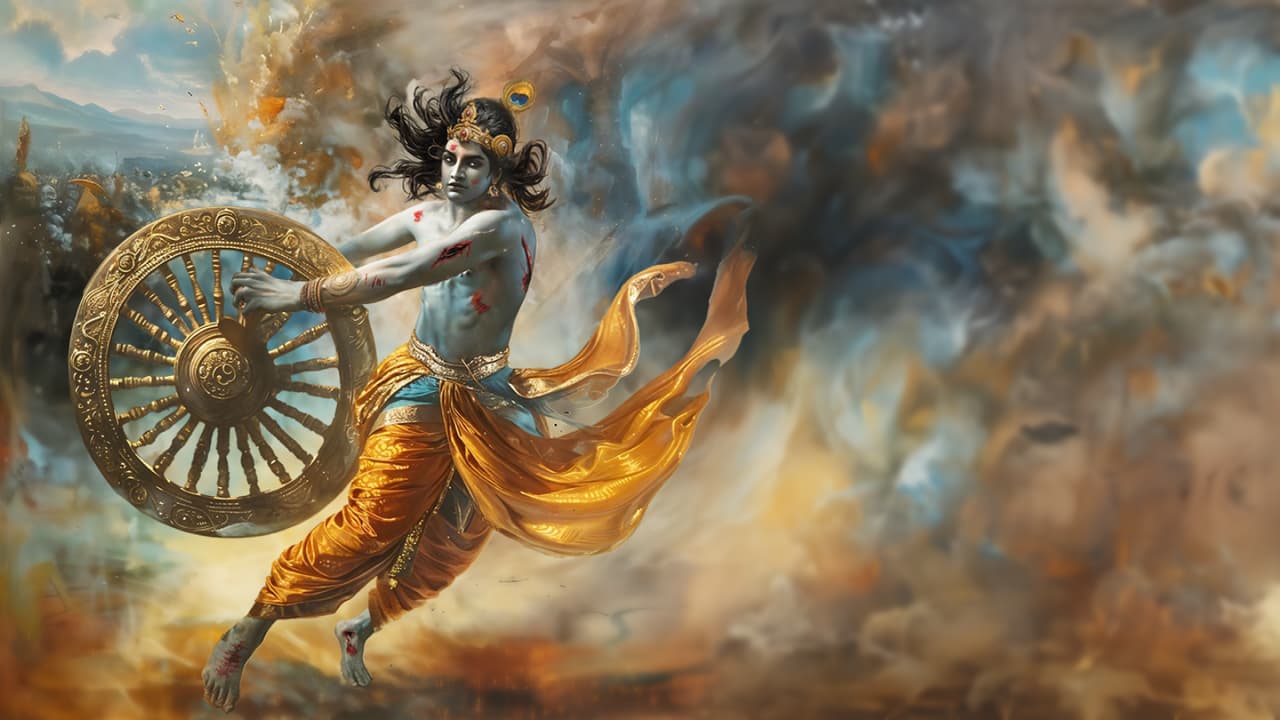
We have images of peace. When you look at the image of Shri Krishna rushing towards Bhishma to attack him personally, going beyond his brief as a charioteer, you don’t think that this is peace. You feel as if Shri Krishna is being violent. The expression of peace often looks very much like violence. Truth, Peace, Love, Freedom — these must never be searched in ‘actions’. Peace and Truth are no different. Peace is about the right action.

For you to benefit from the darshan of Shri Krishna's statue, you should already have a relationship with Shri Krishna and the Gita. If you have had no prior connection with the Gita, then darshan makes no sense. Darshan is a great way to immediately bring back all that has been hidden under the dust of time. You could either re-read the entire Gita or simply look at Shri Krishna’s statue. It’s a fantastic method — but only for Gita lovers.

Overview
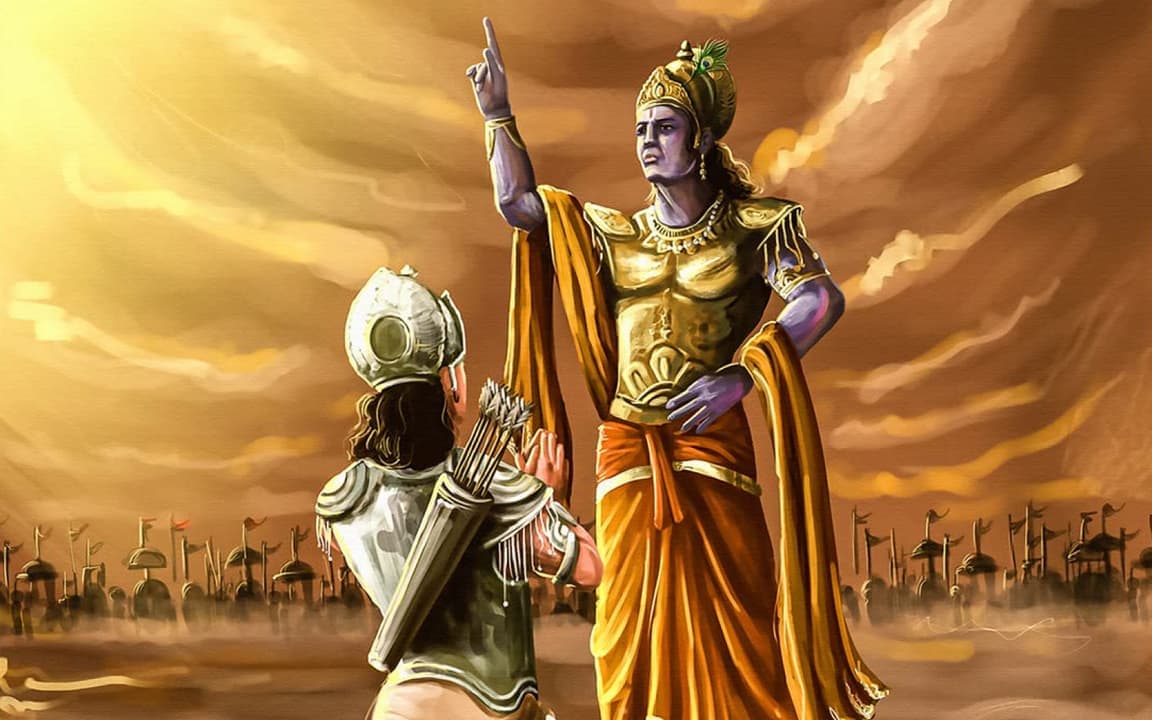
Fighting Duryodhana is Dharma. Fight Duryodhana in the way you can, that is swadharma. Dharma is the same for everybody, but swadharma varies according to your physical, social, temporal conditions.
But remember that swadharma can never be in contradiction of Dharma; swadharma will always be something…

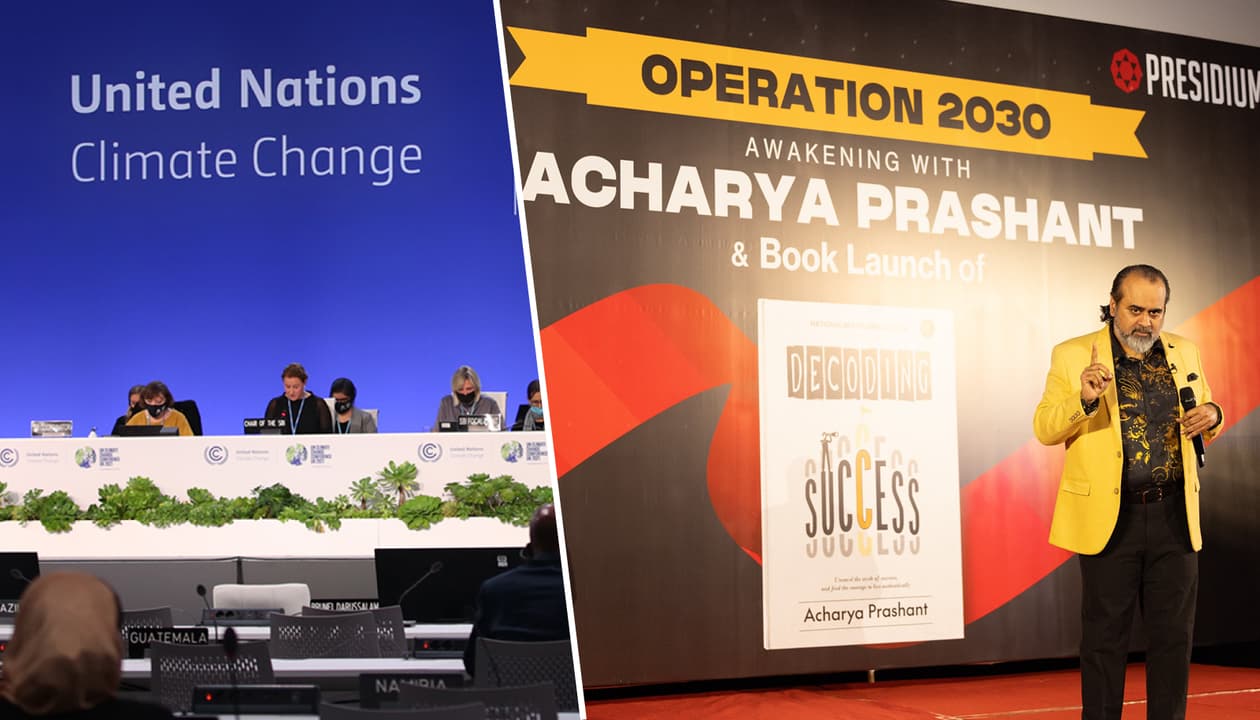
How much has the UN really succeeded when it comes to climate change? Because it's a question of consumption at its core, it cannot be addressed without talking of the consumer — who he really is. Vedanta asks a very fundamental question: For whom? Consumption is for the sake of the one you call as ‘I’. Has consumption really benefited the ‘I’? Will one ever ask what ‘I’ am really hungry for? The moment one does that, life choices will change. In fact, what the United Nations is asking for can be achieved only through the Vedantic route.

The hurt that you have received is a result of your own lack of understanding about the nature of life. This is an opportunity to understand life. It is an opportunity to not let the previous mistakes be repeated.

I'm not asking you to be a loner or an avoider of human company. It's just that things must be given their due place — and their due place depends on their quality. If you do not have good quality people around you, there are many other better options. Why not spend your evenings learning to swim or sing? And there could be so many other things. I mean, you would know better.

Neuroscience says there is no free will. Vedanta also comes to the absence of free will, but through the route of choiceless understanding. It says that the right action will never be a product of your choice because there's no such thing. The right action happens when you just don't see options — not because you're an idiot, but because you're in love with the right one. So, you don't require choice. You require observation. And then, you don’t have to choose. It’s an effortless flow.

If the current trends of fishing continue, we’ll have virtually empty oceans, no aquatic life, and then we all will disappear too. The oceans are the way they are because you are the way you are. If fish are disappearing from the oceans, they are landing in our homes. And if you want to bring a change in the condition of the oceans, you will have to bring a change in your own condition.

Love, for the one who is at a low level of consciousness, is to aspire for a higher level. And love, for one sitting on the Himalayan peaks of consciousness, is to be compassionate towards those at lower levels — and, for their sake, if needed, lay down your life.

The parts of the Upanishads that do not deal with self-enquiry can be taken as outdated. They do not want to address things that change with time. Mankind today is more prosperous than it has ever been in its history — but internally, are you not still afraid? Are you still not greedy? That’s the problem of the self that the scriptures seek to address. The Upanishads are dealing with a very peculiar problem that time alone cannot address — and that is the problem of fundamental human suffering.

Climate is an entire industry, which receives hundreds of billions of dollars in funding for tech-based crisis solutions. And technological or scientific or policy measures are just eyewash. On the other pole, a lot of money is flowing towards climate denialism. We do not have enough time to wait for everyone to see on their own that we are on the edge of the final calamity. What you need now is not persuasiveness, but power. The Gita is a message to fight. It’s a war call.

If you have not looked inside yourself and you keep conquering stuff outside, you find all those conquests hollow, and you are still hungry for more. And this hunger is what is devastating the planet.

It has been a tradition in India that when you donate, you bow down to the one you are donating to, because he has done you a favour by accepting your donation. Being what we are, it is hardly possible for us to do anything for others. Kindly get over this notion that we live for others. That is the privilege granted only to a Buddha. Only in a state of inner fulfilment can one really do something for others.

Acharya Prashant: You will see that I'm repeatedly stressing on Shri Krishna as the demolisher, on Shri Krishna as someone who not only does not accept our prevalent definitions of right-wrong, true and false, humility, authority, right action, non-violence but, in fact, unabashedly and actively demolishes them. It is one…

When you look into the eyes of an animal, and if you are really awake, you will only see your own deep innocence, which might be hidden from you. It is impossible to see anything or anybody else when you really look. That thing that you look at, and that which looks back at you is most prominently visible in the eyes. Look at the animal, pause and meditate for a while — and then go ahead and slaughter it, if you can. You’ll only be slaughtering yourself.

If God stands for innocence, trust, surrender, then animals are closer to God. But man values himself by his ability to exploit. If you always feel hollow and hungry, then the entire universe is but a resource for you. One then wants to exploit the man, the woman, the child, the animals — everything. So, someone who does not want to look at the universe as a resource will not want to kill or consume anything in a violent way.

Questioner (Q): Acharya Ji, do you think that bringing the focus to our diet is going to change anything?
Acharya Prashant (AP): In what sense?
Q: Do you see us heading in the direction of this perfection, completion, along with our diet?
AP: I am seeing that.
You…

क्लाइमेट चेंज, न्यूक्लियर डिज़ास्टर — ये सब ख़तरे इंसान के लिए हैं, पर अपनी फ़िक्र हम नहीं करते क्योंकि उसके लिए सबसे पहले स्वीकार करना पड़ेगा कि हमारे ऊपर ख़तरा है, और हमें ठीक होने की ज़रूरत है