Climate Collapse Is Closer Than You Think

Acharya Prashant

17 min
260 reads
Climate Collapse Is Closer Than You Think
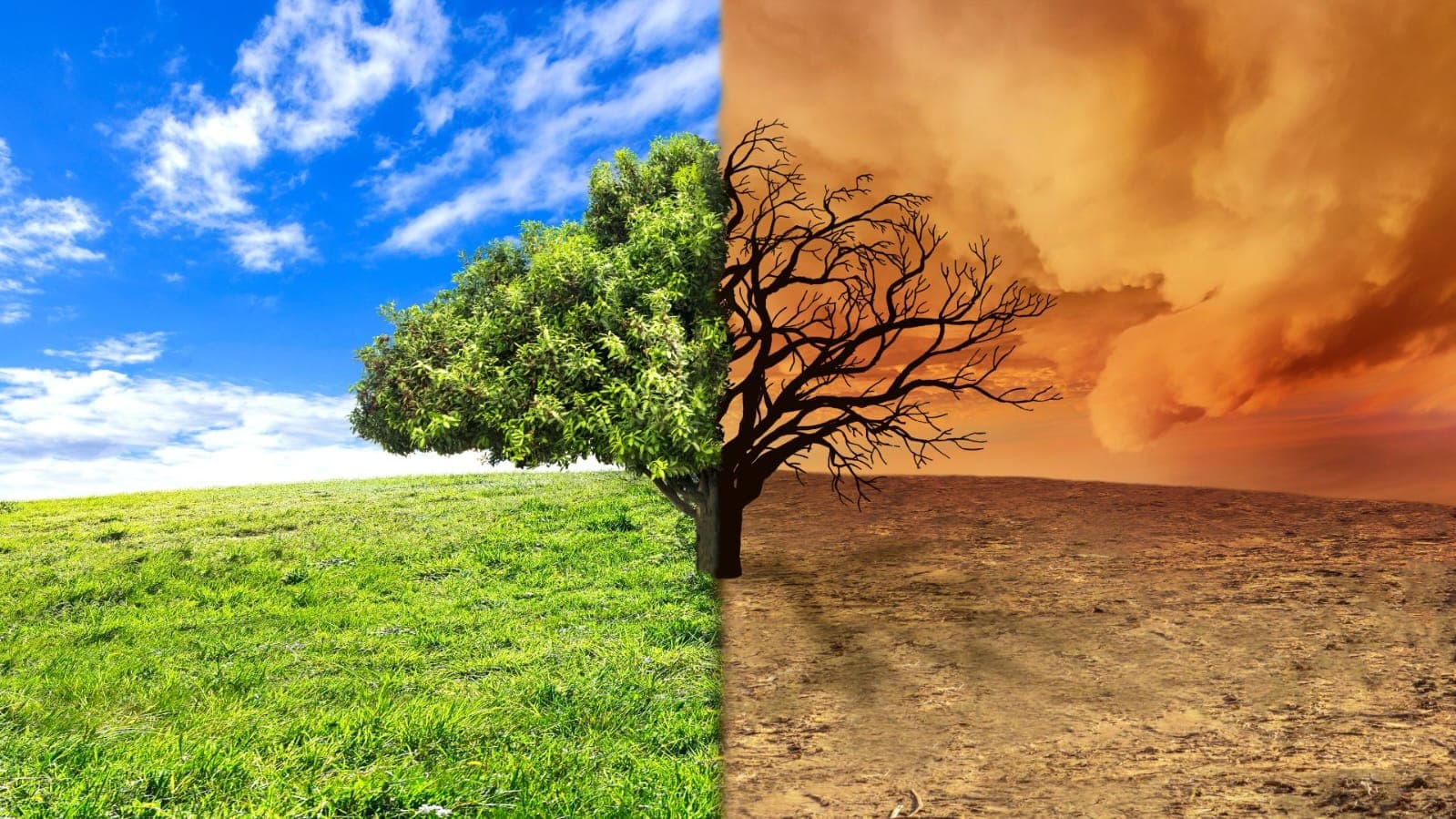
Climate denial is less about ignorance and more about refusing to face uncomfortable truths. Environmental destruction reflects narrow self-interest, collective confusion, and a failure to see the connection between inner values and outer consequences. The greatest burden falls on the poor, future generations, and other species. Lasting solutions require a change in human consciousness, not merely technological or political fixes. This summary is AI-generated. Please read the full article for complete understanding.

Questioner: Namaste, sir. There is the climate denialism is actually peaking right now. And despite knowing that fossil fuels are the biggest contributors to greenhouse gases and global warming and carbon emissions, I linked it with the rise in right-wing authoritarian governments across the world and how they are linked with both immature voters and the leaders themselves who want to, you know, ensure that their subjects are enslaved and not empowered internally. And there has been a link between right-wing politics and climate denialism. There is some link between the two.

And it seems right now that our collective ego as human beings is dominating the state of the environment right now, and we are doing anything but looking at ourselves to change the situation. That's the last thing that we want to do. That's something that doesn't even occur to anyone.

In fact, if you mention this to anyone that, you know, looking at yourself is actually, you know, the solution, not the beginning of the solution to the climate crisis, people are baffled. They don't understand what you're talking about, and then they start talking about the economic system and, you know, how complicated everything is. They want steps, actions in the outside world that are still somehow unable to shake the system as it is. I see that as one of the defenses of self-knowledge that we get. How do you see this actually ending for us? I don't think that it's, of course, I mean, you are doing this very difficult work of making people look at themselves. How do you see it ending for us, like in the context of the climate crisis?
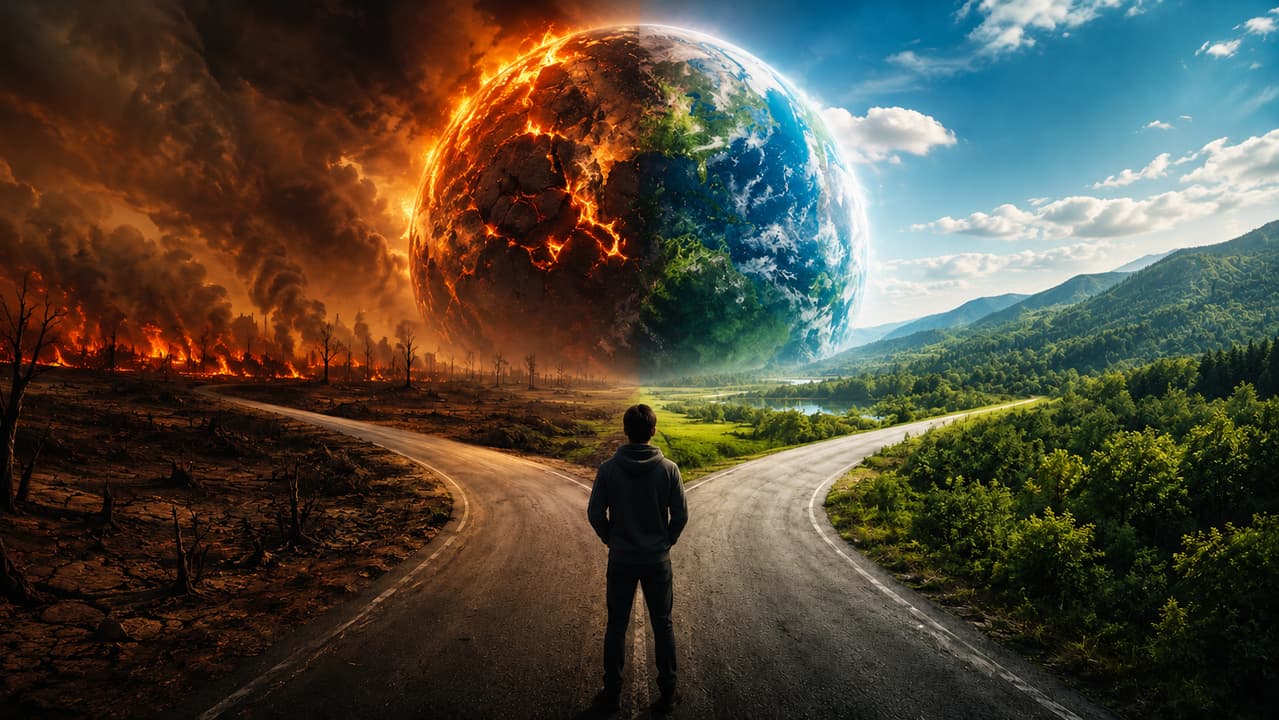
Acharya Prashant: Yeah, I see it ending for us. I don’t buy this cult of optimism or positivity. I definitely do see this ending for us. As long as this body is in this shape and this mouth utters, “I,” I will do what this limited body with its limited resources can do. But that doesn't mean I'll delude and console myself with wishful thinking. I see this ending. In fact, forget about course correction. We are not just moving in the wrong direction, taking the wrong course, but actually accelerating in the wrong direction. So it's not just ending for us; it's ending sooner than later.

Questioner: And do you think climate denialism is something that we are doing because we know somewhere that, you know, this is coming to an end? We're doing it as a self-soothing thing, or…

Acharya Prashant: See, there would be cataclysmic kinds of natural disasters. We are not talking of a few million deaths here. We are talking of millions of species getting wiped out and our own species being reduced to like 1%, 2%, 5% of its current strength. This entire architecture, this so-called civilization, will collapse. And something within us probably wants that, and that's where the denialism is coming from. Something within the collective consciousness of humanity is suffering so much that it wants all this to end. Therefore, it is rushing towards its own annihilation. And then after that, maybe there will be a new beginning. The wise ones have therefore called time cyclical. This is nothing short of pralaya.

I don't have much sympathy, etc., for all these rascals who I know are going to be obliterated. And that's the mass, the big bulk of humanity that's going to be wiped out in the most violent way possible. And I don't have much sympathy for them. But yes, I want to, to whatever extent I can, save the innocent ones. Save the innocent human beings, the newborns, the kids, the poor folk who have contributed nothing to carbon emissions. And equally importantly, I want to save all the animal species and the flora and fauna that are going to be gone for nothing that they have done. They are the ones that deserve to be protected. But unfortunately, they'll be the ones first to go.

If the rascals get what they deserve, I don't really mind. But why should a three-year-old suffer? Why should an innocent bird suffer? When I look at birds, there was this pigeon I met yesterday. It was sitting near that huge tree, and I thought, does it even know what lies in store? Maybe the pigeon will somehow relatively peacefully survive its lifetime because they don't live for long. But does it know what its kids are going to go through? It doesn't know, and that poor thing has done nothing. You look into its eyes, and they are the same old primitive eyes. And we'll wipe them out. Some fat man with a fat bank balance and an even fatter greed is calling the shots. And the politicians and the priests are all hand in glove.

Think of the babies being currently born. The poor things don't even know what kind of universe they are to inhabit. These are the only ones that deserve consideration. These are the ones I'm working for. Let the others meet their fate. Good riddance.

Just that, prakriti does not recognize individuals. It works at an aggregate level. When destruction comes, it will not differentiate between the saint and the sinner. So, everybody would be gone. The innocent ones would be punished as harshly as the culprits. And the culprits will have all kinds of armors and bunkers. The innocent ones, because they are innocent, will have nothing to defend themselves with. This is what is called climate injustice.

The responsible ones will pay the minimum price, and the innocent ones will bear the maximum brunt. That's the thing about the climate crisis, the injustice it carries. That's the only thing one can fight against: the injustice.

The climate catastrophe is pretty much unstoppable now. And mankind has already made a decision. We are okay with the destruction of this planet. That decision has been made.

Nobody would confess it in black and white. Nobody would put it on record, but that's a collective decision this suicidal humanity has already made. Probably one good way of saving the innocent ones is to counsel them against being born.

Questioner: So, is this a consequence of us living without religion for a very long time? Or stopping asking us the…

Acharya Prashant: See, there were many, many red lines that were crossed, right? If even one such line were respected and not crossed, we wouldn't have come to this point. Since we are talking of India, the red line that we crossed was the sanctity that must be given to one's highest philosophy. The day some mischievous mind turned Vedant into theology, turned Vedant into a dualistic belief system, that was the day we lost it.

Every nonsense that you see today in this land can be traced back to that one moment when that line was breached. And similarly, you can figure out many other red lines at other places, and, you know, all of them have been violated. Had we known that the inner and the outer are one, that duality is an illusion, we wouldn't have done what we are doing. And we wouldn't have tried the kind of pseudo-corrective methods that we are attempting.

It is dualistic theology that is at the root of climate destruction. God made the earth, so the earth can be destroyed only by God, and if it is actually being destroyed, it is God's will. And the person and the planet are separate, that's the dualistic belief. So, what is happening on the planet can be corrected without any correction in the person itself, that's the dualistic belief. Once Vedanta was also turned dualistic, the countdown had begun.

Questioner: And this job of, I mean, reinterpreting; not reinterpreting, but bringing forth the real meaning of the philosophy, the non-dualistic philosophy, the bad interpretations are making the job so much harder because they have co-opted the language without any of its spirit. And it's very, very, I mean, my limited interaction with people about the philosophy and about how the inner workings of our mind are, I have found that people know the words, but they don't actually know what it means because they've never practiced it or brought it into life, like in their own lives.

Acharya Prashant: I'm actually in awe of those cunning ones who managed to distort Vedant with such supreme precision, and in a way that is difficult to counter in any meaningful sense. They have taken away everything.

The verses, the symbols, the meanings, and given them absolutely debauched interpretations. We were with the Katha Upanishad yesterday and talking of Om. And the verse said that the highest thing that the Shruti talks of is Om. That for which all the seekers toil is Om. And you go to any person following an Indic religion, not just a Hindu, Buddhists, Jains, Sikhs, they all have Om in their religious dictionary. But you ask them, “What is Om?” They will not know because somebody, some really cunning person, took Om and turned it into something very small, something very ritualistic. Kept the shell and drained out the essence of Om.

You go to any of these pseudo-religious persons and they will say, “Yes, Om. It's a sacred word. It has sacred vibrations.” And they'll tell you a thousand stories related to Om. But they have been forbidden from going to Katha or Mandukya or Prashna Upanishad and seeing what Om really is all about. And the distortionists have done their job brilliantly. So brilliantly that their distortions have become the mainstream religion. And today, when I bring out the real meaning of the Gita or the Upanishads, they say I am deviating from the mainstream interpretation.

Sir, your mainstream interpretation is itself a distortion. I'm restoring the original meaning to Gita and Upanishads. What you have, your so-called mainstream, is a violation. Your so-called mainstream is actually blasphemous because you are doing the unthinkable. You are violating the sacred scripture itself by superimposing a meaning totally opposite to what it intended to convey.

Yagya, the word that we took up today. You ask them “What is Yagya?” They'll have their fancy notions. And if you tell them, “No, Yagya is something else,” they may get agitated and even aggressive.

So, not complaining, just being realistic. I don't want to entertain myself with hope. No, I would rather devote my limited time trying to save those who deserve to be saved. And those who deserve to be saved, they self-select. This is what the community is about, the little island, the little oasis. And people self-select. Those who don't deserve to be saved, they drop out. And that's how the right system should operate.

That doesn't mean that those who will stay put will be saved in some physical or metaphysical sense, just that maybe we'll be able to make an attempt at least.

Questioner: Thank you, sir.

Questioner: Namaste, Acharya ji. I hope I'm audible.

Acharya Prashant: Yes.

Questioner: Sir, first of all, thank you so much for these lovely sessions, lovely lectures that you bring to us. It's been great. I've been listening to you. I've been a part of this Gita community for the past 2 years and 3 months. And it's been awesome, and I've also discovered that there's a lot to be done, and I'm not doing enough.

My question is regarding the AQI problem in Delhi, which keeps getting worse. And the government is also bringing forth certain measures, like 50% of the offices should only function with 50% of their employees in the office. The rest of the employees should work from home. They are also trying to bring up the odd-even formula back again. But is there any immediate relief for the citizens of Delhi and other cities where air pollution is a problem, or do we have to wait till each and every individual becomes a part of the Gita community and understands, or begins the journey of understanding, the self? Is there any immediate solution?

Acharya Prashant: No, there should be no immediate solution. Because if somehow you do manage to get some kind of manufactured relief, right? It would only consolidate your resolve to remain who you are. So, real relief is anyway not possible being who you are. And if, with some sleight of hand, you do get relief, it would be even more disastrous.

See, this is not pollution. This is feedback. What you're saying is, “I want to block the feedback.” You don't want to change the center of the machine itself. It says that there exists a feedback loop, and you want to interrupt the loop. You're saying, “I want to remain the typical North Indian and not experience pollution.” No, that cannot happen. You're saying, “I want to elect the same leaders that I do. I want to buy the same products that I do. I want to carry the same values that I do. But I don't want to experience pollution.” That's not going to happen.

If you are the doer, you will also have to be the sufferer. The karta will necessarily have to be the *bhokta.*Are you getting it?

So, what must those not responsible for it do? They will have to maybe create mini Indias elsewhere. Because India is not just a piece of land, right? India, in the truest sense, is a high set of values. Right?

So, if the entire North Indian population has decided to remain who they are, right? You carry the real India to another geography. That is the only way. You cannot say, “Let there be this. Let there be that. We can try this artificial method, or we can fake the pollution readings themselves and declare ourselves pollution-free, and do this, do that.” That would sound humanitarian.

And maybe, given a chance, I too would approve of that. But existence does not approve of that. Prakriti does not approve of that.

The right relief for those who are right within and still suffering because of being contained in that area, I want relief to come to them, but that relief would be in the form of creating a mini India elsewhere.

Questioner: And that is also happening with or without them being spiritually enlightened. Just this one problem of pollution and rising religious, this jingoism is also turning people off from this country, and they are moving somewhere else. Taxes, the taxes, and all those things are also there, but I think this forms the main reason.

Acharya Prashant: Yeah. I want to call all that very unfortunate. But how does one fight against the laws of Prakriti? You think of the next 30-40 years. There would be massive displacement in our country. And it pains me to think of that. But we are going to be probably the worst-hit nation when it comes to climate change. And even within India, the parts that are the poorest will suffer the most. So there would be massive displacement, massive.

Additionally, the prosperity that we see in India, at least a lot of that is coming because labor here is cheaper, labor of all kinds. Even intellectual labor. Even intellectual labor is cheaper. Now AI would take away that advantage. So there would be the brunt of the climate crisis. The dollar advantage that we got because of being cheaper, that would be gone. And the mindset is not changing; in fact, it's deteriorating. So the pollution levels would be even higher.

So what else remains? It is very saddening, very saddening. But probably new Indias will need to be created elsewhere.

Questioner: They are also thinking about this, If a hill is not above 100 meters in the Aravalli ranges…

Acharya Prashant: I know. See, people will probably not understand even till their last breath. They are self-destructing. They are suicidal. But what do we do? You cannot forcibly stop a huge mass against its wish.

These are crores of people. This is a colossal mass of collective ignorance in a democratic setup. So how do you fight it? How do you fight it? What is probably the thing that can be done is that the innocent ones can be saved. And the innocent ones can be saved only by pulling them away from this suicidal crowd. Bring them out. Bring the innocent ones out. Don't let them suffer. But how do you stop this crowd? And if you want to stop this crowd, it's not that they feel grateful. They turn revengeful. They turn spiteful. It's a murderous crowd.

Questioner: All right, sir. Thank you so much. And your sessions have been truly helpful to me. And this was my first question.

Acharya Prashant: Do you remember Saint Kabir? “Kabira teri jhopdi gal katiyan ke paas.” You go to the exact place where he used to live in Varanasi, and there was actually a butcher's colony not too far away. And he must have been hearing the cries of those little animals day in, day out.

So, in pain, one day he utters this. He says, “Kabira teri jhopdi gal katiyan ke paas.” Right? And then he tells himself, “Jaisi karni vaisi bharni, tu kyo bhaya udas.” Even Sant Shiromani, even the greatest of saints, could not stop these evildoers. And then he had to console himself by saying, “You know, they are the evildoers and they will suffer. “Jaisi karni vaisi bharni.” I cannot stop it though it pains me deeply. But I cannot stop it.

Questioner: The best we can do is add people to the Gita community, go to bookstalls, and try to do all that. I think that's…

Acharya Prashant: Try to save at least the innocent ones. Try to rescue those who can still be rescued.

Questioner: Okay, sir. Thank you so much.

This article has been created by volunteers of the PrashantAdvait Foundation from transcriptions of sessions by Acharya Prashant
Comments
LIVE Sessions
Experience Transformation Everyday from the Convenience of your Home
Live Bhagavad Gita Sessions with Acharya Prashant
Categories