Climate change is not merely an external crisis of emissions, technology, or policy. The deeper problem lies in the unchecked ego that seeks to fill inner emptiness through endless consumption. This psychological demand drives extraction, production, and environmental destruction while failing to resolve the underlying sense of incompleteness. Meaningful climate action therefore requires more than green technology and policy; it requires education that turns inward and examines the self.
This summary is AI-generated. Please read the full article for complete understanding.
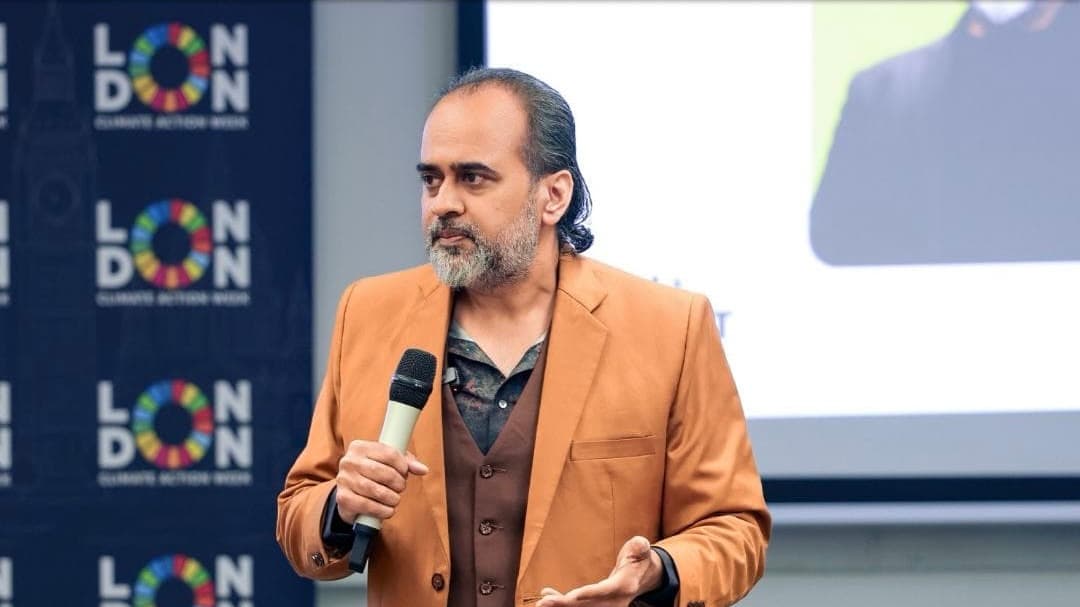
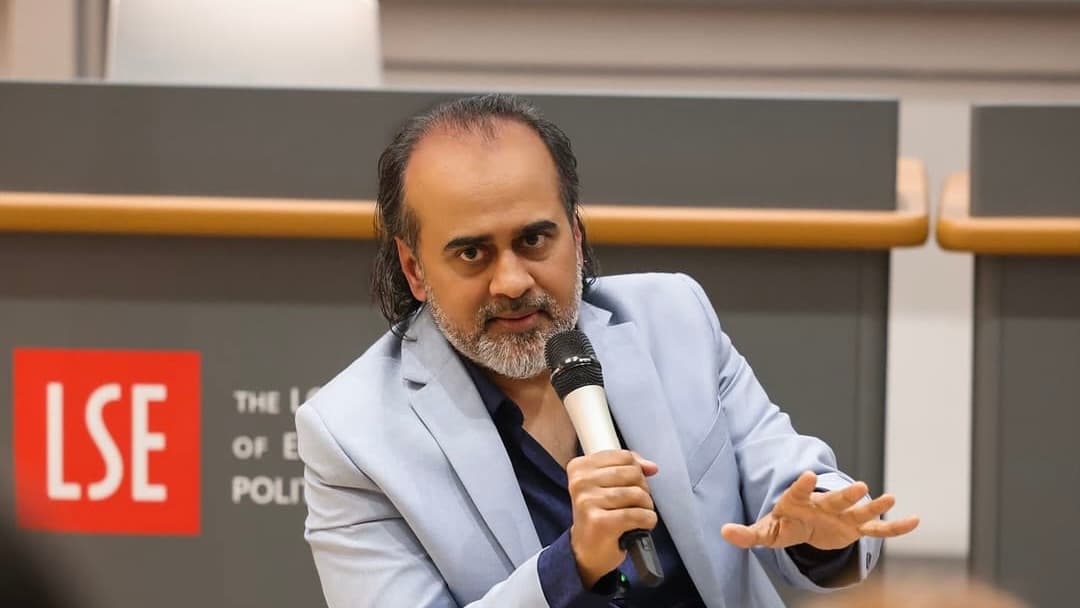
Acharya Prashant: Glad to be here, and I see that I have come right at the end of the session. I'm sure that you have already discussed and deliberated a lot on the topic or something similar to it. I'll see how the whole thing can be brought together as a closure.
So we know that, the last 3 years, the global average temperature is already 1.5° more than 1.5° above normal. We also know that the last 11 years are the 11 hottest ones on record. We also know that over the last century, the oceans have already risen by 20 cm, and they are rising by four mm per year.
All this is very well known to us. We know that if we are to stick to the Paris Agreement goal of 1.5°, all that we are left with is some 170 billion tons of emissions, whereas we produce more than a quarter of that every year.
These facts are known, not that we lack in facts. We probably lack an understanding of where the emissions are coming from. It is somehow convenient to assume that the emissions are coming from an engine, an industry, that they are coming from deforestation or meat. But we fail to look at what is behind the engine. We fail to look at what is behind the axe. We want to believe that it is just human activity that is responsible for the temperature increase and other kinds of climate upheavals, which is not limited, obviously, to temperature and sea levels.