The Only Solution to the Climate Crisis

Acharya Prashant

21 min
261 reads
The Only Solution to the Climate Crisis
It is only the rich and the ultra rich that are really responsible for the bulk of the carbon emissions. Also the emissions that are being contributed by the common man, they are being encouraged and motivated by the rich. You see, the rich are rich because they sell products to the common middle class. They are rich because they are getting money from you and me as consumers and customers. And how are we turned into customers? By diluting and corrupting our basic philosophy of life. We are told unless you consume your life is not rich. This summary has been created by volunteers of the PrashantAdvait Foundation

Questioner: So our next topic, sir, would be something that you and I both are very passionate about. It's climate change. It's something that even the common man is aware of today, because we are seeing temperatures rising to levels we haven't seen before. 2024 was the hottest year on record. The sea levels are rising. Temperatures are going through the roof. Glaciers are melting. Heat waves as well as wildfires are claiming lives more and more.

As far as heat waves are concerning, they are becoming more frequent, more intense, for longer periods of time. And that is the prediction that comes out practically every single year, that it seems to be breaking the previous year's record. What according to you drives you so closely, you know, you're so passionate about climate change? We don't hear many spiritual leaders talk about climate change.

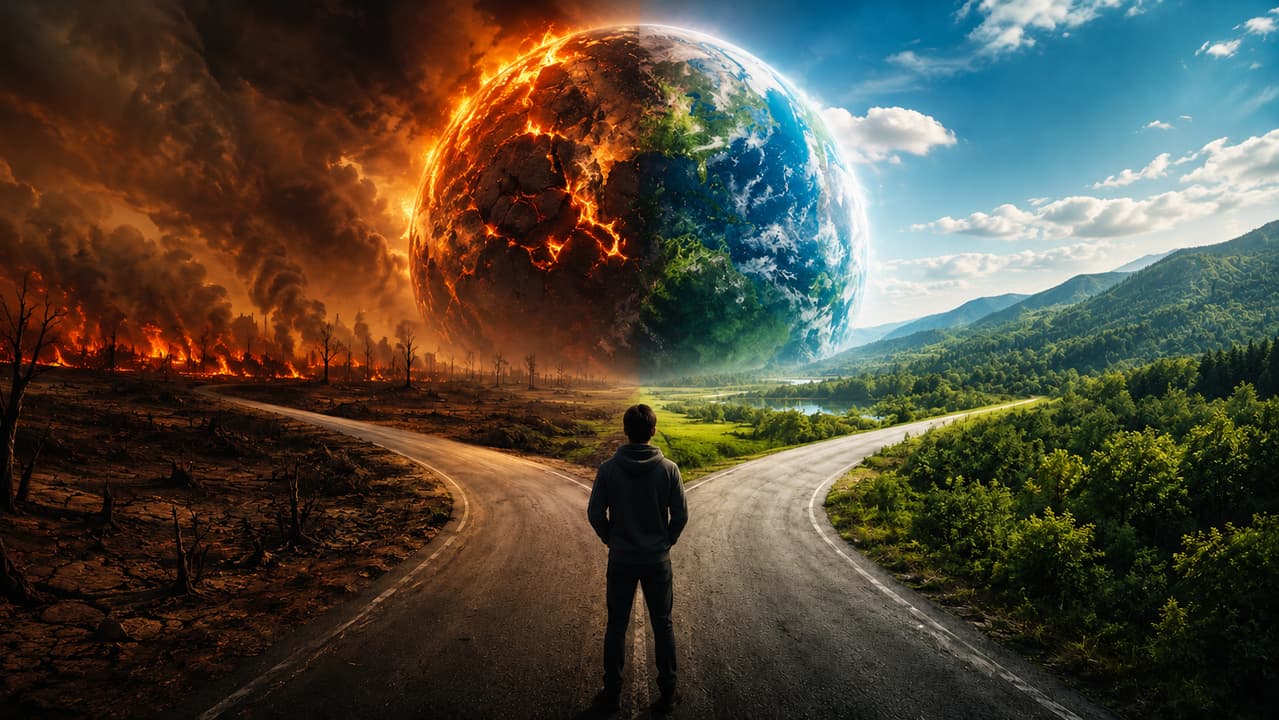
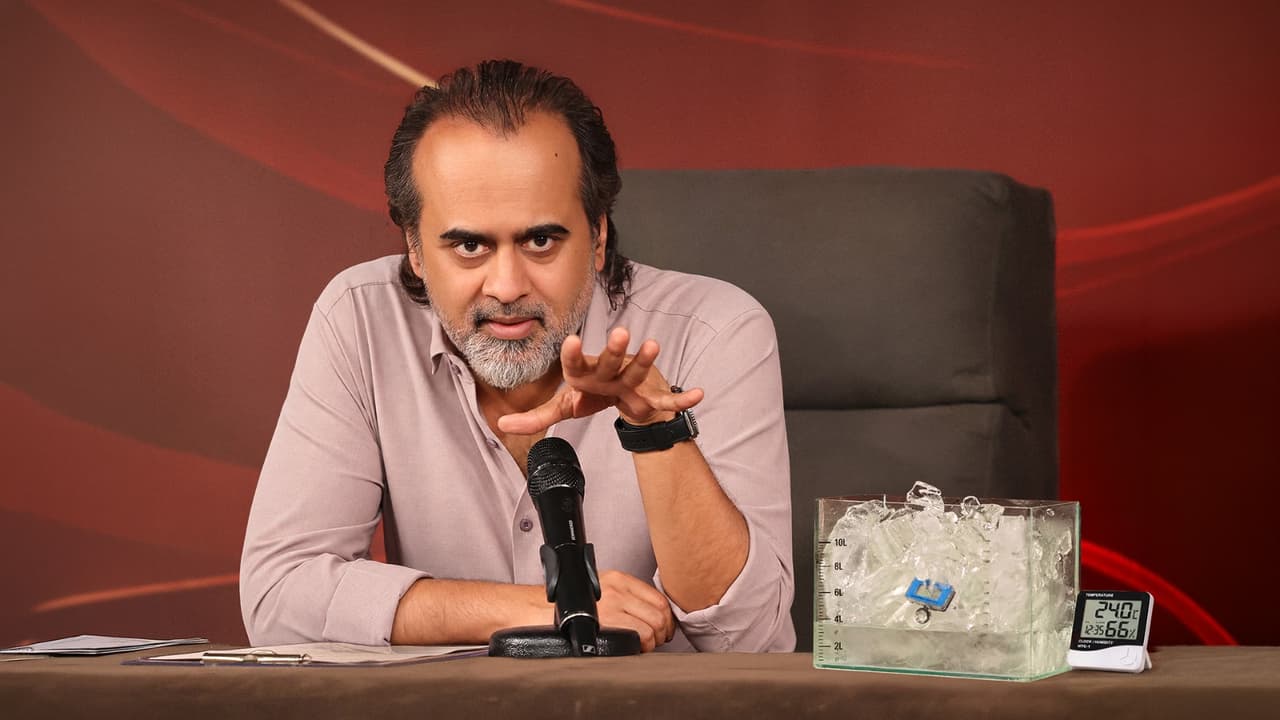
Acharya Prashant: See, spirituality is about freedom from suffering, human welfare, and the biggest threat to the welfare of not just our species but all species on the planet is climate change. It's an imminent threat. It's right hanging over our heads. So one has to talk about it. One cannot be spiritual and not talk of climate change today. If one doesn't talk of climate change, one is neither spiritual nor material. He's just foolish, just ignorant, you know, because even your material interests are going to be severely compromised. The climate crisis, it's the Anthropocene, it's the sixth mass extinction we are entering. The only difference is that this time it is totally man-made.
Questioner: Right. You've written over 100 books and of course I read your book Climate Within and according to you it's overpopulation and overconsumption that's leading to this.

Acharya Prashant: Well said. Yes.

Questioner: Climate change that we are seeing, if these two policies are adopted by the government, do you think we can tackle the problem?

Acharya Prashant: Where is the government coming from? From the same people who proliferate, increase population, and are sold out to consumerism. They are also the voters. So how does one rely on the government to enact policies that are going to violate the wishes of the voter? Isn't the consumer himself the voter? Obviously yes. So how will the governments take any action?

You see, we have had the Paris Accord and noble aims we set for ourselves and all heads of governments, they agreed. It was a big gathering, probably the biggest in recent decades. What happened to that? Are we anywhere close to realizing the mandate of the Paris Accord?

Questioner: We have crossed that 1.5 degree pre-industrial threshold. We've crossed it. It was 1.66 in 2024.

Acharya Prashant: Yes. And we wanted to reduce our emissions by around 50%, 44% to be exact, by 2030. Now instead of reducing them, as of 2025 we stand at around 3% increase, a global 3% increase. Instead of minus 44%, we stand at plus 3%. And that's when all governments duly agreed, ratified, signed. There were country specific deliverables. This is what you have to achieve as a country. This is what you have to achieve. This is what you have to achieve. And all heads of governments went back with that sheet. This is what we'll implement.

And they said 2030 minus 44%, 2050 net zero. None of that is going to happen because if the governments implement policies that would lead to net zero, those governments would fall, collapse.

Questioner: Really, because the rich are the ones who are contributing the most.

Acharya Prashant: Yes, because the rich contribute maximum to the budgets of the political parties and the poor contribute to the votes of the political parties, and neither the rich nor the poor are ready to see the crisis in its face.

We all are trying to avoid the bare naked fact. In some sense, we are all climate denialists. None of us want to accept that it is here. It is not a thing of the future.

People often say, you know, in the third world one is much more worried about things that are more pressing, more urgent. You cannot worry about something that's 20 years into the future. It's not 20 years into the future. It's right here. What's worse, this 1.5° that you mentioned is the trigger point, the activation point for a lot of feedback loops. And that's why the 1.5° thing was so significant. This figure 1.5 was so critical because once this limit is breached, several irreversible feedback loops get activated and they are not man controlled. We made them but we cannot control them.

They are autonomous. They operate on their own and also they are feedback loops, which means that once they start they intensify on their own even without human intervention. Which means that even if we try to mend our ways and to correct the situation by reducing the emissions after the loops have initiated, the loops would not only just still carry on but also intensify, which means that the things have slipped out of our hand totally now.

Questioner: So you are trying to say, the onus doesn't lie on every individual and that they need to also be responsible towards their carbon footprint.

Acharya Prashant: Obviously. And the onus lies much much more on them who understand where we currently are placed. Because the common man, he has been conditioned, trained to live a life of denial, some kind of tunnel vision where you don't want to look beyond what you call your immediate priorities.When I talk of feedback loops, and I try to talk of them as much as possible, and I’ll exploit this opportunity as well to talk of them, I see fear on people’s faces. I want them to be afraid, because it is happening right here, right now, within their lifetimes, and it’s their kids that are going to bear the very cruel brunt of it.

So they need to know at least 10 kinds of extremely vicious feedback loops have been initiated and the media is not talking about it and they are not difficult to understand. It's a very very simple thing if you see. We talk of rising sea levels, we understand that the excess water is coming from the glaciers, the glaciers are melting. We know of that. We talk of receding glaciers. What are the glaciers exposing if they are melting? They are exposing bare rock and the rock is darker in color. Ice or snow is white in color, it reflects the sunlight back, it doesn't absorb it. Whereas when ice melts, it exposes the darker rock and that is since being dark, it absorbs light. So it gets heated up.

And if it gets heated up, what would it do to the ice on it?

It would heat up the ice and the ice would melt even faster. And that's a feedback loop. So ice melts, rock is exposed, rock absorbs even more sunlight, because of that even more ice melts, and when more ice melts, more rock is exposed. And that's one feedback loop. Next, this is when we are talking of the glaciers. Then there is something called the permafrost that you see in Siberia, in Alaska, in the taiga regions, where the top soil itself has remained frozen, and having remained frozen it contains massive deposits of ancient methane. Now that is melting and we know that the greenhouse potential of methane is 20 times more than that of carbon dioxide.

We keep talking about CO2, whereas CH4 is the monster in the room. And that monster is being released. Pandora's box has been opened and it is releasing methane and that methane is going there and when methane goes there temperatures increase further. When they increase further the permafrost melts even more and even more methane is released.

Similarly, the oceans, water vapor itself is a greenhouse gas. You heat up the oceans and you are generating water vapor and water vapor increases the absorption of the solar radiation even more and that heats up the ocean even more and more water vapor is released and the cycle and cycle and cycle.

Similarly, a warmer sea surface absorbs CO2 even less. So, the oceans have served as natural carbon sinks since long. But the solubility of carbon dioxide in water decreases with rise in temperature, which means lesser carbon dioxide is being absorbed by warmer oceans.

Questioner: Sir, you know the more pollution that we're throwing out, that is causing a lot of warming, basically it's trapping the heat and it's not letting it escape and that in turn is warming up the atmosphere. That is what we are seeing. All kinds of records, like you mentioned, are being broken and this is the cycle and the pattern that is being followed. What is the solution to say pollution, something that there have been policies and policies but nothing seems to be working?

Acharya Prashant: See, even now the common man, not just in the global south but even in places like America, you'll be surprised, is releasing a quantity of carbon which is more or less sustainable. And I'm talking not just of the common man in India but in the US as well. Carbon emissions, the bulk of them, are coming from the top 5% of the population, the rich ones, specifically the top 1%.

Questioner: Right. The most developed countries are contributing more.

Acharya Prashant: Not the countries, even within the US.

Questioner: It is the rich, of course.

Acharya Prashant: It is only the rich and the ultra rich that are really responsible for the bulk of the carbon emissions. Also the emissions that are being contributed by the common man, they are being encouraged and motivated by the rich. You see, the rich are rich because they sell products to the common middle class. They are rich because they are getting money from you and me as consumers and customers. And how are we turned into customers? By diluting and corrupting our basic philosophy of life. We are told unless you consume your life is not rich.

Questioner: It's a materialistic world and the more you have the better it is.

Acharya Prashant: Yes. And they implant this materialistic philosophy in your mind so that they may not just remain rich but have a surging bottom line year after year. Even a constant level of profits won't suffice. Even the profits have to rise by a particular percentage every year. How will that happen if you and I don't consume? So they encourage us not just to consume but also to proliferate.

Don't you see many of them keep saying increase population, population collapse is happening, population decline is a big threat? Don't you see why they are saying this? Because if you don't exist as a customer to whom will...

Questioner: Help us establish a link between inner loneliness and over consuming things. Why do we all have these wish lists, ‘we want this,’ and ‘you have this.’

Acharya Prashant: No, you don't have it. You have been subjected to it. You are not born with it. You see, it's propaganda.

Loneliness is propaganda. You are being told that you are lonely so that you may purchase something as your companion. The thing that you purchase as your companion could be a material object or an animate person. It doesn't matter who he is. The thing is whether you bring this home or whether you enter into a wedding arrangement with someone, somebody's pockets are going to get lined.

Weddings are fat occasions of consumerism, aren't they? So, loneliness too, if you would look at it, is a consumerist concept. We are being made to feel lonely. It's the culture, it is being driven by money. There are movies and you look at those movies and you say, you know, there's a couple there and they're having such a great time and I'm the only one without a partner. And you never bother to ask who is financing that movie and why must it carry only a particular kind of script. Is it something about the very nature of Homo sapiens or is it something more social, more external?

Questioner: So you would say consumerism is the root cause of ecological damage.

Acharya Prashant: Of course. And that consumerism is being fueled by the capitalist who wants to turn the entire world into customers because just producing isn't enough. You must also produce customers. Producing a product, a material, doesn't suffice. You must also produce a customer. And a man or a woman can be turned into a customer only by making him feel deprived, unrich and lonely. The more desperate and frustrated and inwardly poor you can make a person feel, the more he'll feel like going out and shopping.

Questioner: So, what is the role that guilt plays when it comes to people falling into this trap?

Acharaya Prashant: Even that guilt is a construct. You have been trained to feel guilty. If you don't have these many things in your life then you're not living it up or if you're not able to provide these many things to your kids then you are not the ideal parent.

Don't you look at their taglines? There is a product and then it says the ideal man or the complete man or the loved woman. Now love has been tied very shrewdly to a product. If someone can bring that product to you…

Questioner: The love language for people has become gifts.

Acharya Prashant: There was this ad, a very veteran ad: *“Jo biwi se karte pyaar wo prestige se kaise karein inkar.”** So the wife has to feel unloved if she is not gifted this particular pressure cooker by the husband.

Questioner: Right. If you could differentiate for us between welfare and wellness.

Acharya Prashant: Welfare and wellness. They are the same thing. You could instead differentiate between things that are synonymous to growth and development. Growth and development.

True welfare means inner wellness.

So they have to go together. But then there is the concept of growth which is very numerical in its outlook. That is very different from the inner thing called wellness or welfare or development. These two must be differentiated.

Questioner: Right. Would you say that a solution to pollution can be found in the Gita?

Acharya Prashant: Pollution is a symptom, not a problem. Man has, 4 billion years ago life started on this planet. Did we ever have the problem of pollution? At least man-made pollution. No, never. We had massive beings here, dinosaurs and all, but we never had massive pollution.

Questioner: We have different problems today than what we had back then. We had poverty and many other problems, illiteracy amongst others. Today our problems are different for sure.

Acharya Prashant: See, the problems that we had back then, the problems that we have today, they are all really coming from the same source. They are coming from ignorance. You pointed at illiteracy. We are still inwardly illiterate. Just then we didn't know about how the suns and the moons operate, whether the earth is flat or not, where do the oceans end, where do storms come from. We didn't know all those things. Today we know all those things. But inwardly we do not know. Do we know where the emotional storm comes from today? We might know where a particular cyclone is coming from and through the satellites we can very cleverly predict it also.

Questioner: you've spoken about the internal storm, that's greed. How do you encourage companies and corporates to be more environmentally responsible?

Acharya Prashant: It's not just greed. Everything internally is a storm that carries us away. It is greed. It is fear. It's also what you call love. It is lust. It is anger. Everything is a storm. A storm by definition is something you can't really withstand. Otherwise it's a gentle breeze. Inwardly we have so many storms and we do not know a thing about where they are coming from.

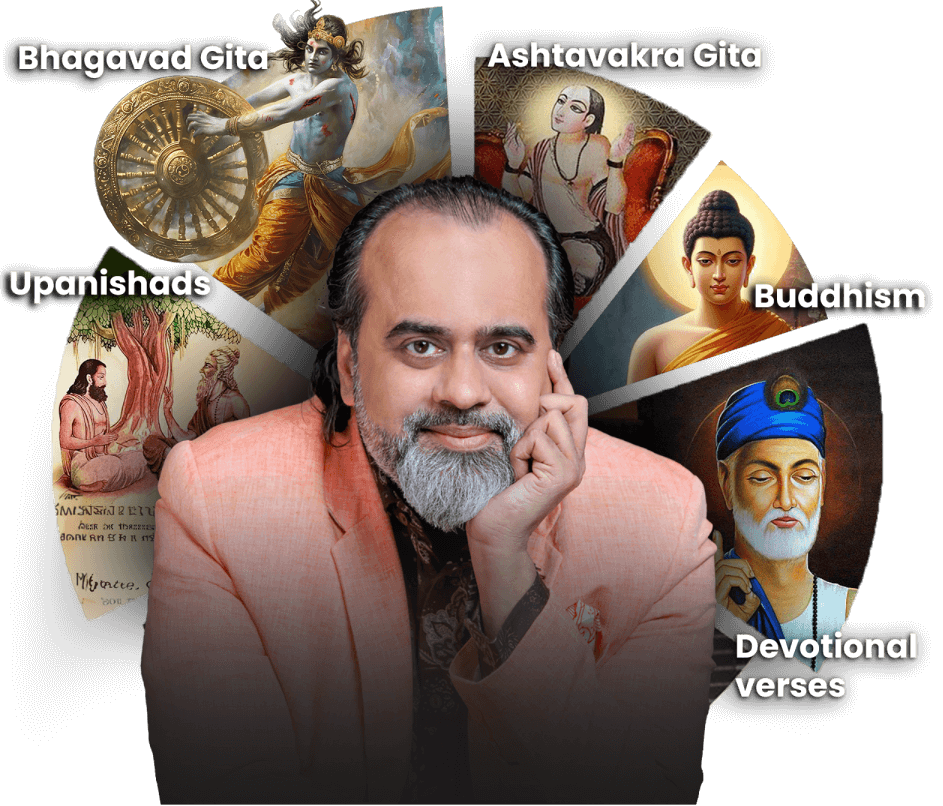
You're talking about corporate greed. Even the corporations do not know why they must earn so much. Even they have been indoctrinated into thinking that if you are running an organization, a firm, then the only justification for its success is the bottom line. Even they do not know. Nobody knows anything. But we behave as if we are clear in our objectives and we rush full steam ahead. That's a problem. Inward literacy is needed and that's where the Bhagwat Gita come in. Wisdom literature comes in. The Upanishads come in. Philosophies and darshans come in. Vedant come in.

Questioner: You speak about the animal within. You talk about the animal inside. How can one help alleviate our consciousness towards our surroundings, towards leaving behind a healthier planet for the next generation?

Acharya Prashant: It's not so much about the next generation. It's about first of all what I'm doing to myself. You know if I'm not all right with myself, how can I do any good to any generation after me? The animal within. What to do with it? Know that there is an animal within. Acknowledge it. We talk, we behave as if there is some great divinity within. We were talking about the storm. When the storm rages, do we hear dogs barking? We don't. Instead we call it some divine love or something sacred that needs to be executed or at least something that deserves our backing. We don't see that it's just the ancient animals clamoring within. So the animal has to be seen for an animal. That's possible only when you can very neutrally, impartially observe your thoughts, emotions, actions and see that they all have an animalistic basis.

The instincts that you have, the motives you have, they are all so similar to what even the street dog has, what even your cat has, what the apes and the chimpanzees have. Fundamentally, all that we want is not just similar but same as everything that the animals want. And when you can see that animal, you somehow transcend that animal.

Questioner: When we talk about what one can do to contribute towards healing the planet, everyone says, ‘This has nothing to do with me; it’s probably the corporates or the government. They need to take action, not us.’ In your opinion, what are the little changes that one can make? You've spoken about how 10% of the population can really bring about the change.

Acharya Prashant: You see a fundamental thing, if you are the suffering then you must be the one responsible for healing your suffering. The governments can be blamed, the corporations can be blamed, the rich ones can be blamed, but who is the one suffering? The fact is the ones who are the most responsible for emissions will be suffering the least. The common man will be suffering the most, even if he's not really responsible so much for the emissions. So if I am the one suffering then the responsibility is on me to take corrective action and I have to do whatever I can. For example, I'm doing whatever I can. You must do whatever you can.

Questioner: In your book you've spoken about spirituality is where the answer lies. The solution lies.

Acharya Prashant: Yes. Because we are thinking of technological and political solutions. We are saying that we must have more fuel efficient vehicles and we must have greener and cleaner technologies, which is all very good and very welcome. But that will never take care of the root cause because even if you reduce, for example an EV, if it is being fueled with clean energy, that's the best case scenario, even then it reduces emissions over its entire lifetime, which includes its manufacturing as well as disposal, maximum it reduces emissions by 40 to 50%. And if you are fueling the EV with unclean energy as we have in India, coal fired plants, then an EV over its entire life cycle reduces emissions only by around 20%.

Now if I'm inwardly greedy and accumulative and jealous, instead of having one fossil fuel car, a gasoline or a diesel car, by way of being one up on my neighbor I'll have two EVs. The footprint of the diesel vehicle was 1.0, the footprint of the EV is 0.7, but if I have two EVs that amounts to 1.4. How is a technological solution of any help?

When I was in the campus, IIIT, there were not as many flyovers as we have today, ring road, outer ring road. And if I had to go to Ghaziabad or Noida, it used to take me an hour or something to reach that place. Today the roads are far wider, it's been 30 years now, the roads are wider, we have just so many flyovers, we also have the metro.

Questioner: But the traffic is worse.

Acharya Prashant: It takes me more time to reach Noida or Ghaziabad from here. Right?

Technological solutions don't work if the insights have not been provided. A solution cannot work if the population keeps on increasing, if everybody keeps on thinking that happiness is the goal of human life and happiness is obtained by consuming more and more. There is no way a technological or political solution is going to work. And therefore I say addressing the heart of the human being is the only way to deal with climate change. This crisis has no other solution.

Questioner: Right. So sustainable living requires spirituality. Is that what you're saying? And the consciousness of one has to be at a level where you are aware of your surroundings.

Acharya Prashant: In spirituality, we do not even talk of sustainable living. Once you understand who you are and what you must do, you have all the freedom to do whatever you want to do and it will be sustainable.

Questioner: Right. Thank you so much for helping us know a little bit more about pollution, climate change and of course traffic being one of the biggest problems and the biggest contributor to pollution and therefore climate change.

Acharya Prashant: Welcome.

This article has been created by volunteers of the PrashantAdvait Foundation from transcriptions of sessions by Acharya Prashant
Comments
LIVE Sessions
Experience Transformation Everyday from the Convenience of your Home
Live Bhagavad Gita Sessions with Acharya Prashant
Categories