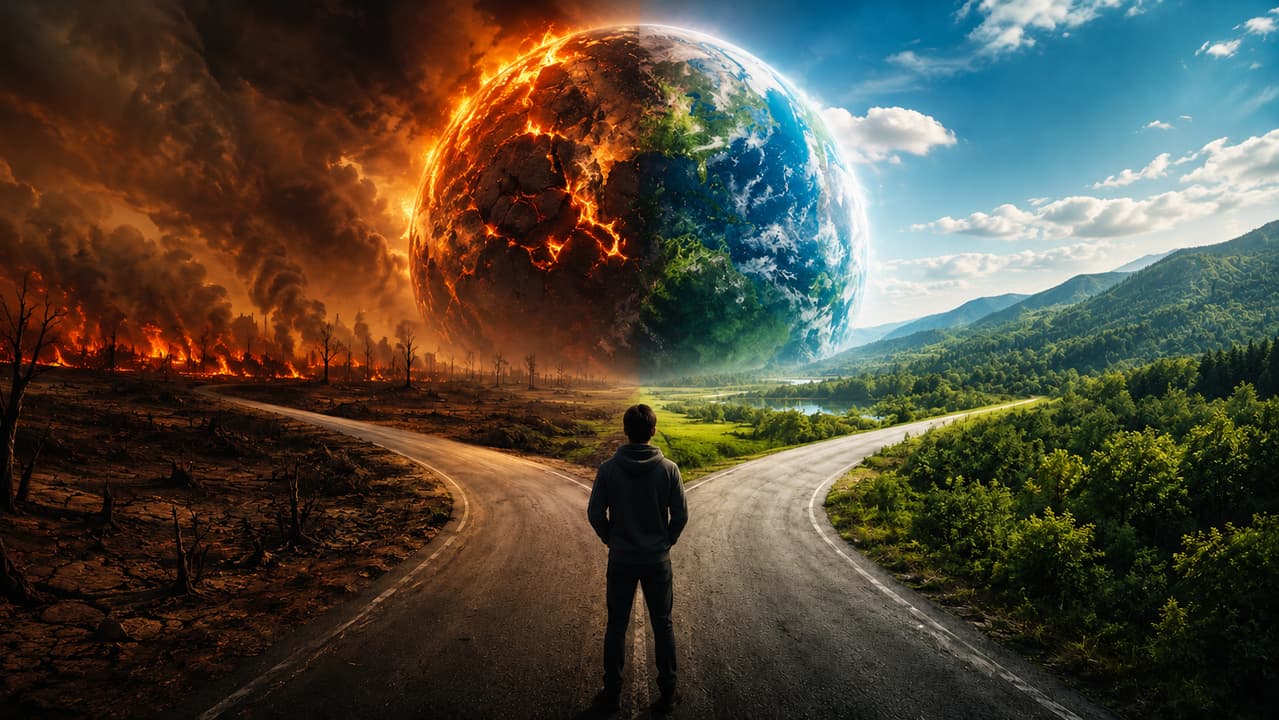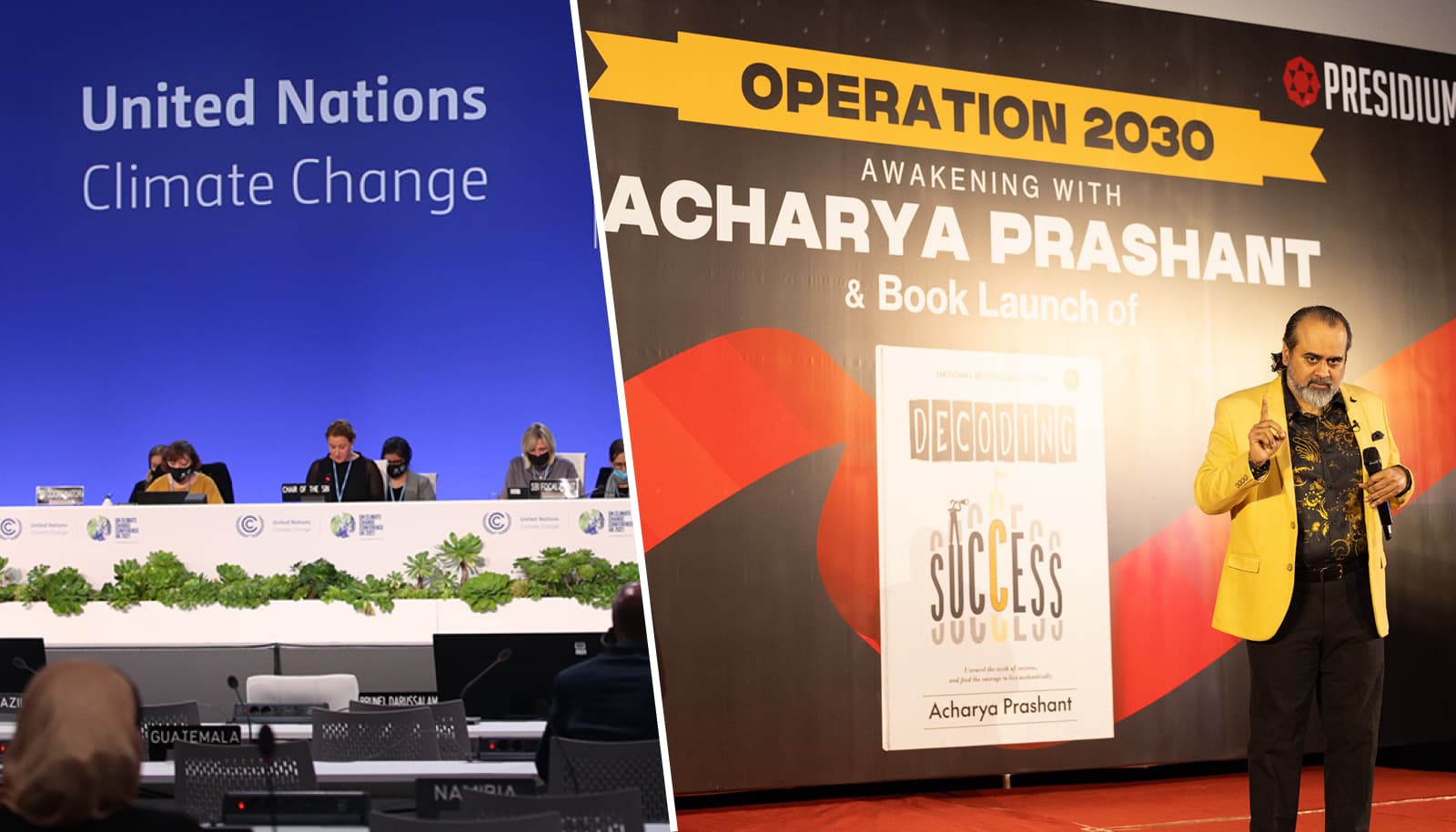
How much has the UN really succeeded when it comes to climate change? Because it's a question of consumption at its core, it cannot be addressed without talking of the consumer — who he really is. Vedanta asks a very fundamental question: For whom? Consumption is for the sake of the one you call as ‘I’. Has consumption really benefited the ‘I’? Will one ever ask what ‘I’ am really hungry for? The moment one does that, life choices will change. In fact, what the United Nations is asking for can be achieved only through the Vedantic route.
This summary is AI-generated. Please read the full article for complete understanding.
Questioner: The United Nations has laid out 17 sustainable development goals. One of them being responsible consumption and production. What is responsible consumption and production, and what role does Vedanta play in the whole process?
Acharya Prashant: Vedanta asks a very fundamental question — For whom? The fundamental question in Vedanta is not about a transcendental truth, or liberation, or any such thing. You would be surprised that the fundamental question in Vedanta is — 'For whom?' So, for example, you say, "I am watching a bird." When you say, "I am watching a bird," it is the bird that you are talking of. Vedanta says, "The bird exists, for whom?" The bird exists, 'for whom?'
Science would say, there is this fan and there is this cathode-ray tube. Spirituality would ask, 'For whom?' So, what is responsible consumption and production? The question is — for whom is consumption? In other words, why do you consume? For whose sake is the consumption made? Who is the consumer? That's the question in Vedanta.