It totally depends on what you're using AI for. You use AI to educate yourself about the climate, and then if AI takes energy to run on the net, still the deal is beneficial. Maybe by educating yourself using AI, you have consumed x units of energy, but the education would mean that you will now save 5x units of energy. So, on the whole it's a favorable deal.
We have gathered a lot of things that make us powerless—like the concepts you’re talking about. Those concepts make you powerless. Once you get rid of those concepts, you are the superpower. That superpower in the Sanatan philosophy is called the self, Atma. That’s the shruti that all Puranic literature, all Smriti, is supposed to submit itself to. The only superpower is the self, Atma—me. There is no other superpower."
Questioner: Who can best answer the basic questions related to human existence or reasons for survival, our life, our emotions, and our death? Can science with its metanarratives answer these questions, or will the Upanishads answer them?
Acharya Prashant: Science does not even look into these questions. Science is considered,…
“Before I can drop the ego, before I can disassociate myself from the incompleteness, I, the one attached to incompleteness, have to first get attached one last time.” And this last attachment is the attachment to the Guru. It is the end of all attachments. That’s the Guru. Read more....
Questioner: Why do we get so easily convinced by just anything? Few of my family members and friends follow things like energy healing and some fraudulent spiritual teachers just because they sound spiritually, scientifically, or logically convincing. I want to convince them that what they are doing is not right.
Acharya Prashant: There is nothing in spirituality that will ever violate science. It is just that spirituality will venture into areas where science never goes at all. Spirituality, for example, will talk about you. Science never talks about you. That’s the difference. That's the only difference.
Questioner (Q): Namaskar Acharya Ji. Modern life has created conditions that privilege material over the spiritual. In your view, is it possible to reconcile the best practices of spiritual mind with the high-tech material and super-modern life? If so, how?
If there is one field from where the most overwhelming evidence in support of veganism comes, it is the medical field itself. Listen to medical science, and it is the medical science that tells you that veganism is the way. Every passing day, more and more, and stronger and stronger
Questioner (Q): Why do we get so easily convinced by just anything? Few of my family members and friends follow things like energy healing and some fraudulent spiritual teachers just because they sound spiritually, scientifically, or logically convincing. I want to convince them that what they are doing is not
Questioner (Q): I have a dilemma related to material progress. When I have debates with my friends and relatives who are good with academics and meditate sometimes, they are of the view that any kind of development, such as mobile phones, internet, etc., is a positive progress for us. I
Did you invent the mobile phone? Look at your brain and your intellect. Do you even deserve to hold the mobile phone in your palm? Look at how the common man lives: he is making use of cutting-edge technology, sometimes bleeding-edge technology, without knowing half a thing about technology.
A temple must really be a university in the purest sense of the word. When people go to a temple, they must return enriched. You are able to listen to a profound lecture, or to an animated debate. You come to know of things that you otherwise do not know.
Questioner (Q): I am a PHD bioscience student, and my question is about the brain and the mind. There are some studies that postulate that we carry memories from our past lives. If that is true, how and where are those memories stored?
Questioner (Q): I have a dilemma related to material progress. When I have debates with my friends and relatives who are good with academics and meditate sometimes, they are of the view that any kind of development, such as mobile phones, internet, etc., is a positive progress for us. I
“Why do you want to follow their science? We will follow our science!” This kind of thing too you are hearing these days, no? This science and that science, as if there are multiple sciences all opposed to each other. Spiritual sciences! What kind of foolishness is this? Pandit-ji is
There is nothing in spirituality that will ever violate science. It’s just that spirituality will venture into areas where science never goes at all. Spirituality, for example, will talk about you. Science never talks about you. That’s the difference—that’s the
Questioner: In any scientific experiment there is a subject and an object, but usually the subject is biased due to his conditioning to some extent. We sometimes see scientific studies contradicting each other as they are reported by scientists having different conditionings. Nevertheless, the general belief is that science is
Acharya Prashant (AP): (reads question) "Only a soul free of desire can taste eternity." She is saying, “Had there been no desires, there would have been no inventions and discoveries, which ultimately led to a better life for all of us. According to an average person", she says, “living a
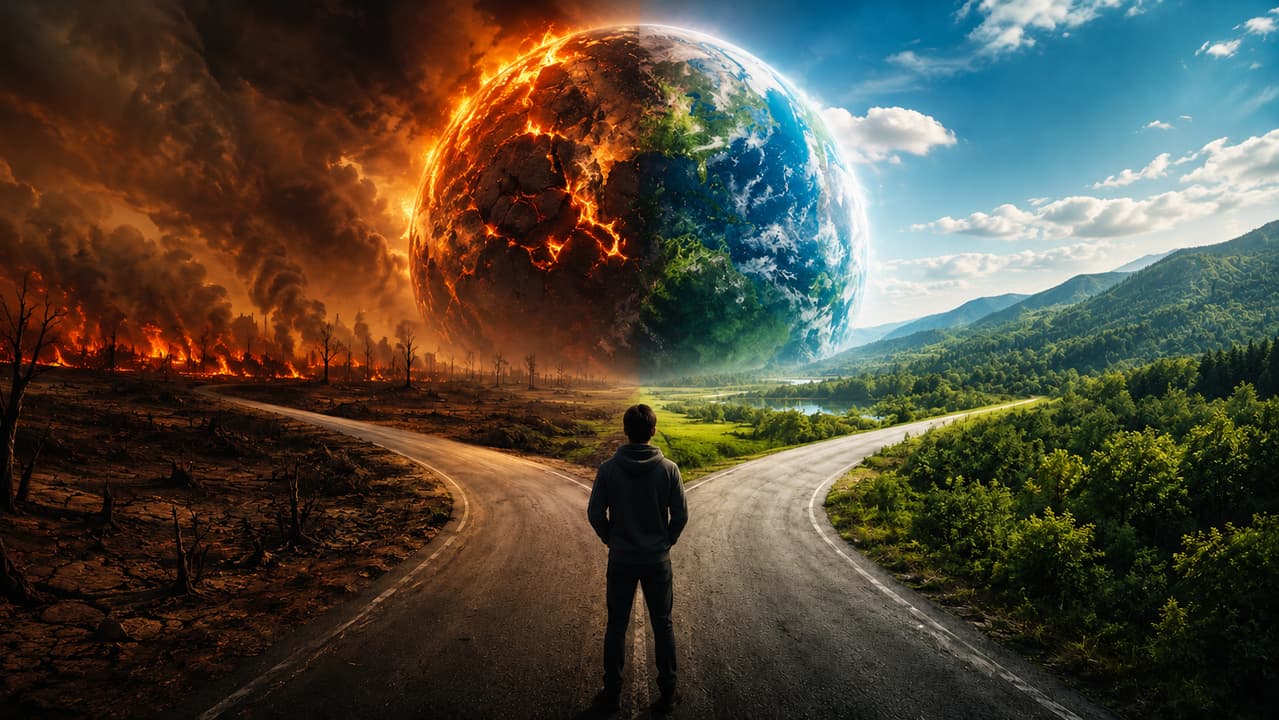
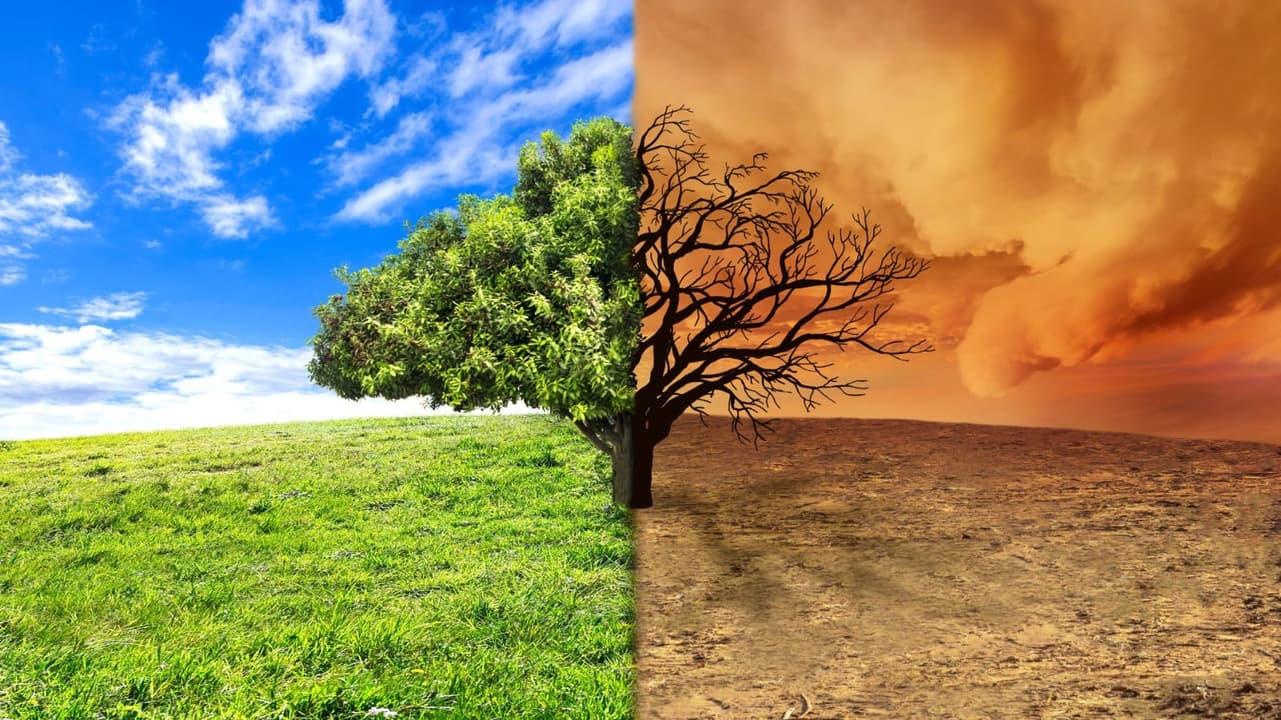
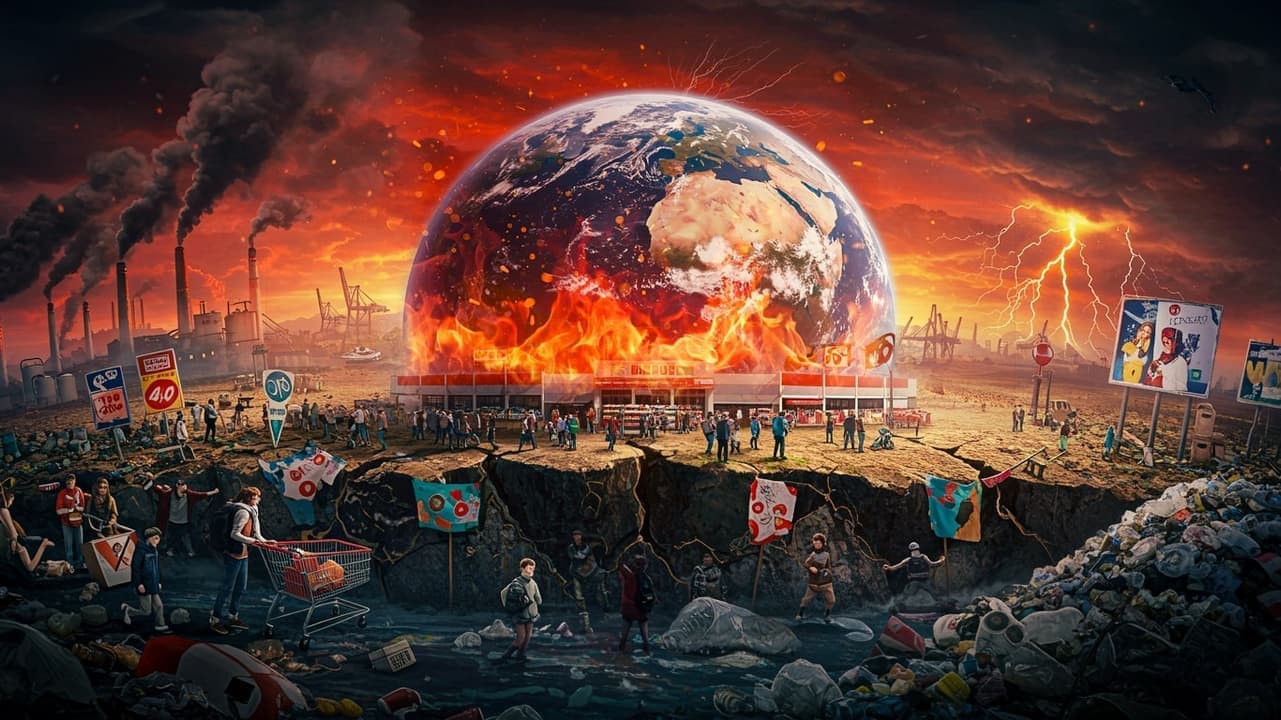
The climate crisis is not caused by nature but by human beings, their growing population and relentless consumption. The desire for greater comfort, wealth and consumption defines success, while increasing families multiply this impact. Green technology alone cannot offset such massive growth in consumption. Climate change also triggers feedback loops that worsen warming. Unless happiness is separated from endless consumption and unchecked desires, the planet will continue moving toward mass extinction.
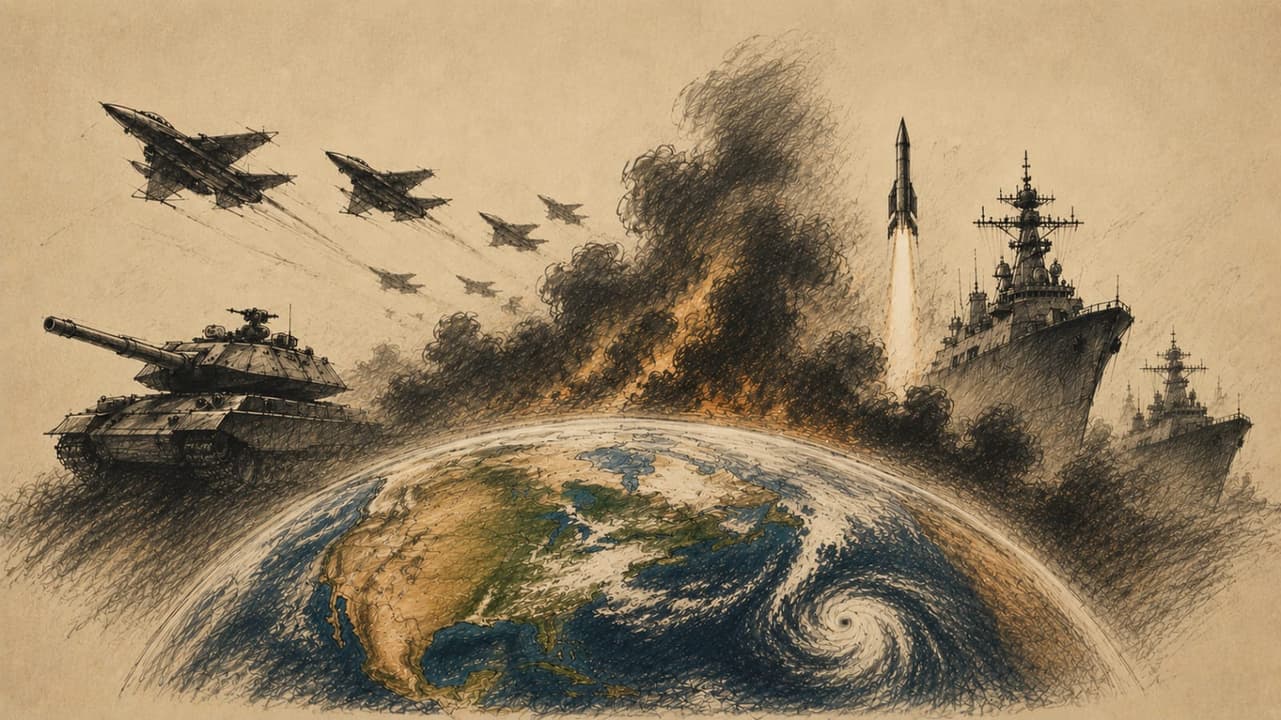
Climate change and global warming cannot be addressed honestly while the world's largest source of hidden carbon emissions—military activity—remains largely excluded from climate accountability. Wars, military expansion, and consumerism arise from the same psychological drive for domination and endless consumption. Unless the Paris Agreement includes military emissions and humanity addresses the inner causes of conflict, every effort to combat climate change will remain incomplete.
Humanity continues to increase emissions despite clear warnings about climate catastrophe. The crisis is not merely technological or political but rooted in endless human consumption and the belief that happiness comes from material accumulation. Development and basic needs are not the problem; blind pursuit of growth is. Lasting solutions require a deeper understanding of human desire, because environmental destruction begins in the mind before it appears in the atmosphere.
Climate denial is less about ignorance and more about refusing to face uncomfortable truths. Environmental destruction reflects narrow self-interest, collective confusion, and a failure to see the connection between inner values and outer consequences. The greatest burden falls on the poor, future generations, and other species. Lasting solutions require a change in human consciousness, not merely technological or political fixes.
Why am I so attracted to the personality and mannerisms of all my teachers, often curious about their lives than the truth of their teachings? When I read Jiddu Krishnamurti(JK), am I conditioned by him? Is JK’s method really ‘via negativa’ all the time?
All consumption comes from this ecosystem, this planet and in the lust of our blind consumption, we destroy life for everybody. As technology progresses, you will probably be able to consume more with impunity.There is a consumption that is needed for basic physical sustenance and comfort,then there is consumption that happens for entirely different psychological reasons. It is the second type of consumption that I am always worried about.
Question: What is the difference between science and technology? What is science? Where does science come from? Is science the mother of technology? Is science the logic behind technology?
Answer: Science comes from direct observation of the fact. One pays attention to the thing right in front. One looks deeply…
You need to understand the world, which comes from science, and yourself, which comes from self-observation. Backwardness in science leads to inner darkness. Without science and self-knowledge, technology can be very dangerous. Inwardly, we are still monkeys, yet technology grants us immense power—power we don’t deserve. If the growth of wisdom lags behind the growth of technology, we are hurtling toward disaster.
7
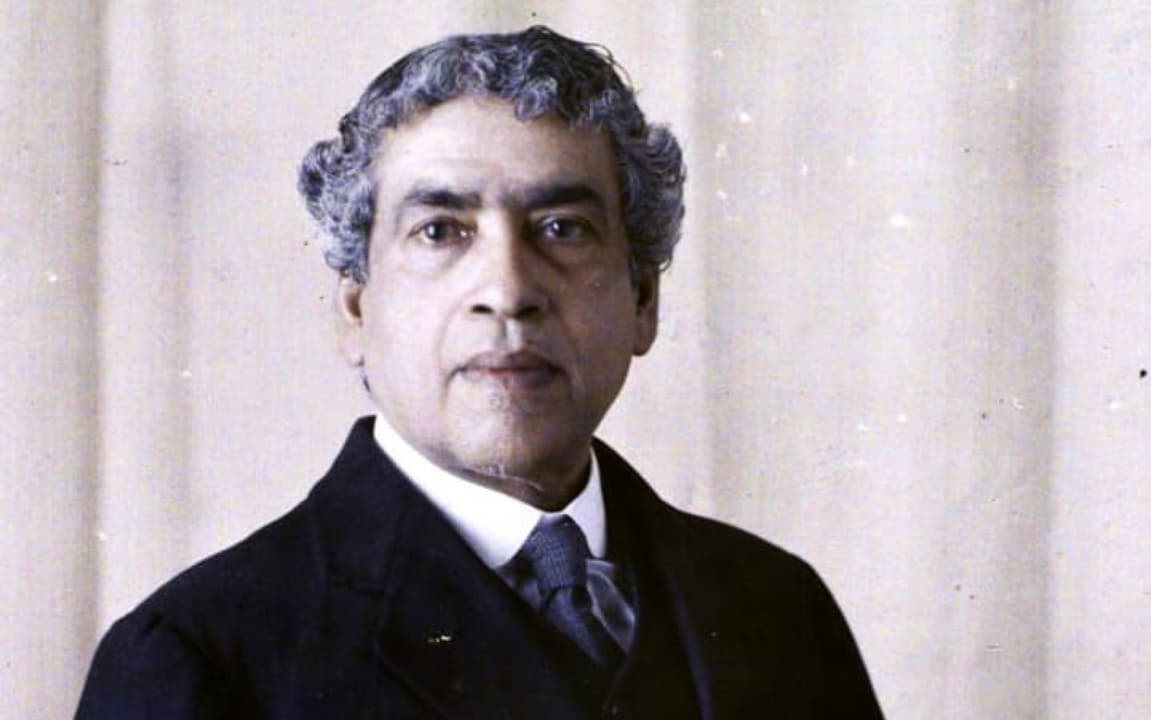
Bose's contribution to radio technology was kept in the dark and came to light only recently. Francesco Marconi, grandson of G. Marconi himself, in one of his lectures, addressed Bose as the inventor of radio, and his grandfather as its propagator. Additionally, the international organization IEEE gave Bose the title of ‘Father of Radio Science’. Many scientists believe that Bose deserved two Nobel Prizes – one for his research on radio waves and the other for his semiconductor research.
Excerpts from Articles
कद नहीं, अपनी कहानी बदलो
कई तरह के डर—अकेले पड़ने, छवि खोने या छोटा समझे जाने—की जड़ अक्सर अतीत में बनी पहचान और कहानियों में होती है। शरीर की हाइट जैसी चीज़ों को समस्या मानकर उनसे जूझने के बजाय उनकी अप्रासंगिकता को समझकर आगे बढ़ना चाहिए। अतीत को दबाने से मुक्ति नहीं मिलती; उसके करीब जाकर अपनी स्मृतियों, धारणाओं और पुराने पैटर्न को निष्पक्षता से देखना ज़रूरी है।
You Don't Understand the Bhagvad Gita, But You Still Claim That You Love Krishna?
The Bhagavad Gita deserves reverence not because of inherited beliefs about its author, but because of its power to dissolve falsehood and reveal Truth. Real devotion is not ritual or blind faith—it is understanding, inquiry, and living the wisdom of the Gita. Through sincere study, one discovers the true meaning of Krishna, making the Gita the most authentic path to knowing and worshipping Him.
ज्योतिष कितना सच है? कुंडली, ग्रह-नक्षत्र: इनका क्या अर्थ है?
वेदांत को केवल इसलिए सही या श्रेष्ठ नहीं माना जा सकता कि वह किसी विशेष परंपरा से आता है। विज्ञान जहाँ भौतिक जगत की वस्तुनिष्ठ जाँच करता है, वहीं अद्वैत वेदांत सीधे मनुष्य के ‘मैं’, उसके दुख, बंधन और मुक्ति की पड़ताल करता है। इसकी कसौटी वैज्ञानिक प्रमाण नहीं, बल्कि अपने जीवन में इसकी सच्चाई को देख पाना है। किसी दर्शन को मान लेना नहीं, बल्कि उससे स्वयं को मुक्त करना ही उसका वास्तविक उद्देश्य है।
Climate change is more than an environmental crisis—it is a crisis of human choices. Our patterns of consumption, consumerism and endless pursuit of more are putting increasing pressure on the planet. But meaningful change does not necessarily begin with new technology or stricter policies. It begins with a deeper question: what are we willing to change within ourselves?
Victory is not decided by the trophy you hold but by the battle you choose to fight. Real strength lies in making the right decisions, staying true to your deepest values, and refusing to be ruled by fear or circumstances. When your actions arise from clarity rather than ambition, the outcome loses its power over you. The moment you choose the right path, you have already won.
Struggling to choose between a secure job and the path you actually feel drawn to? This isn't really a question about careers. It's about why other people's opinions have so much power over you in the first place. Real clarity doesn't come from finding the 'right' choice. It comes from honestly looking at your own fear, again and again, until it stops running the decision for you.
Animal cruelty: Who deserves mercy, and who doesn’t?
Violence begins long before the knife or the slaughterhouse—it begins with the ego, the one that draws boundaries, seeks justification, and decides who deserves compassion. Laws and reforms may reduce suffering, but they cannot end violence while the ego remains intact. When the ego dissolves, exploitation ends naturally, and compassion no longer depends on regulation or moral boundaries.
The beauty, the glory of the Vedas lies not in the fact that they contain all the secrets of the material universe; their glory lies in Vedanta. And the Vedas are de facto immortal because what Vedanta is talking of is stuff that is applicable to all times, all people, all ages. The stuff that I have spoken to you of over the last two hours is nothing but Vedanta. So, Vedanta is very much relevant even today, and it will continue to be relevant five hundred years from today, a thousand years from today.
Share
…
When it comes to…
Listener:
What I want to ask?
AP: Yes.
Question: well, I want to ask something about the generation of Wi-Fi, What is doing that with people, with the earth, all those invisible things (Swirls hand in air). If you can say something,…
Questioner: In any scientific experiment, there is a subject and an object. The subject is biased due to his conditioning. We see many scientific studies contradicting each other as they are reported by scientists having different conditionings. Then there is little difference between Science and Faith as both are subjective.…
Acharya Prashant (AP): Life has always been high-tech, according to…
…
Acharya Prashant Ji:
Your belief in your existence. Just as you strongly believe that you do exist, you equally strongly believe that the world of your opinions exists. You cannot have a staunch belief in your being, and an inquisitive
…
…
…
We…
Acharya Prashant (AP):
No scripture ever offers you knowledge. There is a great difference between knowing Science, and Spirituality. Science is knowledge. Science is incremental. A certain fellow does something, and the next
…
…
Question: How did the brain evolve?
Acharya Prashant: There is absolutely nothing. You could say, “Just material exists.” And then a few chemicals get together, a few chemicals get together, then few more chemicals, longer chains, longer polymers which are today called as proteins. These proteins get together and they…
Acharya Prashant (AP): No, we don’t carry…
1
प्रश्नकर्ता: नमस्ते आचार्य जी, मेरा प्रश्न विज्ञान से सम्बन्धित है। तो काफ़ी समय से वैज्ञानिक समुदाय और प्रकृति में एक तरीक़े का एक तकरार चल रहा है और काफ़ी हद तक विज्ञान सफल भी हुआ है, कोविड वैक्सीन का उन्होंने निर्माण किया और शायद प्रकृति की जो योजना थी उसको…
…
…
Acharya Prashant: First of all, the definitions that pre-exist in the mind must be cleared. Spirituality has nothing to do with religious customs, religious observations, or anything that pertains to a sect, a cult, a particular path, a particular group of people, a…
only
difference.
It is very, very sad that 99%, I…
…
…
Climate change is more than an environmental crisis—it is a crisis of human choices. Our patterns of consumption, consumerism and endless pursuit of more are putting increasing pressure on the planet. But meaningful change does not necessarily begin with new technology or stricter policies. It begins with a deeper question: what are we willing to change within ourselves?
Rakshabandhan is not merely a festival celebrating the protection of a sister by her brother. Its deeper meaning is about recognizing vulnerability and taking responsibility for what needs protection. Today, that responsibility must extend to the environment—rivers, mountains, trees, oceans, wildlife, and the planet itself. True religion lies in self-knowledge, compassion, and understanding that greater power brings greater responsibility.
1
Mass extinction is accelerating due to human-driven climate change, resource consumption, and destruction of other species. The deeper problem is a worldview that equates happiness and development with endless consumption. Science itself is not the problem; without inner clarity, its immense power becomes destructive. Advaita points to a different relationship with the world, where it is not an object of exploitation but a means to deepen self-understanding and inner development.
Climate change is not merely an external crisis of emissions, technology, or policy. The deeper problem lies in the unchecked ego that seeks to fill inner emptiness through endless consumption. This psychological demand drives extraction, production, and environmental destruction while failing to resolve the underlying sense of incompleteness. Meaningful climate action therefore requires more than green technology and policy; it requires education that turns inward and examines the self.
The climate crisis is not merely an external environmental problem but a reflection of inner human greed, desire, and psychological disorder. Drawing from the Gita’s idea of yagya as desireless action, it says real ecological healing requires inner transformation. Outer pollution, exploitation, and destruction mirror the ego’s inner confusion, making personal consciousness and planetary health deeply inseparable.
…
If you are honest, you will find that significant chunks of your time are being taken up by activities you do not even want to admit to yourself. The thing is, we ought to be objective; we ought to know where it is really going. And you might discover that nobody is actually all that short of time. Time is there; it’s just that when it is spent on activities that please us, we try to hide that time because it’s our little joyful secret.
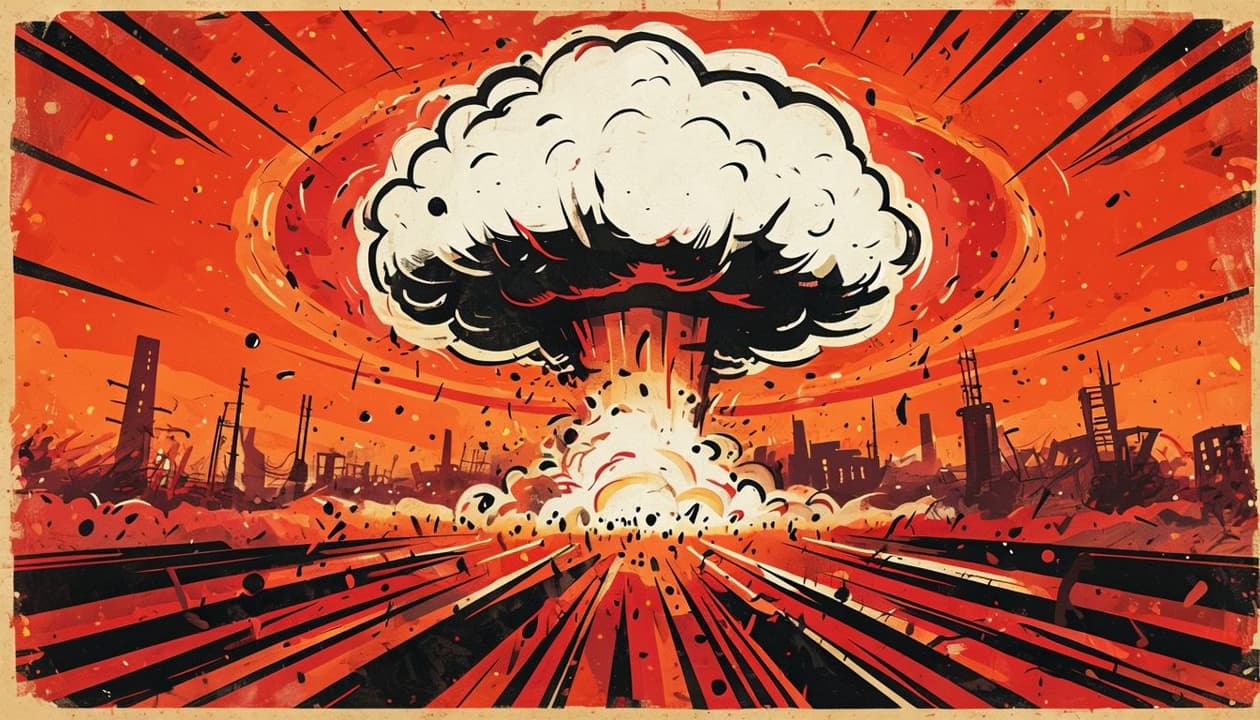
From 1945 to today, consumption drives war beneath peace globally. We have continued to be exactly the same as we were on the day of Hiroshima and Nagasaki. That war happened because the various powers wanted to consume. Have we changed internally? If not, how can there be peace? The problem is not in the structures of thought or governance. The problem is within.
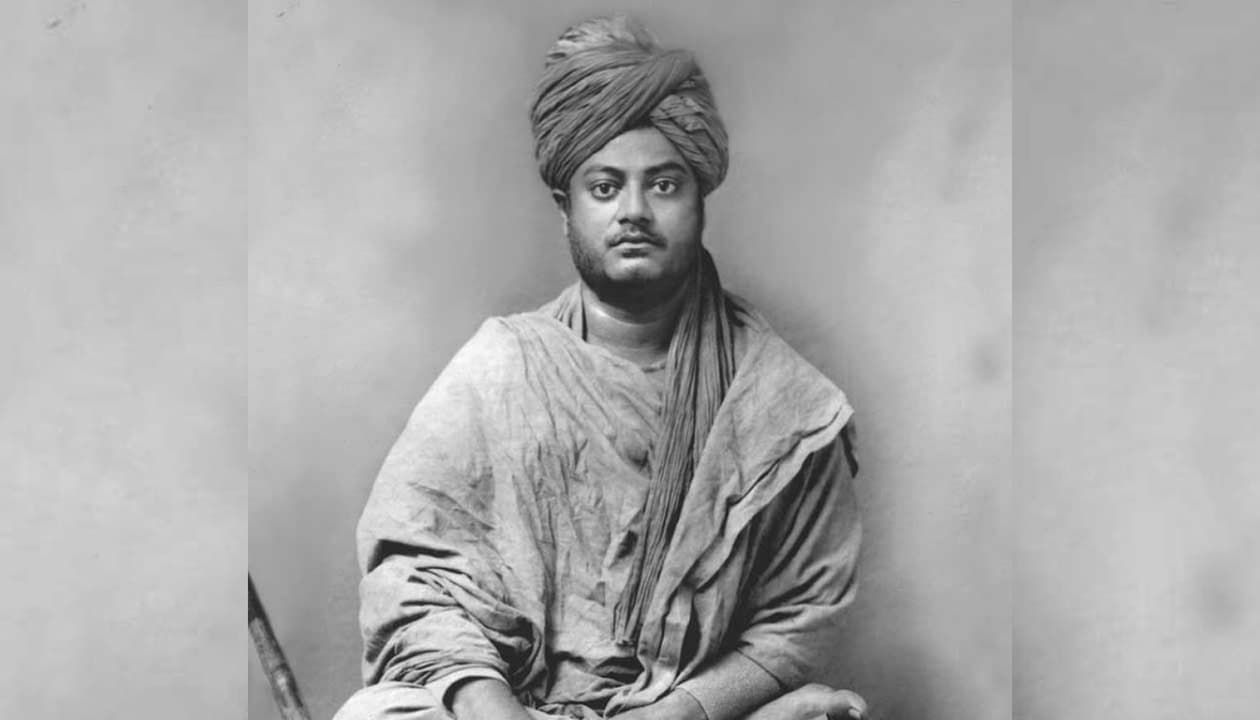
We love to talk of Swami Vivekananda as a youth icon. And I am asserting that were he to be here today, it is the youth that would resist him the most. When he returned from the United States, a huge procession greeted him, right at the port. But when he asked for just a hundred people who could be his soldiers, he was denied. Nobody wants to accept a Swami Vivekananda. He was resisted then, he would be resisted even today.
1
Why the question of sustainability is relevant only to our species, out of the billions of species on this planet? Because we have a hollow inside us, and that hollow demands to be filled. So we want more and more manufactured products, more meat, more luxury, more money. And the sad part is, none of that really succeeds in fulfilling you. But you still want to consume endlessly. And that endless consumption, arising from a spiritual point, is what the sustainability crisis is today.
I am hungry, I am dissatisfied, I want to consume. And I do not know what it is that would appease me, make me happy, quench my thirst, so I will try out everything. If you have this big a hole in your heart, what else will you do? You will use the entire universe to plug this hole. That is what man has been doing. He wants to eat up everything. The very basis of climate change is the constitution of man himself. Man cannot help climate change; man is climate change.
‘I’m not feeling well.’ Your feelings are carbon. No other species is responsible for the climate disaster. We are. Why? Because only the human being has a hollow in her heart. Climate change is the unfulfilled, dark interiors of this species, Homo sapiens. We are destroyers because we are unhappy and loveless within. There can be no scientific, no economic, no political, no technological solution to the climate disaster. Not at all. Because this is purely a spiritual crisis.
Creativity is, first of all, to realize that we are uncreative people. We are puppets with strings in the past or in the hands of others. You know noodles, your mother knows noodles, even your grandmother may know noodles. So noodles are very well known. But all the other things will require a question mark; otherwise, you cannot know. So creativity begins with that question mark. Creativity begins with stepping outside your known zone.
3
Let the Earth be destroyed. We have to save humanity. Wow! The human body is 70% water, and the Earth’s surface is also 70% water. Can’t you see that we are the Earth itself? Going to another planet means thinking of collective suicide. Just remember one thing: we don’t live on this planet, we are this planet. Either two of us live together or we go down together, because we are not two at all. We are one.
10
Ours is a democratic system. You are the government. If you want to accelerate climate devastation, it will be accelerated. Who can stop it? A leader is just a poor person, typically an old man. How will he resist the combined might of the electorate? All real change can happen only at the level of the individual. Once it happens there, it takes no time for governments to toe the line.
If you think you can do it at the policy level, that sounds very tempting but means nothing, because you are trying to defy the very law of existence. You are saying the minister will do it. Why will the minister do it? The ones in power have the least interest in any climate action because they are the ones with the minimum stakes there. You'll have to awaken the individual so that the one in power listens to you. Awaken the individuals. What else? There is no option.