Acharya Prashant: Chandogya Upanishad — Chapter 3, part 11, verses 2 and 3:
न वै तत्र न निम्लोच नोदियाय कदाचन । देवास्तेनाहंसत्येन मा विराधिषि ब्रह्मणेति ॥ ३.११.२ ॥
na vai tatra na nimloca nodiyāya kadācana | devāstenāhaṃsatyena mā virādhiṣi Brahmaṇeti || 3.11.2 ||
Never does this happen there; never did…
Acharya Prashant (AP): What’s happening here, firstly I will read it out to you and then explain.

True freedom begins when we question the beliefs that make us feel trapped. Most of our suffering comes not from circumstances but from unquestioned assumptions, attachments, and imagined obligations. By suspending our beliefs, even briefly, we allow truth to enter, revealing that life always offers choice. Transformation is born from love for truth, the courage to let go, and the willingness to step beyond the boundaries created by the ego.
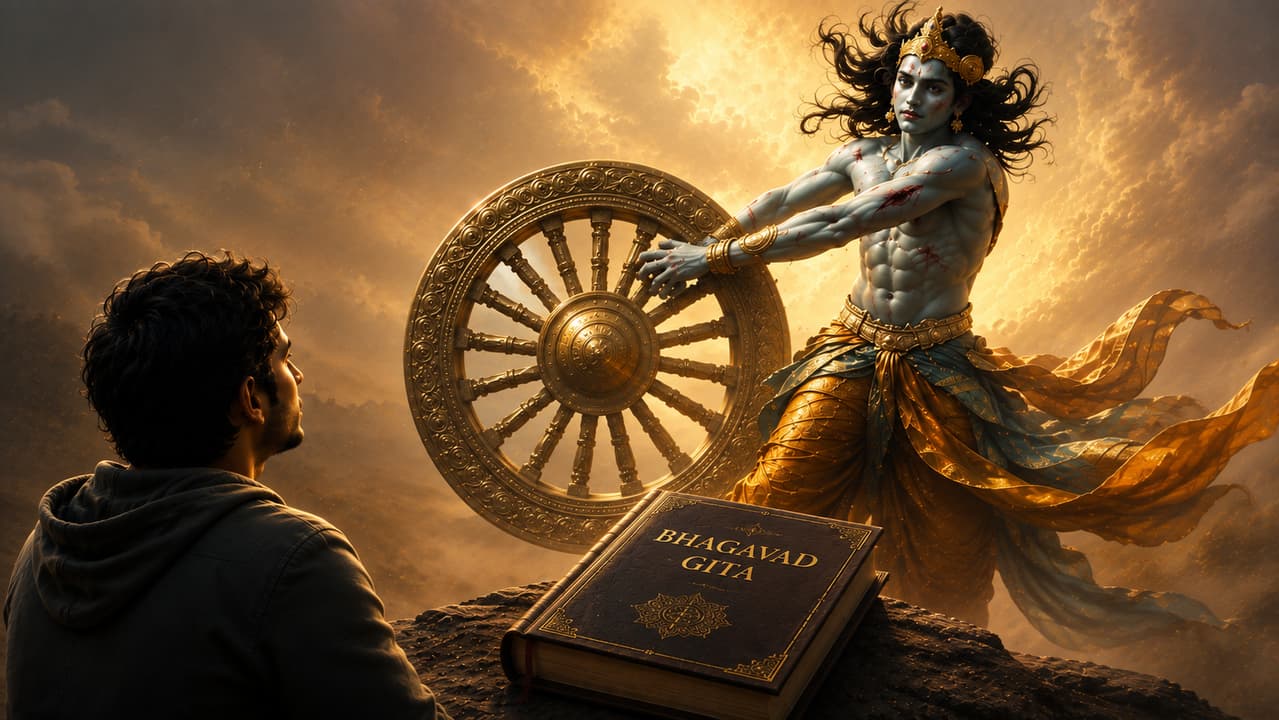
The Bhagavad Gita deserves reverence not because of inherited beliefs about its author, but because of its power to dissolve falsehood and reveal Truth. Real devotion is not ritual or blind faith—it is understanding, inquiry, and living the wisdom of the Gita. Through sincere study, one discovers the true meaning of Krishna, making the Gita the most authentic path to knowing and worshipping Him.

Real change begins not by changing the world alone but by understanding the one trying to change it. Laws, technology, policies, and scientific progress have value, yet they cannot solve problems rooted in human consciousness and endless desire. Truth remains the same across cultures and disciplines, requiring only a change in language, not in essence. Lasting solutions emerge through honesty, self-inquiry, and inner transformation, because no external system can replace a change in the human mind.

The mind is not an independent entity but a structure built and maintained by the ego through thoughts, memories, beliefs, and experiences. Most spiritual practices fail when they become distractions from examining the ego itself. Experiences, emotions, and preferences are often conditioned and unreliable. Real inquiry begins with observing the experiencer, admitting facts without distortion, and applying the same rigor to inner life that science applies to the external world.

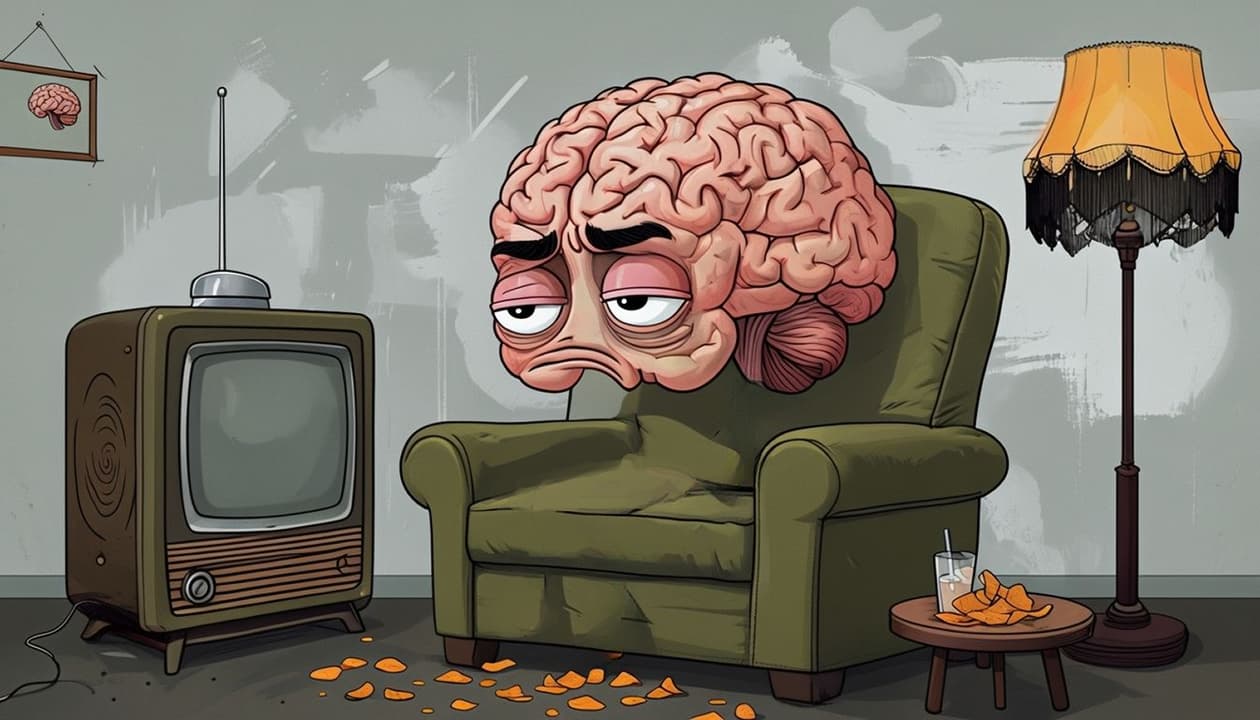

The mind of a sage is continuously sensing a reality beyond appearances, a reality beyond limits. There is a constant realization that all the diversities share commonalities and there is something beyond the diversities that contain all the diversities. This feeling is being given a poetic manifestation in this particular verse. What matters here is the sense that there is something definitely beyond; that which is perceivable, all that which can be experienced between the Earth and the sky is of little importance compared to that.
Operating from the highest inner point means living with honesty rather than self-created illusions. The ego becomes “higher” not through mystical growth but by dropping false self-images and testing its claims against reality. When honesty weakens, lower motives take control, creating inner conflict and disorder. Real growth lies in continuously questioning oneself, facing uncomfortable truths, and preventing the ego from being driven by comforting but deceptive beliefs.
Our mood is always dependent on others and situations. Results have not been up to your expectations. So now you require a morale booster, some motivating speaker. The moment that fellow is gone, your energy also goes away. But there is another way of living. Deep within myself, I find a point that no external situation can touch. Whatever happens, happens on the surface. That will remain stable, uninvolved, a non-participant. Then you are really free.
“Immersing myself in deep meditation.” What do you mean by meditation? And who is being immersed? Please tell me, beyond a trick of words, what is this? But you’ll never ask these questions, because some Baba-ji totally dominated your faculty to question with his get-up and demeanour. Real spirituality is not about something that sounds elevated or respectable. Whenever you are bombarded with high-sounding fluff, learn to ask this question; what exactly does that mean?
This breath-in, breath-out, stomach-in, tummy-out; this is not meditation. Even animals do not need training in breathing, and we are being taught how to breathe. What’s going on? You know, you should breathe mindfully. Why? Is there anything wrong with your breath? Meditation is nothing but an observation of the naked inner fact. That is meditation. To stand naked and honest in front of what is, that is meditation.

We teach our kids to write applications: “Humbly I beg to submit that today I have an ache in my tooth.” “Humbly I beg to submit!” If you are stating a fact, if the toothache is real, why the hell are you groveling? If that is the Truth, why are you begging? Drool, drool, drool. That’s become our culture. If your philosophy tells you to submit and surrender to several masters, you will never be a truthful person, because in Truth there is no authority but the Truth.

This in itself is a philosophical question. This is why you should study philosophy, because you already have this question. Philosophy is your affection for the Truth, your leaning towards the Truth. Don’t you want to know the Truth? How many of you are happy with lies? Nobody. So, it is this love for Truth that we all innately have; that’s called philosophy.

Drop the center of confusion, come to the center of clarity. Drop what the masses practice, come to the direct route of self-realization. That’s what it means.

In the rule books of the courts, there are offenses of a thousand kinds, but when it comes to life, there is just one offense, ‘Did you live by the Truth or did you betray it?’ Remember that chap called Bhagat Singh and his associates. The courts declared they were guilty, and they were still joyful because they were absolutely not guilty in front of life. Live rightly, and then don’t apologize. That’s it.

The Bhagavad Gita, in essence, is a struggle of mukti (liberation) against sanskriti (culture). Shri Krishna urges Arjun to discard misogyny and cultural superstitions; the only thing that matters is mukti — liberation. Culture and traditions are time-bound; they hold meaning only when they point towards Truth — timeless, Sanatan. Have great traditions, and always be careful that your traditions are pointing towards the Truth. Only then do the traditions have life.
![Truth Without Apology [Book Launch]](https://cimg.acharyaprashant.org/images/img-db3ddbf9-ebdf-4baa-8b47-9373d316d478/30/image.jpg)

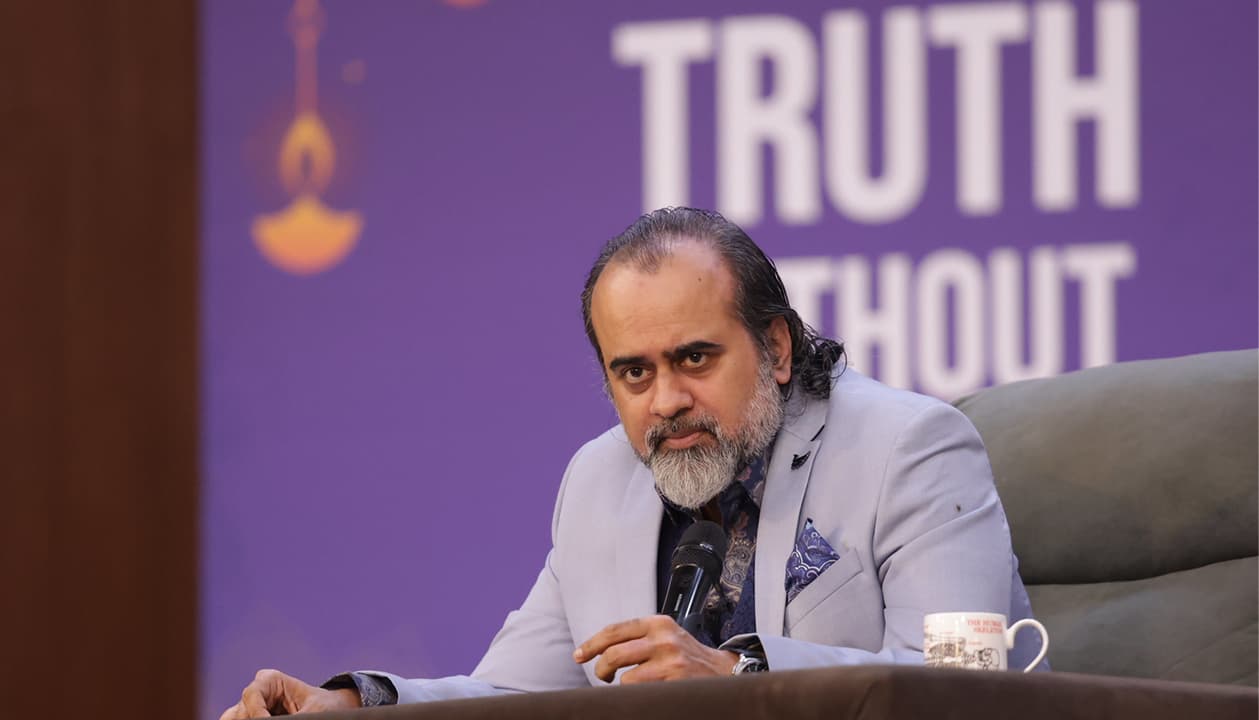
This evening in Delhi, a new book steps into the world—Truth Without Apology by Acharya Prashant. The launch takes place amidst seekers, readers, and companions of his work. In times when words are often polished to please and truths are dressed in comforting disguises, Truth Without Apology arrives like an uninvited storm—direct, raw, and uncompromising.

Life comes to us in an unending number of ways and you never know what's going to happen next. We are starved of something that really penetrates the surface. So, it is the intensity that this book brings — arrow-like depth, striking like lightning, immediately, so you don't have a chance to escape away from it. Like a Zen koan: very brief, very effective, and does its work in a snap. You could open just any chapter from anywhere and find it as if it was written just for you.

We never know the total. The mind, the senses, the grasping power are all limited. The total is available to you, but not through the root of intellectualization, not through the root of causation. The total is available in silence, in noise, in movement, in appearance, in grasping, in holding, in intellect. When you are still, then that which is to be known is known just by itself — without reason, without cause, without preparation, without desire.

The Truth is not a complicated puzzle. Everything is laid open, right in front of you. So, if it is not happening even now, then it is just because of your own mischief. We give preference to the trivial and miss out on the important. We drift from one thing to another, with no thing meaning anything to us. You are not missing the secret; you are missing the obvious.

When words arise from an honest observation of life, then those words are called "divine."

The distinction between spiritual life and worldly life is a false distinction. Spirituality is not morality or a set of commandments. It is never instructive. You do not need great formulations or special practices. Spirituality is basic honesty. Just see and acknowledge what is going on, and then the right action follows. Nothing else is needed.

Acharya Prashant: That's why the rājasika mind is better than the tāmsika mind. The rājasika says, “I’m not alright. I need to do something to become better. I feel inferior. I feel incomplete. I need to rise. I need to achieve.” That’s the rājasika mind. The rājasika mind at least…

DANCE NAKED
Dance, Lalla, with nothing on
But air: Sing, Lalla,
wearing the sky.
Look at this glowing day! What clothes
Could be so beautiful or
more sacred?
~Lal Ded
Acharya Prashant- what does it mean to dance with nothing on?
L1- No causes.
AP- What does it mean to…

Explore Books on Lord Shiv by Acharya Prashant, revealing deep Vedantic insights into Shiv’s true essence, symbols, and spiritual wisdom beyond misconceptions.

All forms of gods and goddesses have emerged from man's mind — they are our own projections. Even if you show a god in the form of an animal, the animal will still be anthropomorphic, very closely related to human beings. So, this proves that we are worshipping our own form. Therefore, if any form does not remind you of a Truth beyond the form, then the form has not succeeded on you. This is why the highest spiritual philosophies have always said that the Truth is formless.

For change to happen, somebody has to be a change agent. But if that agent starts thinking, “I’m not exploited; I benefit from this discriminatory system too,” then who will demand change? My employer earns 11X from my intellectual labor, pays me X, and saves 10X. But that X enables me to run my household and fulfill my dreams. So, will I ever rise and rebel? The system bribes you into submission. The exploiter incentivizes the exploited to stay exploited.

Shakti represents everything in motion, everything that can be experienced, everything in space-time. We move in search of a final destination. That point is symbolically represented by Shiva. Those who are inclined towards having the right kind of movement worship Shakti. Those who have fallen in love with the destination itself, worship Shiva. The fact is that the two are inseparable.

To the one who believes in ghosts (Bhūta-Piśāca) — for him, they exist. When you are asleep and are engaged in some nightmare, you feel it actually exists. Bhūta-Piśāca Nikata Nahiṁ Āve, Mahāvīra Jab Nāma Sunāve: Mahavira Hanuman, devoted to Shri Ram, is to be taken as the representative of Truth. If you can be close to the representative of the Truth, you will get rid of all nonsensical and horrifying imaginations.

Practice means incremental improvement, daily improvement, moment-to-moment improvement. That's what we started this session with. Step by step you have to move — even towards the absolute. No one step can take you to the absolute. Not even a million steps can take you to the absolute. But still, there is no way except the million steps.

What you call as God is a concept; Truth is not a concept. Therefore, you can have stories about God, various religions, and their miscellaneous beliefs. But you can have no story at all about Truth because it is that which is invariable. Time cannot change it, and it doesn't vary from person to person. Irrespective of your subjective state, it remains as it is. Truth just turns you silent.

The Truth cannot be objectified as a thing, place, person, or book. So, don't be too quick to accept your own assessments, judgments, likes, dislikes, and experiences. Whatever you're seeing is seen by "you" — the Ego — and you are no absolute. Everything must be available to enquiry, investigation, and questioning — and questioning cannot happen if you declare that you’ve already come to the Truth. Never believe that the journey has ended or that the ego itself is the Truth.

Never forget who you are — you are someone in prison. Talk of exits, and if doors do not exist, blast the damn walls. That's the reason why you need power. You should honestly and realistically seek freedom from your current bondages. Your responsibility is not to acquire something more. Your responsibility is to drop a lot of things. Drop what you know to be needless and harmful.

The truth that we all inwardly love without even knowing we are in love. That truth is independent of time. It is independent of everything that's temporal, geographical, spatial, cultural. Spirituality has nothing to do with the clothes that you choose to wear, the language you speak, the way you behave, whether you address someone as this or that. facing a particular direction while eating or sleeping. No.

The most common thing in spirituality and science is 'an honest urge to know the Truth.' Science observes the external universe, and spirituality observes the mind. These two have to be in tandem. The one thing that enables true knowledge in any field is honesty and integrity.

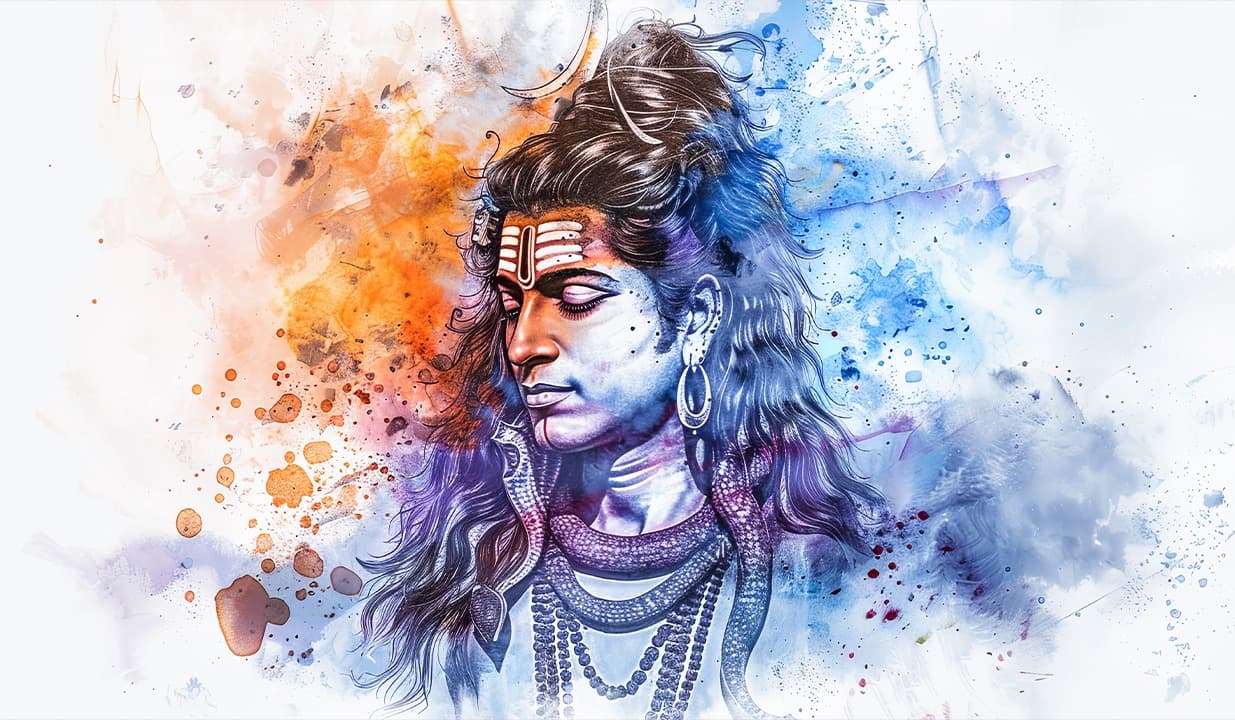
So 'know', don’t try to know about Shiva. Shiva is not furniture. Shiva is not a tree. Shiva is not a cloud, not even the sky. How will you know Shiva? Do you know of anything that has no shape, no form, and is eternal? How will you know Shiva? But know, do know. What can you know? This world and yourself. Know that. That knowing is Shiva-ness. Shivatva.

The Gita is useful because its setting is extremely relatable. Just like us, Arjuna does not know himself—he's a victim of multiple identities and all kinds of conditioning. Therefore, the Gita is about letting Arjuna know who he is, and this illumination enables him to do what he must. So, first of all, see that you are Arjuna. Then, step by step, verse by verse, there will be some resolution.

No, no, you don't have to be empty of anything. You just have to be empty of the choice to use anything in your defense. You are born with ammunition; you don't have to keep the ammunition aside. Let the gun be there with you—just don't fire at the teacher. That's all that Shri Krishna is saying. You don't have to empty the gun. Keep it loaded; it's all right.

Meditation is the submergence of the ego in its essential nature. It is at the root of all self-knowledge and wisdom. However, most often, what we call meditation is just escapism—using some ‘method of meditation’ to superficially soothe our restlessness or gain temporary and deceptive relief from stress.
True meditation…

Amrit is at the center of the story. And where can we get Amrit from? By self introspection. The more a person knows himself, the more he will become free from himself. Free from death. What you think of yourself is known as death. And the more you look at yourself, the more you understand that what I think of myself is all futile. I'm actually not that. Negation, Neti Neti. Amrit does not mean gaining something. Amrit means being free from death.

It’s unfortunate that today, methods of meditation are being mistaken for meditation itself. Meditation is what makes us human—it must be continuous, 24x7. No method can be continuous or 24x7. Meditation is a way of life, a beautiful love affair. Just as the body cannot wait to breathe, consciousness cannot wait to meditate—it’s a madness of love, not dry, ritualistic, or time-bound.

I have been insisting continuously that consciousness, real consciousness is a choice. In a process, there is no choice. The fellow in front of you, how much of a choice does he have? If he has no choice, why get angry? And if he has choice, then the mark of having choice is that you will not choose wrongly. And then you will not get a reason to be angry at him. Had he really had a choice, he would have chosen rightly. And had chosen rightly, you would have found no reason to get mad at him.

The ego seeks security from the world and even when it comes to the truth, it still wants to somehow uphold its security. It is all right if one wants to guarantee one's security against the world. But when it comes to truth and beauty, that's when one should just drop the defenses. It is all right to be immersed. It is all right even to be drowned. It is all right even to die. What is the point in conserving something that is anyway imperfect?

In modern times, reading and respecting the Shastras is often seen in a derogatory light. An Asura disregards the scriptures, saying, “What I know is right. My own experience determines the Truth,” rejecting them because they will not allow him to do what he wants. We have come to a point where we are not merely ignoring but actually insulting the scriptures. If you're sincere about knowing life, why avoid a document with deep insights into it?

The mind chatters only about little and inconsequential things. First of all, the matter would be a petty one; secondly, irrespective of how long the chatter is, the matter can never be brought to an end; so it is inconsequential. The mind loves to engage itself with itself. The mind loves to roll in its own stuff. Give the mind a proper purpose. Let the entire body, your entire system, everything in your existence be focused, be channelized towards the right purpose in life.

The mind is the entire set, the whole universe of objects that the ‘I’ has a relationship with. Not the entire set of everything that is there in the universe. One does not have a relationship with everything. But whatsoever one develops a relationship with becomes mind. An object untouched by the self, the ego is just an object. But the moment the object is touched by ‘I’, it becomes vishay or mind. And, mind is an accumulation, a congregation of objects that it is in relationship with.

You rather have to be relaxed and just receptive. It comes to you. You don't have to chase it. You simply have to unlock your door, and these two are very different approaches. What does the devotee do? He just opens his doors and waits, calmly waits. He doesn't want to enforce his will. Non-resistance. Active pursual would all be within yourself. You are actively pursuing the beyond within yourself.

The mind is both your best friend and your worst enemy. It’s your friend when it operates with intelligence and attention, but when there is no attention, when there is no care or love, then intelligence does not function. And then, the mind is your worst enemy. A prisoner knows no joy, no freedom, no love. Your own sleep keeps you imprisoned. The moment you wake up, you are free.

Gita and philosophy and Vedanta have nothing to do with God. They are in search of Truth, not God. These are different things — Truth and God. Secondly, all the objects that you look at, you look at them in search of something. In search of the Truth, you look at all these objects. In that sense you could say, I am looking at everything in search of the absolute. To the ego, everything carries a promise, a possibility of the absolute. That does not mean that all the objects that you look at contain the infinite or something.

There is nothing more scary than the Truth. The primary function of Truth is to negate all your falseness, to show you that you are living in lies. Truth supports you in the sense that, without its help, you cannot even see falseness. Truth cannot be pleasant to what we are. Truth can only be pleasant to the Truth. Before the Real can come, this false one must disappear.