We never know the total. The mind, the senses, the grasping power are all limited. The total is available to you, but not through the root of intellectualization, not through the root of causation. The total is available in silence, in noise, in movement, in appearance, in grasping, in holding, in intellect. When you are still, then that which is to be known is known just by itself — without reason, without cause, without preparation, without desire.
“स यथा सैन्धवघनोऽनन्तरोऽबाह्यः कृत्स्नो रसघन एव, एवं वा अरेऽयमात्मानन्तरोऽबाह्यः कृत्स्नः प्रज्ञानघन एव; एतेभ्यो भूतेभ्यः समुत्थाय तान्येवानुविनयष्यतिति,

The mind is not an independent entity but a structure built and maintained by the ego through thoughts, memories, beliefs, and experiences. Most spiritual practices fail when they become distractions from examining the ego itself. Experiences, emotions, and preferences are often conditioned and unreliable. Real inquiry begins with observing the experiencer, admitting facts without distortion, and applying the same rigor to inner life that science applies to the external world.
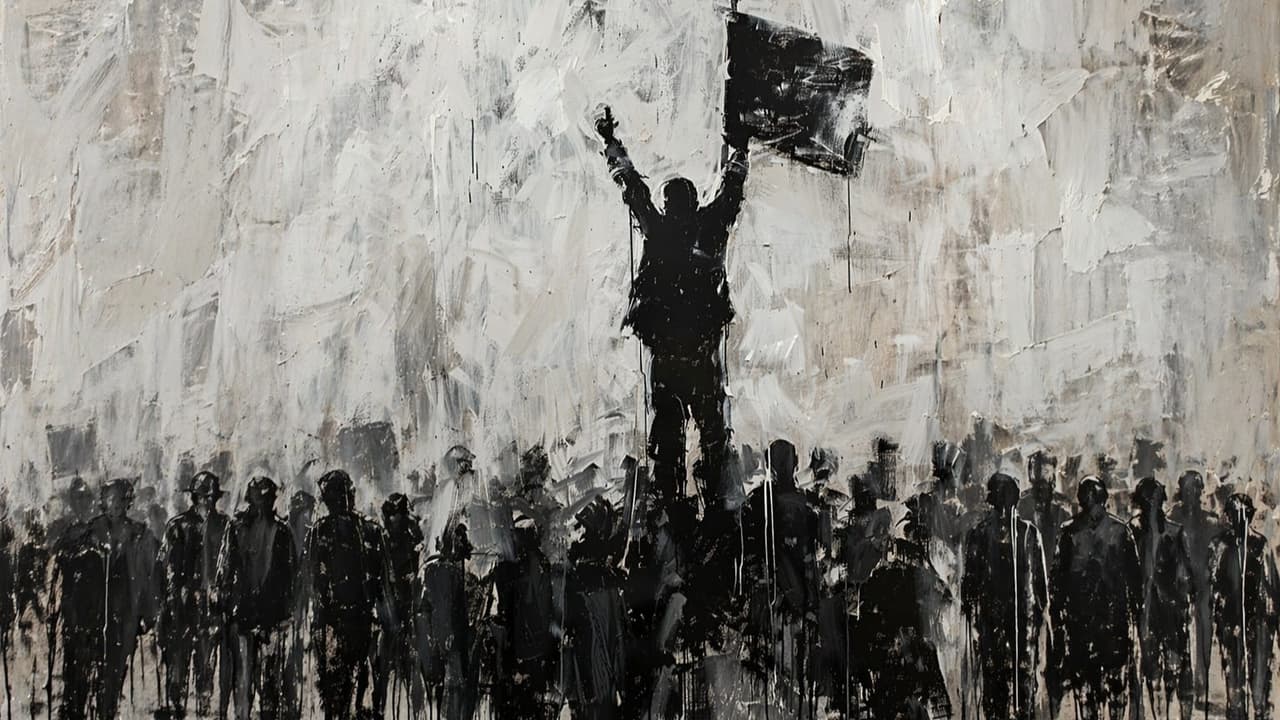
You look at Iran, at revolutions, and ask: can systems really bring freedom? Revolutions keep replacing one system with another, yet the chaos remains. The real question is rarely asked: what within us creates these systems? Real freedom is not political or social; it is inward. Without inner change, every revolution only rotates power, never resolves suffering.


न प्रेत्य संज्ञास्तीत्यरे ब्रवीमीति होवाच याज्ञवल्क्यः ॥ 4.5.13 ॥
sa yathā saindhavaghano'nantaro'bāhyaḥ kṛtsno rasaghana eva, evaṃ vā are'yamātmānantaro'bāhyaḥ kṛtsnaḥ prajñānaghana eva; etebhyo bhūtebhyaḥ samutthāya tānyevānuvinayaṣyatiti,
na pretya saṃjñāstītyare bravīmīti hovāca yājñavalkyaḥ || 4.5.13 ||…
ब्रह्मब्रह्म तं परादाद्योऽन्यत्रात्मनो ब्रह्म वेद क्षत्रं तं परादाद्योऽन्यत्रात्मनः क्षत्रं वेद लोकास्तं परादुर्योऽन्यत्रात्मनो लोकान्वेद देवास्तं परादुर्योऽन्यत्रात्मनो देवान्वेद भूतानि तं परादुर्योऽन्यत्रात्मनो भूतानि वेद सर्वं तं परादाद्योऽन्यत्रात्मनः सर्वं वेदेदं ब्रह्मेदं क्षत्रमिमे लोका इमे देवा इमानि भूतानीद सर्वं यदयमात्मा॥
~ बृहदारण्यक उपनिषद (श्लोक ०६)
Context:
What these Verses mean? What is this world? How…
The debate around nudity and movements like “Free the Nipple” miss a deeper issue: true freedom is not about clothing, but freedom from psychological conditioning and body-based identity. Clothes themselves neither oppress nor liberate. A truly free society is one where the body becomes ordinary and irrelevant, not a source of obsession, shame, validation, or social control.
Question: A gentleman was saying that a person, who is drinking or is drunk, he still has got some kind of stability on mind, and he too, can judge. That is what I felt to be perhaps wrong. A person who is drunk probably loses his judgement and whatever we…
Often, in the name of financial pressure, what we are really kneeling down to is something else. But because that something else is not nice enough to be named, what we quote is financial pressure. Nothing is ever forced in a tangible way. The way is kept gentle in appearance. But there is something else at work inwardly. What is that thing? That is what you have to uncover. You have to be honest towards yourself, very honest.

“Immersing myself in deep meditation.” What do you mean by meditation? And who is being immersed? Please tell me, beyond a trick of words, what is this? But you’ll never ask these questions, because some Baba-ji totally dominated your faculty to question with his get-up and demeanour. Real spirituality is not about something that sounds elevated or respectable. Whenever you are bombarded with high-sounding fluff, learn to ask this question; what exactly does that mean?

This breath-in, breath-out, stomach-in, tummy-out; this is not meditation. Even animals do not need training in breathing, and we are being taught how to breathe. What’s going on? You know, you should breathe mindfully. Why? Is there anything wrong with your breath? Meditation is nothing but an observation of the naked inner fact. That is meditation. To stand naked and honest in front of what is, that is meditation.

Duality is Truth wanting to know itself. If there is no duality, what will the Truth do? Alone, absolutely alone. He too needs a partner. So, it divides itself into two. All our sufferings, all imperfections are important. There is no reason to feel small about it. Without you, how will the Source know what it is to fail, what it is to suffer? Indulge yourself fully, but remember what all this really is. Don’t forget that.

Acharya Prashant: That's why the rājasika mind is better than the tāmsika mind. The rājasika says, “I’m not alright. I need to do something to become better. I feel inferior. I feel incomplete. I need to rise. I need to achieve.” That’s the rājasika mind. The rājasika mind at least…

We are all distinctly different people — our genders, ages, religions, and houses are all different. Despite this, there is something that we all commonly value. If that is revealed, then the fault lines disappear. But without it, all you have are divisions, conflicts, and wastage of energy. This common meeting point is the subject matter of all philosophy — particularly Vedanta. If you really want to unite two people coming from different backgrounds, both of them have to be devoted to one common thing. Vedanta calls it ‘Atman’ — the True Self.

It was Guru Nanak who said, "You may try as hard as you can, but you will never get to know the mind of the liberated one." That's from the Adi Granth. You keep trying. You keep speculating. And the ego has a serious urge to know what is going on in the mind of the Buddha. But you'll never know what's there in the mind of the Buddha. Being who you are, how will you know the mind of the Buddha?

The Gita has nothing to do with sāttvikatā. Even sāttvikatā is to be rejected as destiny, while even rājasikatā is to be embraced if it serves as a means to freedom. Everything and anything is fine if it is usable in the context of liberation. Even sattva can become an object of consumption — don’t we see learned people whose knowledge becomes their identity? The Gita is about getting rid of all traps — be it sattva, rajas, tamas, or anything.

Acharya Prashant (AP): Great things are happening on the screen, don't get so excited, it's just the screen. Irrespective of what happens on the screen, it's not real. That's how you have to look at things. Great silence on the screen. Is it silence? No, it is the silence of…

The truth that we all inwardly love without even knowing we are in love. That truth is independent of time. It is independent of everything that's temporal, geographical, spatial, cultural. Spirituality has nothing to do with the clothes that you choose to wear, the language you speak, the way you behave, whether you address someone as this or that. facing a particular direction while eating or sleeping. No.

Meditation is the submergence of the ego in its essential nature. It is at the root of all self-knowledge and wisdom. However, most often, what we call meditation is just escapism—using some ‘method of meditation’ to superficially soothe our restlessness or gain temporary and deceptive relief from stress.
True meditation…

It’s unfortunate that today, methods of meditation are being mistaken for meditation itself. Meditation is what makes us human—it must be continuous, 24x7. No method can be continuous or 24x7. Meditation is a way of life, a beautiful love affair. Just as the body cannot wait to breathe, consciousness cannot wait to meditate—it’s a madness of love, not dry, ritualistic, or time-bound.

One has to come to a certain purposelessness with respect to what one has always been doing. And when one comes to that purposelessness, that’s now like being with a clean slate. One does not like the words futility. So something within us just silently conspires from inside. So there is futility but then in that futility some meaning will be found. And that’s a conspiracy. There is purposelessness but some meaning will be attached to the word purposeless and that defeats the whole thing.

You have to fight. The world is the battlefield. To be born is to be born as a warrior, to be born is to be born with weapons and armour. That is the message: you cannot run away. Shunning action is not possible.

Realization is extremely powerful. You cannot realize and not act. It is impossible. You cannot realize and not act. Action follows realization. So if you come and say, “I realize, I understand but I cannot act,” then you are mistaken; you actually do not realize at all! The action after realization is not time-bound; it does not even have a time lag. It is instantaneous and spontaneous.

Questioner: Why is there a difference of intensity and love for mukti (liberation) between different human beings?
Acharya Prashant: The differences that you are talking of all relate to time; therefore, they all will be resolved in due course of time. Time gave rise to all those differences, and those…

If following others is slavery, the mind quickly wants to conclude that following oneself is freedom. No, following oneself is deeper slavery because what we call the 'self' is just an aggregate of internalized, pervasive influences, like a crow mistaking a cuckoo’s eggs for its own. True freedom is to be free of others and, more importantly, yourself.

The ego says that my first priority is to remain, exist, and after that comes everything else. Even the Truth must be subservient to my first priority. So, liberation is alright as long as it is a second of liberation. Peace is alright as long as it is five minutes of peace. But if silence threatens to take over the entire life, if peace starts dominating noise to the extent that the noise might be completely annihilated, then the ego rejects. The ego wants Truth, but only a modicum of Truth. The ego wants peace, but only a sliver of peace.

Fulfillment is what you want, don’t you? There won’t be any fulfillment until you break your inner bondages. And the most central, critical, and primary bondage is body-identification.
Use everything that your birth, your body, and Prakriti (physical nature) have given you. Use all of that for the sake of…

Acharya Prashant: Love is the fire that melts down the bondage that is you. Knowledge is merely the light in which you can see your bondages. Even if you are able to look at your chains in the light of knowledge, that does not rid you of the chains. In…

Acharya Prashant: The very urge for liberation, when it doesn’t find an outlet, becomes the urge to consume. Do you see this? Where does the tendency to consume so much come from? It comes from the misidentified and thwarted urge toward liberation. If you will not provide liberation to a…

Questioner 1: In my experience, what’s happening is that I really like reading scriptures, so I’ve been reading them for quite some time. But with time, what I’ve observed is that earlier there used to be a freshness and it would stay with me. There was a sense of excitement…

Questioner: Namaskar Acharya Ji. You talked of Mukti. So, I would like to know, is it a Mukti from life and birth? I mean, more, If you can elaborate?
Acharya Prashant: Mukti from internal compulsions. The goal of life can be talked of as Mukti which is Liberation, which is…

Questioner: My question is that I heard that there are two cosmic energies, these two Cosmic energies will take out all the sufferings of the people, which are from treta yuga of Lord Sri Ram and Lakshman get received the cosmic energies from Sage Vishwamitra, those are called some bala…

Questioner: Sir, what is clarity?
Acharya Prashant: Clarity is two things together: One, it is the absence of readymade concepts based on which one lives, one reacts, one sees the world, and parallelly, simultaneously, on the other hand, it is the ability to respond greatly. So, on the one hand,…

Questioner: Why think so much about decisions? Shouldn’t our decisions be spontaneous? I like to decide in a free flow.
Acharya Prashant: So the questioner is stressing on the spontaneity of decisions. He says that he likes to decide in a flow. It's a good thing, your intention is good.…

To those who articulate that women should mind their clothes and dressings, the question arises: what kind of person are you, man or woman, if anything is able to disturb or provoke you so easily? The allegation is that when watching a woman dressed skimpily, it becomes a disturbance, a distraction, even a provocation. How will you insulate yourself, and how much will you insulate yourself from the world? And what are the limits to what you want to see and not see? Today, it is said that a woman’s legs or thighs provoke you. What prevents you from saying tomorrow that her ankles and fingernails provoke you? Would you then demand that she should cover up from head to toe?

Acharya Prashant: We anyway live in attitudes, try to have a carefree attitude. Try to have an attitude of reasonless security, try to have an attitude in which you don't get daunted easily, you don't start shivering easily.
The world might be stamping its feet in front of you, angrily,…

There can be two sets of actions to choose from. One action could be the one that will load one with more bondages. Action that will lead to a thickening or deepening of your bondages. Another is kartavya i.e. action that leads to Freedom from your bondages. You can see the chains, so your action is for the sake of your Freedom, Liberation.

Questioner: What is the price of freedom? What is it that convinces someone to pay that price? What is the reason for someone wanting freedom in the first place?
Acharya Prashant: Certain things do not even require a reason to validate them, because they are . What is need not…

If you want something extraordinary like Liberation to happen in the society, then you have to take extraordinary care as a society. You need that kind of a society that chooses the right kinds of rulers and brings up the right kind of institutions. To get the society to do that, you have to teach the society.

Questioner: Sir, we just heard one of the couplets of Kabir, saying,
“जो सुख साधू संग में, सो बैकुंठ न होय”
(The Joy that I find in the company of Saint, that Joy is greater than the Joy of heaven).
Is this verse being used in a negative connotation? What…

Acharya Prashant: If you find religion bad, then just honestly consider a world totally without religion. Then probably you will not find religion so bad.
I assure you, there is nothing in man’s physical constitution that prevents him from being envious or lustful or tense or attached. In fact, man…

Questioner: How do I utilise my time better during this self-isolation period so that my devotion in him is strengthened and what are the things that I need to keep a check upon during this free time?
Acharya Prashant: All right. Keep a check upon yourself. There’s nothing else to…

The mind suffers because of the choices that it makes, thinking of one object as superior than the other object. “All is one” is not an objective statement. “All is one” refers, not to the objects, but to the subject and the relationship that the subject strikes with the various objects. As long as one thing appears more desirable than the other things, how can “All is one” be true to you? Have you, in your inner journey, come to a point where you do not see anything as excessively desirable and anything as too repugnant?

Prakriti is another name for duality. Prakriti carries two ends. At one end is the perceiver, and at the other end is the perceived environment or objects or the world or the universe. The ‘I’ that exists at one end of Prakriti says, "I am," and no more. The other end provides a name and meaning to the "I am," the ego self. The Prakriti world exists in this ‘I’ for the sake of its enjoyment and liberation. If you can understand this, you will know the purpose of life, and you will know how to live.

Overview
Hell focuses on what you have. Heaven reminds you of who you are. And once you clearly remember who you are, you don’t even need heaven; then what you have is Liberation. Do not starve yourselves of happiness. If you are giving up on lower happiness, make sure that…

Acharya Prashant: Chandogya Upanishad — Chapter 3, part 11, verses 2 and 3:
न वै तत्र न निम्लोच नोदियाय कदाचन । देवास्तेनाहंसत्येन मा विराधिषि ब्रह्मणेति ॥ ३.११.२ ॥
na vai tatra na nimloca nodiyāya kadācana | devāstenāhaṃsatyena mā virādhiṣi Brahmaṇeti || 3.11.2 ||
Never does this happen there; never did…

We believe that the four yugas represent time spans on the calendar as an external entity. Vedanta just does not look at time as an external entity. Time is a state of mind. So, these four *Yugas*, they surely are states of mind. Satya Yuga is when the mind is totally centred in the Self, the Truth. Treta is when the mind is identified with thoughts. Dvapara is the body, and Kali Yuga is saṃsāra.

Acharya Prashant: Observing the daily ordinary actions of the mind, that is the only way. Observing it as an impartial observer. There is no other method that is going to work because all other methods are ‘isolations.’ The method does something to life. The method excludes life; the method…

Acharya Prashant: You have to ask yourself what your primary identity is. If your primary identity is that of the body, then do what the body commands you to do. Good. The body has an inbuilt software of its own, and it’s a self-improving software. Its capacity to keep improving…

It is not arrogance to expect the highest for yourself. It is not at all your destiny to remain small. Arrogance lies in expecting the highest while remaining exactly as one is. The Vedas say, “If you underestimate yourself, you are doing a disfavor to yourself. If you overestimate yourself, you are still giving yourself a raw deal.”

Who am I?' arises from a relatively unconscious state, simply meaning, 'I will not remain the one who asked it.' You will have to become conscious. So the one who asks this question will have to disappear to get the answer. 'Who am I?' is for the wise, who are no longer interested in remaining troubled.