Bhagat Singh was just twenty-three when he laid down his life, yet he remains immortal, while those who lived up to ninety years are just the dust of time. Who cares for them? That's the difference. He had no time for trivial things. Even on the eve of his hanging, he was reading the Bhagavad Gita, and that copy is still preserved. A voracious reader, well-read at a young age, he never wasted time. Does such a life not excite you?
First the board percentage, then the CGPA, the money, the house: we keep ticking things off and reaching for the next, as if we were items on a conveyor belt that started the day we were born. When we do not know what we want, we end up wanting everything. The same unexamined words, success, love, settling down, decide what we call a true calling. If the seeker is false, how can what we seek be true? What if we first looked honestly at our own ideas of life and success?

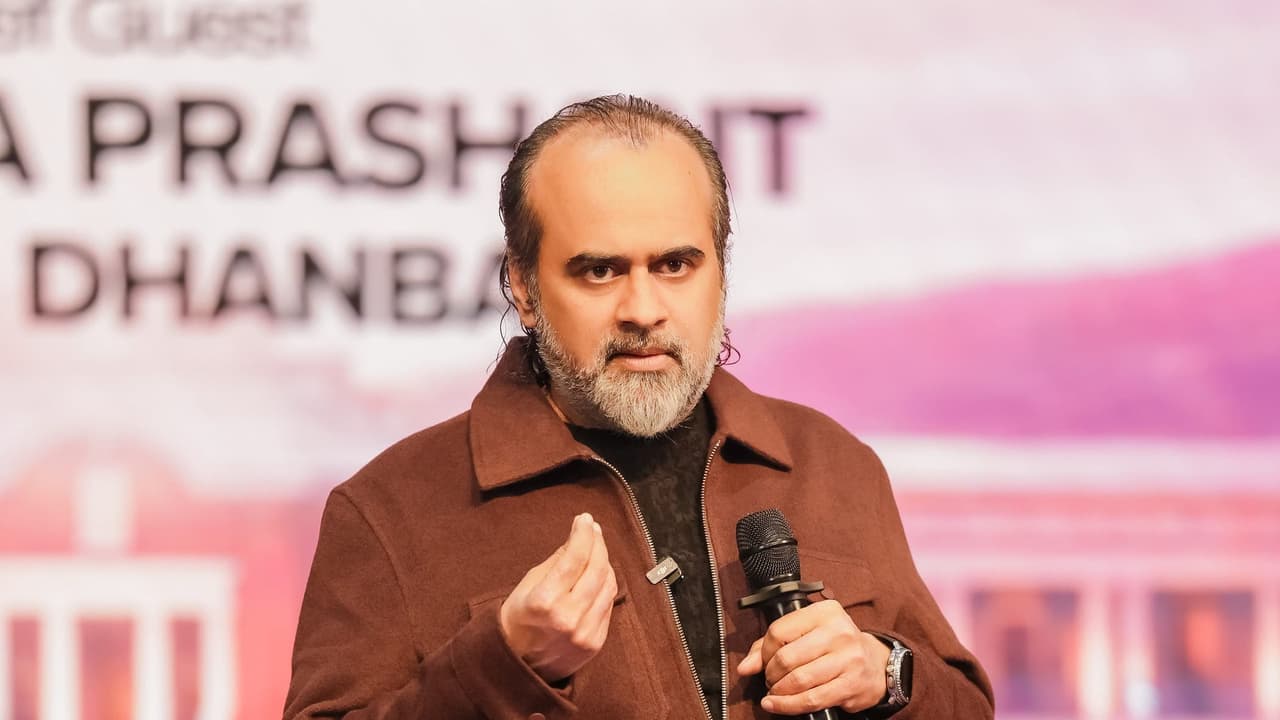
First of all, we have to realize what our life is like. You know, I can’t change something without firstly understanding its processes and its actuality. I must know what this thing called my life is. We keep living without knowing a thing about life. And we’re blinded by names and identities.
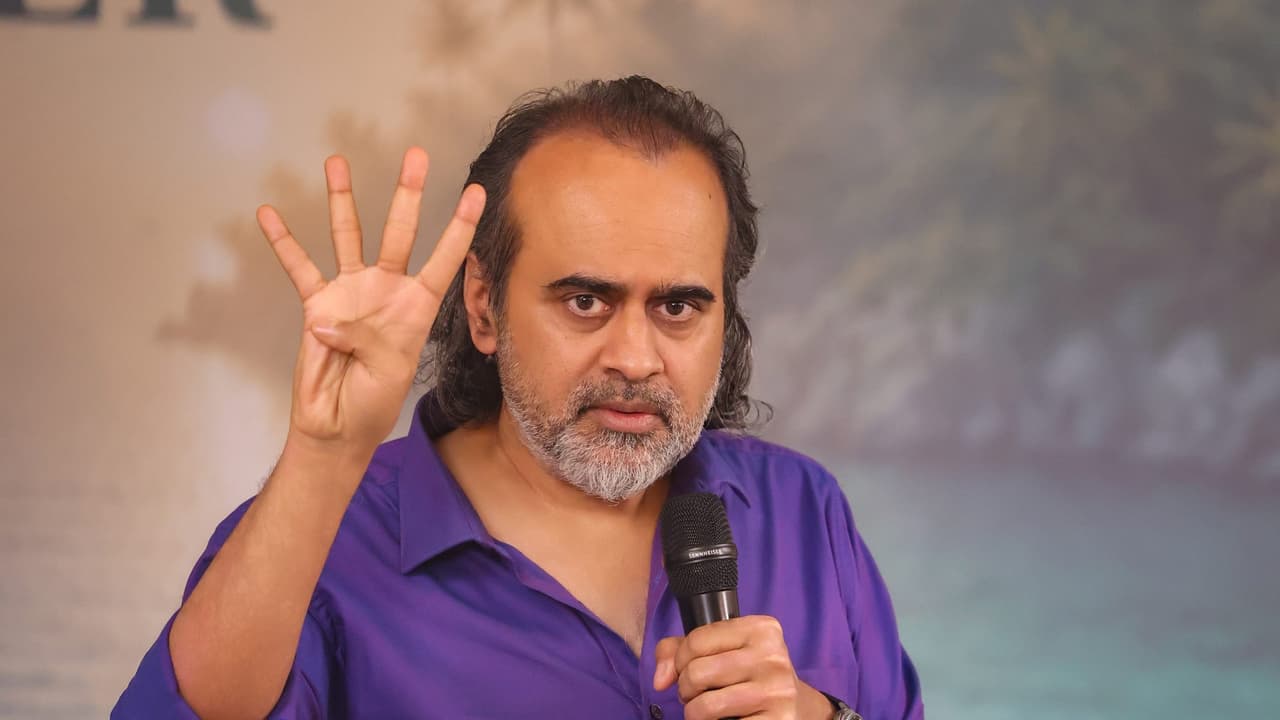

Questioner: Sir, as a law student, Every student has a concern about whether it is about environmental concerns, there is a lot of environmental pollution etc. Also, it is about poverty concern or corruption or any other social issue but then when we get out of college we get start
When his mother asked him, “Why don’t you get married?” Bhagat Singh replied, “I am already married, and her name is Freedom.”
Now, it behooves a Bhagat Singh to not get married to a woman because he has committed himself to freedom, but to every Tom, Dick and Harry it…
We leave a talk moved, and by evening it has faded, so we ask how to stay aware every moment. Yet one glance at a report that says cancer is never forgotten; even in our dreams we remember it, and no one has to remind us. We remember what we truly want to save. The mirror is held up once, and a teacher can do no more than that. Sunlight pours through every window, and we can still crawl under a rock. What are we choosing, each time we forget?
The Bhagavad Gita is often accused of supporting caste and misogyny through selective quotations that ignore context, grammar, and the text's central teachings. A closer reading shows that its emphasis is on inner qualities, conscious action, and spiritual equality rather than birth-based hierarchy or gender discrimination. Misinterpretations arise when isolated verses are detached from their broader meaning, while the Gita consistently points toward self-knowledge, freedom from ego, and the universal possibility of liberation for every human being.
We have all put down a book that could have helped us, or dozed off halfway through something that mattered. A man who could not keep food down was given medicine, and he threw that away too, since it went in by the same route. Most of us strike a similar deal: we move into a place that stinks and, within a week, call the smell normal. Show our fifteen-year-old self the life we lead now and they would scoff. What would change if we admitted we do not like our condition?
Spirituality is about belonging to existence. Not belonging to a narrow household, or caste or ideology. All these are boundaries. So, wherever there are boundaries, there is violence. Wherever there are boundaries, there is also the fear of being small, powerless, limited. The really non-violent one is at home, everywhere and in every situation. Non-violence is not about following duties. Non-violence is an action in clarity and love. That alone is non-violence.
Dr. Ambedkar, one of the greatest minds of modern India, had problems with Hindu culture, but not with Vedanta. Our culture is based on the very periphery of religion and does not resonate with Vedanta. That’s the reason it is in conflict with the Constitution. The Constitution and true religiosity—which you can call self-knowledge or Vedanta—go together.
Man has certain desires. He is seeking the company of the highest, so that his lowest desires can be fulfilled. The highest is just a means, a method and that is the case with all means and methods. Whether the highest is the means, whether the highest is even the end, the real end is always the gratification of the lowly self. Man is such that even if he wants the company or proximity of Gods, it is for the fulfilment of his own personal objectives.
You’re conditioned to think you can only exist with social approval. What holds you back is the fear that something devastating will happen if you don’t conform. Challenge that belief. One must have a healthy contempt for the world, which is possible only when one has deep love for what’s real. Otherwise, you'll keep bowing your head.
Questioner: When I do something my parents don’t approve of, they scold me. But sometimes the matter goes too far and I get offended, and then I refrain from talking back to them; I fear that if I say something, I will end up hurting them. But then, if I…
Questioner: Namskar Acharya ji. Pardon me for not remembering exactly but in one of the shivirs where we had read ‘Gospel of Sri Ramakrishna’ to come to terms with this expression called ‘Adhikar Bhed.’
So therein Ramakrishna was saying that, “now in modern times there cannot be any Adhikar Bhed,…

Acharya Prashant: The world overpowers us in a thousand ways, and don’t we agree to that? You go to the markets and the markets attract you; that’s kind of an attack, an invasion. And don’t you agree to that? Or do you just say that “This is an invasion upon…

Questioner: One of the chapters is on Sattvik and Tamasik action. So how do you distinguish? And you keep saying in the book that there is a fine line between Sattvik and Tamasik actions.
Acharya Prashant: You see, Tamasik action is when you’re conditioned; when you’re in bondage, yet you…

Acharya Prashant: Hell is a place where you get a lot of sympathy, consolation, condolence, and commiseration. You're told that we agree that you are in a miserable state. Your neighbor comes to you, puts his hand on your shoulder, and with a grave face tells you that you are…

Acharya Prashant: Desire means that you are not alright with yourself and you want something else to happen, correct? So, we are anyway not living for ourselves. We are rather living to change ourselves. And are these not two very different things? If you are living for yourself as you…

Acharya Prashant: Whatever you are doing, there has to be honesty in that. What is important is that you do not say one thing and do another thing. If you look at the great scientific discoveries or inventions, the scientist or the explorer would be busy in his chosen area…

Acharya Prashant: The spiritual soldier, the religious warrior has to be extremely intelligent. You could go to the extent of saying that he has to be cunning in the service of Truth; I’m choosing this word with all deliberation.
He has to be cunning in the service of the Truth;…

Vedanta does not talk of a personal past life, the person that you are or I am, we have no past or future life. Rebirth or reincarnation happens at a general, at a macro level, not at a personal level. It’s the “I” tendency that exists and keeps repeating its existence. Read more...

So, in your day-to-day life, practically, obviously, you will have these goals—you have to go to your workplace, you have to go to this thing, that thing—fine, those goals are there. But you have to remember that, ultimately, going to your workplace yields you nothing—maybe financial or physical sustenance, that's all. So the illusion of meaning has to be destroyed. The ego will otherwise keep looking for meaning where there can be no meaning—and in that lies a lot of suffering.

Acharya Prashant: It has been told to us that there exist two centers. I suppose it has been very freshly told to you right? Very recently. He says, “How do I know that I am living out of the right center? How does a young man know whether he’s not…

The character of Radha is not present in any of the Upanishads, obviously, not in the Vedas. It is not sufficiently present even in the Puranas. With respect to the character of Sri Krishna, there are two Puranas mainly. There is the Shrimad Bhagavad Puran and there is the Harivansh Puran. These two are dedicated to Sri Krishna. Even in these two, Radha is scarcely mentioned. Read more....

Questioner: I have a question on an excerpt from you.
“Aloneness is not about being free of others and living without others. Aloneness is to live without oneself. Aloneness does not have much to do with the so-called others; aloneness has everything to do with the one called oneself.”
I’d…

Peace is great, but false peace is deadly. The seeker of peace must be present, and ready to forego false peace, and experience disquiet and turbulence. Read more....

Acharya Prashant: Everybody in his own personal way is seeking fulfillment and that is love. If you are young you may seek fulfillment in somebody's body, if you are middle-aged you may seek fulfillment in wealth and prestige, if you are old you may seek fulfillment in security and property…

Acharya Prashant: Suppose, you are a teacher and you have taught hundreds and thousands of students and you are a good teacher, just for the story’s sake. Good teachers are rare. Now the students have really imbibed what they received from you, really imbibed or you could say the rubbish…

Acharya Prashant: Man bows down to only two things, you know—either to fear or to beauty. Today the world has neither of these. There is very little to be afraid of, you know. If the Earth is being destroyed, you can colonize another planet. “So, don’t worry, we will fly…

The real disciple is the one who already knows the essential, full stop. And then, goes on to do whatever he wants to do, learn, unlearn, forget, remember. The real disciple cannot be a learner. He is the learned one. In fact, the word ‘learner’ is a very dangerous word because it’s a word of imperfection. The real disciple is the one who already knows.

Acharya Prashant: Our normal life is our nemesis. And it is our nemesis precisely because it appears normal. It is not normal. It is normal only by comparison. It is normal only relative to your neighbour. It is the life that your neighbour is leading. It is the life that…

Acharya Prashant: A quiver full of the best of arrows but no bow, how do you fight the battle of life? Can you imagine the amusing as well as tragic situation of the person who has a great arrow without a bow? He will be sharpening and sharpening his weapon,…

n some sense, spirituality is all about unleashing yourself, which is freedom from bondage. The leash is the bondage. Read more....

The man who lives with his heart—there will be heart in his work as well. Heart will be visible in his every step. And the one who is doing something for money—he will say that he will marry where he’s getting more dowry. "I will take up a job where I get a high CTC. And I will give the contract to the one who’s paying more bribe." And this—who teaches this love? Learning this is wisdom. This is self-knowledge. This is self-observation.

Questioner: Why think so much about decisions? Shouldn’t our decisions be spontaneous? I like to decide in a free flow.
Acharya Prashant: So the questioner is stressing on the spontaneity of decisions. He says that he likes to decide in a flow. It's a good thing, your intention is good.…

The word for a Guru does not really exist in the English language. So, they have borrowed Guru itself, Guru. But they have borrowed the word Guru and rather misunderstood it and misapplied it. So, anybody who seems to be an expert at anything, can be justifiably called a Guru in the English language. Now that's not the proper usage in spirituality or in Sanskrit.

In the internal life, there has to be a single criterion, a single criterion against which you determine your choices. What is that criteria? Freedom. Betterment. Liberation. Growth. “Is this making me better? Is this widening, deepening my consciousness? Am I learning something from this? Am I becoming more fearless out of this?” That’s what should determine the choice.

Questioner (Q): Good afternoon, Sir. I have a doubt. In the market, there are a number of Bhagavad Gitas available. Somebody told me that there are eighty varieties of the Gita. Even though the slokas are the same, from what I have seen, the explanation was not making sense. In…

Questioner (Q): Namaste Acharyaji. I am Krishna Goyal I have two questions. My first question is, what things should we keep in mind before reading the Bhagavad Gita? Many people said you should wash hands, take a bath, and all this. So what rituals should we follow? My second question…

Acharya Prashant: What is the intention of the current education system?
The system is good, very good—at doing what it has been designed to do. But what is the intention of the designer, must that not be asked? And when you ask about the intention of the designer, you will…

My concern is the way we are. My concern is the face of the human being. My concern is the little sparrow. I'm not here to tell people what God has said. I'm here to take care of the sparrow. That's my concern. And the sparrow cannot be taken care of unless we go to the Gita. Hence, the Gita.

Questioner: Sir, sometimes in our mind, our thought always continuously revolves around in our mind that things will work out somehow. Is it a good thing to think about the thought or something? I am not doing very well.
Acharya Prashant: What’s your name?
Questioner: Pranav.
Acharya Prashant: Pranav. Of…

Questioner 1 (Q1): Acharya Ji, Pranam. There are certain and similar objects that occupy my mind every day. However much I try to get rid of them, they still linger. How should I get rid of them? Please help.
Acharya Prashant (AP): They are just occupying a void. That void…

You’ve to remember the end. If the end is remembered, practically anything can be a means to that end. If the end is remembered, no means is important. Only that particular means is important that leads to the end at any particular moment. And, you don’t need to stick to any particular means. Because, life changes, so means have to change. The end alone is changeless, the end alone is endless. Everything else must come to an end, except the end itself.

Acharya Prashant: If you look at knowledge that man has gathered in various fields, you will easily see that all of man’s knowledge is related to man’s desire. Man does not try to gain knowledge in fields that have absolutely no connection with man’s fundamental desires.
Man desires, man gets…

Questioner (Q): Pranam Acharya Ji. I’ll read my question. I’m a bit nervous. I have been avoiding facing you for a long time because of fear, and now I want to face this fear. There is some deep distrust to let anyone come truly near. I know that a direct…

It’s about the self-concept that we carry. That self-concept is not innate but gets built over several years. If your self-concept tells you that you do not deserve to crack the toughest question, then you'll not put everything into cracking the toughest question. In fact, you will needlessly make any question the toughest one. You have to tell yourself that you deserve to solve even the toughest problem, and then the tough problem is no longer all that tough. One has to love himself a bit more and say—yes, it's difficult, but for me, it's doable.

The world is like an open book to the one whose eyes are open; if you cannot read the world, then you have to look at yourself first, then you have to be mindful of your own condition. Read more...

Questioner (Q): So, we often have many tasks to do in our day-to-day life and we make a to-do list, but we fail to complete it and the loop goes on every time. So, what can be the other ways to overcome this?
Acharya Prashant (AP): Right the right things…

Acharya Prashant: Women like burly guys. Why do they like burly and big and muscular guys? Because they are likely to have a higher level of testosterone. Unless you have testosterone, you cannot build muscles, right? And that is why you cannot build muscles, let's say after 50 or 60.…