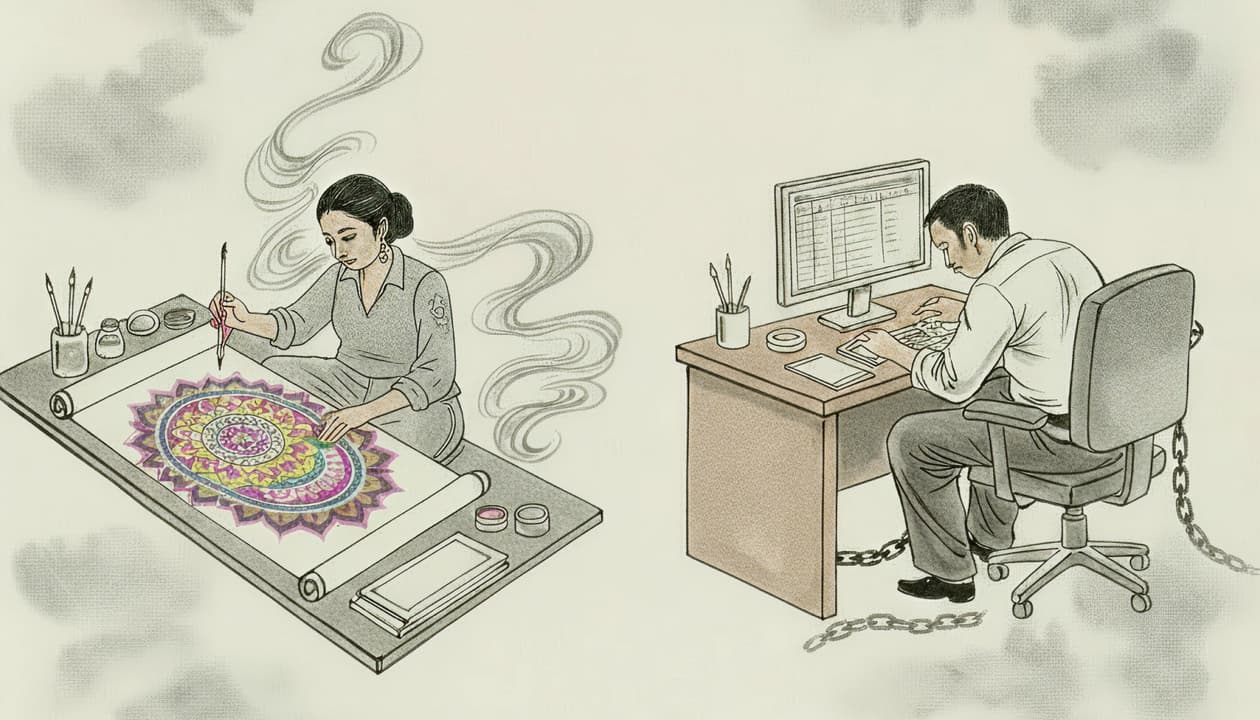
If freedom is important to you, you will secure it, you will get it. Do you love being free? Are you really a free bird? No, you had accepted slavery long back. And then you complain, and then you put up miserable faces, that won’t do. These faces are masks. The one who wants it, gets it.
Questioner: In The Fountainhead it is said, “I take the only desire one can really permit oneself. Freedom, Alvah, freedom. To ask nothing. To expect nothing. To depend on nothing.”
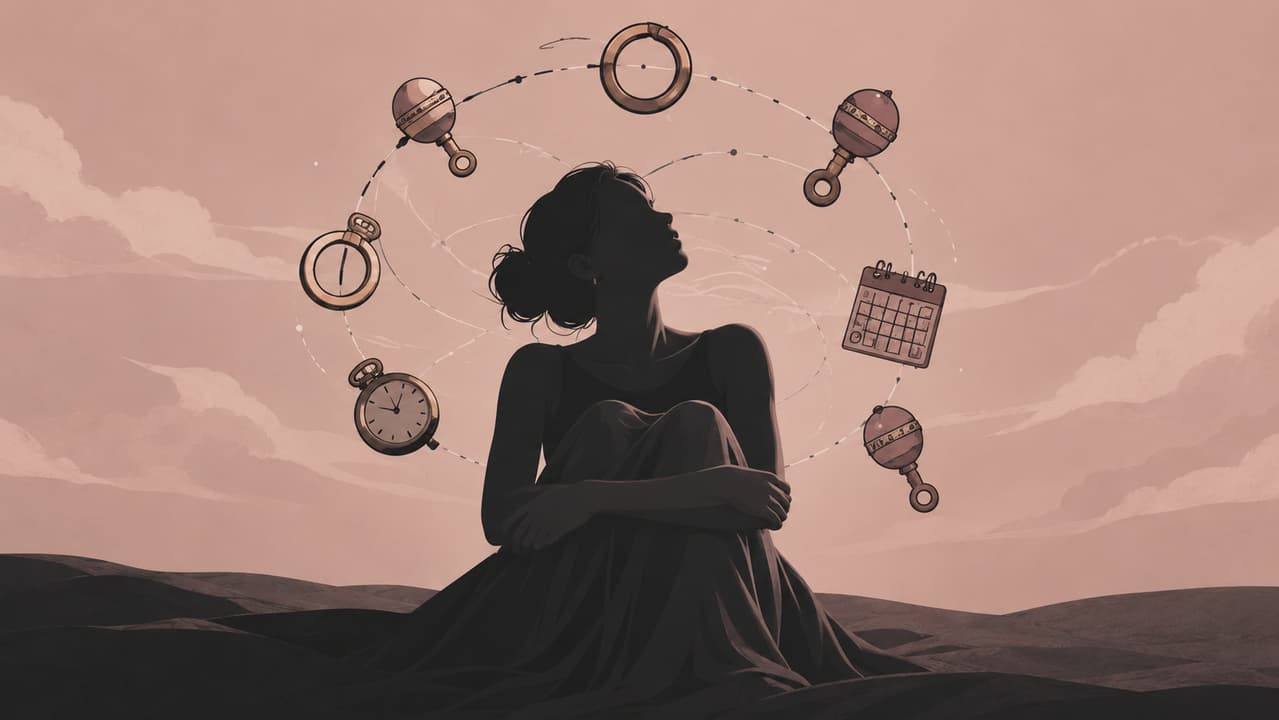

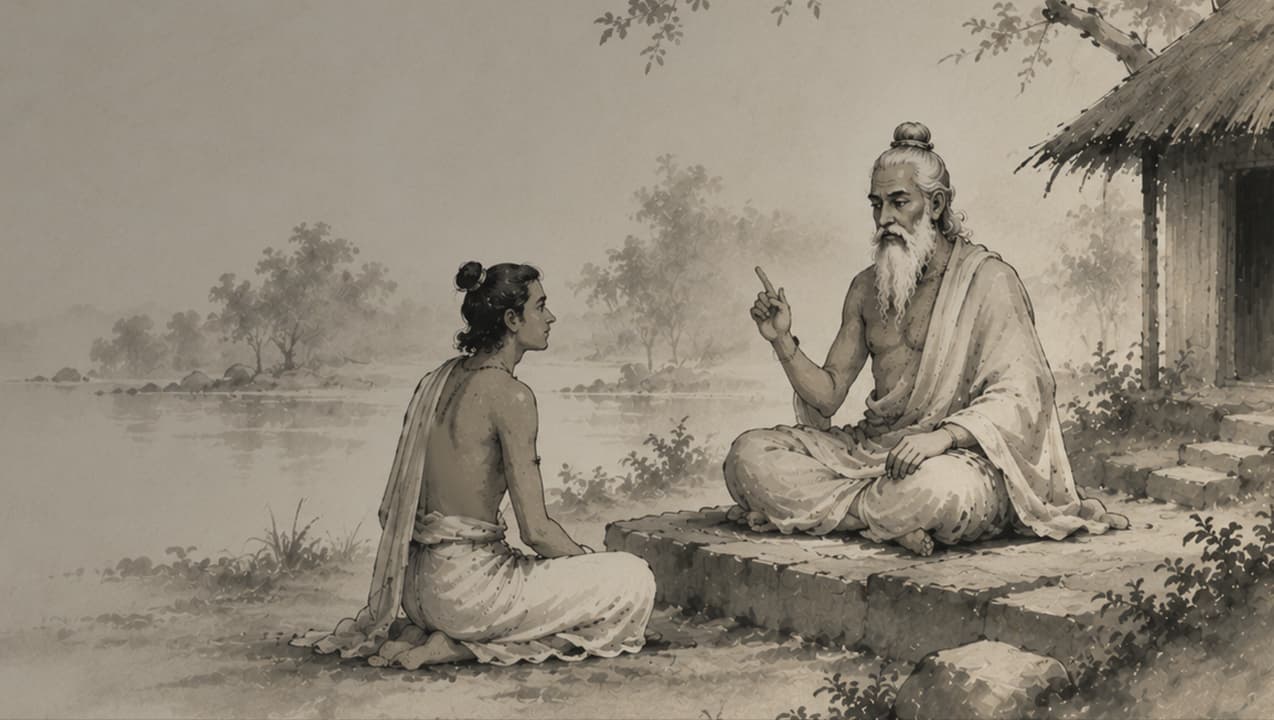
Science can examine material claims, but Advaita Vedanta deals with the subjective self, ego, suffering, bondage, and liberation—areas outside science’s objective framework. Vedanta need not be accepted because of one’s religion or tradition; its value lies in whether its insights can be personally verified and help free one from suffering. The ultimate responsibility is not toward any philosophy, but toward oneself: to live a truly free life.

Superhero films appeal to our desire to escape inner inadequacy through external power. The fantasy of an ordinary, fearful person becoming extraordinary reinforces the ego’s belief that more strength, money, possessions, or status will bring happiness. Consumerism follows the same pattern, endlessly adding objects to fill an inner void. Real freedom does not come from becoming more powerful or acquiring more, but from honestly seeing and understanding the ego that feels incomplete.

Detachment and ambition are not opposites. Both arise from clear insight into what is truly valuable. Detachment means naturally dropping what is seen as false, futile, or harmful, while ambition means pursuing the highest and most meaningful truth with complete intensity. Spiritual surrender is continuous: as understanding deepens, false attachments are repeatedly abandoned, until renunciation becomes natural and almost choiceless.
In the above lines, Ayn Rand has said that freedom is to not expect and depend on the desired outcome.…
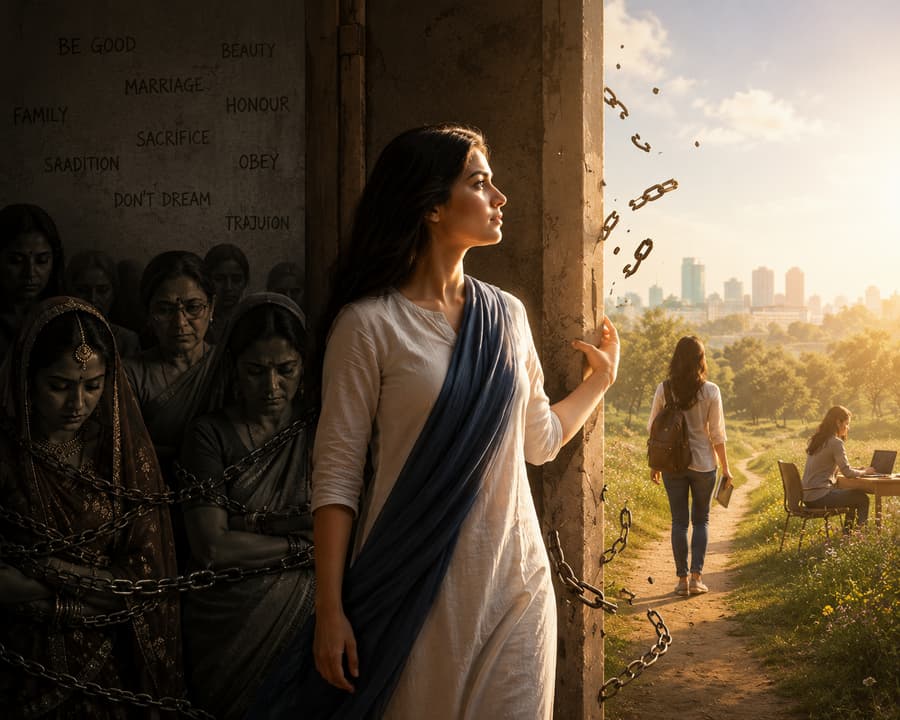
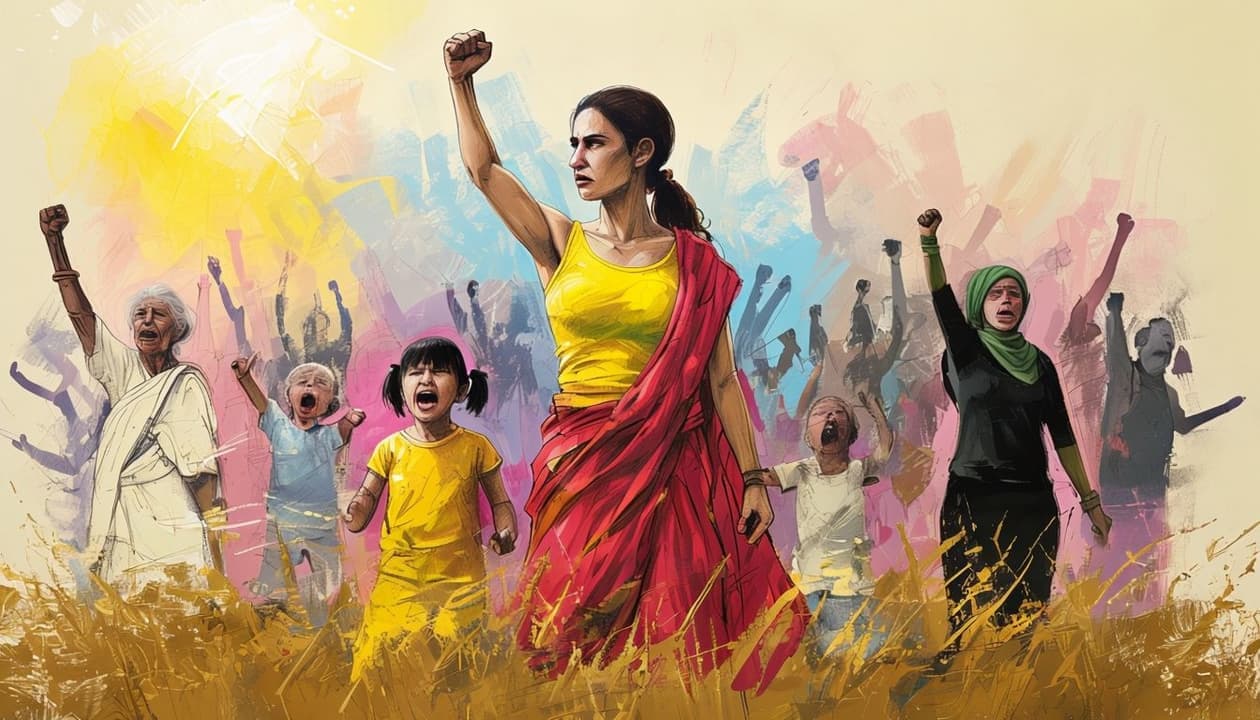
A modern woman calls herself liberated, yet lives anxious — anxious about age, desirability, marriage, motherhood. Acharya Prashant exposes this anxiety as proof that feminism never touched the real wound: centuries of conditioning that reduced women to bodies for pleasure and reproduction. External equality isn't enough. True freedom demands she reject the entire inheritance of tradition and simply become human — not woman, not wife, not mother by decree, but free.
Climate change is more than an environmental crisis—it is a crisis of human choices. Our patterns of consumption, consumerism and endless pursuit of more are putting increasing pressure on the planet. But meaningful change does not necessarily begin with new technology or stricter policies. It begins with a deeper question: what are we willing to change within ourselves?

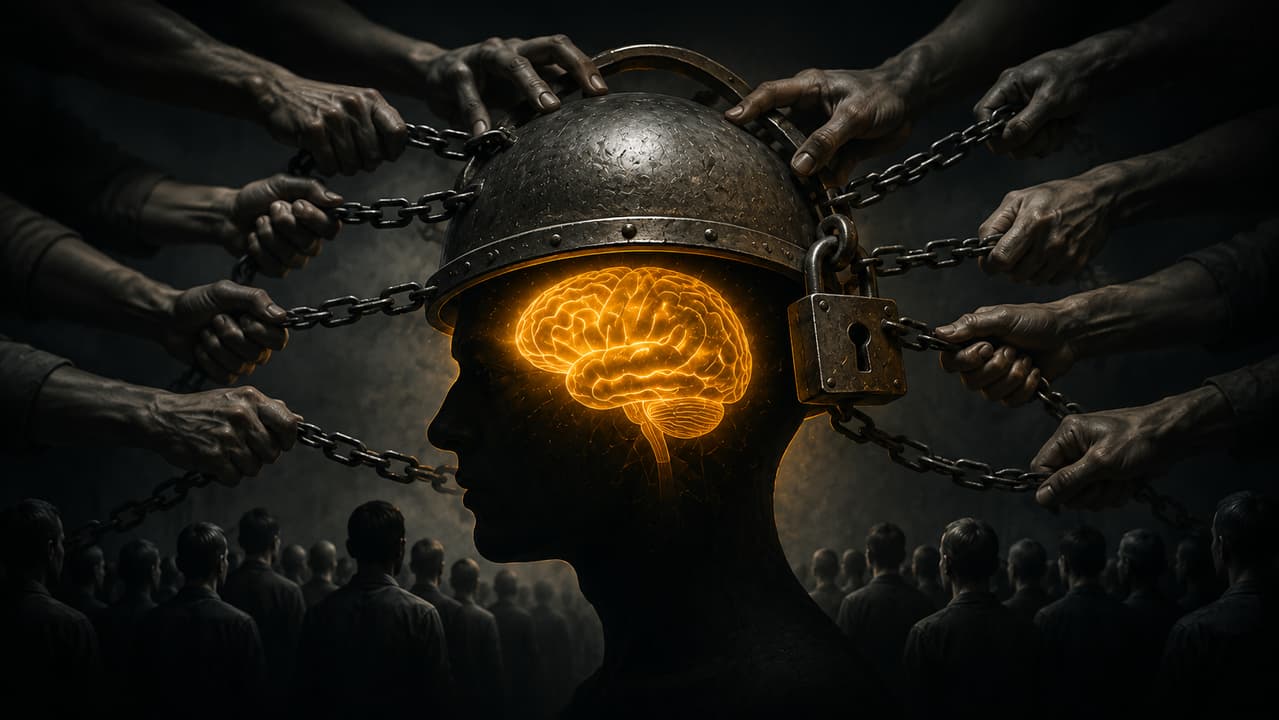
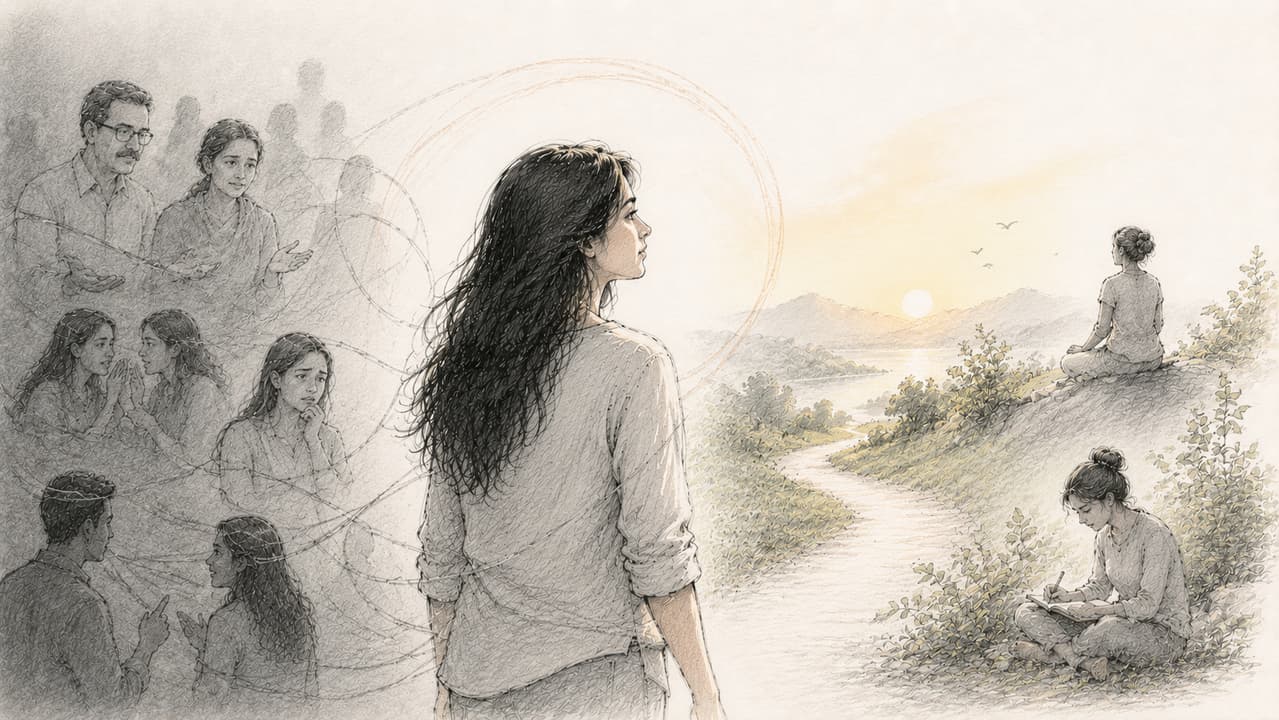
We often believe we are living freely, while our desires, dreams, beliefs, and choices are shaped by physical, social, cultural, religious, and psychological scripts. These scripts offer comfort and security, making us reluctant to examine our bondage. Freedom does not begin by imagining what lies beyond the script, but by deeply observing the cage we already live in, without fear, desire, or attachment.

Innovation is born from research, creativity, critical thinking, scientific temper, and original thinking—not imitation or appearances. A society that values honest inquiry over validation creates genuine progress. India's future depends on nurturing a culture that encourages questioning, respects originality, and pursues truth with intellectual honesty instead of settling for superficial success and empty displays.
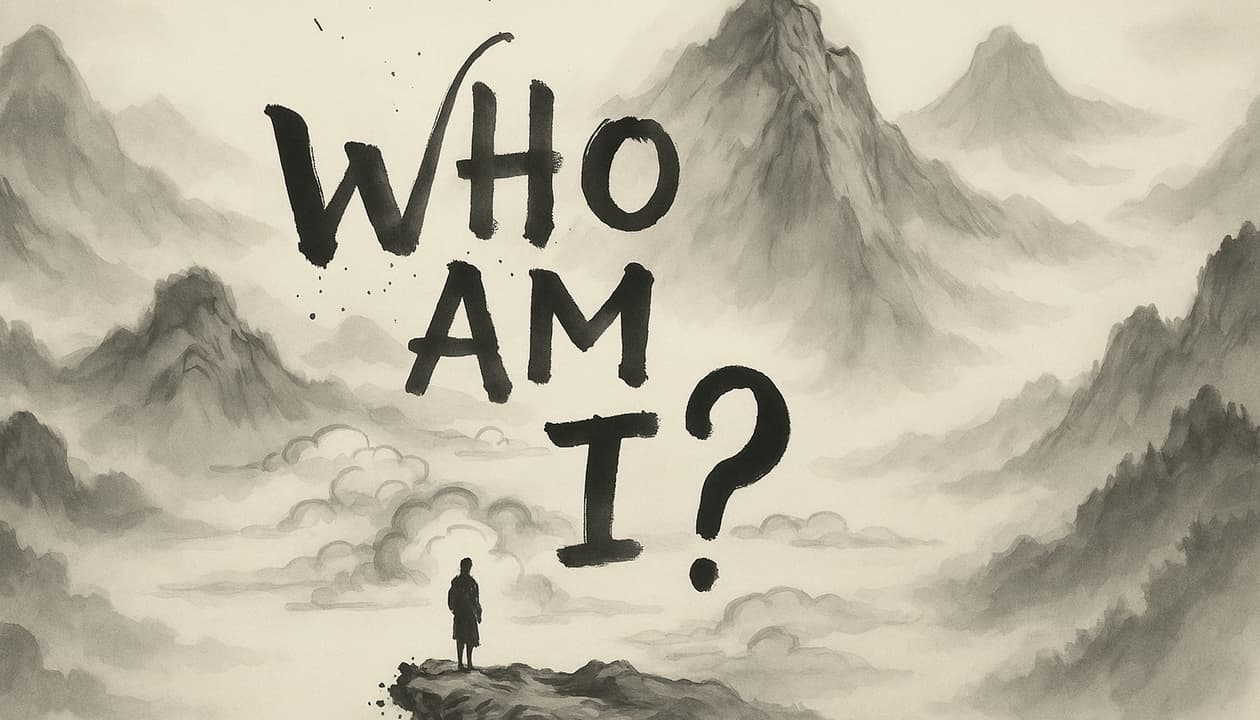
Should women choose marriage or career? Society often forces this question, but Vedanta asks a deeper one: are these choices truly yours? This discussion explores family pressure, the biological clock, gender equality, and social conditioning, revealing why freedom, consciousness, and self-awareness matter more than living according to expectations or traditional roles.

Society has a role in practical matters, but it should never decide love, marriage, happiness, or the purpose of life. Real freedom begins when personal choices are guided by understanding instead of social pressure. While social norms help maintain order, they become harmful when they dictate relationships, career, or inner values. True happiness and love arise from freedom, not conformity, making every love story meaningful only when it is authentically one's own.

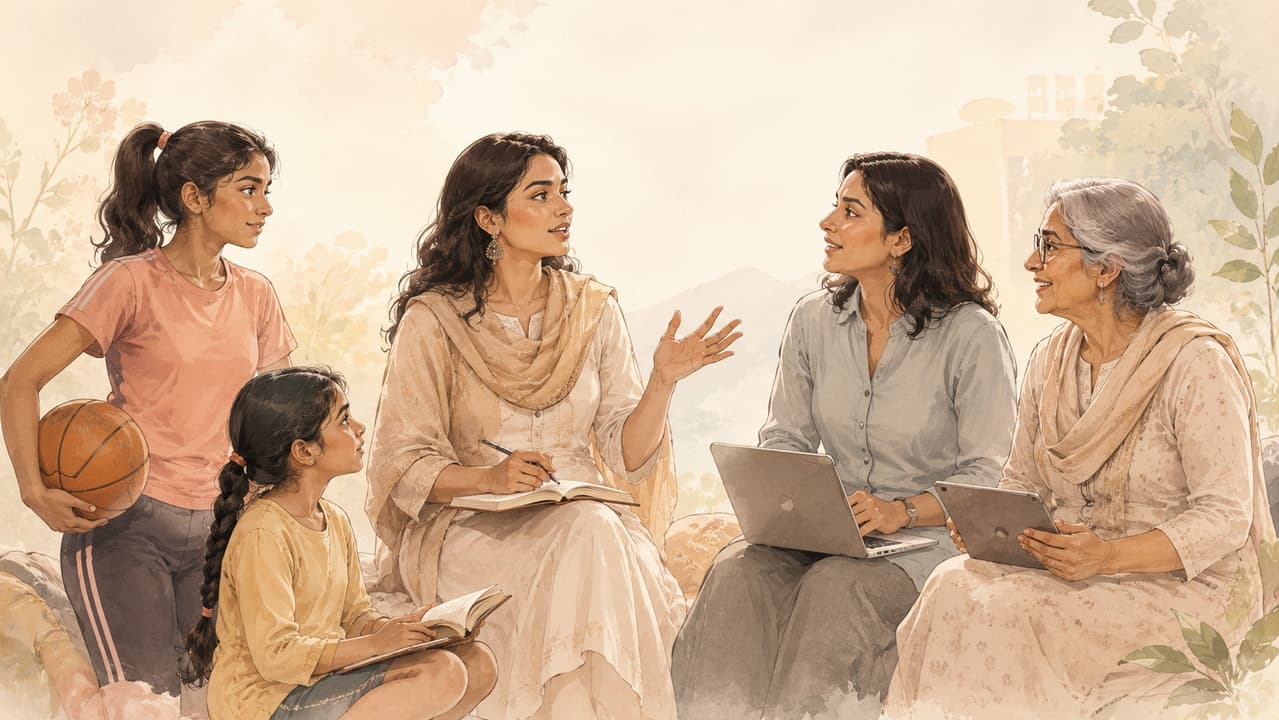
Women cannot be truly liberated through education, income, or legal rights alone if they remain psychologically identified with socially conditioned ideas of “womanhood.” While external barriers may fall, inner bondage persists through inherited identities, roles, and expectations. Real freedom begins not by rejecting the body, but by seeing oneself primarily as a conscious human being rather than a gendered identity, because lasting liberation starts at the root of self-identification.

Women are often valued not only for their abilities but also for their appearance, desirability, and conformity to social expectations. This conditioning begins early and is reinforced through family, workplaces, media, and culture. As a result, many forms of discrimination continue not only because they are imposed from outside but also because they are accepted and normalized from within. Real freedom begins when a woman refuses to define herself through roles, approval, or standards created to keep her dependent on external validation.

Science and philosophy arise from different kinds of inquiry. Matter seeks continuity of state, while the ego seeks continuity of existence and constantly changes identities to preserve itself. Fear, danger, and suffering are rooted in the ego’s sense of “I,” not in material reality itself. Questions are valuable because they expose hidden beliefs, and genuine learning requires challenging assumptions through inquiry, dialogue, and self-examination.

Freedom is often assumed to be the ability to choose, yet most decisions arise from conditioning, biology, social influences, and habit. Real freedom begins by seeing how mechanical and unconscious life usually is. As awareness deepens, confusion and endless options gradually diminish, making life simpler and more direct. Liberation lies not in imagining freedom, but in recognising and understanding the forces that keep one bound.

Inner freedom becomes impossible when identity is borrowed from family, friends, or social expectations. Fear, guilt, and pressure arise because people allow others to define their worth and choices. Relationships become healthy only when they support growth rather than control it. Real autonomy comes from self-understanding, continuous inner inquiry, and the courage to act from clarity rather than conformity. When there is inner certainty, labels, criticism, and social judgment lose their power.

Women's oppression survives not only through external control but also through the internal acceptance of identities imposed by society. Freedom cannot be permanently granted from outside; it must arise from an individual's own sense of dignity, agency, and responsibility. While laws, institutions, and support systems matter, lasting liberation begins when people stop defining themselves through inherited limitations and choose to assert their own consciousness, freedom, and self-worth.

Curiosity and honest questioning do not oppose love; they deepen understanding. Blind obedience creates dullness, while genuine inquiry keeps the mind alive and engaged. True questioning is not self-defense but a sincere search for clarity. Most people remain psychologically hypnotized by fear, entertainment, and ego, yet a small conscious voice within always seeks truth. Real change begins when one chooses love and self-realization over fear and self-preservation.

Todays educated and financially independent woman says, “I am free,” yet still feels deeply confined within. Why? Because external freedom alone does not dissolve inner conditioning. The old idea of “womanness” still sits at the center of identity. Real liberation begins when one stops seeing oneself merely as a gendered body and starts living as human consciousness first.

Global conflicts stem not from geopolitical interests but from the ego's fundamental incompleteness. Nations are merely expressions of collective egoic consciousness. Leaders represent humanity's worst tendencies, not its average. The ego requires duality and boundaries to survive. True disarmament means detoxifying the ego itself. External wars reflect internal disturbance. No diplomatic solution addresses the root cause, only wisdom and self-knowledge can dissolve the ego's need for conflict and separation.

Question: A gentleman was saying that a person, who is drinking or is drunk, he still has got some kind of stability on mind, and he too, can judge. That is what I felt to be perhaps wrong. A person who is drunk probably loses his judgement and whatever we…

Question: Dear Sir, a few questions:
Why am I so attracted to the personality and mannerisms of all my teachers, often curious about their lives than the truth of their teachings? When I read Jiddu Krishnamurti(JK), am I conditioned by him? Is JK’s method really ‘via negativa’ all the time?…

The only principle that truly runs this world, created by all of us, is the principle of greed and power. What do you think that fellow has earned his billions for? He didn't become a politician to be noble. The only thing that separates us from animals is the intellect, not the center the intellect is operated from. Don't locate the problem and the responsibility somewhere out there. We change ourselves; the world changes.

Questioner: All the forms of multimedia, the film industry and advertisements, have presented images of both sexes that are very often unrealistic and debatable. The very quality of femininity has been portrayed in the film industry, ironically, as victimizing them, merely pretty faces, and sidekicks. Why do you think women…

All of us want a new future. But the brain cannot want anything new. How many of you would want to taste a dish like Kakatua? Forget about tasting it, you haven’t even heard the name before. So, there is a golden rule: all desire is nothing but a stale repetition of memories. Ambition is nothing but a repetition of the past. What you didn’t know in the past, you can’t want in the future. New is new only when it is totally unrelated to the past. The truly new comes as a surprise.

Women do not need sympathy, reservation, or compensation; they need awakening. Victimhood may offer temporary advantage, but it slowly erodes dignity and strength. Education that stops at jobs and numbers fails both men and women. Unless education addresses the inner fear, insecurity, and ignorance that sustain oppression, no policy can truly empower the girl child.

There can be no self-respect without self-knowledge. And we have been repeatedly saying that the ego survives only in lack of self-knowledge. The less you know yourself, the denser and more crystallized your ego is. Self-respect is nothing but self-awareness. The more you know yourself, the more you realize who you are not, and that brings you to who you are. That is real self-respect, knowing oneself.

You are given an image to pursue, and that image is a distant one, far off in the future. A villa of your own, two nice cars, two cute kids, a light-skinned wife, such things. That's the worst concept you can subscribe to in life: settling down. What does that mean? Not changing anymore, not improving further, not having the guts or the stamina to be disruptive anymore. We are very loveless people. All we care for is security, and that's why there is so little creativity and innovation here.

If you are offering something to somebody without expecting much in return, then you'll never be afraid. Fear comes only from greed and desire. If your aim is to bring the Truth to the other without expecting anything or without expecting much, then you will never be afraid. Never.

Duality is Truth wanting to know itself. If there is no duality, what will the Truth do? Alone, absolutely alone. He too needs a partner. So, it divides itself into two. All our sufferings, all imperfections are important. There is no reason to feel small about it. Without you, how will the Source know what it is to fail, what it is to suffer? Indulge yourself fully, but remember what all this really is. Don’t forget that.

What surrounds you is 99.99% trash. And if, by glorious chance, there is 0.01% greatness, brilliance, selfless compassion, you will never accept it because you are used to the usual 99.99%. You will think even this one is of the same type. You need to be very careful about this because it’s a double trap. One, you are surrounded by idiots. Two, when you meet the one exception, you are so conditioned to idiots that you take even the exception as an idiot.

The point always to be proven and maintained is that the woman is weak and fragile, because that is exactly what patriarchy always sought to prove: “She can’t work.” Coming from a man it will appear harsh, but being a human being much like a woman, what I can broadly say is that I will not trade away my freedom for the sake of avoiding physical inconvenience. Even if favors are offered to you for free, refuse. There are no free lunches.

Every living being, from humans to the smallest species, is trying to change the world to suit its own needs. But this is not intended to do any good to the world, it is just coming from the little ego. And the ego will not say, “I'm not all right;” it will try to change the world. So, if your idea of ‘good’ is only relative to your personal self, is it right to impose it on others? You must be clear about why you aspire to change the world, and whether you have brought about any change in yourself first.

The authentic one can never be harmed because he lives freely and without dependence. If someone can inflate you with their words, they can also deflate you. By accepting your identity from someone else, you have needlessly made yourself a beggar. The authentic person does not want anything from any external being. He can have a relationship, but he’ll always be ready to leave. And that does not mean the relationship cannot have love. Love and desire are different things; desire means: I want to exploit; love is about giving without expectation.

When you are passionate about the one right thing, then you become impervious to many other things. Come pleasure, come pain, come attractions, come distractions, nothing matters to me, because now I have something extremely worthwhile in my life. One thing, one life, one love, one passion. Isn’t that a great way of living life?

If the woman really understands herself and therefore her choices, why would there be a need to be affected by others? But we bother. That happens because we have borrowed our sense of self from history, tradition, and society. When dependence is glorified, be it physical, financial, emotional, or psychological, it definitely coexists with bondage. If you feel bulldozed or forced, there is only one reason: you’re not walking on your own legs. Go out and earn. No price is too big for freedom.

What is life without real passion, real commitment, real love? What do you live for? Just wake up each day and say, "Another day, another day," and a day will come when you will run out of days. They will tell you, "Look at that beggar on that street, that will be you in 20 years." They will paint all these terrifying pictures. Don't listen. The real deal is work, not money. Just do not be afraid.

Joy is not a problem. Suffering is a problem. I am the sufferer. And if this ‘I’ is the problem, the sufferer, then firstly the ‘I’ itself has to be approached. And when I find that my efforts are getting saturated, I will have to go to a book that talks exclusively of the ‘I.’ The Upanishads are such books, because their subject matter is nothing but the ‘I.’ So, if you come across something that is dealing in stories, beliefs, and deviating from the self, you must know that it is not Vedanta at all.

The theoretical reply would be that if condemnation hurts you, then somewhere you are looking for praise. Even if it’s implicit praise or subtle praise, there is some hunger for praise. Or the inner condition that the ego has set is, don’t give me praise, but don’t condemn me either. So there is some condition that the ego is setting on the world. The fact is, the world has a movement, a flow of its own. You cannot set any condition on it. If you are getting hurt, it means there is an expectation, a condition.

Had you not been told what to do, would you have done even one of the things that you currently do? Think of it. If nobody tells you to take a particular kind of education or a particular career, would you still go in that stream? Very unlikely. Most of that which we want is something we have been ‘made to want.’ You are not even a puppet. You are a bubble — a bubble blown by society. Once you start looking directly at yourself, the need for external validation then reduces.

At the level of the body, this world will have an influence on you, and there is no need to even contest that. Let it happen, because it is going to happen anyway. But inwardly, let there be a place so sacred that nobody is allowed to enter — not even you. And when that is there, you can freely participate in the world because you'll no longer be afraid. You'll say, “Come what may, I'm secure within.” Then you will live in deep security, and we all know how pleasing security is.

The self is a hollow, incomplete thing by its own admission. It has no free existence of its own; it is nothing but associations with the objects around it, absorbing its worth from the environment. To hide this absence of self-worth, you keep running after all kinds of things, yet the promise of fulfillment is never kept, and you are deceived. Therefore, to have any self-worth, you must have clarity about the self. All wisdom literature is about clearing away your false notions of the self.

Life will give you a 440-volt shock, embrace her. The moment you embrace, you will be thrown away. Embrace her again. Develop stamina. After a while, you discover this is what you have always wanted; this is your deepest longing. Remaining protected, covered, insulated, secured — that's not the way of life. Those who cannot bear pain will never know joy. It's in the depths of your pain that joy will emerge.

“That brother is such a rascal. He roams all over the city and does this and does that. But this one is such a nice girl. She follows all the parental instructions, does her homework properly, gets good grades in school, and the brother is a rascal.” But the brother will end up in Silicon Valley, and the sister will end up in the kitchen. Don't be a good girl with your mother sitting next to you. That's the advice I'm offering.

Question: If love is death of ego, then how will we live? Man is made of only these things. So, the only thing left will be ‘soul’. So we can say that we have moksha (liberation).
Speaker: The question is: If love is death of ego, then a loving man…

Questioner: If love is death of ego, then loving man will be just soul. So, is love Moksha (Salvation)?
Acharya Prashant: Everything that you just said, is a concept in your mind. Ego lives on concepts; ego lives on thoughts—concepts are thoughts.
What is the definition of a concept? Where…

You are the quality of your present action. You are, right now, attention itself, if you are indeed listening to me. Unfortunately, this identity won't last. Soon you will be distracted. You'll become somebody else. The discipline lies in holding on to the highest identity possible, that which you know to be the highest, given your limited capacity. That's who you should be. That's the answer to — ‘Who am I?’

Existence does not allow multi-tasking. It says, “One thing at a time.” Rule one is that whatever is happening, it must happen fully, 100%. Second thing is what is happening right now, must happen only right now. It should live in this moment, be fully alive, and then it should die. It should not carry forward into the next moment. The first formula is the rule of complete life and the second one is the rule of complete death and these two must go together.

There is nothing that can continue in time unchallenged, untested, undefeated. The moment anything starts journeying in time, it is bound to be defeated and die. So, how is immortality or eternity possible at all? It is possible only when your association with things in time is deep. Eternity lies in the quality of time, not in the expanse of time. And the depth of association is known by seeing how we usually superficially relate, without attention or inquiry into what they really are. This superficiality is mortality.

Irrespective of her station in life, it has been drilled deeply into the Indian woman that her life is foremost about the husband, kids, bed, and meals. But how can this be the primary reason for a conscious human being's existence? We use decorated phrases like “Queen of the House”, but the moment the "queen" gets some money, all her queenly tasks are dumped onto somebody else. So, we are just deceiving ourselves. Give yourself the courage to question things and not accept them blindly — it will give you a blossomed personality and a great life.