To the one who believes in ghosts (Bhūta-Piśāca) — for him, they exist. When you are asleep and are engaged in some nightmare, you feel it actually exists. Bhūta-Piśāca Nikata Nahiṁ Āve, Mahāvīra Jab Nāma Sunāve: Mahavira Hanuman, devoted to Shri Ram, is to be taken as the representative of Truth. If you can be close to the representative of the Truth, you will get rid of all nonsensical and horrifying imaginations.
The balance between order and disorder should not be decided by personal likes or dislikes, but by what the task at hand requires. Sometimes a project demands discipline and order; at other times, more important work requires leaving things messy. The right action comes from responding to the actual need, not personal preference. Even sacrifice can be meaningful when it serves something important, but “staying backstage” should never become an excuse to avoid what one cannot tolerate.

True freedom begins when we question the beliefs that make us feel trapped. Most of our suffering comes not from circumstances but from unquestioned assumptions, attachments, and imagined obligations. By suspending our beliefs, even briefly, we allow truth to enter, revealing that life always offers choice. Transformation is born from love for truth, the courage to let go, and the willingness to step beyond the boundaries created by the ego.
We often call something “help” or “love” while secretly expecting something in return. When that return does not come, we feel hurt, revealing that the relationship was a trade, not genuine help. The ego, being unfulfilled, cannot truly love or share. Likewise, desperation to be loved makes us controllable. Real love emerges when we stop seeking validation, work on ourselves, and become so inwardly fulfilled that we no longer need to be loved.

True love is not a biological instinct, emotional attachment, or social conditioning. Biology and science explain the body's drives, but they cannot explain the self that seeks freedom. Love is the inner restlessness to move from ignorance and bondage toward truth and liberation. Religion is not rituals or inherited beliefs but this personal journey of understanding. Freedom—not possession or conformity—is the essence of both love and religion.

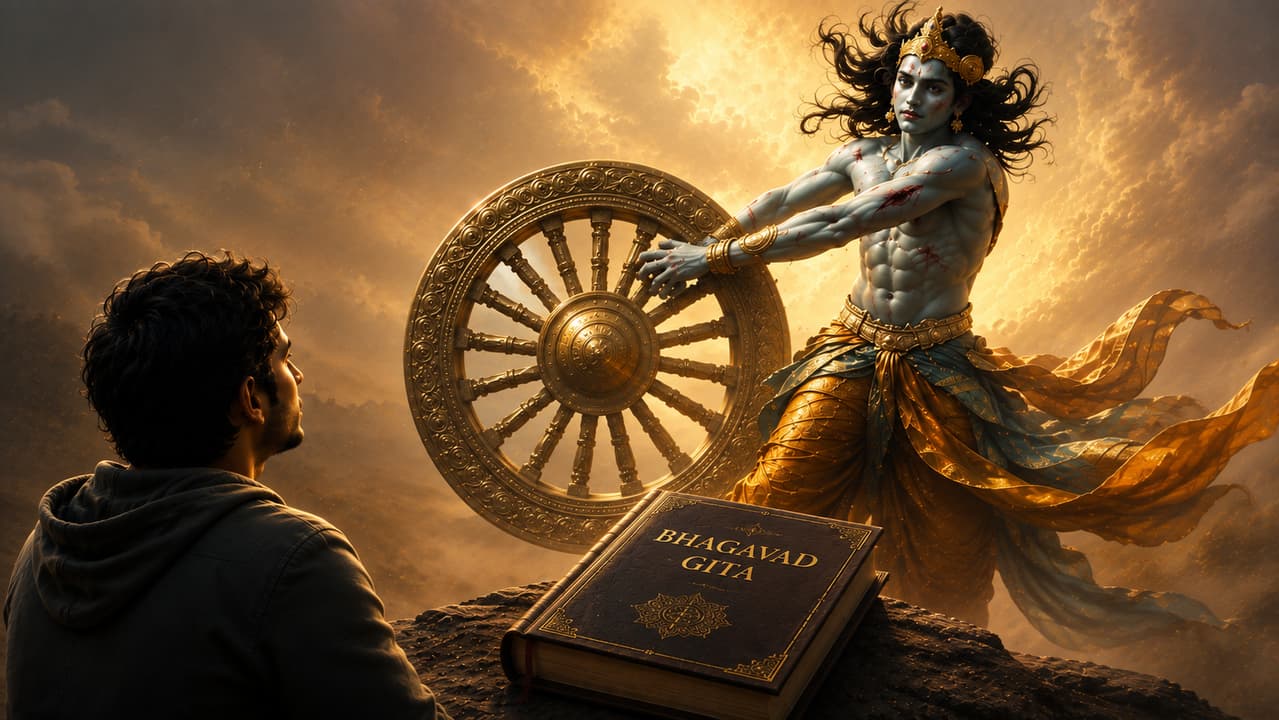
The Bhagavad Gita deserves reverence not because of inherited beliefs about its author, but because of its power to dissolve falsehood and reveal Truth. Real devotion is not ritual or blind faith—it is understanding, inquiry, and living the wisdom of the Gita. Through sincere study, one discovers the true meaning of Krishna, making the Gita the most authentic path to knowing and worshipping Him.

Truth cannot be forced upon anyone, but neither should falsehood be entertained. Genuine love is not about preserving relationships at any cost; it is about helping oneself and others break free from illusion, even if that means risking the relationship itself. Spiritual growth begins by questioning conditioning, examining falsehood without bias, and choosing authenticity over comfort. Real relationships are built on the courage to seek freedom, not convenience.

True learning is not built on memorizing answers but on understanding reality. Memory may help in examinations, but life constantly presents new questions that demand clarity, presence, and intelligence. Education becomes meaningful only when knowledge is deeply understood and lived, not merely remembered. Real understanding frees us from dependence on rote learning and enables us to respond wisely to every new situation.

The Bhagavad Gita is not a separate spiritual path or an escape from everyday life - it is a mirror that reveals the truth of your present life. Real spirituality begins with self-observation, not rituals or temporary practices. Lasting transformation comes when work, relationships, career, and personal growth become one integrated life driven by awareness, love, and freedom rather than ego, fear, money, or social pressure.

Vedanta reveals that freedom is impossible as long as the ego seeks to preserve itself. Meditation may bring temporary calm, but real transformation begins only when the false sense of individuality dissolves. Whether through devotion or knowledge, every genuine spiritual path culminates in the complete dissolution of the seeker into Truth. Liberation is not the experience of Truth by an individual—it is the end of the individual who wants to experience Truth.

Love is not a special emotion reserved for selected people or relationships but a way of relating free from self-interest, possession, and psychological dependence. Most relationships become transactions driven by insecurity, where the ego seeks completion through ownership and exchange. Genuine companionship arises without the urge to control or claim another, allowing affection to exist naturally, freely, and without conditions or expectations.

Real change begins not by changing the world alone but by understanding the one trying to change it. Laws, technology, policies, and scientific progress have value, yet they cannot solve problems rooted in human consciousness and endless desire. Truth remains the same across cultures and disciplines, requiring only a change in language, not in essence. Lasting solutions emerge through honesty, self-inquiry, and inner transformation, because no external system can replace a change in the human mind.

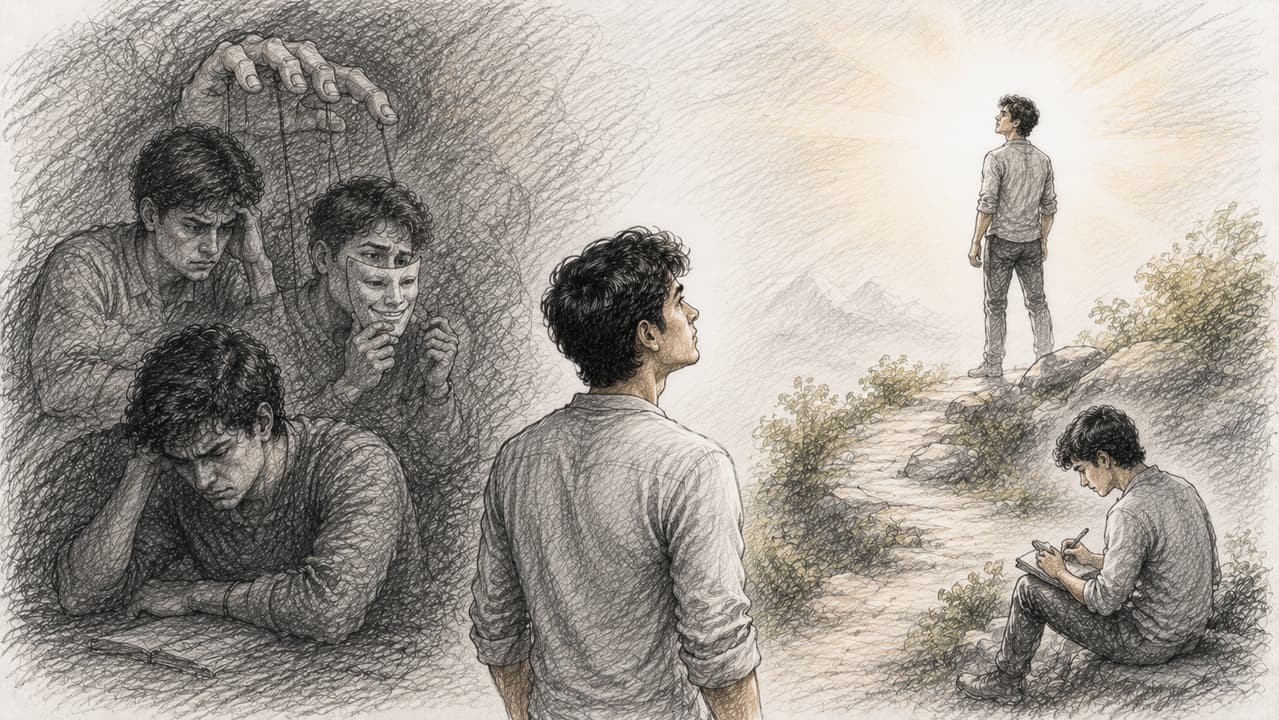
Human beings are born into uncertainty, surrounded by beliefs, identities, and social conditioning that offer ready-made answers to fundamental questions. Real spirituality begins not with accepting collective or personal beliefs, but with honestly examining one’s own suffering, fears, and false identities. The journey is not toward comforting ideas, but toward self-inquiry, where truth is discovered through questioning, observation, and the gradual rejection of illusion.

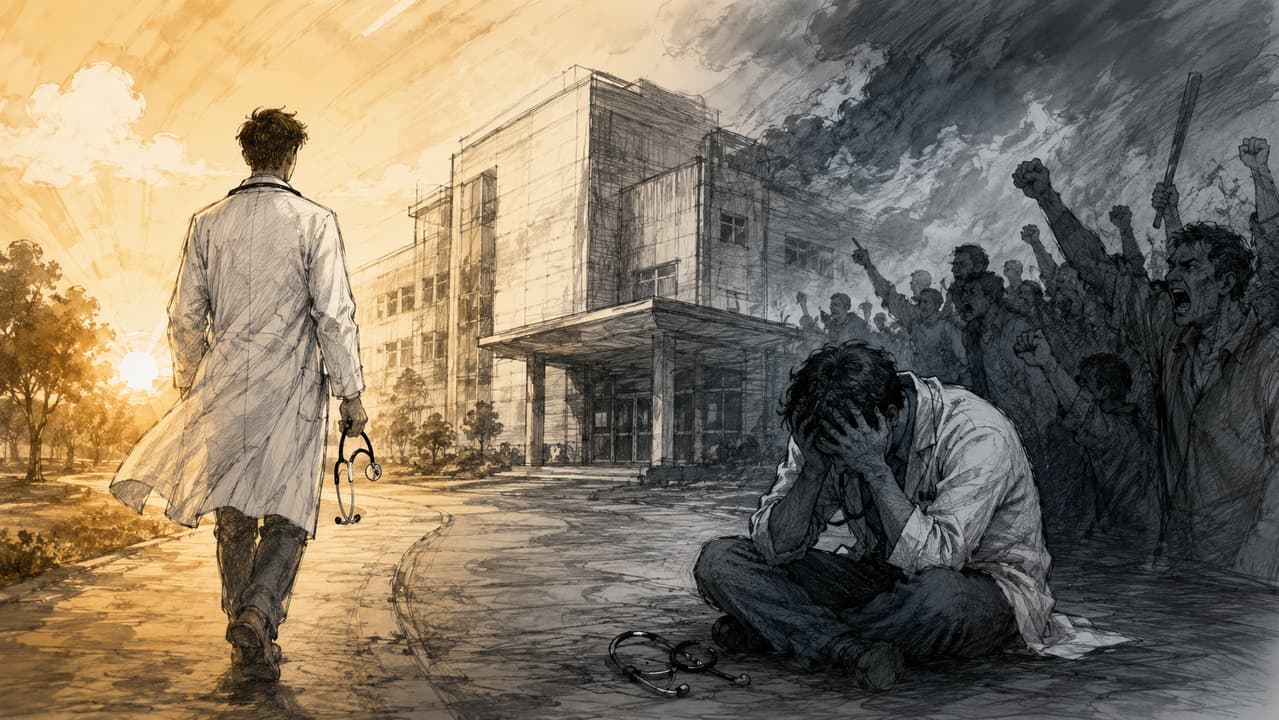
A society that loses its sense of sacredness begins to see every person and profession as merely transactional. When truth is replaced by the pursuit of happiness and consumption, trust erodes and cynicism becomes the norm. Doctors, teachers, and institutions are no longer respected but viewed with suspicion. The deeper crisis is not medical or social but philosophical: without self-understanding, people become consumers first and human beings second. True respect can return only when truth, integrity, and inner education become more important than personal gain.

Modern relationships often create more insecurity, not less, because people are conditioned to seek completion, validation, and identity through another person. Social institutions, media, culture, and tradition continuously reinforce the idea that fulfillment lies in romantic attachment. As a result, relationships become driven by dependence rather than love. Real companionship becomes possible only when one is inwardly at peace and not using another person to fill an inner void.

Freedom begins when a person stops handing over the authority of life to others. Society, family, and tradition can offer opinions, rewards, or disapproval, but they cannot truly stop someone unless there is inner dependence on their approval. Many conflicts that appear external are rooted in psychological dependence, fear, greed, obligation, or the desire for validation. Clarity does not come from controlling every outcome; it comes from ensuring that decisions are not driven by inner confusion, and then allowing life to unfold naturally.

Operating from the highest inner point means living with honesty rather than self-created illusions. The ego becomes “higher” not through mystical growth but by dropping false self-images and testing its claims against reality. When honesty weakens, lower motives take control, creating inner conflict and disorder. Real growth lies in continuously questioning oneself, facing uncomfortable truths, and preventing the ego from being driven by comforting but deceptive beliefs.

Love is not attraction, possession, dependency, or a transaction driven by personal gain. As long as relationships arise from insecurity, ownership, or the desire for psychological completion, they remain centered on the ego. Love is simple, natural, and free of self-interest, flowing without preference or exclusion. The ego seeks security, continuity, and suffering because they preserve its identity, while freedom and joy threaten its existence. A meaningful life begins when one stops repeating old patterns, accepts uncertainty, and chooses freedom over the comfort of familiar cages.
Climate change, population policies, and social conflicts often arise from a common source: narrow love. People, communities, and nations justify actions that benefit their own group while overlooking broader consequences for humanity and the planet. True care is not exclusive or identity-based; it is expansive and inclusive. Even motherhood, patriotism, and family concern can become limiting when reduced to narrow self-interest rather than guided by wisdom, freedom, and universal responsibility.

The debate around nudity and movements like “Free the Nipple” miss a deeper issue: true freedom is not about clothing, but freedom from psychological conditioning and body-based identity. Clothes themselves neither oppress nor liberate. A truly free society is one where the body becomes ordinary and irrelevant, not a source of obsession, shame, validation, or social control.

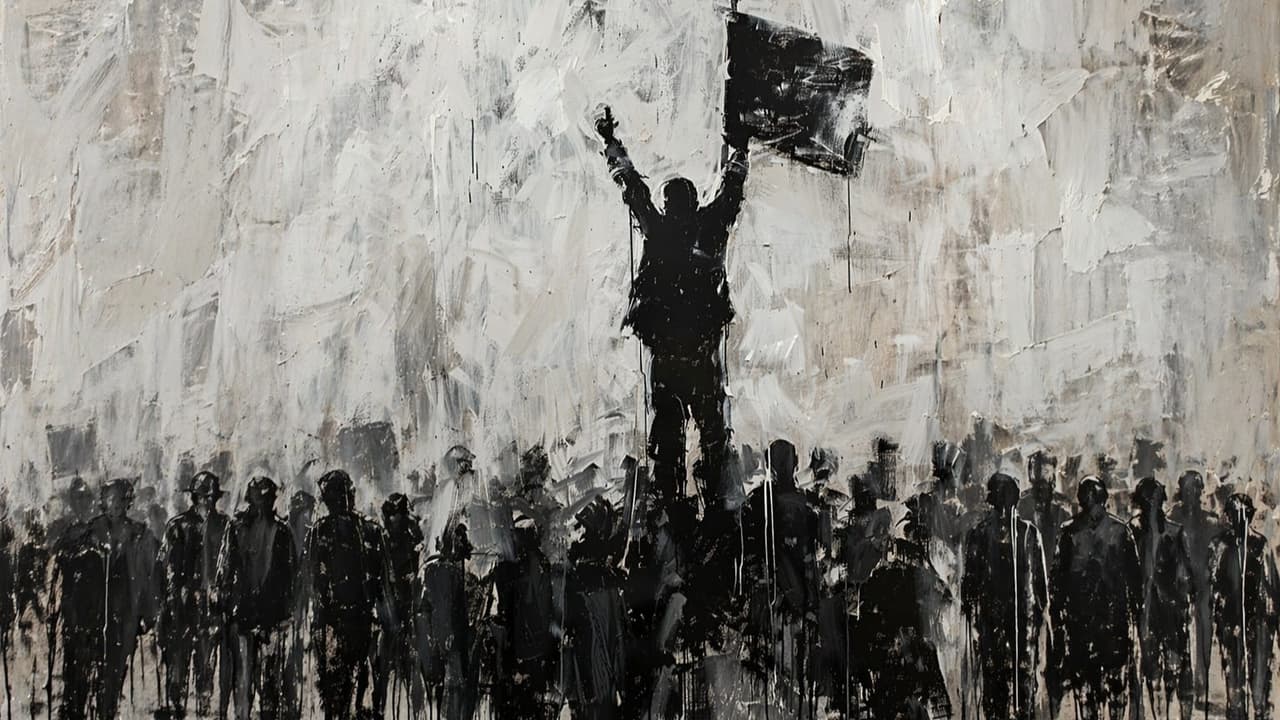
You look at Iran, at revolutions, and ask: can systems really bring freedom? Revolutions keep replacing one system with another, yet the chaos remains. The real question is rarely asked: what within us creates these systems? Real freedom is not political or social; it is inward. Without inner change, every revolution only rotates power, never resolves suffering.

You are not truly young, you carry centuries of inherited beliefs, prejudices, and conditioning. Youth is the ability to change and create the new, not follow fixed patterns. Before asking what to do next, question and free yourself from the past. Only by breaking from inherited constraints can genuine freshness emerge.

It’s far easier to sit on a greatly decorated stage and talk about the virtues of Rudrākṣa, and what kind of water to drink, and why copper is useful; and all kinds of pseudo-scientific nonsense. But to really speak upon a Kabir or an Ashtavakra requires a tremendous understanding which does not come to everybody. If you are a spiritual teacher and you are saying you have not read any scripture, that raises questions on your love for the Truth.

The one who is religion-less. A real Hindu does not have any religion. To go beyond all religions is to be a Hindu. There are religions that are on one plane, and then there is Sanatan Dharma, which is another dimension — the eternal religiousness. Liberation from religion is religiousness. Sanatan Dharma is awakened intelligence.

Listener: (Reading a quote of Acharya Prashant from a quote-calendar)
What lies beyond mind?More mind.What is more mind?What and lies and mind.Questions, perceptions on the concept of the mind.
Acharya Prashant: Any question about beyondness would be a useless question because the question itself is coming…

Questioner (Q): Why do we forget?
Acharya Prashant (AP): The question is, "Why do we forget? Why forgetting is a property of the mind?"
Do not ask, "Why do we forget?" Just remember that we forget. Because when you forget then you don’t ask this question that, "Why do we…

Love has to be seen as the need of the mind, the attraction of the mind towards Peace, towards rest. All attraction is there only with a desire; the hope is of fulfilment. So when the mind says ‘love’, along with love it has a picture of love. How do you know that somebody loves you? Only if he behaves according to set patterns. When real love comes to us, we close our gates to it. Love is not with a particular man or woman; Love is the natural state of the mind.

Who is a practical man? One who understands before acting. To be practical means to understand and put it into practice. If my work, my action, and my practice is arising out of clarity, then I'm practical. Clarity is not some state, clarity is not some picture and clarity is not ideal. Clarity is not something to be achieved. Clarity is your inherent ability - your very nature to understand, to know, that is called clarity.

The kinds of meanings that we associate with love are actually quite demeaning. It’s not your own self-interest that you think of in love. Love is not an emotion; love primarily is a spiritual understanding. Saint Valentine would not be quite pleased with the meanings we have associated with his name and his day. The saints laid down their lives so that our faulty definition of love could be corrected, and that is probably the best use this day can be put to: correcting the definition of Love.

There is nothing called woman’s liberation in isolation. Woman is oppressed and the man too is oppressed, albeit in a different way. Woman’s liberation is man’s liberation. Together they suffer, and together they will celebrate. Their attempts to have freedom only for themselves are their bondage. She is love, he is awareness. There is no love without awareness. Let both know, let both be with each other. In that alone lies liberation for both.

Real Love is a very pure thing. It is pure and it purifies. If you really love her, forget about the families, you won’t even bother whether she loves you, because Love does not demand anything in return. Forget about marriage or anything else. You love, you know love, and that is all, sufficient. Love unconditionally, and then a way will emerge. Unconditional Love is very, very intelligent, and knows no fear. It knows where the solution is, it will find a solution.

Often, in the name of financial pressure, what we are really kneeling down to is something else. But because that something else is not nice enough to be named, what we quote is financial pressure. Nothing is ever forced in a tangible way. The way is kept gentle in appearance. But there is something else at work inwardly. What is that thing? That is what you have to uncover. You have to be honest towards yourself, very honest.

For most people, India is just a bit of land, a boundary on the global map, a political entity. These are not things you can fall in love with. To love, there must be something sacred, something worth worshipping. The identity of India, the root of the Indian nation is essentially spiritual. India has been a nation because of its Vedantic foundation.

If you are religious, then shouldn’t you be truly religious? Religion is about a total commitment to the Truth. You’ll have to recognize that the objective of religion is not to attain heaven, not to please a holy figure, but to come to your own inner Truth. All good books exist to awaken your consciousness. When it comes to you and the Truth, do you want somebody in between? And wherever you spot fakeness, falseness, hollowness or ignorance, drop it.

There is a search within the human being, always for the greatest, the absolute, and that is what differentiates humans from animals. India was fertile, and there was abundance. You had ample leisure, and in that leisure there was space for intellectual inquiry. The sages and the seers would talk to each other purposelessly. And from that purposeless discussion, from silent observation of life for hours, days, months, and years, came those insights that you today recognize as Indian philosophy.

Clarity is not a state. Clarity is like clean air, air free of pollutants. It is not something you arrive at. It is not a finality. There is a lot that you believe in, and you must keep testing it and rejecting it. You can never say, “I have achieved clarity.” It is a lifelong process, because pollutants keep entering the air continuously. So you have to keep clearing the air continuously. That is the process.

India was a superpower in all possible terms and yet those lowly little Britons came here and colonized us. Is it possible? There is something fishy in the story. We don't want to go back and really read and figure out what really happened. We believe in this narrative: we were great, we were ‘Vishwaguru’. How can the land of the Gita be ever defeated? It was due to internal reasons that we got defeated and enslaved. And those reasons are still very much present today. Which means the fault is entirely our own.

Truth is not about lofty words and scholarly theories. Truth is, first of all, a deep desire to help. If they see that you want to help, they will listen. Then they will listen even if they are not able to make perfect sense of your words. To your words, people listen later. The first thing that they listen to is your empathy. They want to see whether your face and your eyes carry their pains. If your eyes contain not a bit of the pain that they live in, they will not be able to listen to you.

You see, the democratic system is a great one, but there are some problems associated with it. The leader comes from the masses, and the masses, by themselves, are never really attracted to wisdom. Have you ever found a voter asking his leader, “How many Upanishads have you read?” before casting a vote. The leaders know very well what they can ignore. They just want to know what your religion is, and what your caste is. That is why wisdom always comes last.

This has always been a hugely profit-making sector of all economies, just that it has always been a small sector controlled by the priestly class. Now the attempt is to make this sector really big and on an organized scale, because the profits are very tempting, and there is no quality control. There can be no external auditor. All kinds of objections, audits, and scrutinies are ruled out. Getting it? So it’s a very tempting sector.

When I say, “I want the right action,” surely I have an image in mind. That image is coming from the past. But the right action, by definition, is one that cannot come from the past. Please remember that whenever something really right happens in life, it does not happen as a result of one’s decision. The really good, the right action, happens on its own, provided you do not become the decision-maker and the actor.

Shri Krishna is saying: the mind is conditioned to move towards objects and perceive only their surface, periphery, or form. Develop the practice of penetrating further. Let Truth be your practice. The moment you would look at something, and you are in no position not to look at things being embodied, you would look at things. Nobody said that you have to practice lust. Lust just comes. You might be a total fool, an utter retard, and still you will find yourself getting sexually excited once you reach a particular age. Did you need some practice? No, you didn’t. It just happened. But if you are to understand lust, if you are to cross over, if you are to be a master of your body, then it will require a lot of practice, and that will necessarily and obviously tell you about your predicament.

You really think the world is being run by an authority outside of yourself? No. We are the ones running this world, and we have made a mess of it. But we don’t want to own the responsibility, so we bring somebody else in between. And that somebody else, poor God, cannot even come and argue for Himself, defend Himself, and claim innocence and say, “No, no, no, no. I have not brought the world to such a pathetic position. You have done it.”
We have a great interest in claiming that there is something special about us. But there is nothing special. We too are just machines made of material, just a system. And this system, in the course of evolution, has now given birth to another system, which you call artificial intelligence. But calling it artificial is just vanity. We too are equally artificial. This “I” feeling that we carry is just a product of our physical constitution.

That’s the purpose of life, no? To know your real destiny beyond your physical limitations and social conditioning. Most people do not know that such a dangerous thing is surreptitiously happening to them. I have found that we are quite big on media and social media now, so comments flow in their hundreds. And women actually have a self-righteous position when they say that we are not supposed to work and you better not expect that from us. Equally, men are conditioned about the roles they are supposed to play in life at home, in society, and how they are supposed to feel about themselves.

There is no issue at all in being with one person or even five persons. That’s fine. The problem is the desperate center the need arises from. And when that center, that desperate, that unexamined center, is at the root of the relationship, the relationship will never be auspicious. Never. Let your relationships come in a natural way. You are all right with yourself. It just so happens you come across somebody worth being with, and then there is a natural companionship

I have desires and you are the means to fulfill those desires. That’s why I come to you and I say I’m a loving person. This is not love. Most of that which we call love is actually just self-interest. A lot of our comforts, conveniences and identities depend on the other; therefore, we want to hold the other. Real love is possible only when you know that the other cannot bring anything to you. You relate to the other to share, not to gain.

Oh, we are so selfless towards our kids, come on, and then we expect compliance and returns and obedience, basically ROI. It becomes very difficult to explain to the other that, no, you cannot act selflessly, not because of you, but because you are Homo sapiens. Our species is not designed to act selflessly. Therefore, trying to practice Nishkam Karma (selfless action) without knowing what the “Self” is, is actually self-deception, not selflessness.

Beliefs can’t talk to each other. You will say, ‘The world was created on a Sunday.’ He’ll say, ‘No, on a Monday.’ He’ll say, ‘Tuesday.’ He’ll say, ‘Wednesday.’ Now talk, how will you reconcile this? You can only fight. Why do you need to believe? You look at the question, "What should I believe in?” Well, nothing.

You can tell someone, “Kid, this is the path of destruction. Leave it!” But you cannot forcefully pick the kid up and take her away. You know something is not right for the other person, and yet you can’t help her from doing it. You can’t give up, you can’t get angry, and you can’t stop what is happening. Great powerlessness. That’s how a Teacher feels.