Questioner: Namaste, Acharya Ji. Sir, I was reading about the spiritual market or spiritual business sector, which includes yoga and guided meditation programs, spiritual tourism, online digital platforms offering services like e-puja and e-darshan, doorstep delivery of prasad, in fact sale of products and experiences. So I dug out some facts, and what I found I would like to share.
This sector is immense and is rapidly growing, especially in India. The Indian religious and spiritual market reached about US dollars 58.56 billion in 2023–2024 and is projected to grow to over US dollars 135 billion by 2033. Spiritual tourism alone accounts for more than US dollars 27 billion in market value, with popular segments including yoga and meditation retreats, which represent the largest share over 35% of wellness tourism services.
The industry spans pilgrimage tourism, donations, events, music, films, incense, statues, and digital consultancy, with more than 900 startups in India engaged in faith-tech and spiritual products or services. Another one is that the consumers of such services are mostly youngsters.
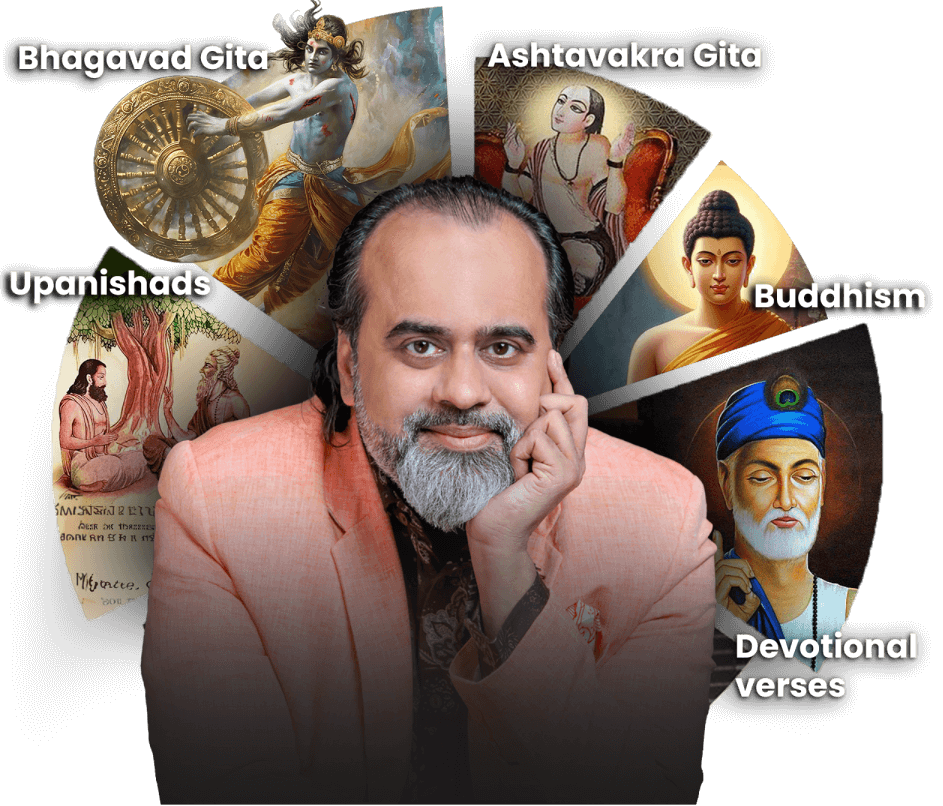
Sir, in your latest book “Stupidity in the Name of Spirituality,” I read two quotes which I would like to quote. The first one says, “Wherever you find the prevalence of superstition, look sharply, you’ll also find a parallel economy.”
The second one says, “Real spirituality is the field of self-inquiry, not belief.”
Here, in the data that I shared, I nowhere found any inquiry; just the economy is flourishing. So in all this web of easily available apps and services, how should one differentiate that what one is being served is real spirituality or just stupidity in the name of spirituality?
Acharya Prashant: This is nothing new, just that it is happening at a more organized scale now. There have always been priestly classes, and they have been able to successfully amass prosperity by just selling heavens and rebirths. That kind of trade has been not just possible but quite successful, right? A lot of profit.
In fact, in other trades, there is often some cost associated with the goods you are selling, COGS, or some effort associated with the service you are providing. But in the spiritual trade, there is very little cost of goods and also very little effort in service delivery, which means profit margins are close to 100%. Whatever you get is a profit, right? Supernormal profits you can get.
If a company earns 500 crore, it is possible that it spent 480 crore to have that kind of sales or revenue. But if an ashram gets 500 crore, it is possible that in terms of goods sold or the service provided, the expenditure was close to zero. So everything is just bottom-line, profit margin close to 100%. So it’s the most beneficial trade possible historically. Nothing is to be given. Nothing to be given at all. You simply have to declare that this place is holy. If you come here, you’ll be granted a visa to heaven. This place has strong dharmic vibes. You just come here, and obviously if you go to that place, you’ll also offer some money and also benefit the local economy.
So this has always been a hugely profit making sector of all economies, just that it has always been a small sector controlled by the priestly class. Now the attempt is to make this sector really big and on an organized scale, because the profits are very tempting, and there is no quality control. There can be no external auditor. All kinds of objections, audits, and scrutinies are ruled out. Getting it? So it’s a very tempting sector.
Also, if you have nothing else to offer, the rest of the world is much ahead of you in technology, in quality of manpower, in competitiveness, in ease of doing business; if there is nothing else to offer, this looks like probably the only thing left to offer. Yes, you can earn money using your technology and your manufacturing and everything. Earn money there by working hard on technology and management and innovation and manufacturing. Do all that and then come here and give me all that money so that I can send you to heaven. This is indeed a compelling business model, is it not?
So many people travel to NRIs especially the diaspora, they travel to India to do charity. You ask them, “What are you coming to India for?”
They said for charity, because such charity is not at all possible there. They are affluent societies. So we are coming here for charity, religious charity in particular. We are coming here for religious reasons. So it seems like a good, good model of the economy itself. We have nothing else to offer. So we will give you salvation. It’s a salvation economy.
We can’t manufacture. We have nothing else that we can be competitive in. We have nothing else that we can export. But we have salvation. For that, you have to come to us. Come here. You might have earned money using all kinds of creative and intelligent means. But all that money, you come here and you give it to the priests. And don’t we find all kinds of educated people doing that? They earn money and then they offer it to the priests in the hope of salvation.
So it’s a sector with awesome margins and very little accountability. It can remain in the private sector, or the government too can find it useful and turn it into a public undertaking. All that is quite possible.
See, all places have to come up with something as their core strength, right? Otherwise, what will you earn from?
China, the core strength is manufacturing, the factory of the world, right? Even Southeast Asia, or even Bangladesh, they too have become competitive on both cost and quality. Then you look at the US. The core strength is research, innovation, and now so much is being poured into AI. So what are we left with then? What do we export?
Listener: Salvation.
Acharya Prashant: The decision has been made, what you call the faith economy.
Now you have to consider what that decision means for the ordinary citizen. If indeed that sector becomes profitable, then that sector will attract more and more people and more and more investment, which means a proliferation of superstition, which means entire large areas being economically driven by superstition, and superstition turning into huge business models, and benefiting millions of people. Now, will these people ever even try to challenge superstition? Now their very sustenance, and bread and butter, and their families will depend on this business model. So an entire area, an entire generation, will be fully lost.
We have had priests the world over, right? So the farmer works and works and slogs and slogs, and once the thing is harvested and sold and he brings home some money, the priest drops in and says, “Ah, now you have to get into this particular ritual and perform this sacrifice and do all these things, otherwise the gods will get upset.” So the poor farmer says, “Yes, yes, yes. I have worked hard for six months. Now I must perform this ritual or sacrifice.” And he does that, and most of that money is taken away by the…
Listener: Priest.
Acharya Prashant: It is such a good business model.
Now that business model is being institutionalized, given a tech backbone, given robust infrastructure, solid institutional backing, and in the short term it will indeed prove economically beneficial, because money will pour in. But you have to think of what it means to the future of an entire area and an entire generation. That’s what you have to think over.
Will the youngsters, the kids in that area, have any scientific bent of mind? Will even the authorities promote critical thinking in that area? Can any research institution come up there? Can you envision an AI lab coming up there, or state-of-the-art manufacturing being set up there? Can you envision any of these things? No. All that you’ll have is, and who will rule over such areas? Babaji’s of all shapes, sizes, and colors. They will be the overlords.
It’s nothing to just laugh off. Think of it. All kinds of Babaji’s will be the overlords, extra-constitutional authorities, and nobody will challenge them, because that entire place is getting its revenue with Babaji at the center. So what about law and order? Will there be law and order, or will law and order be taken over by Babaji? Will there be freedom of speech? What about the age-old ills of casteism and misogyny? What will happen?
And externally it will all look nice, but only as nice as is needed to be shown to the religious tourists. As tourists, when you go to a place for four days, do you penetrate deep into what is happening there? No. You just look at the roads and the veneer and the ostentation, and you say, “Wow, this place has such a great spiritual aura.” You will never know what is really happening in the common houses behind closed doors.
That is a new economic model taking over. This is not the first time. The world has seen it many times in the past, and each time with disastrous consequences.
Questioner: Hello sir. Sir, so you explained about the axis of liberation and gratification, and how by aiming at both, attempting to get both, the ego compromises both.
I find myself oscillating between the two directions. I repeatedly face disappointment seeking gratification. Eventually, after multiple letdowns, I desperately ask, “Why do I keep doing this? What is the right center of action?” And in a way, I seek liberation. Then seemingly I proceed on that axis for a while, and that yields some prasad or some sweet fruit as well. The quality of work improves. I feel lighter, somewhat free from the trivia of life.
Then again the ego starts, or I start hoping to gratify myself through this prasad, and I want to consume what good I’ve gotten by proceeding on this axis. So then I proceed on the gratification axis again, and I find myself losing the quality of work, the lightness which I had gained. So then again I get disappointed, and yeah, that way the cycle continues. So how do I come out of this cycle? That’s the question.
Acharya Prashant: If the question has any sincerity, you’ll be out at this moment, because you are describing it so vividly. If you can describe something so vividly, then intellectually you know what is happening. Now it’s not that you need a technique, “How do I come out?” Now, what you need is honesty, and that I cannot supply you. Had you not known what was happening, I would have taken 10–15 minutes and elaborated. But you already know what is happening. And if it’s still continuing, it’s only because you want it to.
How do I fight your desire? How do I fight the brute force of primitive desire? Only you can take that decision. And that goes to a lot of people in the community. If you ignore exactly what is happening, now don’t ask for a technique. Show that you are a man. You don’t need a technique now. You need some honesty.
Questioner: So that little bit of hope remains that maybe I have traveled.
Acharya Prashant: So then engage that hope. Engage that hope. Take it to the lab, as we said. It’s almost like sugar has reached 230, so diet control for 15 days in the hope that once it stabilizes, I’ll feast on sweets. What kind of hope is this? This hope is unscientific. Test this hope.
This is the kind of spirituality most people have, right? “Let me control my sugar levels for 15 days using all kinds of spiritual methods so that I may go berserk on the 15th night.” This is spirituality for the sake of consumption. This is fasting for the sake of indulgence. And you have done it multiple times probably, so you know how it works. If you still want to continue, that’s a decision. That’s not a problem anymore.
And I cannot change decisions sitting here. I can throw light on problems. But you don’t have a problem. What you are telling me is a decision. What’s coming my way is not a question but information. And if you are giving me information, then thank you so much. Well, you have informed me of your decision, right?
You have just informed me of your decision. What can I say about that? I don’t have any locus stand there. Mostly your questions, if you will see, are declarations. And if it’s a declaration, I have no role there. You are declaring to me, “You know, this is the way I choose to be.” It’s a decision. It’s a choice you are making. That’s the best thing you can do, being with yourself. I’m not even needed.
This is the best answer I can give. Be with yourself, because it’s your decision, and only you can change it. It doesn’t take much. You’re not accountable to anybody, so it doesn’t take much. You don’t have to push files. You simply have to say, “I do” or “I don’t.” That’s how long it takes.
Questioner: Thank you, sir.