First the board percentage, then the CGPA, the money, the house: we keep ticking things off and reaching for the next, as if we were items on a conveyor belt that started the day we were born. When we do not know what we want, we end up wanting everything. The same unexamined words, success, love, settling down, decide what we call a true calling. If the seeker is false, how can what we seek be true? What if we first looked honestly at our own ideas of life and success?
Acharya Prashant: Hell is a place where you get a lot of sympathy, consolation, condolence, and commiseration. You're told that we agree that you are in a miserable state. Your neighbor comes to you, puts his hand on your shoulder, and with a grave face tells you that you are…

Questioner (Q): My question is regarding abortion. Broadly, there are two schools of thought regarding abortion. The first one is, because it is the woman’s body, she is the one who gets to decide whether to abort or deliver the child. The second school of thought says that the woman

Acharya Prashant: A quiver full of the best of arrows but no bow, how do you fight the battle of life? Can you imagine the amusing as well as tragic situation of the person who has a great arrow without a bow? He will be sharpening and sharpening his weapon,

We have all put down a book that could have helped us, or dozed off halfway through something that mattered. A man who could not keep food down was given medicine, and he threw that away too, since it went in by the same route. Most of us strike a similar deal: we move into a place that stinks and, within a week, call the smell normal. Show our fifteen-year-old self the life we lead now and they would scoff. What would change if we admitted we do not like our condition?
Man has always been attracted to the new. But attraction alone is not enough, especially when one is resistant to leaving the old ways. 'New' comes with an opportunity to change, and equally with a responsibility to act upon that change. Bridging this gap between attraction and action, Acharya Prashant guides us with practical resolves that possess the potential to bring real development—if followed honestly!
Your only obligation is your liberation. These are just loveless social customs and economic structures where a woman is seen as a factor of production that produces babies. There’s no need to go to the husband’s place or even stay at your father’s if you are unloved and unwanted. The world is a vast opportunity. Live anywhere, stay anywhere, do whatever is the right work, and fly free—simple.
Questioner: Namskar Acharya ji. Pardon me for not remembering exactly but in one of the shivirs where we had read ‘Gospel of Sri Ramakrishna’ to come to terms with this expression called ‘Adhikar Bhed.’
So therein Ramakrishna was saying that, “now in modern times there cannot be any Adhikar Bhed,…
Acharya Prashant: The spiritual soldier, the religious warrior has to be extremely intelligent. You could go to the extent of saying that he has to be cunning in the service of Truth; I’m choosing this word with all deliberation.
He has to be cunning in the service of the Truth;…
Questioner (Q): So I had your advice and I got some books in terms of getting different perspectives. It might be a bit weird in a way question but I kind of wonder, when people are praying for God somewhere and also you're mentioning something about the myth of the…
The world is like an open book to the one whose eyes are open; if you cannot read the world, then you have to look at yourself first, then you have to be mindful of your own condition. Read more...
Questioner (Q): I have been suffering from a type of OCD (Obsessive Compulsive Disorder) called somatic OCD for the last two years. I was in constant fear, every single moment, for around two years. I was on sleeping pills and anti-anxiety pills, but I think what helped me a lot…
If you know no philosophy and you are just celebrating Holi, Diwali, or Eid, or Christmas, that's dumb. Very dumb. And you call that as your great culture. No, I will have to sacrifice goats. Bloodshed is the name of religion. What kind of religion? No crackers are needed, even if that kills the air. What is this? AQI of 1,400. But I don't bother. I'm a religious man. What are you celebrating?
Vedānta is about the person gaining liberation from both of these—body identification and mental conditioning. So, ideally spirituality should be the woman’s best friend. But practically, evidence has been rather mixed; in fact, evidence has been that religion historically has been on the side of the oppressors when it comes to the women, oppressors of the women. The reason is that religion itself has not been well understood. Religion itself has been a victim of contamination, and when religion is contaminated then religion becomes a tool towards exploitation of women.
There is a search within the human being, always for the greatest, the absolute, and that is what differentiates humans from animals. India was fertile, and there was abundance. You had ample leisure, and in that leisure there was space for intellectual inquiry. The sages and the seers would talk to each other purposelessly. And from that purposeless discussion, from silent observation of life for hours, days, months, and years, came those insights that you today recognize as Indian philosophy.
There is only one Dharma. And that is to attain liberation or peace, to gain freedom from your bondages, to gain freedom from your inner chaos and noise, to gain freedom from your inner falseness. Gaining freedom from inner falseness is more commonly known as Truth realization. It is a euphemism—a very decorated euphemism. It’s not really Truth that is really realized; it is falseness that is dropped.
Questioner: Acharya Ji, recently I had a small argument with my parents regarding marriage. They have been pushing me for the last seven years, trying to somehow convince me to get married. I’ve got kind of really sick of it. I’m trying to push it, saying that I don't need…
![Truth Without Apology [Book Launch]](https://cimg.acharyaprashant.org/images/img-1ba7c449-c792-4b5e-b7c3-714d51940a57/30/image.jpg)
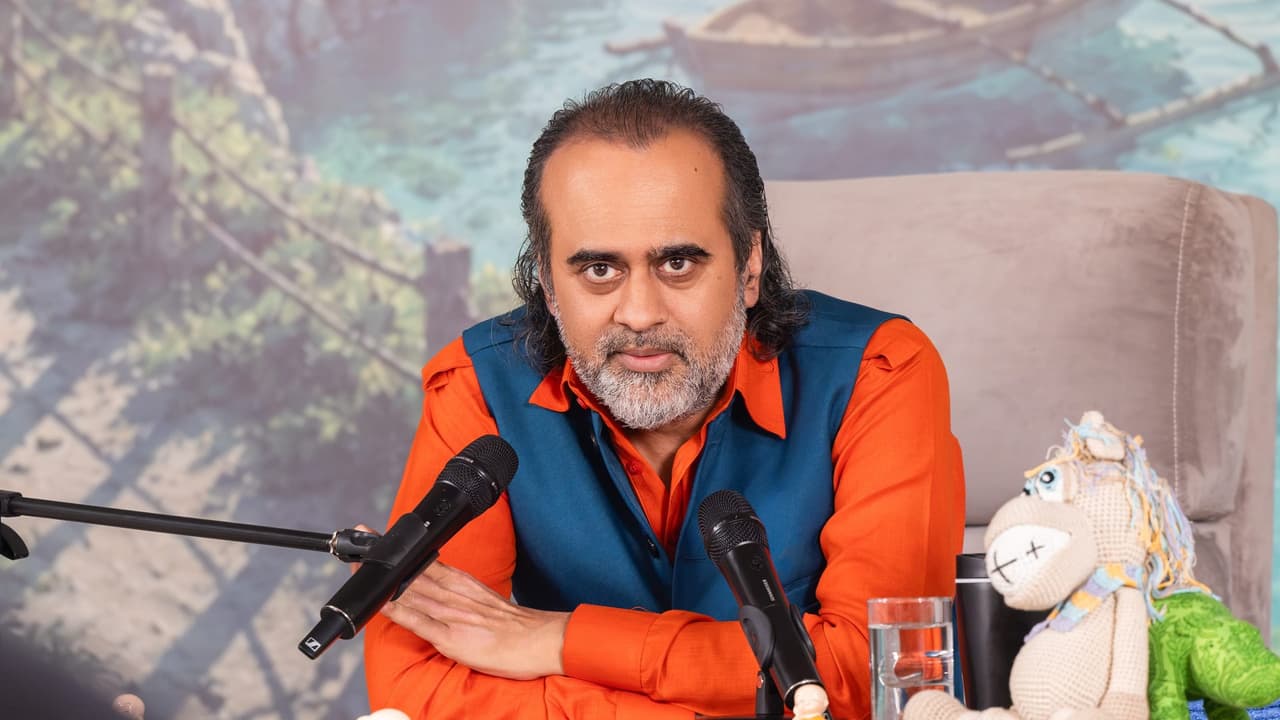
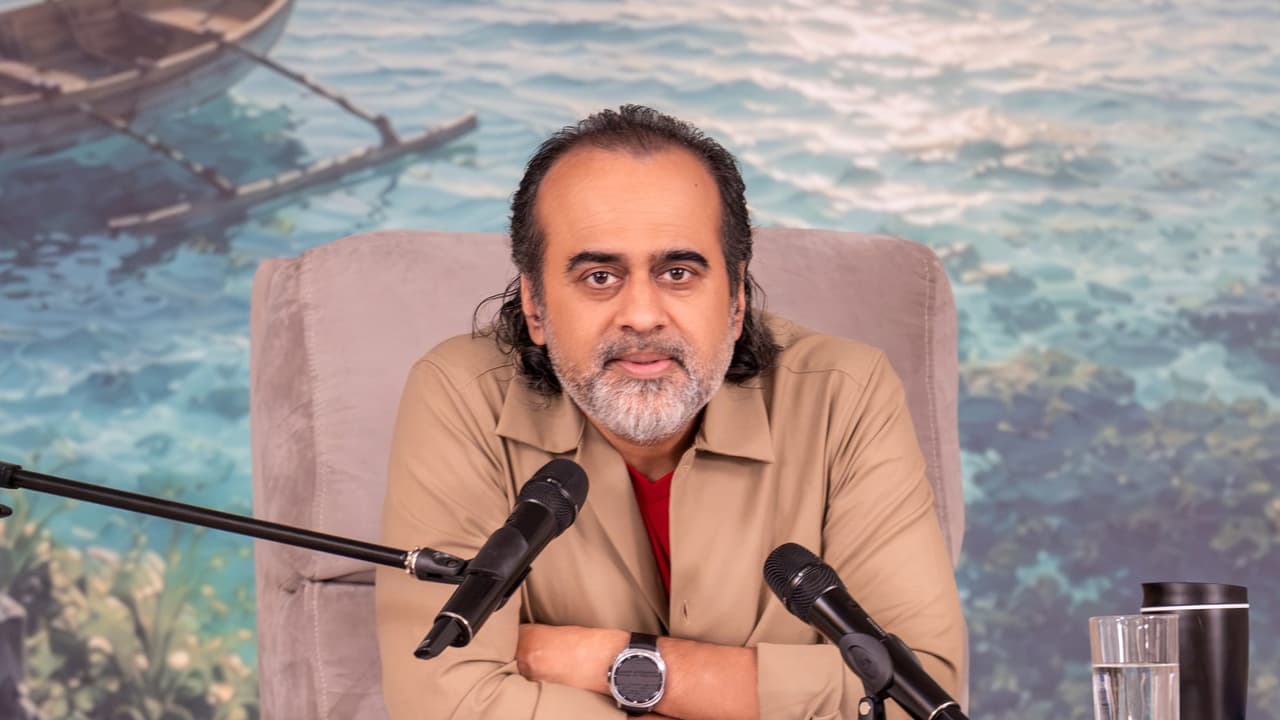
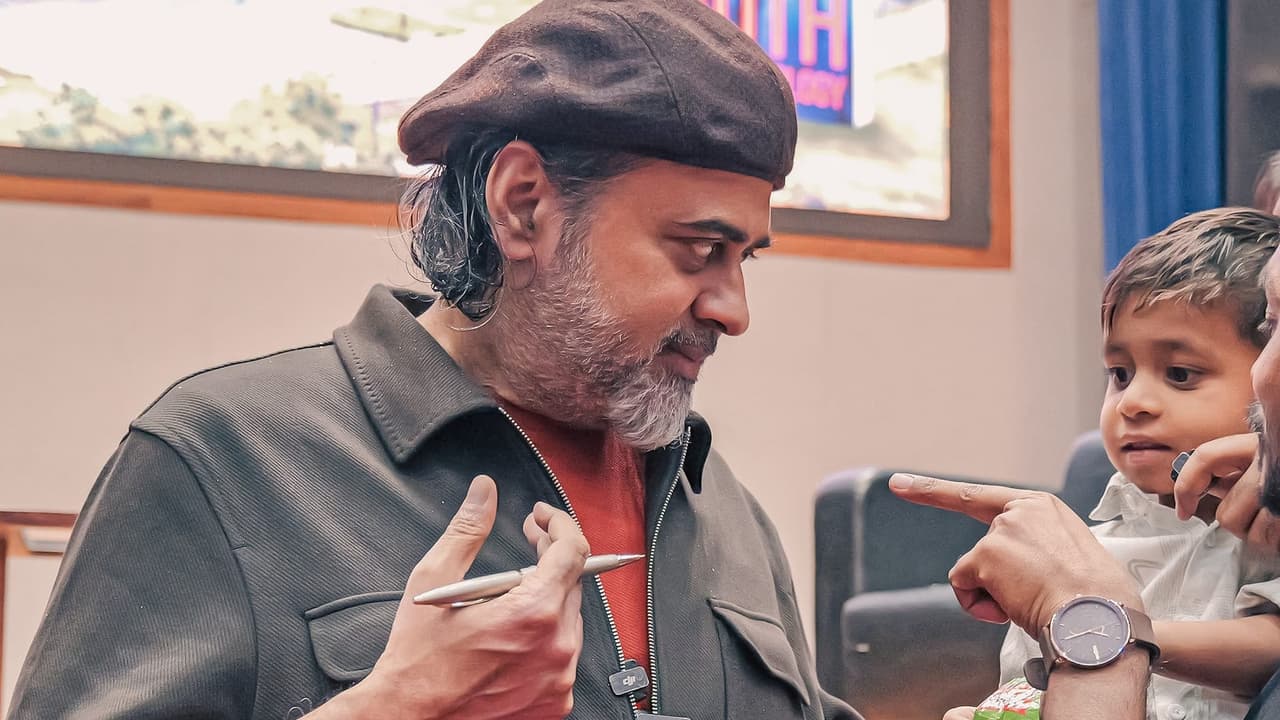
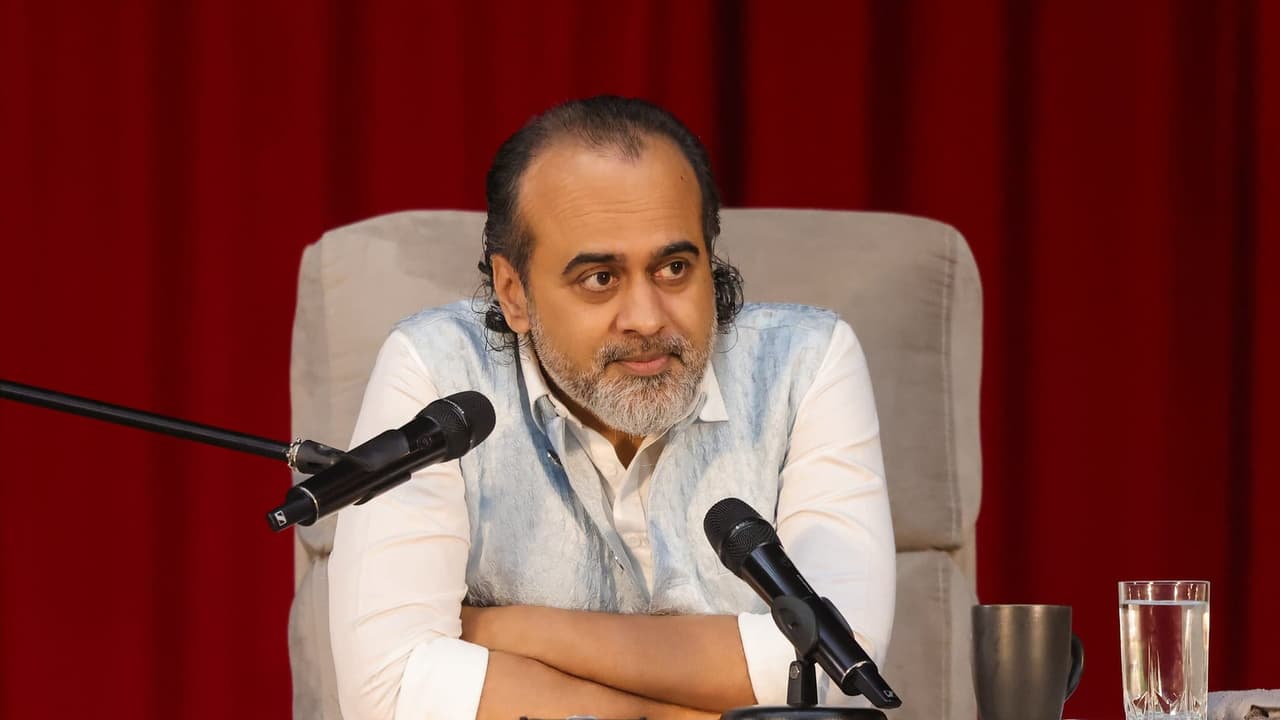
This evening in Delhi, a new book steps into the world—Truth Without Apology by Acharya Prashant. The launch takes place amidst seekers, readers, and companions of his work. In times when words are often polished to please and truths are dressed in comforting disguises, Truth Without Apology arrives like an uninvited storm—direct, raw, and uncompromising.

Life comes to us in an unending number of ways and you never know what's going to happen next. We are starved of something that really penetrates the surface. So, it is the intensity that this book brings — arrow-like depth, striking like lightning, immediately, so you don't have a chance to escape away from it. Like a Zen koan: very brief, very effective, and does its work in a snap. You could open just any chapter from anywhere and find it as if it was written just for you.

A woman is murdered—even that is just a two-inch thing in some newspaper. But if it is a sensational rape case, then the entire country joins in.
Are we really concerned about women? Had we been concerned about women, how is it that the common man of this country is…

Questioner (Q): A very good evening, sir. According to the world bank, out of the total economic growth of India, women contribute only seventeen per cent. However, their Chinese counterpart country put forty per cent into their nation’s growth, as we are aiming to be a five trillion economic country…

Questioner: All the forms of multimedia, the film industry and advertisements, have presented images of both sexes that are very often unrealistic and debatable. The very quality of femininity has been portrayed in the film industry, ironically, as victimizing them, merely pretty faces, and sidekicks. Why do you think women…

You never take out a candlelight vigil on India Gate when a little girl is being badly conditioned by media, by society, by the school, by all the websites, by all the influences upon her. Have you ever seen a candlelight vigil against all the corrupting forces on the little…

Many Indian parents keep their children, and especially their daughters, away from sport, even where coaches and facilities exist. The barrier is often not outside but in the parent’s own ideas: poor returns, uncertainty, and fixed notions of what a girl’s life must be. Blaming our own parents does not help either; our life is now our responsibility. Parenting is a decision of the greatest responsibility, and it begins with self-love. Can we love a child if we cannot love ourselves?

Many of us look for role models of our own gender and hope to succeed as a man or as a woman, yet no one great was ever great as a gender. The moment we tie our aims to being a woman or a man, we tie them to the body, and much of our attention goes into how we look and how we are seen. So much around us keeps reminding a woman of her body, from songs to the fear of a street at night. But the body has never achieved anything by itself. What might we attempt if gender stopped mattering?

We gladly worship Krishna the cowherd of Mathura and Vrindavan, yet the Krishna of Kurukshetra, who speaks the Gita, is rarely welcome. Much of what we call religion is a request: we pick a favourite deity, place and ritual, then ask for a car, money or a cure. The Gita values rituals done for desire as little as a pond beside the ocean. Popular religion says, "I want, therefore I act." The Gita says, "Know who you are and then simply let things happen." Which of the two do our prayers come from?

The baby arrives, the income rises, and a short break from work quietly becomes permanent. The home is comfortable, so why go back? Behind that comfort sits a belief we absorb from media and culture: that “we exist not for our liberation, but for consumption.” If consumption comes free, “why work at all?” The talk calls a life with no purpose worth exerting ourselves for hell, and asks what freedom is possible when someone else feeds us. Can we look honestly at what we have been taught to want?

A world champion asks why she cannot sleep when a teammate outperforms her, and why even big wins leave her restless. The restlessness is not a problem but unspent energy, a sign that we have more to give. When every bit of our time and attention goes to what we have chosen, there is no surplus left to worry with. The right fight is never only against an opponent; it is against the ego within. What would it mean to fight so fully that nothing is left to celebrate or mourn?

Physical weakness does not stay physical. It becomes mental weakness, and the ego, which turns everything into an identity, starts saying “I am weak” because that line brings support and spares it responsibility. Visible strength works even unused: it keeps the opponent outside wary and silences the one within, who can no longer claim to be helpless. Keeping the body strong is therefore a spiritual matter, not vanity. Are we holding on to weakness because it is convenient?

The Bhagavad Gita deserves reverence not because of inherited beliefs about its author, but because of its power to dissolve falsehood and reveal Truth. Real devotion is not ritual or blind faith—it is understanding, inquiry, and living the wisdom of the Gita. Through sincere study, one discovers the true meaning of Krishna, making the Gita the most authentic path to knowing and worshipping Him.

True freedom begins when we question the beliefs that make us feel trapped. Most of our suffering comes not from circumstances but from unquestioned assumptions, attachments, and imagined obligations. By suspending our beliefs, even briefly, we allow truth to enter, revealing that life always offers choice. Transformation is born from love for truth, the courage to let go, and the willingness to step beyond the boundaries created by the ego.

“I lust after your body” is the ego speaking plainly. Tell it the ego is false, and it rephrases: “It’s not lust, it’s love. And I’m not the ego, I’m Atma.” So the Buddha said even this Atma is false, and we turned Neti Neti into one more belief. A PhD student asks which of the two works better. The answer: neither teaching was weak. “You give poison to the ego, that becomes nourishment.” Which holy word is doing that work for us today?

The point always to be proven and maintained is that the woman is weak and fragile, because that is exactly what patriarchy always sought to prove: “She can’t work.” Coming from a man it will appear harsh, but being a human being much like a woman, what I can broadly say is that I will not trade away my freedom for the sake of avoiding physical inconvenience. Even if favors are offered to you for free, refuse. There are no free lunches.

Explore Books on Lord Shiv by Acharya Prashant, revealing deep Vedantic insights into Shiv’s true essence, symbols, and spiritual wisdom beyond misconceptions.

There is such great fun in leaving yourself behind and turning a servant to the Truth. It’s almost like Krishna advising Arjuna, “Talk in everlasting words and dedicate them all to Me—*mām ekaṃ śaraṇaṃ vraja, sarva-dharmān parityajya*.” And at numerous places in the *Bhagavad Gita*, he says, “Arjuna, you are not fighting for yourself, you are fighting for Me. As long as you fight for yourself, if you win, you suffer, and if you lose, you suffer. And when you fight for Me, then you are a victor even before the fight begins.”

Holi isn’t just about colors and fun; its symbolism runs deep. Hiranyakashyap represents the ego that seeks its own continuation and misuses power for some nefarious end. Prahlad embodies detachment, valuing Truth above all relations. If you’re cunning like Holika, your own powers will destroy you. And Narsingh reminds us that God is cleverer than the cleverest—He is the source. Do not try to act too smart or be ungrateful.

To those who articulate that women should mind their clothes and dressings, the question arises: what kind of person are you, man or woman, if anything is able to disturb or provoke you so easily? The allegation is that when watching a woman dressed skimpily, it becomes a disturbance, a distraction, even a provocation. How will you insulate yourself, and how much will you insulate yourself from the world? And what are the limits to what you want to see and not see? Today, it is said that a woman’s legs or thighs provoke you. What prevents you from saying tomorrow that her ankles and fingernails provoke you? Would you then demand that she should cover up from head to toe?

The usual feminism always proceeds keeping the man at the center. The woman is saying, “The man is alright and I want to be like the man.” This is such a low standard to set, whereas true feminism would proceed keeping the person that the female is, her real potential at the center. Real feminism is raising to your own individual center, called the true self or Atman.

To the one who believes in ghosts (Bhūta-Piśāca) — for him, they exist. When you are asleep and are engaged in some nightmare, you feel it actually exists. Bhūta-Piśāca Nikata Nahiṁ Āve, Mahāvīra Jab Nāma Sunāve: Mahavira Hanuman, devoted to Shri Ram, is to be taken as the representative of Truth. If you can be close to the representative of the Truth, you will get rid of all nonsensical and horrifying imaginations.

A man has to give up on greed, on this and that. A woman has to give up on the feelings related to the body. On all the assumptions and other stuff related to the body. Leaving the house, for her, is like becoming naked. And then the rest of the journey is very easy for her. If you have a woman who can drop her physicality, who can get rid of the basic woman-ness, then you have a great saint in front of you.

The one who is religion-less. A real Hindu does not have any religion. To go beyond all religions is to be a Hindu. There are religions that are on one plane, and then there is Sanatan Dharma, which is another dimension — the eternal religiousness. Liberation from religion is religiousness. Sanatan Dharma is awakened intelligence.

The human mind suffers because it does not understand what’s going on within itself. The mind longs for understanding and liberation from bondage. And the responsibility is on the human being to gain that understanding and that freedom from bondages. This responsibility is called Sanatan Dharma — founded on self-inquiry, ‘Atma-Jigyasa.’ It is a philosophy of the mind that gives a purpose to life.

Sanatan Dharma is not about following traditions in the name of Dharma. It is about constantly moving towards that which will take you beyond your mind: the Sanatan. All our beliefs and rituals might be religious, but they are not Sanatan because they are just mind stuff. Since both Sanatan Dharma and Vedanta discard mind stuff as trivial, one cannot be a Sanatani if one is not a Vedanti.

It is not others that you have to be cautious of. You have to be cautious of that within you which gets influenced by others, which does not know others but gets influenced by others. It does not live in knowing. It lives in indoctrination. How to know the real master? See, who is treating your disease. How do you know a doctor? Not by his degrees but by his ability to treat you.

Women are physically a bit weaker, and men could coerce them using sheer muscle power. But those days are behind us, because now we have institutions, the law, and the police — systems that do not listen to muscles. There is something in you that agrees to the demands being made by the patriarchal system — question that. What is it in you that surrenders — and that thing is called greed and fear. So that's what you need to fight against — your greed and fear.

If the woman really understands herself and therefore her choices, why would there be a need to be affected by others? But we bother. That happens because we have borrowed our sense of self from history, tradition, and society. When dependence is glorified, be it physical, financial, emotional, or psychological, it definitely coexists with bondage. If you feel bulldozed or forced, there is only one reason: you’re not walking on your own legs. Go out and earn. No price is too big for freedom.

Before you go to the Quran, you must first be in a condition to understand what it is saying. The center of the Quran is Tauheed – Oneness. The Quran can be understood only when you, as the ego-mind, are connected to the same source that blessed the Prophet. Otherwise, you will misinterpret it. You are so full of ego that you want to remain what you are. By remaining what you are, if you apply your intellect to the scriptures, you will obviously distort them.

Irrespective of her station in life, it has been drilled deeply into the Indian woman that her life is foremost about the husband, kids, bed, and meals. But how can this be the primary reason for a conscious human being's existence? We use decorated phrases like “Queen of the House”, but the moment the "queen" gets some money, all her queenly tasks are dumped onto somebody else. So, we are just deceiving ourselves. Give yourself the courage to question things and not accept them blindly — it will give you a blossomed personality and a great life.

Women do not need sympathy, reservation, or compensation; they need awakening. Victimhood may offer temporary advantage, but it slowly erodes dignity and strength. Education that stops at jobs and numbers fails both men and women. Unless education addresses the inner fear, insecurity, and ignorance that sustain oppression, no policy can truly empower the girl child.