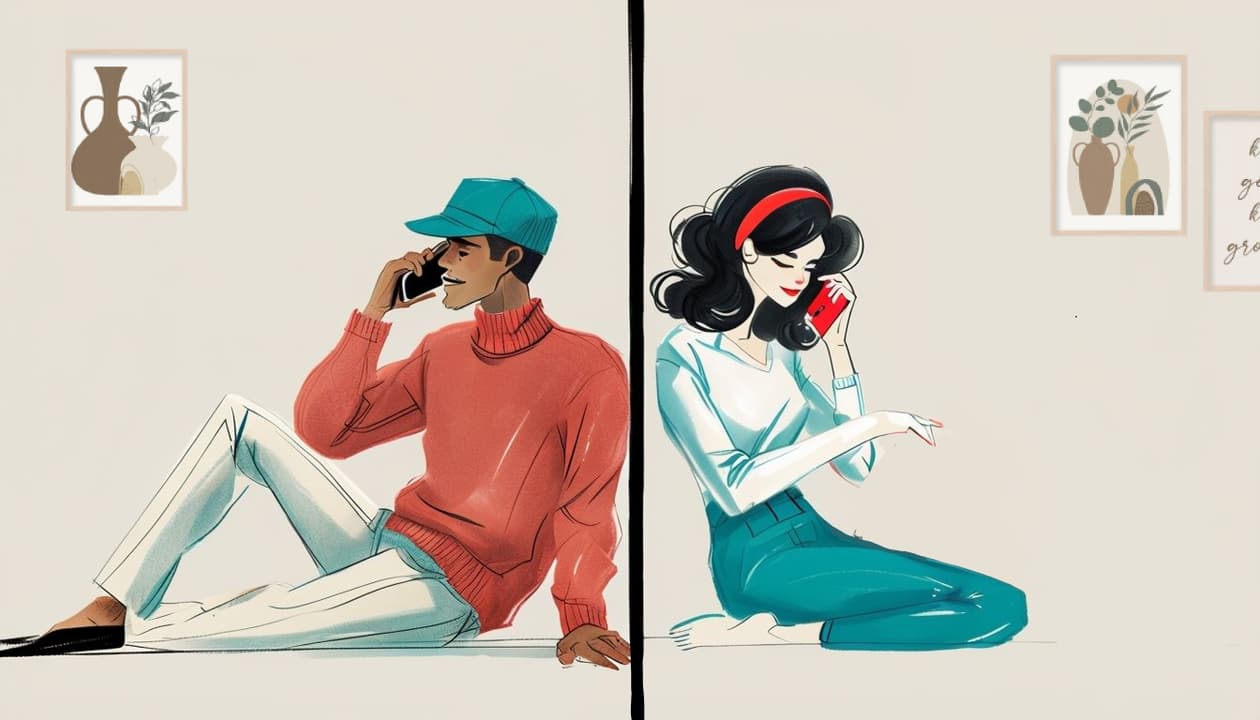
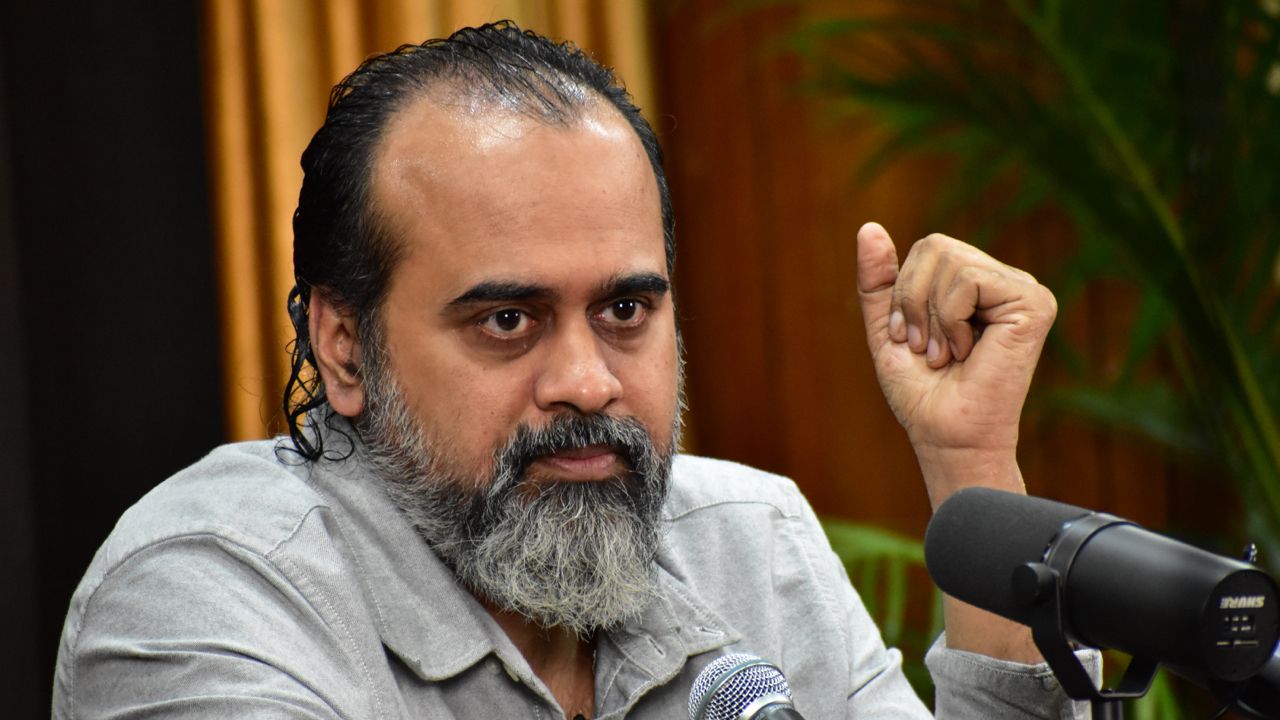
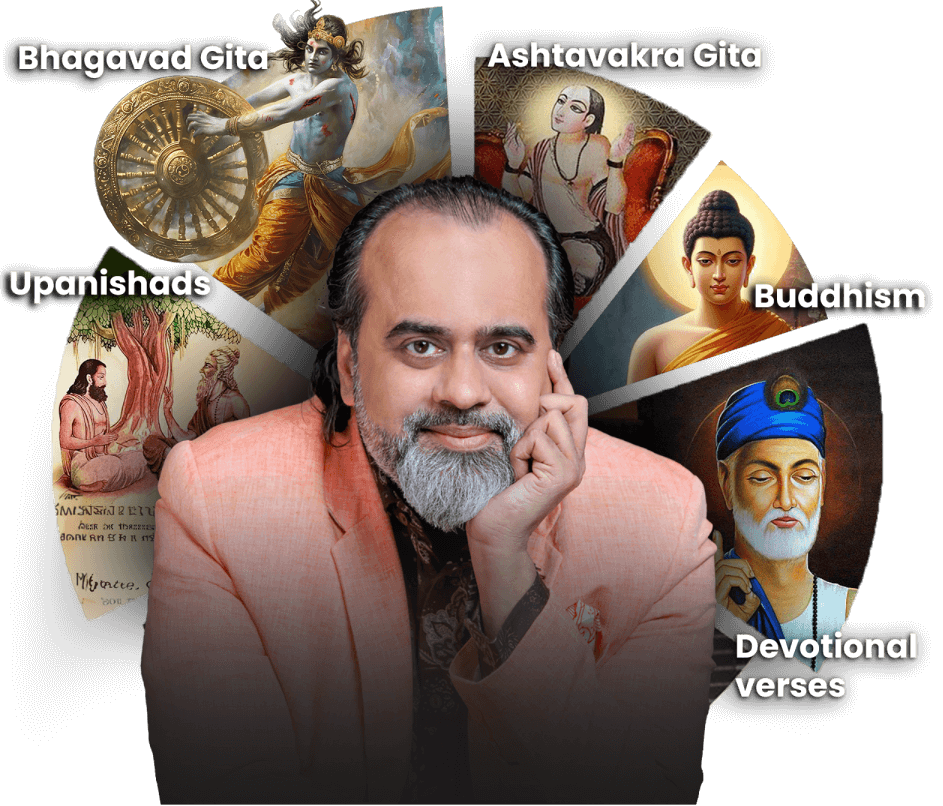
Acharya Prashant: ‘How can I get my ex-girlfriend back?’ The question comes from Shubham. Shubham you will have to die (audience bursts into laughter). There is no other way, you will have to die.
You know, it was Kabir Sahab who said: ये तो घर है प्रेम का, खाला…
Acharya Prashant: Please, understand the nature of attachment. When two things get attached, do they disappear into each other ever? Attachment means continuity of separation. Attachment means that the two in spite of appearing proximate would still be separate. They would appear to be near but still they would continue
There can be nothing worse than being saddled with, being tied to, being chained to some general unworthy person in life. That’s the worst hell you can create for yourself. Don’t do that.
If life is benevolent enough to offer you a great great companion, nothing like it. But if…
Spirituality does not replace the fear of ghosts with belief in God. It asks us to question the mind that creates both fear and belief. Ghosts, gods, and stories can all become projections of imagination. The spiritual path begins by dropping assumptions, investigating “Who am I?” and understanding the source of suffering. With attention, right knowledge, and self-inquiry, fear loses its power and one becomes inwardly free.
See, it's like this when you're not observant and you look at something, you go back into your own world or into the thousands other worlds that you have, and then with a
…
1
Questioner (Q): I read some couplets by Saint Kabir and they touched me deeply. He wants to become one with God or Truth so much, but he is pained that he is unable to do that. At times I feel like meeting Him is the only thing left for me…
Share
Excerpts from Articles
Climate Change: The Solution Is a Choice
Climate change is more than an environmental crisis—it is a crisis of human choices. Our patterns of consumption, consumerism and endless pursuit of more are putting increasing pressure on the planet. But meaningful change does not necessarily begin with new technology or stricter policies. It begins with a deeper question: what are we willing to change within ourselves?
You Don't Understand the Bhagvad Gita, But You Still Claim That You Love Krishna?
The Bhagavad Gita deserves reverence not because of inherited beliefs about its author, but because of its power to dissolve falsehood and reveal Truth. Real devotion is not ritual or blind faith—it is understanding, inquiry, and living the wisdom of the Gita. Through sincere study, one discovers the true meaning of Krishna, making the Gita the most authentic path to knowing and worshipping Him.
ज्योतिष कितना सच है? कुंडली, ग्रह-नक्षत्र: इनका क्या अर्थ है?
वेदांत को केवल इसलिए सही या श्रेष्ठ नहीं माना जा सकता कि वह किसी विशेष परंपरा से आता है। विज्ञान जहाँ भौतिक जगत की वस्तुनिष्ठ जाँच करता है, वहीं अद्वैत वेदांत सीधे मनुष्य के ‘मैं’, उसके दुख, बंधन और मुक्ति की पड़ताल करता है। इसकी कसौटी वैज्ञानिक प्रमाण नहीं, बल्कि अपने जीवन में इसकी सच्चाई को देख पाना है। किसी दर्शन को मान लेना नहीं, बल्कि उससे स्वयं को मुक्त करना ही उसका वास्तविक उद्देश्य है।
कई तरह के डर—अकेले पड़ने, छवि खोने या छोटा समझे जाने—की जड़ अक्सर अतीत में बनी पहचान और कहानियों में होती है। शरीर की हाइट जैसी चीज़ों को समस्या मानकर उनसे जूझने के बजाय उनकी अप्रासंगिकता को समझकर आगे बढ़ना चाहिए। अतीत को दबाने से मुक्ति नहीं मिलती; उसके करीब जाकर अपनी स्मृतियों, धारणाओं और पुराने पैटर्न को निष्पक्षता से देखना ज़रूरी है।
Struggling to choose between a secure job and the path you actually feel drawn to? This isn't really a question about careers. It's about why other people's opinions have so much power over you in the first place. Real clarity doesn't come from finding the 'right' choice. It comes from honestly looking at your own fear, again and again, until it stops running the decision for you.
Victory is not decided by the trophy you hold but by the battle you choose to fight. Real strength lies in making the right decisions, staying true to your deepest values, and refusing to be ruled by fear or circumstances. When your actions arise from clarity rather than ambition, the outcome loses its power over you. The moment you choose the right path, you have already won.
Animal cruelty: Who deserves mercy, and who doesn’t?
Violence begins long before the knife or the slaughterhouse—it begins with the ego, the one that draws boundaries, seeks justification, and decides who deserves compassion. Laws and reforms may reduce suffering, but they cannot end violence while the ego remains intact. When the ego dissolves, exploitation ends naturally, and compassion no longer depends on regulation or moral boundaries.
Struggling to choose between a secure job and the path you actually feel drawn to? This isn't really a question about careers. It's about why other people's opinions have so much power over you in the first place. Real clarity doesn't come from finding the 'right' choice. It comes from honestly looking at your own fear, again and again, until it stops running the decision for you.
कई तरह के डर—अकेले पड़ने, छवि खोने या छोटा समझे जाने—की जड़ अक्सर अतीत में बनी पहचान और कहानियों में होती है। शरीर की हाइट जैसी चीज़ों को समस्या मानकर उनसे जूझने के बजाय उनकी अप्रासंगिकता को समझकर आगे बढ़ना चाहिए। अतीत को दबाने से मुक्ति नहीं मिलती; उसके करीब जाकर अपनी स्मृतियों, धारणाओं और पुराने पैटर्न को निष्पक्षता से देखना ज़रूरी है।
A true relationship is not built on need, possession, or emotional dependence, but on a shared commitment to Truth and inner growth. A worthy companion reflects your reality like a mirror rather than performing a role to please you. Real love is effortless, rooted in one's nature, not expectations. When your highest commitment is to excellence and Truth, relationships become a natural outcome—not the purpose of life itself.
6
Sixty million followers do not necessarily indicate a transformation in consciousness. Large numbers may reflect persistent outreach rather than deep commitment. Truth is often avoided not through opposition but through indifference, convenience, and self-deception. Real change requires sustained effort, inner honesty, testing one's understanding, and the courage to face uncomfortable truths instead of seeking comfort, validation, or easy inspiration.
Fear, social conditioning, and painful memories often shape how people live and make choices. True growth begins by questioning inherited beliefs, refusing to remain trapped by past wounds, and acting from understanding rather than conformity. What appears to be sacrifice is often just the abandonment of conditioned habits. Freedom comes not from external systems, but from the courage to see clearly, learn, and move beyond fear.
The other must exist in your life, and vice versa, only for the sake of internal elevation, to make you into a better person. Don't you see the impact the other one is having on your life? Seeing is the key. What does seeing mean? Seeing implies understanding. See and ask yourself: What is the impact upon me? And if you see that, you'll just push it aside. It will be spontaneous. You won't even require to think, because now you have seen.
As a doctor, can we limit our responsibility to the one particular body or to the set of few bodies that come to us for treatment? Or is the patient actually a representative of an entire society, an entire ecosystem? Can I really be a good doctor of the lungs, if I support a society that pollutes the environment in the name of development? So, if I'm a doctor, then health is my responsibility in the holistic sense, not just one patient.
2
It’s not going to be right when the patient starts playing the doctor. We need to grow up; and having a kid, in that sense, is an opportunity. You want to be of some use to the kid, then grow up with the kid.
A suicide is a sad event because it prevents us from realizing our possibility and potential — there was an opportunity to live, learn, grow, realize, and be liberated, but it was wasted. But how many of us actually manage to realize our potential even if we live to 80 years? Hardly anybody. For our species, the extent of aliveness is proportional to the freedom and height of our consciousness. So ask yourself honestly: How close am I to the best I could have been?
There is nothing that can continue in time unchallenged, untested, undefeated. The moment anything starts journeying in time, it is bound to be defeated and die. So, how is immortality or eternity possible at all? It is possible only when your association with things in time is deep. Eternity lies in the quality of time, not in the expanse of time. And the depth of association is known by seeing how we usually superficially relate, without attention or inquiry into what they really are. This superficiality is mortality.
It's probably a blessing when we commit blunders that can no longer be hidden or justified because only then are we forced to admit to ourselves that we are operating from the wrong centre. When this happens and our act of ignorance harms a loved one, we cannot undo it, but there is something within us that can be undone — that's the opportunity. When guilt is real and complete, it shows you the completeness of your unconsciousness and becomes an agent of change. When it is superficial, it becomes an agent of defence.
The hurt that you have received is a result of your own lack of understanding about the nature of life. This is an opportunity to understand life. It is an opportunity to not let the previous mistakes be repeated.
I'm not asking you to be a loner or an avoider of human company. It's just that things must be given their due place — and their due place depends on their quality. If you do not have good quality people around you, there are many other better options. Why not spend your evenings learning to swim or sing? And there could be so many other things. I mean, you would know better.
Explore Books on Lord Shiv by Acharya Prashant, revealing deep Vedantic insights into Shiv’s true essence, symbols, and spiritual wisdom beyond misconceptions.
The parts of the Upanishads that do not deal with self-enquiry can be taken as outdated. They do not want to address things that change with time. Mankind today is more prosperous than it has ever been in its history — but internally, are you not still afraid? Are you still not greedy? That’s the problem of the self that the scriptures seek to address. The Upanishads are dealing with a very peculiar problem that time alone cannot address — and that is the problem of fundamental human suffering.
A surgeon’s table is never a beautiful sight to look at. Poets will find nothing there. There are scissors and instruments, and iron and blood and flesh cut apart. There is no happiness there. There is nothing pleasant there. Seekers of pleasantness will be disappointed looking at a surgeon’s table. But that table saves lives.
We want to do good to the ones we are related to and we have long stretches of memories with all kinds of identifications. I fully appreciate that. But I also know that it doesn't always work this way. Sometimes what works better is shifting of focus to more appropriate areas. Remember, nobody can be helped beyond their consent. That's the nature of life.
Our culture has turned attachment into value, very proximate to love. However, attachment is poison and has nothing to do with love. We don’t feel ashamed admitting that we are attached, as if something beautiful is happening. If you are with the wrong one, and not even prepared to see that you are with the wrong one — that’s attachment. And you can never be attached to the Right One; there is only dissolution.
It has been a tradition in India that when you donate, you bow down to the one you are donating to, because he has done you a favour by accepting your donation. Being what we are, it is hardly possible for us to do anything for others. Kindly get over this notion that we live for others. That is the privilege granted only to a Buddha. Only in a state of inner fulfilment can one really do something for others.
Don’t think of heaven and hell as the afterlife; both are here, right now. As the Niralamba Upanishad says: Right company is heaven; wrong company is hell. If you are someone who loves to be with people who will take you towards truth, joy, and simplicity, you are already in heaven. And if you surround yourself with people who pull down your consciousness, then verily, you are—right now—in hell.
Whenever the past bothers you, you should immediately know that some danger is lurking in the present. Had the right thing been happening to you right now, then you couldn’t have been bothered with the past. And that is what the past does. It serves as a very deceptive distraction from the present. Figure out what is happening today.
The reason is that we have internalized a utopian image of a suffering-free life. And our current state of suffering, compared with the utopian heaven, makes us very frustrated. So, keep this comparison aside by seeing that this utopia is purely imaginary. You are not born to be in bliss. In fact, suffering is an inevitable part of life. Take life as it is, and then do your best to raise it as much as possible — this is excellence.
Behind all FOMO is the fear of missing out on what life has the potential to deliver to each of us. Since we don't know ourselves fully enough, there is a general kind of anxiety — "I'm missing out on something." Let's identify what we are really missing. And the process is of negation and rejection. Reject what is not needed. If the inner rubbish can be cleaned up, you realize — that's all.
Those who want to travel long distances and fight important battles, they don’t carry baggage - they travel light. You must know which responsibilities rightfully belong to you and which ones you must disown. You are not obliged to fulfill all the so-called traditional responsibilities. Therefore, you’ll need a total revolution in your inner world before you can fearlessly do something in the outer world.
Question: What do I do to cross the river? To me, it is such a challenge.
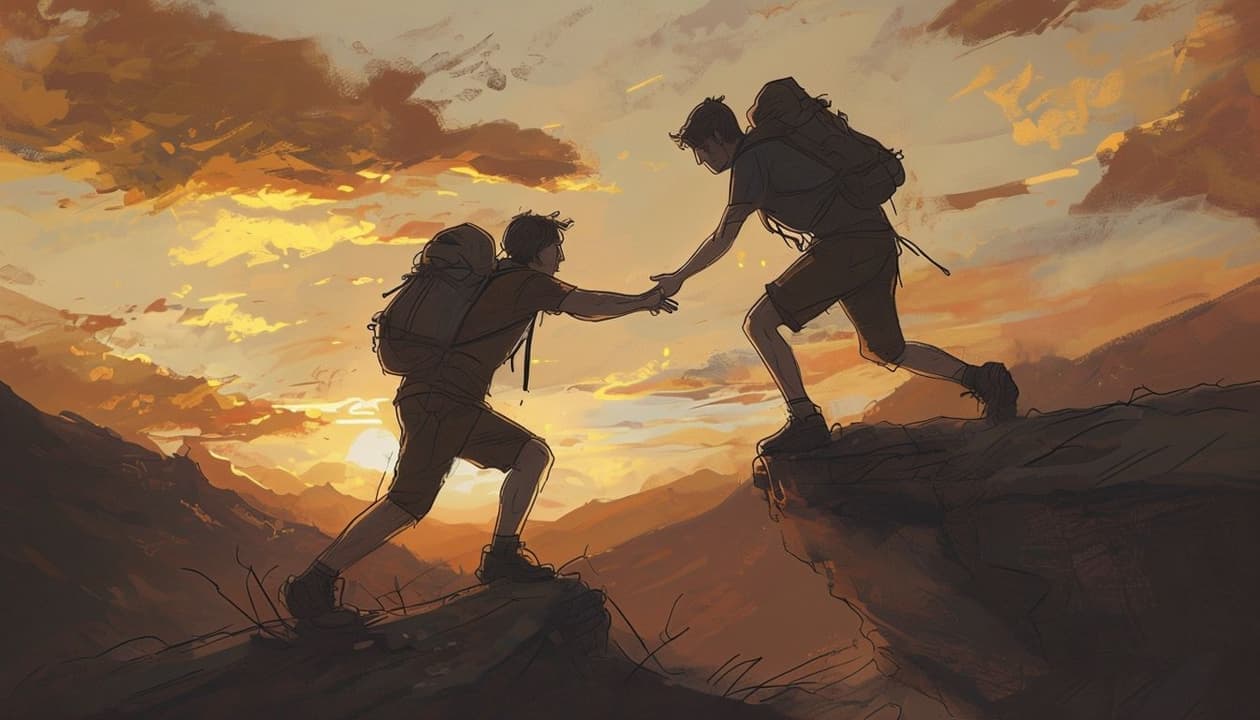
Acharya Prashant: Crossing the river is easy. Just hold the hand of someone who knows the other side, and cross. You have already crossed the river a thousand times with me. Your failure is…
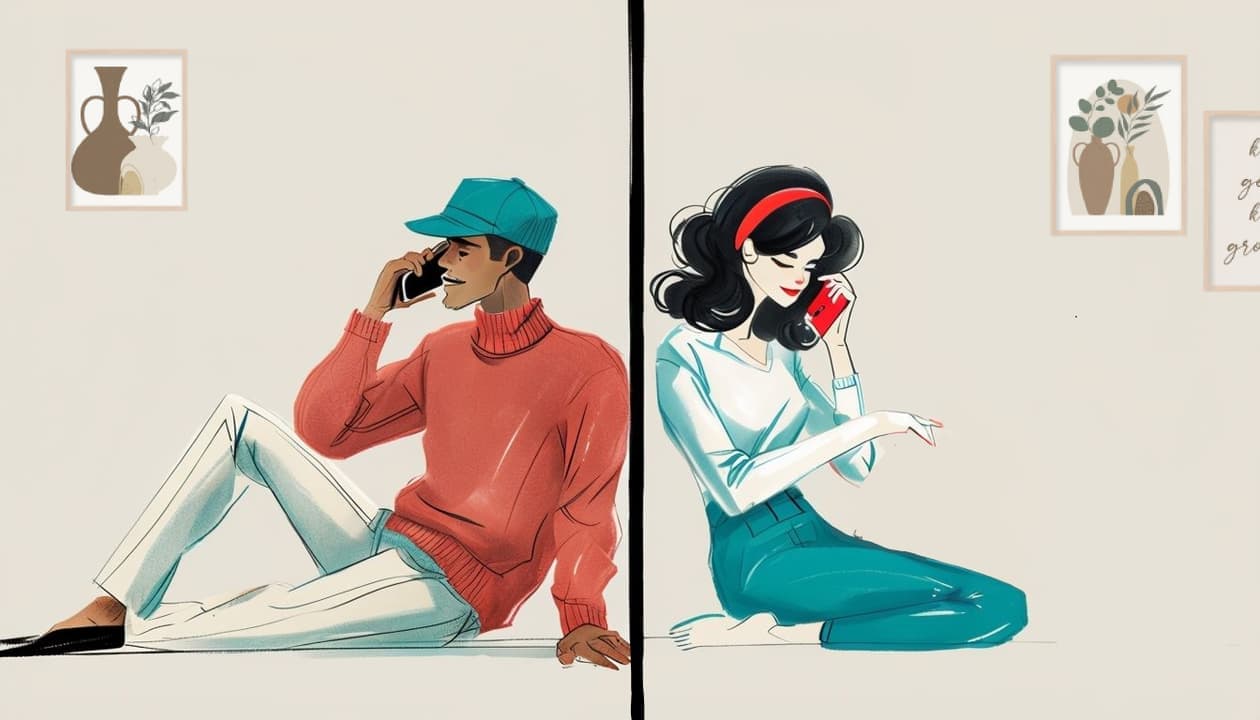
Attachment is just a promise. A lack of fulfilment. It is a substitute for love because the real thing is not available. If you find yourself attached, it means there is a desire for love; it means there is a call for love. Know that a fake is presenting itself as a substitute for the real thing.
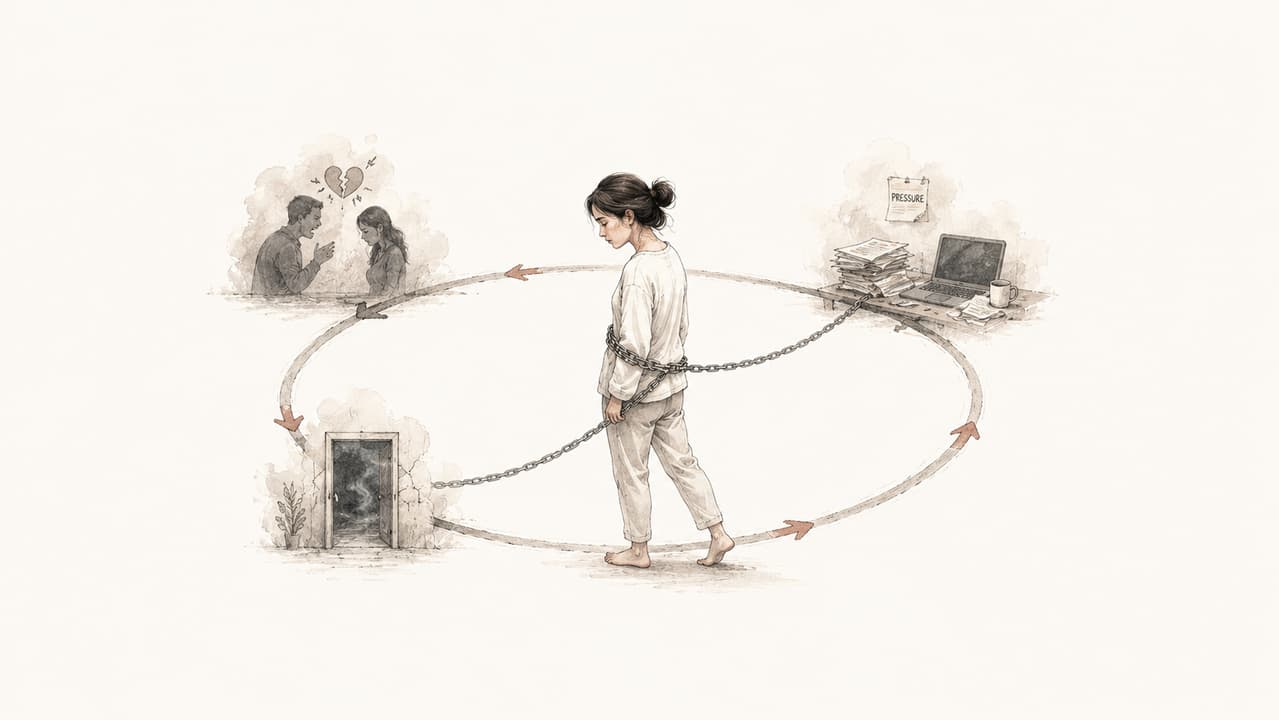
The same suffering that we hide behind so many things— entertainment, even knowledge, so-called distractions, achievements, pleasures, accumulations, prestige, sanctions, and approvals from all around. We hide that fact of human suffering behind all these things. So, it's a big problem. It's a big problem that we want to address. So now, I want to look at — why am I suffering? Why am I suffering?
There has never, ever been anybody 100% sorted. There are always challenges, and those challenges arise from the body itself; your enemy is within you, and it will remain as long as you are alive. So, learn to revel in this situation — it's called life. And instead of asking for a final victory, start asking for a good battle — battles where, even in your pain, you can say, “This one was good!”
And with human beings becoming more powerful technologically, economically, the little being at home is even more staggeringly at the mercy of the grown-ups. The little one is absolutely at the mercy of everybody else. And these grown-ups, they have so much today. Don't you see how human consciousness and the corruption within it is manifesting itself in a 100 ways and sexual exploitation of vulnerable sections is just one way this corruption is manifesting itself.
So the opposite of cruelty is not compassion. The opposite of cruelty is often either attachment or possessiveness or taking care of those who are related to you by way of self-interest. So that's the domain of duality. So yes, it is true that the mind wanders about in duality and then there is hope and there is hopelessness and then there is friendship and then there is enmity. So all these are aspects of duality but compassion does not sit anywhere in the dualistic framework.
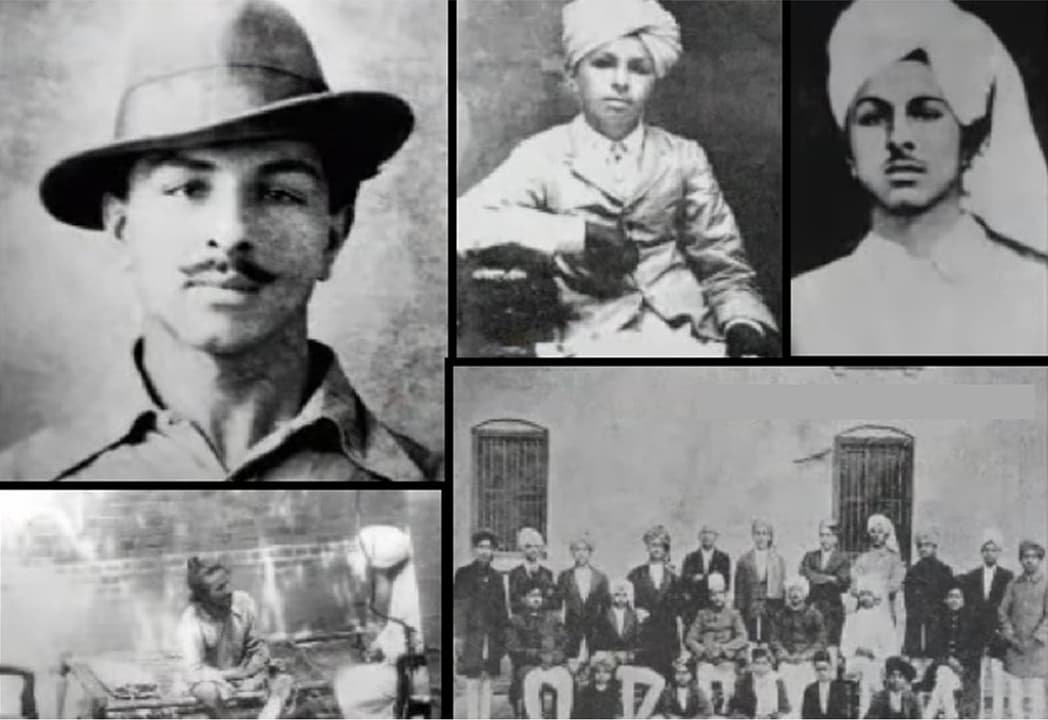
Bhagat Singh was just twenty-three when he laid down his life, yet he remains immortal, while those who lived up to ninety years are just the dust of time. Who cares for them? That's the difference. He had no time for trivial things. Even on the eve of his hanging, he was reading the Bhagavad Gita, and that copy is still preserved. A voracious reader, well-read at a young age, he never wasted time. Does such a life not excite you?
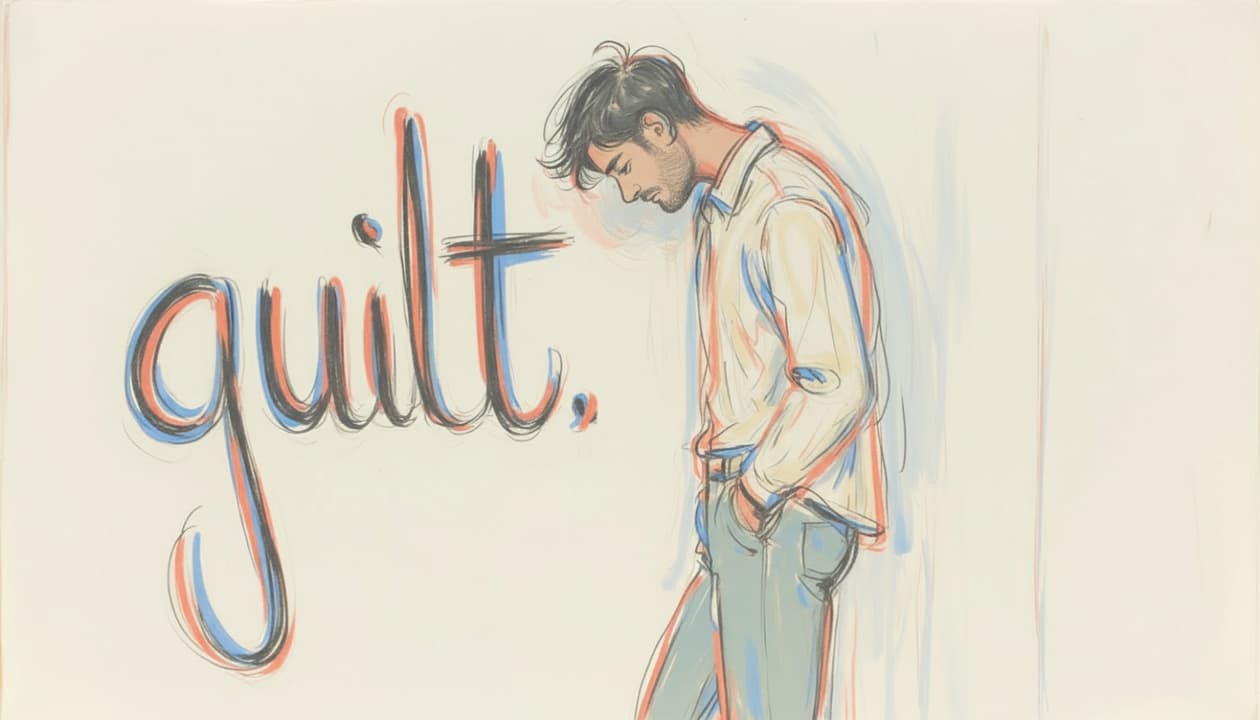
Guilt says, “I am better than my mistakes.” But for most people, it is very important to accept that they are not accidentally making mistakes; what they call mistakes is their standard state of being. So, guilt can be a great alibi against improvement. Far better than guilt is the honest and silent realization of one’s actual state. And this realization is highly transformative.
No wise man will ever take your problem seriously, believe me. For the wise one, all your problems are bad jokes—not even worthy of a sound laughter. But then he says, "You know, I can see through. You cannot. So, I'll give up my right to laugh at you. I'll instead pretend to be serious." "Yes, yes, yes, of course! We have a problem!" He says, "You know, there was a time I was so much like you. These same things were big issues even to me. But I know they can be outgrown.
You didn't have anything special in the past. Had we had anything special in the past, then we wouldn't have come to the state of suffering we find ourselves in today. So, the past is not the solution. You have to realize how things are with you today. You have to look at your interactions with human beings today. You have to see how you relate to your body, to your friends, to your workplace—all these things. And from there, you—you develop an insight, and that insight offers, some freedom.
If you know that a thought is not beneficial to you, you won't support it, and it cannot survive. So, if a bad thought continues in your mind, it means you're only calling it a "bad thought," yet deep down, you support it. Deep down, you think it is a ‘good thought.’ Had you really known it was ‘bad', it would have gone. But our minds are full of so-called bad thoughts. What does that mean? We call them ‘bad', but we do not truly consider them bad. We enjoy them.
Shallow philosophies and false treatments do not work for anybody. It's another matter if we want to keep fooling ourselves. There has to be self-love. There has to be courage. One has to say it's all right to be devastated and destroyed but it's not all right to keep yielding moment by moment the way I do.
Outgrow. Outgrow your past. Look at your past and say, ‘Oh, she's a different girl. She's not me. And, I find no pleasure even looking at her. I mean, all right, she's a younger self, some kind of a younger sister— cute, all right, but nothing of much interest to me now. I have better things to look at. I have more important stuff to attend to.’
All words have existential connotations to the ego. That existential connotation is the meaning. If that connotation is removed, words will do nothing. All words carry something that impinges on your very existence. If you can clear the word of that, then words will remain just words, and no words will have the power to shake you up or disturb you.
It's a very, very dangerous notion if you say—"You know, all the fun, all the pinkness, all the tenderness lies in stupid kind of notions. And everything that is conscious, elevated, sublime—is dry." It's very dangerous and you are becoming a victim of the propaganda of the juice sellers. There is nothing more fascinating than the truth. Go ask that to those who have dedicated their lives to the service of truth—exploration, discoveries.
Laugh with no care at all. Why take oneself so seriously? What hurt, what wound can be so big? When we fully well know that the only thing that really is the Truth. Can there be two truths? The truth and the wound. The wound has to be a lie. But it will continue to pretend to be the truth as long as you avoid looking at it. The more you look at it, the more you will see that the wound is just some kind of dressing up that has been needlessly done.
Just try figuring out where the thing is coming from. You'll not always succeed. It's a bit of a guesswork but it at least tells you that the thing is not original or authentic, it is coming from somewhere. So you find, for example, some descendant of an aristocratic lineage talking to you and he's talking in a particular manner and if you can see that the manner belongs to his great grandfather that brings a smile to you. Where is the thing coming from? That's not him talking, that's his great grandfather talking.
Fear is biological. You are not supposed to fight fear because, even to fight it, you would have to enter the domain of the body. Ignore fear and attend to the task that your consciousness is suggesting to you. Let fear be there; you do what you must. You don't need willpower or motivation—rather, you need wisdom to ignore these things.
Thought is a servant; thought is a shadow. The shadow cannot betray its owner, its master. So, what changes is the nature of the ego itself, not the nature of thought. So when we say, for example, selfless thought, that primarily implies that the ego has improved, loosely put. Since I have become better, so have my thoughts. Now, I cannot remain the same and say my thoughts have become selfless, and if I do that, then I'm being pretentious and just fooling myself.
I’m already bad, and through the thought process, I make a choice that makes my condition worse. I will always choose a woman who does me no good. And if a woman exists, coincidentally, who can be of real help to me, the job of thought will be to push that woman aside. Ditto for the other combination. As a woman, you don’t want a man who will challenge your most fundamental beliefs.