The Gift of Genuine Guilt

Acharya Prashant

11 min
1.4k reads
The Gift of Genuine Guilt
It's probably a blessing when we commit blunders that can no longer be hidden or justified because only then are we forced to admit to ourselves that we are operating from the wrong centre. When this happens and our act of ignorance harms a loved one, we cannot undo it, but there is something within us that can be undone — that's the opportunity. When guilt is real and complete, it shows you the completeness of your unconsciousness and becomes an agent of change. When it is superficial, it becomes an agent of defence. This summary has been created by volunteers of the PrashantAdvait Foundation

Questioner: Namaste Acharya Ji. Sometimes couples, who are also parents, exhibit their disagreements or arguments in the presence of their children, which may cause mental health issues unbeknownst to them — the parents. And later on, when they do become aware, they feel guilty, and this guilt gets harbored in them for as long as a lifetime, or beyond. I'm not aware. It's too heavy. How? What? I don't even know how to phrase this question. All I know is children do not come with manuals, without instructions. How? Thank you.

Acharya Prashant: I mean, let that guilt remain because we indeed are guilty. Bring a life to the world, often in the most unconscious way possible, and then your impact, your impression, just distorts things even further for the girl or the boy. Of course, it's a matter of guilt. But let that guilt be real and deep and transformational.

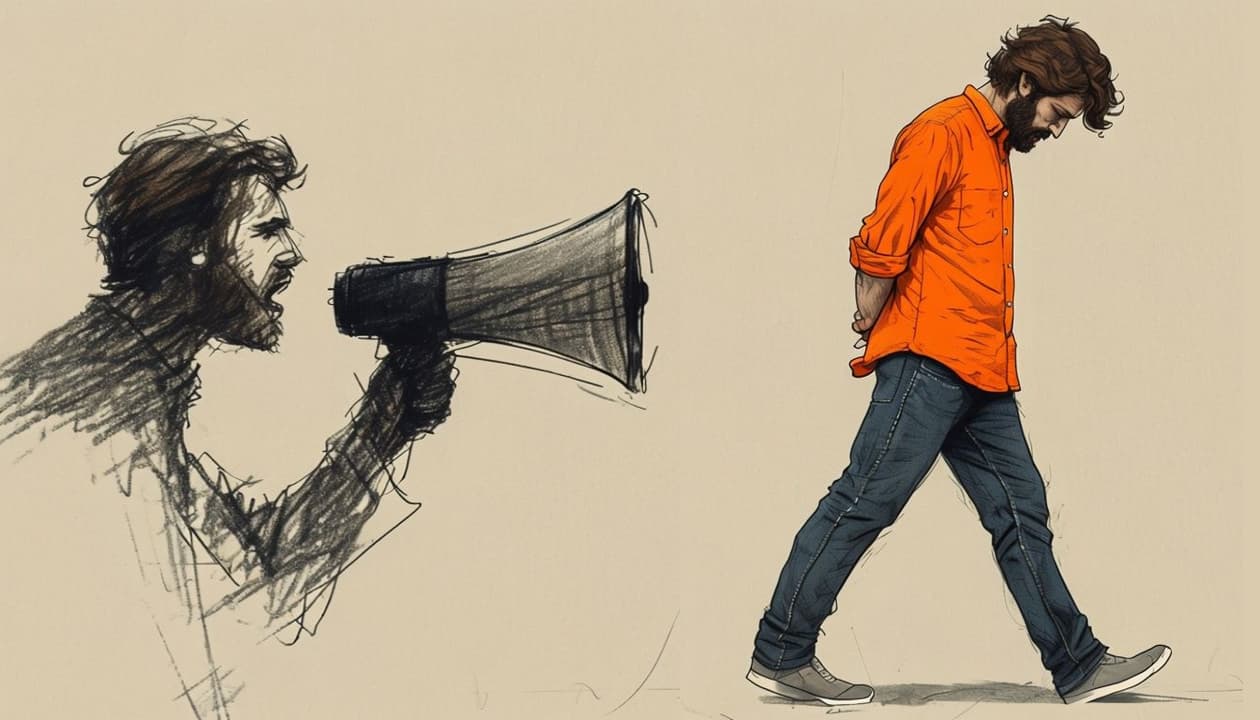
When guilt is real, it becomes an agent of change. When guilt is superficial, it becomes an agent of defence.
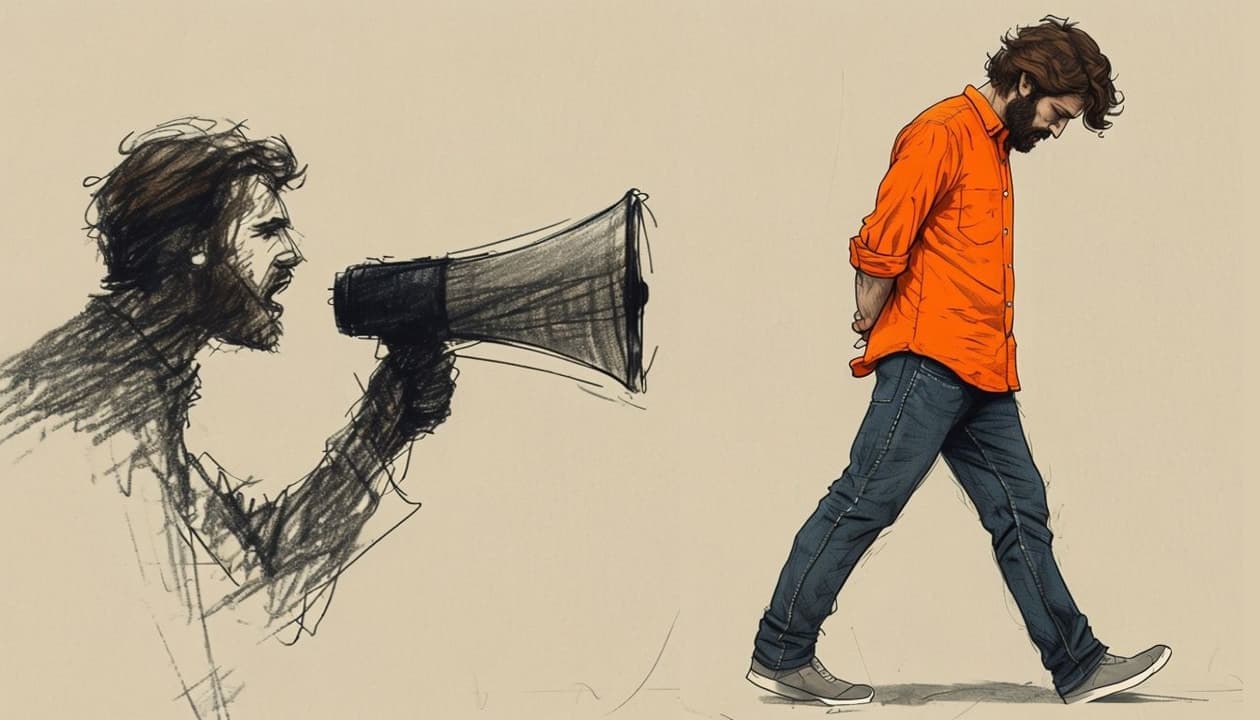
You say, "You know, I did that in ignorance. I didn't know much. So, how can I be blamed?" Not that kind of guilt. Or, "I'm a good person, but I indeed did do bad things, but that was just a coincidence, a random slip, something unintentional." Not that kind of guilt.

Let the guilt be complete. Complete because what we did, or what we commonly do to our kids, is the complete story of our life. We are continuously doing that. It's not just the kids who are at the receiving end of our violent ignorance. Aren't we equally violent towards everything and everybody? Just that in the case of kids, it shows up in the most conspicuous and brutal way possible. Otherwise, our unconsciousness, by definition, is violent.

When that complete guilt is there, then it becomes a factor for transformation of complete life, every single relationship, not just a relationship with the kids.

I mean, yes, yes, of course, kids are very vulnerable, more vulnerable, and what we do to them is very reprehensible because they are also hopelessly dependent on us, and in some way, we betray their trust. Yes, of course. But the same unconsciousness, does it also not find expression in our relationship with our friends, with our pets, with our spouses, with the planet in general? Or are we selectively unconscious? No, we are unconscious towards everything. Towards everything.

But when it comes to kids, oh, they are so little, so feeble, and also so cute, that you feel very upset at having done to them a few bad things, if only you discover that you have indeed done a few bad things. A lot of parents never discover that. Even if they do discover that, they never accept that. It takes a lot of courage to accept that we have not been fair to our kids. But the thing is, you cannot be fair because you are unconscious, and that's the way of our life. How do you be fair? Is justice or fairness or love possible from an unconscious state? No.

Before the kids came, there was the moment of impregnation; was that a conscious moment? Before the mating, there was the moment of the wedding; was that a conscious decision? Before the wedding, maybe there was a period of courtship; was that conscious courtship? It's a series of unconscious acts. And it doesn't stop with the kids. It continues all our life.

If the guilt is complete, it will show you the completeness of your unconsciousness. If the guilt is not complete, maybe it'll make you spiritual, and you'll go to some place of worship, or some babaji, or follow some method, and say, "You know, now I am a decent woman." Now, remaining who you are, you will pretend you are a decent woman. While you are much the same as what you have been all your life, let the guilt totally incinerate you from within. If the guilt is actual, it will not allow you to remain the person you have been. Then it's not just a relationship with your kids that would change. It's a relationship with yourself and the entire world. That's the kind of guilt we need. Not selective guilt, not superficial guilt.

You know, "I am otherwise a great father, a great human being. I'm a great boss or I'm a great employee. You know, I'm also a very religious person. Just that I have not been kind or fair or responsible towards my daughter." Sir, that is not possible. Not possible to be religious and not be fair, and yet be fair to your daughter. But you are saying, "No, everything else is all right. Only in this particular segment of life have I gone wrong." Not possible.

And what else can be a mark of your irreligiosity than your deformed relationship with your kids? Tell me, please. We say, "You know, we are religious people. We value sacredness. We believe in God." And then look at the world and see how it traumatizes its kids. What kind of religiousness is this? How can you be religious if that does not show up in your relationships and your decisions?

Religion is the very art and science of consciousness. Is it not? Is it not?

If your decisions, your acts, are not coming from your consciousness, how do you claim to be religious?

Listener: We hide behind words.

Acharya Prashant: We hide behind words. Yes, that's true.

Listener: Sorry. Sir, my name is Anika. I just said, we hide behind these words, and we just justify ourselves that what we have done is right, and we always say lie to it, and we say that lie is the truth, 100 times to our mind and say, "No, this is the truth." Actually, we don't want to accept the truth, and we just hide behind that.

Acharya Prashant: Wish you stay here. Don't let this go.

"I'm a decent person. In fact, my guilt comes from my assertion that I'm otherwise a decent person. I went wrong only in this one particular case." No sir, your very centre is misplaced.

There was this Hindi movie that “galti se mistake ho gya.” No, no, not galti se mistake ho gya. That's your very centre. It's not accidental. It's not random. It's not a one-off slip. That's the whole story of your life. That's why I'm emphasizing the word "complete." And when you see that, a new story unfolds. Now, it's not just your relationship with your kids that is renewed. Now it's your relationship with yourself that's different. Very different. Not just different, separate planes altogether.

Sometimes I observe, probably it comes as an opportunity when we make seriously big mistakes. Mistakes. Because the smaller ones, we are adept at concealing. The smaller mistakes — "No, nothing happened. No, I was all right. Not my fault. What can I do? I'm under so much pressure. Not my fault." We are very skilled at concealing the little mistakes.

It's probably a blessing when we commit blunders. Blunders that can no longer be hidden or justified or rationalized. We need to commit blunders. Only then will we be forced to admit to ourselves that we are operating from the wrong centre. Blunders.

That's why in the history of spirituality there have been turning points when man has killed his saints, his teachers, his prophets. Because you are anyway, always hurting your sages, your saints, your thinkers, your philosophers. You're always hurting them. But that can be kind of swept under the carpet. "No, no, no. It hurts a little bit, not much, nothing more."

But when you actively kill Socrates, that's when you cannot escape the situation. That's when you are forced to confront your brutality. So, that's a great opportunity. There could have been no Christianity without the crucifixion. So, blunders and gross exhibitions of evil are in some sense a good opportunity. In fact, probably there would have been no Plato had Socrates not been poisoned.

Are you getting it?

Questioner: So, these opportunities are opportunities of redemption, repair.

Acharya Prashant: Everything.

Questioner: Once the cognition has been…

Acharya Prashant: Yes. That's the only thing that's needed. Acknowledgement. Acknowledgement. And a complete acknowledgement, not a partial one. You cannot say, "You know, only on that day, only in that event, only with that person did I go wrong." You have to see that you are operating from fundamentally the wrong point all your life. Therefore you need colossal blunders. Colossal blunders. And then those colossal blunders are difficult to hide. Now, it's the dinosaur in the room. You cannot hide it, nor can you avoid looking at it. Now, it becomes unavoidable. Now, you have to admit that you are indeed fundamentally wrong.

So, when such a thing happens, when our acts of ignorance harm a loved one, especially a little kid, we cannot go back to the past and undo it there. But there is something within us that can be undone right now. That's the opportunity. Can we undo that within us right now? And then unscripted things happen.

Questioner: Sir, please elaborate. When the guilt incinerates you. Please elaborate on that.

Acharya Prashant: Which means you are no more the same person who would get into things she needs to be further guilty of.

There is somebody sitting within me. I identify with that one. Right? I have given that one my own name. What's your name please, if you may?

Questioner: Karishma.

Acharya Prashant: Karishma. So, there is somebody within, and I call that person, that thing, that being, as Karishma. Right? Now, that's the criminal, that's the guilty one. And criminal in the sense of being unconscious. That's the only crime. That's the mother of all crimes. If you are unconscious, anything and everything that you do will be a crime.

Crime is not an isolated event or activity or happening. Crime is who we are. The one sitting within, that I call Karishma, is the criminal because she is unconscious. Classically that's called the "Ahankar," The Ego. That's the first criminal. That's the first criminal because it has stolen something. It has stolen your name. That's not who you are. But that one has taken your name. It calls itself the Atma, "I am the Truth." It calls itself Karishma. It's not Karishma. You are somebody else.

That's what the entire Vedanta is about. Your real identity. You're not the one sitting within. Obviously, you're not the criminal. The sages say you are the sons and daughters of immortality itself. How can you be a criminal? No possibility. But the criminal within us has stolen our identity. Now this criminal, whatever it does, will be a crime.

So, what is meant by incineration?

Get rid not of the crime but of the criminal itself. Otherwise, you will be fighting crimes in isolation. "You know, here I went wrong with this person, let me repair the damage. In this particular transaction, I did something unjustified. Let me apologize. Here, in this matter, I am again erring. Let me correct it." This kind of isolated, fragmented approach will not work because the criminal will stay safe.

So, incineration means I'm not fighting the crimes anymore. I am destroying the criminal itself. That's incineration.

Wonderful! Intense and engaging. Thank you. Thank you so much.

This article has been created by volunteers of the PrashantAdvait Foundation from transcriptions of sessions by Acharya Prashant
Comments
LIVE Sessions
Experience Transformation Everyday from the Convenience of your Home
Live Bhagavad Gita Sessions with Acharya Prashant
Categories