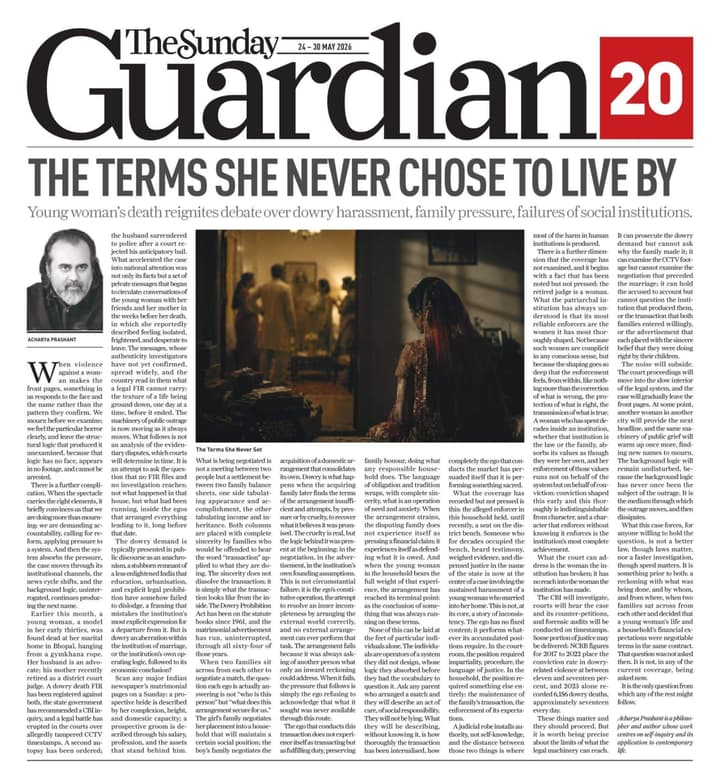
The dowry violence is not a social “exception” but a natural outcome of how marriage is treated as a transaction between families. Using a recent dowry death case in Bhopal, it shows how ego, status, tradition, and family expectations disguise financial negotiations as duty and honour. Laws may punish individuals, but the deeper structure — where relationships become arrangements for security and social gain — remains largely unquestioned.
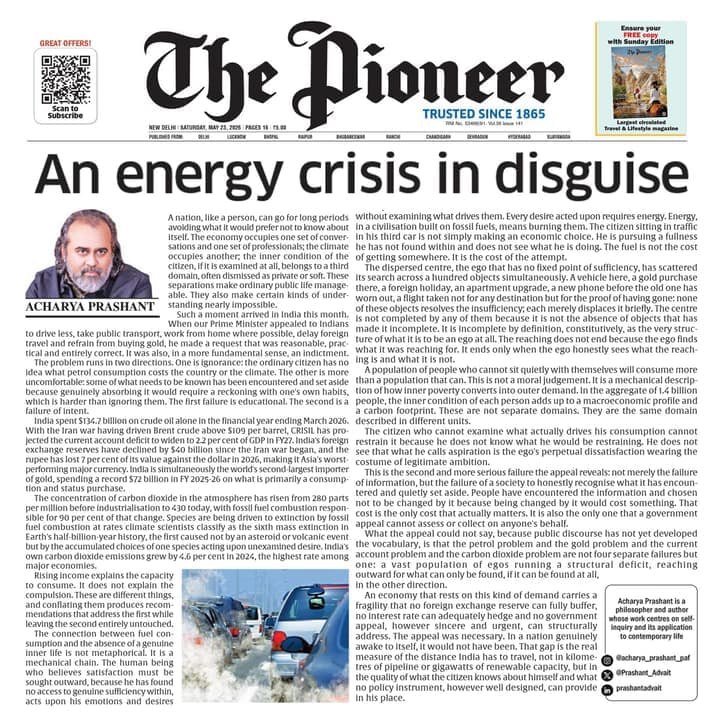
India’s energy crisis may not be only about oil prices, imports, or climate change. The article argues that beneath these visible problems lies an invisible one: a society endlessly trying to fill inner insufficiency through consumption. Cars, gold, travel, upgrades and endless wanting are not merely economic choices; they reflect a deeper restlessness. The real deficit may not be in fuel reserves, but within the human mind.
Man and woman, classically, both are just Prakriti. So, both come under the umbrella name of woman which is the human state. In some sense, all of us are women. You are a woman in just the biological sense; I too am a woman in the mental sense. So, the word woman describes entire mankind; you could say, “Womankind.”
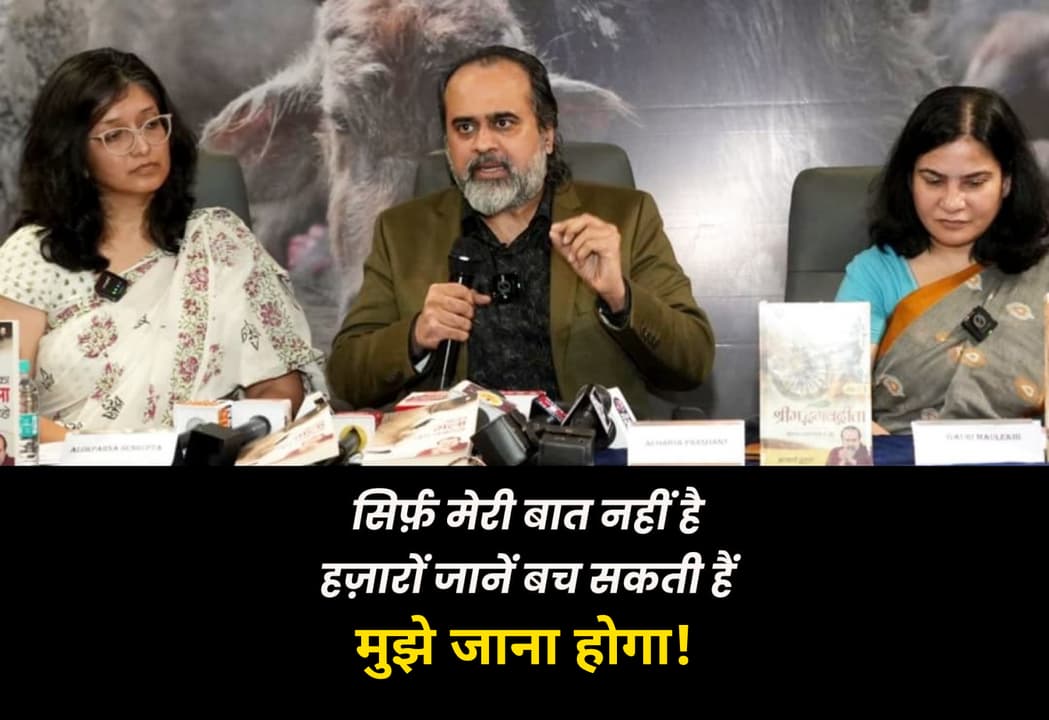
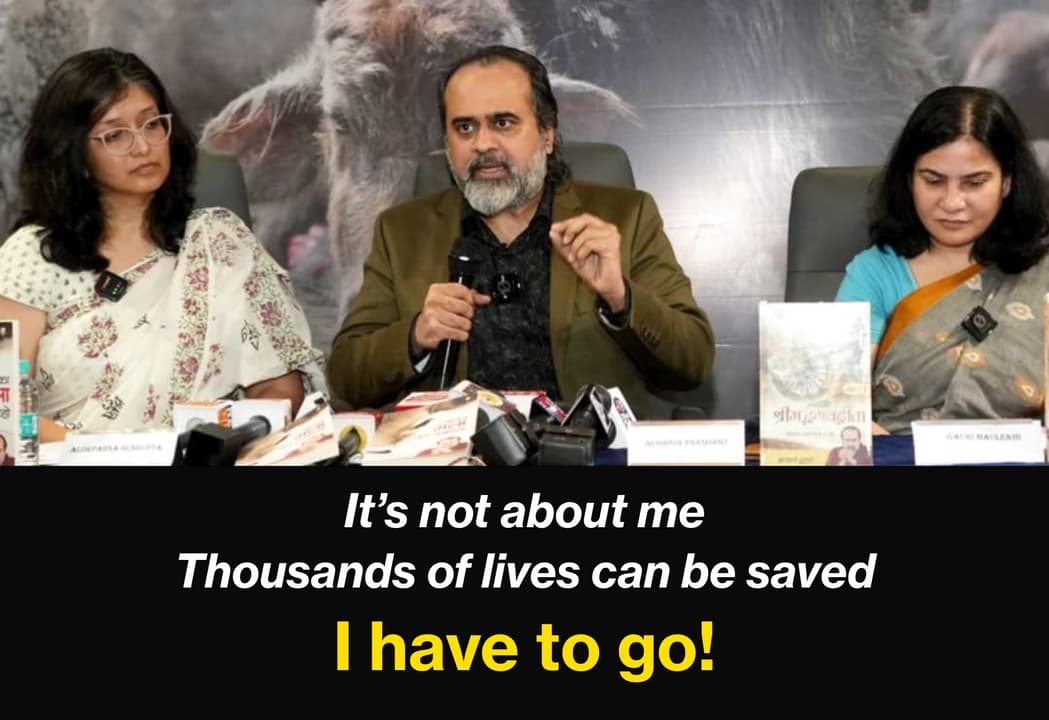
15 नवंबर को गीता सत्र से कुछ घंटे पहले, देश की बड़ी पशु कार्यकर्ता, गौरी मौलेखी जी का एक संदेश आया। उन्होंने आचार्य जी से नेपाल में होने वाले ‘गढ़ीमाई महोत्सव’ के विषय पर बिहार के, मुख्यमंत्री, मुख्य सचिव और प्रेस से बातचीत के लिए पटना आने का अनुरोध किया। यह एक गंभीर मुद्दा था—हजारों जानवरों की जान बचाने का और एक सदियों पुरानी कुप्रथा के विरुद्ध आवाज़ उठाने का।
On the evening of November 15, just hours before a scheduled Gita session, a message arrived from Gauri Maulekhi, a prominent animal rights activist. She requested Acharya Prashant to join her in Patna the following morning to meet the Chief Secretary of Bihar and address the press about the Gadhimai festival in Nepal. This was no ordinary request. It was a plea to save thousands of animals and to raise a voice against a centuries-old practice of cruelty disguised as tradition.