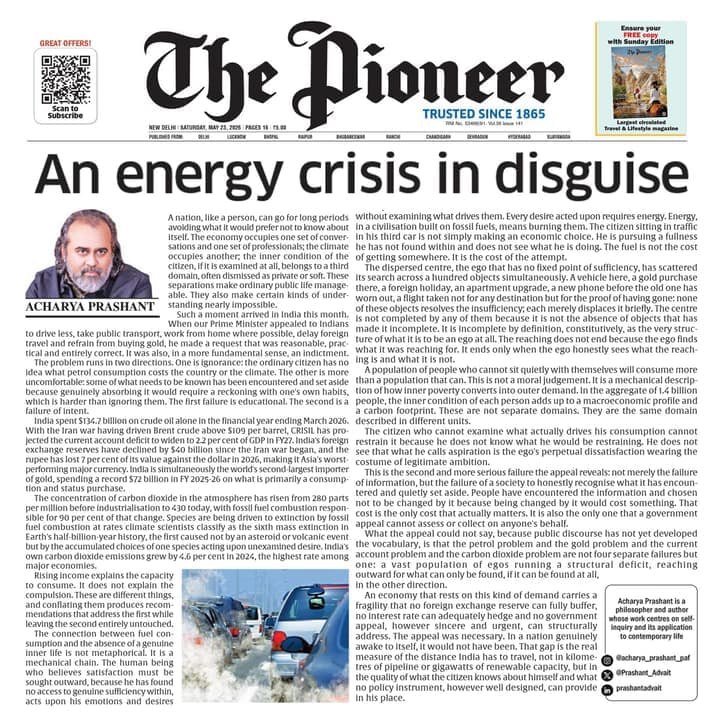
India’s energy crisis may not be only about oil prices, imports, or climate change. The article argues that beneath these visible problems lies an invisible one: a society endlessly trying to fill inner insufficiency through consumption. Cars, gold, travel, upgrades and endless wanting are not merely economic choices; they reflect a deeper restlessness. The real deficit may not be in fuel reserves, but within the human mind.
This summary is AI-generated. Please read the full article for complete understanding.
Originally published in The Pioneer
A nation, like a person, can go long periods avoiding what it would prefer not to know about itself. The avoidance is rarely deliberate; it is built into the very categories through which the nation processes its own news. The economy occupies one set of conversations and one set of professionals; the climate occupies another; the inner condition of the citizen, if it is examined at all, belongs to a third domain often dismissed as private or soft. These separations make ordinary public life manageable. They also make certain kinds of seeing nearly impossible. Now and then, usually through a small public moment, easily missed, the cost of those separations becomes briefly visible.
Such a moment arrived in India this month. When our Prime Minister appealed to Indians to drive less, take public transport, work from home where possible, delay foreign travel, and refrain from buying gold, he made a request that was reasonable, practical, and entirely correct. It was also, in a more fundamental sense, an indictment.