Raman Maharishi
Ego
21min1.5kreads539
Who am I?' arises from a relatively unconscious state, simply meaning, 'I will not remain the one who asked it.' You will have to become conscious. So the one who asks this question will have to disappear to get the answer. 'Who am I?' is for the wise, who are no longer interested in remaining troubled.
Raman Maharishi
6min1.8kreads598
Ramana Maharshi says, “Silence of the mind is higher than the silence of the eye and the ear,” because even if the eye and the ear are not compulsive about sucking in sensual inputs, still something will reach the mind. A silent mind is the one that is not under any internal pressure, any internal compulsion to react to what comes to it. Stuff has come; the mind says, “Alright, you have come. I am inert towards you. I am non-reactive!” “Real silence is silence of the mind.”

Raman Maharishi
10min655reads8
It is said that when you are in the waking state (jāgrat), you are identified with the world; in the dream state (svapna), you are identified with the dream; and in deep sleep (suṣupti) you are still identified with some kind of primitive darkness. But, it is not as if that you have gone beyond identification. Turīya is the state that is present behind the drama of waking, sleeping and dreaming. Turīya, the witness state, is not ‘yours;’ it witnesses you, it is outside of you. So, your birth and death do not touch it.

Clarity
7min378reads31
Questioner: Acharya Ji, pranam. Ramana Maharshi says, “Since the self is free from the notions of knowledge and ignorance, how can it be said to pervade the entire body in the shape of sentience or to impart sentience to the senses.”
“Wise men say that there is a connection between…
Raman Maharishi
21min240reads1
Question: Sir, Ramana Maharshi has talked about the ‘I’. He has always asked the seekers to observe this ‘I’, and this has always been the basis of his teachings. What exactly does Ramana Maharshi mean, when he asks us to constantly observe this ‘I’? How does one witness this ‘I’?…
Excerpts from Articles
Devi as Nature, Demon as Destruction
Navratri is not just about outer restoration. It is about inner illumination. Liberation is knowledge, and knowledge is restoration. Until man knows himself, no river will run clean, no forest will stand safe. To worship Devi is to end the demon within; only then will the earth be free.
You Have Lifted The Cup, And Part Of The Spell
A true victory is not over an external opponent, But over one’s own limitations: personal, cultural, historical. When women play freely, the nation breathes freely. When women claim their place, the planet finds its peace.
Dr BR Ambedkar: A Visionary Beyond Politics
Dr. Ambedkar is an enduring symbol of struggle, dignity, and the relentless pursuit of justice. His life was not merely a series of events that were linked with politics or social reform. It was an intellectual, social, and spiritual odyssey. Dr.
Jealousy is dependency in disguise
Nobody wants to admit to jealousy, not even to themselves. It is easier to look away from than to examine. But it is worth looking at, because jealousy tells you where your sense of worth is kept.
How To Get Freedom From Anxiety?
Especially in the modern world, unfortunately, a degree of constant anxiety has become an almost normalized state for us. A large portion of our mental health problems as a collective is very much about anxiety and fear. Burn-outs, career pressures, problems with self-esteem, fear of others, stress about studies etc.
Israel-Hamas: Unraveling The Role Of Religion In Conflict And Cruelty
Why do conflicts happen, and why is there cruelty in the world? These two things show us what religion means to regular people.
Beyond The Mat - Yoga, The Return To The Centre
Yoga is not something you do - it's what remains when falsehood falls away. It is the union, through conscious acsendence, of your current (ordinary and lowly) state with your highest possibility.
Contemporising Kumbh: Ancient wisdom, Modern Relevance
The story, the myth, is elaborate, but one word that firmly dictates the narrative of the Kumbh saga is immortality. Immortality is to live deeply, not necessarily long. It is to go to one’s deepest desire, fulfill it, and extinguish it forever. Another Kumbh beckons us. Can we go beyond the ritualistic dip and honestly observe life as it is, within and around us?
Sanatan Dharma is the way if the world is to be saved, rest is just cult
When it comes to philosophy and spirituality, the discourse often becomes dense. But in our endeavour to understand Sanatan Dharma, we will proceed with simple definitions and queries.
When clarity ends confusion
Decision-making, for most of us, becomes heavier than it needs to be. The moment a choice appears, the mind begins its familiar dance. Thoughts circle around the options, trying to predict outcomes, trying to secure certainty, and the whole thing turns strangely tiring.
The Mirage of Revolutions: Why Uprisings Fail Without Inner Freedom
When we think of revolutions, it is often the sound that comes back first: the roar of voices in the streets, slogans ringing through capitals, crowds that feel unstoppable, and rulers suddenly brought down. For a fleeting moment, it feels as if a new dawn has arrived. Yet when the dust clears, the old shadows return.
A Lesser Known Incident From Mahatma Gandhi’s Life
Mahatma Gandhi had been in South Africa at the center of a civil movement for more than two decades but he kept coming to India to attend Congress sessions. There was not much depth in those visits.
Children’s Day: What Are We Really Giving Our Children?
Children’s Day is celebrated on 14 November every year. We try to provide the best schools, facilities, and plans for our children’s future and celebrate their achievements with pride.
The planet is irreversibly tipping. Who is pushing it?
We have begun to speak of the future climate as though we could settle the bill later. We shall keep emitting greenhouse gases, warm the planet beyond the limit we have agreed upon and, when technology has improved, bring the temperature down again.
The real meaning of Shiva
All names are beautiful. But if we understand the meaning of these names by going into the depths of spirituality, their beauty increases further.
Climate Crisis: A Mirror to Our Inner State
Climate change is not just about data and systems. It reflects something deeper: the confusion in the human mind. We are not just harming the planet by accident. We are driven by wants we do not understand, chasing comfort, status, or identity without pausing to ask: What do we really need?
Climate change: When disaster becomes a market
When a flood destroys a bridge, rebuilding it creates economic activity. Someone buys steel and cement, construction companies get contracts, workers are hired, and money changes hands.
Complex challenges necessitate consciousness and policy shift
India faces multitudes of challenges arising from different quarters. But essentially all problems have their roots in the mind of the human being and arise from a lack of adequate understanding of the self. The solutions therefore have to be both in the external and the internal domain.
Raman Maharishi
14min228reads1
Questioner: The reading has this quote that,
‘Solitude is in the mind of a man, that it is an attitude of the mind.
A man attached to things of life cannot get solitude wherever he may be.
A detached man is always in solitude.”
So it doesn’t depend on the…
Raman Maharishi
10min184reads62
Question: Sir, at one point Ramana Maharishi says, “When the praarabdh is exhausted, the ego is completely dissolved without leaving any trace behind.” And at another point he says, “You can experience the Self right now.” So how will this *praarab*dh change or break at a certain moment? How can…
Raman Maharishi
31min321reads13
Speaker: So, this morning we are here, trying to look at what is Religion. It would be easy to go into this deeply researched and heavily documented topic as just another objective topic, but I wonder, whether we ask ourselves some very subjective, very personal, very intimate questions. I wonder,…
Self Enquiry
12min165reads1
Questioner (Q): How to live my daily life regardless of my family, job, financial situation, mood or body, and reach the Truth? Ramana Maharshi says, “One’s duty is to practice continuous self-enquiry.” The mind is so used to its tendencies that this is hard for me; it hijacks my attention…
Raman Maharishi
5min126reads
“'I' is the root of all thoughts because, in the end, very thought occurs to the ‘I’. So, first try to get hold of who this ‘I’ is, which will lead the enquirer to dissolve and merge in the source.” ~ Sri Raman Maharishi
Questioner: Acharya Ji, Pranaam! I want…
Raman Maharishi
4min353reads1
Questioner (Q): (Referring to a text) Sir, it is written here, “Silence is ever speaking. It is the perennial flow of language.” How is ‘Silence’, a perennial flow of language?
Acharya Prashant (AP): What is language?
Q: Language is a medium of communication.
AP: Communication. What is the use of…
Bhakti
8min400reads2
“What is samaadhi?”
*“It is the complete merging of the mind in God-Consciousness. The jnani experiences jada samaadhi, in which no trace of ‘I’ is left. The samaadhi attained through the path of bhakti is called ‘chaitanya samaadhi’.”*
“In this samaadhi there remains the consciousness of ‘I’…
Attachment
6min232reads2
Somebody asks Raman Maharishi, “It is an established rule that so long as there is the least idea of ‘I am the doer’, self-knowledge cannot be attained. But is it possible for an aspirant who is a householder, to discharge his duties properly without this sense?”
Sri Raman Maharishi says:…
Karma
13min614reads100
Question (Q): Acharya Ji, on being asked, can Karma ever come to an end? Ramana Maharshi says, "Karmas carry the seed of their own destruction in themselves." Dear Acharya Ji, please help me understand, how Karmas carry the seed of their own destruction?
Acharya Prashant (AP): Karma is action. We…
Raman Maharishi
18min229reads3
Question: Acharya Ji, what is ‘elimination of false knowledge’ that Ramana Maharishi talks of when he says, “The individual is miserable because he confounds the mind and the body with the Self. This confusion is due to wrong knowledge. Elimination of wrong knowledge is alone needed. Such elimination results in…
Raman Maharishi
8min372reads1
“All the texts say that in order to gain release one should render the mind quiescent; therefore their conclusive teaching is that the mind should be rendered quiescent. Once this has been understood, there is no need for endless reading.”
“In order to quieten the mind, one has only to…
Raman Maharishi
5min216reads
Ramana Maharshi also said,
“That which you take to be as your normal state is on the contrary, an abnormal state. Do you have to search for a long time before finding this ‘I’ which is none other than yourself?
This is what I mean when we declare that no…
Self Enquiry
15min532reads
Questioner (Q): You always mention how qualifications like dispassion and abandonment of action are necessary for enquiry to take place, while Ramana Maharshi says, “Even a great sinner can do enquiry.” How can this be reconciled? Also, you speak about renunciation, but Ramana Maharshi says, “All events in our lives…
Silence
5min207reads
One must be free to do as one pleases and should not be served by others.‘No want’ is the greatest bliss. It can be realized only by experience. ~ Sri Raman Maharishi
Questioner: Acharya Ji, Pranaam! Please elaborate on the above, especially with regard to what it means that…
Guru
10min248reads1
All the people in the world can be put under four categories:
The Guru’s disciples, bhaktas, those who are indifferent to Him and those who are hostile to Him.
All these will be benefited by the existence of the Jnani
Each in his own way and to various degrees.
Sri…
Ego
7min179reads
All that one gives to others, one gives to one’s self. If this truth is understood, who will not give to others? ~ Sri Raman Maharshi
Questioner: In this statement, Raman Maharshi is saying that giving to others is giving to oneself, but the mind discriminates between ‘I’ and ‘the…
Thoughts
10min223reads
Questioner (Q): I want to know the source of thought. I remember Ramana Maharshi’s words: “‘I’ is the root of all the thoughts because in the end, every thought occurs to the ‘I’. So, first try to get hold of who this ‘I’ is, which will lead the enquirer to…
Raman Maharishi
6min403reads
Question: There are two things which I hold very tightly. Raman Maharishi has written only these two pieces himself. One is – ‘Who am I?’ And the other one is – ‘Self Inquiry’.
I go through only these, because these are from a young man who was not conditioned, who…
Ego
10min604reads4
In deep sleep mind is merged and not destroyed. That which merges reappears. It may happen in meditation also. But the mind which is destroyed cannot reappear. The yogi’s aim must be to destroy it and not to sink in ‘laya’ (merging). In the peace of dhyana (meditation), laya ensues…
Raman Maharishi
7min251reads2
Questioner (Q): Acharya Ji, pranam. Raman Maharishi talks about three states: waking state, dreaming state and deep sleep. Thoughts appear in the dreaming and waking state. For the realized one, there are no differences between these three states because they can consciously sleep, consciously dream and are conscious during their…
Truth
10min206reads1
Question:
“How do the triple factors, that is – the knower, the known, and knowledge, which are absent in deep sleep, Samadhi, etc., manifest themselves in the self, in the state of waking and dreaming?”
Sri Raman Maharshi:
“From the Self there arise in succession:
(i) Chidabhasa (reflected consciousness), which…
Ego
4min718reads152
Questioner (Q): Acharya Ji, Ramana Maharshi talks about ‘transcending and turning inwards'. Who is transcending and who is turning inwards?
Acharya Prashant (AP): The Ego, the I tendency. Whatever advice is given, is always given to the “I” tendency. Because at the center of everything lies this “I” tendency that…
Suffering
36min11reads1
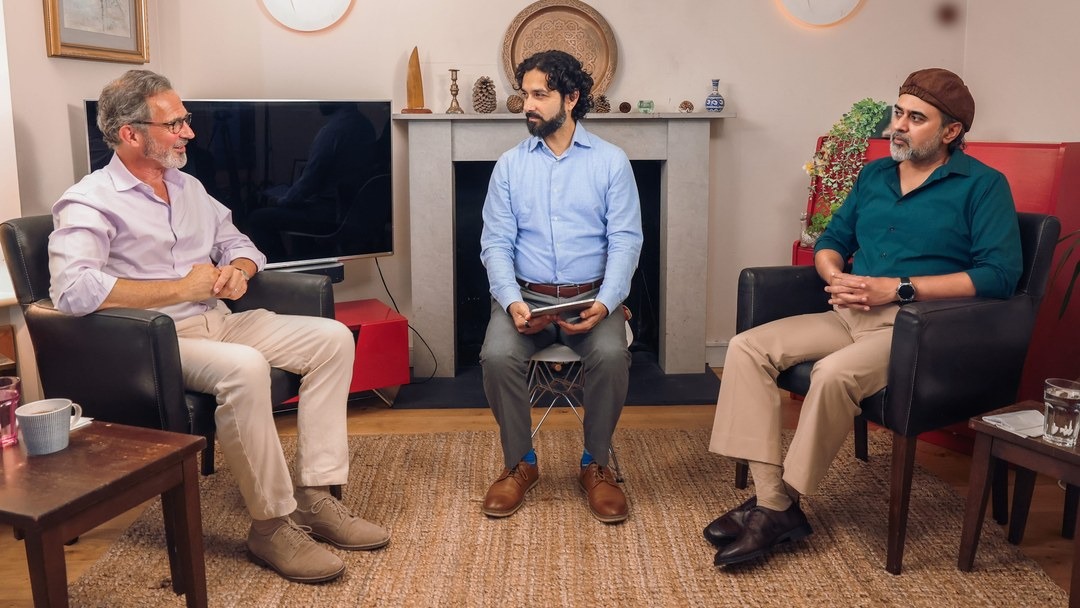
Most of us try to fix our suffering: a better job, a calmer mind, a new practice, a holier word to hide behind. But what if the trouble was never the pain itself? In this London dialogue with a teacher of non-duality, we look at who it is that says “I am”, why the sufferer hides in money and in holy concepts alike, and why non-duality is an intention, not a state. If the ego is a born lover, what does it truly want?
Ego
10min45reads
We say my body, my brain, my reason, my decision, and we never ask who is saying it. A boy who has tormented animals must be corrected, we all agree. Then he turns out to be our own son, and reasons to excuse him arrive without effort. Did reason change, or the one who owns it? Every courtroom shows how intent drives argument. The judge we admire may be the one who has learned to thin that owner down. When we decide, who is deciding?
Ego
14min261reads221
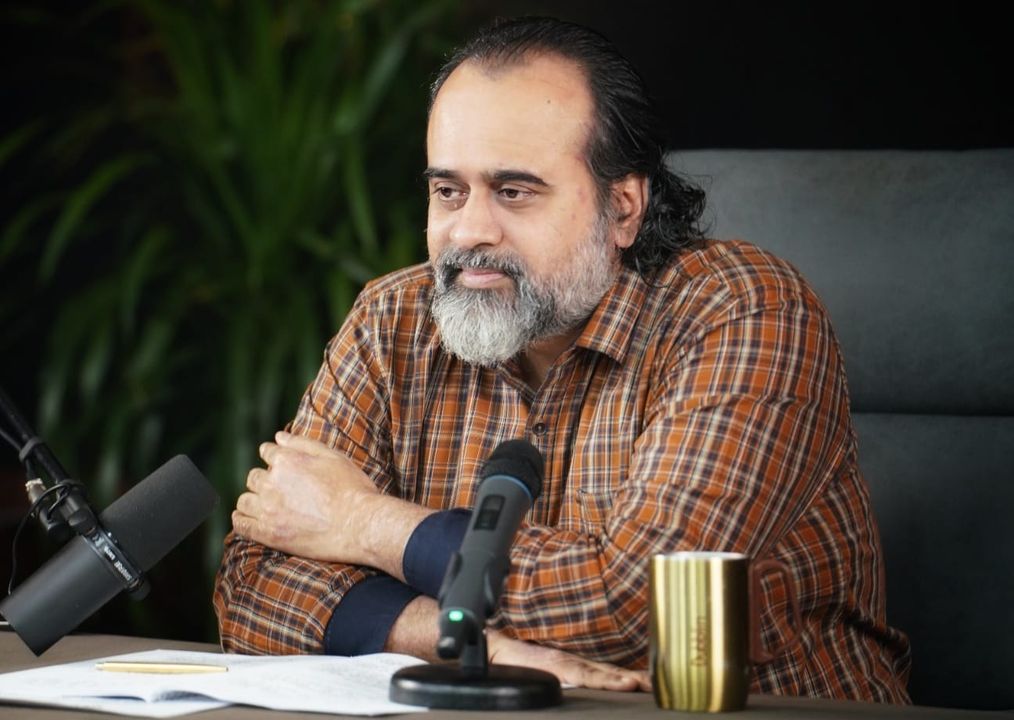
We study history, languages and money, and never the one who is reading, to whom all of it matters. Our interests feel like our own, and we call them freedom without asking where they came from. Had that stranger carried another name, would our view of him be the same? Self-inquiry cannot end in a final answer, because the one asking dissolves before it arrives, and returns the next morning. Do we want an answer, or do we want to look?
Related Articles
Suffering
15min163reads72
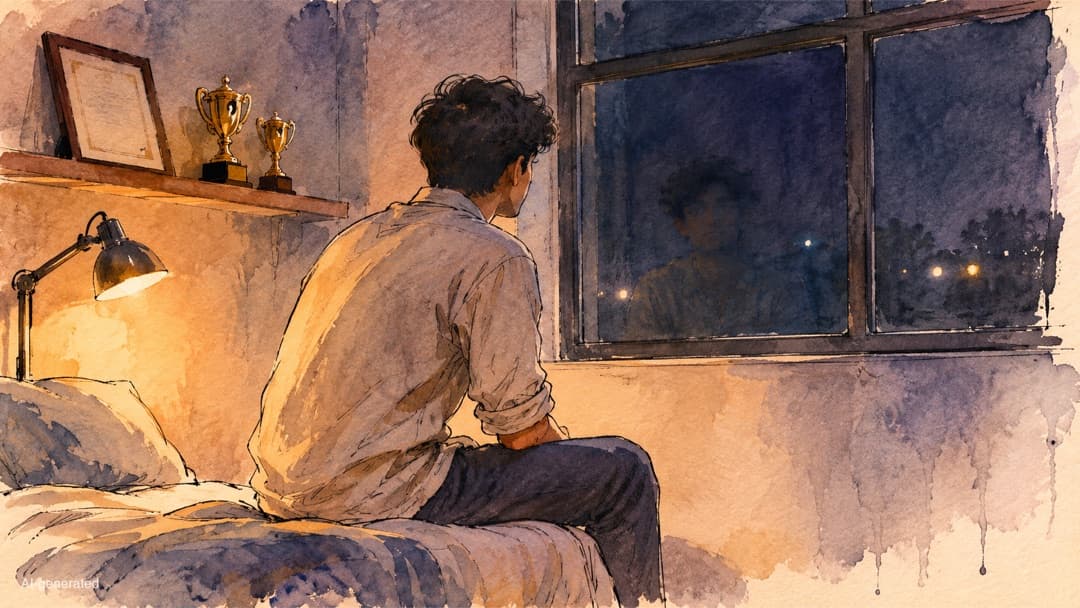
We sharpen the brain, collect the degrees, climb the ladder, and still feel strangled from within. The brain struggles with a hard maths problem, but who struggles with life? It is the one who uses the brain, the body and every opportunity, and calls all of it “mine”. We never examine that user, so its first claim, “I am important”, goes unchecked, and every value we build on it inherits the flaw. We chase prizes that give very little. Can we look at the one who is chasing?

Ego
12min100reads7
Many of us know the squeeze: a job that earns a living by making people want one more thing, and a nagging sense that this is not the life we want. It feels as though the world is pressing us into a deal. But a deal is signed, not imposed. The world offers a contract and something in us says yes, because it expects something in return. Can we be pressured by anyone we expect nothing from? Before asking whether to quit, can we look honestly at who is accepting the offer?

Suffering
12min174reads112
Someone asks how we are, and we say, “I am so good. I’m doing so well.” Then comes 3 a.m., and we know better. Nobody outside can check that claim, so the talk says an inner claim can be falsified only in the first person. Science runs on peer review; self-inquiry does not. A mirror can show where we stand, but whether we accept what it shows depends on honesty. Which of our own claims have we never allowed to be tested?

Truth
11min112reads1
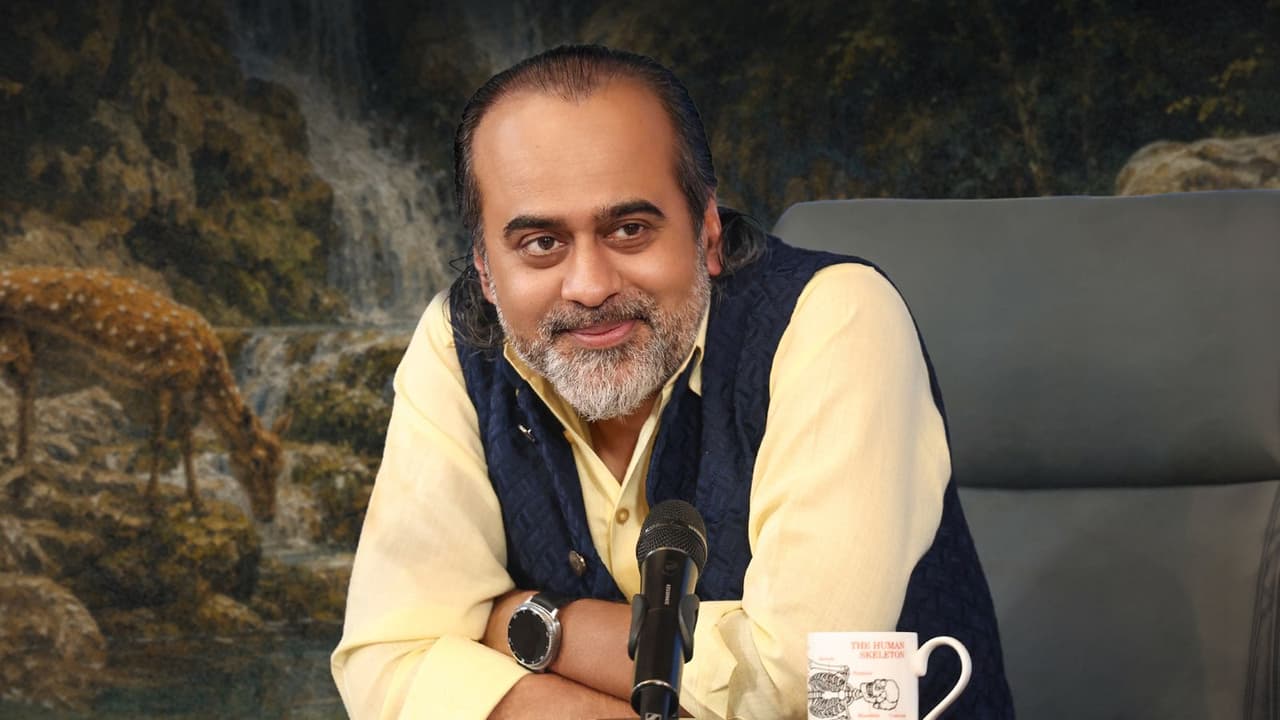
First the board percentage, then the CGPA, the money, the house: we keep ticking things off and reaching for the next, as if we were items on a conveyor belt that started the day we were born. When we do not know what we want, we end up wanting everything. The same unexamined words, success, love, settling down, decide what we call a true calling. If the seeker is false, how can what we seek be true? What if we first looked honestly at our own ideas of life and success?
Clarity
5min393reads2
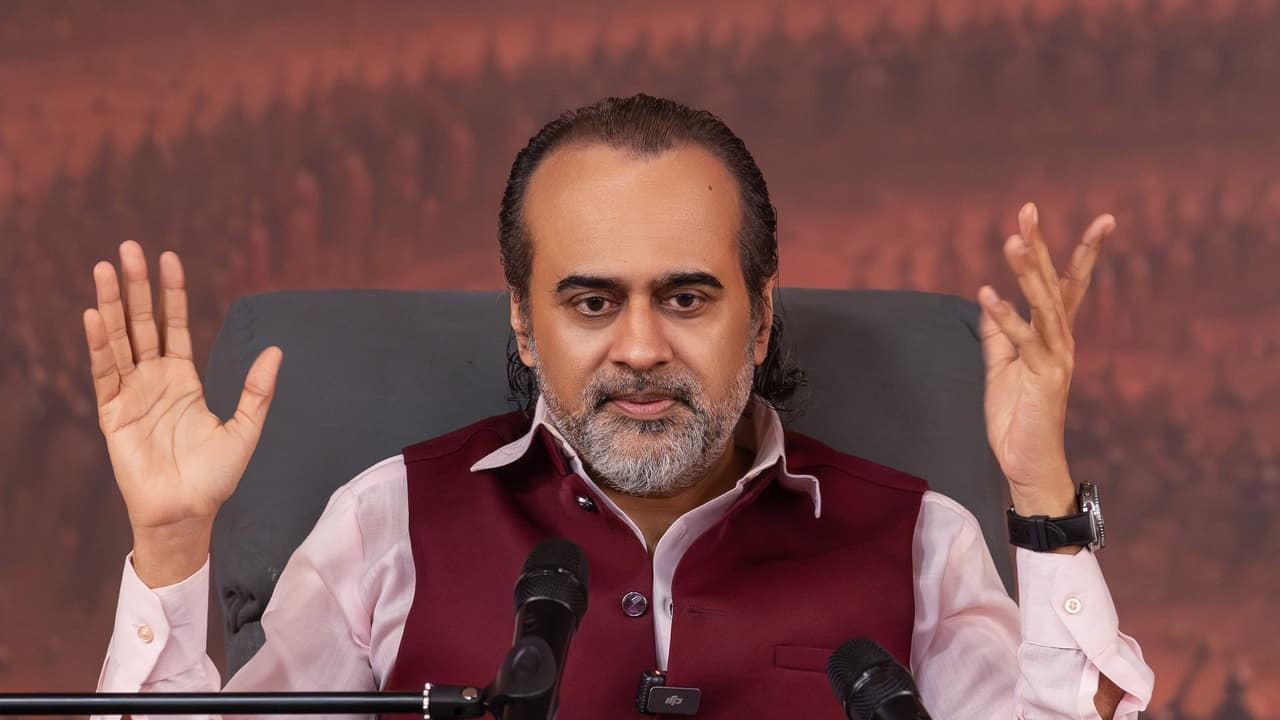
Vedanta does not talk of a personal past life, the person that you are or I am, we have no past or future life. Rebirth or reincarnation happens at a general, at a macro level, not at a personal level. It’s the “I” tendency that exists and keeps repeating its existence. Read more...
Clarity
3min216reads2
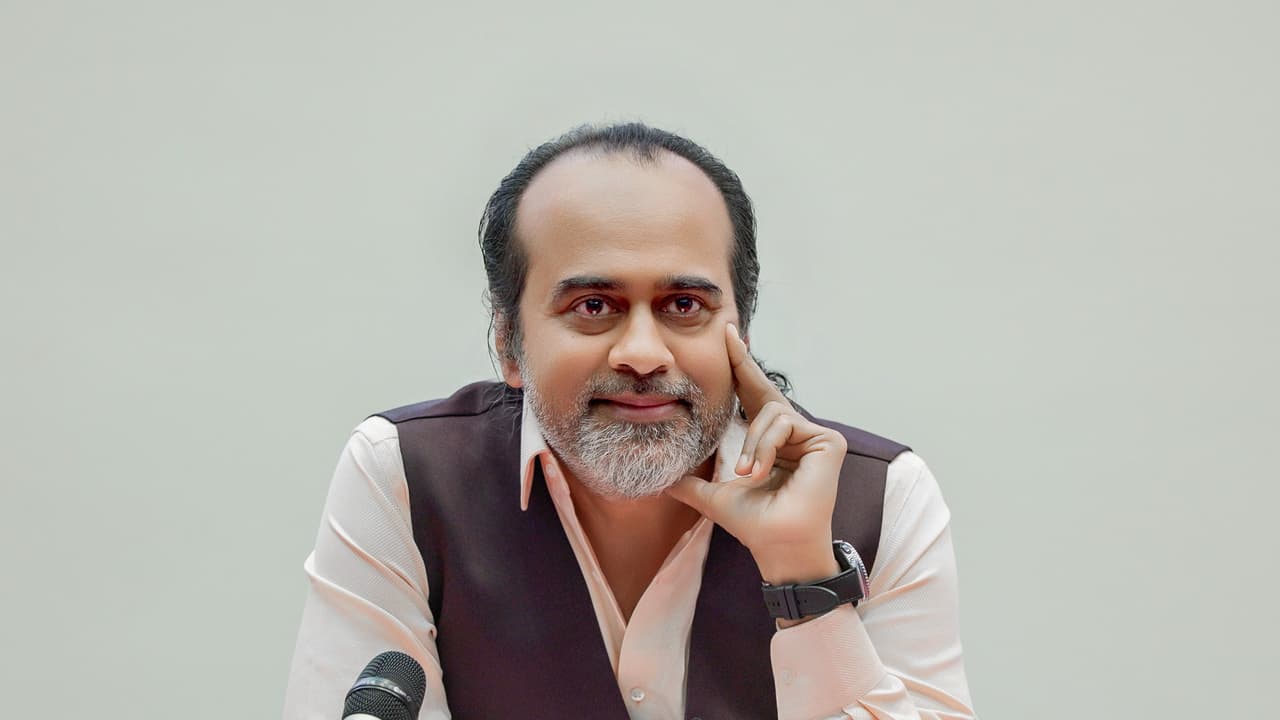
Acharya Prashant: Our normal life is our nemesis. And it is our nemesis precisely because it appears normal. It is not normal. It is normal only by comparison. It is normal only relative to your neighbour. It is the life that your neighbour is leading. It is the life that
Clarity
8min254reads3
Acharya Prashant: A quiver full of the best of arrows but no bow, how do you fight the battle of life? Can you imagine the amusing as well as tragic situation of the person who has a great arrow without a bow? He will be sharpening and sharpening his weapon,
Happiness
3min463reads
Acharya Prashant: Happiness comes to you so that you become interested, you become inquisitive, your longing gains depth and you ask for permanent happiness. You say, “Oh this that was given to me was so ephemeral! Thirty seconds, that’s all? No no no! It was good. But I want the…