Our definitions of beauty and greatness are all egoistic. Something is beautiful if it corresponds with our likes and with our taste — then we call it beautiful. Whereas the real definition of beauty is that which silences you, that which does not leave you even in a position to utter a "Wow!" That's beauty. That which takes you beyond yourself — that's beauty.
Acharya Prashant: The question is that how to stay at the center when there is so much that takes the mind away from the center. How do you know that you are away from the center? How do you know that?
One must be free to do as one pleases and should not be served by others.‘No want’ is the greatest bliss. It can be realized only by experience.
~ Sri Raman Maharishi
Questioner: Acharya Ji, Pranaam! Please elaborate on the above, especially with regard to what it means that
Listener 1 (L1): Since the last few days, I have been with you, taking in what you say and the result is that I am clearly able to see the fakeness contained in the world in the ways of mankind. And that makes me ask what is the point of
Questioner: Sir, who is the uncivilized one? Whom is it that the civilization disowns and calls it savage?
Acharya Prashant: Civilization is a product of man’s fight; it is man-made. The uncivilized-one runs counter to civilization. What is man-made will be countered by something which again is man-made. So there
Questioner (Q): Acharya Ji, I would like to raise a notion of compromise, and specifically in its primary dictionary definition, according to which, it is disagreement where both parties being unable to solve a problem settle on making concessions, so in a way, reaching a middle way.
We are told that cleaner technology will solve the climate crisis. But emissions begin before any fuel is burnt, in a life that has no joy and so keeps reaching for the next lower pleasure: the party, the trip, the purchase. The demand for pleasure is not wrong. What matters is which pleasure we seek. Music, books, sport and real company cost the planet almost nothing. Can we look honestly at what our own consumption is trying to fill?
Many of us interrupt, rush to make our point, or change the topic when a conversation comes too close. We call it a lack of patience or discipline. But impatience in a conversation is often fear: when what we hold within is borrowed belief, every question could shatter it. The same confusion makes us take our instincts and feelings as ourselves, though they are only the body’s chemistry. If we looked honestly at what we hold, would a question still feel like an attack?
The balance between order and disorder should not be decided by personal likes or dislikes, but by what the task at hand requires. Sometimes a project demands discipline and order; at other times, more important work requires leaving things messy. The right action comes from responding to the actual need, not personal preference. Even sacrifice can be meaningful when it serves something important, but “staying backstage” should never become an excuse to avoid what one cannot tolerate.
True freedom begins when we question the beliefs that make us feel trapped. Most of our suffering comes not from circumstances but from unquestioned assumptions, attachments, and imagined obligations. By suspending our beliefs, even briefly, we allow truth to enter, revealing that life always offers choice. Transformation is born from love for truth, the courage to let go, and the willingness to step beyond the boundaries created by the ego.
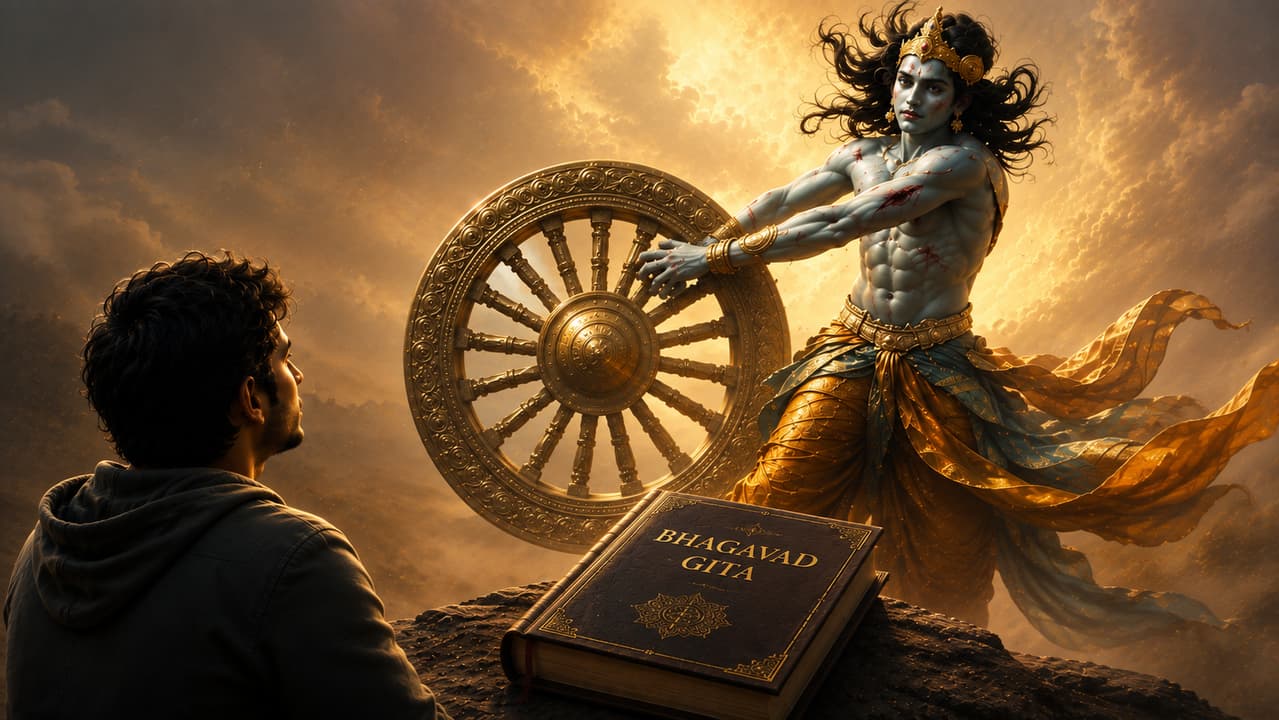
The Bhagavad Gita deserves reverence not because of inherited beliefs about its author, but because of its power to dissolve falsehood and reveal Truth. Real devotion is not ritual or blind faith—it is understanding, inquiry, and living the wisdom of the Gita. Through sincere study, one discovers the true meaning of Krishna, making the Gita the most authentic path to knowing and worshipping Him.
Real love is not measured by comfort, agreement, or preserving relationships at any cost. It is revealed when one has the courage to challenge falsehood, embrace uncomfortable truths, and even risk a relationship for another's freedom and growth. Truth is not a fixed destination but a continuous rejection of illusion. Genuine relationships, mature guidance, and authentic scriptures all serve as mirrors that help us see and dissolve our own falseness.
The biggest weakness of modern education is not that it fails to keep pace with technology, but that it neglects self-knowledge. Students are trained to build identities around qualifications and careers, making them rigid in a world that demands constant change. Real adaptability, innovation, and lifelong learning come not from acquiring more skills, but from understanding oneself and letting go of fixed identities.
Humanity's greatest crisis arises from the imbalance between immense external progress and inadequate inner understanding. While technology, wealth, and knowledge have expanded unprecedentedly, unchecked desires and ignorance continue to fuel conflict, inequality, and environmental destruction. Sustainable change requires mass-based education of the self so individuals understand their motives and use science, technology, capital, and power with wisdom, responsibility, and inner clarity rather than unconscious craving.
Vedanta reveals that freedom is impossible as long as the ego seeks to preserve itself. Meditation may bring temporary calm, but real transformation begins only when the false sense of individuality dissolves. Whether through devotion or knowledge, every genuine spiritual path culminates in the complete dissolution of the seeker into Truth. Liberation is not the experience of Truth by an individual—it is the end of the individual who wants to experience Truth.
Social media has not destroyed attention spans; it has exposed our dissatisfaction with what we consume. The real problem is repeatedly returning to content we already know is empty instead of respecting our own intelligence. Books are only one medium for knowledge, not knowledge itself. What truly matters is reclaiming attention from distractions, demolishing the borrowed mental structures imposed by society, and creating an inner space where meaningful learning, reflection, and self-knowledge can flourish.
The ego is not a real, independent entity but a bundle of conditioning that creates the illusion of a separate "I" and becomes the source of suffering. Self-observation is not introspection or analysis but moment-to-moment honesty about what is happening within. Real freedom comes when this false center is seen through, allowing life to function naturally without the burden of psychological ownership.
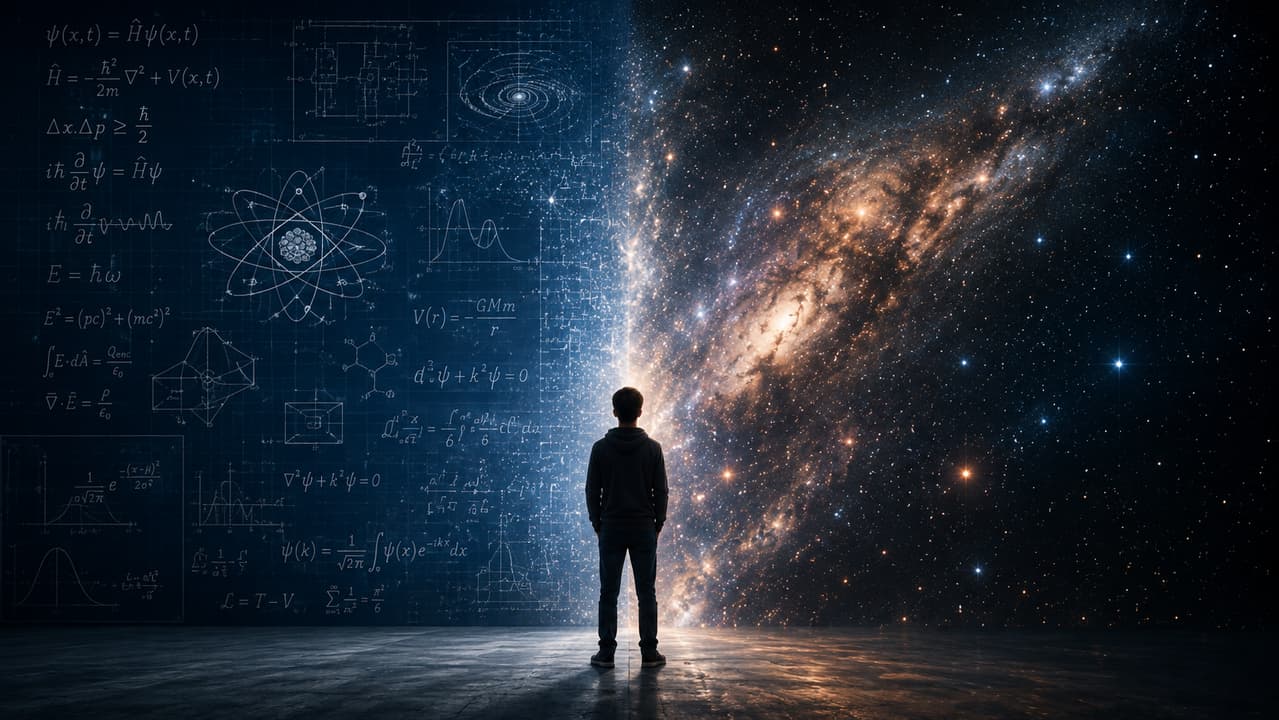
Life cannot be transformed by knowledge of the external world alone; it also requires understanding the one who experiences it. Science, technology, and logic are powerful, but they remain incomplete without self-knowledge and inner honesty. Lasting solutions to personal and global crises emerge when the same rigor used to study the world is turned inward, examining one's motives, intentions, and consciousness with equal seriousness.
Real change begins not by changing the world alone but by understanding the one trying to change it. Laws, technology, policies, and scientific progress have value, yet they cannot solve problems rooted in human consciousness and endless desire. Truth remains the same across cultures and disciplines, requiring only a change in language, not in essence. Lasting solutions emerge through honesty, self-inquiry, and inner transformation, because no external system can replace a change in the human mind.
The mind is not an independent entity but a structure built and maintained by the ego through thoughts, memories, beliefs, and experiences. Most spiritual practices fail when they become distractions from examining the ego itself. Experiences, emotions, and preferences are often conditioned and unreliable. Real inquiry begins with observing the experiencer, admitting facts without distortion, and applying the same rigor to inner life that science applies to the external world.
Most people move through life unconsciously, mistaking inherited beliefs, ambitions, and social conditioning for personal choice. Careers, relationships, goals, and even identities often arise more from habit and circumstance than from conscious understanding. Real freedom begins by questioning the actor rather than the action, examining the assumptions behind one’s choices, and awakening from the psychological “coma” in which life is merely happening rather than being consciously lived.
Search
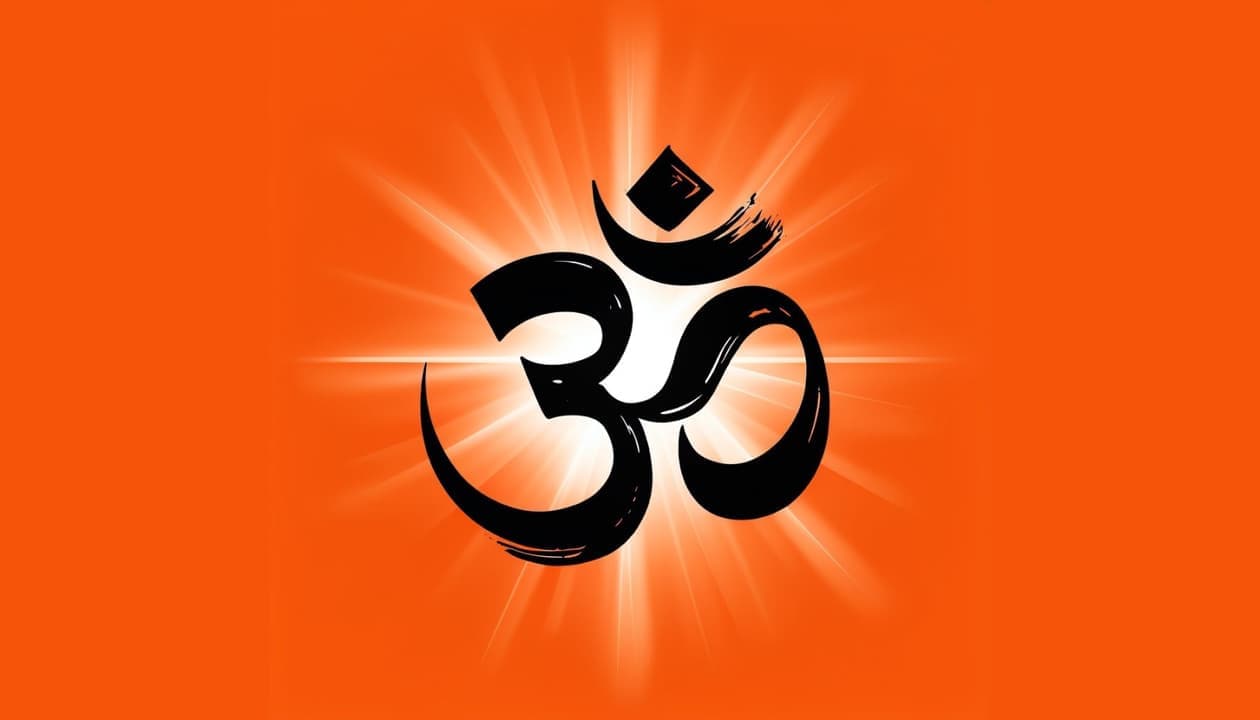
Figuratively, we say that Om, comprising ‘A, U, M’ (Akār–Ukār–Makār), representing the three states of consciousness, dissolves into silence, and silence is the target. Similarly, the mind, leaving behind all its three states, disappears into the target. Pass through all that you can experience — all that is possible in waking, dreaming, sleeping — and then transcend into 'non-being'. Within the three states, you are you, but when you leave the three states behind, you have left yourself behind. And when there is no you, then there is no mind, no ego. That is. That is.
1
Silence is not just the absence of sound. Sound has its utility. Let there be a lot of sound and yet let there be silence and that silence is not cultivated through discipline. It is just a matter of the mind being aware of anything outside it but also of itself.
In the Upanishads, "Om" is used as a powerful symbol of transcendence. It consists of three sounds: "A", "U" and "M". These correspond to the three states of consciousness. "Om" begins where one currently is—obviously, there can be no other place to begin with. You can only begin from where you are. So "Om' begins with "A", which is your current state of consciousness.
A. Objective and Fear
Wherever there is an objective, there would be fear associated with it. You hope to get something, and you fear that you may not get it. Don’t you see that a man who is chasing goals has condemned himself to live in fear?
It is possible…
Excerpts from Articles
Stuck Between Job Security and Your Real Passion?
Struggling to choose between a secure job and the path you actually feel drawn to? This isn't really a question about careers. It's about why other people's opinions have so much power over you in the first place. Real clarity doesn't come from finding the 'right' choice. It comes from honestly looking at your own fear, again and again, until it stops running the decision for you.
कई तरह के डर—अकेले पड़ने, छवि खोने या छोटा समझे जाने—की जड़ अक्सर अतीत में बनी पहचान और कहानियों में होती है। शरीर की हाइट जैसी चीज़ों को समस्या मानकर उनसे जूझने के बजाय उनकी अप्रासंगिकता को समझकर आगे बढ़ना चाहिए। अतीत को दबाने से मुक्ति नहीं मिलती; उसके करीब जाकर अपनी स्मृतियों, धारणाओं और पुराने पैटर्न को निष्पक्षता से देखना ज़रूरी है।
ज्योतिष कितना सच है? कुंडली, ग्रह-नक्षत्र: इनका क्या अर्थ है?
वेदांत को केवल इसलिए सही या श्रेष्ठ नहीं माना जा सकता कि वह किसी विशेष परंपरा से आता है। विज्ञान जहाँ भौतिक जगत की वस्तुनिष्ठ जाँच करता है, वहीं अद्वैत वेदांत सीधे मनुष्य के ‘मैं’, उसके दुख, बंधन और मुक्ति की पड़ताल करता है। इसकी कसौटी वैज्ञानिक प्रमाण नहीं, बल्कि अपने जीवन में इसकी सच्चाई को देख पाना है। किसी दर्शन को मान लेना नहीं, बल्कि उससे स्वयं को मुक्त करना ही उसका वास्तविक उद्देश्य है।
Justice Without Boundaries: Why Compassion Cannot Stop at Species
Oppression should not see caste, gender, creed or colour, and it should not see species either. The moral threshold is sentience, not intelligence. An animal feels pain as fully as a human does, whether or not it can explain its suffering.
Climate change is more than an environmental crisis—it is a crisis of human choices. Our patterns of consumption, consumerism and endless pursuit of more are putting increasing pressure on the planet. But meaningful change does not necessarily begin with new technology or stricter policies. It begins with a deeper question: what are we willing to change within ourselves?
Eating, walking, sleeping, working, dying – these alone surely cannot mean being alive. Life is much more than the physical and mental processes. Machines can walk, eat, work. The programmed analysis that computers do is no different from what we call thinking. Machines have no role in their formation, just as we have no role in our birth. And machines can be programmed to self-terminate after a certain time, just as we die.
The highest virtue is not virtuous
Therefore it has virtue
The lowest virtue holds onto its virtue
Therefore it has no virtue
The highest benevolence acts without purpose
The highest righteousness acts with purpose
The highest ritual acts, but since no one cares, it raises its arms and use force
…
Speaker: If you will not suffer, how you will write this question? If you will not ask this question, how will this form get filled? If your form does not…
Mattos
: Thank you for allowing me to attend this session. I’ll be very quiet and just observe.
Speaker: In fact it would be even better if you speak. When we meet in our office, which happens twice a week,…
Acharya Prashant:
Yes! And what is that one answer?
L1: That it is the Self.
AP: No. The answer is that ‘the question is stupid,’ and hence there is no answer. Silence is…
L: By realizing sometimes…
AP: So it’s a thought?…
Acharya Prashant:
‘Stilling the mind’, or ‘stopping the mind’ are very popular and lucrative catchphrases. There is a small problem. The problem is – for the mind, everything is a verb. Everything is a verb. Everything denotes action. So when
…
influential
part of the mind
, they are not coming from the essential just like you said that the faces are real till the time
…
Acharya Prashant:
Silence is that which you want, really-really want, when you move from one type of noise to the other type. That is Silence. But because all your experience has only been about noise, so even when you are thirsty and craving for Silence, all
…
1
Shri Prashant: This is a camera (holding a smartphone in hand, pointing towards the camera) and let’s say that there is something written over here (pointing at the wall). I want to let it come to me through this camera and I record it using this camera and the…
Questioner (Q):
Silence.
AP: We can talk a lot in Silence. Talking about Silence will always be a little round-about; beating around the bush. But in Silence, which is our nature, we can talk a lot.
We can even be silently noisy.…
Acharya Prashant:
What is
enquiry
? How does
knowing
happen? Does enquiry mean that one keeps asking questions? Does enquiry mean that one is looking for particular answers within obviously
…
…
2
Questioner (Q): Sir, sometimes people ask, or are curious to know, that what are you getting from these sessions. But I do not like to share anything with them, because they do not have that understanding. They will criticize it. So, what to do?
Acharya Prashant (AP): Why do they…
1
Acharya Prashant: You are talking about the sound of the naad and you are wondering whether that can be used as a technique.
What will you use as a technique?
There has to be something to be used. The naad is not the sound at all. What will you use…
AP:
Is there a contradiction between silence and words? Is there really? We have been silent since the last one hour. It’s such an eloquent Silence.
Listener 1: It’s still secondary.
AP: No,…
…
…
Acharya Prashant (AP):…
Question:
Why is it so difficult to give up on yourself even though it is the cause of so much suffering?
Acharya Prashant: It might become easier had we not been using these attractive names. Knowledge is such an attractive name. Is it not? Now suffering is called knowledge…
1
When someone calls us ugly or dumb, it can feel as if our confidence has been taken away. But others are outsiders; they cannot know us as well as we can know ourselves. The trouble begins when we do not know ourselves, so we start looking at ourselves through others’ eyes. Self-knowledge here simply means being honest with ourselves about where our likes, fears and desires come from. What would change if we looked at ourselves directly, and not through others’ opinions?
1
We often defend a bad choice by pointing to a worse one: stay dishonest or starve, keep the wrong grip or stop playing. But the real trouble is not the option we picked. It is the option we never let ourselves see. Action does not need greed or attachment to find its energy. The third way begins by rejecting both false choices, without knowing what comes next. Which of our everyday choices are really false dilemmas?
2
वेदांत को केवल इसलिए सही या श्रेष्ठ नहीं माना जा सकता कि वह किसी विशेष परंपरा से आता है। विज्ञान जहाँ भौतिक जगत की वस्तुनिष्ठ जाँच करता है, वहीं अद्वैत वेदांत सीधे मनुष्य के ‘मैं’, उसके दुख, बंधन और मुक्ति की पड़ताल करता है। इसकी कसौटी वैज्ञानिक प्रमाण नहीं, बल्कि अपने जीवन में इसकी सच्चाई को देख पाना है। किसी दर्शन को मान लेना नहीं, बल्कि उससे स्वयं को मुक्त करना ही उसका वास्तविक उद्देश्य है।
1
Science can examine material claims, but Advaita Vedanta deals with the subjective self, ego, suffering, bondage, and liberation—areas outside science’s objective framework. Vedanta need not be accepted because of one’s religion or tradition; its value lies in whether its insights can be personally verified and help free one from suffering. The ultimate responsibility is not toward any philosophy, but toward oneself: to live a truly free life.
2
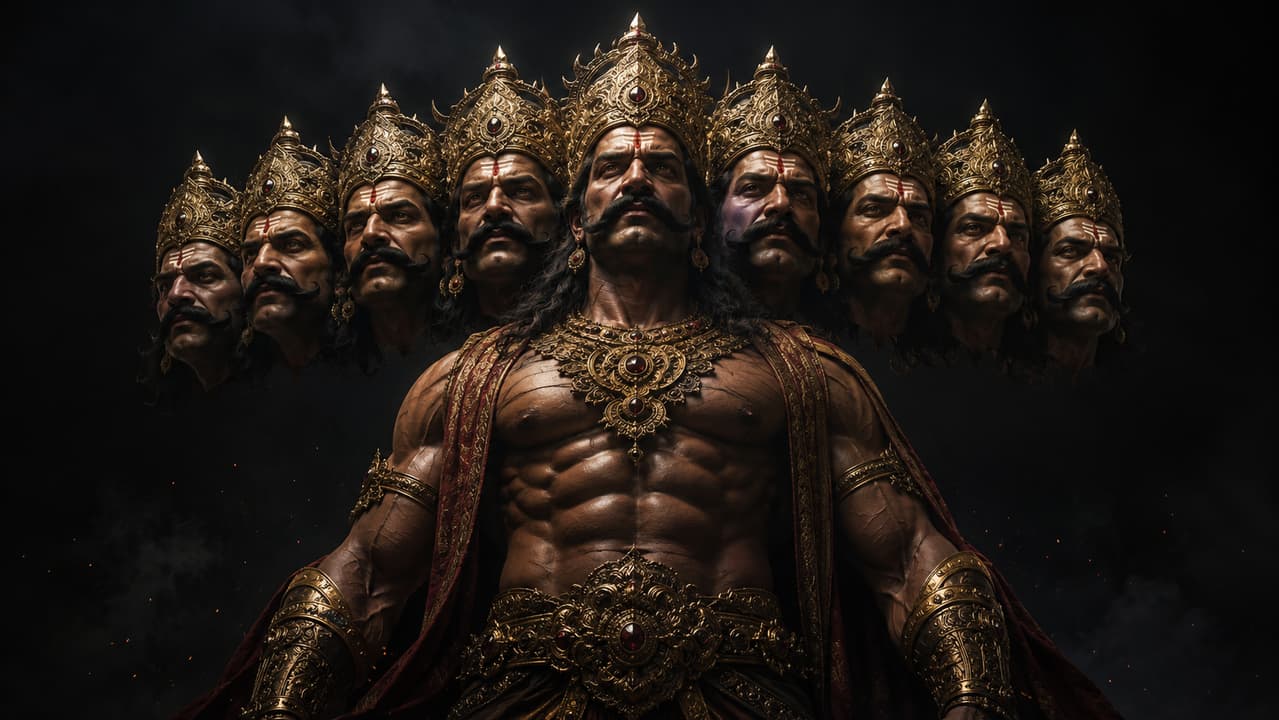
Knowledge alone cannot transform life; it can become another object of the ego. True knowledge is self-knowledge—a mirror that exposes and destroys false ideas about oneself. Ravana may have been knowledgeable, but without self-knowledge, knowledge can become a tool for exploitation. Wisdom is not something to acquire; it is innate. Self-knowledge is the process of unbecoming unwise by clearing away the nonsense we have gathered.
1
Question: Why do I feel lost?
Acharya Prashant: Because, you are asking this question.
We ‘think’ that we are lost, equally, we ‘think’ that we are not lost. The same place from where the thought, the perception of being lost, or not lost arises, that place is the same place…
2
Friendships naturally change as people follow different paths in life. When you remain focused on your true purpose, you stop clinging to those who only accompany you briefly. Instead of dwelling on memories or fearing others' intentions, examine your own expectations and self-deception first. Honest self-awareness brings clarity, wiser relationships, and the freedom to move forward without resentment or attachment.
1
True learning is not built on memorizing answers but on understanding reality. Memory may help in examinations, but life constantly presents new questions that demand clarity, presence, and intelligence. Education becomes meaningful only when knowledge is deeply understood and lived, not merely remembered. Real understanding frees us from dependence on rote learning and enables us to respond wisely to every new situation.
1
Superstition does not begin with rituals alone; it begins with unquestioned beliefs about the self. Science can remove many false beliefs, but complete freedom requires Self-knowledge. Vedanta, philosophy and meditation help expose the ego, making awakening possible. Religion becomes meaningful only when it encourages Self-knowledge rather than blind belief. Real freedom comes not from accepting inherited ideas but from understanding oneself through direct observation and awareness.
2
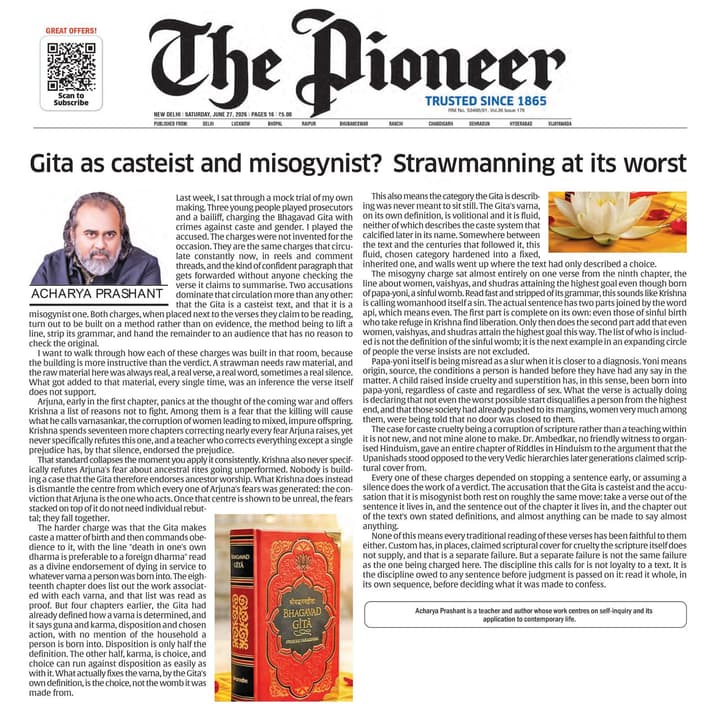
The Bhagavad Gita is often accused of supporting caste and misogyny through selective quotations that ignore context, grammar, and the text's central teachings. A closer reading shows that its emphasis is on inner qualities, conscious action, and spiritual equality rather than birth-based hierarchy or gender discrimination. Misinterpretations arise when isolated verses are detached from their broader meaning, while the Gita consistently points toward self-knowledge, freedom from ego, and the universal possibility of liberation for every human being.