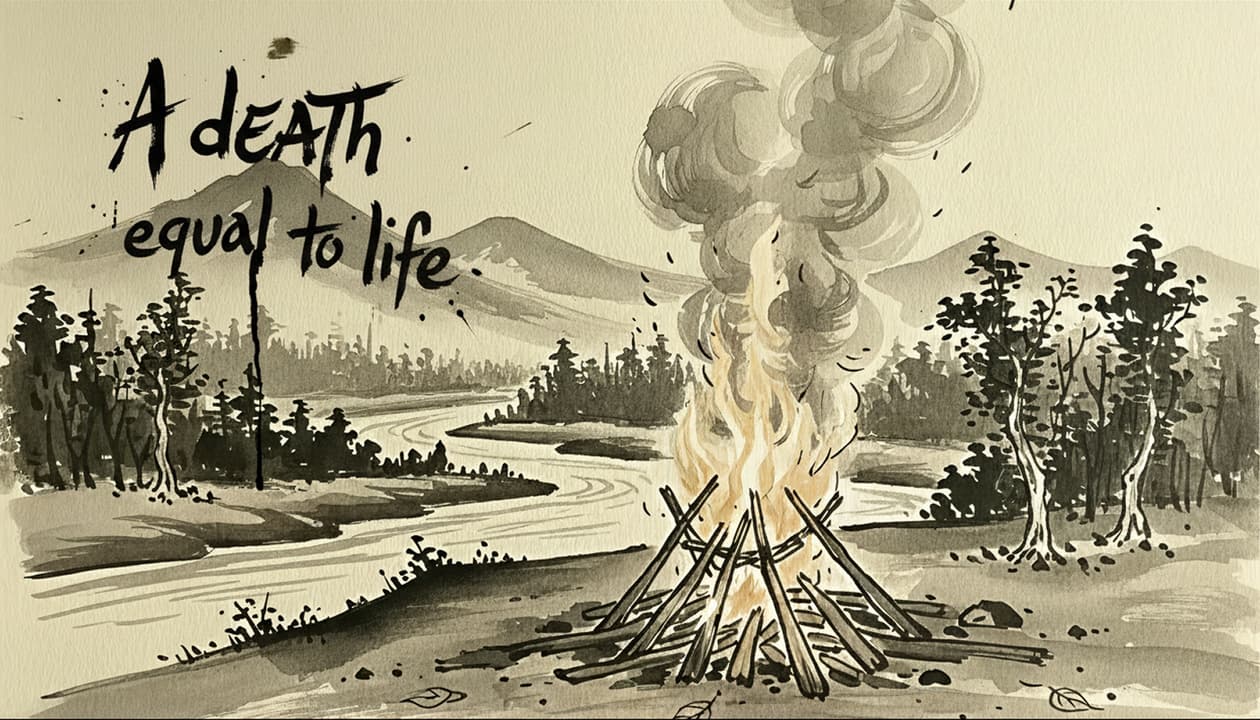
A dignified life includes a death of dignity. If everything in life must be subject to your conscious choice, then so must be your death. Death is not something that we should ever leave to chance. Choice must not lie only in extending life, choice must lie also in ending life. That decision cannot be made in a moment of desperation or despondency. Let your life be high and let your death be an equal to your life.

We don’t remember death. We think of death as something ugly. But facts cannot be ugly. Facts are just facts. But in the moment of love, in the moment of ownership, attachment, possessiveness, we hate to remember death.
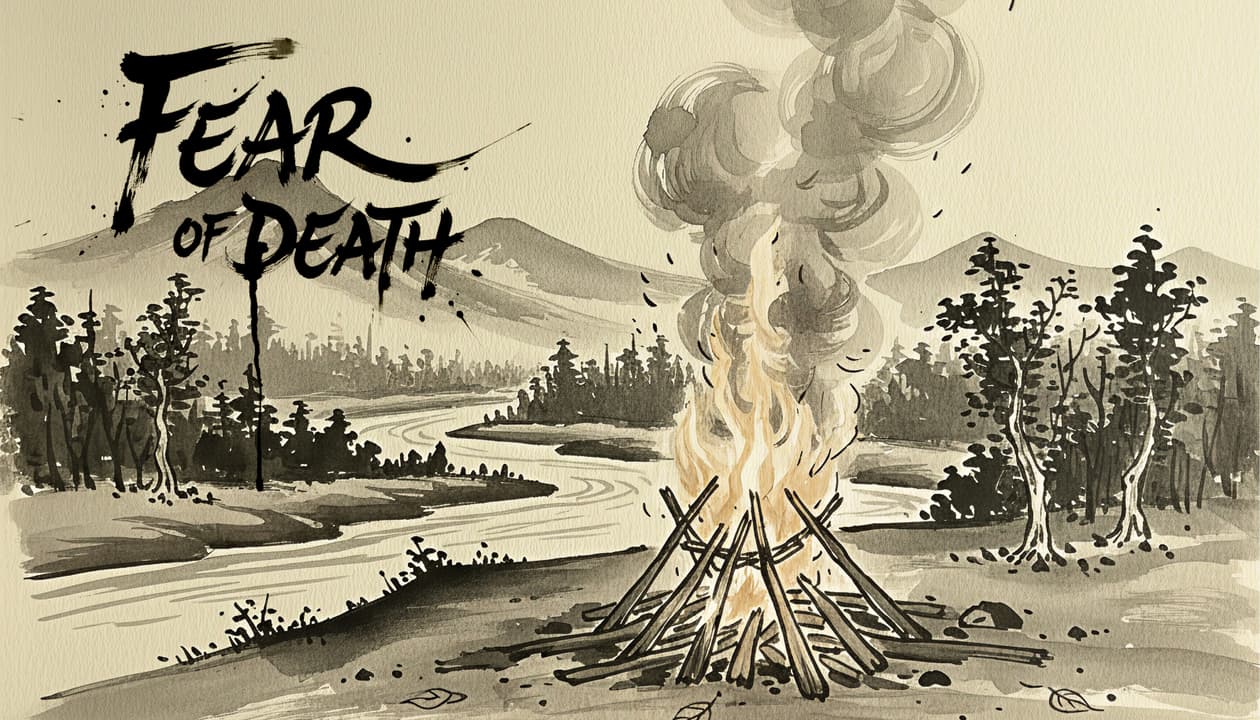
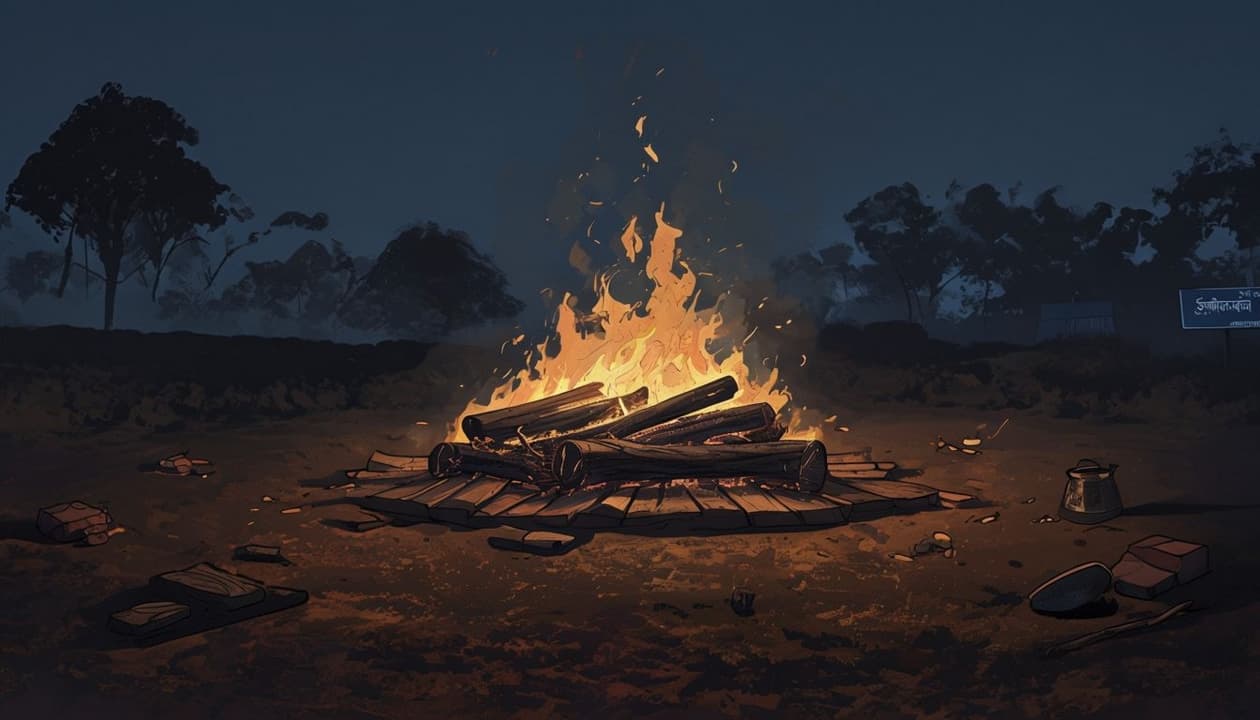

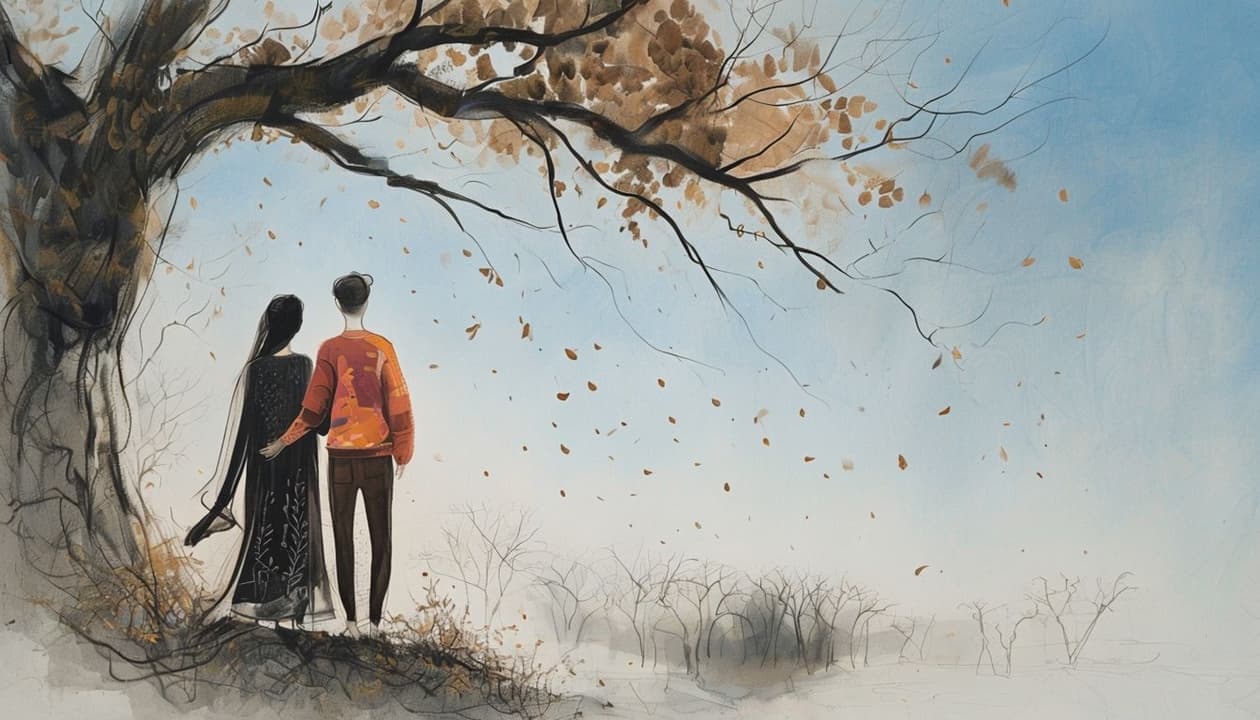

Death scares the ego because there was something that the ego wanted from its existence that has not yet been achieved. The technical problem there is that what the ego wants from its existence can only be attained from its non-existence. Therefore, the only way to avoid death is by dying before death.



The question is, why do we want the uncertain to be certain? Why do we want the changing to become unchangeable? Why do human beings try so much for security? That is because we are, by our internal constitution, designed to love security. Uncertainty cannot be limited; uncertainty is the very nature of life and this world. You have to be secure within. Read more...

Acharya Prashant: You see you are a human being. It is neither possible nor advisable for you to just give up on the past. The body is nothing but a flow of the past stretching over time. So, you cannot just wish away the past. It won’t happen.


Questioner: When we all meet the same end, that's death, how does it matter whether I spent my life like a warrior or as an idol statue?
Questioner: Ramana Maharshi says, “There is no difference between the dream and the waking state except that the dream is short and the waking state is long.” Further at another place he says, “Just before waking up from sleep there is a very brief state free from thought. That should…
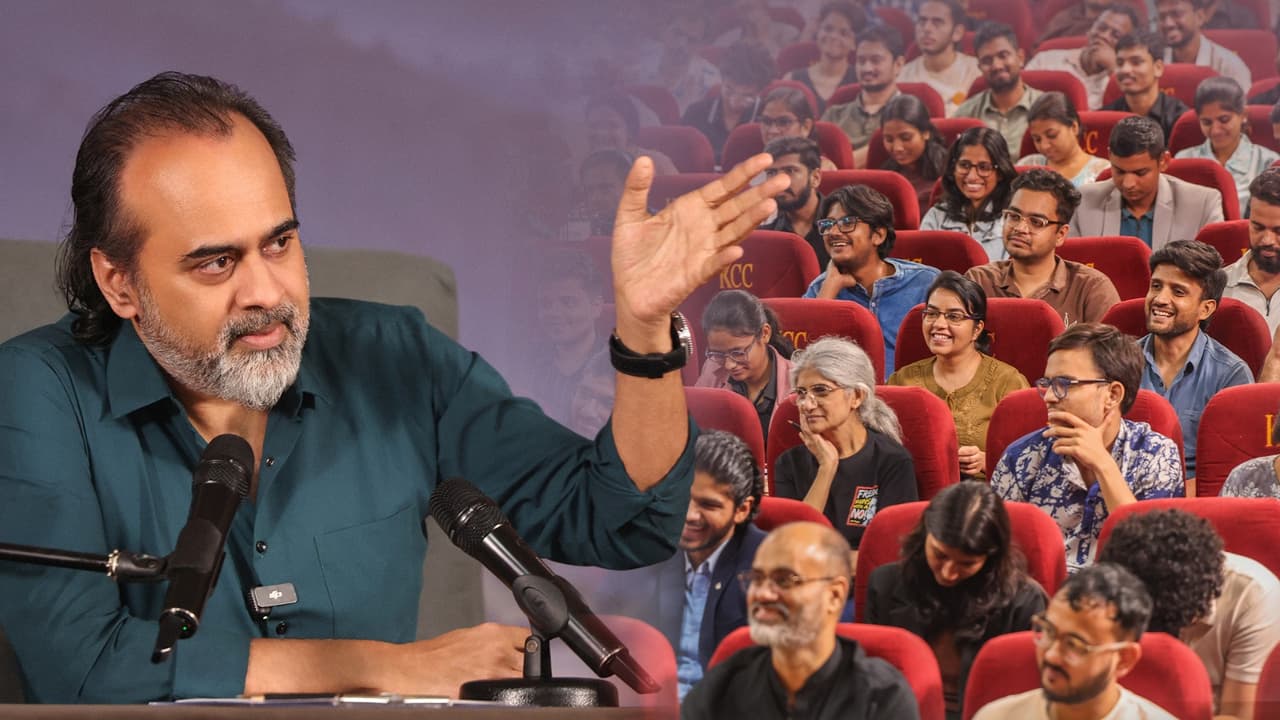
Many of us interrupt, rush to make our point, or change the topic when a conversation comes too close. We call it a lack of patience or discipline. But impatience in a conversation is often fear: when what we hold within is borrowed belief, every question could shatter it. The same confusion makes us take our instincts and feelings as ourselves, though they are only the body’s chemistry. If we looked honestly at what we hold, would a question still feel like an attack?
Many of us promise our parents high marks, and when the result falls short, the guilt can feel heavier than the exam itself. But no one controls results; they depend on far too many things outside us. What is in our hands is our intent, our effort and our honesty with what we study. The Bhagavad Gita says the same: our right is to action alone, never to its fruit. What if the only promise we made was to study honestly and with love?


Sisyphus pushes a rock up a hill forever, knowing it will always roll back down. A regular workman does the same thing inside a job: he keeps pushing too, except he hopes it will eventually pay off, a promotion, a house, a better life. This hope is often just a comfortable lie. Sisyphus, who expects nothing and still keeps going, is actually more honest than we are. The real question is not whether the effort is worth it, but whether we can stop lying to ourselves about it.

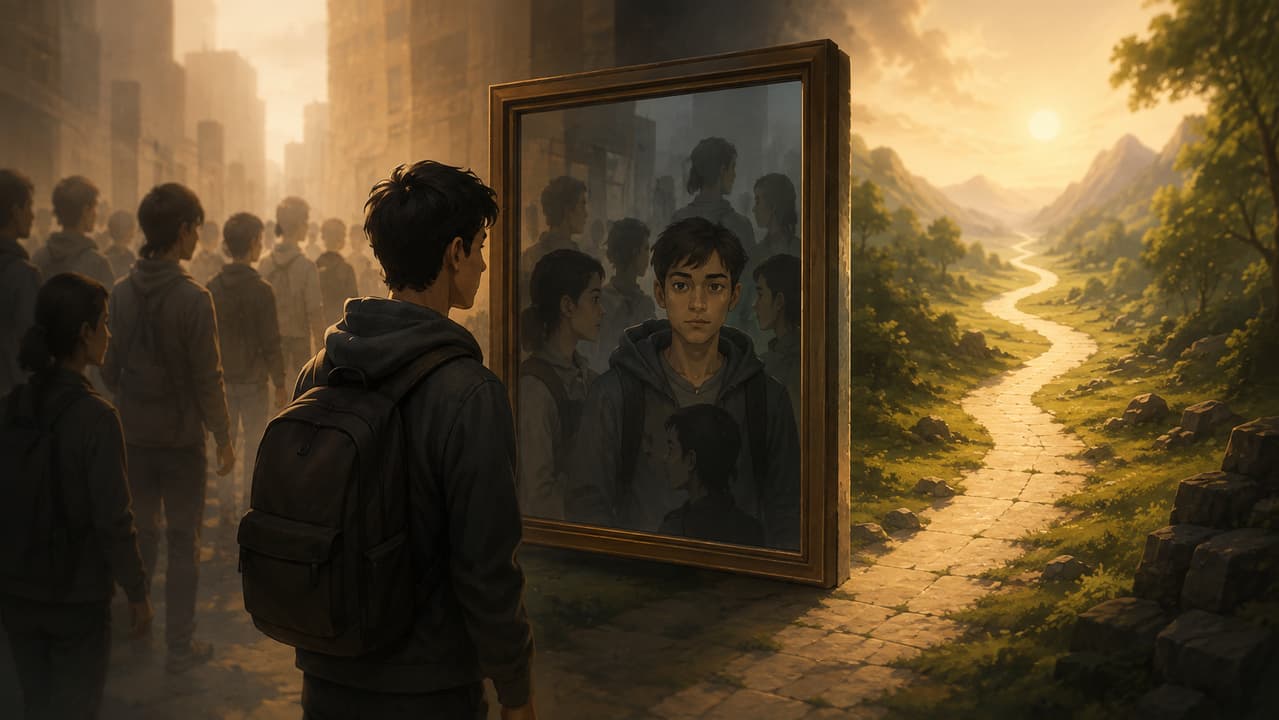



Superhero films appeal to our desire to escape inner inadequacy through external power. The fantasy of an ordinary, fearful person becoming extraordinary reinforces the ego’s belief that more strength, money, possessions, or status will bring happiness. Consumerism follows the same pattern, endlessly adding objects to fill an inner void. Real freedom does not come from becoming more powerful or acquiring more, but from honestly seeing and understanding the ego that feels incomplete.


Spirituality does not replace the fear of ghosts with belief in God. It asks us to question the mind that creates both fear and belief. Ghosts, gods, and stories can all become projections of imagination. The spiritual path begins by dropping assumptions, investigating “Who am I?” and understanding the source of suffering. With attention, right knowledge, and self-inquiry, fear loses its power and one becomes inwardly free.

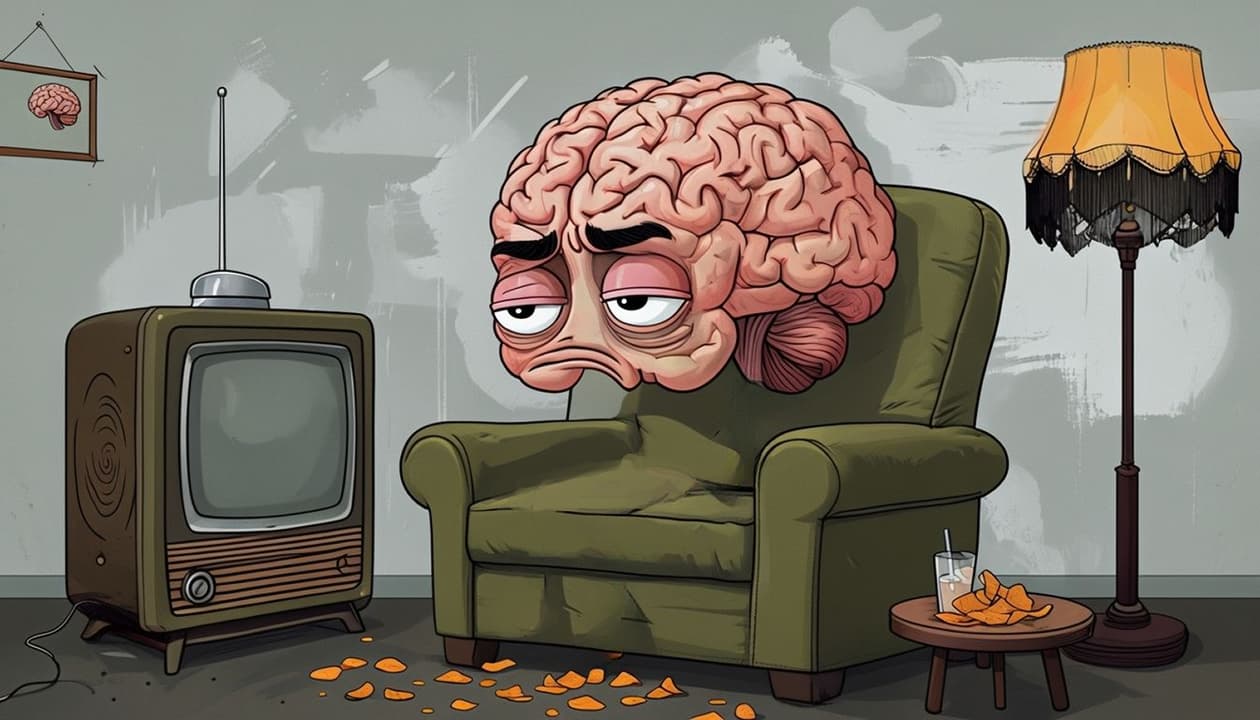




When the person is dead, you remember that person. But when the person is alive, do you remember death? Who is not dying every moment? Please tell me. Then why do you want to believe that the person, as you see him right now, would be carried over to the future? No one gets carried over to the future. No one. Death has to be seen as a fact, not a fact at the end of a string, but as a present reality. It is not death that scares us. Unlived life is what we grieve for.
Death is certain for everybody in the future. What matters is that today, you are alive. Wasting time is bad even for an otherwise healthy young person. But when you know that your clock is ticking, then wasting time makes no sense at all. Let every day be a celebration of some kind or the other. Be free, sit together, eat together, travel together, and make the best use of whatever time is there.
Death has a certain significance. But rituals, whether at the time of birth or death, mean nothing to Prakriti. And even at the level of the Truth, where there is neither birth nor death, rituals don’t matter. In between these two is the level of the social mind — this is where rituals seem to matter. Not an absolute significance but if you are heavily influenced by society, going against it has consequences. Those who still can't take blows don't need to get into needless rebellions. There are bigger battles to fight. But those who are ready; there has to be resolve within and tact outside.
Death is a fact of the body. Whatever took birth, will die. Whatever is yours, will die. There is no need to entertain the notion that even after death, some part of oneself will remain or that one will take birth again. Go to graveyards, watch dead bodies. See a body burning and you will lose all seriousness that you have about your own body. Those who are afraid of dying, they will never be able to live. So, die fully and die completely, so that you may live. Order a pizza. Go and dance, have fun.
Death comes to teach us. Let's learn the lesson. Death is a liberator — not so much to the one who has died, but to the one who is still alive. Your normal work, relationships, worldview — all these will appear hollow when you're struck by the fragility of everything. Death disturbs us precisely because it challenges the assumptions on which we base our day-to-day life. Once you have seen something, you cannot be the same ignorant mind.
Organized religion is just an elaborate conspiracy to keep you away from Mukti. And you put it very nicely: nobody talks of Mukti when they are alive. Now, after they are gone, their kith and kin are supposed to be worried about their Mukti, which is all quite nonsensical. Once you are gone, the opportunity is gone. There is no liberation for the dead. No liberation at all for the dead. And that is why the opportunity called life is so precious.
When it comes to death, we think so much about divine intervention, as if there is some conscious entity at work with a deliberate plan. Just realize that life doesn’t follow our plan or any divine plan. We come and go, just as waves rise and fall in the ocean. There is no rhyme or reason to it. We die just as we come—randomly. Nobody is doing it. It’s hard to swallow, but if we can acknowledge this, it would set us free.
The sword is hanging over everybody’s head. It can fall here or there. Nobody is conspiring against anybody, and nobody has been blessed with special fortune. There is a random chance it falls here; it falls there. I am not talking of cases in which, let’s say, the family atmosphere is so toxic that it compels a couple of members to commit suicide. I am not talking of such cases. I am talking of accidental deaths. Accidental deaths are exactly that: accidents.
To the loved ones who have died, pay the holiest tribute possible. There are others still here; ensure you have right relationships with them. If a relationship is right, the end won't hurt much. The end might even be glorious, a true pinnacle. The relationship was an upward journey all along, and death now becomes the peak of that connection.
Acharya Prashant: What's the relationship between immortality, deathlessness, and knowing the Ātmā as the container of the material and the mental world? Not that they are really distinct, still. So, what's the relation between knowing Ātmā as the container of the world and keeping all other thoughts aside, and immortality?…
Acharya Prashant: Nachiketa is a mere boy dependent on his father, and he has the honesty and the guts to go to his father and say, “Of what use is all this that you are doing? Who will benefit from these old and sick and milkless cows?” I assure you…
If the…
प्रश्नकर्ता: सर, जो पुनर्जन्म की बात की जाती है, क्या हम उसको समझ सकते हैं?
आचार्या प्रशांत: देखो, पुनर्जन्म तो ठीक है, लेकिन ज़रूरी है यह पूछना – पुनर्जन्म किसका? आवश्यक है कि आप समझें कि पुनर्जन्म है, लेकिन कोई पर्सनल सेल्फ (व्यक्तिगत स्व) नहीं होता है जिसका पुनर्जन्म हो…
Acharya Prashant: There are many other options as well which you are very cleverly hiding. Look at the very construction of the question—sharp!…
Questioner(Q): Hello Sir, I am Saurav, PhD student at IIT-Patna. Sir, a couple of years ago I met with a bike accident. At that moment, I felt like time was moving very slowly. I don’t know if it was just my feelings, but I searched on the internet and I…
ਕਰਮੀ ਆਵੈ ਕਪੜਾ ਨਦਰੀ ਮੋਖੁ ਦੁਆਰੁ ॥
karmee aavai kaprhaa nadree mokh du-aar
By good karma, the Saropa, which is this body, the robe of honor, is obtained, and by His kindness, the door to salvation opens.
~ Guru Granth Sahib 2-5 (Japji Sahib, Nitnem)
✥ ✥ ✥
Questioner (Q):…
Physical weakness does not stay physical. It becomes mental weakness, and the ego, which turns everything into an identity, starts saying “I am weak” because that line brings support and spares it responsibility. Visible strength works even unused: it keeps the opponent outside wary and silences the one within, who can no longer claim to be helpless. Keeping the body strong is therefore a spiritual matter, not vanity. Are we holding on to weakness because it is convenient?
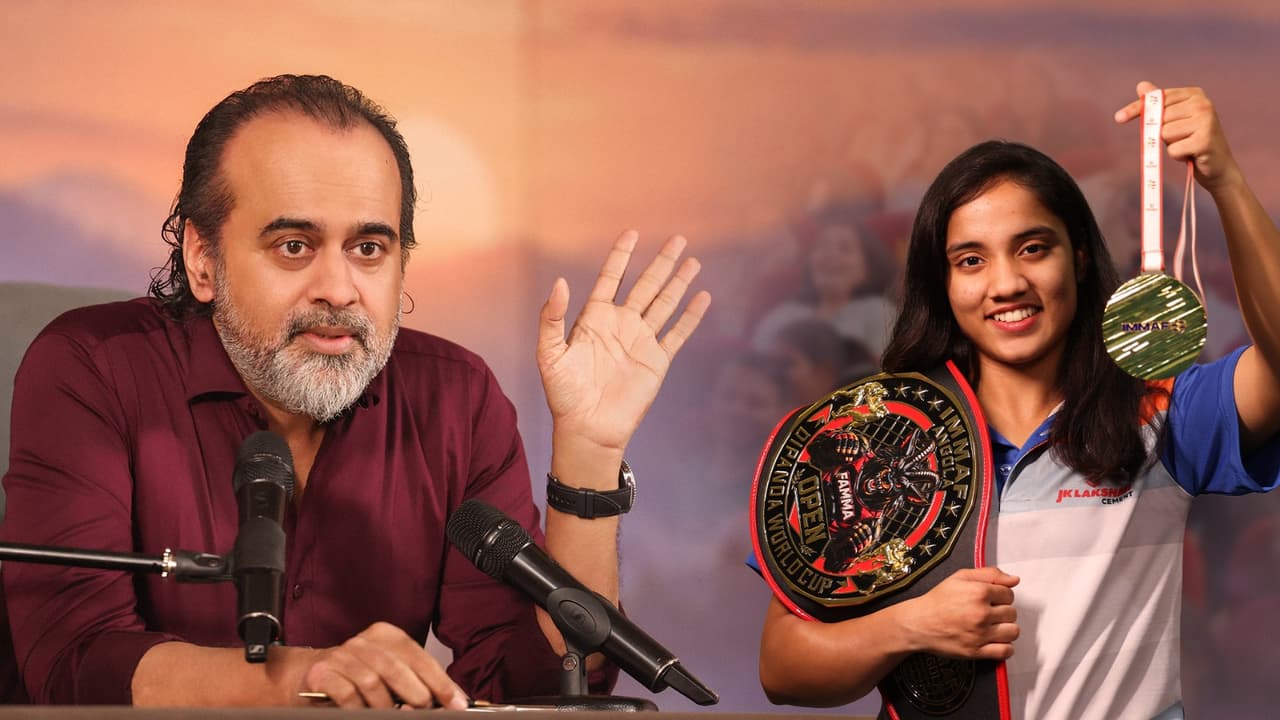
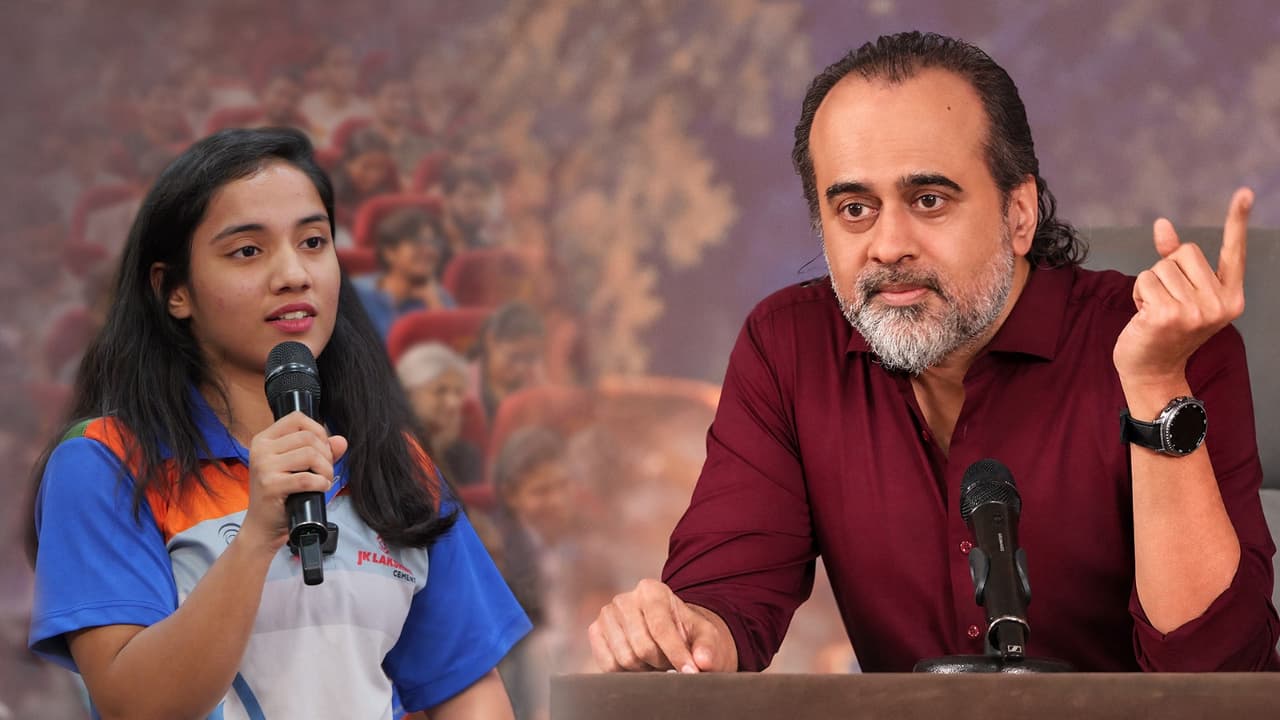
A world champion asks why she cannot sleep when a teammate outperforms her, and why even big wins leave her restless. The restlessness is not a problem but unspent energy, a sign that we have more to give. When every bit of our time and attention goes to what we have chosen, there is no surplus left to worry with. The right fight is never only against an opponent; it is against the ego within. What would it mean to fight so fully that nothing is left to celebrate or mourn?
We often defend a bad choice by pointing to a worse one: stay dishonest or starve, keep the wrong grip or stop playing. But the real trouble is not the option we picked. It is the option we never let ourselves see. Action does not need greed or attachment to find its energy. The third way begins by rejecting both false choices, without knowing what comes next. Which of our everyday choices are really false dilemmas?
Seen a bubble in the sea? That is our story.
You came with the hands empty, empty, and nothing will you carry.
So why be caught in misery? Make merry, make merry!
Who is your family? Who is a lover really?
You are deep in illusion, happily, happily fooling yourself…
Struggling to choose between a secure job and the path you actually feel drawn to? This isn't really a question about careers. It's about why other people's opinions have so much power over you in the first place. Real clarity doesn't come from finding the 'right' choice. It comes from honestly looking at your own fear, again and again, until it stops running the decision for you.
Feeling lonely on campus after being disappointed by friends? Acharya Prashant explains why loneliness should not push you into accepting the wrong company or remaining attached to relationships that pull you away from what is right. One person’s wrongdoing does not justify condemning everyone, nor does friendship mean supporting a friend in what is wrong. Learn why the right company is the company that helps you move toward truth rather than merely giving you temporary relief from loneliness.
Climate change is more than an environmental crisis—it is a crisis of human choices. Our patterns of consumption, consumerism and endless pursuit of more are putting increasing pressure on the planet. But meaningful change does not necessarily begin with new technology or stricter policies. It begins with a deeper question: what are we willing to change within ourselves?
Science can examine material claims, but Advaita Vedanta deals with the subjective self, ego, suffering, bondage, and liberation—areas outside science’s objective framework. Vedanta need not be accepted because of one’s religion or tradition; its value lies in whether its insights can be personally verified and help free one from suffering. The ultimate responsibility is not toward any philosophy, but toward oneself: to live a truly free life.
कई तरह के डर—अकेले पड़ने, छवि खोने या छोटा समझे जाने—की जड़ अक्सर अतीत में बनी पहचान और कहानियों में होती है। शरीर की हाइट जैसी चीज़ों को समस्या मानकर उनसे जूझने के बजाय उनकी अप्रासंगिकता को समझकर आगे बढ़ना चाहिए। अतीत को दबाने से मुक्ति नहीं मिलती; उसके करीब जाकर अपनी स्मृतियों, धारणाओं और पुराने पैटर्न को निष्पक्षता से देखना ज़रूरी है।
A true relationship is not built on need, possession, or emotional dependence, but on a shared commitment to Truth and inner growth. A worthy companion reflects your reality like a mirror rather than performing a role to please you. Real love is effortless, rooted in one's nature, not expectations. When your highest commitment is to excellence and Truth, relationships become a natural outcome—not the purpose of life itself.
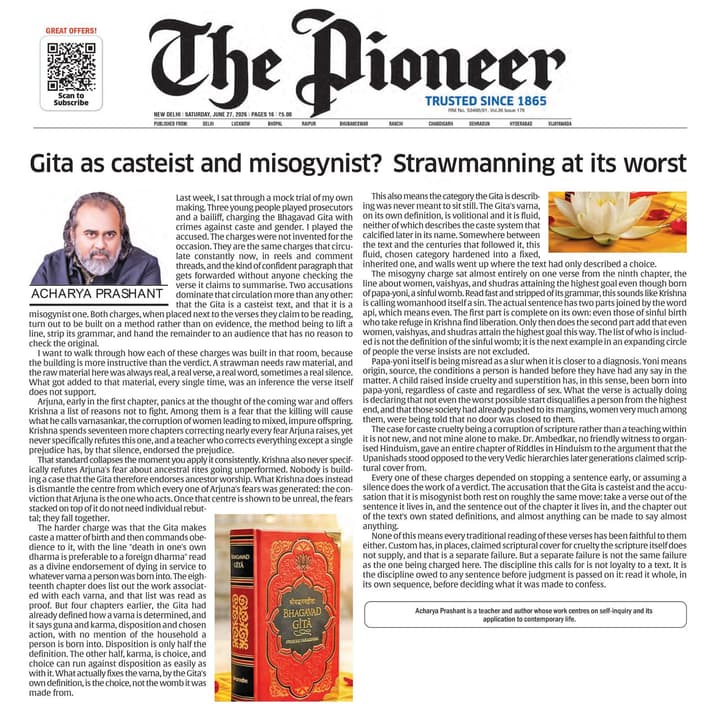
The Bhagavad Gita is often accused of supporting caste and misogyny through selective quotations that ignore context, grammar, and the text's central teachings. A closer reading shows that its emphasis is on inner qualities, conscious action, and spiritual equality rather than birth-based hierarchy or gender discrimination. Misinterpretations arise when isolated verses are detached from their broader meaning, while the Gita consistently points toward self-knowledge, freedom from ego, and the universal possibility of liberation for every human being.
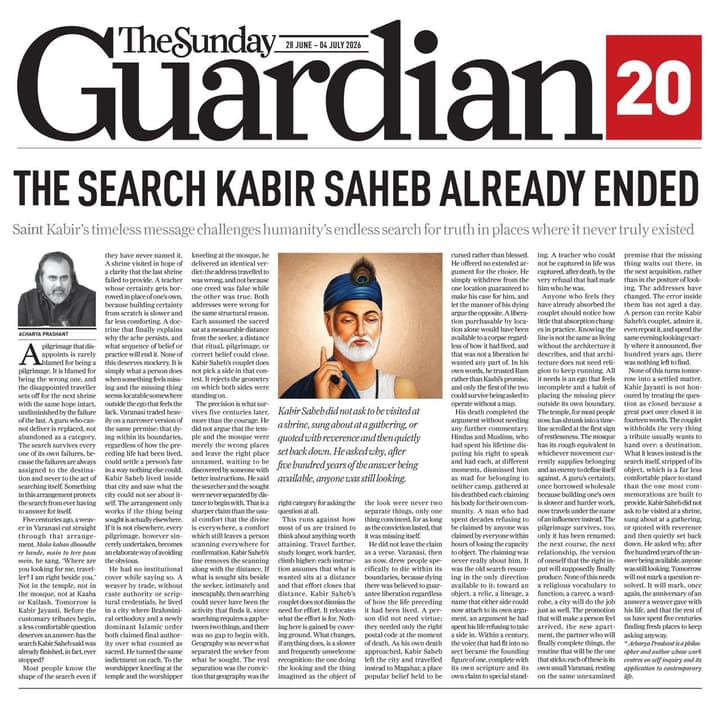
Kabir Saheb's message questions the very act of searching for fulfilment outside oneself. Whether through religion, relationships, success, possessions, or identity, people keep assuming that what is missing lies somewhere else. The problem is not the destination but the belief that fulfilment exists at a distance. Real freedom begins when the search turns inward, recognising that the seeker and the sought were never truly separate.
Science and philosophy arise from different kinds of inquiry. Matter seeks continuity of state, while the ego seeks continuity of existence and constantly changes identities to preserve itself. Fear, danger, and suffering are rooted in the ego’s sense of “I,” not in material reality itself. Questions are valuable because they expose hidden beliefs, and genuine learning requires challenging assumptions through inquiry, dialogue, and self-examination.
Sixty million followers do not necessarily indicate a transformation in consciousness. Large numbers may reflect persistent outreach rather than deep commitment. Truth is often avoided not through opposition but through indifference, convenience, and self-deception. Real change requires sustained effort, inner honesty, testing one's understanding, and the courage to face uncomfortable truths instead of seeking comfort, validation, or easy inspiration.
Fear, social conditioning, and painful memories often shape how people live and make choices. True growth begins by questioning inherited beliefs, refusing to remain trapped by past wounds, and acting from understanding rather than conformity. What appears to be sacrifice is often just the abandonment of conditioned habits. Freedom comes not from external systems, but from the courage to see clearly, learn, and move beyond fear.
The climate crisis is not merely an external environmental problem but a reflection of inner human greed, desire, and psychological disorder. Drawing from the Gita’s idea of yagya as desireless action, it says real ecological healing requires inner transformation. Outer pollution, exploitation, and destruction mirror the ego’s inner confusion, making personal consciousness and planetary health deeply inseparable.
Is loneliness really the absence of people, or the crowd of images and ideas inside us telling us that we “need someone” to feel complete? Two incomplete people cannot create wholeness together. Relationships are beautiful, but only when they do not become substitutes for inner completeness. Relate to the world, connect deeply, but never use another person to fill your inner hollowness.
Global conflicts stem not from geopolitical interests but from the ego's fundamental incompleteness. Nations are merely expressions of collective egoic consciousness. Leaders represent humanity's worst tendencies, not its average. The ego requires duality and boundaries to survive. True disarmament means detoxifying the ego itself. External wars reflect internal disturbance. No diplomatic solution addresses the root cause, only wisdom and self-knowledge can dissolve the ego's need for conflict and separation.
Our mood is always dependent on others and situations. Results have not been up to your expectations. So now you require a morale booster, some motivating speaker. The moment that fellow is gone, your energy also goes away. But there is another way of living. Deep within myself, I find a point that no external situation can touch. Whatever happens, happens on the surface. That will remain stable, uninvolved, a non-participant. Then you are really free.
The only principle that truly runs this world, created by all of us, is the principle of greed and power. What do you think that fellow has earned his billions for? He didn't become a politician to be noble. The only thing that separates us from animals is the intellect, not the center the intellect is operated from. Don't locate the problem and the responsibility somewhere out there. We change ourselves; the world changes.
Superficiality offers pleasures. Superficiality offers cheap salvation. Therefore, it is easy to be attracted to superficiality. On the other hand, true spirituality challenges you to pay a heavy price. So, you see, all this knowledge has existed since antiquity. Yet there are people who do not want to read the Gita.
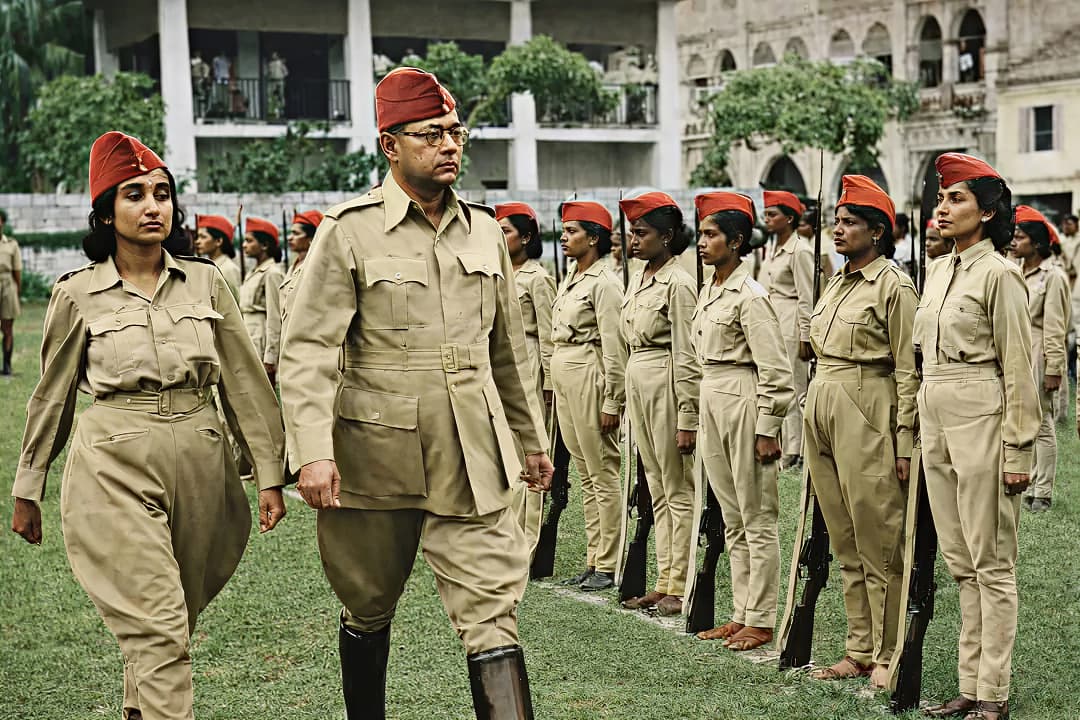
There is no revolution possible without the Gita. That’s the reason why even those who are not remembered particularly for their spiritual inclination, people like Subhash Chandra Bose, even they founded their core on Gita. What kind of revolution can you do if it’s the body that’s always at the top of your mind? You require a Gita to tell you that this body is perishable and would anyway go. Gita only teaches you, "Endure and fight."
There can be no self-respect without self-knowledge. And we have been repeatedly saying that the ego survives only in lack of self-knowledge. The less you know yourself, the denser and more crystallized your ego is. Self-respect is nothing but self-awareness. The more you know yourself, the more you realize who you are not, and that brings you to who you are. That is real self-respect, knowing oneself.
Shri Krishna is saying: the mind is conditioned to move towards objects and perceive only their surface, periphery, or form. Develop the practice of penetrating further. Let Truth be your practice. The moment you would look at something, and you are in no position not to look at things being embodied, you would look at things. Nobody said that you have to practice lust. Lust just comes. You might be a total fool, an utter retard, and still you will find yourself getting sexually excited once you reach a particular age. Did you need some practice? No, you didn’t. It just happened. But if you are to understand lust, if you are to cross over, if you are to be a master of your body, then it will require a lot of practice, and that will necessarily and obviously tell you about your predicament.
