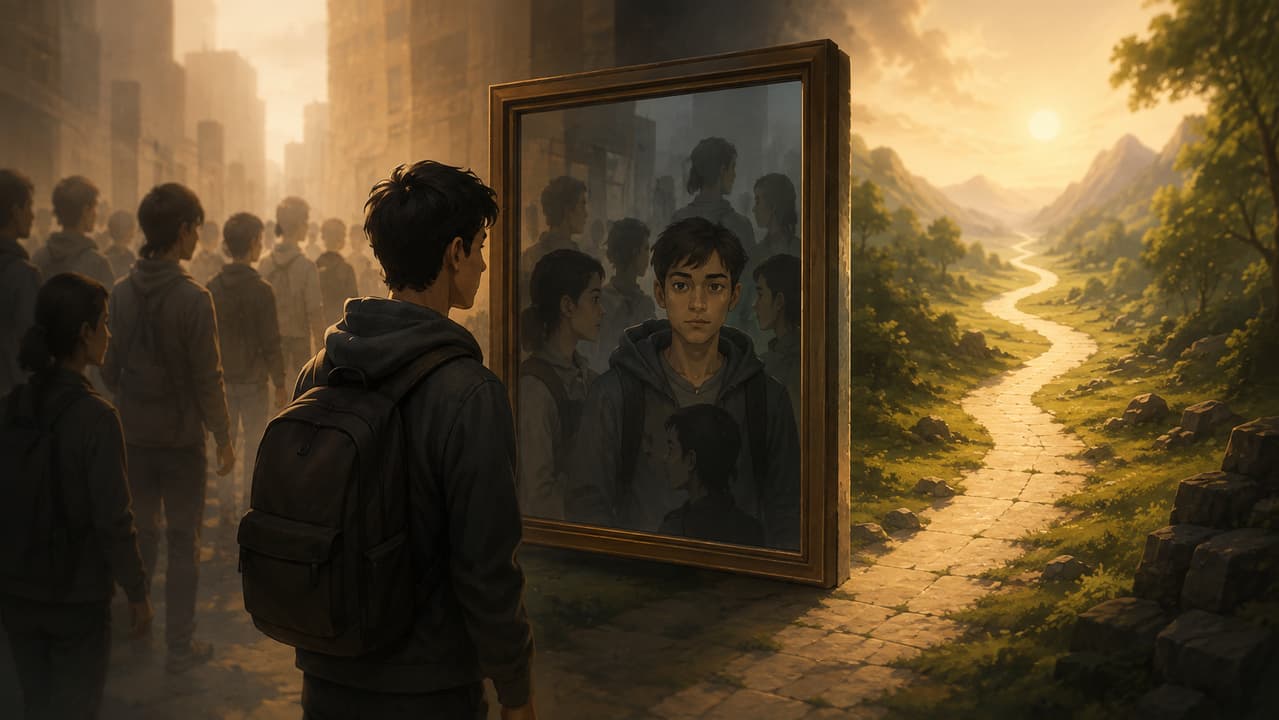
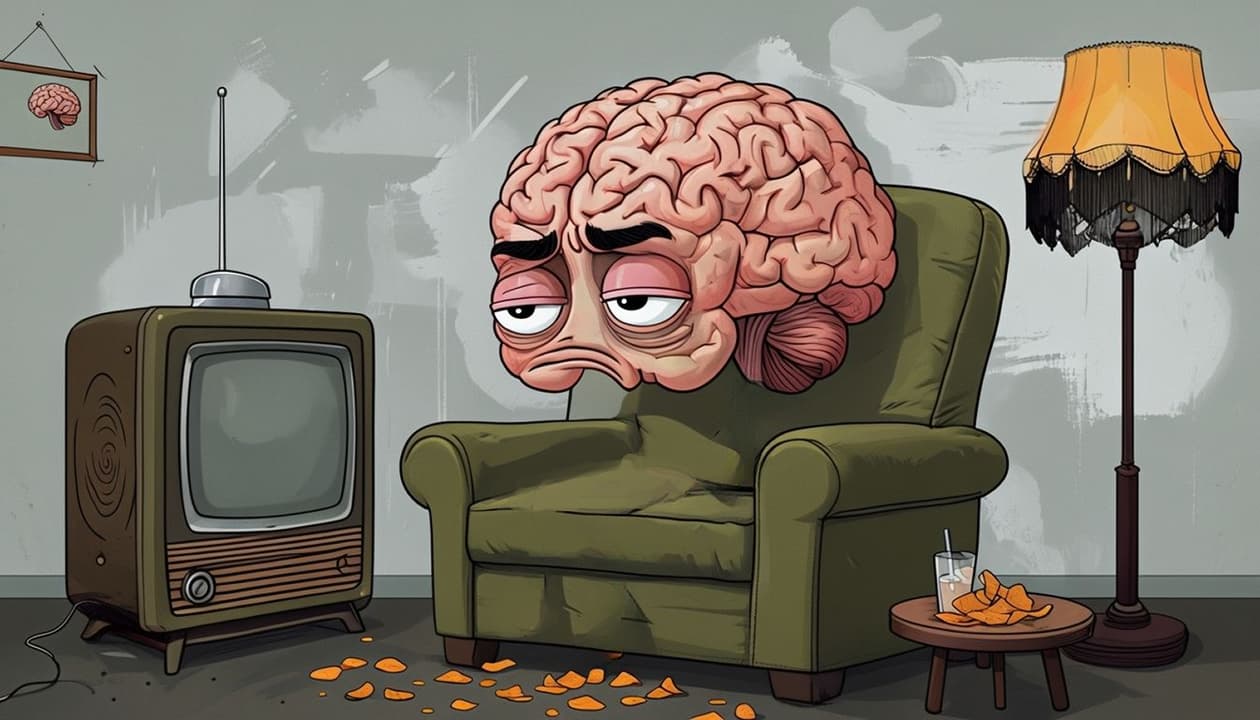
Social media has not destroyed attention spans; it has exposed our dissatisfaction with what we consume. The real problem is repeatedly returning to content we already know is empty instead of respecting our own intelligence. Books are only one medium for knowledge, not knowledge itself. What truly matters is reclaiming attention from distractions, demolishing the borrowed mental structures imposed by society, and creating an inner space where meaningful learning, reflection, and self-knowledge can flourish.
Questioner (Q): If my parents tell me to concentrate on my studies but I fail to do so, does it mean that I don’t find it worth concentrating on or interesting enough?
Success never quiets the anxiety underneath it. Hustle culture runs on karma — a restless cycle of chasing the next job, package, or achievement in hopes of filling an inner void. Young professionals in Bangalore who've "succeeded" on paper remain fearful, ashamed, and unsettled within, proof that success is a liar: it promises liberation but delivers only debt. Anxiety itself traces not to the future but to a present that's been neglected, and real freedom from restlessness begins only by turning inward.
The mind is not an independent entity but a structure built and maintained by the ego through thoughts, memories, beliefs, and experiences. Most spiritual practices fail when they become distractions from examining the ego itself. Experiences, emotions, and preferences are often conditioned and unreliable. Real inquiry begins with observing the experiencer, admitting facts without distortion, and applying the same rigor to inner life that science applies to the external world.
The object of love is so big, so total, so filling, so occupying that it leaves no space for the subject to hide and survive. The task is so damn big that it can’t be done if you protect yourself. If you protect yourself, it won’t happen. Love involves a lot of bloodshed and demolition. And there are fireworks. Great structures collapse. Formidable enemies have to be defeated. All that is love.
The Truth cannot be objectified as a thing, place, person, or book. So, don't be too quick to accept your own assessments, judgments, likes, dislikes, and experiences. Whatever you're seeing is seen by "you" — the Ego — and you are no absolute. Everything must be available to enquiry, investigation, and questioning — and questioning cannot happen if you declare that you’ve already come to the Truth. Never believe that the journey has ended or that the ego itself is the Truth.
The truth that we all inwardly love without even knowing we are in love. That truth is independent of time. It is independent of everything that's temporal, geographical, spatial, cultural. Spirituality has nothing to do with the clothes that you choose to wear, the language you speak, the way you behave, whether you address someone as this or that. facing a particular direction while eating or sleeping. No.
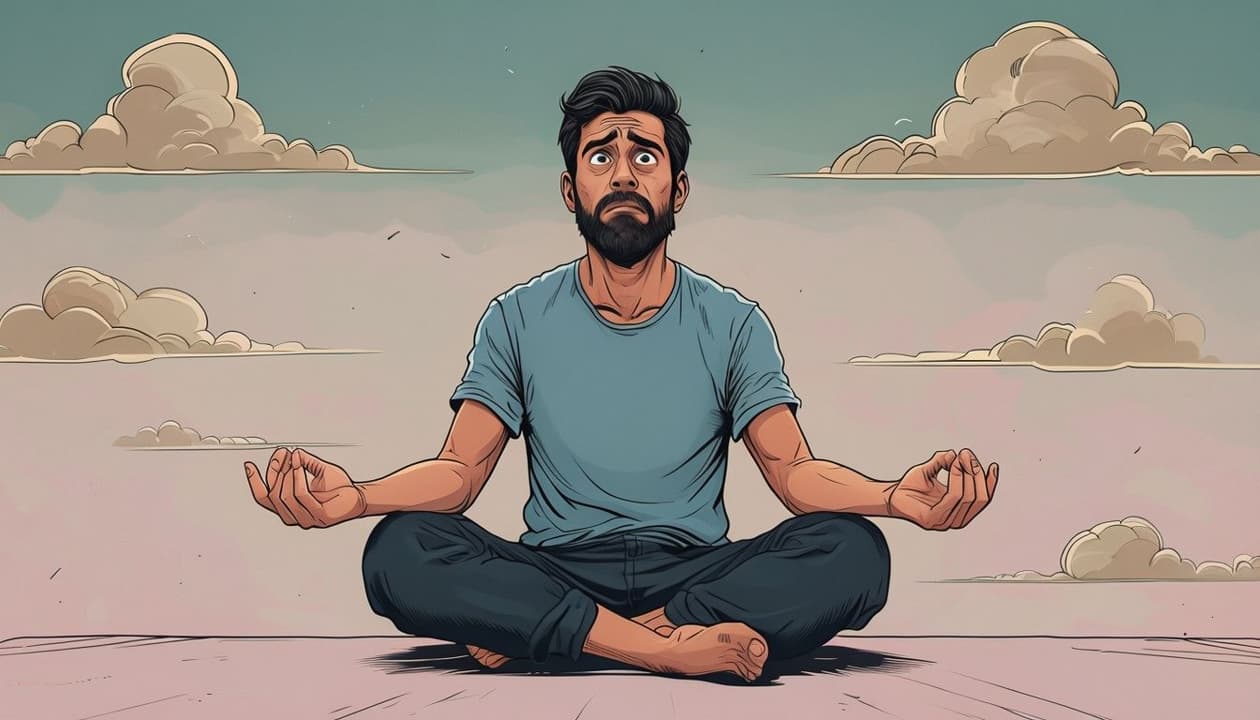
You say you want something, but you are distracted easily. Ask yourself, "Why am I attracted to anything?" Unless you find that, you are just a plaything in the hands of situations. If you really know, then knowing itself decides for you. Then there is no question of indecision or distraction because there are no options left.
It is primarily not about the span of attention. The important thing is not really for how long you can hold your attention on an object. The important thing is, what is the quality of the object you are attending to, and the nature of the human consciousness is such that, only very specific type of objects can really hold your attention for long.
6
When Shankaracharya says “Dissolve the mind by concentrating it in the Supreme Self” , what he is saying is that your mind is anyway always concentrated and the type of concentration that you have will not help. This verse just tells you that whatsoever you are concentrating on is going to disappoint you. The mind is always concentrated in all the worldly and miscellaneous things. It is beyond the mind to concentrate on the Truth. Because the Truth is not an object. So, concentration doesn't help, it is not a matter of concentrating, it is a matter of seeing the futility of concentration.
Acharya Prashant (AP): The question that I must first of all address is, why must a twenty-two or…
Excerpts from Articles
You Don't Understand the Bhagvad Gita, But You Still Claim That You Love Krishna?
The Bhagavad Gita deserves reverence not because of inherited beliefs about its author, but because of its power to dissolve falsehood and reveal Truth. Real devotion is not ritual or blind faith—it is understanding, inquiry, and living the wisdom of the Gita. Through sincere study, one discovers the true meaning of Krishna, making the Gita the most authentic path to knowing and worshipping Him.
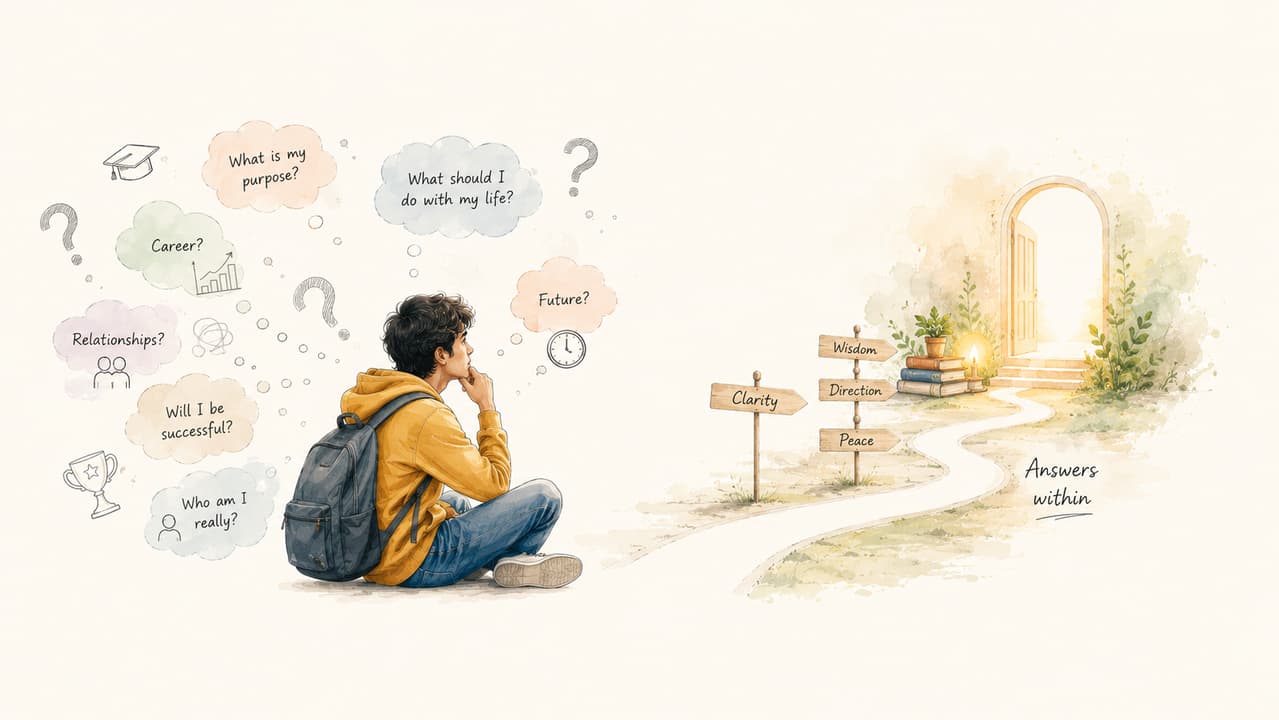
Struggling to choose between a secure job and the path you actually feel drawn to? This isn't really a question about careers. It's about why other people's opinions have so much power over you in the first place. Real clarity doesn't come from finding the 'right' choice. It comes from honestly looking at your own fear, again and again, until it stops running the decision for you.
ज्योतिष कितना सच है? कुंडली, ग्रह-नक्षत्र: इनका क्या अर्थ है?
वेदांत को केवल इसलिए सही या श्रेष्ठ नहीं माना जा सकता कि वह किसी विशेष परंपरा से आता है। विज्ञान जहाँ भौतिक जगत की वस्तुनिष्ठ जाँच करता है, वहीं अद्वैत वेदांत सीधे मनुष्य के ‘मैं’, उसके दुख, बंधन और मुक्ति की पड़ताल करता है। इसकी कसौटी वैज्ञानिक प्रमाण नहीं, बल्कि अपने जीवन में इसकी सच्चाई को देख पाना है। किसी दर्शन को मान लेना नहीं, बल्कि उससे स्वयं को मुक्त करना ही उसका वास्तविक उद्देश्य है।
Victory is not decided by the trophy you hold but by the battle you choose to fight. Real strength lies in making the right decisions, staying true to your deepest values, and refusing to be ruled by fear or circumstances. When your actions arise from clarity rather than ambition, the outcome loses its power over you. The moment you choose the right path, you have already won.
कई तरह के डर—अकेले पड़ने, छवि खोने या छोटा समझे जाने—की जड़ अक्सर अतीत में बनी पहचान और कहानियों में होती है। शरीर की हाइट जैसी चीज़ों को समस्या मानकर उनसे जूझने के बजाय उनकी अप्रासंगिकता को समझकर आगे बढ़ना चाहिए। अतीत को दबाने से मुक्ति नहीं मिलती; उसके करीब जाकर अपनी स्मृतियों, धारणाओं और पुराने पैटर्न को निष्पक्षता से देखना ज़रूरी है।
Climate change is more than an environmental crisis—it is a crisis of human choices. Our patterns of consumption, consumerism and endless pursuit of more are putting increasing pressure on the planet. But meaningful change does not necessarily begin with new technology or stricter policies. It begins with a deeper question: what are we willing to change within ourselves?
Animal cruelty: Who deserves mercy, and who doesn’t?
Violence begins long before the knife or the slaughterhouse—it begins with the ego, the one that draws boundaries, seeks justification, and decides who deserves compassion. Laws and reforms may reduce suffering, but they cannot end violence while the ego remains intact. When the ego dissolves, exploitation ends naturally, and compassion no longer depends on regulation or moral boundaries.
Shri Prashant: No, he will not feel joy in every task he is doing, the joy is irrespective of…
2
Questioner: I get very tensed whenever I face any conflict. I find that definitely there is an underlying fear that I will lose something, which causes anxiety. But, just being able to pinpoint doesn’t help much.
Very often, my mind says that I should let go of, whatever I am…
First of all, I understand that why Aman is asking this question in this language; because all our lives we have seen that we get something only by doing.
So, Aman thinks that attention is to do something.…
Question: Sir, can I be in attention even when mindis distracted? Does attention also depend on whether I am loving the thing that I am doing or not?
Answer: Prashant,
Attention is a quality of the mind. Attention is the deep desire of the mind to understand. Understanding means settling…
Acharya Prashant (AP):
In the cold areas of the country, it becomes important, especially in winters, to let the sunlight in. Quilts etc. are kept out in the open so that they receive the Sun treatment. The Sun must beat
…
Shri Prashant: Because those things are not worth concentrating. When you will meet something that deserves all your immersion, then you will not be left to ask this question. So, till the time you are not meeting that, it is good that…
The Present is not an object of thought. To live in the Present, first of all you must know what is really ‘Present’. You know what is meant by Present? What really is ‘Presence’? Living in the Present means living in the Truth, because only
…
Struggling to choose between a secure job and the path you actually feel drawn to? This isn't really a question about careers. It's about why other people's opinions have so much power over you in the first place. Real clarity doesn't come from finding the 'right' choice. It comes from honestly looking at your own fear, again and again, until it stops running the decision for you.
Time shortage is often not real but a result of misplaced priorities. Social media and trivial activities consume the limited time that could be used for reading, sports, creativity, and self-development. Time flows toward what we value most. Therefore, honestly tracking where our time goes is essential, because our time profile reveals our true priorities, mindset, personality, and the direction of our life.
True dedication does not feel like painful sacrifice. When a goal becomes love, unnecessary distractions quietly lose importance instead of being forcefully abandoned. Personal growth and contribution to society are not separate; meaningful work naturally benefits both oneself and others. Real freedom is not outward performance but inner clarity. Life should be measured by inner elevation, not by comparison with others’ achievements.
8
Acharya Prashant (AP): That which you call “Vipassana” today, is a very recent phenomenon. They claim that it comes from the Buddha, actually, it is not. The stream flowing from Buddha got extinct around the 8th or 10th century AD. This modern Vipassana came up in Burma, just around a…
1
Question: Sir, people these days emphasis on the idea of the ‘Power of now’. But you say that the present is different from the now. Please elaborate.
Speaker: This whole talk about the power of now is a great sham. It is deep materialism disguised as spirituality. The present is…
Our mood is always dependent on others and situations. Results have not been up to your expectations. So now you require a morale booster, some motivating speaker. The moment that fellow is gone, your energy also goes away. But there is another way of living. Deep within myself, I find a point that no external situation can touch. Whatever happens, happens on the surface. That will remain stable, uninvolved, a non-participant. Then you are really free.
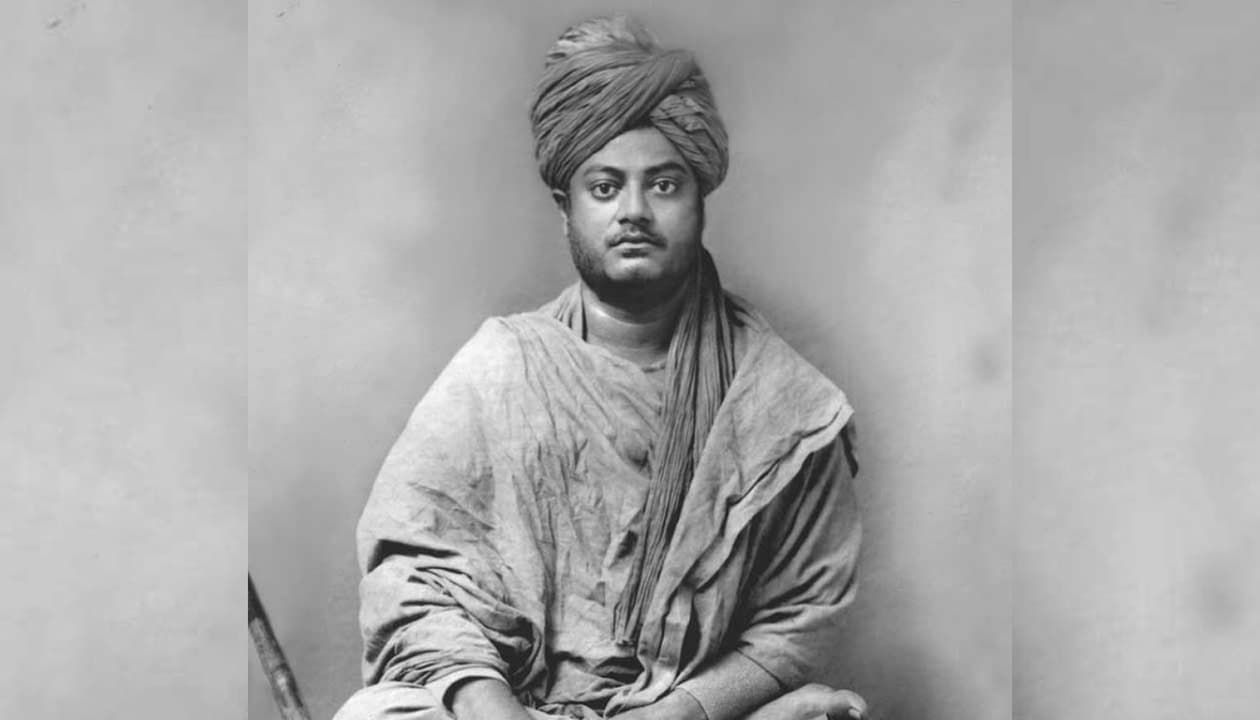
We love to talk of Swami Vivekananda as a youth icon. And I am asserting that were he to be here today, it is the youth that would resist him the most. When he returned from the United States, a huge procession greeted him, right at the port. But when he asked for just a hundred people who could be his soldiers, he was denied. Nobody wants to accept a Swami Vivekananda. He was resisted then, he would be resisted even today.
“Immersing myself in deep meditation.” What do you mean by meditation? And who is being immersed? Please tell me, beyond a trick of words, what is this? But you’ll never ask these questions, because some Baba-ji totally dominated your faculty to question with his get-up and demeanour. Real spirituality is not about something that sounds elevated or respectable. Whenever you are bombarded with high-sounding fluff, learn to ask this question; what exactly does that mean?
Be in love with your work and give it just everything that you have. The quality of the relationship must be so high that you are left choiceless in attending to it. Once you have given it all that you have, you will be left with very little time, space, or energy to bother about the result. “I gave everything that I had; now it is difficult to differentiate between defeat and victory.” Live so intensely that, in the end, you are left with no energy to be concerned with the result.
This breath-in, breath-out, stomach-in, tummy-out; this is not meditation. Even animals do not need training in breathing, and we are being taught how to breathe. What’s going on? You know, you should breathe mindfully. Why? Is there anything wrong with your breath? Meditation is nothing but an observation of the naked inner fact. That is meditation. To stand naked and honest in front of what is, that is meditation.
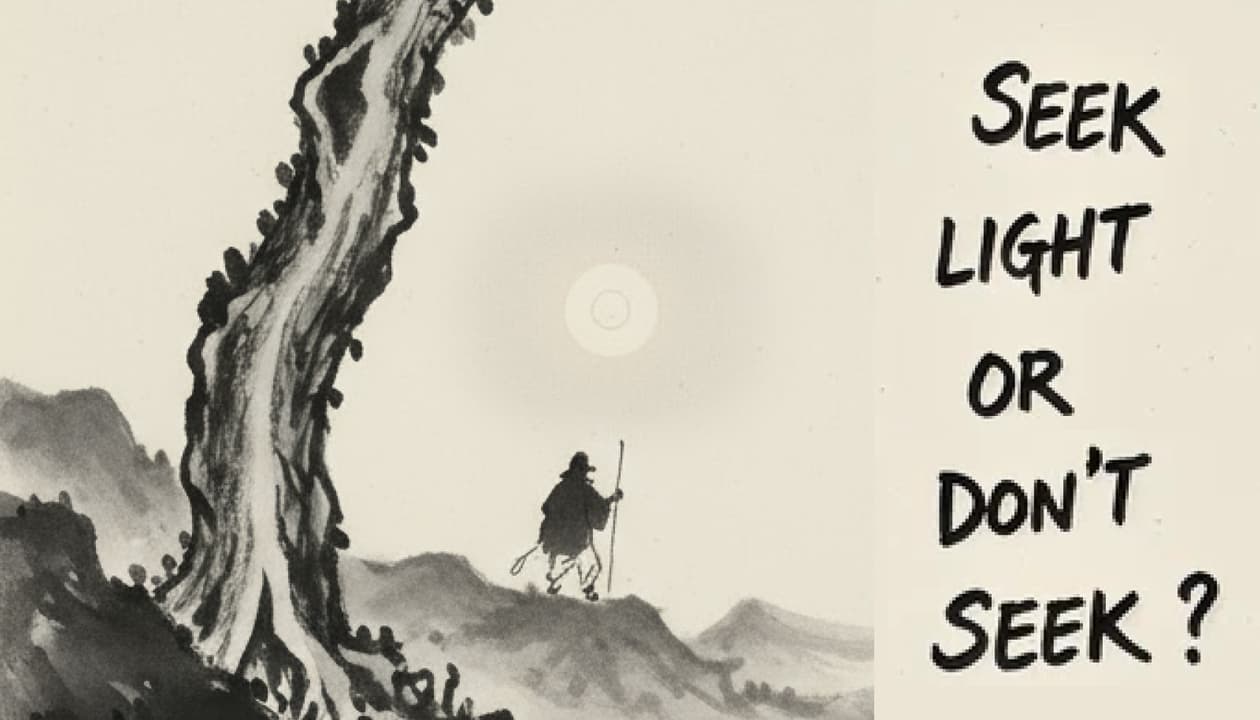
On one hand, there is a great danger that if you seek Light, you will seek the wrong kind of light; you will just seek darkness disguised as light. On the other hand, there is the equally dark option of not seeking at all. Between these two possibilities, I prefer the possibility of seeking Light, with all its associated dangers — that is still better than not seeking at all. Isn’t it better to die fighting in the battle than not fight at all?
The real problem is that you don’t ‘know’ the problem. Had you really known the problem, the problem would have very quickly faded away. Whenever you come across a problem, do not begin by saying that this is the problem and now I am going to solve it. First of all, drop all your pretensions about your understanding. You do not know anything, so you have to start from an absolute zero. You observe.
It is not really happiness that is to be found through self-knowledge. In fact, self-knowledge often is a danger to happiness. Self-knowledge dissolves both happiness and sadness, and you are left with nothing but a naked and silent joy. If you can see yourself clearly, without motivation, then the seeing itself is great fun.
The words of a wise man must be read with wisdom, with empathy. When J. Krishnamurti says, “Become deeply aware,” read it as ‘Unbecoming Unaware.’ There is nothing called becoming aware. ‘Awareness Is.’ Over the innate awareness, there is a cloud of assumed unawareness. You just have to see that there is no fact in your assertion that there exists unawareness. So, you unbecome unaware. You cannot become aware. Awareness is not something that you can achieve or become or reach. It is.
6
Acharya Prashant: That's why the rājasika mind is better than the tāmsika mind. The rājasika says, “I’m not alright. I need to do something to become better. I feel inferior. I feel incomplete. I need to rise. I need to achieve.” That’s the rājasika mind. The rājasika mind at least…
For change to happen, somebody has to be a change agent. But if that agent starts thinking, “I’m not exploited; I benefit from this discriminatory system too,” then who will demand change? My employer earns 11X from my intellectual labor, pays me X, and saves 10X. But that X enables me to run my household and fulfill my dreams. So, will I ever rise and rebel? The system bribes you into submission. The exploiter incentivizes the exploited to stay exploited.
Love, for the one who is at a low level of consciousness, is to aspire for a higher level. And love, for one sitting on the Himalayan peaks of consciousness, is to be compassionate towards those at lower levels — and, for their sake, if needed, lay down your life.
Don’t think of heaven and hell as the afterlife; both are here, right now. As the Niralamba Upanishad says: Right company is heaven; wrong company is hell. If you are someone who loves to be with people who will take you towards truth, joy, and simplicity, you are already in heaven. And if you surround yourself with people who pull down your consciousness, then verily, you are—right now—in hell.
1
You look at a Swami Vivekanand and then you want the others to be like that. But a Swami Vivekanand is not normal. He's an aberration. He's a great exception. Just by looking at him, if you start assuming that all young human beings by default should be like him, then you are missing the fact of what it means to be a human being.
Buddha had some core traits which remain the same today. A sharp mind and a certain curiosity in knowing the depths of life, not feeling that ‘I already know.’ Deep compassion, detachment, and an unending desire to reach the ultimate knowledge, not lazily concluding at one point. He shared his knowledge with the world. A practical man — raised an organization that became the dominant religion of the land. Today, in an age where religion has distorted, we need hundreds of Buddhas.
Those who work towards 'an end' find that they are defeated both in the work and in achieving 'the end' because even if they somehow manage to reach that end, they find that it's not really what they wanted. So, they proceed to the next destination; this is a vicious cycle. On the other hand, those who work because the work itself is a celebration, they win doubly because the work itself is the end, and they celebrate all the way to success.
If you know that a thought is not beneficial to you, you won't support it, and it cannot survive. So, if a bad thought continues in your mind, it means you're only calling it a "bad thought," yet deep down, you support it. Deep down, you think it is a ‘good thought.’ Had you really known it was ‘bad', it would have gone. But our minds are full of so-called bad thoughts. What does that mean? We call them ‘bad', but we do not truly consider them bad. We enjoy them.
The Gita is useful because its setting is extremely relatable. Just like us, Arjuna does not know himself—he's a victim of multiple identities and all kinds of conditioning. Therefore, the Gita is about letting Arjuna know who he is, and this illumination enables him to do what he must. So, first of all, see that you are Arjuna. Then, step by step, verse by verse, there will be some resolution.
All words have existential connotations to the ego. That existential connotation is the meaning. If that connotation is removed, words will do nothing. All words carry something that impinges on your very existence. If you can clear the word of that, then words will remain just words, and no words will have the power to shake you up or disturb you.
By all means, have goals. But the goal should not be more important than the game itself. If there is any meaning, the meaning is in the game. The goal might be achieved in the process of the game—fine. But the meaning does not lie in the goal. The meaning lies in the game. Play with abandon. You’ll forget to count the number of goals. Somebody will have to draw your attention towards the scoreboard. "I got so much into the game, I lost count of goals." This is not some impractical, utopian fiction. This is what the greats have lived by. This is the very substance of greatness.
So, in your day-to-day life, practically, obviously, you will have these goals—you have to go to your workplace, you have to go to this thing, that thing—fine, those goals are there. But you have to remember that, ultimately, going to your workplace yields you nothing—maybe financial or physical sustenance, that's all. So the illusion of meaning has to be destroyed. The ego will otherwise keep looking for meaning where there can be no meaning—and in that lies a lot of suffering.
A worthy motive would always have something to do with your current condition. It would either be something that gives you joy, or it would be something that gives you liberation. And even these two, after a point, you will see, are identical. It would either be something that gives you unconditional joy—purposeless joy. It is something you can do without getting any reward. If there is something that attracts you this way, then it's fit to be your goal.
No, no, you don't have to be empty of anything. You just have to be empty of the choice to use anything in your defense. You are born with ammunition; you don't have to keep the ammunition aside. Let the gun be there with you—just don't fire at the teacher. That's all that Shri Krishna is saying. You don't have to empty the gun. Keep it loaded; it's all right.
Meditation is the submergence of the ego in its essential nature. It is at the root of all self-knowledge and wisdom. However, most often, what we call meditation is just escapism—using some ‘method of meditation’ to superficially soothe our restlessness or gain temporary and deceptive relief from stress.
If you choose a goal that's not worthy, you'll try hard to concentrate on it, but you'll invariably get distracted. That's not because the distractions are powerful; it's because your goal is powerless. If your goal offers you unconditional joy or leads to your freedom and liberation, you will never be distracted.
It’s unfortunate that today, methods of meditation are being mistaken for meditation itself. Meditation is what makes us human—it must be continuous, 24x7. No method can be continuous or 24x7. Meditation is a way of life, a beautiful love affair. Just as the body cannot wait to breathe, consciousness cannot wait to meditate—it’s a madness of love, not dry, ritualistic, or time-bound.
I have been insisting continuously that consciousness, real consciousness is a choice. In a process, there is no choice. The fellow in front of you, how much of a choice does he have? If he has no choice, why get angry? And if he has choice, then the mark of having choice is that you will not choose wrongly. And then you will not get a reason to be angry at him. Had he really had a choice, he would have chosen rightly. And had chosen rightly, you would have found no reason to get mad at him.
Thought is a servant; thought is a shadow. The shadow cannot betray its owner, its master. So, what changes is the nature of the ego itself, not the nature of thought. So when we say, for example, selfless thought, that primarily implies that the ego has improved, loosely put. Since I have become better, so have my thoughts. Now, I cannot remain the same and say my thoughts have become selfless, and if I do that, then I'm being pretentious and just fooling myself.