Acharya Prashant (AP): That which you call “Vipassana” today, is a very recent phenomenon. They claim that it comes from the Buddha, actually, it is not. The stream flowing from Buddha got extinct around the 8th or 10th century AD. This modern Vipassana came up in Burma, just around a…
Questioner: Pranaam Acharya Ji!, You have told that individual Liberation is not possible. Either we can go together, or nobody can go. So we have to help others to cross-over.
Acharya Prashant: You are in front of food and you see how your body wants to lunge towards food. And do you know why the body wants to lunge towards food? Especially, let’s say, sweetmeats or high-calorie items? Why? – Because evolution taught it to, because the survival of the
Acharya Prashant: Love and responsibility have to be reasonless. They have to be mad. One has to be crazy enough to put in everything for a seemingly trivial creature.
Question: It is said that the sage doesn’t get angry for long time. Can you talk about this?
Speaker: Do you bother about how other people love? If you have a real relationship with anybody; with a child, with a dog, with a woman, do you bother about how other
Questioner (Q): Yes, so just again we haven't been able to talk about this conversation prior to this, but I’m sure you got a sense of it. What we like to do in this conversation is keep it very transparent and conversational. But what we like to believe is different…
Many of us interrupt, rush to make our point, or change the topic when a conversation comes too close. We call it a lack of patience or discipline. But impatience in a conversation is often fear: when what we hold within is borrowed belief, every question could shatter it. The same confusion makes us take our instincts and feelings as ourselves, though they are only the body’s chemistry. If we looked honestly at what we hold, would a question still feel like an attack?
Many of us promise our parents high marks, and when the result falls short, the guilt can feel heavier than the exam itself. But no one controls results; they depend on far too many things outside us. What is in our hands is our intent, our effort and our honesty with what we study. The Bhagavad Gita says the same: our right is to action alone, never to its fruit. What if the only promise we made was to study honestly and with love?
Spirituality does not replace the fear of ghosts with belief in God. It asks us to question the mind that creates both fear and belief. Ghosts, gods, and stories can all become projections of imagination. The spiritual path begins by dropping assumptions, investigating “Who am I?” and understanding the source of suffering. With attention, right knowledge, and self-inquiry, fear loses its power and one becomes inwardly free.
Social media has not destroyed attention spans; it has exposed our dissatisfaction with what we consume. The real problem is repeatedly returning to content we already know is empty instead of respecting our own intelligence. Books are only one medium for knowledge, not knowledge itself. What truly matters is reclaiming attention from distractions, demolishing the borrowed mental structures imposed by society, and creating an inner space where meaningful learning, reflection, and self-knowledge can flourish.
The mind is not an independent entity but a structure built and maintained by the ego through thoughts, memories, beliefs, and experiences. Most spiritual practices fail when they become distractions from examining the ego itself. Experiences, emotions, and preferences are often conditioned and unreliable. Real inquiry begins with observing the experiencer, admitting facts without distortion, and applying the same rigor to inner life that science applies to the external world.
You look at Iran, at revolutions, and ask: can systems really bring freedom? Revolutions keep replacing one system with another, yet the chaos remains. The real question is rarely asked: what within us creates these systems? Real freedom is not political or social; it is inward. Without inner change, every revolution only rotates power, never resolves suffering.
Love, for the one who is at a low level of consciousness, is to aspire for a higher level. And love, for one sitting on the Himalayan peaks of consciousness, is to be compassionate towards those at lower levels — and, for their sake, if needed, lay down your life.
Buddha had some core traits which remain the same today. A sharp mind and a certain curiosity in knowing the depths of life, not feeling that ‘I already know.’ Deep compassion, detachment, and an unending desire to reach the ultimate knowledge, not lazily concluding at one point. He shared his knowledge with the world. A practical man — raised an organization that became the dominant religion of the land. Today, in an age where religion has distorted, we need hundreds of Buddhas.
Realization is extremely powerful. You cannot realize and not act. It is impossible. You cannot realize and not act. Action follows realization. So if you come and say, “I realize, I understand but I cannot act,” then you are mistaken; you actually do not realize at all! The action after realization is not time-bound; it does not even have a time lag. It is instantaneous and spontaneous.
1
It indeed does help to feel like a victim. It does not help you, but it helps that within you which is a product of victimization. Because if you are a victim, then you are entitled to certain rights. All victims get entitled to special rights.
Operate from a…
Excerpts from Articles
Stuck Between Job Security and Your Real Passion?
Struggling to choose between a secure job and the path you actually feel drawn to? This isn't really a question about careers. It's about why other people's opinions have so much power over you in the first place. Real clarity doesn't come from finding the 'right' choice. It comes from honestly looking at your own fear, again and again, until it stops running the decision for you.
ज्योतिष कितना सच है? कुंडली, ग्रह-नक्षत्र: इनका क्या अर्थ है?
वेदांत को केवल इसलिए सही या श्रेष्ठ नहीं माना जा सकता कि वह किसी विशेष परंपरा से आता है। विज्ञान जहाँ भौतिक जगत की वस्तुनिष्ठ जाँच करता है, वहीं अद्वैत वेदांत सीधे मनुष्य के ‘मैं’, उसके दुख, बंधन और मुक्ति की पड़ताल करता है। इसकी कसौटी वैज्ञानिक प्रमाण नहीं, बल्कि अपने जीवन में इसकी सच्चाई को देख पाना है। किसी दर्शन को मान लेना नहीं, बल्कि उससे स्वयं को मुक्त करना ही उसका वास्तविक उद्देश्य है।
कई तरह के डर—अकेले पड़ने, छवि खोने या छोटा समझे जाने—की जड़ अक्सर अतीत में बनी पहचान और कहानियों में होती है। शरीर की हाइट जैसी चीज़ों को समस्या मानकर उनसे जूझने के बजाय उनकी अप्रासंगिकता को समझकर आगे बढ़ना चाहिए। अतीत को दबाने से मुक्ति नहीं मिलती; उसके करीब जाकर अपनी स्मृतियों, धारणाओं और पुराने पैटर्न को निष्पक्षता से देखना ज़रूरी है।
Justice Without Boundaries: Why Compassion Cannot Stop at Species
Oppression should not see caste, gender, creed or colour, and it should not see species either. The moral threshold is sentience, not intelligence. An animal feels pain as fully as a human does, whether or not it can explain its suffering.
Climate change is more than an environmental crisis—it is a crisis of human choices. Our patterns of consumption, consumerism and endless pursuit of more are putting increasing pressure on the planet. But meaningful change does not necessarily begin with new technology or stricter policies. It begins with a deeper question: what are we willing to change within ourselves?
Acharya Prashant: One hallmark, one unmistakable quality of right action would be that it would require all your guts. It is only a false action that you can comfortably undertake. Falseness is never troublesome; Truth always is. Whenever you would be doing something that would be real, you would know…
Acharya Ji, I can’t even help the people close to me, they are caught up either in routine work or…
1
Acharya Prashant: I know it's a fad currently, “the in thing” to say, be your own light, don’t depend on anyone, decide for yourself, whatever. It's a very ignorant thing to say with all due respect to the Buddha.
Such advice is meant only for very selected disciples. And even…
…
1
Acharya Prashant: The whole issue is because you have left the jungle and yet not reached where you set out to reach; you are stuck in between.
Man is in a very precarious position. Animals are well settled; the free ones, the Buddhas are also well settled. Man is unsettled.…
I don’t know whether you have heard this story from the life of the Buddha. One man was carrying a goat
…
…
Share
Sansari
(worldly man), is full of thoughts about obtaining power, prestige, comforts, money and such things. And often the mind of the so called spiritual seeker is filled with thoughts of obtaining liberation.
Right?
The concept of liberation is such that it…
4
प्रश्नकर्ता: प्रणाम आचार्य जी, मेरा प्रश्न है कि भगवान महावीर आत्मा को मानते हैं और भगवान बुद्ध आत्मा को अस्वीकार करते हैं। एक आत्मा को सत्य बोलते हैं और एक असत्य बताते हैं तो इन दोनों के बीच में अंतर क्या है?
आचार्य: जब कोई बात हमको बताई जाती है…
1
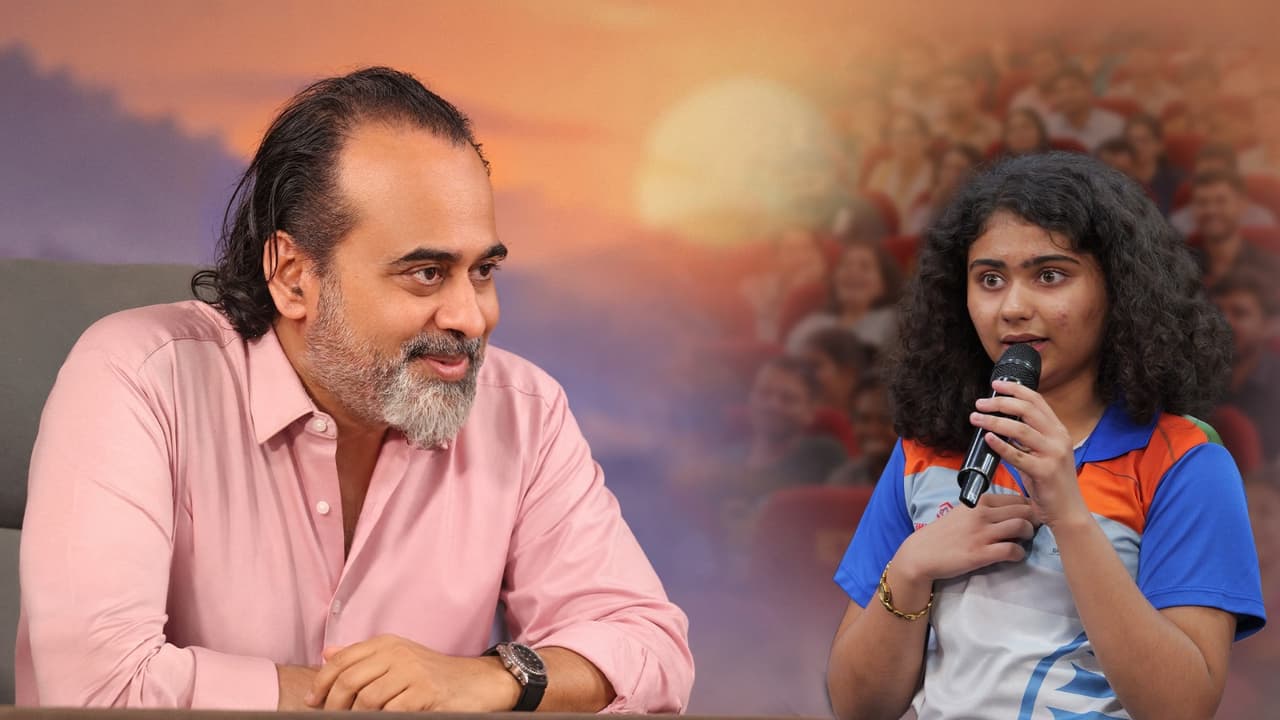
A young athlete says she knows she should not be attached to winning, yet she is, because her coach, family and country are invested in it. Wanting to win on the court is fine; that is what a contest is for. But we never know who the next opponent will be, and the one opponent always present is ourselves. She also fears that starting at 14 was too late. The past is fixed, so what is left is to play the cards we are dealt. Where does our real contest lie?
1
We often defend a bad choice by pointing to a worse one: stay dishonest or starve, keep the wrong grip or stop playing. But the real trouble is not the option we picked. It is the option we never let ourselves see. Action does not need greed or attachment to find its energy. The third way begins by rejecting both false choices, without knowing what comes next. Which of our everyday choices are really false dilemmas?
5
Struggling to choose between a secure job and the path you actually feel drawn to? This isn't really a question about careers. It's about why other people's opinions have so much power over you in the first place. Real clarity doesn't come from finding the 'right' choice. It comes from honestly looking at your own fear, again and again, until it stops running the decision for you.
कई तरह के डर—अकेले पड़ने, छवि खोने या छोटा समझे जाने—की जड़ अक्सर अतीत में बनी पहचान और कहानियों में होती है। शरीर की हाइट जैसी चीज़ों को समस्या मानकर उनसे जूझने के बजाय उनकी अप्रासंगिकता को समझकर आगे बढ़ना चाहिए। अतीत को दबाने से मुक्ति नहीं मिलती; उसके करीब जाकर अपनी स्मृतियों, धारणाओं और पुराने पैटर्न को निष्पक्षता से देखना ज़रूरी है।
A true relationship is not built on need, possession, or emotional dependence, but on a shared commitment to Truth and inner growth. A worthy companion reflects your reality like a mirror rather than performing a role to please you. Real love is effortless, rooted in one's nature, not expectations. When your highest commitment is to excellence and Truth, relationships become a natural outcome—not the purpose of life itself.
6
Sixty million followers do not necessarily indicate a transformation in consciousness. Large numbers may reflect persistent outreach rather than deep commitment. Truth is often avoided not through opposition but through indifference, convenience, and self-deception. Real change requires sustained effort, inner honesty, testing one's understanding, and the courage to face uncomfortable truths instead of seeking comfort, validation, or easy inspiration.
Fear, social conditioning, and painful memories often shape how people live and make choices. True growth begins by questioning inherited beliefs, refusing to remain trapped by past wounds, and acting from understanding rather than conformity. What appears to be sacrifice is often just the abandonment of conditioned habits. Freedom comes not from external systems, but from the courage to see clearly, learn, and move beyond fear.
3
The debate around nudity and movements like “Free the Nipple” miss a deeper issue: true freedom is not about clothing, but freedom from psychological conditioning and body-based identity. Clothes themselves neither oppress nor liberate. A truly free society is one where the body becomes ordinary and irrelevant, not a source of obsession, shame, validation, or social control.
Our mood is always dependent on others and situations. Results have not been up to your expectations. So now you require a morale booster, some motivating speaker. The moment that fellow is gone, your energy also goes away. But there is another way of living. Deep within myself, I find a point that no external situation can touch. Whatever happens, happens on the surface. That will remain stable, uninvolved, a non-participant. Then you are really free.
The world is a crooked place. You will have to be zig-zag, tangential; that is the nature of the world. Realization of crookedness is the only straight thing possible. If you want to become straight, let yourself be crooked. Once you know that the straight One, the innocent One, is sitting in your heart, then you no more feel the need to display a fake straightness. Now you can get rid of all morality. Whatever you are doing is coming out of your love and compassion or just enjoyment.
8
Often, in the name of financial pressure, what we are really kneeling down to is something else. But because that something else is not nice enough to be named, what we quote is financial pressure. Nothing is ever forced in a tangible way. The way is kept gentle in appearance. But there is something else at work inwardly. What is that thing? That is what you have to uncover. You have to be honest towards yourself, very honest.
“Immersing myself in deep meditation.” What do you mean by meditation? And who is being immersed? Please tell me, beyond a trick of words, what is this? But you’ll never ask these questions, because some Baba-ji totally dominated your faculty to question with his get-up and demeanour. Real spirituality is not about something that sounds elevated or respectable. Whenever you are bombarded with high-sounding fluff, learn to ask this question; what exactly does that mean?
This breath-in, breath-out, stomach-in, tummy-out; this is not meditation. Even animals do not need training in breathing, and we are being taught how to breathe. What’s going on? You know, you should breathe mindfully. Why? Is there anything wrong with your breath? Meditation is nothing but an observation of the naked inner fact. That is meditation. To stand naked and honest in front of what is, that is meditation.
11
The other must exist in your life, and vice versa, only for the sake of internal elevation, to make you into a better person. Don't you see the impact the other one is having on your life? Seeing is the key. What does seeing mean? Seeing implies understanding. See and ask yourself: What is the impact upon me? And if you see that, you'll just push it aside. It will be spontaneous. You won't even require to think, because now you have seen.
1
Realization is your essential nature, and that nature means nothing. That nature is neither solid nor liquid. That nature is not hot nor cold. That nature is not beautiful, not ugly. That nature is not expansive, not limited.
8
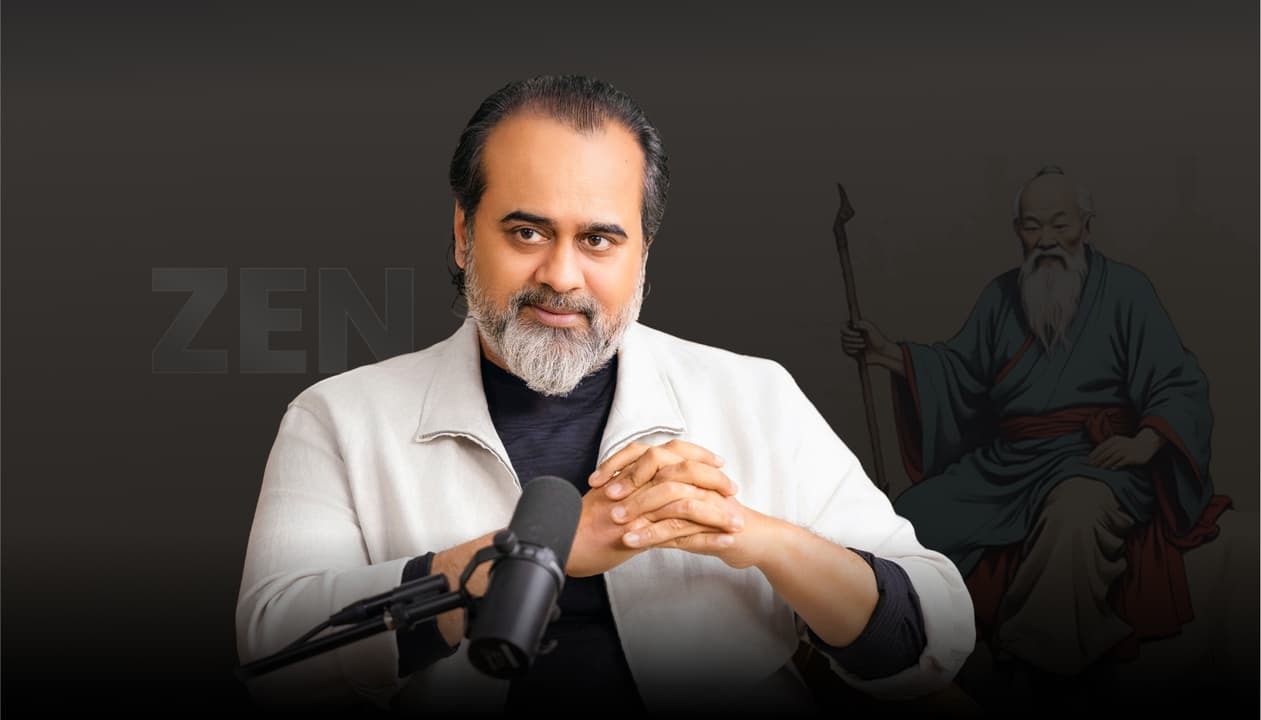
In Zen, the student asks a question to the master, and the reply brings sudden enlightenment. It means something had long cluttered the mind, and in one deft stroke, like a genius, the master cuts the relationship between the ego and its belief. What Vedanta does through persuasive argument, the koan does through an abrupt shock.
A dirty plate is a dirty mind. It is carrying traces. It is carrying stuff from somewhere else. Go clean the plate. If your plate is clean, if your mind is clean, what is left to be done? But cleaning the mind, making it lighter, comes like a threat. “Oh! Something in me is getting reduced. I am under attack. My notions are getting shaken up.” That’s what Zen is all about, a total shake-up! Such a shake-up that clears away all the rubbish.
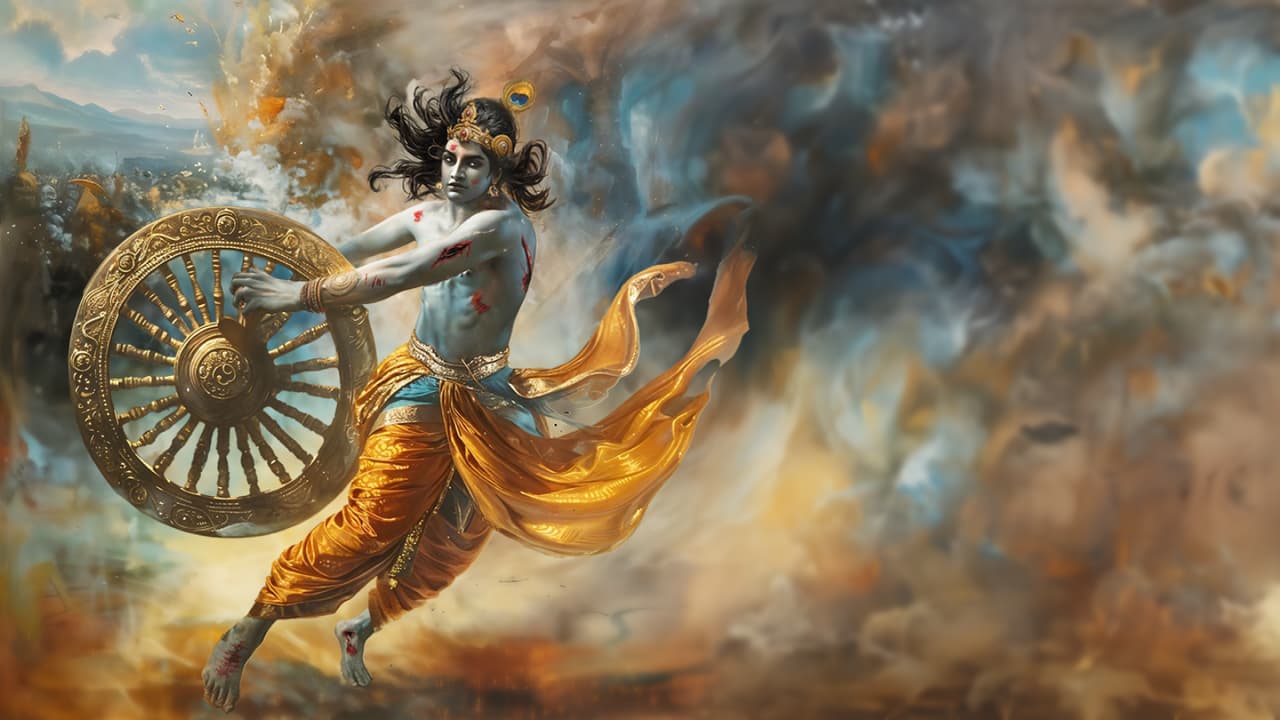
We have images of peace. When you look at the image of Shri Krishna rushing towards Bhishma to attack him personally, going beyond his brief as a charioteer, you don’t think that this is peace. You feel as if Shri Krishna is being violent. The expression of peace often looks very much like violence. Truth, Peace, Love, Freedom — these must never be searched in ‘actions’. Peace and Truth are no different. Peace is about the right action.
6
Acharya Prashant: That's why the rājasika mind is better than the tāmsika mind. The rājasika says, “I’m not alright. I need to do something to become better. I feel inferior. I feel incomplete. I need to rise. I need to achieve.” That’s the rājasika mind. The rājasika mind at least…
For change to happen, somebody has to be a change agent. But if that agent starts thinking, “I’m not exploited; I benefit from this discriminatory system too,” then who will demand change? My employer earns 11X from my intellectual labor, pays me X, and saves 10X. But that X enables me to run my household and fulfill my dreams. So, will I ever rise and rebel? The system bribes you into submission. The exploiter incentivizes the exploited to stay exploited.
1
It was Guru Nanak who said, "You may try as hard as you can, but you will never get to know the mind of the liberated one." That's from the Adi Granth. You keep trying. You keep speculating. And the ego has a serious urge to know what is going on in the mind of the Buddha. But you'll never know what's there in the mind of the Buddha. Being who you are, how will you know the mind of the Buddha?
2
A surgeon’s table is never a beautiful sight to look at. Poets will find nothing there. There are scissors and instruments, and iron and blood and flesh cut apart. There is no happiness there. There is nothing pleasant there. Seekers of pleasantness will be disappointed looking at a surgeon’s table. But that table saves lives.
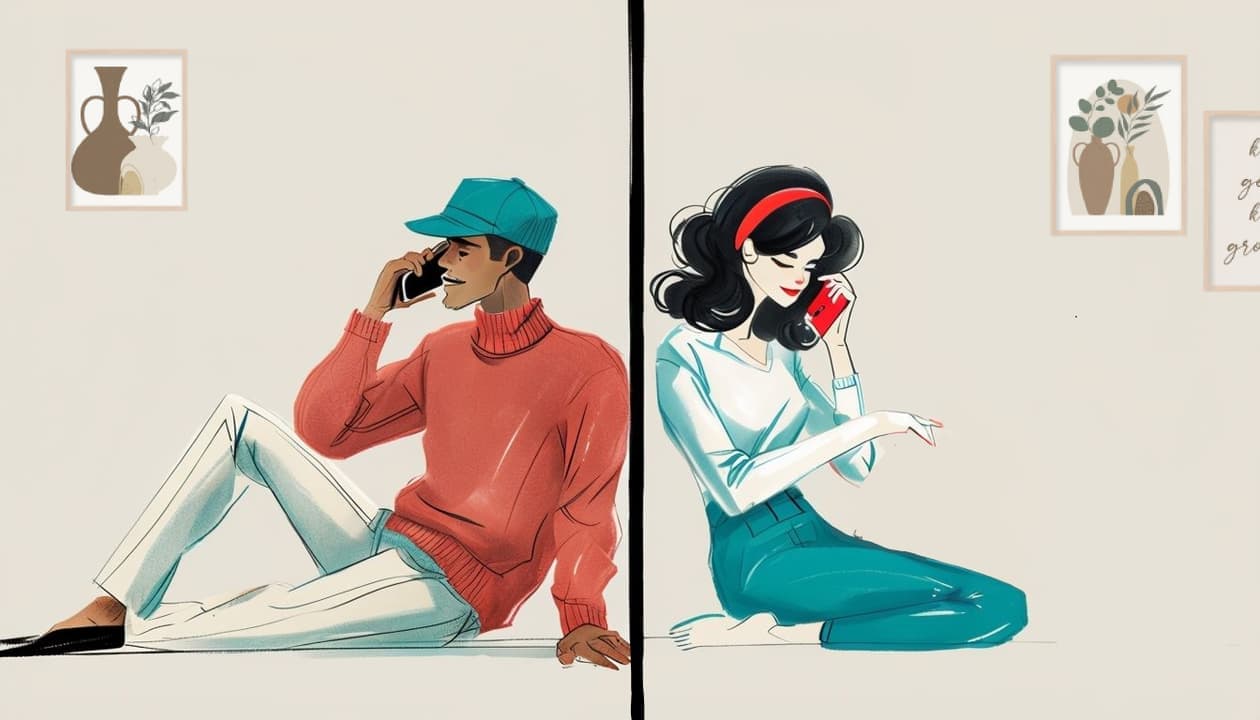
Our culture has turned attachment into value, very proximate to love. However, attachment is poison and has nothing to do with love. We don’t feel ashamed admitting that we are attached, as if something beautiful is happening. If you are with the wrong one, and not even prepared to see that you are with the wrong one — that’s attachment. And you can never be attached to the Right One; there is only dissolution.
It has been a tradition in India that when you donate, you bow down to the one you are donating to, because he has done you a favour by accepting your donation. Being what we are, it is hardly possible for us to do anything for others. Kindly get over this notion that we live for others. That is the privilege granted only to a Buddha. Only in a state of inner fulfilment can one really do something for others.
The Gita has nothing to do with sāttvikatā. Even sāttvikatā is to be rejected as destiny, while even rājasikatā is to be embraced if it serves as a means to freedom. Everything and anything is fine if it is usable in the context of liberation. Even sattva can become an object of consumption — don’t we see learned people whose knowledge becomes their identity? The Gita is about getting rid of all traps — be it sattva, rajas, tamas, or anything.
Behind all FOMO is the fear of missing out on what life has the potential to deliver to each of us. Since we don't know ourselves fully enough, there is a general kind of anxiety — "I'm missing out on something." Let's identify what we are really missing. And the process is of negation and rejection. Reject what is not needed. If the inner rubbish can be cleaned up, you realize — that's all.
Acharya Prashant (AP): Great things are happening on the screen, don't get so excited, it's just the screen. Irrespective of what happens on the screen, it's not real. That's how you have to look at things. Great silence on the screen. Is it silence? No, it is the silence of…
The truth that we all inwardly love without even knowing we are in love. That truth is independent of time. It is independent of everything that's temporal, geographical, spatial, cultural. Spirituality has nothing to do with the clothes that you choose to wear, the language you speak, the way you behave, whether you address someone as this or that. facing a particular direction while eating or sleeping. No.
Attachment is just a promise. A lack of fulfilment. It is a substitute for love because the real thing is not available. If you find yourself attached, it means there is a desire for love; it means there is a call for love. Know that a fake is presenting itself as a substitute for the real thing.