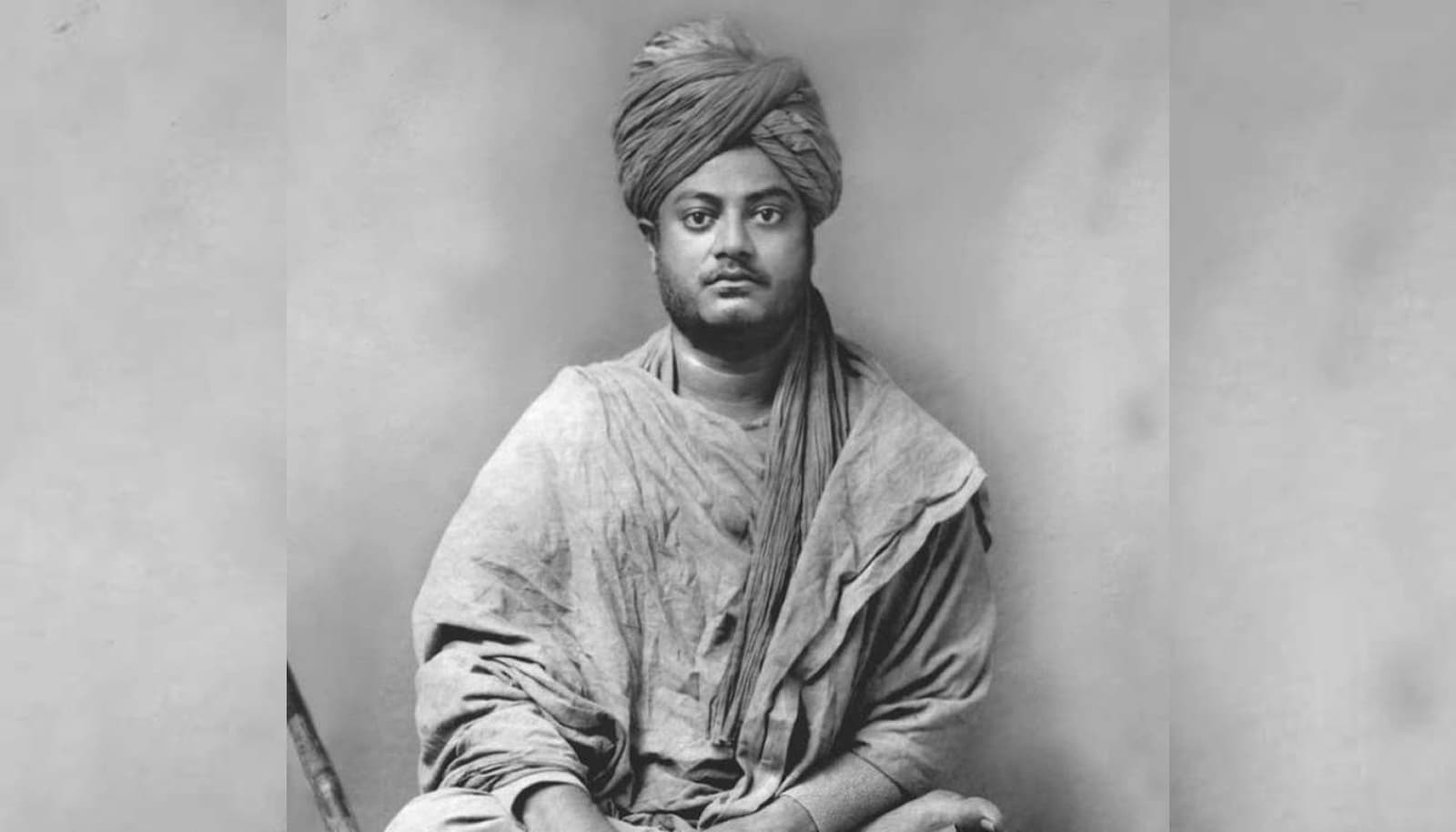
If Vivekanand Comes Alive Today

Acharya Prashant

36 min
1.2k reads
If Vivekanand Comes Alive Today
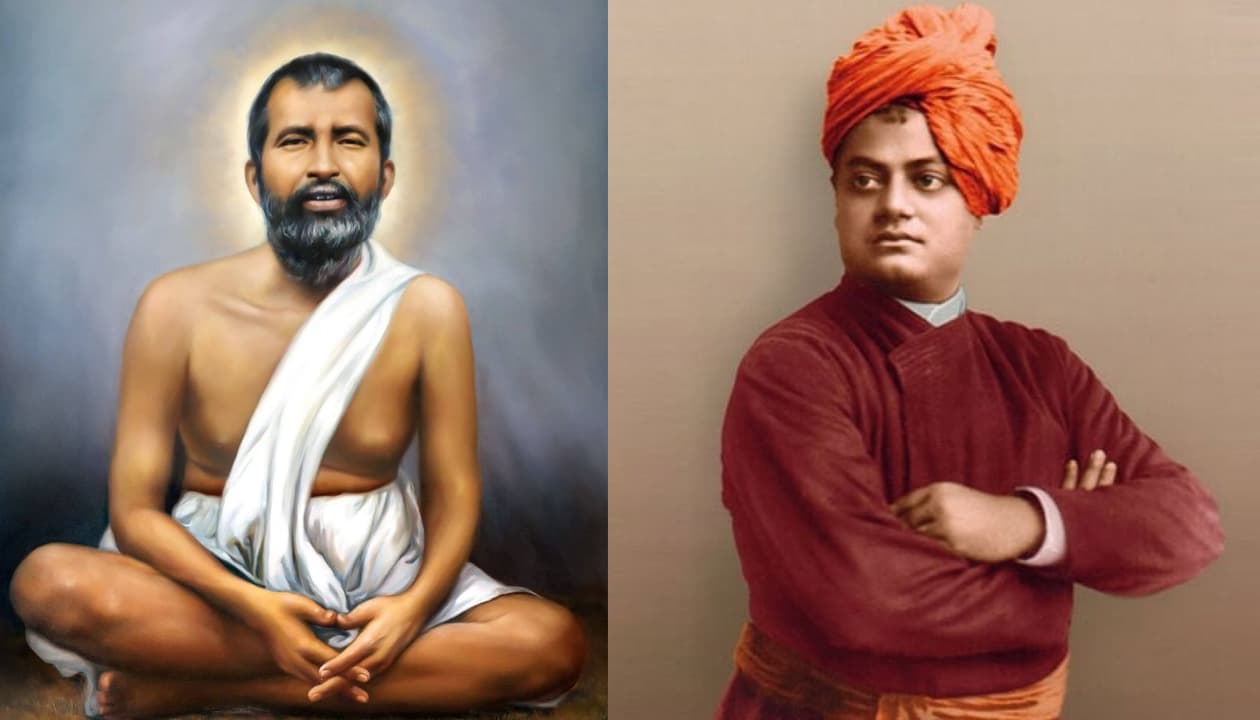
We love to talk of Swami Vivekananda as a youth icon. And I am asserting that were he to be here today, it is the youth that would resist him the most. When he returned from the United States, a huge procession greeted him, right at the port. But when he asked for just a hundred people who could be his soldiers, he was denied. Nobody wants to accept a Swami Vivekananda. He was resisted then, he would be resisted even today. This summary has been created by volunteers of the PrashantAdvait Foundation

Questioner: Sir, what do you think is a major difference in youth engagement from Swami Vivekananda's time to today? Is it easier now, or is it more difficult, or are the challenges the same? I would request you to please throw some light on this.

Acharya Prashant: You see, the youth is always in a peculiar condition. And the peculiar condition is that the body, in a short span of time; let’s say, six to seven years, attains almost a sudden maturity. If you consider the lifespan of a human being to be seventy-five to eighty years on an average, six or seven years is almost sudden, and you are a very changed biological being at eighteen compared to what you were at twelve. Right? It just happens, and you have attained biological maturity, which means you can do a lot of things that adults can. Also, you have energy comparable to other, more grown-up adults; let’s say, those who are thirty to thirty-five years old.

And all that has just happened when you were passing through your formal schooling and college or university education. Suddenly, you find yourself a grown-up adult. Now, life has not yet given you too many years to gather experience from, but it has given you the energy to shake things up, the power to procreate, and the responsibility to build systems, engage with systems, earn for yourself, all these things suddenly come to you.

You think of the two important decisions that people make in their lives, which is choosing their education and career, that’s the first part of the decisions. And the second one being engaging with another human being of the other gender and possibly marrying. Both these things get done right when you are quite young and you don’t really know the world too much. So, that’s the condition of the youth, having a lot of potential, having a lot of energy, but not having enough understanding.

Your schooling, your college education, during which you are growing up, does not cater to your inner development needs; that is taken as a given. It is assumed that the person is growing up in a physical way; therefore, the person is also gaining inner maturity parallelly, which is a huge assumption, an erroneous assumption, that does not just happen. So, what happens is that all this energy that the youth has is not driven by the understanding of the youth, but by the random forces of social, cultural, and biological conditioning that operate upon you.

That was the situation a hundred years back, hundred thirty years back, if you are talking of Swami Vivekananda’s time. And that is also the condition today, and that will be the condition forever, because that’s how biology shapes up the youth. Puberty used to happen at a certain age in Vivekananda’s time, and it happens at almost the same age even today. So, in that respect, the youth was vulnerable then, and the youth is equally vulnerable today.

In the blink of an eye, the kid who used to play at home is interested in the responsibility to earn, make life decisions, choose a career, choose a partner, and all that happens just so quickly. Has the youth been equipped decently and responsibly to take all those decisions? No, that does not happen. So, instead of ‘understanding’, what we have is ‘conditioning’.

What was the conditioning operating at the time of Swami Vivekananda? The conditioning was twofold. Biologically, in the physical sense, the youth of that time was not quite strong. And mentally, the youth had been conditioned to believe that life is all about weakness and misery and defeat and subjugation. The genius of that monk lies in challenging both these conditionings.

He said, “First of all, you need to be physically strong.” If you are little and weak and sick all the time, then there is not much that life can offer you.

He said that strength must be the first quality, and weakness must be considered as the foremost problem, even the first sin.

Weakness must be considered extremely abhorrent. Any feeling of helplessness or subjugation has to be kept aside. So, he said those things, but if you see what he was challenging, he was really challenging weakness; he was challenging conditioning. It’s just that in those times, conditioning expressed itself as weakness.

If you look at the average height of a twenty-year-old today; you take a sample of a hundred to two hundred youngsters, all twenty years old, and you look at their average height and average weight, you will find the average height to be a couple of inches more than the height that was there in 1890 or in the year 1900, Swamiji’s time.

Similarly, weight, you all have gained in weight; the youth of that time was quite emaciated. And if you look at girls especially, the difference in height and weight might be even more significant. Now, I am saying this from my hunch; you can corroborate the data from wherever it is available, if at all it is available. I think the data will validate what I am saying.

So, there was a lot of weakness at that time, and poverty and subjugation. India had simply been crushed and trampled over. And there was so much illiteracy, and the result was that the youth was in a state of complete lack of self-assuredness. Instead, what the youth had come to believe was that misery, defeat, weakness, surrender, meekness is the only and inevitable way of life; just bow down; bow down to life; bow down to oppressors; bow down to poverty; bow down to ignorance, lack of knowledge; bow down to all the random forces of situations that hit a human being.

Swamiji said, “No, no, no, that’s not the Truth; that’s simply the way you are conditioned.” So, it is important to remember that the central work of Vivekananda was not really against just weakness, ignorance, or whatever; it was against conditioning. It’s just that conditioning expressed itself, at that time, as weakness and illiteracy and helplessness and ignorance.

Now, you tell me, as the youth of today, what does conditioning express itself as today? Because had Swamiji been alive today, he would not have conveyed the same message he did a century and a quarter ago. The message would have changed, because the conditions have changed.

See, the work of a spiritual revolutionary is to bring the Truth to you. And what is the Truth? Truth is not a concept; Truth is not a statement; Truth is not a principle to live by. Truth lies simply in getting rid of one’s inner patterns. That which you have believed yourself to be; drop that, and what remains is the Truth. Whatever you have become by chance, by ignorance, drop that, and what remains is the Truth.

So, had he been around today, how would he have conveyed the message of Truth? What has the youth of today become? You see, his work stands in challenging what we have erroneously, falsely become.

The year 1890-1900 was a time when he was the most active. What had the youth become then? At that point, what was the condition of the youth? How had the youth of that time taken shape? What was the condition? What were they thinking? What did they look like? What was their belief system? Think of that. What were they saying?

Let's say you meet someone from that time, twenty years old or twenty five. And what is that person saying? First of all, how does he look? Famished and skinny. Is he well-read? What does he believe in? Superstition. When he looks at a white man, how does he feel? Inferior and afraid. Right? And what else, how does he look at other castes? Let’s say he belongs to one of the so-called upper castes; how does he look at the so-called lower castes?

Now, this fellow himself is in tatters, but he is looking at a fellow human being, a fellow Indian, as untouchable, probably. If he is a male, how does he look at women? Lower, inferior beings. Right? And he is conditioned to believe all of that. Probably he is a flat-earther, quite probable. Right? Does he know where America is? Quite possible that he also looks at other communities with a lot of distaste. Right?

How much geography or history or biology does he know? Not much. The literacy rates had plummeted to almost single-digit levels in most parts of the country by that time.

Such was the devastation; such was the havoc wreaked upon the education system, especially after 1857. People were not getting to learn, to read, to write. The existing system of education had been devastated, and no mass-based alternative had been created, so people were largely illiterate. So, that was the situation.

And when you look at him today, what do you say? “Oh! He is so blinded by his beliefs.” You know, when you look at him, you will say, “A poor fellow.” Inwardly, that fellow is very, very confident. He was so confident that, in some way, he actually managed to obstruct Swami Vivekananda.

One of the reasons Swamiji died so early was because he faced such stiff resistance, not from the Europeans or Americans, but from the Indian population itself. He did the best he could. And that was not really the age of technology. A lot of travel that he undertook was quite a burden on the body; very painstakingly he travelled, sometimes on foot. He did not take care of his food, his health, his various diseases, and before he could be forty, he was gone.

Think, who troubled him so much that he had to depart? And he was a well-built man, strong. Pretty strongly built. And it’s not as if he miraculously just chose to disappear or depart at a young age. He was brought down by ill health and disease. Who troubled him so much? Think of it.

And he was a strong man and a well-read man. I mean, “well-read” is an understatement; he is a champion author. And there is somebody who just pulverizes him to the ground. Who is this? That famished, ill-read, ill-bred, ill-fed fellow, he defeated Swamiji, not in the final count, obviously, but at least temporarily.

He kept on saying, “If I just get a hundred suitable young people, I’ll change the face of India.” He didn’t get that many. It’s debatable whether he even got ten of them.

You do not need to kill a man always directly. He’s asking for something; he’s betting his life on something. You deprive him of that which he wants so desperately, that which he loves with all his heart, he won’t be able to live. Do you see this? It is just that we never love anything that heartfully, so we do not know what a real lover goes through. But if you ever want something really worthy, something really beautiful, with all your life, with all your energy, and you don’t get it, you just don’t feel like living.

The youth of that time deprived Swami Vivekananda of what he wanted from them. And how did the youth deprive him? By blindly believing in whatever they believed in, whatever their concepts were. Today, you look at that fellow whom we just talked of, and you say, “Oh! Five feet four inches; can’t even write properly.” You ask him to just tell you how many major rivers there are in North India, he might not know. Ask him where smallpox and chickenpox come from, he will say, “Divine curse.” That kind of a fellow.

But that kind of a fellow, who is most probably racist, casteist, sexist, ignorant, manages to obstruct the work of a giant like Swami Vivekananda. That is the power of conditioning. It is the conditioning that Swamiji was fighting against. It is always possible and easy, rather, to look at someone else, especially from some other age, and see very clearly that the fellow is conditioned.

For example, today that fellow tells you that women do not need to be educated, you won’t even feel like countering him. Right? Some of you would laugh at him; others won’t even feel like laughing at him. You would simply want to look elsewhere, at something that is more pleasant, more meaningful, more sensible. But that fellow is very, very confident. He’s saying, “But, you know, women, they are for the kitchen and taking care of the kids. And what do they have to do by studying, reading, and being educated? I mean, will they wear coats and pants and go out to work like men? Ha-ha-ha!”

He will be very sure of himself; he will be very; catch that word, he will be very ‘sure of’ himself. When you are so ‘sure of’ yourself, then you can defeat even the most beneficial, most benevolent power that stands in front of you to help you, to uplift you. Conditioning manifests itself in sureness. And what’s the popular word for ‘sureness’? Confidence.

That skinny fellow, if you send his blood to some pathology lab, he would be found deficient in twenty things. In fact, he would be found deficient in everything; he might even be found deficient in a few organs, the fellow does not have a liver, that kind of deficiency. But he is not deficient in confidence; deficient in everything, but not in... And that’s what troubled Swami Vivekananda so much. He actually laid down his life.

It’s just that when you are killed by a gun, then you can see the blood flowing; or when you wear a crown of thorns, as Jesus did, again you can see the cruelty out there in a very obvious way; or you find Socrates being made to sip poison, you can see it; your eyes can see that. So, you know that this is murder.

But when a Vivekananda dies that way, you do not see the blood flowing, and you do not see the thorns, and you do not see the poison; you do not see a head being chopped off. Because you do not see, you say, “Oh! Well, he just died out of some sickness; he was diseased.” No, he was not diseased; he was killed.

What killed him? The headstrong “confidence” that we have. You can call them headstrong jug-heads, extremely confident of themselves. And what they were then confident of, today we laugh at. Correct? Maybe someone else would laugh at the things that we are today confident of. And confidence continues to be a buzzword even today, especially in the youth. Does it not? You like to be confident, and you all admire confident people. Look at your role models; don’t they all act very confident? The ego, to sustain itself, all ignorance, to sustain itself, must act very, very confident.

Now, fast-forward to 2023: what are we confident of? And the inner confidence that we have is very, very stubborn. Times change, but the ego tendency does not change. All change is just superficial, apparent, external. Internally, human beings continue to be the way they always were. What are we confident of?

Obviously, if Vivekananda comes here today, he will not tell us to be physically strong. Most of us are already reasonably strong, right? You have gyms; the nutrition that you take is more or less okay; all kinds of sports facilities are there right within the campus. So he will not talk about nutrition. At that time, he was talking a lot about good food, and he would say, “Come on, leave your ignorance behind. Get up, go and play football.” Today, he does not need to tell you to play football; you already play football.

What will he need to address today? What are you confident of today? You will resist him every bit as much as that fellow from the last century. Nobody wants to accept a Swami Vivekananda; his lot, his fate, is to be resisted. He was resisted then, he would be resisted even today. He was resisted by everybody, including the youth then, and it is the youth that would resist him even today.

Now, that’s very counterintuitive, because we love to talk of Swami Vivekananda as a youth icon. Right? Swami Vivekananda, the favourite of the youth; a youth icon.

And here I am asserting that, were he to be here today, it is the youth that would resist him the most. Because the work of a spiritual revolutionary, of the knower of Vedanta and it is Vedanta that Swamiji was most fond of; he worshipped Vedanta, not any god; to him, Vedanta was sacred. His work is to challenge the conditioning of the day. In that alone lies the worship of the Truth, challenge conditioning.

What are we conditioned as? What are you conditioned to believe in? Tell me, please. His work would be equally difficult today.

Beliefs have changed; the believer has not. The one who loves to live in beliefs has not changed; it's just that he has changed his beliefs.

So, there was one set of beliefs then, and there is another set of beliefs now but the tendency to live in beliefs has not changed. He will have an equally tough task today with you guys. You will not christen him as a youth icon. After he is gone, then another generation would; not you. You would not like to listen to him. Listening to someone who brings the Truth to you is always a difficult task. The nature of Truth is that it cannot be pleasant irrespective of how much you try to sweeten it or smoothen it.

Think of this, so many people would assemble to listen to him when he returned from The States, and a huge procession greeted him right at the port. But when he asked for just a hundred people who could be soldiers, he was denied. Beliefs are superstitions, just that it is easy to call the other's superstition as superstition.

Our own superstition, we call as a sacred belief or holy culture or passion. Right? In a non-religious, non-cultural context, your personal belief you call as your passion but even that is superstition. And when that is challenged, one does not like it.

The superstitions of that time are quite evident. The fellow is, for example, saying that snakes live for two thousand years or that a certain tree turns into a beautiful lady every fortnight and today you can laugh those things away. How about the superstitions of today? Have we tried to inquire about the superstitions that we carry? Come on. Risk a guess, at least. What are the superstitions we carry? Please.

Consume, consume and consume. Consume, have more, that's the purpose of life. Happiness is the purpose of life and happiness is obtained through consumption.

And Swami Vivekananda will again have to fight this superstition till his last breath, and he'll again be defeated. We will not let him win. Consume everything you can lay your hands on. Consume your own body, consume somebody else's body, consume all the resources that Earth does not even have to offer. Consume the plants, the animals, the mountains, the trees, the rivers, the air. Consume just everything possible; have it. We don't like to call it a superstition. We'll say, “But you know, it's a choice; it's a way of life. It's not even a way of life, it's the purpose of life.” That's what he would do today.

What is superstition? Believing in something without having inquired till the last detail.

And when I talk of the last detail, do you know what I mean? The belief is something out here, this is (pointing towards the spectacles). When you want to go to the last detail, you have to think of the believer. Who is the believer? You have to look into the fact of the belief obviously. And then you have to go into the mind of the believer and ask, “Why does he have to stick to this concept or assumption? Why does he have to stick to it?” And that's when the inquiry is complete and if the inquiry is not complete, whatsoever you hold as true is not only belief but actually superstition.

And our education, the thing that we talked of right in the beginning, does not equip us to go into self-inquiry. We do not know why we think the way we do. We do not know why we desire the way we do. We all want so many things in life but we do not know why we want something and if you do not know why you want something, whatever you want will be perilous to you; irrespective of what you want, it will hurt you.

Technology and technical growth can offer you redemption from your suffering. Technology can only do what you want it to do; technology is a slave. Right? Your imagination comes first; your desire comes first and then comes the technology to fulfil your desire; to materialize your imagination. That's what technology does. If your desire itself is a rotten thing, how can technology help you? Please, tell me. Your desire is to kill the other.

You come up with the most powerful fusion device possible. And it’s a state-of-the-art thing, the greatest hydrogen bomb ever made. Where is that coming from? Your rotten hateful desire to kill the other, and why do you want to kill the other? Because he does not worship the same god as you do. Because you want a piece of land and the other does not agree. So, you want to kill him; such an animalistic desire. Right?

But to fulfil this desire, what do you use? The latest, most modern, state-of-the-art technology. What can technology bring to you if you are inwardly rotten? What can technology bring to you? Technology will simply become an expression of your inner diseased state.

Questioner: We are just preparing slowly for tomorrow.

Acharya Prashant: See, wherever there is a desire, there has to be a wait for tomorrow. What does a life based on desire mean? Work today based on your desire and tomorrow you will have the fruits of your action. So, you'll have to necessarily live in tomorrow. And what does that entail? Something very dangerous. What that means is, you cannot live in love; you cannot work in love. You cannot do something just because you love it. This quest for tomorrow means that all the value has been postponed to the future. In the desirous mind, where does the value lie? In the future. Because that's where the imagined fulfilment of desire is. No desire gets instantaneously fulfilled. Right?

What is the nature of desire? You desire something, then you work to attain it and you attain it two days later and two days later, you imagine that you will be fulfilled. It is just that two days later there is something else and you are never really fulfilled. But forget about the future; what does this continuous state of desire do to the quality of your existence which is right now? It leaves you deprived, impoverished; you have nothing right now. Everything has been scheduled to the future. All the goodness, all the fun, all the joy have been marked to the future.

So, how are you right now, nobody wants to talk of that. “Come on, become something!” Now, all becoming again lies in the... So, how are you right now? Blank, nothing, I have nothing. But nobody wants to call it as a superstition.

You see, the usual superstitions have all been killed by science, mostly, because they are objective superstitions like you must not take food at the time of lunar eclipse. Now, that's an objective superstition; it has something to do with objects. Which objects are we talking of? The Moon, the Earth, the food, all these three are objects. Now, science will defeat all these superstitions because science is very well equipped to deal with objects. So, all the objective superstitions are gone. Swamiji would be very happy.

But then, he will look at the other side, the subjective side, and his face will turn pale. All the superstitions are now subjective and how do you defeat them? Objective superstitions can be defeated. For example, it was superstition that, let say, the Nazi blood is superior to and purer compared to the other races. How was this defeated? You just take blood samples and compare, and science has defeated that. Right?

So, we kept talking of the pure Aryan blood and nobody talks of that today. There's nothing called pure Aryan blood. You could be an Aryan, a non-Aryan; you could be anybody, blood is blood. Science defeated that but if you say, for example, that getting settled quickly or getting retired quickly is the purpose of life; how does science defeat that? Tell me. Science has no answer there and that's the superstition of today.

Hustle, earn quick bucks by doing any damn rotten thing and then retire at thirty-five. And if you don't feel like doing that thing, exactly because it is so rotten it cannot be done, then listen to some huge money-bag industrialist, capitalist, influencer or motivator and push yourself back to the same rotten job, so that you may retire early.

Science has no answer to this kind of superstition because it is subjective. Science cannot deal with subjective things. You fall in love with a pig; science cannot correct you. All that science can tell you that it is a pig. You still say, “It is my subjective decision to roll in the shit with the pig.” Science will remain silent; what can science do now? Science can, at max, tell you what all kinds of bacteria are present in that filth; beyond that science can't do much. It is a subjective thing and the superstitions today are all subjective. How do you fight that?

Swami Vivekananda is saying, “The challenges of the last century were actually easier to deal with. At this moment, the challenges are almost impossible to tackle.”

You could demonstrate to someone that his belief is a mere superstition, but how do you demonstrate that your subjective concepts: your way of life, your principles are all just worthless, false and baseless? How do you demonstrate that? It is very difficult.

And the youth has been greatly indoctrinated in it today, especially in a country like India because it is a young country. So, if you capture the youth, you have captured everything. You have also captured the future. Right? The ones who are young today will be the earners of tomorrow. “Catch them young, ” that's how they say. And you have been indoctrinated. That which you think of as normal is not normal at all.

To that fellow, he is still standing here; do you see him? To that fellow, it is very normal to think that the Sun goes around the Earth and he says, “But I see that happening every day; rises this side, sets that side; the Sun obviously goes round the Earth; it is a very normal thing. Don't you have common sense? Come on.” When you will dispute what he says, what will he say? “Can’t you see the obvious? It's commonsensical, the sun goes round the Earth.”

Think of what all is normal and obvious and commonsensical to you. Please do that. It is that which you take as common sense that is defeating you; that is a nemesis; that is killing you. That which you think of as obvious and certain and feel very assured of, so assured of that you don't even want to question it, that’s what is defeating you.

“I will do my BTech and three roads arise from there or maybe four or five max, a job, MS, MBA or I go and fall into the lap of family and say, ‘I'll be part of my family business.’”

How do you know that all this is not a superstition? Don't dismiss it as being obviously an insane question to ask. You all are very sane people. For the next hour, just bear being a little insane with me. How do you know that this is not a superstition to choose just one among these four or five options? Please, tell me.

You are not a previous one; you are a current one. The previous ones are all dead, and they did not live exactly glorious lives. Why do you want to emulate them? The friend we have standing here is also a previous one. Want to be like him? Why not? If the old is to be emulated, let’s go for the older one. And why stop at the older? Let’s go for the oldest one, the one who is in a cave in the jungle, sitting on the treetop and chasing monkeys from there. Why not copy that one?

Questioner: We live in a country like India where the daily need of a person is to have a piece of bread and butter daily. So if you do not use any of the four paths and try to think that, “I’ll speculate today and maybe after two to three days I will go on to some other thing that will give me bread and butter,” that is not how life works. You can’t stay impoverished for more than four to five days.

Acharya Prashant: How do you know? It's just a question. A superstition involves something that you have not inquired into. How do you know that bread and butter is possible only via these four or five paths? How do you know? What’s the basis? How much have you seen the world? How much have you inquired? How much knowledge and experience do you have? At this young age, how do you feel so convinced that unless you follow the well-trodden path, you won’t even physically survive? You’re talking of starvation, as extreme as that.

Questioner: Sir, whatever happens in this world is a mutual thing, a mutual action by you and the surroundings, how it reacts to you. So the thing is that if you are not doing some work, or maybe you are thinking that there’s some other path which may lead you to some work, like you said that there are only four options after engineering, four to five options maybe. So in that way, I think that would be correctly the way to think, because if you do not work in a particular direction or if you are trying to choose a new path, it’s most probable that the surrounding people would not react to you in the same way.

Acharya Prashant: How do you know? That argument of obviousness again. How do you know? My question is: how do you know?

Questioner: I’ll give you an example.

Acharya Prashant: The question is: how do you know? Don't give me an example. How do you know? It’s an epistemological question. How do you know?

Questioner: Sir, you give podcasts on YouTube. Is it possible for you to say something against the Prime Minister of India today in your podcast?

Acharya Prashant: I actively say when I need to. Even the Prime Minister probably knows that.

Questioner: But sir, that would lead you into trouble.

Acharya Prashant: It’s okay, it’s a subjective thing, right? My question was: how do you know? Get into that. How do you know that you’ll starve if you do not take these four or five paths?

Questioner: Because it is scientifically proven.

Acharya Prashant: Scientifically proven? Which journal? Which research paper? Which lab? Which scientist?

Questioner: That I do not know exactly.

Acharya Prashant: Then how do you know?

Questioner: Because that is what we have been taught in earliest classes.

Acharya Prashant: Which books? Which particular syllabus? Which board do you come from?

Questioner: Sir, ICSE.

Acharya Prashant: Any other person from ICSE here? By the way, I too am an ICSE product. Did you have any book that told you that you will starve if you do not follow any of these four paths? Any courses? Any books?

How do you know?

Questioner: Sir, you need money to survive, right?

Acharya Prashant: How do you know that you won’t have money outside these four or five paths?

Questioner: So you don’t have time to speculate over that.

Listener: It’s just that we have seen other famous people who are in a good position right now, and we know that they have taken those paths. So we try to replicate their paths, saying that if we take the path, we will also reach where they are right now.

Acharya Prashant: Okay. How do you know that wherever they are, they are actually feeling okay? How do you know?

Listener: We don’t know that, but because of the fame, the popularity.

Acharya Prashant: Look at the logic please. You are saying somebody is famous, so I want to be like him. Anybody can be famous for whatever reason, good, bad, whatever. You want to be like somebody who is famous. But how do you know that his own position is something that would give you whatever you want, peace, fulfillment, joy, fun? How do you know?

Listner: What if something you want is being famous itself.

Acharya Prashant: How do you know being famous will give you something that you really enjoy? How do you know? You can be famous overnight. You can be famous tomorrow morning. It’s quite possible in the age of social media. You can actually plan it out. You want to be famous, you can be famous before the session ends. We know how things go viral and what all things go viral.

How do you know being famous will bring to you something that would please you?

Questioner: We don’t know it until we reach that path.

Acharya Prashant: How have you chosen a destination without knowing anything about the destination? You can even choose, but how have you simply committed yourself to that one thing as obvious and the right thing and the purpose of life? How have you done that?

Listener: Belief. It’s like it’s our belief.

Acharya Prashant: That’s what. It’s just blind belief. That’s what he was fighting, blind belief.

One of the beliefs of those times was that the white man is made to rule. And if you challenge that belief, you will have a hard time, not among the white ones, but actually more among the brown ones. How do you know that you’re not living in similar beliefs today? Similar in the sense of the believer remaining to be the same. The beliefs have obviously changed.

How do you know anything you believe in is of any value?

And it’s not impossible to test things out. Inquiry is possible. It’s not as if it takes an entire life to inquire. You have a lot of time. A lot of things that we believe in would simply fall to pieces if we sincerely inquire even for a couple of hours or a couple of days. It is possible. We don’t even Google properly. Look at most of the stuff that is circulated on WhatsApp, etc. Have those people even Googled for the facts? Is it so impossible to know that what you are believing in is just hogwash?

You want to be like someone, have you even bothered to look at the facts of that person’s life? Obviously you cannot enter his kitchen or bedroom and look for first-hand information, but have you even bothered to glean through the publicly available information? Have you? How then have you accepted that person as your role model?

I’m asking you, please. Son, how do you know? The question has still not been answered.

Questioner: Sir, the human brain works in the way previous experiences have taught it to be. In that way, sir, if you could say that maybe 150 years ago Swami Vivekananda believed in a certain kind of ideology.

Acharya Prashant: No, he didn’t believe in any ideology.

Questioner: I mean certain principles.

Acharya Prashant: No, he didn’t believe in principles.

Questioner: Sir, you said right now.

Acharya Prashant: No, I didn’t.

Questioner: The stubborn man at that time was not…

Acharya Prashant: The stubborn man had principles. Swamiji didn’t have principles. He was a destroyer of principles.

Questioner: Eventually when you are destroying the principles, you are...

Acharya Prashant: How do you know that destruction of principle is another principle? Why do you come to such quick inferences?

Questioner: Sir, I think that’s really the problem. We see what others are telling us; we do not go to the last details about everything. So that’s what I think superstition was, is, and will remain.

Acharya Prashant: What to do about it?

Questioner: I don’t really know. What we can do about it.

Acharya Prashant: But we’re already doing something about it by acknowledging that that is the biological tendency of this animalistic brain.

Questioner: I think the first step itself is acknowledging.

Acharya Prashant: Acknowledgment, yes, that’s the first step. Acknowledge that beliefs come quick and cheap, and they are most likely to be not only false but very, very dangerous. They’ll consume your entire life. You could even say a man is nothing but his bundle of beliefs. You have to be very, very careful about the bundle that you are carrying. That does not mean there are good bundles and bad bundles. All bundles are just bad, just as there are no good diseases.

Questioner: That’s what I really think.

Acharya Prashant: Yes. Wonderful.

This article has been created by volunteers of the PrashantAdvait Foundation from transcriptions of sessions by Acharya Prashant
Comments
LIVE Sessions
Experience Transformation Everyday from the Convenience of your Home
Live Bhagavad Gita Sessions with Acharya Prashant
Categories