A scripture is a book that tells you about yourself. A scripture has to deal essentially with self-knowledge. A book that talks of dietary choices cannot be called a scripture. A person who talks of the kind of things you must eat to enhance your health and such things cannot be called a Guru. Shastra is what deals with self-knowledge; a guru is one who encourages self-knowledge in you.
Acharya Prashant: You might be an MBBS, or an MD, or a DM, but you could still be quite illiterate; you might still not have basic knowledge regarding the nutritional value of various food products. You could have a quack graduating even from the best medical college.
“The will to live.” “The will to just continue.” That, he said, is the basic human existential tendency. I’m asking, “Don’t animals have that tendency?” At the root of all consciousness; is the will to survive and continue. We don’t want to die; the animals, too, don’t want to die, right? We feel pain, we suffer; so do animals. The reasons might be very different. Often the reasons are, in fact, not too different. Separate a human mother from her baby and you see the suffering. It’s very apparent. Separate a cow from her calf, and the suffering is much the same. Read more...
Acharya Prashant: Love and responsibility have to be reasonless. They have to be mad. One has to be crazy enough to put in everything for a seemingly trivial creature.
Questioner (Q): I am concerned about what will happen to me when I grow old. There are retirement homes one can resort to, but that is not a viable option to everybody. My mother, for example, got very sick when she got old, and if we had not been there
The shopkeeper’s business is to sell his goods, and that’s what most gurus of today are: they have to sell their goods. When that is what you want to do, how can you afford to antagonize a big chunk of the population? And you would never, never do that if
Very, very vulgar demonstration of consumption of thousands of litres of milk… So, they will take the milk and put it in a pond and say, “This pond is all full of milk!” or they will even encourage their followers to bring lakhs of litres of milk on some holy…
Questioner (Q): This discussion today is a followup to a conversation between Acharya Prashant and my colleague, Dr. Evan Goodstein, the director of Bard’s graduate programmes on sustainability and the ‘Solve climate by 2030’ program. In a conversation we held earlier, you gave my colleague an answer from a deep
There will be people who will be prepared to lay down their lives if they are asked to eat meat. They will say, “We are prepared to get killed, but we will not take meat!” I respect that sentiment. But these are the very same people who have no scruples,…
This is the age of mass production. The fellow who is owning and running the machine, the corporation, the empire, out of his greed wants you to consume.
Sisyphus pushes a rock up a hill forever, knowing it will always roll back down. A regular workman does the same thing inside a job: he keeps pushing too, except he hopes it will eventually pay off, a promotion, a house, a better life. This hope is often just a comfortable lie. Sisyphus, who expects nothing and still keeps going, is actually more honest than we are. The real question is not whether the effort is worth it, but whether we can stop lying to ourselves about it.
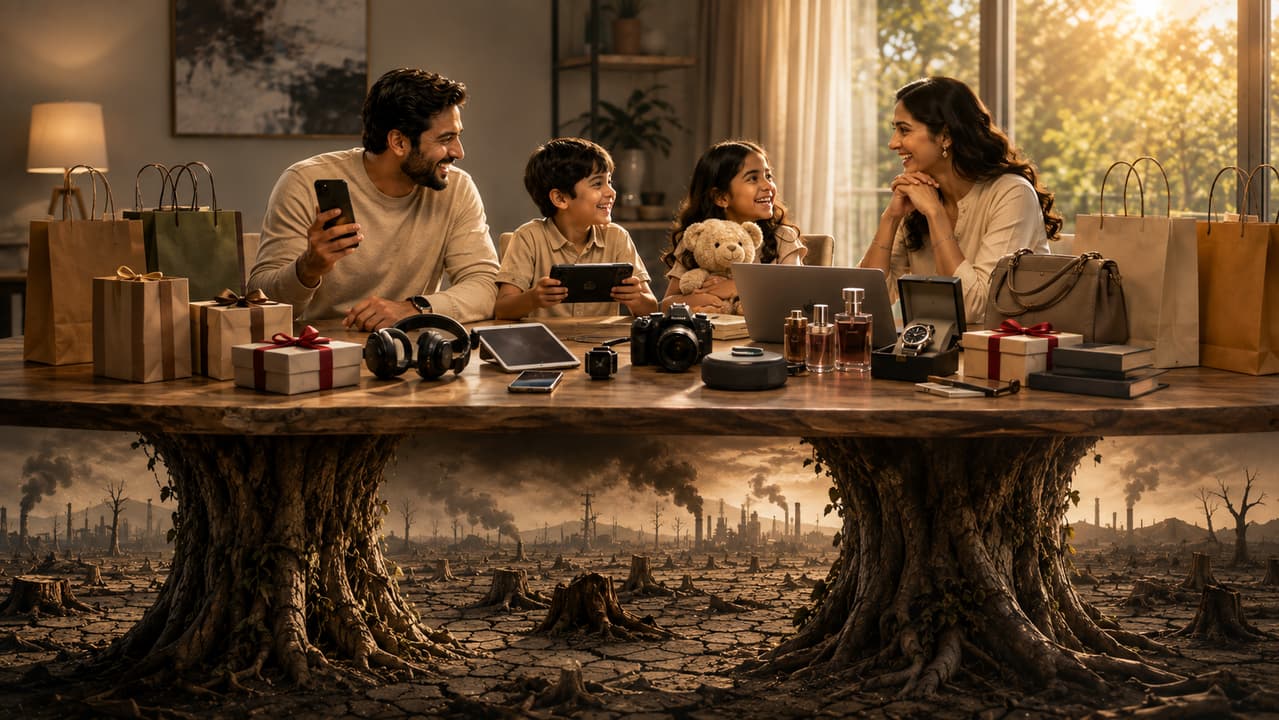
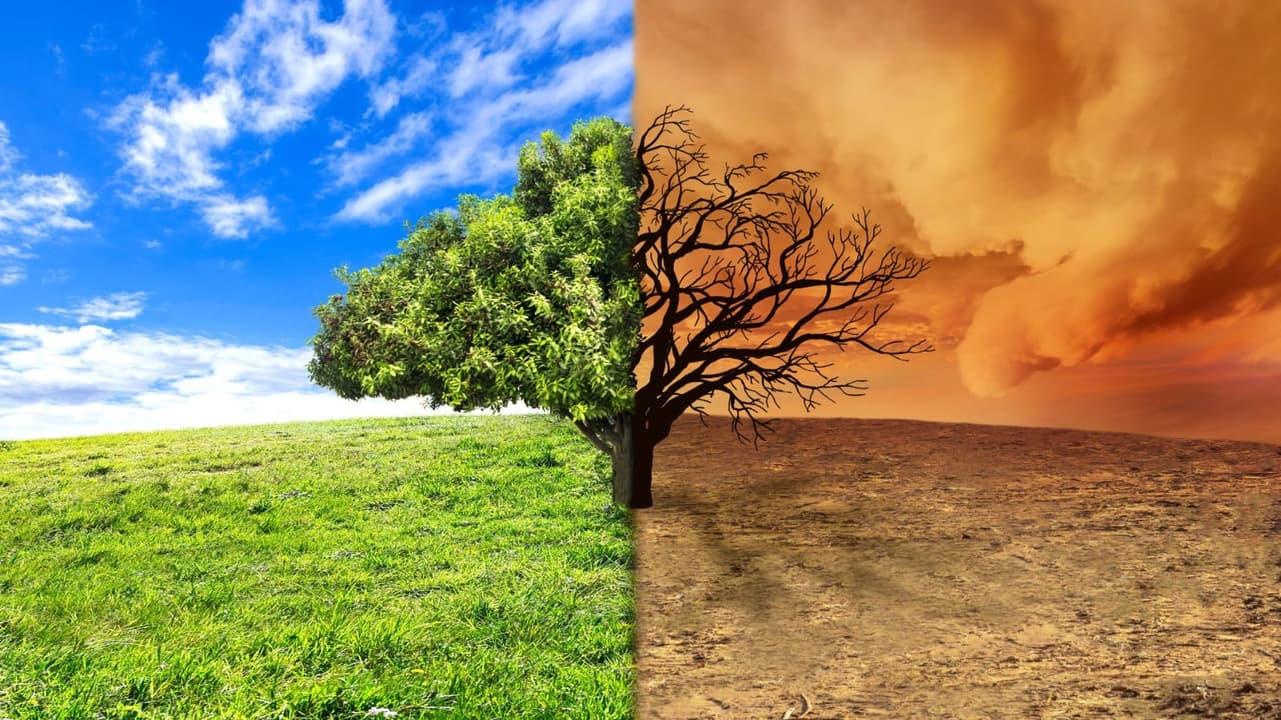
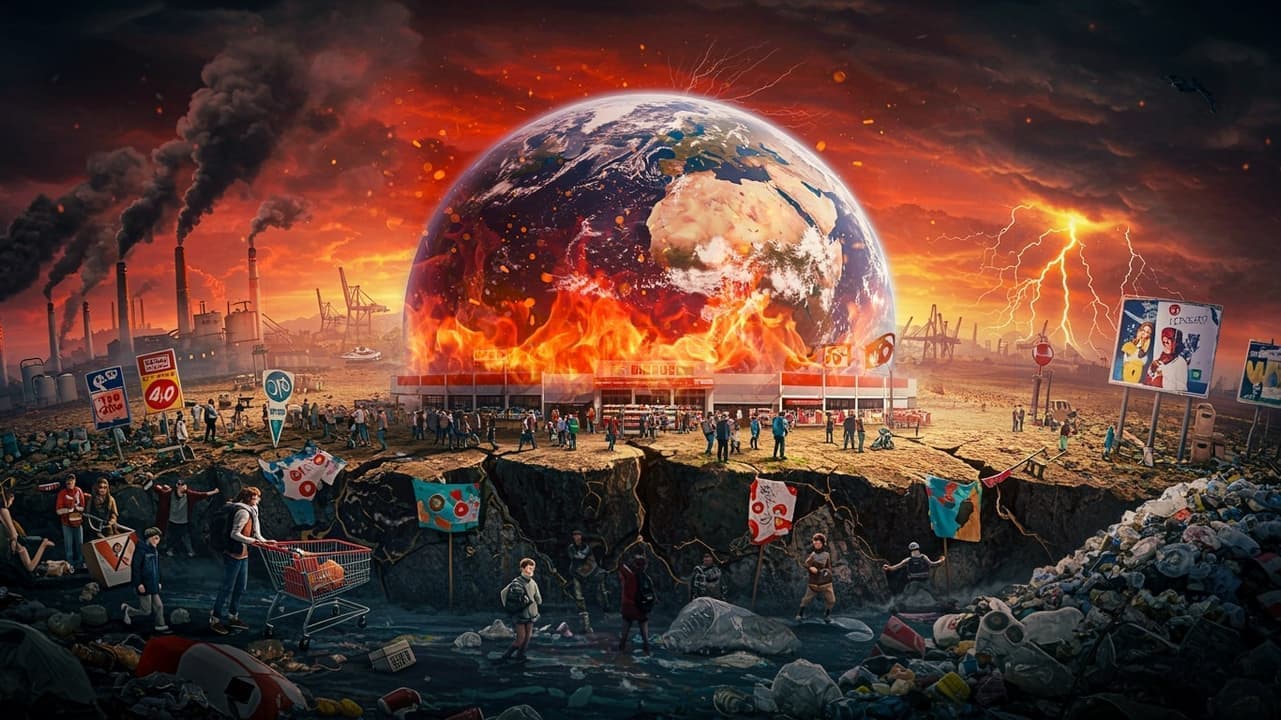
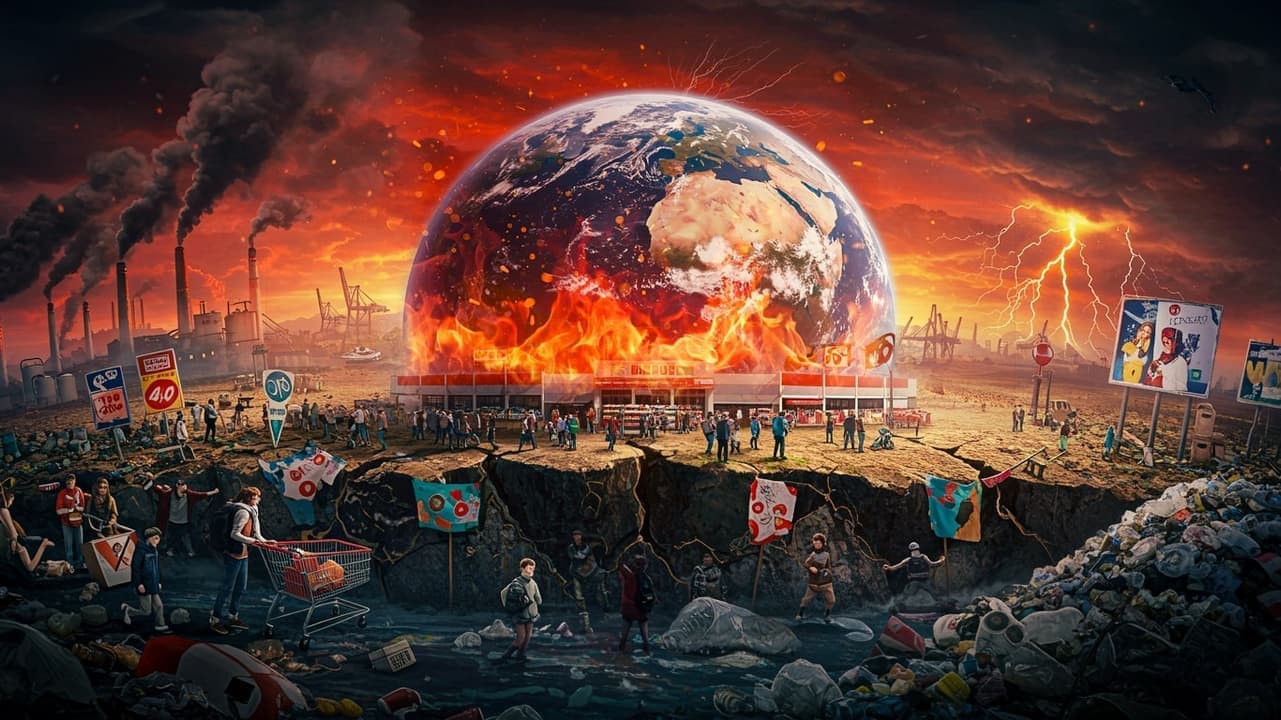
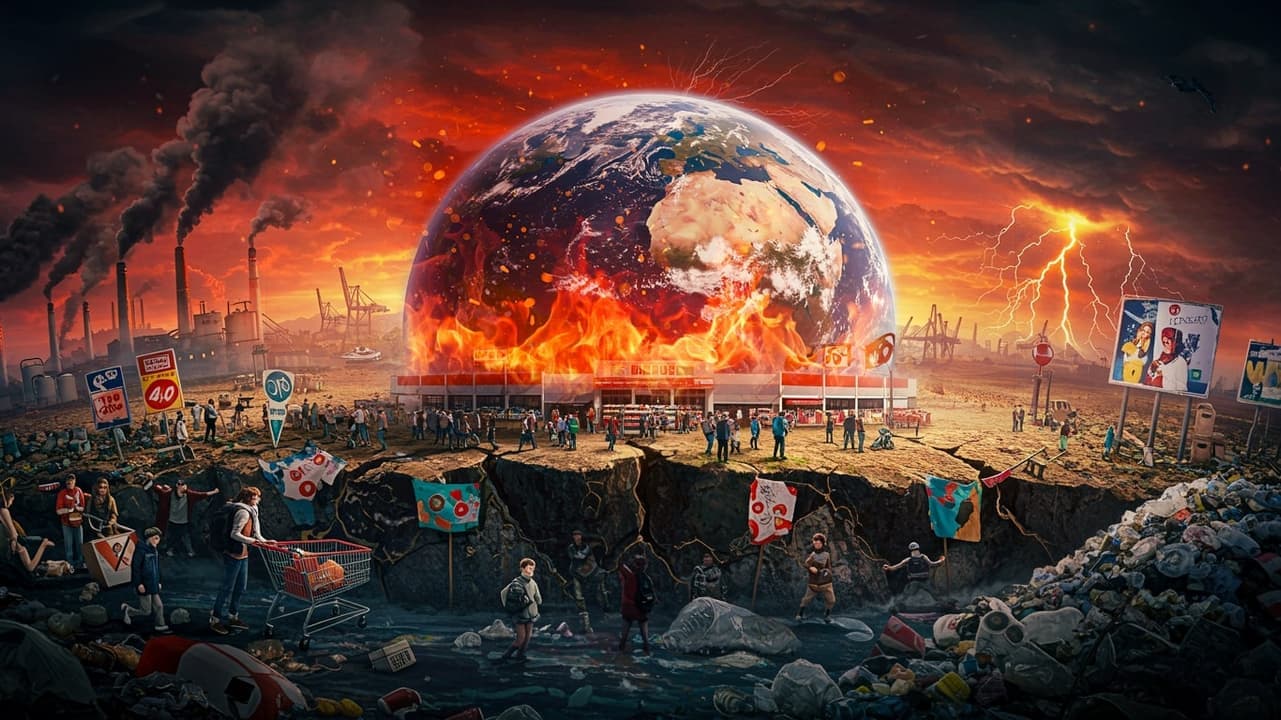
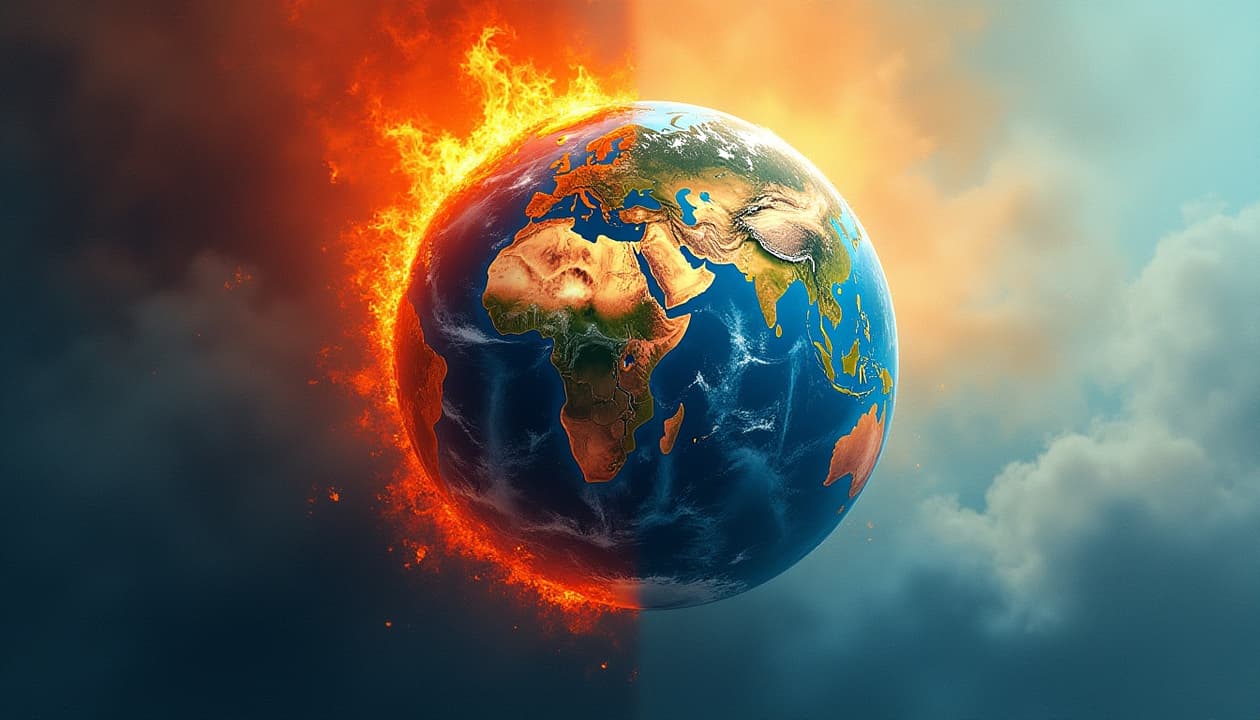
The climate crisis is not caused by nature but by human beings, their growing population and relentless consumption. The desire for greater comfort, wealth and consumption defines success, while increasing families multiply this impact. Green technology alone cannot offset such massive growth in consumption. Climate change also triggers feedback loops that worsen warming. Unless happiness is separated from endless consumption and unchecked desires, the planet will continue moving toward mass extinction.
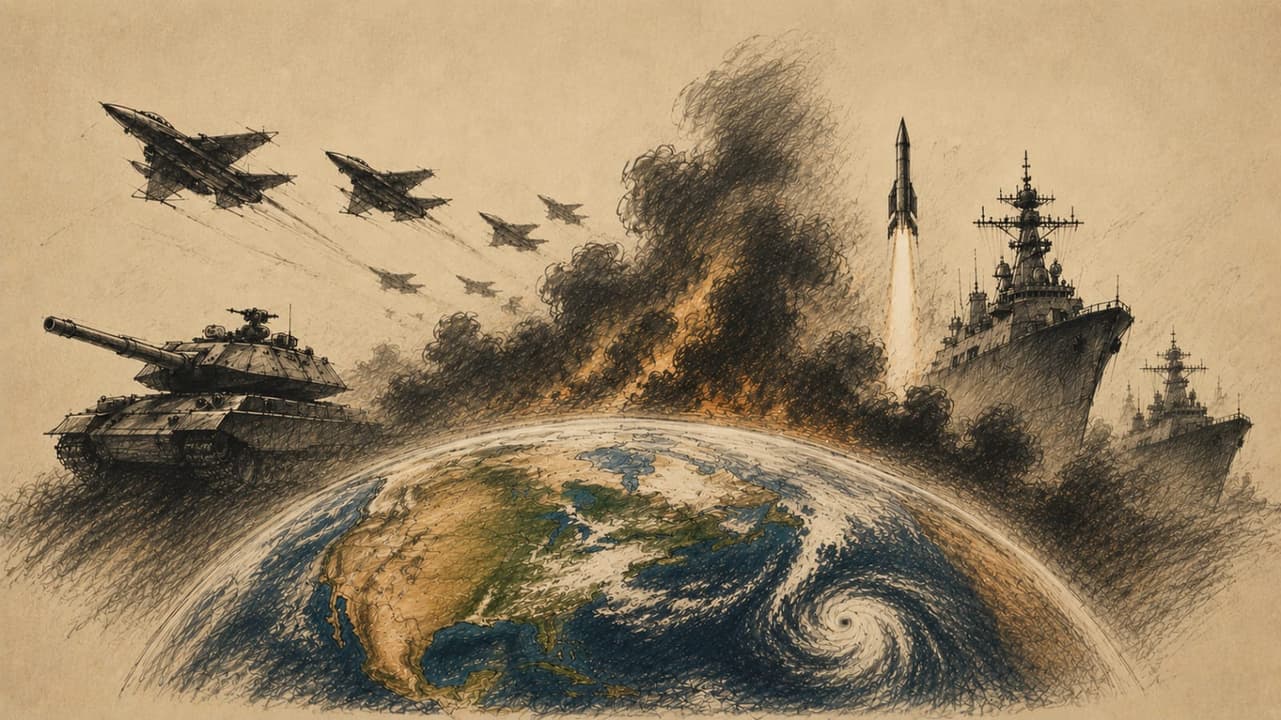
Climate change and global warming cannot be addressed honestly while the world's largest source of hidden carbon emissions—military activity—remains largely excluded from climate accountability. Wars, military expansion, and consumerism arise from the same psychological drive for domination and endless consumption. Unless the Paris Agreement includes military emissions and humanity addresses the inner causes of conflict, every effort to combat climate change will remain incomplete.
Humanity continues to increase emissions despite clear warnings about climate catastrophe. The crisis is not merely technological or political but rooted in endless human consumption and the belief that happiness comes from material accumulation. Development and basic needs are not the problem; blind pursuit of growth is. Lasting solutions require a deeper understanding of human desire, because environmental destruction begins in the mind before it appears in the atmosphere.
Climate denial is less about ignorance and more about refusing to face uncomfortable truths. Environmental destruction reflects narrow self-interest, collective confusion, and a failure to see the connection between inner values and outer consequences. The greatest burden falls on the poor, future generations, and other species. Lasting solutions require a change in human consciousness, not merely technological or political fixes.
Acharya Prashant: You look at the last few centuries. Even the declaration of the rights of man came just three hundred years back. Then came the declaration of the rights of slaves. And in the last century came the Declaration of the Rights of Women.
I am seeing that in…
Questioner: We have a question by Pooja. So people who try to become self-aware and you know knowledgeable of themselves. They usually became the black sheep of their families.
Question by Pooja is what can we do if our loved ones, that is spouse, parents, friends are not receptive to…
4
When I was in IIT, in my second year or something, there was a Hindi story I read, an autobiography of a calf, a cow's calf. So, how it is born and what it has to go through, and then how it was denied milk, how it was castrated and then how it was exploited in the field, and ultimately how it was dispatched to the slaughterhouse. So that made me quit milk at that time.
Share
Excerpts from Articles
Stuck Between Job Security and Your Real Passion?
Struggling to choose between a secure job and the path you actually feel drawn to? This isn't really a question about careers. It's about why other people's opinions have so much power over you in the first place. Real clarity doesn't come from finding the 'right' choice. It comes from honestly looking at your own fear, again and again, until it stops running the decision for you.
कई तरह के डर—अकेले पड़ने, छवि खोने या छोटा समझे जाने—की जड़ अक्सर अतीत में बनी पहचान और कहानियों में होती है। शरीर की हाइट जैसी चीज़ों को समस्या मानकर उनसे जूझने के बजाय उनकी अप्रासंगिकता को समझकर आगे बढ़ना चाहिए। अतीत को दबाने से मुक्ति नहीं मिलती; उसके करीब जाकर अपनी स्मृतियों, धारणाओं और पुराने पैटर्न को निष्पक्षता से देखना ज़रूरी है।
ज्योतिष कितना सच है? कुंडली, ग्रह-नक्षत्र: इनका क्या अर्थ है?
वेदांत को केवल इसलिए सही या श्रेष्ठ नहीं माना जा सकता कि वह किसी विशेष परंपरा से आता है। विज्ञान जहाँ भौतिक जगत की वस्तुनिष्ठ जाँच करता है, वहीं अद्वैत वेदांत सीधे मनुष्य के ‘मैं’, उसके दुख, बंधन और मुक्ति की पड़ताल करता है। इसकी कसौटी वैज्ञानिक प्रमाण नहीं, बल्कि अपने जीवन में इसकी सच्चाई को देख पाना है। किसी दर्शन को मान लेना नहीं, बल्कि उससे स्वयं को मुक्त करना ही उसका वास्तविक उद्देश्य है।
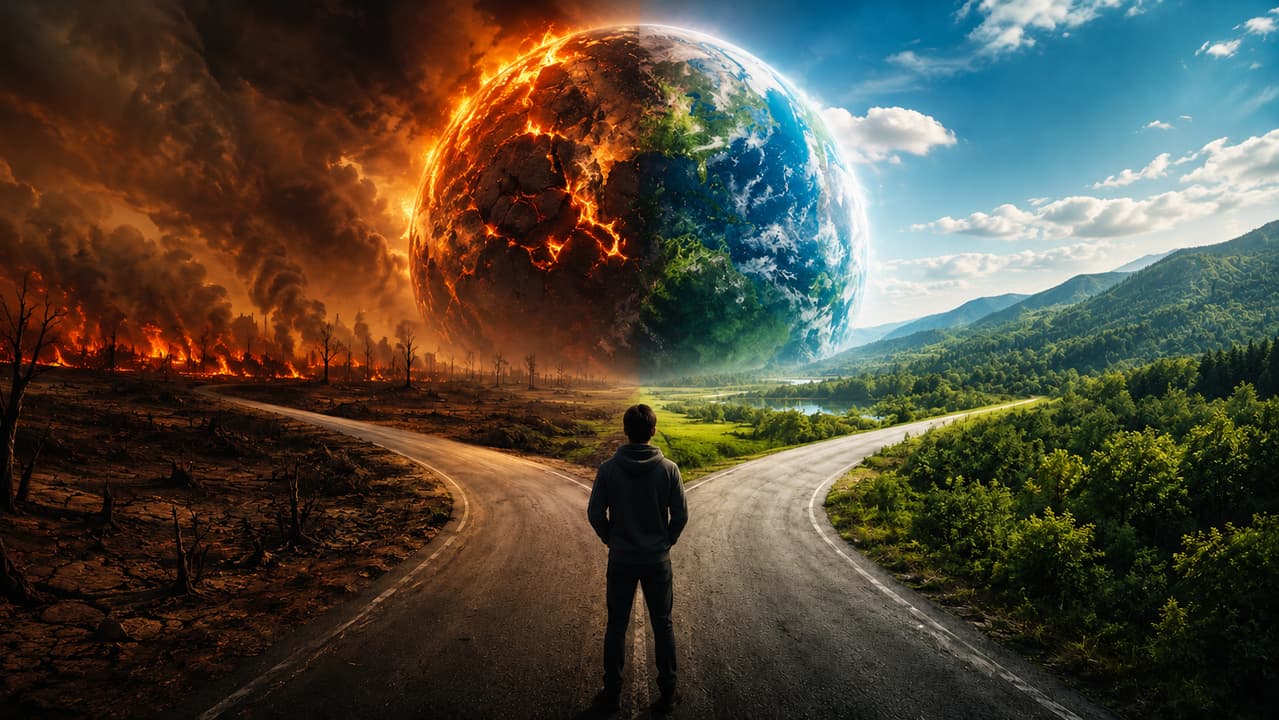
Climate change is more than an environmental crisis—it is a crisis of human choices. Our patterns of consumption, consumerism and endless pursuit of more are putting increasing pressure on the planet. But meaningful change does not necessarily begin with new technology or stricter policies. It begins with a deeper question: what are we willing to change within ourselves?
Justice Without Boundaries: Why Compassion Cannot Stop at Species
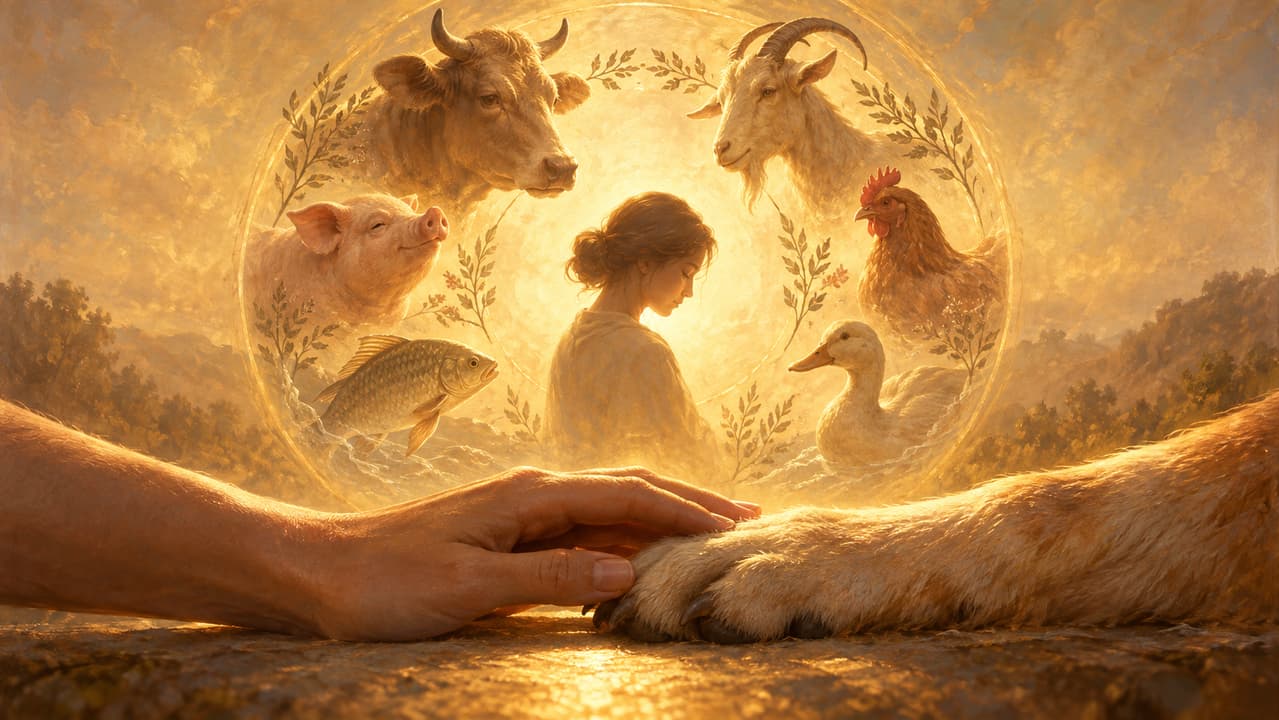
Oppression should not see caste, gender, creed or colour, and it should not see species either. The moral threshold is sentience, not intelligence. An animal feels pain as fully as a human does, whether or not it can explain its suffering.
But, when you look at someone who comes from a meat-eating family or the traditional kind of Indian Vaishnav family where milk and ‘kheer’ and ‘dahi’ are a staple, then it comes as a shock to that person, that milk involves cruelty. It’s a totally alien and a disturbing concept. So, it has to be brought out with due expertise and that does not mean that you have to be especially trained in communicating these matters, just that one has to be sensitive that the other person might not really know.
1
Questioner: We have always been eating meat and drinking milk; it has been there since ancient times. So, my question to you is, is animal liberation or the vegan movement consistent with the ancient times of our land?
Acharya Prashant: There are a few myths that need to be dispelled.…
5
Yes, you need health. But for what? When you say a fellow, a young fellow, must have vibrant health, I agree. But I'll ask: What for? What for are the biceps? Yeah, girls like them, obviously. Yes, a young fellow must be able to run a lot. Towards? Chimpanzees run a lot. But it's again one of those romantic ideals—the youthful, strong, vibrant young man. Why must one be strong? Strength is a resource. If you do not know what the resource is for, why do you need the resource at all? Before you gain health, must you not gain the wisdom to use health?
1
Acharya Prashant: The whole issue is because you have left the jungle and yet not reached where you set out to reach; you are stuck in between.
Man is in a very precarious position. Animals are well settled; the free ones, the Buddhas are also well settled. Man is unsettled.…
I don’t know whether you have heard this story from the life of the Buddha. One man was carrying a goat
…
Acharya Prashant:
In what sense?
Questioner: Do you see us heading in the direction towards this perfection, completion along with our diet?
Acharya Prashant: I am seeing that.
You see, it is…
You are in grief even when somebody disrespects you.
In fact, you are in grief the moment somebody is not loving towards you.
So, Veganism is, in its true sense, Love.
Questioner (Q): What is spirituality? How would you explain it to someone who knows nothing about it? How is…
…
1
Questioner (Q): Dear Acharya Ji, for the sake of not sounding hypocritical, I have to admit that I have killed more than one mosquito in my life and many other insects too, but never intended to cause pain and suffering to them. Now hearing, let alone seeing the relatively conscious…
…
3
Question: Acharya Ji, what is the reason which made you go vegan?
Acharya Prashant Ji: The same reason that makes you ask these questions, and makes me answer them – Wisdom, Love, Truth.
One is fettered, one is shackled, and consciousness is one’s only hope – deep, deep consciousness that…
Share
…
1
Question: Acharya Ji, there are people who quote the Vedas and say “A Hindu is a good Hindu only if he drinks milk from the mother cow.” What is your take on that?
Acharya Prashant: See if you have named the Vedas, what is the central teaching of all the…
Share
Questioner (Q):
Having seen your videos and being in constant touch with you, one can see that the central idea of your teachings is, as you very lucidly have said, “You are not missing the secret, you are missing the obvious.” For us
…
“I am producing so much, but people are not buying it. Why? Because they do not need it. So, what do I…
3
Eat that in which you are causing minimum damage to consciousness.
So, eating an apple and eating an animal are not the same thing.
The less you love yourself, the more likely it is that you will be a flesh eater;
The more you love yourself, the more you know…
1
Questioner: From the videos that I have watched, I understand you’re a strong veganism promoter. Now as institutes like IITs and IIMs, and institutes which people look up to and get influenced and follow, what do you believe institutes like these should follow and promote? Do you also believe that…
desi gai ka ghee
(clarified butter from the Indian cow), they do not even know what they are doing to the creature they call as ‘mother’.
Is…
6
Oppression should not see caste, gender, creed or colour, and it should not see species either. The moral threshold is sentience, not intelligence. An animal feels pain as fully as a human does, whether or not it can explain its suffering.
2
Seen a bubble in the sea?
That is our story.
You came with the hands empty, empty,
and nothing will you carry.
So why be caught in misery?
Make merry, make merry!
Who is your family?
Who is a lover really?
You are deep in illusion, happily, happily
fooling yourself…
1
Climate change is more than an environmental crisis—it is a crisis of human choices. Our patterns of consumption, consumerism and endless pursuit of more are putting increasing pressure on the planet. But meaningful change does not necessarily begin with new technology or stricter policies. It begins with a deeper question: what are we willing to change within ourselves?
1
Rakshabandhan is not merely a festival celebrating the protection of a sister by her brother. Its deeper meaning is about recognizing vulnerability and taking responsibility for what needs protection. Today, that responsibility must extend to the environment—rivers, mountains, trees, oceans, wildlife, and the planet itself. True religion lies in self-knowledge, compassion, and understanding that greater power brings greater responsibility.
1
Mass extinction is accelerating due to human-driven climate change, resource consumption, and destruction of other species. The deeper problem is a worldview that equates happiness and development with endless consumption. Science itself is not the problem; without inner clarity, its immense power becomes destructive. Advaita points to a different relationship with the world, where it is not an object of exploitation but a means to deepen self-understanding and inner development.
1
Climate change is not merely an external crisis of emissions, technology, or policy. The deeper problem lies in the unchecked ego that seeks to fill inner emptiness through endless consumption. This psychological demand drives extraction, production, and environmental destruction while failing to resolve the underlying sense of incompleteness. Meaningful climate action therefore requires more than green technology and policy; it requires education that turns inward and examines the self.
6
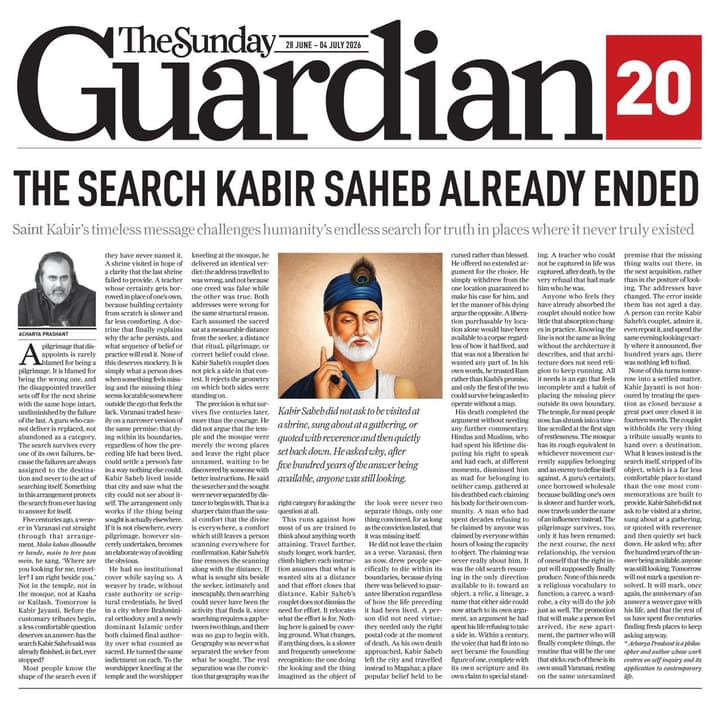
Kabir Saheb's message questions the very act of searching for fulfilment outside oneself. Whether through religion, relationships, success, possessions, or identity, people keep assuming that what is missing lies somewhere else. The problem is not the destination but the belief that fulfilment exists at a distance. Real freedom begins when the search turns inward, recognising that the seeker and the sought were never truly separate.
1
Freedom is often assumed to be the ability to choose, yet most decisions arise from conditioning, biology, social influences, and habit. Real freedom begins by seeing how mechanical and unconscious life usually is. As awareness deepens, confusion and endless options gradually diminish, making life simpler and more direct. Liberation lies not in imagining freedom, but in recognising and understanding the forces that keep one bound.
The climate crisis is not merely an external environmental problem but a reflection of inner human greed, desire, and psychological disorder. Drawing from the Gita’s idea of yagya as desireless action, it says real ecological healing requires inner transformation. Outer pollution, exploitation, and destruction mirror the ego’s inner confusion, making personal consciousness and planetary health deeply inseparable.
5
From 1945 to today, consumption drives war beneath peace globally. We have continued to be exactly the same as we were on the day of Hiroshima and Nagasaki. That war happened because the various powers wanted to consume. Have we changed internally? If not, how can there be peace? The problem is not in the structures of thought or governance. The problem is within.
All consumption comes from this ecosystem, this planet and in the lust of our blind consumption, we destroy life for everybody. As technology progresses, you will probably be able to consume more with impunity.There is a consumption that is needed for basic physical sustenance and comfort,then there is consumption that happens for entirely different psychological reasons. It is the second type of consumption that I am always worried about.
1
Why the question of sustainability is relevant only to our species, out of the billions of species on this planet? Because we have a hollow inside us, and that hollow demands to be filled. So we want more and more manufactured products, more meat, more luxury, more money. And the sad part is, none of that really succeeds in fulfilling you. But you still want to consume endlessly. And that endless consumption, arising from a spiritual point, is what the sustainability crisis is today.
I am hungry, I am dissatisfied, I want to consume. And I do not know what it is that would appease me, make me happy, quench my thirst, so I will try out everything. If you have this big a hole in your heart, what else will you do? You will use the entire universe to plug this hole. That is what man has been doing. He wants to eat up everything. The very basis of climate change is the constitution of man himself. Man cannot help climate change; man is climate change.
4
‘I’m not feeling well.’ Your feelings are carbon. No other species is responsible for the climate disaster. We are. Why? Because only the human being has a hollow in her heart. Climate change is the unfulfilled, dark interiors of this species, Homo sapiens. We are destroyers because we are unhappy and loveless within. There can be no scientific, no economic, no political, no technological solution to the climate disaster. Not at all. Because this is purely a spiritual crisis.
3
Let the Earth be destroyed. We have to save humanity. Wow! The human body is 70% water, and the Earth’s surface is also 70% water. Can’t you see that we are the Earth itself? Going to another planet means thinking of collective suicide. Just remember one thing: we don’t live on this planet, we are this planet. Either two of us live together or we go down together, because we are not two at all. We are one.
As a doctor, can we limit our responsibility to the one particular body or to the set of few bodies that come to us for treatment? Or is the patient actually a representative of an entire society, an entire ecosystem? Can I really be a good doctor of the lungs, if I support a society that pollutes the environment in the name of development? So, if I'm a doctor, then health is my responsibility in the holistic sense, not just one patient.
10
Ours is a democratic system. You are the government. If you want to accelerate climate devastation, it will be accelerated. Who can stop it? A leader is just a poor person, typically an old man. How will he resist the combined might of the electorate? All real change can happen only at the level of the individual. Once it happens there, it takes no time for governments to toe the line.
2
It’s not going to be right when the patient starts playing the doctor. We need to grow up; and having a kid, in that sense, is an opportunity. You want to be of some use to the kid, then grow up with the kid.
6
If you think you can do it at the policy level, that sounds very tempting but means nothing, because you are trying to defy the very law of existence. You are saying the minister will do it. Why will the minister do it? The ones in power have the least interest in any climate action because they are the ones with the minimum stakes there. You'll have to awaken the individual so that the one in power listens to you. Awaken the individuals. What else? There is no option.