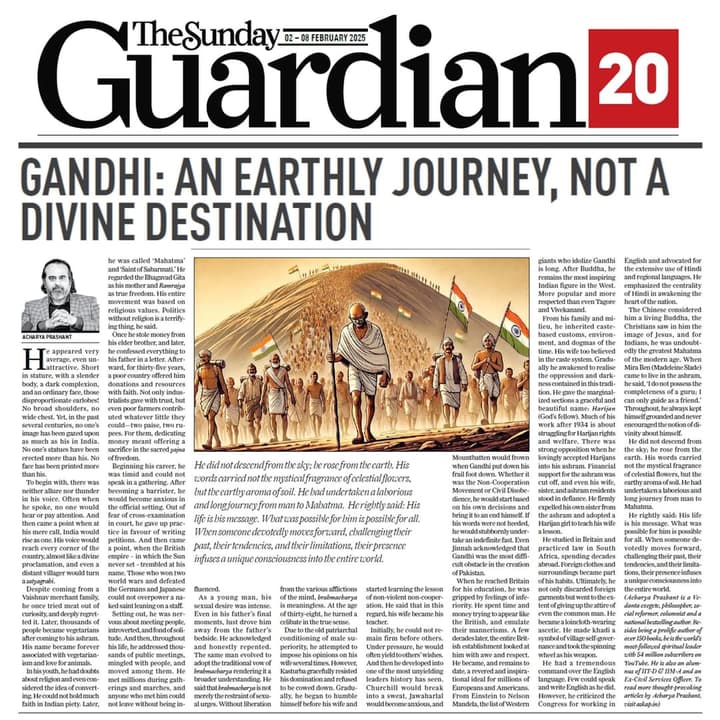
Gandhi did not descend from the sky; he rose from the earth. He undertook a laborious and long journey from man to Mahatma. And he rightly said that his life is his message — what was possible for him is possible for all. When someone devotedly moves forward, challenging their past, their tendencies, and their limitations, their presence infuses a unique consciousness into the entire world.
Migration can arise from genuine needs such as safety, education, livelihood, or environmental conditions, as well as from the ego's pursuit of greater consumption and fulfilment. The challenge is to distinguish between these motives with wisdom rather than ideology. Fair, impartial screening, mutual respect between migrants and host societies, and practical integration create a balanced approach that is both humane and responsible.
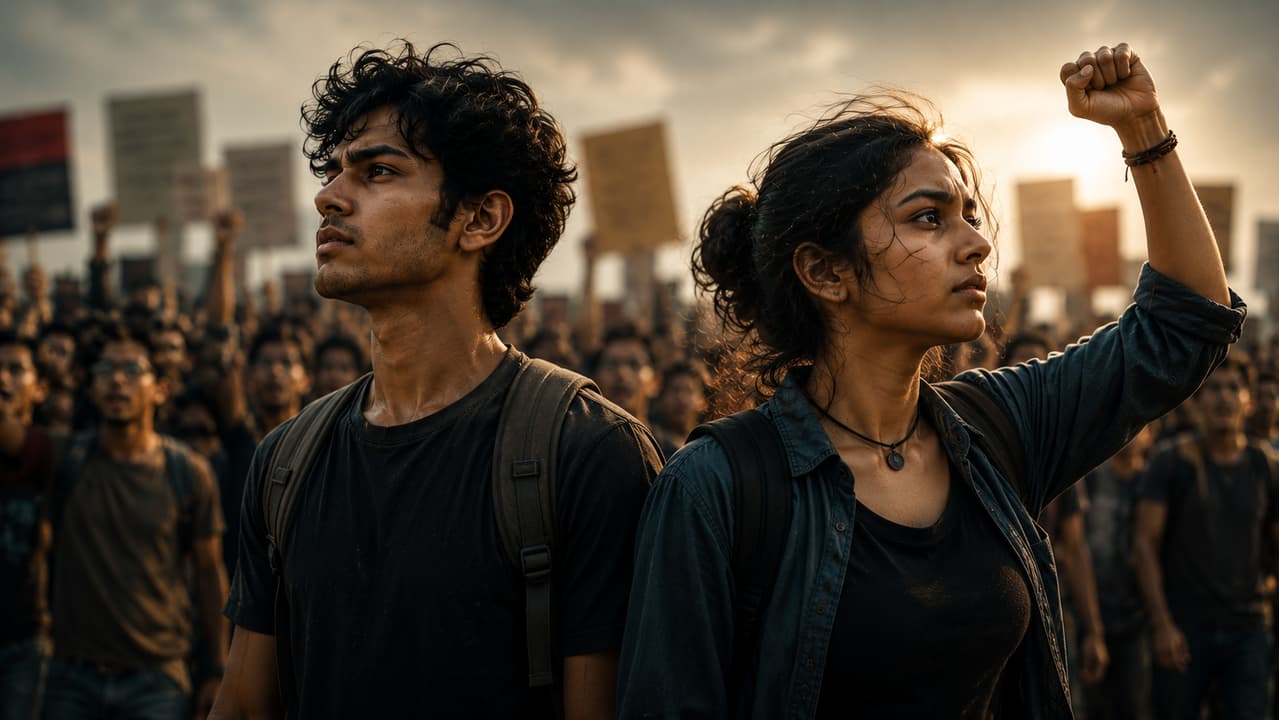
True revolution begins with inner transformation, not merely with protest. Lasting social change is possible only when individuals cultivate self-knowledge, integrity, and personal responsibility. Replacing governments or demanding reforms without examining the mind that sustains the same patterns only repeats history. Awaken yourself first, educate others with clarity and compassion, and let conscious citizens, not unconscious crowds, become the foundation of a better society.

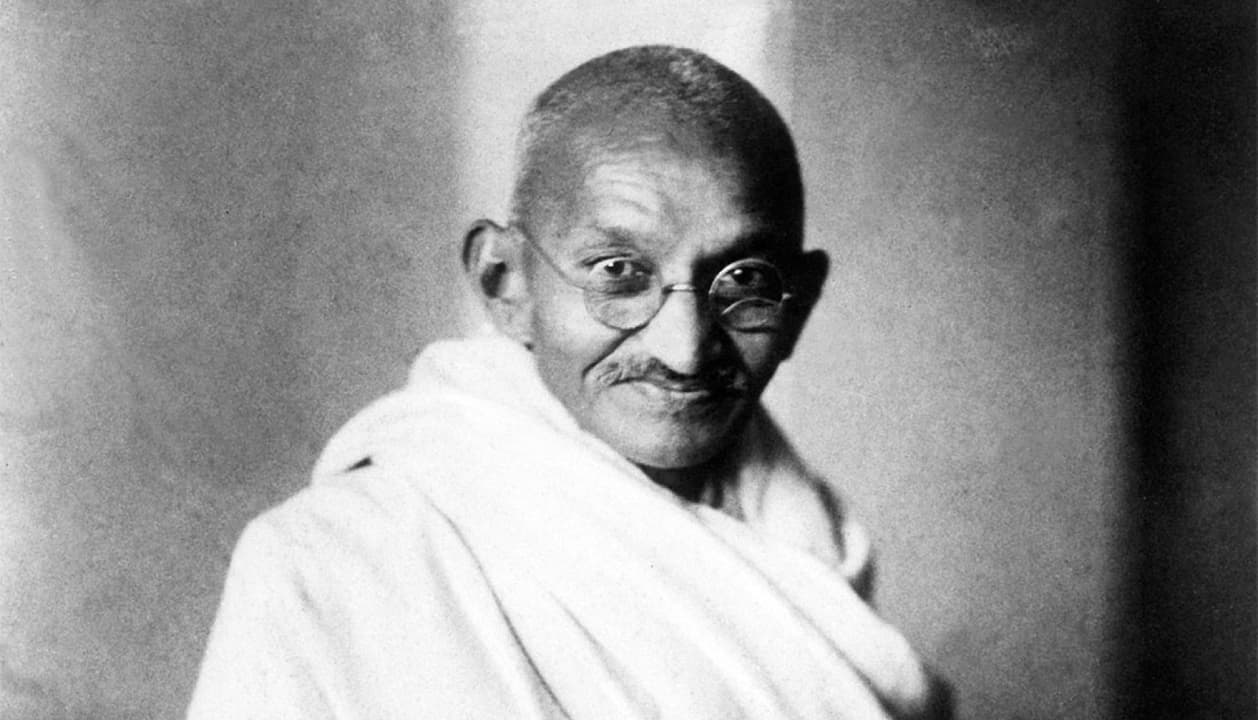
Those abusing Gandhi Ji are least interested in him—they try to achieve something, and Gandhi Ji stands in the way. If one wants to create a society that is highly illiberal and deeply fractured on communal lines, then the symbol of liberalism and communal harmony has to be abused. Gandhi Ji is not just a person but a thought. Gandhi Ji was killed once, and that didn't suffice. Now, he’s being killed in abusive ways, yet some things cannot be killed.
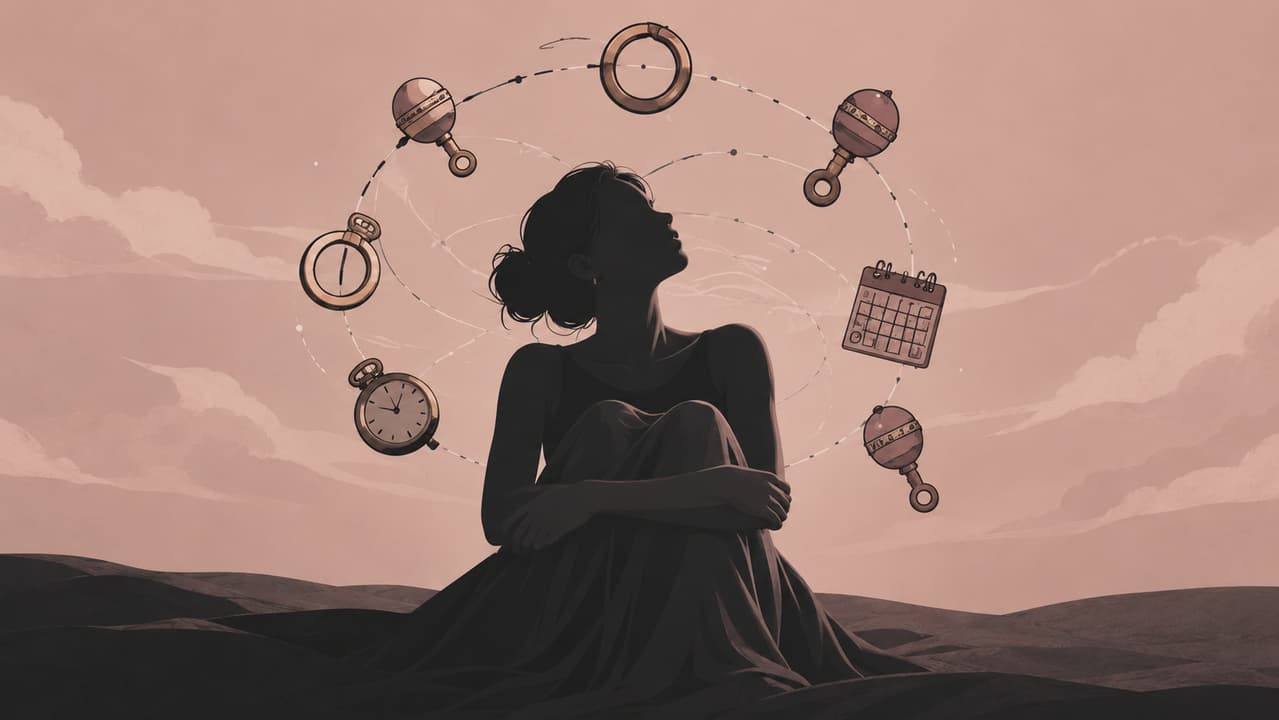
A modern woman calls herself liberated, yet lives anxious — anxious about age, desirability, marriage, motherhood. Acharya Prashant exposes this anxiety as proof that feminism never touched the real wound: centuries of conditioning that reduced women to bodies for pleasure and reproduction. External equality isn't enough. True freedom demands she reject the entire inheritance of tradition and simply become human — not woman, not wife, not mother by decree, but free.
Victory is not decided by the trophy you hold but by the battle you choose to fight. Real strength lies in making the right decisions, staying true to your deepest values, and refusing to be ruled by fear or circumstances. When your actions arise from clarity rather than ambition, the outcome loses its power over you. The moment you choose the right path, you have already won.
The crisis exposed by the NEET paper leak goes far beyond examination malpractice. When society teaches young people that a single rank determines their worth, corruption, desperation, and broken trust become inevitable. Lasting reform requires more than stricter systems—it demands a transformation in how education, success, and self-worth are understood by students, parents, teachers, and society.
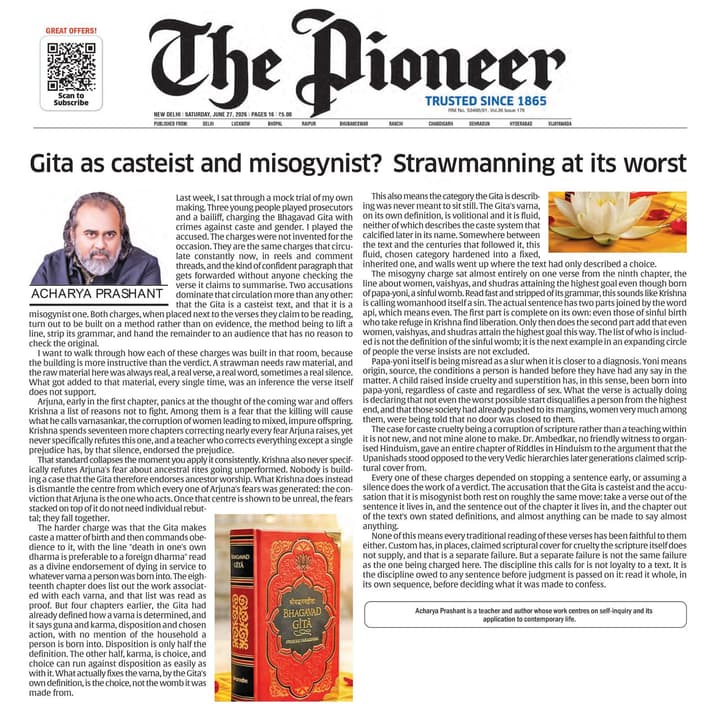
The Bhagavad Gita is often accused of supporting caste and misogyny through selective quotations that ignore context, grammar, and the text's central teachings. A closer reading shows that its emphasis is on inner qualities, conscious action, and spiritual equality rather than birth-based hierarchy or gender discrimination. Misinterpretations arise when isolated verses are detached from their broader meaning, while the Gita consistently points toward self-knowledge, freedom from ego, and the universal possibility of liberation for every human being.
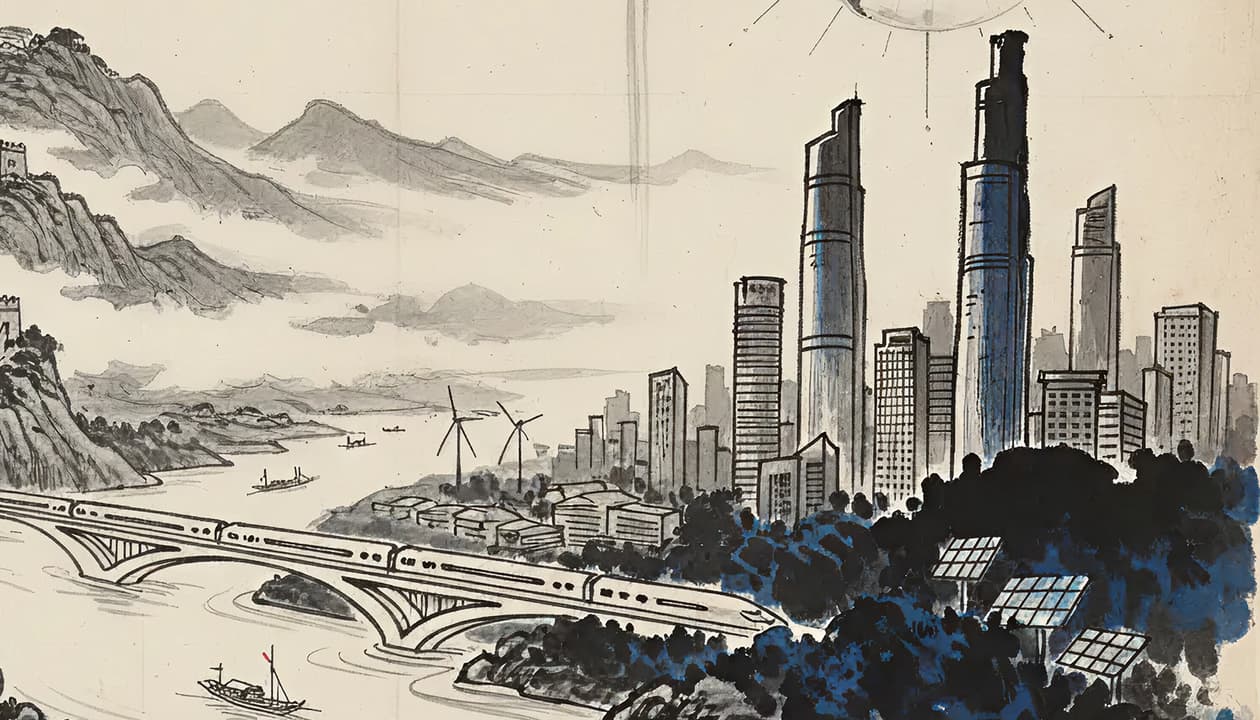
The climate crisis is not merely an external environmental problem but a reflection of inner human greed, desire, and psychological disorder. Drawing from the Gita’s idea of yagya as desireless action, it says real ecological healing requires inner transformation. Outer pollution, exploitation, and destruction mirror the ego’s inner confusion, making personal consciousness and planetary health deeply inseparable.

Will another revolution really change anything, or are we just changing faces while keeping the same consciousness intact? The article argues that societies often rush toward rebellion because it feels easier than responsibility. We blame systems, governments, and institutions, but the deeper crisis lies in the collective ego that creates them. Without inner education and self-understanding, every revolution risks becoming another cycle of the same story.

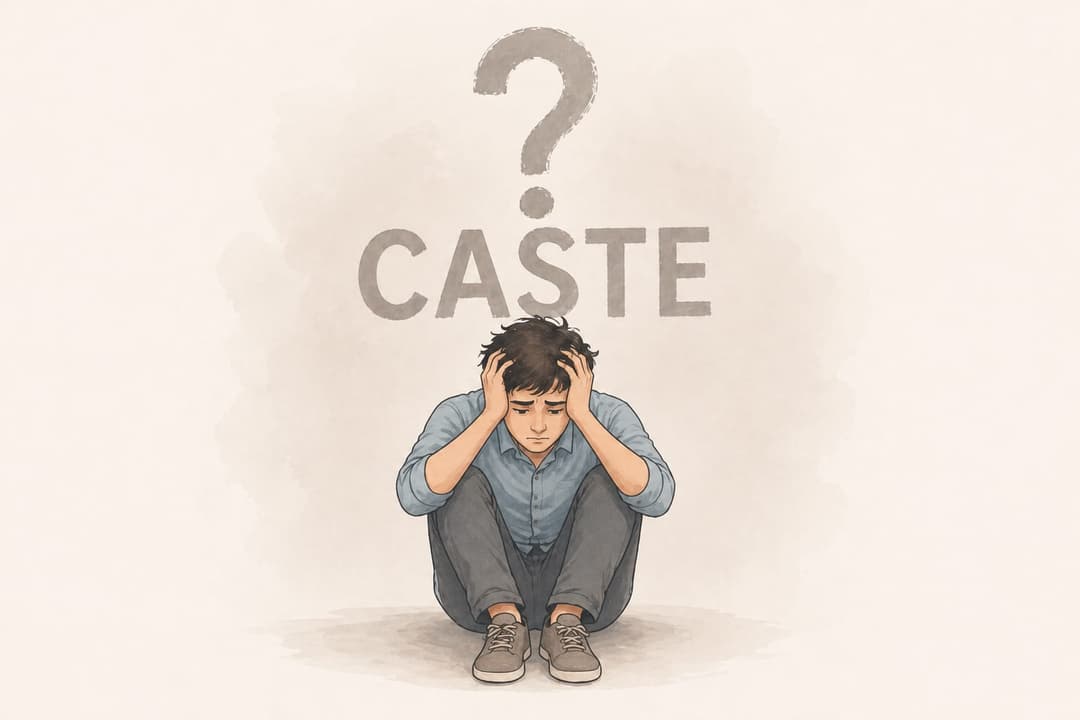
Do you still feel the need to know someone’s caste? That urge itself is the problem. Caste exists neither in the body nor in consciousness; it is a construct of the mind. Society keeps it alive because the ego thrives on division. Until you see a person simply as a person, caste will persist. The real solution lies in understanding and dropping inner ignorance.

Superficiality offers pleasures. Superficiality offers cheap salvation. Therefore, it is easy to be attracted to superficiality. On the other hand, true spirituality challenges you to pay a heavy price. So, you see, all this knowledge has existed since antiquity. Yet there are people who do not want to read the Gita.

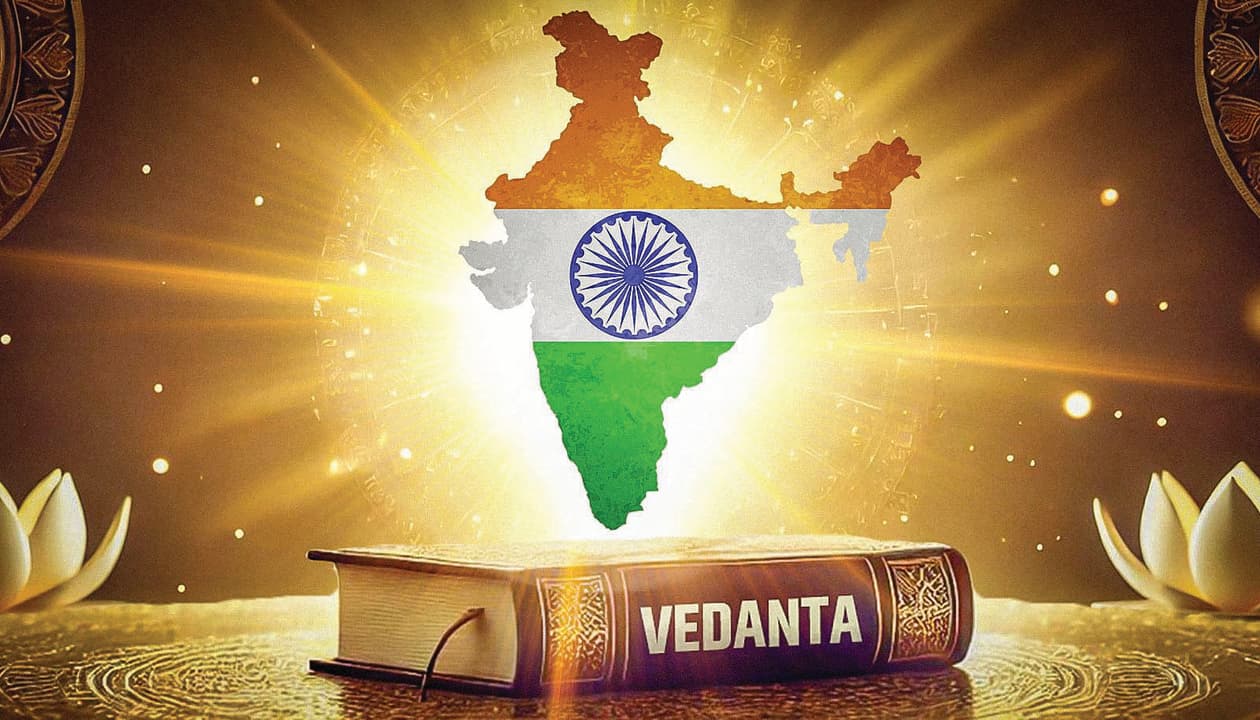
For most people, India is just a bit of land, a boundary on the global map, a political entity. These are not things you can fall in love with. To love, there must be something sacred, something worth worshipping. The identity of India, the root of the Indian nation is essentially spiritual. India has been a nation because of its Vedantic foundation.

Death is already happening moment by moment. Why think that it is there somewhere in the future? We are all going in the same direction: a journey towards death. You cry not at the fact that somebody died, but at the fact that life was not lived fully. We have had a mystic who said that death should be celebrated. When everything about this man was joyful, how can his death be painful? There would be no reason to cry; death can be celebrated.

India was a superpower in all possible terms and yet those lowly little Britons came here and colonized us. Is it possible? There is something fishy in the story. We don't want to go back and really read and figure out what really happened. We believe in this narrative: we were great, we were ‘Vishwaguru’. How can the land of the Gita be ever defeated? It was due to internal reasons that we got defeated and enslaved. And those reasons are still very much present today. Which means the fault is entirely our own.

You see, the democratic system is a great one, but there are some problems associated with it. The leader comes from the masses, and the masses, by themselves, are never really attracted to wisdom. Have you ever found a voter asking his leader, “How many Upanishads have you read?” before casting a vote. The leaders know very well what they can ignore. They just want to know what your religion is, and what your caste is. That is why wisdom always comes last.

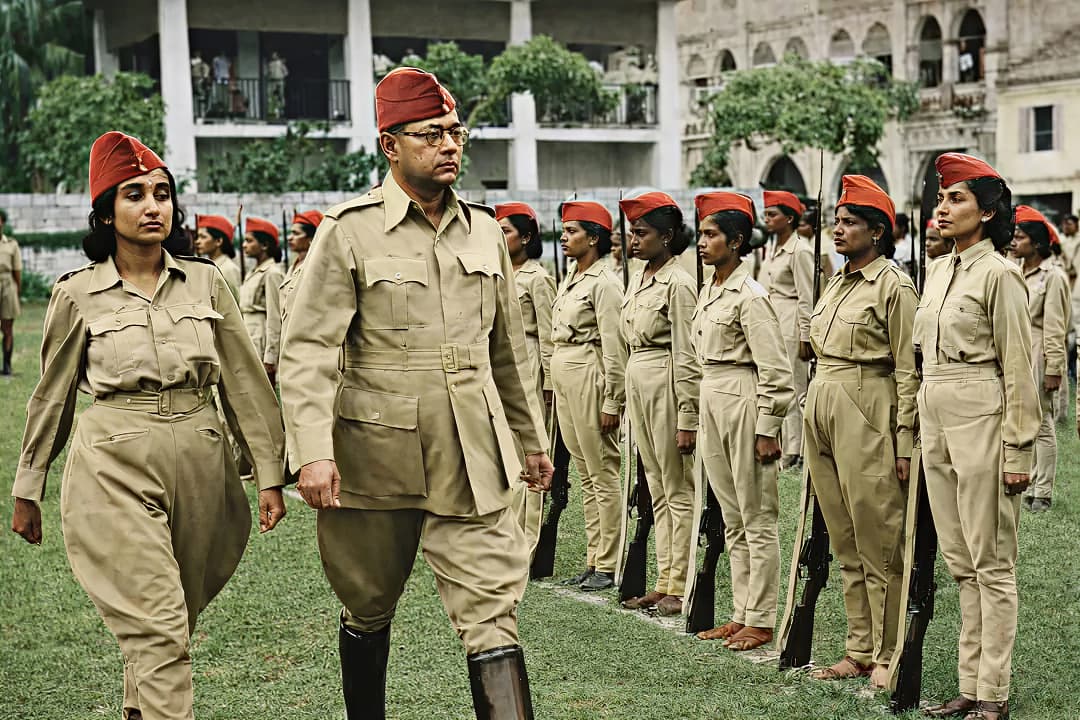
There is no revolution possible without the Gita. That’s the reason why even those who are not remembered particularly for their spiritual inclination, people like Subhash Chandra Bose, even they founded their core on Gita. What kind of revolution can you do if it’s the body that’s always at the top of your mind? You require a Gita to tell you that this body is perishable and would anyway go. Gita only teaches you, "Endure and fight."

Shri Krishna is saying: the mind is conditioned to move towards objects and perceive only their surface, periphery, or form. Develop the practice of penetrating further. Let Truth be your practice. The moment you would look at something, and you are in no position not to look at things being embodied, you would look at things. Nobody said that you have to practice lust. Lust just comes. You might be a total fool, an utter retard, and still you will find yourself getting sexually excited once you reach a particular age. Did you need some practice? No, you didn’t. It just happened. But if you are to understand lust, if you are to cross over, if you are to be a master of your body, then it will require a lot of practice, and that will necessarily and obviously tell you about your predicament.

If you leave yourself weak and vulnerable, you are submitting to the ecosystem of rape. What’s worse? It won’t even be reported. The first thing is: empower yourself through education, through exposure, through wisdom. When it comes to sexual urges, no lessons of morality really succeed. You’ll just be left complaining to the benevolent power up there, “You know, I’m such a pious woman. Why was I violated?” Because that’s how it happens in the jungle. That’s the answer. That’s all.

If somebody is a great cricketer, I am all right admiring him irrespective of his nationality; that’s fine. But the question is: why is such adulation and such expenditure reserved only for people outside your own country? Indian soccer is totally starved of funds, but the same fans will not spend this money, not even a fraction of this money. Are we really poor, or are we just poorly directed? We don’t know the right direction to move in because we don’t know the right center to have.

So much so that, even today, India’s literacy rate is just 77%, and China has almost cent per cent literacy. That’s a huge difference. From where will you get innovation if your kids are not well-educated? And even if they are educated, they are just moving towards the service sector rather than the line of innovation. How will you lead the world? Just having democracy will not take you anywhere if those casting their vote are not educated enough.

If you see GDP growing at a fast rate, it is not a matter of celebration; it might actually be a warning. Don’t do that. Slow down. GDP is something that you can increase even with a lot of income inequality, as is happening in the case of countries like India. We need clarity. We need to be extremely clear on the definitions of our national imperatives. If development means the images we have been carrying of the United States, that is unsustainable, just not possible.

The very nature of research is that there is uncertainty. It’s a dive into the unknown. We fear the unknown so much that we want to stick to known lanes throughout; that’s what explains the lack of a research culture. There are just so many masters all around and over you. Don’t listen to them. All those who stop you from flying high, they are being irresponsible, because they in no way can compensate for the opportunity you lose.

You know, if your husband is gone, your finances are gone. Therefore, you will guard your husband very, very strongly, very possessively. It’s not love, it’s dependence. In love, you often allow the other to fly free. But if you are acting as that possessive wife or girlfriend or whatever, that is also because you are dependent, and that is violence, is it not?

Karma is a reflection of who you are. You are the doer. Karma means action. You are the actor. The principle of karma is: do not focus on karma; focus on karta, the doer, the actor. That is karma, that’s all. There is nothing mystical about it.

Can you go to the past and choose something or unchoose something? And life is happening right now. So your power to respond to life is right now. But the moment you say it is happening due to the past, then you have surrendered your power to choose, because you cannot do anything with the past. You cannot change the past. You can’t choose the past. You can’t unchoose the past. You can’t modify it. You can do nothing.

Drop the center of confusion, come to the center of clarity. Drop what the masses practice, come to the direct route of self-realization. That’s what it means.

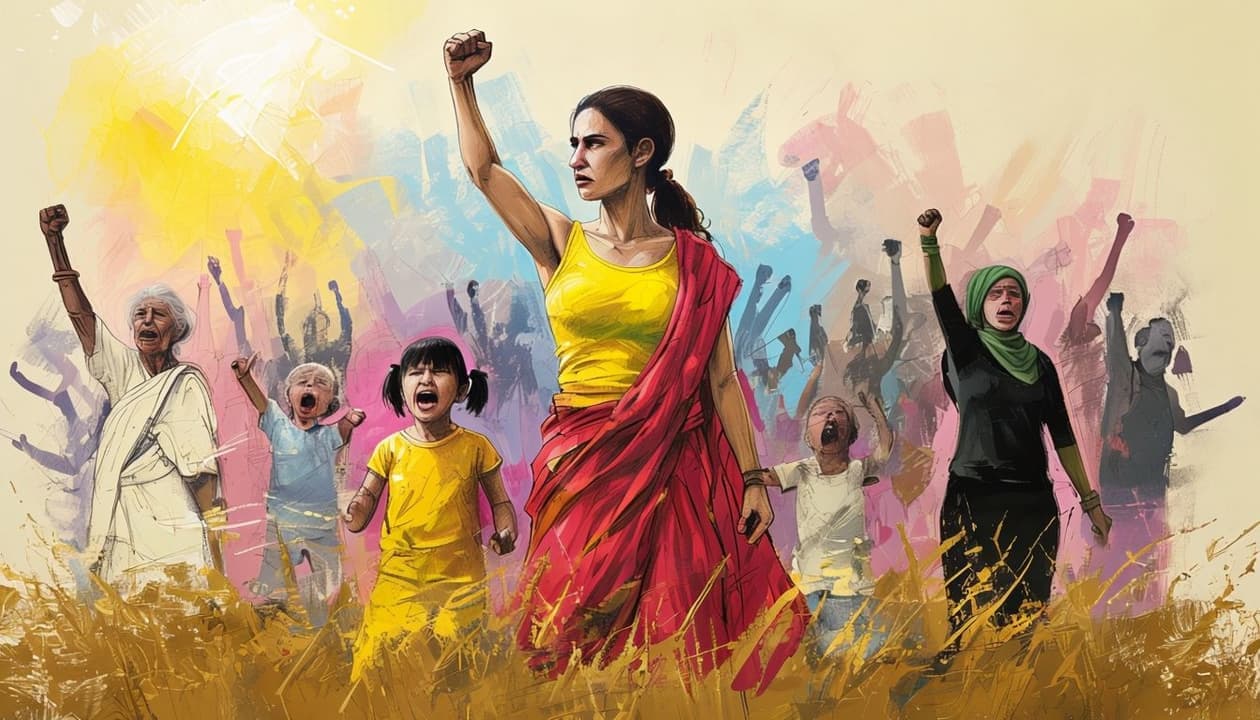
You have lifted the World Cup, and with it, part of the weight of centuries. Such victories go beyond the field; they remind us how much becomes possible when you are unshackled from limiting scripts and submissive roles. A true victory is not over an external opponent, but over one’s own limitations: personal, cultural, historical. When women play freely, the nation breathes freely. When women claim their place, the planet finds its peace.

The biggest problem is when we succeed in these little acts of charity, goodness, kindness. Had you succeeded in somehow persuading the kids away, you wouldn’t even have raised this question, and a self-awarded sense of morality and righteousness would have held you high. That’s the whole problem. When you said the kids wouldn’t go away because it is a festival and it is crackers, then do we really understand why the kids wouldn’t go away?

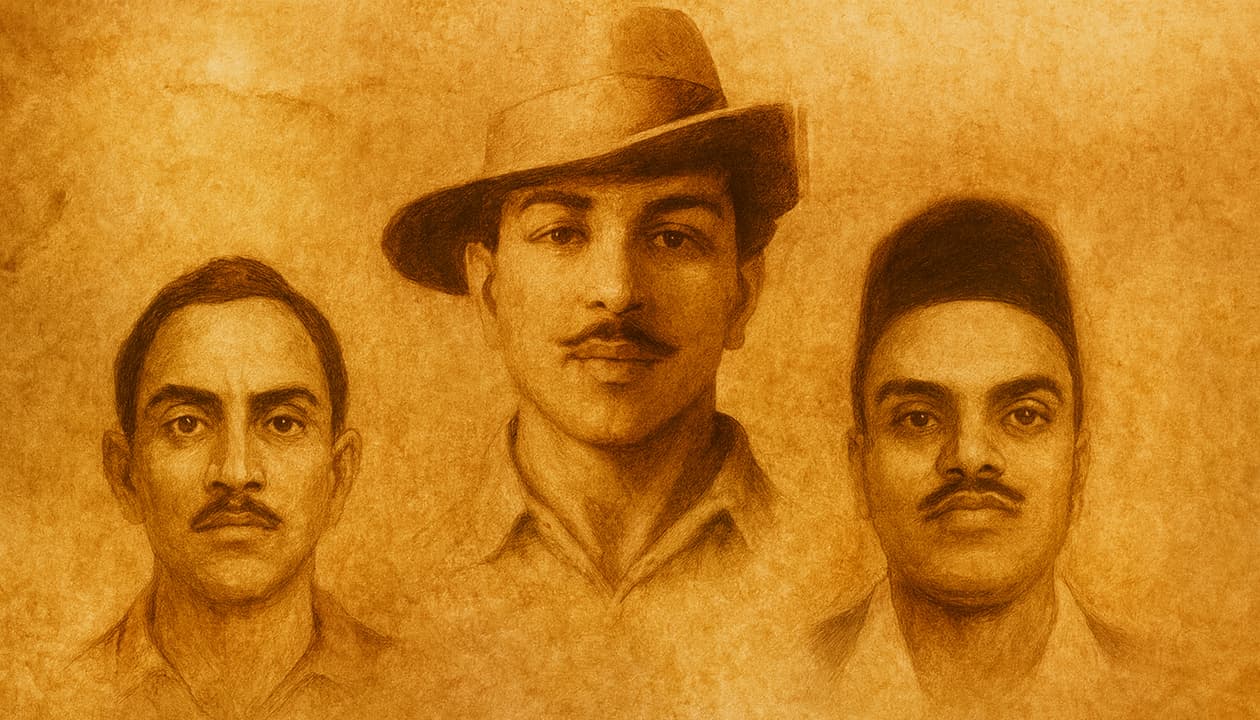
Today we venerate Bismil, Rajguru, Bhagat Singh, and Azad, yet many of them were let down by their own youthful compatriots. Be it any era, most people are governed mostly by their biological mandate. The choice is to either follow your biological compulsions, or go by the whisperings of your free mind, the aspirations of your yearning consciousness. The villains are ordinary; it is the hero who emerges against the norm. This age desperately needs a few heroes.

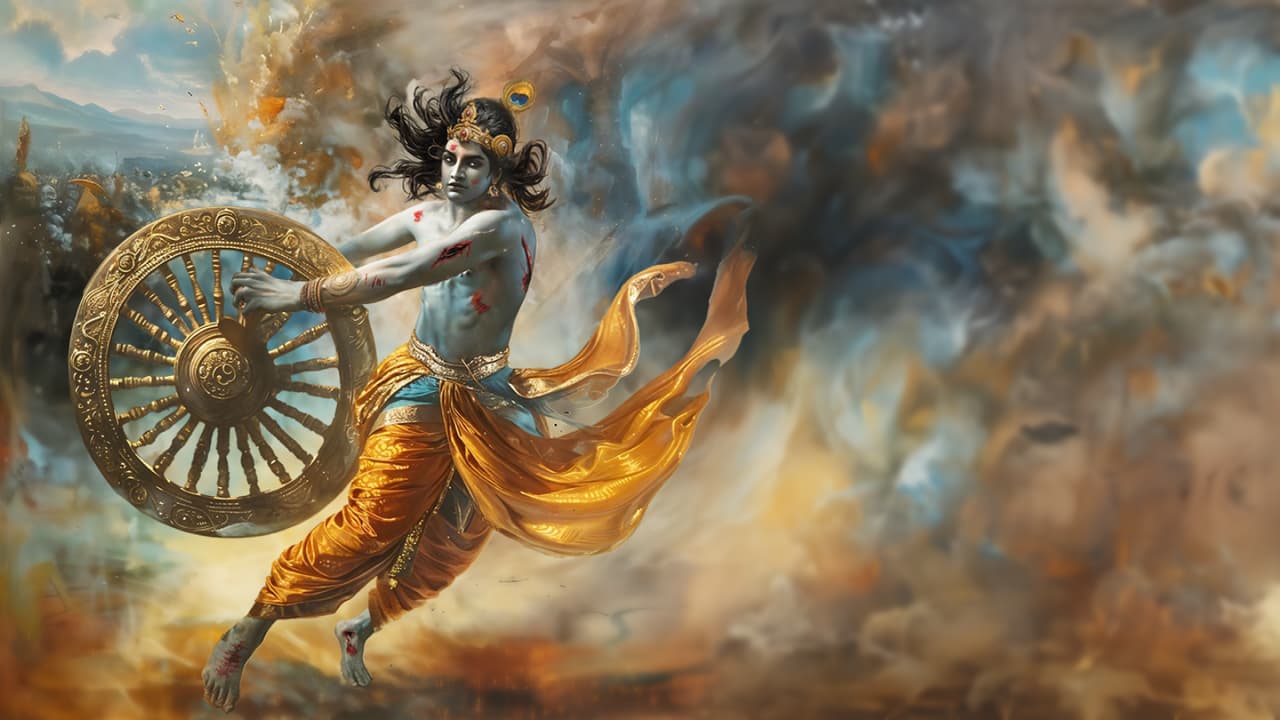
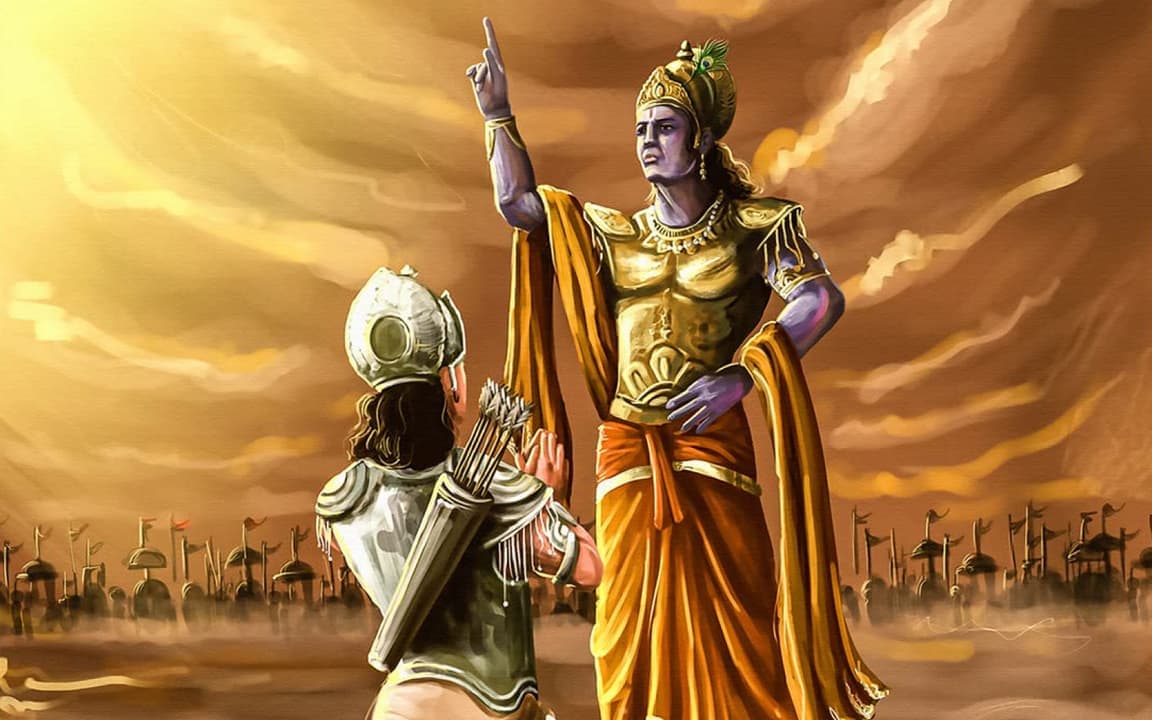
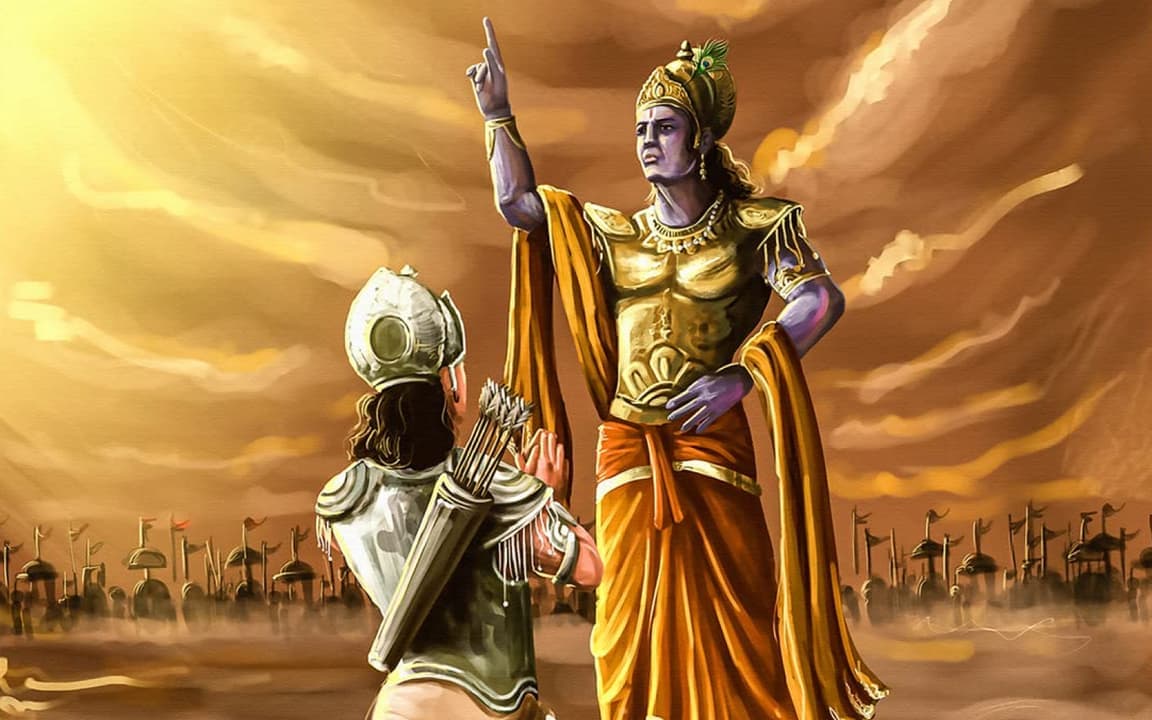
We have images of peace. When you look at the image of Shri Krishna rushing towards Bhishma to attack him personally, going beyond his brief as a charioteer, you don’t think that this is peace. You feel as if Shri Krishna is being violent. The expression of peace often looks very much like violence. Truth, Peace, Love, Freedom — these must never be searched in ‘actions’. Peace and Truth are no different. Peace is about the right action.

When you are reading the Upanishads, and your face has a sudden radiance, and you feel for yourself what it means to say, ‘pūrṇam adaḥ pūrṇam idam,’ then I will say, “That! That is Bharat.” Otherwise, what do ‘bha’ and ‘rat’ mean? Nothing. All this is just wordplay. The word ‘That’ is of tremendous significance — ‘That’; ‘tat’; ‘tat tvam asi’. ‘Tat’ — ‘That’ — 'That is Bharat.'

You have inflated the reproductive process much beyond its worth. Psychologically, a girl carries it throughout her life as something big, whereas it's nothing — just another process in the human body. And because of the stigma you have attached to this purely biological thing, countless women suffer silently because they can't openly talk about gynaecological problems. Indian philosophical systems have zero space for any belief, assumption, or tradition. So, obviously, this culture has to be outrightly rejected.

Overview
Fighting Duryodhana is Dharma. Fight Duryodhana in the way you can, that is swadharma. Dharma is the same for everybody, but swadharma varies according to your physical, social, temporal conditions.
But remember that swadharma can never be in contradiction of Dharma; swadharma will always be something…

Do not consume that which will poison you, even if it appears attractive. Now that is spirituality.

A lot of people from the West come to India, thinking that the land itself will do something magical to them. The land will do nothing on its own. One comes to India to probe himself, to know himself. The process is Upanishadic — of deep discussion and deliberation. If you are madly in love with realization, then India can bless you with something very magical. But India’s blessings cannot be foisted upon someone; one has to be deeply in love with, and desperate for those blessings.

It is not really the action that counts. One has to look at the constitution of the actor. If you want to become India’s soldier because you understand the great principles that India stands for and realize that those principles are worth laying down your life for — then you should definitely become a soldier. However, if becoming a soldier is about defending just a piece of land, or your own self-worth or ego, then there is not much in this choice.


Just because we don't hear gunshots doesn't mean that things are peaceful between partners or between parents and kids — especially daughters. Not at all. There are clear boundaries and those boundaries have been mined. As long as you remain within the boundaries, you will entertain the illusion that you are free and loved. Try to step out, and you'll be blown to pieces. So, the violence was always cooking but you didn't see it because you were blinded by your emotions, need for security, and conditioning.

Vedanta says that the body of the woman is her cage, just as the body of the man is the man's cage. Vedantic feminism would say, ‘Disown your physical self — you are much beyond that, girl.’ As long as you identify with the body, enjoy being called a girl or woman, there’s no freedom for you, and the same goes for the man. Saying, ‘I am the woman, I am the man’ is the real problem. Equality is a high ideal, but liberation is the purpose of life.

The building is raised on a weak foundation, and now you want to penalize everybody who comes and shakes it up even a little? You don't do this. Why did you allow this building to stand on such a weak foundation, and now you are trying to protect it through legislation? What kind of stupidity is this?

We don't really look at a woman as a human being, but rather as her physical identity. Even in murder, we fail to see the human being. The sexual lenses are always on. Sri Ramakrishna Paramhans, the great saint, used to say that the ordinary person is driven by two objectives — kanchan (money) and kamini (lucrative girl). Sex is not so much a need of the body, it's a need of the mind. Unless this thinking changes, we'll have to live through the pain of seeing more such incidents.

Human beings are in a peculiar situation. They can choose to side with their animalistic conditioning or they can choose something higher. They can choose freedom, joy, love, liberation, compassion. Therefore, humans have a responsibility. Animals don't have that responsibility.

If India is just the birthplace of your body to you, then there is nothing special in India. What is India really? Figure that out, and then you will know whether it is of importance to serve India. And when you know something is important, then you devise means. Then, you need not necessarily be present within the geographical limits of India. You probably could be anywhere equally. You need not be at other places for reasons of greed.

Acharya Prashant: You will see that I'm repeatedly stressing on Shri Krishna as the demolisher, on Shri Krishna as someone who not only does not accept our prevalent definitions of right-wrong, true and false, humility, authority, right action, non-violence but, in fact, unabashedly and actively demolishes them. It is one…

It is the most critical moment for the plane, when it is taking off. Even after that, if we are constructing something as sensitive as a hospital right next to the airport — then only God can help. This can only be found in India — where there's an airport, and right next to it are buildings, and we accept it. Until we understand that living with dignity is more important, we will keep finding it acceptable to sell off our safety and self-respect.

It is our animal tendency to be territorial and to really want to control the other gender — so that we can maximize our own pleasure. When you own something, then there is a sense of security and that's why men want to control women's sexuality. You can dispel that by understanding that you can have no lasting pleasure by owning anything — including a person of the other gender.

Acharya Prashant (AP): The Ego wants to hedge its bets. Because it is born in insecurity and gains its sustenance from insecurity, therefore insecurity is its very life-stuff. Now look what happens, if insecurity is the life-stuff of the Ego then what kind of security will it seek? It…

You look in the mirror, and if there is a speck or blemish on your face, you want to change something. If you look at the Gita and that doesn't result in changes in your life, then you are misusing it. Anybody who holds the Gita must be ready to look within and discard all that which is unnecessary, borrowed, antithetical to life. If that is not happening, then that's disrespect to the Gita.

We all have our moments, our episodes of failures. We all let ourselves down at some time or the other. What to do then? Rule number one – do not go down tamely. If there is an inner conflict, and you know which side should win, fight hard to ensure that the right side prevails. Rule number two – keep fighting till your victory and keep fighting in your defeat. Even in defeat, remain a winner.

Genghis Khan — he was fighting wars all his life. Somehow, he spared India. But the rest of Asia and some parts of even Europe — he totally vandalized. Vandalized to the extent that a very high percentage of people in Central Asia to this date carry his genes. He impregnated so many women. That seemed to be one of his major motivations: "If I win the war, I get to impregnate the women. Forty in a day." Imagine — entire populations bear the stamp of his genes. War and women—they always go together. Because they come from the same center.