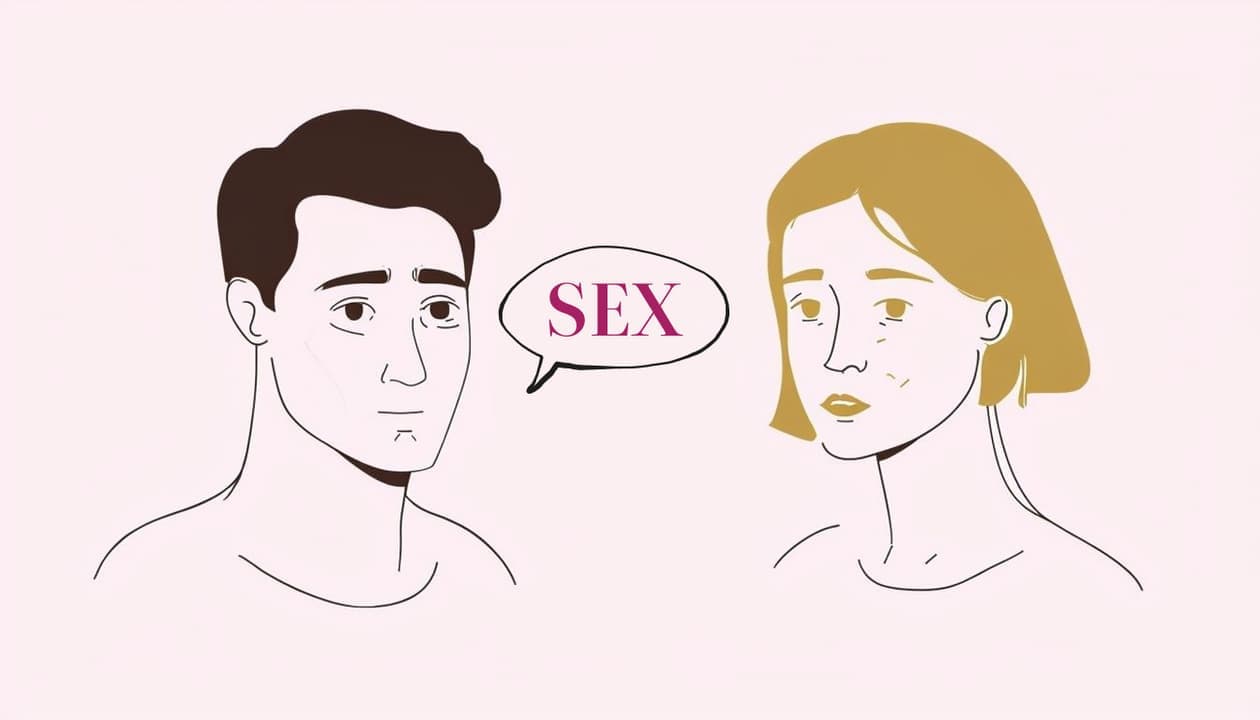
Sex and Menstruation: Why Is Religion so Obsessed?

Acharya Prashant

27 min
1.2k reads
Sex and Menstruation: Why Is Religion so Obsessed?
You have inflated the reproductive process much beyond its worth. Psychologically, a girl carries it throughout her life as something big, whereas it's nothing — just another process in the human body. And because of the stigma you have attached to this purely biological thing, countless women suffer silently because they can't openly talk about gynaecological problems. Indian philosophical systems have zero space for any belief, assumption, or tradition. So, obviously, this culture has to be outrightly rejected. This summary is AI-generated. Please read the full article for complete understanding.

Questioner: Namaste Acharya Ji. I joined the Gita session on December 23 along with my elder sister. My question is about a very common stigma in India related to monthly periods in women. We understand that menstruation occurs when the egg isn't fertilized and is shed. In India, there's a list of things women are not allowed to do during these periods. So, my question is: since the grandmother intends for us to reproduce and continue this cycle, is menstruation considered impure precisely because her objective is not fulfilled during that time? Can we see it like that?

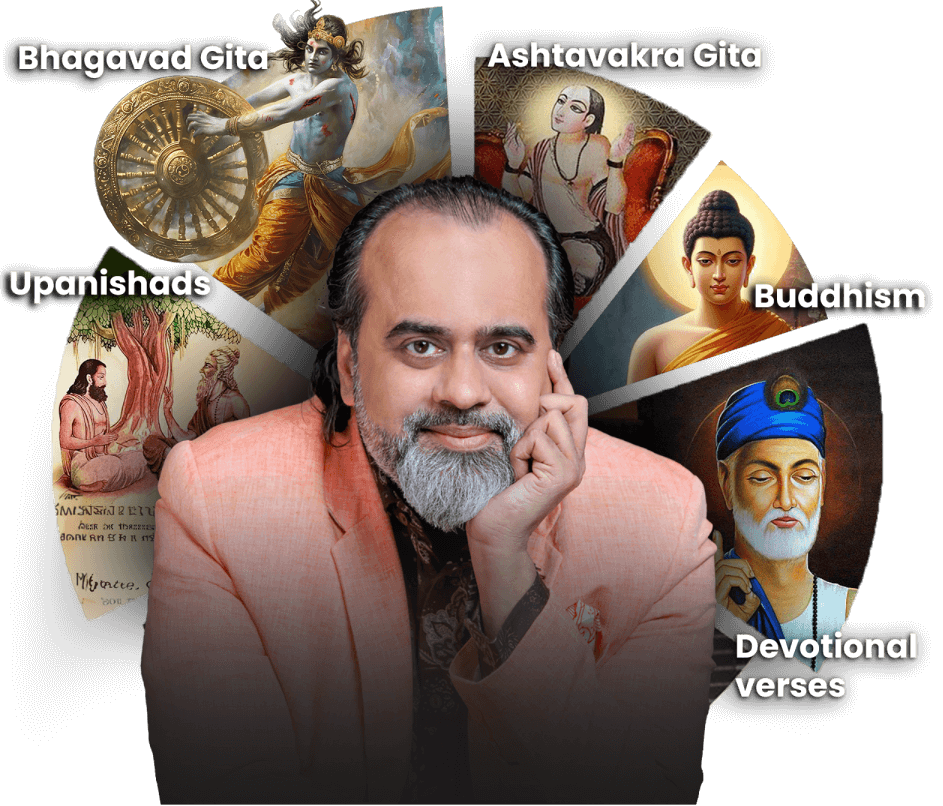
Acharya Prashant: No. First of all, let's not debase India by saying that in India, this is what we think and practice. India is also about the various deep, towering philosophies that we have. Why equate only the prevailing filth with India? How is Bhagavad Gita not India? And where does the Bhagavad Gita talk of menstruation? How are yogis not India? How are Vaiśeṣika Sūtras not India? Buddha and Mahavir and the entire tradition of saints, how is that not India? Or the entire tradition of explorers and scientists, how is that not India?
India has scaled the utmost heights of consciousness as well. And the mission is to reclaim India. Otherwise, the fools have usurped India. They have kidnapped, hijacked India to the extent that you see in your question, you are equating all the nonsense with India. I can understand where you're coming from, but that's a tragedy, isn't it?

And since this is in English and would go to the English channels, international audiences would also get the same impression that this is how Indians think and practice. They'll think that the entire country and its whole past and its philosophy is like this, where women are stigmatized on particular days in the month and on the basis of basic biological processes. And they'll say, “What a stupid nation they are.”

And that's a tragedy, because India is also the cradle of wisdom. Is it not? And yet, things have come to such a lowly state that the place that raised the most beautiful ontological questions has now been reduced to a breeder of very rotten and very stupid beliefs.

We said we are not going to believe anything. The entire structure of religion that we have is based on philosophy, and all kinds of philosophies. Not just heterodox, orthodox as well. And some that cannot be called as orthodox-astika or heterodox-nastika — they fall in a grey zone. All kinds of thought systems fill up the consciousness space. That's the place India has been.

What is certain, however, is that none of the philosophical systems has any place for belief. The things that you are talking of — the discrimination against women and all those things are done in the name of culture and tradition. And culture is supposedly based on religion. Right?

Let's explore the linkages.

Culture is supposedly based on religion. But our religion comes from our philosophies. And our philosophies have no place for belief.

Questioner: Right.

Acharya Prashant: Instead, the first thing they would ask, is an assertion having an epistemic basis? What is an epistemic basis? That which you are talking of as existent, is it backed by any kind of proof?

Questioner: No.

Acharya Prashant: That's what the philosophical systems will ask. Indian philosophical systems are so rigorous. They have zero space for any belief or assumption or tradition. And we are not just talking of Vedant here. You go to Nyāya–Vaiśeṣika. You go to Yog. You go to Sāṃkhya. You go to the Cārvākas who are a league of their own. Or you go to Buddhism and Jainism. Everywhere, the first thing that they ask you: what is the epistemological basis of whatever you are saying? Where are you coming from? What is the proof?

First thing they will ask: how are you certain of your knowledge? How do you know? Don't I repeatedly ask you, “how do you know?” That is epistemology. How do you know? Or are you just believing? You are positing. You are assuming. You are dreaming. You are imagining. You are projecting. You are not knowing. So, rejection of belief is the first thing in philosophy. Indian philosophy.

And philosophy is the basis of religion. And culture must find itself in religion. So, can culture have any place for beliefs or traditions? But what you call as the prevailing Indian culture is nothing but beliefs and traditions. So obviously this culture has to be outrightly rejected, totally rejected — because this culture is not true to our religion. This culture is in defiance of our religion. This culture is an insult to our religion.

Have you understood the whole line of argument? Culture must come from religion. And religion is founded on philosophy. And there is no philosophy without epistemology. And epistemology says, “No belief sir. Let there be a proof. Show me the proof.” So any culture that says something has to be done or practiced only because it has been happening for so many generations or centuries is a culture worth junking. Throw it in the trash. There is nothing to this culture.

Any aspect of culture that says, “Believe in something, practice something, surrender to something, act in this particular way and don't ask the reason. Respect beliefs. Respect beliefs. Respect belief.” That kind of culture, at least that aspect of culture is an abomination, a humiliation, a disrespect to everything that is Sanatan.

Now tell me this monthly period thing. Is there a scientific reason? Is there logic? Is there some sound argument? Nothing. Some random bullshit that we want to justify using fake arguments. Because something exists and you have linked that tradition to your ego. You say it has been happening for so many years, and my ancestors practiced it. So if I now junk it, it means my ancestors were stupid. And my entire identity comes from my ancestors, because you see, I belong to such and such caste and varna, and all that comes from my ancestors. And I take a lot of pride in being something a brahmin, a vaishya or whatever.

Therefore, how can I admit that my ancestors were mistaken? That's a big problem. How to admit that the ancestors were mistaken? Sir, why not admit that? Four generations later, you would be an ancestor to somebody. And we all know how stupid we are. So if we can be stupid as ancestors, why will our ancestors not be stupid? Just as we are stupid, they were also stupid.

Four generations later, somebody will say, “You know, my great ancestors, epitome of wisdom. How could they be foolish?” Everybody is foolish. At any given point in time, only 0.1% of the society is wise. Everybody else is stupid. And traditions are not founded by the wise 0.1%. They are the traditional breakers. Traditions are carried forward by the dumb majority, overwhelming majority — 99.9%.

But you will come up with some argument because now your ego is at stake. How do I admit that my great culture and my ancestors were all at fault? So let me come up with some arguments. The argument is that, you know, the woman is always the housewife and the housewife is overworked. So our ingenious ancestors devised a trick to give the women some rest. They said that for four or five days in the month, they will not enter the kitchen, meaning they will be able to sleep. See how everything is eco-friendly, anti-casteist, and silently feminist.

Our ancestors were lovers of women. So they said, for at least five days in a month, let the women take some rest. So they came up with this argument: Let them not go to the kitchen. Let them not even go to the temple. So they will not go anywhere. So they will sleep.

See, we have been a place that loves our women so much. We wanted to give them some rest and peace. All glory to our great ancestors. Yes, we have had great ancestors. But those who are really great, you don't even know their names. You worship stupidity in the name of greatness. And real greatness, you have forgotten.

India has no dearth of great names in the past. But do you know them? If I say “Aruṇi,” you'll look around and wonder like a fool, “Who is Aruṇi?” If I say “Uddālaka,” you will say, “What, methi palak?” We have had our more than fair share of greatness in ancestry, yes. But those who are really great, as always, you neglect them, you humiliate them, and you forget them. And all the nonsense you perpetuate in the name of greatness — all the foolish things you carry forward saying, “This is coming from our great past.”

Today your kids go and study atoms and molecules and the nuclear particles in school. If I say Kaṇāda is the name that should first come to you when you say aṇu, you say, “Kaṇāda? What an odd name. Why would somebody name his kid Kaṇāda?” Stresses the nose, Kaṇāda.

Had we really been lovers of greatness, you would have found kids being named after Kaṇāda? And Kaṇāda is as scientific a mind as you can find at any place at any point in the entire world's history. But do we really worship greatness where we have had it? No. If I say Vijñāna Bhikṣu, you'll be astounded. You’ll say, “What kind of name is this? Vijñāna Bhikṣu? Science beggar? What does that mean?” But you will say, “It is our great tradition that women should not put their hand inside the pickle jar during periods.”

Why?

You know, if a woman is menstruating and she touches pickles, the entire lot will rot. But don't touch pickles, and some creative genius will come up with a supportive argument. They will say, "You know, the real scientific reason is this." Such contempt you have for science. You want to insert science where there is really no science, just blind tradition and belief.

You know the fact of periods? There was this account I was reading, and the woman says, 'It's not just me. Most of the women that I know of, their husbands do not spare them during periods.' Forget about not entering the kitchen.

"The man's lust does not spare the woman even if she is menstruating.”

So you will not let her enter the kitchen, but you will enter her body. And because of this stigma you have attached to this purely biological thing, there is no count of women who get diseases, infections, and suffer silently because they cannot come out and say. Most of India is still rural and small-town. Women cannot come out and say they are having gynaecological problems.

One of the inflection points when you look at the dropout rates, the comparative chart between boys and girls, one of the inflection points is at 12, 13 years of age. Girls just drop out because there's a stigma attached to menstruation. They stop going to school because their parents didn't tell them anything. There is no sex education. And when the bleeding starts in the school, it becomes a spectacle. There's just so much shame and embarrassment. And for the others, it's good fun. And girls just drop out.

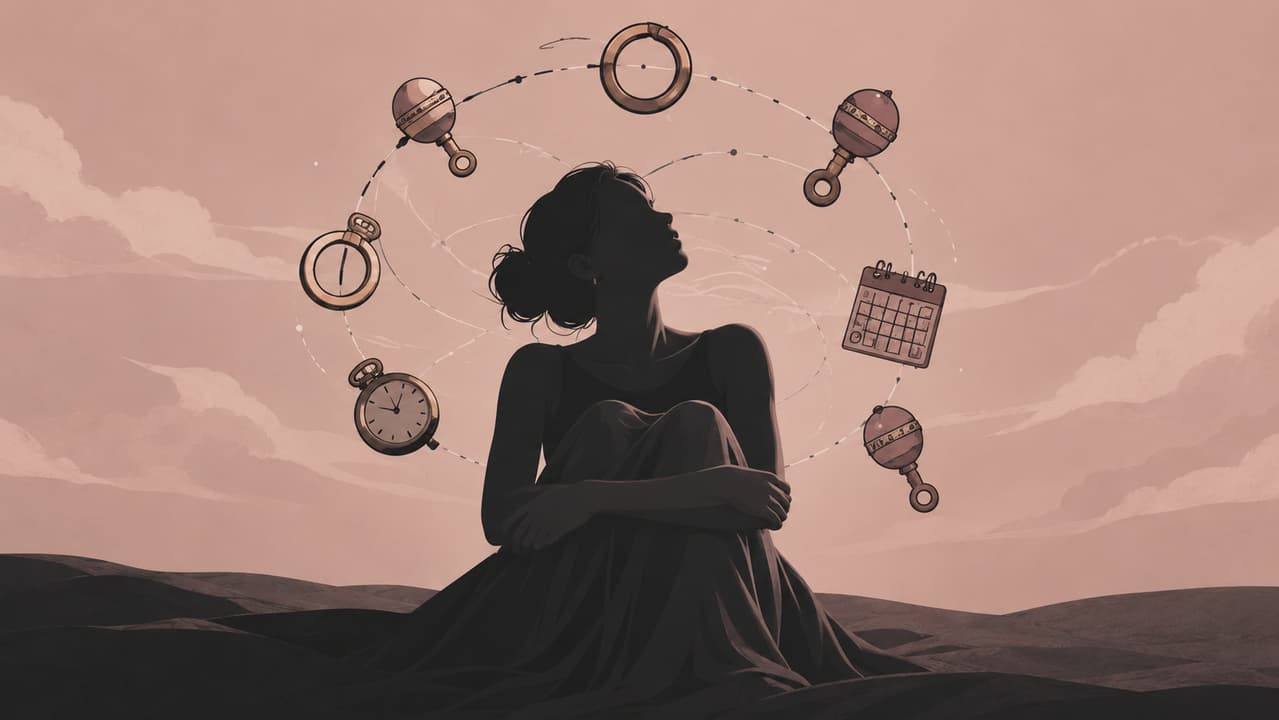
And another thing. Because you blow it up into such a big thing, in the mind of the girl also it becomes a disproportionately big thing, whereas it is nothing. It's like any other usual process in the human body. That's it. And there are so many processes that do not happen on a daily basis. They actually happen on a monthly basis. Even in the man's body it happens, just that they are not visible.

From the brain to the heart to the kidneys, there are things that have their own cycles, time periods. Sometimes that period is a week, 15 days, a fortnight, 6 months. There is so much happening. Even the layers of skin that automatically peel off, they have their own periods, time periods. 72 days, a little beyond 2 months, that too is a period. Just as the unfertilized egg is being shed, similarly the skin is also shed in both men and women. And this is happening with all organs in the body in some way or the other.

There's nothing very unusual about it. But we blow it up into something massive, and psychologically it becomes something big in the mind of the girl. And she carries it throughout her life. Something very big is happening to me. Something very important is happening to me. And then that affects her career as well. She actually starts feeling it's a big thing, and will be absent from the office, and will feel justified.

Now, obviously there can be real medical situations also. Obviously, there can be genuine justifications also. There is actually some pain associated with it in some individuals. That is possible. But then there is a huge psychological component as well. You made it into such a big thing that throughout her life the woman keeps feeling, "These are very important days, you know.” And devoid of self-reflection, self-observation, she will not know where that feeling, that importance is coming from. She will feel, you know.... (expressing fear) and then there are exaggerated mood swings. Some part of that is hormonal, and some part is just psychological.

She cannot behave normally. She cannot be her casual self. Some of them won't want to travel. Some of them won't want to play. Some of them won't want to venture out of the house. And they will think, "This is a sovereign choice. This is a free choice." It's not a free choice. Since your childhood, this was made into such a big thing that you are carrying the trauma.

And then women say, “The entire personality experiences turbulence, shakes like an aircraft in choppy weather in those days.” Some part of that is obviously biological and hormonal, but please understand, some part of that is cultural. If there is a Grand Slam competition which extends over so many weeks, would a top tennis player say, I have reached the semi-finals or the quarters, and even these quarters, then semis, and then finals — that even the final leg is quite a distance. Will she say, “You know, I'm on my periods, so I'll allow my performance to be affected?” No, not at all.

And you can't just be on pills and postpone periods by 2 days or 3 days because the entire competition is just weeks long. How long can you postpone it? You take it in your stride. You just take it in your stride. Every mammal menstruates, every single mammal from dogs to cats to cows, but they don't have a culture that turns it into something so significant. So they take it in their stride. For them, it's an ordinary event, a usual thing, nothing spectacular. We just turn it into......(expression of exaggeration.)

And we do have some books which are unfortunately called religious books. They are not religious at all. The Bhagavad Gita is religious. The various Darshans that we have are truly religious, not books that say things of the kind that if a girl has started menstruating and if her father has not married her away, then the father is guilty of one murder per menstrual cycle.

Please understand the logic. Such an affront to the word "logic." But the logic is, the egg that has been shed could potentially have become a human being. But because the father didn't marry away the girl, so that potential human being has been killed. So the father is the killer. And now he will bear the sin, and in the next birth, he will become a pig or whatever.

And so fathers are in a particular haste, "Is she grown up now? Has she started on periods? Okay, just bring in somebody." The only qualification is that he should be a male. Any species would do. Just get somebody, and I'll send her off. So women find themselves being married away to pigs, asses, chimpanzees, just so that the father can absolve himself of sinning more.

There must surely be a day in the boy's reproductive life also when his sacks start manufacturing sperm. Why not treat it with the same pomp and grandeur and significance? Just because the thing is hidden? You can't see? Now you'll have machines that can see. Celebrate that also.

What kind of culture is so obsessed with reproduction? You don't want to place emphasis on her education. You don't want to celebrate the days when she first picks up a badminton racket, wins her first match, completes her first book, writes her first paper. You don't want to celebrate those days. You don't want to remember those days. There is no significance there, right?

She appears for the first time on the stage and participates in an elocution competition, or recites her first poem, or participates in theatre, or just rides the bicycle the first time — those are not the days of significance? Please tell me.

But you want to remember when she becomes fertile. You want to have a monthly reminder, and you want to say, "Oh, this is very important." The result is, the woman starts seeing herself as not more beyond a reproductive machine. "Who am I? Somebody born to reproduce." And then you glorify that with all the images and halo around motherhood — "You are born to become a mother. You know, your greatest achievement is that you beget a baby," and all that is one thing. Do you see this? The significance attached to menstruation, and then to motherhood, and the entire structure of exploitative patriarchy — all these are one thing.

There has been a recent movement though. I'll have to update myself about the details. Abroad and in India, certain corporations are provisioning for period leaves, and they will be counted as genuine medical leaves or something.

In the Indian cultural context, I'm afraid there might be a flip side to it. Because you are again telling the woman that something very significant is happening. But that is exactly what her mother and father and the society and the school were telling her since her puberty. You are again reinforcing the same belief, may I say, the trauma.

Somehow she became a career woman. Somehow she entered corporations. And here again, the HR comes up to her and says, "You know, we have this new progressive policy now. You can have period leaves, which is, I understand the intention, and I see that it's coming from a place of empathy. But also understand that in the Indian context, we must first understand how vulnerable the woman is and what kind of experiences she has already passed through.

Obviously, if there is a genuine medical reason, she must be entitled to have leaves. Obviously, no one can dispute that. I'm talking of the psychological component of the whole thing.

If you just dig up the figures — how many girls drop out of school? How many women suffer, and even die, because of untreated gyne disorders? The numbers will be staggering. Then we want metals in the Olympics. So you have to train. If you are talking of female athletes, you have to train them from the age of six or eight. If we really want them to perform and win something for you ten years later, how will you produce world-class swimmers if periods are such a taboo?

Or even tennis players, where the norm is to wear short skirts. Or weightlifters. Or gymnasts. It's a simple and normal thing. There's nothing to raise such a big hue and cry about. Simple. Why turn it into a life defining thing?

There are people who have a lot of earwax. They have to periodically get the wax removed. That too is a kind of period. And the doctors will tell them, "Every two months you come to me, otherwise you'll have problems." Now, obviously, detractors can laugh at this argument and shred it apart, but please see the point I'm trying to make.

All in all, this is not religion. This is not philosophy. This is not epistemology. This is a certain belief.

And where is that belief coming from? That belief is coming from the mother belief — that the purpose of a woman's life is sex, reproduction, and caregiving. Have sex. Have babies. Serve the baby and the family around. And that's not a belief. That's an agenda. That's a vicious agenda. That's not a reasonless belief. There is a reason behind that. You can't even call that a blind belief. That's a vicious agenda.

If 50% of the population has to have fun, why not subordinate the remaining 50%? That's the agenda. Fifty percent can have fun by subduing the other 50%. Proceed. And all these things — periods, motherhood, this, that, wedding are all little cogs in the big machine. Who wants to refuse a service provider that comes for free? All kinds of services she offers. And you don't even have to pay her properly. You just have to tell her, "You are doing your duty.What payment are you asking for? This is anyway your duty. No payments to be made. Forget about duty. Before you report for duty, bring a huge dowry. So I'll appoint you, make you work for me and won't pay you any salary. I'm talking the language of corporations. And before I make you the offer, allow you to sign it, I'll demand a huge ransom. Do you get this?

The kind of bribery that often happens in government departments. "If you want this job, pay me." So if you want to come to my house to serve me, if you want that job, first of all, you have to pay me. What is that payment called as? Dowry.

Look at the sheer ridiculousness of it, and the audacity of it, and the miracle that this system has managed to continue since centuries. You pay me so that you can come and serve me. And when you serve me, I won't give you any kind of share because that is supposed to be your sacred duty.

So when you look at the broader picture, why menstruation happens to be such a big thing in our minds, and all these things, that's the bigger picture. That's the broader agenda. And that agenda manifests itself in many ways. Menstruation is just one of those ways.

The emphasis placed on the girl's looks, for example. The practice that the girl will leave her house to settle in the boy's household after marriage. All these little elements, when you pick them up and piece them together, that's when you see what the bigger agenda is.

The bigger agenda is simply this — “Serve me for free.” Provide me with all kinds of services. What other agenda can one have when one is operating from a point of self-centered ignorance? What other agenda can be there? That's all that the self-interested ego wants, right? Some pleasure at the cost of exploiting the other. What else can a selfish person want? I want to have my pleasure. If that means I have to exploit or kill somebody, so be it. That's all.

There is no divine complexity in anything. Don't think of it as, you know, there has to be some mystical element in this. Some holy unknowable that we mere mortals cannot comprehend. Nothing of the sort. Human beings are selfish, as are all animals. And if they can create a system whereby they can have somebody serve them for free, they will create that system. That's it. No divine complexities here. No mystical secrets here.

Another aspect, if I may. By turning something related to the reproductive process into something so big, you have inflated the issue of sex much, much beyond its worth. You have told the woman and also probably the man, that sex is a very big and sensitive thing, you see. Now the entire life of the woman would be in some way giving sex disproportionate importance. And that disproportionate importance manifests itself as both submission and abstinence.

"Sex is such an important thing, and as a woman it's my duty to provide this important favor to my lord when he so desires. Because it is important. It is not only important. It is something governed by culture and rules and tradition — forces outside of me. So I don't really have agency there, you know.

So when the lord comes and says, "Disrobe, because such is my will, I will follow my patī-dharma.” How can a human being live freely if sex becomes such a big thing in the mind? How virtuous are you as a wife — that is determined by your sexual conduct. What nonsense. And by giving so much importance to sex, indirectly you have told her, "You are a body." And that is the entire purpose of the ego. Aham dehasmi "I am the body."

You might be an idiot in all other ways. But if you have been sexually obedient, then you are considered virtuous. No? That's the entire claim to fame. "You know, all my life I never looked at anybody else." Now I'm not suggesting that you go out and look at 20 other people. But whether you do look at someone or you don't look at someone, how does that become something so big?

I would rather want to know how truthful your life has been, instead of your submission to your lords. I would like to know how deep your submission to the truth has been. That's the measure of virtuosity.

But the Indian woman has been told, "You know, it doesn't matter if you are illiterate. Doesn't matter if you don't know a thing. Doesn't matter if you can't even drive a scooty. Doesn't matter even if you can't buy vegetables. It doesn't matter if you do not know at all what's happening in the world. No idea of sciences. No hold on arts.” If asked to draw something, the most you can draw will be the blank. Nothing in your life.

But still she claims to be pious and virtuous. The very image of goodness. Why? "I never got into any sexual misconduct." Whatever that means. "I considered my husband as the lord. Now I'll certainly be salvaged."

You know Phoolan Devi, right? I was just watching an interview, and there was something very poignant she said. The interviewer asked her, "What is your desire now?" She said, "God, make me a goat, a cow, an ant, anything in the next life, but don't make me a woman."

And in the same interview, she said — now that she got elected, she became a political representative. She said, "I feel ashamed when these people bring me papers and I can't read properly. But now I'm learning in great haste. And I want to be able to read everything and decide on my own and be a good representative."

So there is consciousness. She could have been so much more. And given an opportunity, even at the far end of her life, she was trying to be so much more — in terms of reading, writing, understanding, talking, discussing, making policies, taking decisions. She was trying to be so much more. But in the initial part of her life, you know what happened to her, right? Raped repeatedly. Because that's how we look at women. And we say, "This is our culture." And then to hide the very obscenity of it, we say, "We worship women as goddesses."

Sir, really?

Had we worshipped them as goddesses, would we have looked at them in such vulgar and sexual terms — in all kinds of ways possible, including menstruation?

And I'll return to the first thing I started with. Let nobody say that this is India. I love India. India is beautiful. And these idiots have no right to call themselves Indians. India must be reclaimed. If you are proud of being an Indian, then you have to understand the essence of India. You'll have to go back to the roots. And you'll have to give India her due.

These are two things that are being repeatedly abused today — India and Sanatan. Whatever nonsense you want to peddle, you can do in the name of Bharat and Sanatan. And both these words need to be reclaimed. Because India is beautiful and Sanatan is holy. And they have to be restored to their beautiful and holy places. Both these have been brought down. Both these have been abused. We cannot allow the abuse to continue.

Questioner: Thank you so much, sir.

This article has been created by volunteers of the PrashantAdvait Foundation from transcriptions of sessions by Acharya Prashant
Comments
LIVE Sessions
Experience Transformation Everyday from the Convenience of your Home
Live Bhagavad Gita Sessions with Acharya Prashant
Categories