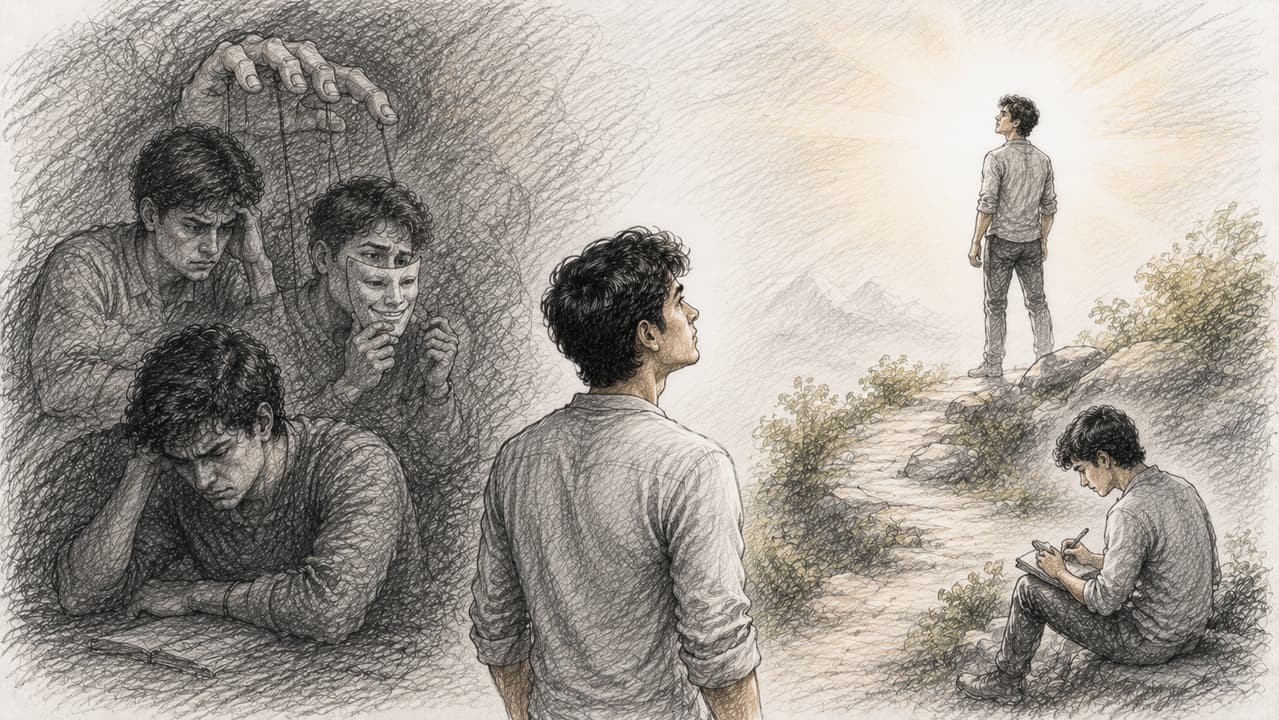

Reaction is an instinctive, unconscious response rooted in ancient survival mechanisms, while response arises from consciousness and understanding. Our biological instincts evolved for survival, but modern life demands that we move beyond them. Emotional reactivity makes us predictable and controllable, allowing others to manipulate our emotional triggers. True freedom lies in pausing before reacting, examining emotions, thinking deeply, and responding consciously rather than living as slaves to instinct.

The balance between order and disorder should not be decided by personal likes or dislikes, but by what the task at hand requires. Sometimes a project demands discipline and order; at other times, more important work requires leaving things messy. The right action comes from responding to the actual need, not personal preference. Even sacrifice can be meaningful when it serves something important, but “staying backstage” should never become an excuse to avoid what one cannot tolerate.

True freedom begins when we question the beliefs that make us feel trapped. Most of our suffering comes not from circumstances but from unquestioned assumptions, attachments, and imagined obligations. By suspending our beliefs, even briefly, we allow truth to enter, revealing that life always offers choice. Transformation is born from love for truth, the courage to let go, and the willingness to step beyond the boundaries created by the ego.

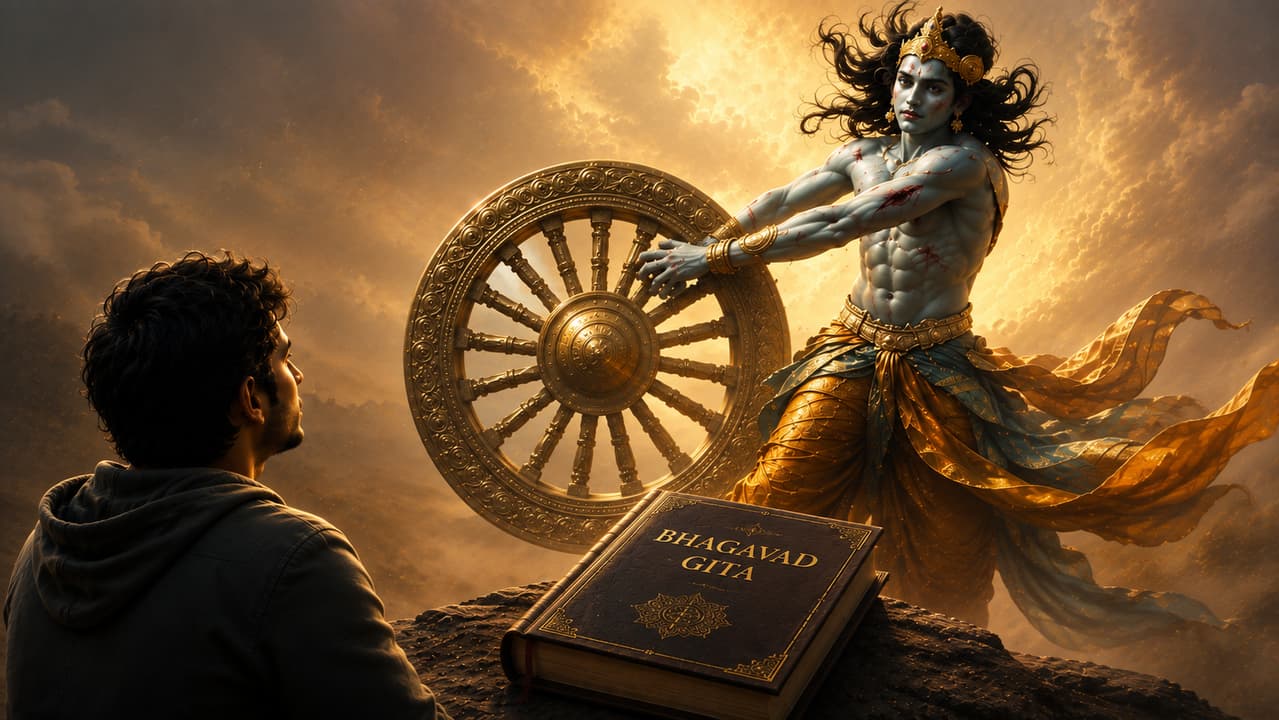
The Bhagavad Gita deserves reverence not because of inherited beliefs about its author, but because of its power to dissolve falsehood and reveal Truth. Real devotion is not ritual or blind faith—it is understanding, inquiry, and living the wisdom of the Gita. Through sincere study, one discovers the true meaning of Krishna, making the Gita the most authentic path to knowing and worshipping Him.

True learning is not built on memorizing answers but on understanding reality. Memory may help in examinations, but life constantly presents new questions that demand clarity, presence, and intelligence. Education becomes meaningful only when knowledge is deeply understood and lived, not merely remembered. Real understanding frees us from dependence on rote learning and enables us to respond wisely to every new situation.

Bullying hurts deeply only when it is allowed to define one's inner identity. External abuse may wound the body, but lasting psychological wounds require inner participation. While OCD, anxiety, depression, schizophrenia, and other mental health conditions deserve proper treatment through psychiatry, lasting freedom demands self-knowledge.

Social media has not destroyed attention spans; it has exposed our dissatisfaction with what we consume. The real problem is repeatedly returning to content we already know is empty instead of respecting our own intelligence. Books are only one medium for knowledge, not knowledge itself. What truly matters is reclaiming attention from distractions, demolishing the borrowed mental structures imposed by society, and creating an inner space where meaningful learning, reflection, and self-knowledge can flourish.

Real change begins not by changing the world alone but by understanding the one trying to change it. Laws, technology, policies, and scientific progress have value, yet they cannot solve problems rooted in human consciousness and endless desire. Truth remains the same across cultures and disciplines, requiring only a change in language, not in essence. Lasting solutions emerge through honesty, self-inquiry, and inner transformation, because no external system can replace a change in the human mind.

Freedom begins when a person stops handing over the authority of life to others. Society, family, and tradition can offer opinions, rewards, or disapproval, but they cannot truly stop someone unless there is inner dependence on their approval. Many conflicts that appear external are rooted in psychological dependence, fear, greed, obligation, or the desire for validation. Clarity does not come from controlling every outcome; it comes from ensuring that decisions are not driven by inner confusion, and then allowing life to unfold naturally.

Operating from the highest inner point means living with honesty rather than self-created illusions. The ego becomes “higher” not through mystical growth but by dropping false self-images and testing its claims against reality. When honesty weakens, lower motives take control, creating inner conflict and disorder. Real growth lies in continuously questioning oneself, facing uncomfortable truths, and preventing the ego from being driven by comforting but deceptive beliefs.

You are not truly young, you carry centuries of inherited beliefs, prejudices, and conditioning. Youth is the ability to change and create the new, not follow fixed patterns. Before asking what to do next, question and free yourself from the past. Only by breaking from inherited constraints can genuine freshness emerge.

Acharya Prashant (AP): That which you call “Vipassana” today, is a very recent phenomenon. They claim that it comes from the Buddha, actually, it is not. The stream flowing from Buddha got extinct around the 8th or 10th century AD. This modern Vipassana came up in Burma, just around a…

Who is a practical man? One who understands before acting. To be practical means to understand and put it into practice. If my work, my action, and my practice is arising out of clarity, then I'm practical. Clarity is not some state, clarity is not some picture and clarity is not ideal. Clarity is not something to be achieved. Clarity is your inherent ability - your very nature to understand, to know, that is called clarity.

There is nothing called woman’s liberation in isolation. Woman is oppressed and the man too is oppressed, albeit in a different way. Woman’s liberation is man’s liberation. Together they suffer, and together they will celebrate. Their attempts to have freedom only for themselves are their bondage. She is love, he is awareness. There is no love without awareness. Let both know, let both be with each other. In that alone lies liberation for both.

The world is a crooked place. You will have to be zig-zag, tangential; that is the nature of the world. Realization of crookedness is the only straight thing possible. If you want to become straight, let yourself be crooked. Once you know that the straight One, the innocent One, is sitting in your heart, then you no more feel the need to display a fake straightness. Now you can get rid of all morality. Whatever you are doing is coming out of your love and compassion or just enjoyment.

Clarity is not a state. Clarity is like clean air, air free of pollutants. It is not something you arrive at. It is not a finality. There is a lot that you believe in, and you must keep testing it and rejecting it. You can never say, “I have achieved clarity.” It is a lifelong process, because pollutants keep entering the air continuously. So you have to keep clearing the air continuously. That is the process.

Truth is not about lofty words and scholarly theories. Truth is, first of all, a deep desire to help. If they see that you want to help, they will listen. Then they will listen even if they are not able to make perfect sense of your words. To your words, people listen later. The first thing that they listen to is your empathy. They want to see whether your face and your eyes carry their pains. If your eyes contain not a bit of the pain that they live in, they will not be able to listen to you.

When I say, “I want the right action,” surely I have an image in mind. That image is coming from the past. But the right action, by definition, is one that cannot come from the past. Please remember that whenever something really right happens in life, it does not happen as a result of one’s decision. The really good, the right action, happens on its own, provided you do not become the decision-maker and the actor.

We have a great interest in claiming that there is something special about us. But there is nothing special. We too are just machines made of material, just a system. And this system, in the course of evolution, has now given birth to another system, which you call artificial intelligence. But calling it artificial is just vanity. We too are equally artificial. This “I” feeling that we carry is just a product of our physical constitution.

There is no issue at all in being with one person or even five persons. That’s fine. The problem is the desperate center the need arises from. And when that center, that desperate, that unexamined center, is at the root of the relationship, the relationship will never be auspicious. Never. Let your relationships come in a natural way. You are all right with yourself. It just so happens you come across somebody worth being with, and then there is a natural companionship

Oh, we are so selfless towards our kids, come on, and then we expect compliance and returns and obedience, basically ROI. It becomes very difficult to explain to the other that, no, you cannot act selflessly, not because of you, but because you are Homo sapiens. Our species is not designed to act selflessly. Therefore, trying to practice Nishkam Karma (selfless action) without knowing what the “Self” is, is actually self-deception, not selflessness.

We teach our kids to write applications: “Humbly I beg to submit that today I have an ache in my tooth.” “Humbly I beg to submit!” If you are stating a fact, if the toothache is real, why the hell are you groveling? If that is the Truth, why are you begging? Drool, drool, drool. That’s become our culture. If your philosophy tells you to submit and surrender to several masters, you will never be a truthful person, because in Truth there is no authority but the Truth.

This in itself is a philosophical question. This is why you should study philosophy, because you already have this question. Philosophy is your affection for the Truth, your leaning towards the Truth. Don’t you want to know the Truth? How many of you are happy with lies? Nobody. So, it is this love for Truth that we all innately have; that’s called philosophy.

If I’m working in a machine that helps accumulate money for one person or a group of persons, and then that money is used for the ugliest kind of consumption, for example, one that worsens the climate spectre, then there is a problem. The question is: where is the heart placed? If the heart of the system is at the right place, then at the micro level you can do your best in it. Minor flaws will remain even in the best system that you construct on your own.

Drop the center of confusion, come to the center of clarity. Drop what the masses practice, come to the direct route of self-realization. That’s what it means.

Confidence is your enemy. Catch the inner thief red-handed. Look at its functioning. See how it manipulates and distorts. See how it has preset conclusions and then fabricates arguments in favor of the conclusions.

In the rule books of the courts, there are offenses of a thousand kinds, but when it comes to life, there is just one offense, ‘Did you live by the Truth or did you betray it?’ Remember that chap called Bhagat Singh and his associates. The courts declared they were guilty, and they were still joyful because they were absolutely not guilty in front of life. Live rightly, and then don’t apologize. That’s it.

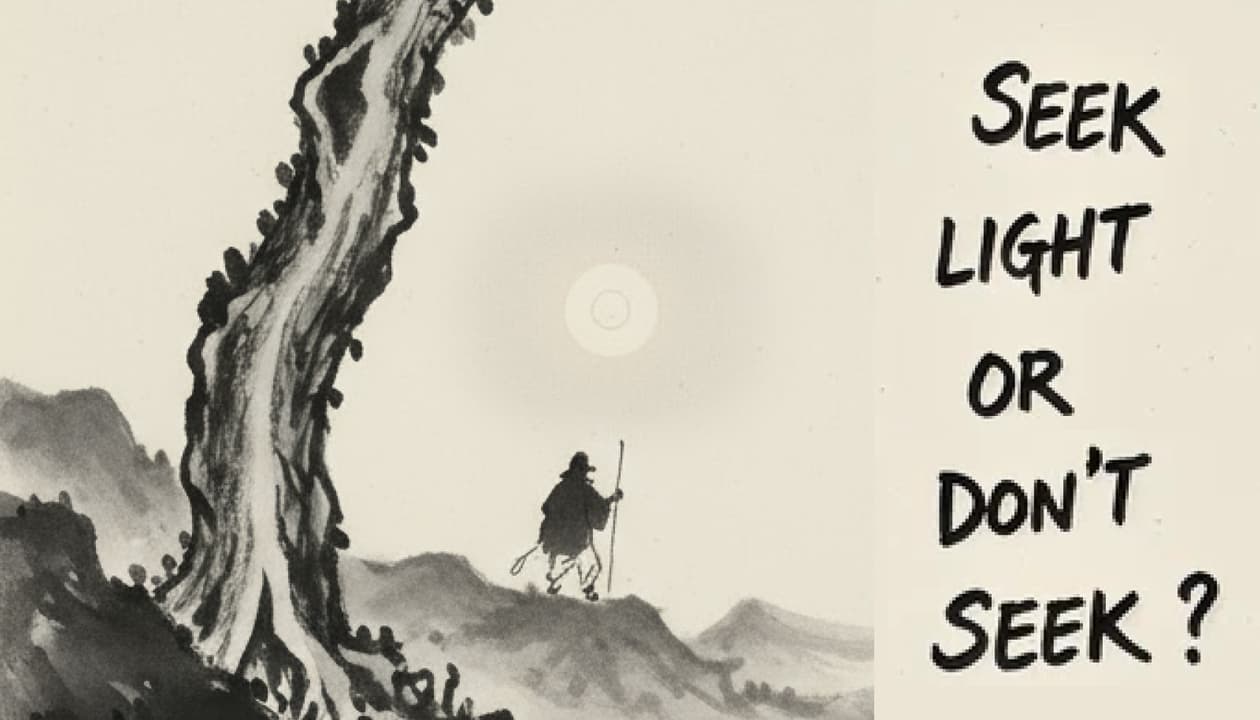
On one hand, there is a great danger that if you seek Light, you will seek the wrong kind of light; you will just seek darkness disguised as light. On the other hand, there is the equally dark option of not seeking at all. Between these two possibilities, I prefer the possibility of seeking Light, with all its associated dangers — that is still better than not seeking at all. Isn’t it better to die fighting in the battle than not fight at all?

Our definitions of beauty and greatness are all egoistic. Something is beautiful if it corresponds with our likes and with our taste — then we call it beautiful. Whereas the real definition of beauty is that which silences you, that which does not leave you even in a position to utter a "Wow!" That's beauty. That which takes you beyond yourself — that's beauty.

The Bhagavad Gita, in essence, is a struggle of mukti (liberation) against sanskriti (culture). Shri Krishna urges Arjun to discard misogyny and cultural superstitions; the only thing that matters is mukti — liberation. Culture and traditions are time-bound; they hold meaning only when they point towards Truth — timeless, Sanatan. Have great traditions, and always be careful that your traditions are pointing towards the Truth. Only then do the traditions have life.

You think of the right, free, and spiritual life as planned, tasteless, and boring. No, it involves great love, great rejections, great revenges. Everything happens in a much more intense way than in your normal householder’s life. You say, “I’m leading a worldly life because I want to have fun or because I’m in love.” But one day you’ll realize where real love lies, and you’ll knock at the doors and won’t be permitted.

Acharya Prashant (AP): Jayant has initiated, and he is saying that he used to lead a mechanical life that starts the story, and then he got into spirituality, now he wants to be in love always but that does not always seem possible. Right?
Love is neither molecular nor even…

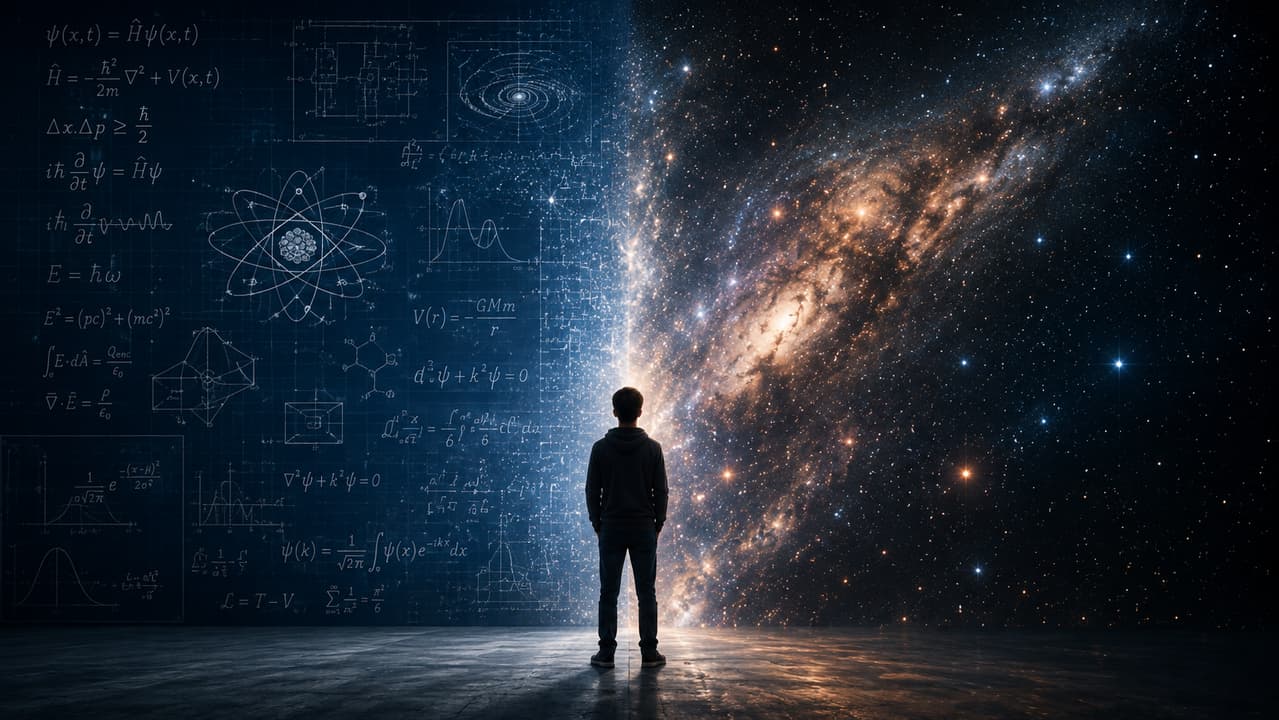
There is a lot of pseudoscience and superstition being floated in the name of spirituality by people who you are influenced by. And therefore, the common man gets the message that spirituality means some mumbo-jumbo. Spirituality is not this godman business. In fact, a really spiritual man can never contradict science. If you are really logical, you will turn spiritual. You have no option. Spirituality is the natural destiny of logic.
![Truth Without Apology [Book Launch]](https://cimg.acharyaprashant.org/images/img-db3ddbf9-ebdf-4baa-8b47-9373d316d478/30/image.jpg)
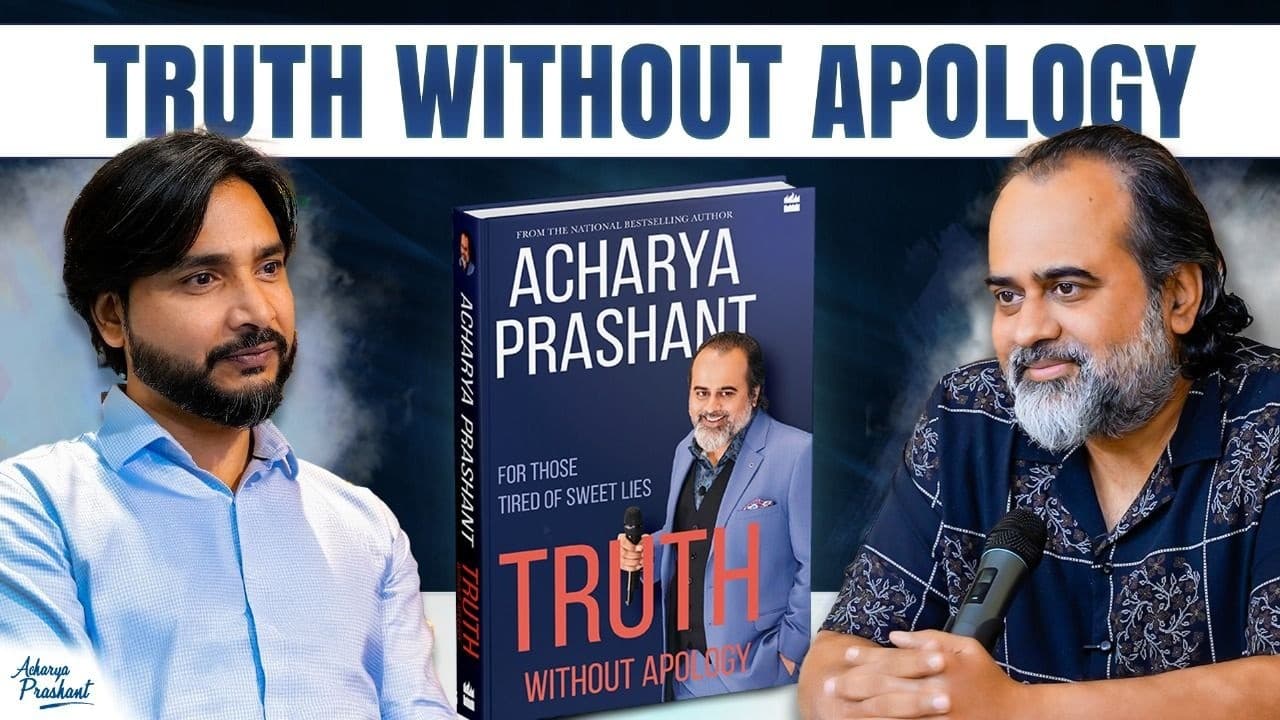
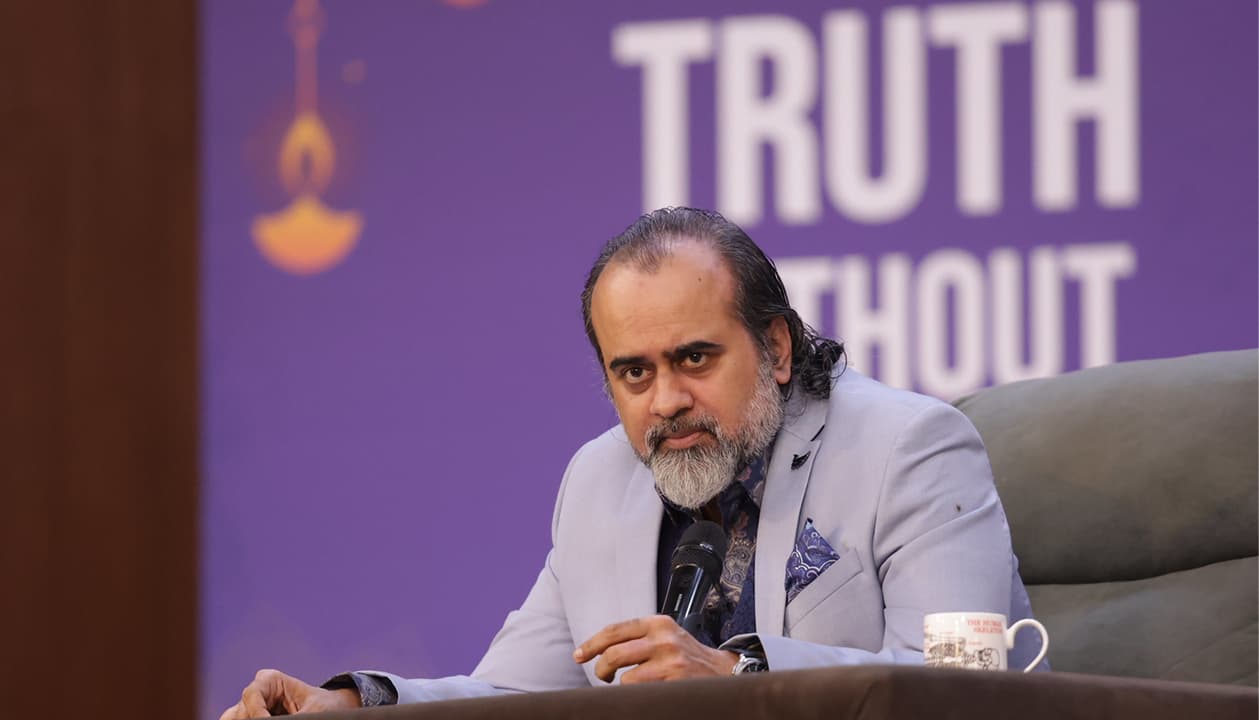
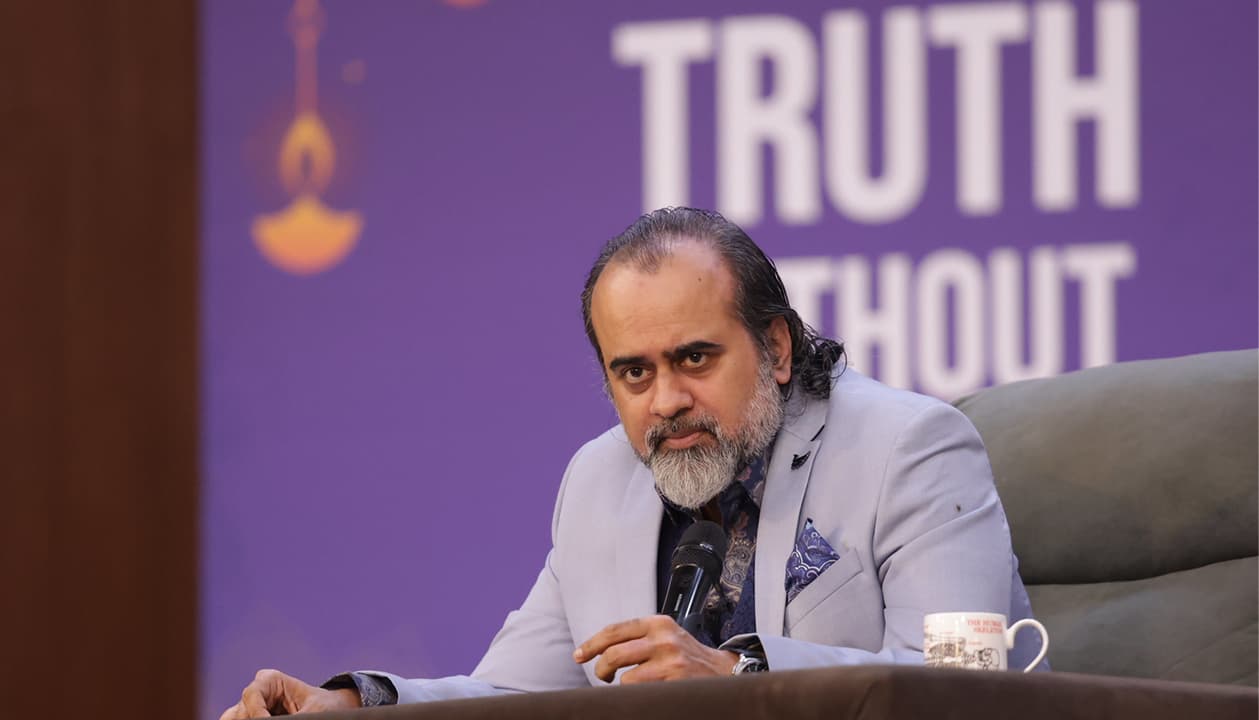
This evening in Delhi, a new book steps into the world—Truth Without Apology by Acharya Prashant. The launch takes place amidst seekers, readers, and companions of his work. In times when words are often polished to please and truths are dressed in comforting disguises, Truth Without Apology arrives like an uninvited storm—direct, raw, and uncompromising.

Life comes to us in an unending number of ways and you never know what's going to happen next. We are starved of something that really penetrates the surface. So, it is the intensity that this book brings — arrow-like depth, striking like lightning, immediately, so you don't have a chance to escape away from it. Like a Zen koan: very brief, very effective, and does its work in a snap. You could open just any chapter from anywhere and find it as if it was written just for you.

You didn't emerge from the jungle so that you could collect external riches. You were doing all right even in the jungle. There was no need to leave the jungle and do something that was extraordinary and go out of your way to do something that no other species had done. There was no need. You were doing all right. But you emerged from the jungle so that you can have inner development.

Realization is your essential nature, and that nature means nothing. That nature is neither solid nor liquid. That nature is not hot nor cold. That nature is not beautiful, not ugly. That nature is not expansive, not limited.

The kind of knowledge that AI puts in the hands of the common man today is unprecedented. And it must be put to the best possible use. Think of all the evils that we suffer from. Don't they come from our false beliefs? AI is the litmus test. If you believe in something, go test it with AI. You may not get the veritable Truth itself, but the chances are that you will get something much better than what you currently believe in. AI is a huge opportunity and those who are missing out are doing themselves a great disservice.

In Zen, the student asks a question to the master, and the reply brings sudden enlightenment. It means something had long cluttered the mind, and in one deft stroke, like a genius, the master cuts the relationship between the ego and its belief. What Vedanta does through persuasive argument, the koan does through an abrupt shock.

The Truth is not a complicated puzzle. Everything is laid open, right in front of you. So, if it is not happening even now, then it is just because of your own mischief. We give preference to the trivial and miss out on the important. We drift from one thing to another, with no thing meaning anything to us. You are not missing the secret; you are missing the obvious.

When words arise from an honest observation of life, then those words are called "divine."

A dirty plate is a dirty mind. It is carrying traces. It is carrying stuff from somewhere else. Go clean the plate. If your plate is clean, if your mind is clean, what is left to be done? But cleaning the mind, making it lighter, comes like a threat. “Oh! Something in me is getting reduced. I am under attack. My notions are getting shaken up.” That’s what Zen is all about, a total shake-up! Such a shake-up that clears away all the rubbish.

The distinction between spiritual life and worldly life is a false distinction. Spirituality is not morality or a set of commandments. It is never instructive. You do not need great formulations or special practices. Spirituality is basic honesty. Just see and acknowledge what is going on, and then the right action follows. Nothing else is needed.

DANCE NAKED
Dance, Lalla, with nothing on
But air: Sing, Lalla,
wearing the sky.
Look at this glowing day! What clothes
Could be so beautiful or
more sacred?
~Lal Ded
Acharya Prashant- what does it mean to dance with nothing on?
L1- No causes.
AP- What does it mean to…

Explore Books on Lord Shiv by Acharya Prashant, revealing deep Vedantic insights into Shiv’s true essence, symbols, and spiritual wisdom beyond misconceptions.

All forms of gods and goddesses have emerged from man's mind — they are our own projections. Even if you show a god in the form of an animal, the animal will still be anthropomorphic, very closely related to human beings. So, this proves that we are worshipping our own form. Therefore, if any form does not remind you of a Truth beyond the form, then the form has not succeeded on you. This is why the highest spiritual philosophies have always said that the Truth is formless.

Figuratively, we say that Om, comprising ‘A, U, M’ (Akār–Ukār–Makār), representing the three states of consciousness, dissolves into silence, and silence is the target. Similarly, the mind, leaving behind all its three states, disappears into the target. Pass through all that you can experience — all that is possible in waking, dreaming, sleeping — and then transcend into 'non-being'. Within the three states, you are you, but when you leave the three states behind, you have left yourself behind. And when there is no you, then there is no mind, no ego. That is. That is.

In ancient India, in the great universities — Taxila, Nalanda — logic and mathematics were taught before religion was taught. If you do not know logic, how will you understand Ashtavakra? Only a very sharp intellect can rise above itself. You look at the prophets, saints, and see how adept they were, even in worldly matters. Do not put the intellect aside when it comes to the regular, mundane affairs of the world. Use your intellect to the fullest.

Had it been greatly liberating to spend a week in the hills, then those who are spending their entire lifetime in the hills should have been automatically liberated. But instead of liberation, you see a lot of superstition. So, mindless adventure trips or picturesque trails will not help. Do we want to go to the hills to really change our lives or to shed our tension and continue the same old routine? We need to have questions. And when we approach the hills or the seas with those questions, with honest inquiry, then it makes sense.