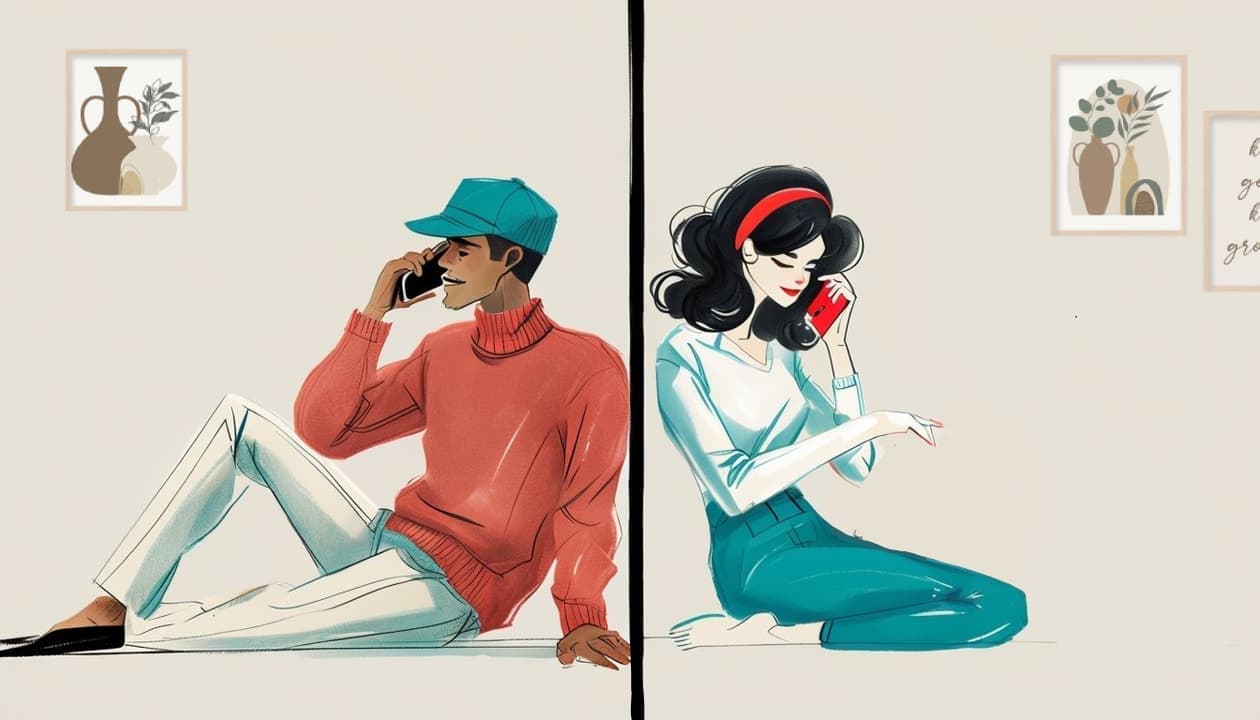
I want both of usTo start talking about this Great LoveAs if You, I and the Sun were all marriedAnd living in a tiny room.Helping each other to cook,Do the wash,Weave and sewCare for our beautifulAnimals.We all leave each morningTo…
An infant in my arms

The subject tonight is love and for tomorrow night as well.
Like

All the false notions of myself

has risen so high let me flood
over
You.
Close your eyes for a moment
And may be all your
Fears and fantasies
Will end.
If that happened
God would become an infant in your
Arms
And then you
Would…
(Hafiz)
Acharya Prashant: Rumi, Hafiz, Meera, Bulle Shah, they sing of love, and in their poetry the lover often appears…
Of mismatched newlyweds,
One of whom still feels very insecure,
I keep turning to God
Saying,
“Kiss Me.”
~ Hafiz
Shri Prashant: What would happen if you are already in a lip lock and you are saying “Kiss me”? What would happen if your lips are already…
Have turned to ash
As I neared God.
Love is
The funeral pyre
Where the heart must lay its
Body.
~ Hafiz
Acharya Prashant: Let’s just remember that all which we have talked of, is the body. The body…
True God is the Truth right now in your heart. That is true godliness, true bhagavatta. The problem is that people want to avoid the real living Truth in their heart. Therefore, they come up with stories that place an imaginary God somewhere up in the skies. God is wonderful, but the stories and the imaginations about God are all very disrespectful towards God. When there is love for God, God is held very close to the chest, and that God is called Truth. That God is the very purpose of philosophy and the very origin.

We often call something “help” or “love” while secretly expecting something in return. When that return does not come, we feel hurt, revealing that the relationship was a trade, not genuine help. The ego, being unfulfilled, cannot truly love or share. Likewise, desperation to be loved makes us controllable. Real love emerges when we stop seeking validation, work on ourselves, and become so inwardly fulfilled that we no longer need to be loved.

Reaction is an instinctive, unconscious response rooted in ancient survival mechanisms, while response arises from consciousness and understanding. Our biological instincts evolved for survival, but modern life demands that we move beyond them. Emotional reactivity makes us predictable and controllable, allowing others to manipulate our emotional triggers. True freedom lies in pausing before reacting, examining emotions, thinking deeply, and responding consciously rather than living as slaves to instinct.

Questioning pseudo-science and superstition is the first step toward genuine freedom. Beliefs such as *Vastu, Kundli,* and *Muhurat* should not be accepted merely because they have been followed traditionally. Fear and attachment to privileges often prevent people from questioning authority. A truth-seeker must be willing to challenge age, status, and authority. Human progress has come through curiosity, inquiry, experimentation, and reason—not through blind obedience.

Desires and beliefs may keep changing, but the deeper tendency to believe, think, choose, and seek fulfilment often remains unchanged. Real transformation begins by examining this constant inner pattern rather than changing superficial preferences. Instead of seeking conclusions about greed or desire, honestly observe recurring behavior and support the truth you already recognize. Expressing that truth can dissolve false identities, relationships, and habits, creating space for genuine change.

True freedom begins when we question the beliefs that make us feel trapped. Most of our suffering comes not from circumstances but from unquestioned assumptions, attachments, and imagined obligations. By suspending our beliefs, even briefly, we allow truth to enter, revealing that life always offers choice. Transformation is born from love for truth, the courage to let go, and the willingness to step beyond the boundaries created by the ego.

True love is not a biological instinct, emotional attachment, or social conditioning. Biology and science explain the body's drives, but they cannot explain the self that seeks freedom. Love is the inner restlessness to move from ignorance and bondage toward truth and liberation. Religion is not rituals or inherited beliefs but this personal journey of understanding. Freedom—not possession or conformity—is the essence of both love and religion.

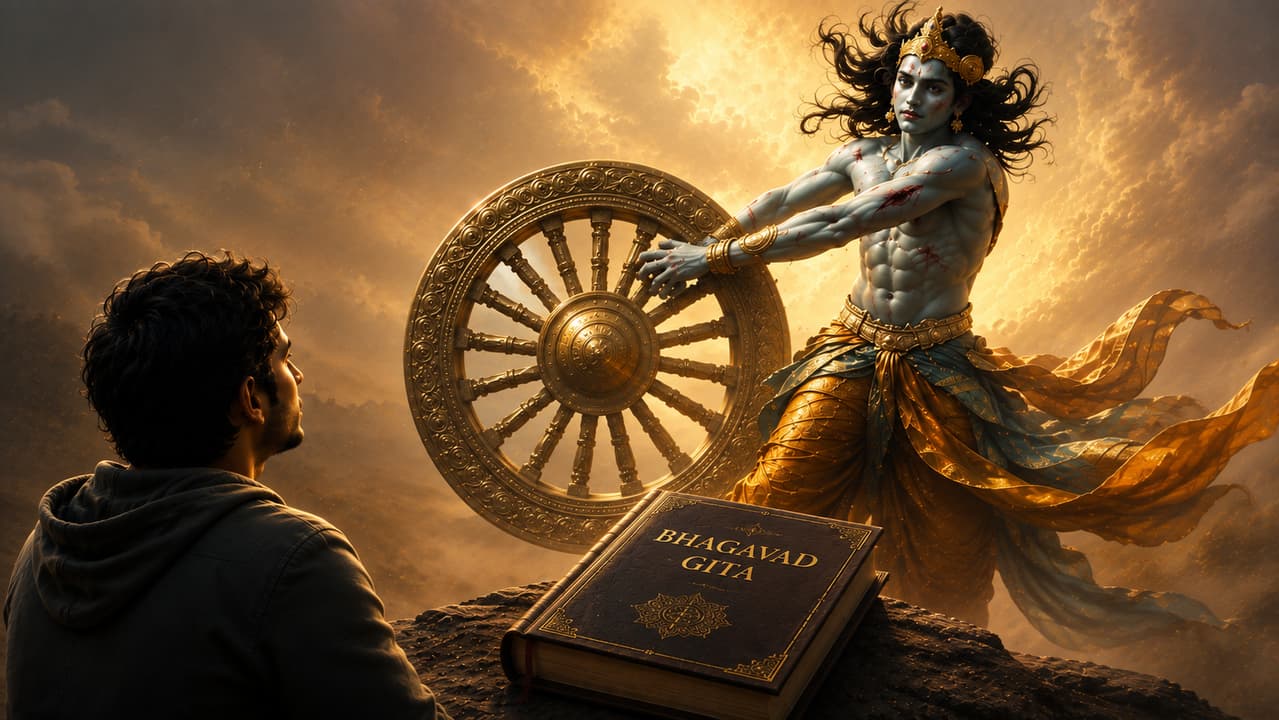
The Bhagavad Gita deserves reverence not because of inherited beliefs about its author, but because of its power to dissolve falsehood and reveal Truth. Real devotion is not ritual or blind faith—it is understanding, inquiry, and living the wisdom of the Gita. Through sincere study, one discovers the true meaning of Krishna, making the Gita the most authentic path to knowing and worshipping Him.

Truth cannot be forced upon anyone, but neither should falsehood be entertained. Genuine love is not about preserving relationships at any cost; it is about helping oneself and others break free from illusion, even if that means risking the relationship itself. Spiritual growth begins by questioning conditioning, examining falsehood without bias, and choosing authenticity over comfort. Real relationships are built on the courage to seek freedom, not convenience.

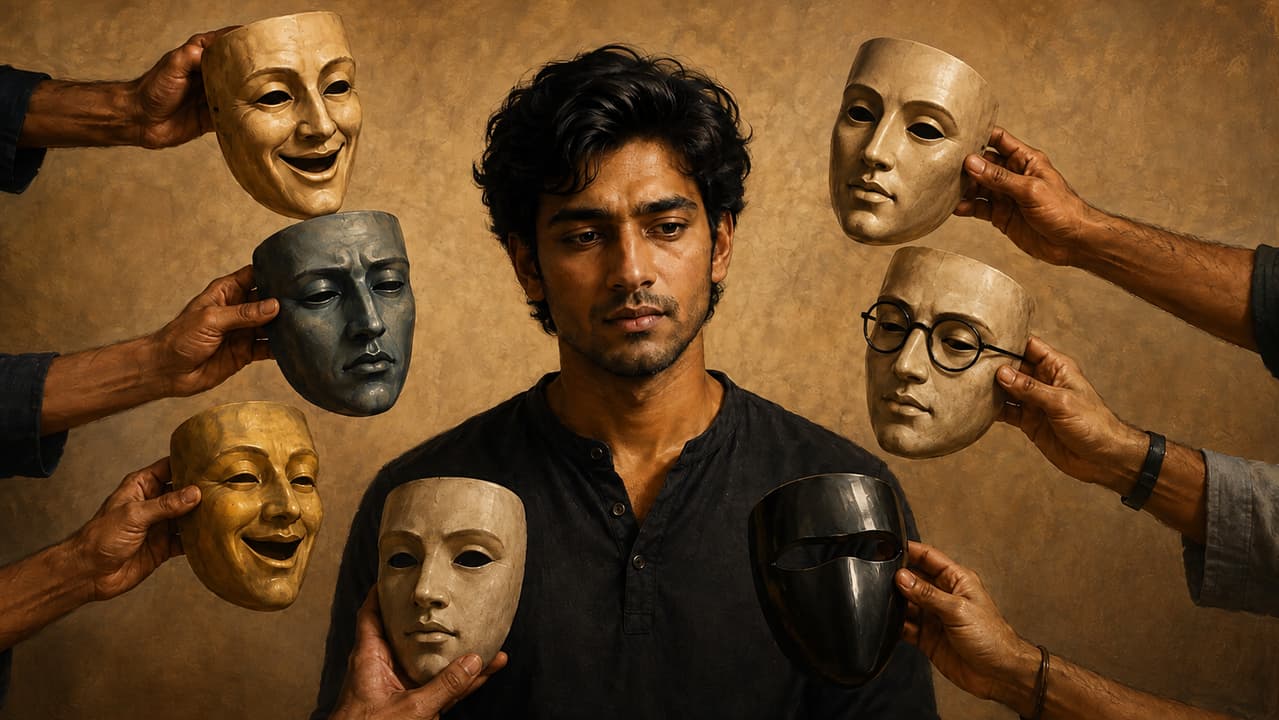
Modern life is increasingly driven by materialism, social validation, and the desire to impress, leaving authenticity behind. When image becomes more important than substance, relationships, education, and success turn into performances rather than expressions of truth. Real transformation begins with inward honesty—the courage to stop seeking approval, confront inner emptiness, and choose authenticity over appearances, imitation, and external validation.

The Bhagavad Gita is not a separate spiritual path or an escape from everyday life - it is a mirror that reveals the truth of your present life. Real spirituality begins with self-observation, not rituals or temporary practices. Lasting transformation comes when work, relationships, career, and personal growth become one integrated life driven by awareness, love, and freedom rather than ego, fear, money, or social pressure.

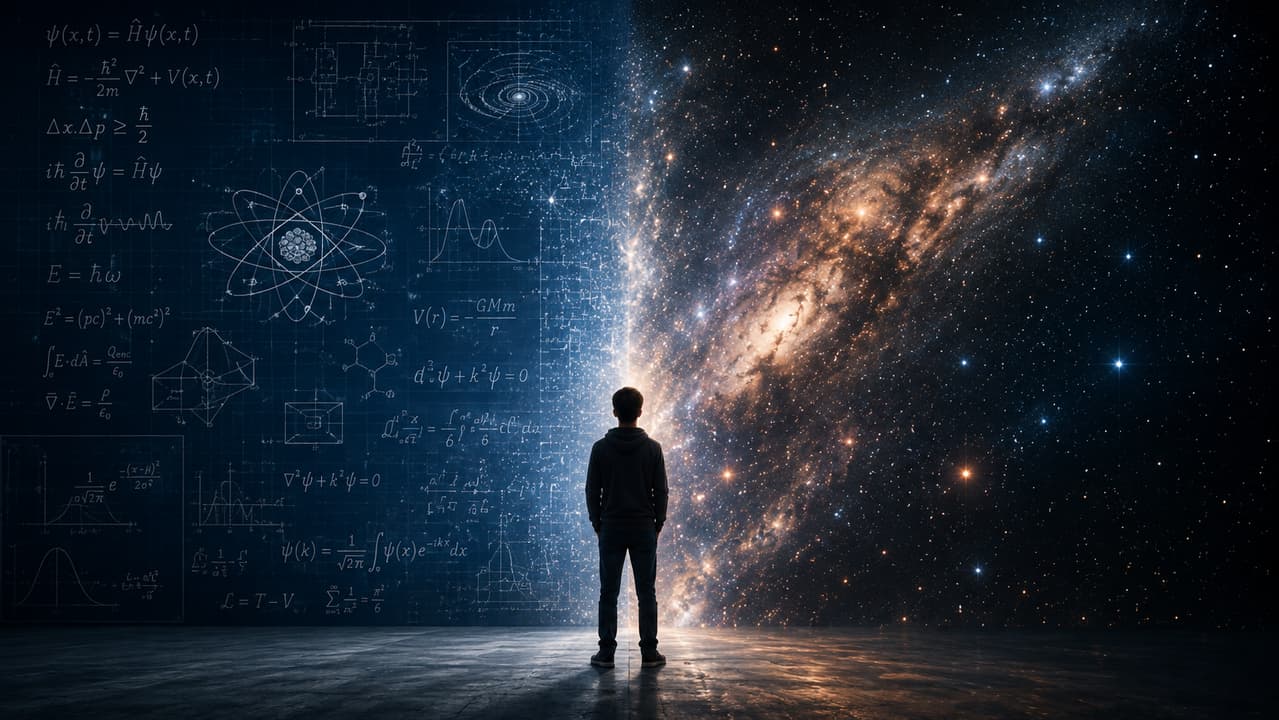
What is the relationship between quantum physics, consciousness, and the ego? This dialogue explores where scientific inquiry ends and self-enquiry begins. Through Vedanta, Acharya Prashant explains why the ego clings to its own existence, how beliefs and superstition shape our lives, and why lasting freedom lies beyond conditioned thinking.

Bullying hurts deeply only when it is allowed to define one's inner identity. External abuse may wound the body, but lasting psychological wounds require inner participation. While OCD, anxiety, depression, schizophrenia, and other mental health conditions deserve proper treatment through psychiatry, lasting freedom demands self-knowledge.

Love is not a special emotion reserved for selected people or relationships but a way of relating free from self-interest, possession, and psychological dependence. Most relationships become transactions driven by insecurity, where the ego seeks completion through ownership and exchange. Genuine companionship arises without the urge to control or claim another, allowing affection to exist naturally, freely, and without conditions or expectations.

Real change begins not by changing the world alone but by understanding the one trying to change it. Laws, technology, policies, and scientific progress have value, yet they cannot solve problems rooted in human consciousness and endless desire. Truth remains the same across cultures and disciplines, requiring only a change in language, not in essence. Lasting solutions emerge through honesty, self-inquiry, and inner transformation, because no external system can replace a change in the human mind.

Modern relationships often create more insecurity, not less, because people are conditioned to seek completion, validation, and identity through another person. Social institutions, media, culture, and tradition continuously reinforce the idea that fulfillment lies in romantic attachment. As a result, relationships become driven by dependence rather than love. Real companionship becomes possible only when one is inwardly at peace and not using another person to fill an inner void.

Operating from the highest inner point means living with honesty rather than self-created illusions. The ego becomes “higher” not through mystical growth but by dropping false self-images and testing its claims against reality. When honesty weakens, lower motives take control, creating inner conflict and disorder. Real growth lies in continuously questioning oneself, facing uncomfortable truths, and preventing the ego from being driven by comforting but deceptive beliefs.

Love is not attraction, possession, dependency, or a transaction driven by personal gain. As long as relationships arise from insecurity, ownership, or the desire for psychological completion, they remain centered on the ego. Love is simple, natural, and free of self-interest, flowing without preference or exclusion. The ego seeks security, continuity, and suffering because they preserve its identity, while freedom and joy threaten its existence. A meaningful life begins when one stops repeating old patterns, accepts uncertainty, and chooses freedom over the comfort of familiar cages.

Climate change, population policies, and social conflicts often arise from a common source: narrow love. People, communities, and nations justify actions that benefit their own group while overlooking broader consequences for humanity and the planet. True care is not exclusive or identity-based; it is expansive and inclusive. Even motherhood, patriotism, and family concern can become limiting when reduced to narrow self-interest rather than guided by wisdom, freedom, and universal responsibility.

Many so-called spiritual practices falsely promote intoxication as a path to higher consciousness. In reality, this only deepens confusion. True spirituality is about clarity and self-understanding, not external experiences or blind belief. Neither gurus nor media can offer truth. It must be discovered within by honestly observing and rejecting inner falseness, with awareness and sincerity.

Question: A gentleman was saying that a person, who is drinking or is drunk, he still has got some kind of stability on mind, and he too, can judge. That is what I felt to be perhaps wrong. A person who is drunk probably loses his judgement and whatever we…

Mojud – The man with the inexplicable life
There was once a man named Mojud. He lived in a town where he had obtained a post as a small official, and it seemed likely that he would end his days as inspector of weights and measures.
One day when he…

Love has to be seen as the need of the mind, the attraction of the mind towards Peace, towards rest. All attraction is there only with a desire; the hope is of fulfilment. So when the mind says ‘love’, along with love it has a picture of love. How do you know that somebody loves you? Only if he behaves according to set patterns. When real love comes to us, we close our gates to it. Love is not with a particular man or woman; Love is the natural state of the mind.

The kinds of meanings that we associate with love are actually quite demeaning. It’s not your own self-interest that you think of in love. Love is not an emotion; love primarily is a spiritual understanding. Saint Valentine would not be quite pleased with the meanings we have associated with his name and his day. The saints laid down their lives so that our faulty definition of love could be corrected, and that is probably the best use this day can be put to: correcting the definition of Love.

Real Love is a very pure thing. It is pure and it purifies. If you really love her, forget about the families, you won’t even bother whether she loves you, because Love does not demand anything in return. Forget about marriage or anything else. You love, you know love, and that is all, sufficient. Love unconditionally, and then a way will emerge. Unconditional Love is very, very intelligent, and knows no fear. It knows where the solution is, it will find a solution.

The universe does not care for any human being. The universe is a very, very neutral place and a very random place. We are all products of randomness. Do you get this? The universe is not going to have any specific intention towards a specific individual. All that we are experiencing is episodes and events of random distribution. That’s all. Please understand the philosophy.

That’s the purpose of life, no? To know your real destiny beyond your physical limitations and social conditioning. Most people do not know that such a dangerous thing is surreptitiously happening to them. I have found that we are quite big on media and social media now, so comments flow in their hundreds. And women actually have a self-righteous position when they say that we are not supposed to work and you better not expect that from us. Equally, men are conditioned about the roles they are supposed to play in life at home, in society, and how they are supposed to feel about themselves.

I have desires and you are the means to fulfill those desires. That’s why I come to you and I say I’m a loving person. This is not love. Most of that which we call love is actually just self-interest. A lot of our comforts, conveniences and identities depend on the other; therefore, we want to hold the other. Real love is possible only when you know that the other cannot bring anything to you. You relate to the other to share, not to gain.
Beliefs can’t talk to each other. You will say, ‘The world was created on a Sunday.’ He’ll say, ‘No, on a Monday.’ He’ll say, ‘Tuesday.’ He’ll say, ‘Wednesday.’ Now talk, how will you reconcile this? You can only fight. Why do you need to believe? You look at the question, "What should I believe in?” Well, nothing.

The tiger chases the buffalo calf and brings it down. Does that disappoint you? No, because that was expected. Similarly, expect animal behavior all the time from everyone around you, including yourself. Everything we do comes from the jungle, so don’t be disappointed. Disappointment always arises from expectations. You really have to strive to be someone who is not an animal. And the first step in that striving is to address your own inner animal.

We teach our kids to write applications: “Humbly I beg to submit that today I have an ache in my tooth.” “Humbly I beg to submit!” If you are stating a fact, if the toothache is real, why the hell are you groveling? If that is the Truth, why are you begging? Drool, drool, drool. That’s become our culture. If your philosophy tells you to submit and surrender to several masters, you will never be a truthful person, because in Truth there is no authority but the Truth.

Manifestation is simply an expression of your desire. You desire something, and then you imagine your desire has been fulfilled. What does the common man desire? ‘Give me more money.’ What will the politician desire? ‘Finish off democracy and give me power for life.’ We have very stinking desires. Do we ever desire anything that is really good for everybody? The question remains: Was that thing worth it? You gave it so much time, so much respect, did it deserve that?

“I love my job as long as I'm paid for it.” Can you work without being paid? If yes, then probably there is some beginning of love. There are ten things we all like, and all liking or disliking is conditional, and the mark of love is that it survives all conditions. If you come to something that is dearer to you than life itself, then you know what love is. Love is dangerous, because it would mean you have come to something that's more precious to you than life itself.

This in itself is a philosophical question. This is why you should study philosophy, because you already have this question. Philosophy is your affection for the Truth, your leaning towards the Truth. Don’t you want to know the Truth? How many of you are happy with lies? Nobody. So, it is this love for Truth that we all innately have; that’s called philosophy.

Drop the center of confusion, come to the center of clarity. Drop what the masses practice, come to the direct route of self-realization. That’s what it means.

Spirituality is not belief. Please, please. In fact, spirituality is constantly sniffing for belief. And if I smell belief there, I’ll come hunting. Spirituality is the unrelenting enquiry into all beliefs in life. “Why am I living on imaginations? I want to question.” Enquiry does yield results, but it requires honesty. If you honestly look at yourself, you’ll discover there is a reason why you are irritated. In the absence of honesty, belief is the crutch.

In the rule books of the courts, there are offenses of a thousand kinds, but when it comes to life, there is just one offense, ‘Did you live by the Truth or did you betray it?’ Remember that chap called Bhagat Singh and his associates. The courts declared they were guilty, and they were still joyful because they were absolutely not guilty in front of life. Live rightly, and then don’t apologize. That’s it.

Prasad is what you get by being in contact with a luminous source. You are close to the Bhagavad Gita, there are insights, you start living those insights, others look at you and see something special, something luminous, and feel inspired — that is prasad. There is a certain realization, and you want to share it with everybody — that is prasad. Your own inner illumination is prasad.

When you do not like human beings, you must also remember that they do carry the potential to be lovable. Not just the potential to be loved, but the potential to be lovable. Beyond likable, lovable. So, along with not liking humanity, also comes the responsibility to maybe help them become lovable, to whatever extent one can.

To say, “I am such a devotee that I will reach freedom through my efforts. And I will not stop till I am liberated,” might sound like a statement of commitment, devotion, and deep mystical thirst — but it is actually just arrogance. Rumi has done the fullest that the human mind can do, and has left no stone unturned. And after doing what he could do, he simply raised his hands and surrendered. This is the utmost that this mortal form can do.

The Bhagavad Gita, in essence, is a struggle of mukti (liberation) against sanskriti (culture). Shri Krishna urges Arjun to discard misogyny and cultural superstitions; the only thing that matters is mukti — liberation. Culture and traditions are time-bound; they hold meaning only when they point towards Truth — timeless, Sanatan. Have great traditions, and always be careful that your traditions are pointing towards the Truth. Only then do the traditions have life.

Real spirituality is actually a shameless path — not something that sounds elevated or admirable. In contrast, conventional spirituality or ‘Lokdharm’ feels poetic and enchanting — romantic mysticism. The most common statements are often the ones that deserve your scrutiny. Whenever you're bombarded with high-sounding fluff, ask: “What exactly do you mean by that?” Expect answers rooted in bare facts, not in abstractions, idioms, or euphemisms.

The object of love is so big, so total, so filling, so occupying that it leaves no space for the subject to hide and survive. The task is so damn big that it can’t be done if you protect yourself. If you protect yourself, it won’t happen. Love involves a lot of bloodshed and demolition. And there are fireworks. Great structures collapse. Formidable enemies have to be defeated. All that is love.

As young people, we mistakenly take tradition to be the Truth. Tradition tells you in advance, "This is important," and you believe it. This has to stop. You must question, inquire, and experiment. Because if you have readymade definitions of what is important, then you will never come to what is truly important. And when you independently inquire, a lot of unimportant nonsense disappears from life, and fresh space is revealed. Now, through your own discretion and wisdom, if you decide that these things are indeed important, then so be it.

Acharya Prashant (AP): Jayant has initiated, and he is saying that he used to lead a mechanical life that starts the story, and then he got into spirituality, now he wants to be in love always but that does not always seem possible. Right?
Love is neither molecular nor even…