Love Is Dangerous

Acharya Prashant

9 min
1.3k reads
Love Is Dangerous
“I love my job as long as I'm paid for it.” Can you work without being paid? If yes, then probably there is some beginning of love. There are ten things we all like, and all liking or disliking is conditional, and the mark of love is that it survives all conditions. If you come to something that is dearer to you than life itself, then you know what love is. Love is dangerous, because it would mean you have come to something that's more precious to you than life itself. This summary has been created by volunteers of the PrashantAdvait Foundation

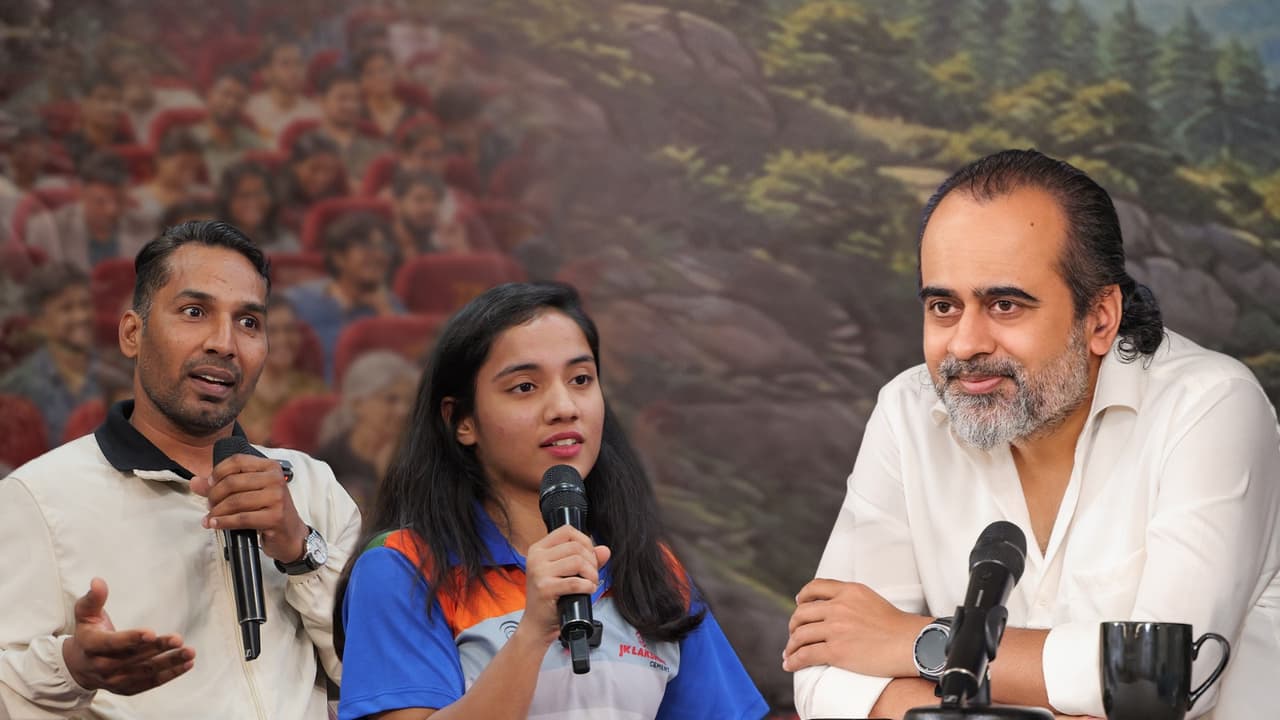
Questioner: Namaskaram Acharya ji. My name is Sinduja. Actually, I have a confusion, not exactly a question. So my confusion is regarding passion, hobby and career. So, what if a person doesn't know what to do in his future? Like, how will his or her life end? I don't understand that.

Acharya Prashant: It would anyhow end. It is certain it will end. In some way, it would end. That's what. If you are just randomly wandering, at one point you would stop wandering because you would fall dead. Would you reach somewhere? No. Would you see something? No. That's it.

There is no rhyme or reason to the way most people live. They just allow themselves to drift. They drift till they just fall dead, that's all. I wish there were more to this story, but there is nothing. So what do I say? That's what the story of the vast majority of mankind is; drift, drift, drift, and one day suddenly just drop and you're gone. Finished. There is nothing to it. No center, no theme, no purpose, no destination really, no meaning, nothing. Meaningless, unremarkable lives. That's how we live.
We allow ourselves to live that way because that feels secure. That feels secure because that's how everybody's living: meaningless, purposeless, centerless lives. Go to school, go to college, get married, have kids, get a house, pester your kids, make them follow the same cycle, fall ill because you never took care of your body, again harass your kids with ten years of your hospitalization, and after that die. Drag it to the fullest extent possible, and then... That's a story. That's it.

And I'm not sure whether I included in this book that holy eight-step process to death. Is that there? The holy eight-step process to death that each one of us follows.

Questioner: I mean, there is another side of this coin as well. So, the other side is: see, I am a person, like I'm average at everything. I'm not perfect at one particular thing so that I can make it my career or make it my job or make something out of it. So I don't understand where I'll be ending up. So that always pisses me off.

Acharya Prashant: The question is not whether you are perfect. The question is whether you love perfection. Do you?

Questioner: I feel.

Acharya Prashant: It's a straight; yes or no?

Questioner: I didn't get your question, sir.

Acharya Prashant: Do you love perfection? Do you love excellence, where you see? Do you love the sight of a human being striving for excellence?

Questioner: Yes.

Acharya Prashant: Do you love that?

Questioner: Yes.

Acharya Prashant: Then submit to that kind of situation, or system, or person, or whatever it is. If I can't be the highest, let me at least serve the highest. And nobody can be the highest; in that way, we all have to be servants. And that's the real meaning of service even in the spiritual sense.

If I can't be that, let that not stop me from loving that.

Don't you love watching the moon?

Questioner: I do.

Acharya Prashant: Would you ever land there?

Questioner: I wish.

Acharya Prashant: But would you realistically?

Questioner: No.

Acharya Prashant: Does that reduce your love?

Questioner: No.

Acharya Prashant: That's what. Or would you say, because I can't realistically land there or touch the moon, so I'm going to rather fall in love with the earthworm? Would you say that? The moon is infinitely better even if distant. Fall in love with the moon rather than embracing the earthworm. The only qualification that the earthworm has is that it is available, accessible; you can physically hold it, touch it, embrace it and call it your own.

If you can't land on the moon, at least fall in love with it. Allow yourself. Would that not be a worthier life; spent waiting, watching, watching as worship?

Nobody's perfect, by the way. Nobody's perfect in anything. It's not a question of your skill or knowledge or experience. It's a question of love.

Questioner: So, if I'm loving doing ten things, should I just continue doing the ten things as a form of hobbies?

Acharya Prashant: Are there ten moons?

Questioner: Exactly. So, I want to find out what my moon is. So, I like dancing, I like singing, I like drawing and all of that. But I also want, as I've said, I want to be perfect at one thing. I always want to choose something out of this. That is always in my mind, but then I console myself that I'm good.

Acharya Prashant: Get a piece of paper and write down the conditions under which you like or dislike something. When you come to something that you can like despite the most adverse conditions, then you know what you love.

“I love my job as long as I'm paid for it.” Can you work without being paid? If yes, then probably there is some beginning of love. Can you pay to work? Can you pay somebody just so that you can be allowed to work? Love is probably now opening its wings. Are you getting it?

There are ten things we all like, and all liking or disliking is conditional, and the mark of love is that it survives all conditions. If you come to something that is dearer to you than life itself, then you know what love is. You would prefer to give up everything but not this. Can even give up life but not this. That's love.

You know how the sages put it. Somebody must have asked the same question. So he said, “If you want to understand love, look at the fish. Look at the fish. It loves the ocean so much that it surrounds itself totally with the ocean. Left, right, inside, outside, above, below; the ocean is everything for the fish. And the love is so deep, the fish decides to give up life the moment it has to give up the ocean. Fish says, ‘You can bring me out of the ocean, yes, you can do that, but you can't make me live without the ocean. I'll die. I'll simply die.’”

Now that's a pointer. The fish doesn't consciously decide that, it's a thing of biology, but please understand.

Is there something that you can die for just as the fish does for the ocean? And if you have not yet come to that, then you still haven't come to love. Your love is still very conditional.

Then it is just a form of liking. It is just a thing of pleasure or preference. It is not love. But also, mind you, love is dangerous, because it would mean you have come to something that's more precious to you than life itself. So, love can be threatening in all ways possible.

Now, life is an extreme example, but love, when it enters, robs you of so many things. Right? You allow those things to fall away. You now have something so precious, you don't care for the rest. And that's why many of us subconsciously avoid love. We would rather associate ourselves with some petty object. Love means associating yourself with something tremendous and submitting to it.

When something so tremendous enters your life, it leaves no space for the little, for the petty, for the worthless. All that is elbowed out. But in the little and the petty, our comforts and securities lie. So, love becomes dangerous. It leaves you insecure. But that's also the only way to live. No? What else? That madness is called love.

For most of us, love is not madness. For most of us, love is a cultivated and pre-planned project like arranged marriage. All kinds of horoscopes matched. All boxes ticked: religion, caste, gotra, this, that, age, economics, dowry. What kind of love can you expect in such an arrangement?

These days they also sign agreements in advance: “If we break up before two years, you'll have no alimony rights.” And girls are becoming smarter. Obviously I mean, if men can be wicked, women can be at least smart. Is that love? And then you have kids. What kind of upbringing? What kind of family and environment? How would they be raised? And then we have the audacity to call all of that as love. Why insult the word? It's what makes life worth living. Why insult the word? It's the highest.

“I love the way you move your body. I like the way you breathe.” And we are always afraid of such arrangements, because we know all of it is so fragile, so conditional. One phone call can shatter it all. No? That's not love.

We, in some way, are born to love. Can there be liberation without love? Not possible. So, if liberation is the destination, love is the road.

This article has been created by volunteers of the PrashantAdvait Foundation from transcriptions of sessions by Acharya Prashant
Comments
LIVE Sessions
Experience Transformation Everyday from the Convenience of your Home
Live Bhagavad Gita Sessions with Acharya Prashant
Categories