


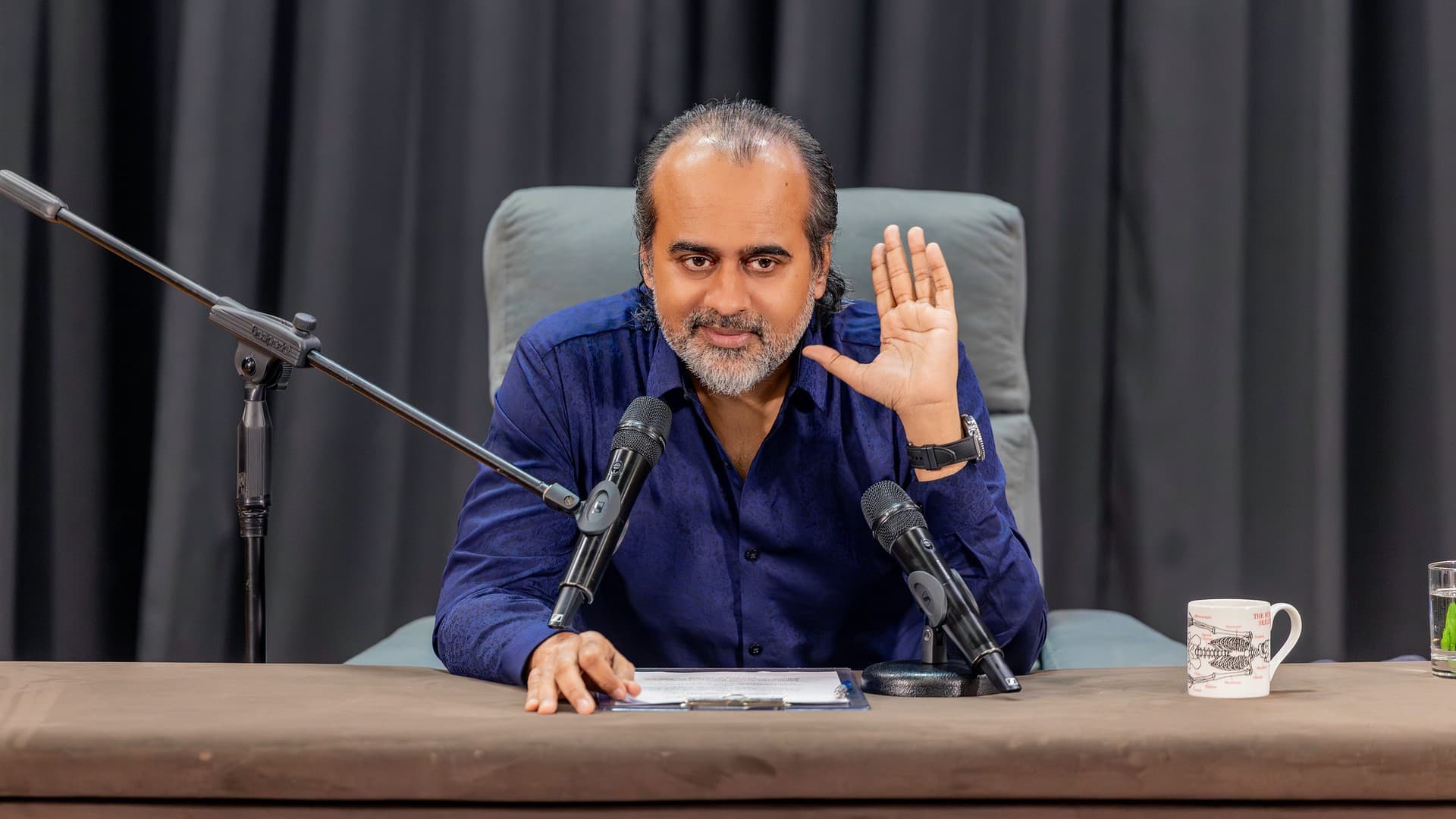
When someone calls us ugly or dumb, it can feel as if our confidence has been taken away. But others are outsiders; they cannot know us as well as we can know ourselves. The trouble begins when we do not know ourselves, so we start looking at ourselves through others’ eyes. Self-knowledge here simply means being honest with ourselves about where our likes, fears and desires come from. What would change if we looked at ourselves directly, and not through others’ opinions?
This summary is AI-generated. Please read the full article for complete understanding.
Questioner: Sir, some people seek acceptance a lot. It’s just a statement, it’s just the truth. It’s not even a question. It’s just the truth, that people can do anything for acceptance. What’s your thought upon that?
Acharya Prashant: Now I’ll try to do justice to the question. Yes, beta, what’s your name?
Questioner: Poornima.
Acharya Prashant: Poornima. Yes, you are very right. Most people go to any lengths to get accepted by others. Why do you think that happens?
Questioner: I think that happens because a lot of people judge others for being themselves. So they want to seek acceptance so people can like them.
Acharya Prashant: But why do we want so much to be liked by others?
Questioner: Sir, if we are not liked by others, we will get judgment. We will get judgment from a lot of people. Which will get our motivation to lower down.
Acharya Prashant: Right. So others will judge us, right? That’s fine. That’s for them to do. They may judge us. They may judge you, they may judge her, they may judge me, or anybody here. But why must that suppress you or disable you from within? Why must that have an internal effect? Suppose somebody judges you, suppose somebody says something that is not very good about you. Why must that make you feel small or helpless within?
Questioner: Sir, if someone judges and says like, “Oh, my God, you’re ugly.” That happened to me. But sir, if that happens, it could lower the self-confidence that a person can have in themselves. And lowers their confidence and makes them feel insecure at a very young age.
Acharya Prashant: Does that happen?
Questioner: Yes.
Acharya Prashant: Does that happen?
Questioner: Sir, and it’s very common nowadays in young ages.
Acharya Prashant: So somebody comes and says something that is nasty, bad, ugly, and you say that makes you feel small about yourself. What was the exact phrase you used?
Questioner: Sir, I said…
Acharya Prashant: What effect it can have on you?
Questioner: Sir, it can have an effect on anybody. Like, it can lower their self-confidence.
Acharya Prashant: Lower the self-confidence. Right.
Questioner: Sir, it can also make them feel self-conscious and self-insecure.
Acharya Prashant: Self-insecure about yourself. Right. So somebody comes and says, and they’re outsiders, right? They’re not you. They’re somebody else. They exist outside of you. So obviously they will not know you as well as you know yourself, right? Still they are saying something which may be totally baseless. Right? Totally hollow, totally false. And yet we feel that it is affecting our self-esteem, that it’s lowering our confidence. That it’s making us feel pity from inside. Okay. You are Poornima. And you know that. You know that, right? What if she calls you Amavasya? Will that have some effect on you?
Questioner: I would say, if they say like a serious matter, of course it will. But they know, like here people will say it jokingly because nobody likes it…
Acharya Prashant: No, not jokingly. Does it happen that, you know, just consider this instance. She calls you by one name, X, and she addresses you by another one, Y. She calls you as Z. Does that arouse some doubt, some suspicion in you that, “I might not be Poornima, I might be XYZ”?
Questioner: No, sir, that does not mean that. But, sir, if someone calls me by a name that I do not prefer, I could call. If they change my name to something else…
Acharya Prashant: They’ve changed your name. She’s saying you are X…
Questioner: …sir, I would feel like, “Oh, my name is very bad. Oh, I don’t like my name, it’s not good.”
Acharya Prashant: I understand. But she’s calling you X. Why does that not have an effect on you?
Questioner: Sir, it might not have effect on me because I know that myself…
Acharya Prashant: Because I know myself. Repeat that.
Questioner: Because I know myself. Like, I’m sorry.
Acharya Prashant: No, no, that’s the answer. Need not be sorry for it, that’s the answer. This is not an example that is scholarly enough or deep enough. But this isn’t scholarly. That’s illuminating enough, helpful enough, right? Because you know yourself, so whatever she says about you or I say about you will have very minimal effect on you. Very little, right? Right.
People confuse each other because they are confused inside. And anybody can call anybody else by any name. What do we know about anything? The trouble is not that this person does not know you. The real trouble starts when you do not know yourself, right? And because most of us do not know what is really inside of us, what’s going on, where do we stand, where our thoughts come from, where our values, our feelings come from. Because we do not know that, so we are internally unsure. We are internally unsure. And we are internally unsure, then what others say becomes very important. Because I do not know. Because I do not know, so what he says or she says becomes very important only because I do not know. I do not know.
Consider a problem in mathematics, a simple thing. A very simple thing. Two plus two is four. I say five. Will that lower your self-confidence? Will that make you doubt your solution?
Questioner: Sir, if, like two plus two if someone says five, and the other people start laughing like, “Oh my God, she’s told them, he’s told them,” like that will make us like feel very bad about ourselves.
Acharya Prashant: That’s fine. That, I understand. You are feeling bad about yourself because you want them to accept your solution, that is another thing. But would you start doubting whether two plus two is actually four? I’m saying five, she’s saying six, she says seven, and she says eight. Nine and ten too are here. Does two plus two four come under the shadow of doubt now? It doesn’t. Because you? Because you?
Questioner: I…
Acharya Prashant: Say that loudly.
Questioner: …know it.
Acharya Prashant: Because you know. So the thing is to know what you are really within. And when you know that, then it is not of great importance what others are saying about you. This is a very relevant discussion, especially for young people like you, right? And even the older ones, actually. Everybody.
And it appears as if the discussion is about others. Why are others so nasty? Why are others so, so vicious, so hurtful? Why do they say bad things about me? Why don’t they realize that I’m actually good? Or why do they imagine so much? Why don’t they know my truth? It appears as if we are talking about others, and the problem lies in others. But fundamentally, the problematic situation is inside us. Because I’m not sure that two plus two is invariably four, come what may. It cannot change. It cannot change. Even if I say that two plus two is five, it still won’t change. So how does it matter whether they talk of all kinds of numbers and throw up all kinds of things? You will then be still and established in your internal sureness. What we lack is that internal sureness, and that’s why others unsettle us. What do they do?
Questioner: Unsettle.
Acharya Prashant: Unsettle us. Sometimes, you know, the poor others do not even want to unsettle us and we just get unsettled. Sometimes they do not even need to say, oh, that you are looking ugly. It’s just that they’re too busy to appreciate our looks, and we feel as if they have declared us ugly. It’s just that, you know, the fellow was caught in herself, so didn’t pay attention. But because I’m not sure of how I look here and how I look here inside, so I keep looking at others to know how I am and how I look. The fault does not primarily lie in the others. It’s a situation that lies inside of me. I do not know where I stand.
Someone can come and say, “Oh, she’s a coward.” But first of all, I must know how courageous I am. I must know, and then I’ll not need somebody else to tell me whether I’m courageous or coward, right? Somebody comes and says, “Oh, you know, she’s mean.” You must know whether you are good or mean, and when you really know that, then what others say will not have an undue effect on you. Please understand. The result of lack of self-knowledge.
What is self-knowledge? Simply being honest with yourself is self-knowledge.
The result of lack of self-knowledge is dependence on others. Because you need to know. If you do not know directly, then you will need to know indirectly through others. So why know indirectly when the direct route is available? What is the direct route? Be honest with yourself.
And that is something education systems must take into account and incorporate. You see students all over the world and at all levels, starting from the nursery kindergarten to post-doc stage. They are taught of all things. They are taught of all things, right? You must know about this. This is electronics. You must know about this. This is textiles. You must know about that. That is material. You must know about the systems outside, the polity, the economics. You must know mathematics. You must know the languages. You must also know how the various philosophies have evolved over history, and obviously you must know history. So we are taught all of that, right? And obviously we are studying all that here. I too am a product of an education system. But what we have been lacking in is the education of the self.
So the result is a product that knows about a lot, but does not know the knower.
I know of this. I know of that. I know that this is tea. I know tea comes from Assam. I know this is a mug, and I can calculate the cubic capacity here. I know that is some water there and I know the chemical formula, and I can work out the equations, and I’m pretty clever. I’m so clever. I can even top the exams and the boards and the entrance exams. I can do everything. But what I have very little exposure to is myself.
Because there is no subject called “I.” You have a subject called geography, history, physics, chemistry, mathematics, philosophy, computer science. All that is there. But who is the one learning all that? Do we know about ourselves? I know history, but do I know myself? Do I know myself? How is that happening? Because what you are cannot really be brought to you through a textbook. You’re a living thing. You are something in motion. You are continuously changing. How will you reach yourself? That is a special subject because you are the subject, you know?
Technically, the subject means the one to whom all the objects are. So this is an object. This is an object. This is an object. Even this is an object. I am the subject of all objects. All objects are to me. The problem is what we call as subjects. We read Hindi, English, Sanskrit, maths and all. We call them subjects, right? They’re actually objects. The only subject is I. And of this subject, we are taught very little. Very little. Whether in schools or in institutions of higher learning, IITs, IIMs or the Ivy League institutions, very little of that is happening.
And the result of that then is the climate crisis, the wars we are witnessing, and all kinds of problems surrounding us from outside, from inside, mental health. You see what’s happening to the hills. Destruction, population, pollution, all kinds of things. Why is that happening? Because we know so much about everything, but very little about ourselves.
Let me give you an example. When you don’t feel good about somebody commenting on you, do you really know where that dislike or that fear is coming from? You experience it, right? But do you know what it is? Experiencing something is not the same as knowing it, right? You have a stomach ache. You experience it, but do you know what it is about? Not necessarily, right?
Similarly, we experience so much. Sometimes you are happy. And sometimes the mood swings to the other side. Sometimes you are angry, and you don’t exactly know why, and sometimes you start liking something or somebody without knowing why. We don’t know why certain things are happening. We make decisions without knowing exactly where the decision is coming from. We simply say, “Oh, because I like it,” or, “Because that’s the way I want it to be.” But that’s such an incomplete explanation, right? I ask you, “But why do you like, let’s say, masala dosa so much?” And you say, “You know, I just like it. This is my personal thing. You can’t question my desires.” Now, that can end the discussion. But that does not answer the question. Or does that?
So we do not know where our impulses are coming from, right? We do not know that, and that’s the reason we are dependent on others.
When you do not know yourself, then somebody else becomes your master.
When you do not have eyes to look directly at yourself, then you start looking at yourself through others’ eyes. Like peeping in somebody’s eyes to have a look at your own reflection. You’ll get some idea, but not a clear view. Would you? You’ll get some idea. So I keep looking at you so that I can know myself. Please tell me something about myself, and you will say something, and you will say something, and you will say something. So I’ll get some hazy idea and a distorted idea, but that’ll not be what I really am. In fact, that can be the opposite. That can be very, very far removed from my reality, and that’s why we all live in illusions. Because our sense of who we are comes from others.
Others say, “Oh, you are great,” and we start feeling great. Somebody felicitates you on a stage, and you start feeling, “Oh, I surely must be respectable because others are honoring me.” Similarly, somebody comes and shows you down, disrespects you, or abuses you. You feel as if you have fallen within, no? As you said, as if self-respect is lost. Now, somebody came and said something. How can that amount to a loss of internal self-respect? Surely that is happening only because I am dependent on the other, and that is a very needless dependency because I have these eyes that can look inwards also. I have eyes that can look inwards also.
You all must have seen the way the figure, the statue of Mahadev is traditionally carved. Have you seen this third eye here? What does that represent? Two eyes are sufficient. Why does one need the third one? No. This is the eye that looks at itself. These two eyes keep looking at the world. This eye is special. Special. It looks at yourself, and that’s what we can simply call as honesty. Simply calling it honesty. I must know what I’m doing. If I love something, I must know where the love is coming from. If I hate something, I must know where the hate is coming from. That internal honesty is everything. Everything. And then you will not be dependent.
And then they can call you X, Y, or Z, and she can keep saying two plus two is eight. You will remain still at your place. In fact, out of compassion, you might want to help them and say, “Come, come, girl, come. Two plus two is something else. Let’s learn.” Do you get this? You be sure of yourself. Do not look so much at others.
Who is closest to you? You or this one or that one? Who remains with you 24 hours? You or this one or that one? You do, right? So who is in the best position to know Poornima? Poornima herself. So Poornima knows best or is at least best placed to know who Poornima is. Only Poornima can know best who Poornima is because Poornima is with Poornima 24 hours. And Poornima is very, very intimate to Poornima, proximate to Poornima, close, very, very adjacent to Poornima. So only Poornima can know who Poornima really is, right? We need not be dependent on others.
And you know, when you are dependent on others, you also become angry at others, resentful, hateful, because you want them to say good things, and they will not always say good things, and then there’ll be violence. So don’t be dependent. Simple. Know yourself and be free.
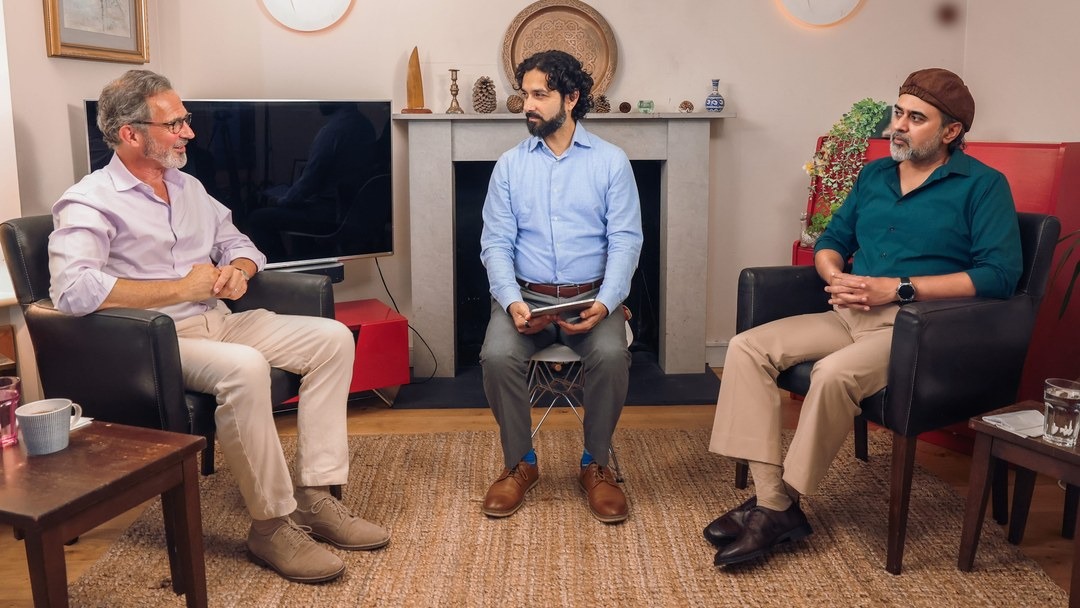
Most of us try to fix our suffering: a better job, a calmer mind, a new practice, a holier word to hide behind. But what if the trouble was never the pain itself? In this London dialogue with a teacher of non-duality, we look at who it is that says “I am”, why the sufferer hides in money and in holy concepts alike, and why non-duality is an intention, not a state. If the ego is a born lover, what does it truly want?
We say my body, my brain, my reason, my decision, and we never ask who is saying it. A boy who has tormented animals must be corrected, we all agree. Then he turns out to be our own son, and reasons to excuse him arrive without effort. Did reason change, or the one who owns it? Every courtroom shows how intent drives argument. The judge we admire may be the one who has learned to thin that owner down. When we decide, who is deciding?
We study history, languages and money, and never the one who is reading, to whom all of it matters. Our interests feel like our own, and we call them freedom without asking where they came from. Had that stranger carried another name, would our view of him be the same? Self-inquiry cannot end in a final answer, because the one asking dissolves before it arrives, and returns the next morning. Do we want an answer, or do we want to look?
