We are told that cleaner technology will solve the climate crisis. But emissions begin before any fuel is burnt, in a life that has no joy and so keeps reaching for the next lower pleasure: the party, the trip, the purchase. The demand for pleasure is not wrong. What matters is which pleasure we seek. Music, books, sport and real company cost the planet almost nothing. Can we look honestly at what our own consumption is trying to fill?
Many of us interrupt, rush to make our point, or change the topic when a conversation comes too close. We call it a lack of patience or discipline. But impatience in a conversation is often fear: when what we hold within is borrowed belief, every question could shatter it. The same confusion makes us take our instincts and feelings as ourselves, though they are only the body’s chemistry. If we looked honestly at what we hold, would a question still feel like an attack?

Many of us promise our parents high marks, and when the result falls short, the guilt can feel heavier than the exam itself. But no one controls results; they depend on far too many things outside us. What is in our hands is our intent, our effort and our honesty with what we study. The Bhagavad Gita says the same: our right is to action alone, never to its fruit. What if the only promise we made was to study honestly and with love?
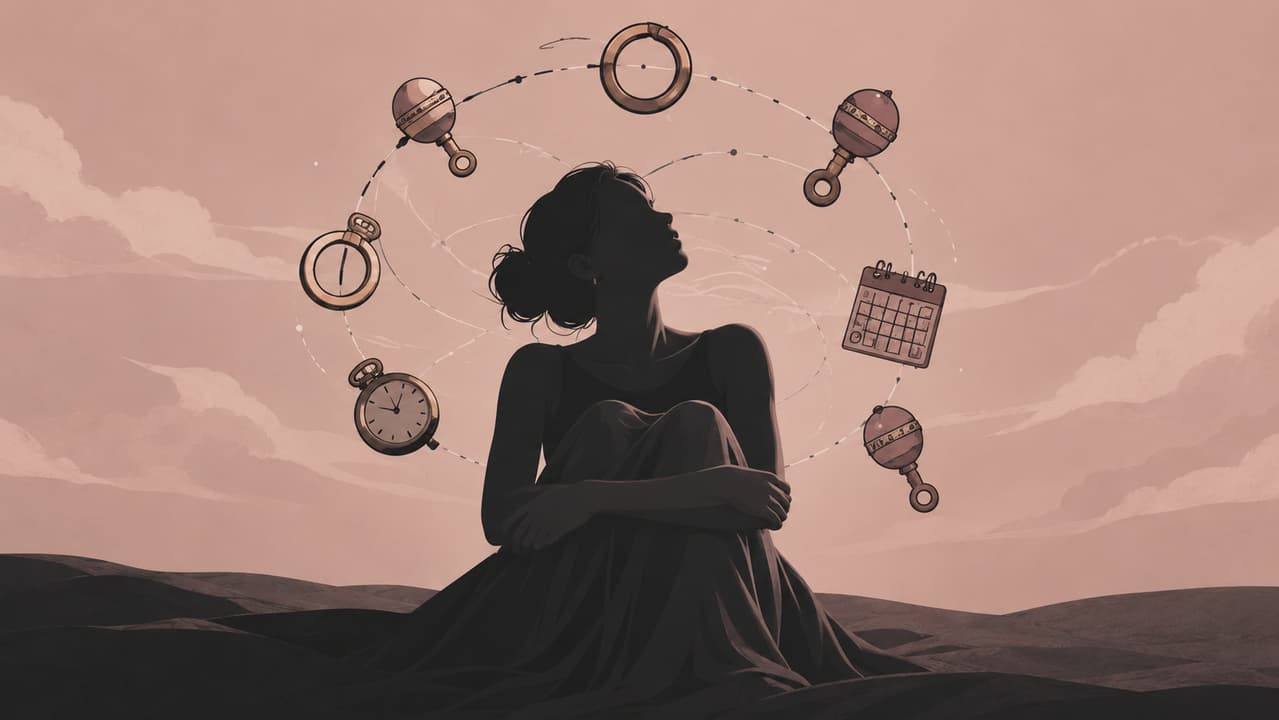

A modern woman calls herself liberated, yet lives anxious — anxious about age, desirability, marriage, motherhood. Acharya Prashant exposes this anxiety as proof that feminism never touched the real wound: centuries of conditioning that reduced women to bodies for pleasure and reproduction. External equality isn't enough. True freedom demands she reject the entire inheritance of tradition and simply become human — not woman, not wife, not mother by decree, but free.

Modern culture often celebrates rebellion, travel, and endless experiences as symbols of freedom and happiness, but they can become just another form of conformity. Genuine personal development begins with mindfulness and creating the right mind space to understand oneself. Without inner clarity, changing places, trends, or identities only repeats old patterns. True freedom comes from self-understanding, not from chasing new experiences or fashionable rebellion.

Freedom is often assumed to be the ability to choose, yet most decisions arise from conditioning, biology, social influences, and habit. Real freedom begins by seeing how mechanical and unconscious life usually is. As awareness deepens, confusion and endless options gradually diminish, making life simpler and more direct. Liberation lies not in imagining freedom, but in recognising and understanding the forces that keep one bound.

The debate around nudity and movements like “Free the Nipple” miss a deeper issue: true freedom is not about clothing, but freedom from psychological conditioning and body-based identity. Clothes themselves neither oppress nor liberate. A truly free society is one where the body becomes ordinary and irrelevant, not a source of obsession, shame, validation, or social control.

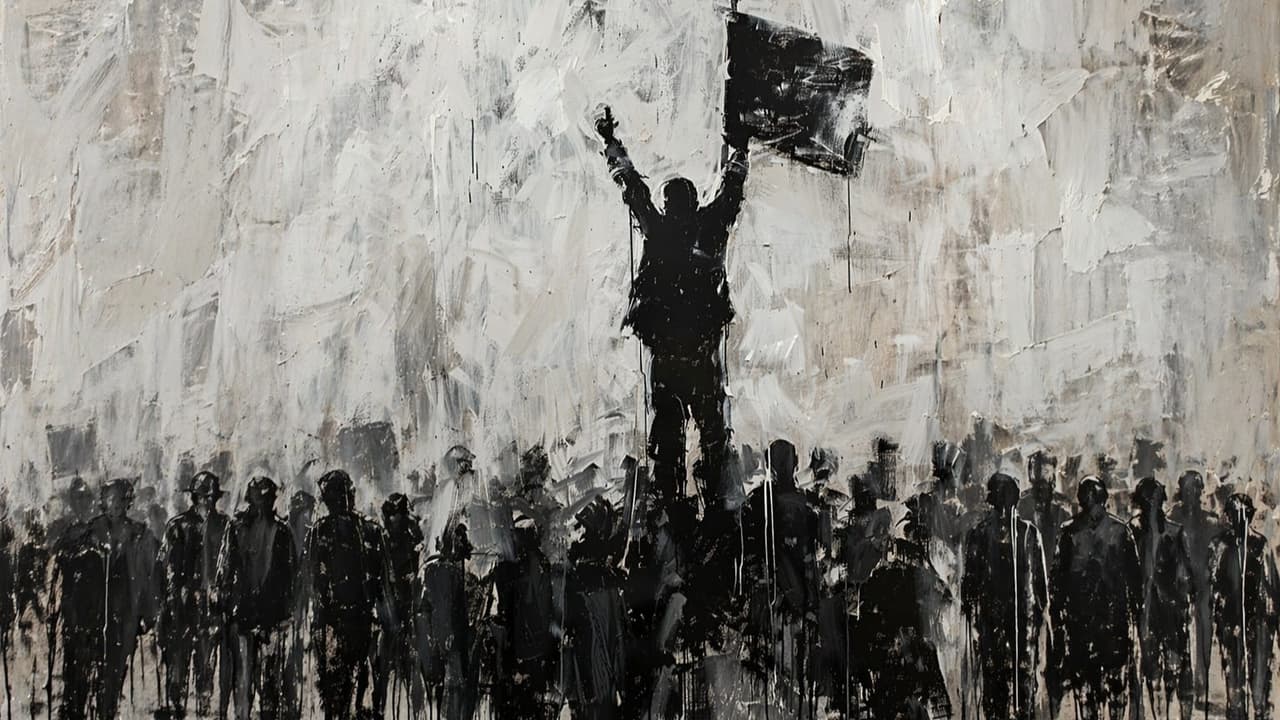
You look at Iran, at revolutions, and ask: can systems really bring freedom? Revolutions keep replacing one system with another, yet the chaos remains. The real question is rarely asked: what within us creates these systems? Real freedom is not political or social; it is inward. Without inner change, every revolution only rotates power, never resolves suffering.

Joy is not something that you can think of as something wonderful. You cannot go somewhere and say that, looking at a mountain, I experienced joy. Joy is something which is always there, obfuscated; hence, it is the absence of obfuscation. A complete absence of all rubbish is joy, and that rubbish includes both pleasure and pain.

Often, in the name of financial pressure, what we are really kneeling down to is something else. But because that something else is not nice enough to be named, what we quote is financial pressure. Nothing is ever forced in a tangible way. The way is kept gentle in appearance. But there is something else at work inwardly. What is that thing? That is what you have to uncover. You have to be honest towards yourself, very honest.

All happiness that your mind feels is directly proportional to how unhappy you are. So, if you want to be really happy, become totally unhappy. This is called the law of duality. The deeper your pain, the more relieved you will be. That is the nature of the mind. When you are moving towards happiness, actually the journey towards unhappiness has begun.

That’s what the entire spiritual process is about, collecting the airfare. So that you can rise up, otherwise, you stay crawling on the highway. Life is not so that you just remain a crawler, a creeper. Life is so that you can take off.

Some battles need to be fought just because they deserve to be fought, not for the sake of victory but for the sake of the fight itself. And victory is indeed possible. We are not fundamentally evil. We are all hypnotized since birth. That’s what is called Maya. Just as somebody can hypnotize us, somebody can also break the hypnosis. It is possible! Never, never lose Faith.

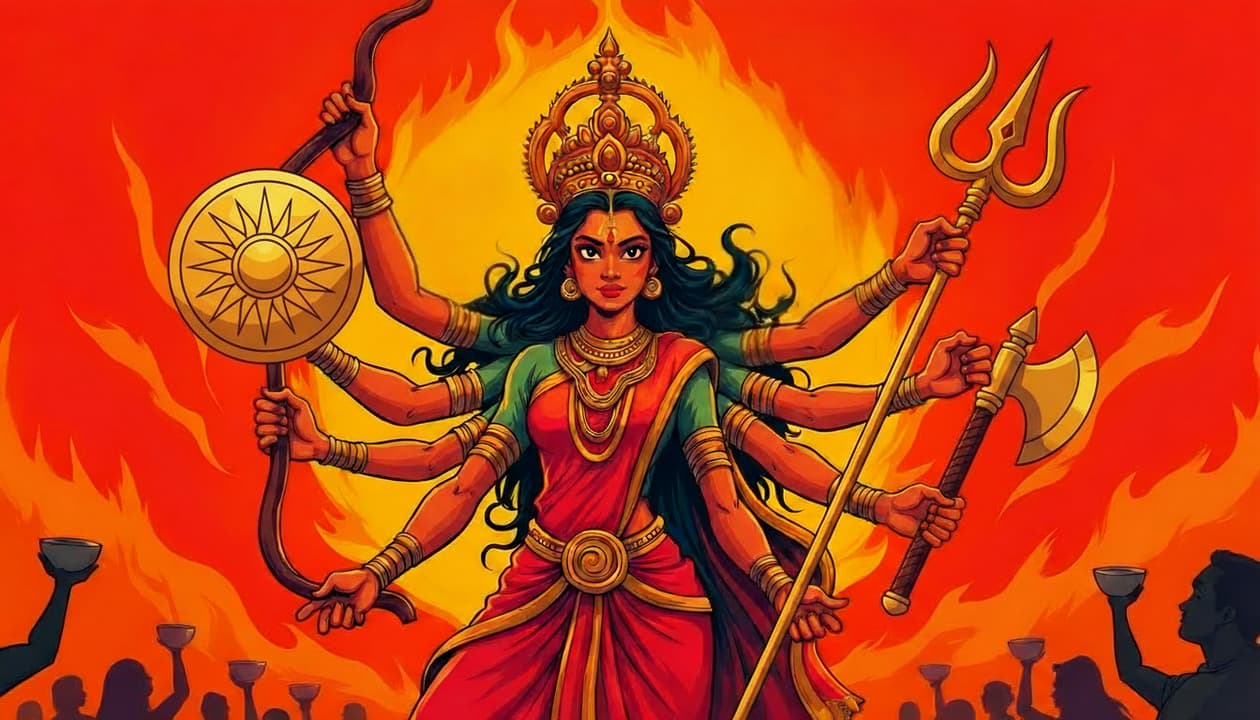
You are the subject, Puruṣa, and everything you can experience, perceive, speak, imagine, or think is Prakṛti. The only real spiritual question is to determine the right relationship between Puruṣa and Prakṛti. India came up with a beautiful answer: Worship Prakṛti with reverence, but do not try to possess or exploit her. The Shakti tradition with the Devi-puja is nothing but an answer to this question of right relationship. Durga, Ambika, and Kali — they all represent Prakṛti.

It is not really happiness that is to be found through self-knowledge. In fact, self-knowledge often is a danger to happiness. Self-knowledge dissolves both happiness and sadness, and you are left with nothing but a naked and silent joy. If you can see yourself clearly, without motivation, then the seeing itself is great fun.

Because you underestimate Maya. Because maybe you are in the illusion that you have conquered, that you have left her way behind. Because probably you do not perceive that you too are still threatened. You feel, 'Oh, the thing is so easy, I overpowered it. Why is my dad not able to accomplish this simple feat?' Maybe it's actually so difficult that not only your dad is failing—even you have not fully succeeded.

Acharya Prashant: That's why the rājasika mind is better than the tāmsika mind. The rājasika says, “I’m not alright. I need to do something to become better. I feel inferior. I feel incomplete. I need to rise. I need to achieve.” That’s the rājasika mind. The rājasika mind at least…

Neuroscience says there is no free will. Vedanta also comes to the absence of free will, but through the route of choiceless understanding. It says that the right action will never be a product of your choice because there's no such thing. The right action happens when you just don't see options — not because you're an idiot, but because you're in love with the right one. So, you don't require choice. You require observation. And then, you don’t have to choose. It’s an effortless flow.

It was Guru Nanak who said, "You may try as hard as you can, but you will never get to know the mind of the liberated one." That's from the Adi Granth. You keep trying. You keep speculating. And the ego has a serious urge to know what is going on in the mind of the Buddha. But you'll never know what's there in the mind of the Buddha. Being who you are, how will you know the mind of the Buddha?

The Gita has nothing to do with sāttvikatā. Even sāttvikatā is to be rejected as destiny, while even rājasikatā is to be embraced if it serves as a means to freedom. Everything and anything is fine if it is usable in the context of liberation. Even sattva can become an object of consumption — don’t we see learned people whose knowledge becomes their identity? The Gita is about getting rid of all traps — be it sattva, rajas, tamas, or anything.

Acharya Prashant (AP): Great things are happening on the screen, don't get so excited, it's just the screen. Irrespective of what happens on the screen, it's not real. That's how you have to look at things. Great silence on the screen. Is it silence? No, it is the silence of…

Inquiry is the only route. Otherwise, there is no way you can ever detect whether your thoughts, internal processes, feelings and importantly conclusions and decisions are your own, really original or whether they are products of an implanted process. You will never come to know what has been implanted within that which you are calling as conditioning is an implanted thing and once it has entered your insides it will always appear innate.

Happiness that is neither temporal nor chemical has been classically called as joy. And it is not something to be obtained. It is not something to be obtained. It is nature. It is who you are. Provided you refuse to abide by what you are not. Happiness is not something you have to hunt for. Otherwise, happiness remains eternally elusive.

For you to make your parents happy, the first requirement is that you must be happy. If you are not happy, how can you give happiness to your parents? There is a basic law of existence: you can only give what you have. How can you suffer and still make others happy? Please, get rid of the notion that you can compromise your life to make others happy.

Acharya Prashant: ‘How can I get my ex-girlfriend back?’ The question comes from Shubham. Shubham you will have to die (audience bursts into laughter). There is no other way, you will have to die.
You know, it was Kabir Sahab who said: ये तो घर है प्रेम का, खाला…

One has to come to a certain purposelessness with respect to what one has always been doing. And when one comes to that purposelessness, that’s now like being with a clean slate. One does not like the words futility. So something within us just silently conspires from inside. So there is futility but then in that futility some meaning will be found. And that’s a conspiracy. There is purposelessness but some meaning will be attached to the word purposeless and that defeats the whole thing.

You have to fight. The world is the battlefield. To be born is to be born as a warrior, to be born is to be born with weapons and armour. That is the message: you cannot run away. Shunning action is not possible.

Questioner (Q): Man is typically a social animal who seeks to coexist with the society around him. I am a vegan but many people around me are not, and that creates a difficulty for me. I want to speak out my thoughts on animal cruelty and get into animal activism,…

Break it down. Just ask yourself, “How much is to be done right now,” and that’s all. Beyond that I don’t bother. You know, how the Upanishads put it? They say, “Yes, it’s infinite but it’s also very immediate; very, very far, but I also know that it’s also very immediate.” So, I’ll focus on the immediacy. Why horrify myself with the thought of the infinite? I would rather remain humble and think only of the immediate.

No! They are not interesting people; they are sick people. It’s just that the very definition of the word 'interesting' has become distorted to their advantage. People in hell are as interesting as a stinking pile of trash is.

Making yourself happy isn't self-love. Self-love is gifting yourself the highest possible. If you do not know what to give yourself, at least abstain from giving yourself toxic and harmful things. Real love is always tough. Self-love is an exercise in reduction, not accumulation. When you work to make your life beautiful, you are truly loving yourself.

Realization is extremely powerful. You cannot realize and not act. It is impossible. You cannot realize and not act. Action follows realization. So if you come and say, “I realize, I understand but I cannot act,” then you are mistaken; you actually do not realize at all! The action after realization is not time-bound; it does not even have a time lag. It is instantaneous and spontaneous.

If you want to be happy, you should be sad. How many of you want deep happiness? You must go and must become deeply sad. This kind of happiness is of no use, it is coming from others, it is situation-dependent, there is no intelligence in it. There is another happiness that is called as ‘joy’. Find that happiness which nobody has given you and nobody can take away, which is your own nature. Lightness, simple pure lightness!

The bulk of the human population is always, by default, in the state of boredom, frustration, irritation and anxiety— which are all nothing but sadness. The brain can never know the real happiness, i.e., 'Joy'. So, it is looking for some kind of a cheap substitute, which it finds in various objects: position, power, performance, money, appreciation, prestige, reputation— all these things. Happiness is a false medicine. A substitute. A cheap, unworthy substitute for joy.

Questioner: Why is there a difference of intensity and love for mukti (liberation) between different human beings?
Acharya Prashant: The differences that you are talking of all relate to time; therefore, they all will be resolved in due course of time. Time gave rise to all those differences, and those…

If following others is slavery, the mind quickly wants to conclude that following oneself is freedom. No, following oneself is deeper slavery because what we call the 'self' is just an aggregate of internalized, pervasive influences, like a crow mistaking a cuckoo’s eggs for its own. True freedom is to be free of others and, more importantly, yourself.

Questioner: I am a research scholar. I am in my fourth year of PhD, and it is kind of my second inning. Earlier I was a teacher, I was teaching at a university, but I’ve left that and I have started my PhD.
I’ve been suffering from a condition for…

Understanding expresses itself through action. And understanding knows no other expression. Words are a very poor substitute for the right action and that is what Gibran is talking of here. He says that which is understood claim for its final expression as action in life. The poet often lets his understanding become his words. To that extent, there is a flow but if the words remain mere words and do not turn into life then there is no freedom yet. The imprisonment continues. Live what you love, otherwise, the punishment is tremendous.

Acharya Prashant: A fly comes and sits on my arm here (pointing towards the arm), I reject it, I discard it – Is the game over? Is she not ever going to return? Why? Because I discarded the fly and not my arm, so irrespective of how strong your resistance…

Questioner: Why do people commit suicide?
Acharya Prashant: They still have a lot of hope. They feel that suicide would redeem them. They have not given up everything. They are still carrying a lot of hope. If I do not know what is beyond life, how can I enter that…

Fulfillment is what you want, don’t you? There won’t be any fulfillment until you break your inner bondages. And the most central, critical, and primary bondage is body-identification.
Use everything that your birth, your body, and Prakriti (physical nature) have given you. Use all of that for the sake of…

Acharya Prashant: Love is the fire that melts down the bondage that is you. Knowledge is merely the light in which you can see your bondages. Even if you are able to look at your chains in the light of knowledge, that does not rid you of the chains. In…

Acharya Prashant: The very urge for liberation, when it doesn’t find an outlet, becomes the urge to consume. Do you see this? Where does the tendency to consume so much come from? It comes from the misidentified and thwarted urge toward liberation. If you will not provide liberation to a…

Questioner: Good evening sir. I’m…. and I’m a PhD student here at IIT, Kanpur. Sir, I have a very personal question. Being a girl child, especially in India, comes with very different sets of consequences. Despite being given equal opportunities like education and skills, at the end where we’re supposed…

Questioner 1: In my experience, what’s happening is that I really like reading scriptures, so I’ve been reading them for quite some time. But with time, what I’ve observed is that earlier there used to be a freshness and it would stay with me. There was a sense of excitement…

Questioner: Namaskar Acharya Ji. You talked of Mukti. So, I would like to know, is it a Mukti from life and birth? I mean, more, If you can elaborate?
Acharya Prashant: Mukti from internal compulsions. The goal of life can be talked of as Mukti which is Liberation, which is…

Questioner: My question is that I heard that there are two cosmic energies, these two Cosmic energies will take out all the sufferings of the people, which are from treta yuga of Lord Sri Ram and Lakshman get received the cosmic energies from Sage Vishwamitra, those are called some bala…

Questioner: Sir, what is clarity?
Acharya Prashant: Clarity is two things together: One, it is the absence of readymade concepts based on which one lives, one reacts, one sees the world, and parallelly, simultaneously, on the other hand, it is the ability to respond greatly. So, on the one hand,…

Questioner: Why think so much about decisions? Shouldn’t our decisions be spontaneous? I like to decide in a free flow.
Acharya Prashant: So the questioner is stressing on the spontaneity of decisions. He says that he likes to decide in a flow. It's a good thing, your intention is good.…

To those who articulate that women should mind their clothes and dressings, the question arises: what kind of person are you, man or woman, if anything is able to disturb or provoke you so easily? The allegation is that when watching a woman dressed skimpily, it becomes a disturbance, a distraction, even a provocation. How will you insulate yourself, and how much will you insulate yourself from the world? And what are the limits to what you want to see and not see? Today, it is said that a woman’s legs or thighs provoke you. What prevents you from saying tomorrow that her ankles and fingernails provoke you? Would you then demand that she should cover up from head to toe?